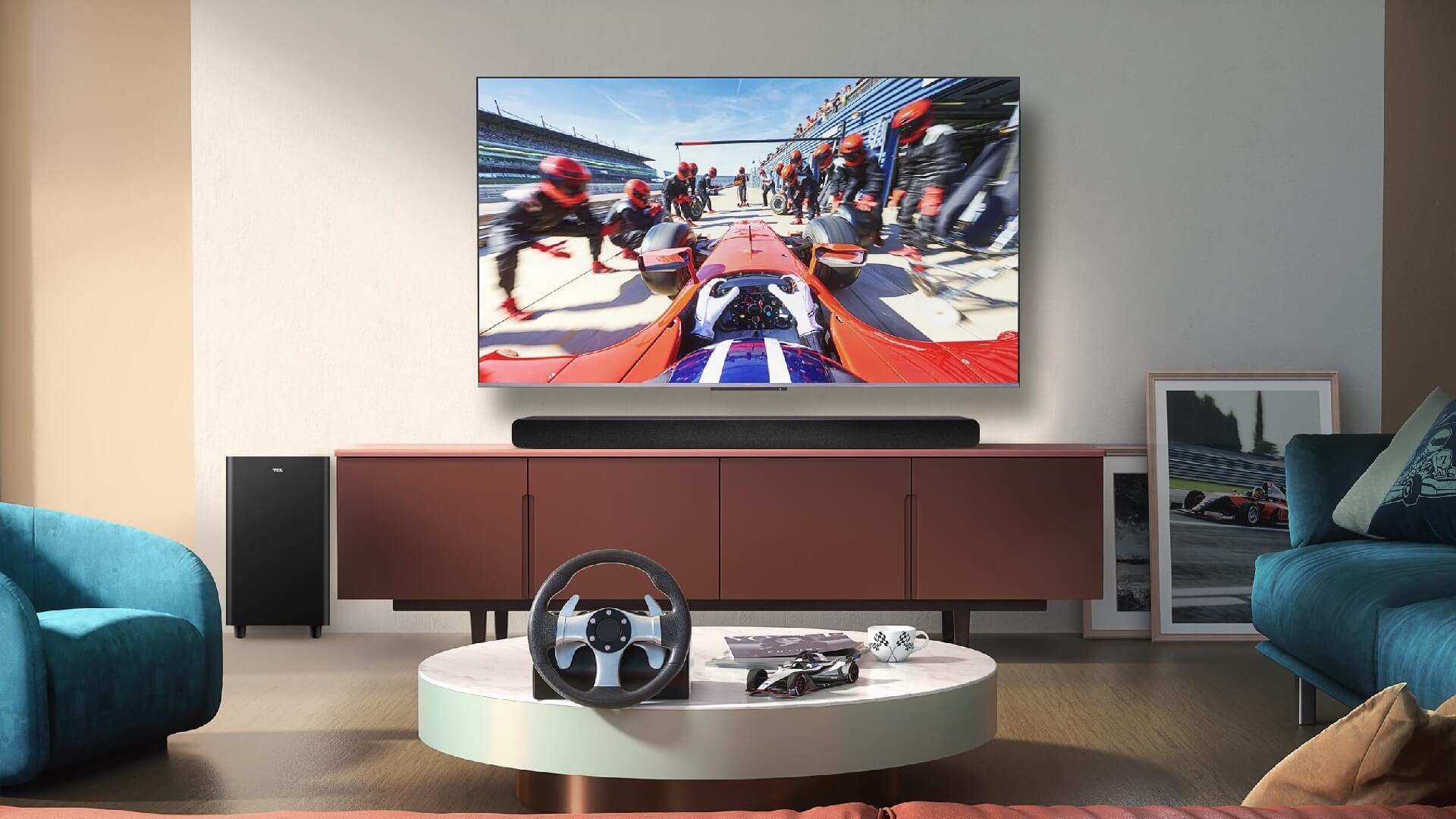

Thin television speakers make dialogue disappear, then turn action scenes into a sharp wall of noise. The right soundbar fixes that without forcing every room into a complicated speaker installation. Our Best best tv soundbar picks range from compact dialogue-focused bars to full surround systems with Atmos and separate speakers.
The Bose TV Speaker is the easiest recommendation for most people who want clearer television sound without a subwoofer or rear speakers. The rest of the list covers stronger bass, virtual surround, true rear channels, app control, and small-room setups.
Comparison table
| # | Product | Award | Channels | Key feature | Best for |
|---|---|---|---|---|---|
| 1 | Bose TV Speaker | Best overall | 2 angled drivers | HDMI ARC, optical, AUX, Bluetooth | Clear speech in a simple setup |
| 2 | ULTIMEA Poseidon M60 | Best surround upgrade | 5.1 | Dolby Atmos, wired subwoofer, app EQ | Room-filling movie sound |
| 3 | Assistrust Sound Bar | Best flexible compact bar | 2 in 1 | 80W output, three EQ modes | TVs, PCs, and projectors |
| 4 | Samsung S60D | Best Samsung all-in-one | 5.0 | Q-Symphony, SpaceFit, Alexa | Samsung TV owners |
| 5 | Amazon Fire TV Soundbar Plus | Best all-in-one Atmos bar | 3.1 | Built-in bass, Dolby Atmos, DTS:X | Fire TV households |
| 6 | Samsung HW-B400F | Best simple Samsung bar | 2.0 | Built-in woofer, Voice Enhance | Small rooms and late viewing |
| 7 | Amazon Fire TV Soundbar | Best compact Fire TV bar | 2.0 | DTS Virtual:X, Dolby Audio | Small TV stands |
| 8 | Sony S100F | Best for home offices | 2.0 | Bass Reflex, Voice Enhancement | TVs and conference calls |
| 9 | ULTIMEA Wireless Subwoofer Bar | Best bass-focused 2.1 system | 2.1 | Wireless subwoofer, app EQ | Movies and music |
| 10 | ULTIMEA 5.1.2 Atmos Bar | Best true surround package | 5.1.2 | Rear speakers, up-firing drivers | Dedicated home theaters |
1. Bose TV Speaker: Best Overall
Pros
- Speech-focused sound is easy to understand
- Compact body fits below most televisions
- HDMI ARC, optical, AUX, and Bluetooth
- Dialogue and bass modes on the remote
Cons
- No separate subwoofer included
- HDMI cable is sold separately
- Not a true surround system
Best for: anyone who wants noticeably clearer TV speech with minimal setup.
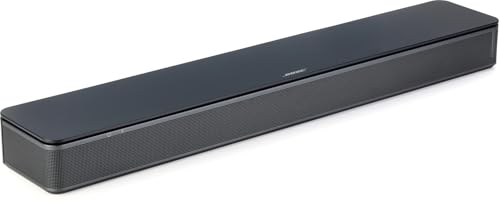
The Bose TV Speaker is the one we would recommend first to someone who says, “I just want to hear the show.” It does not try to turn a television into a cinema, and that restraint is the reason it works so well. The bar puts vocal clarity ahead of spectacle, making dialogue more distinct without requiring a room full of equipment.
Its two angled full-range drivers help create a wider, more natural presentation than the television's built-in speakers. The body is only 2.21 inches tall, 23.38 inches wide, and 4.02 inches deep, so it should fit beneath a broad range of TVs without blocking the screen. Optical setup is straightforward, while HDMI ARC, AUX, and Bluetooth provide more ways to connect. Bose says up to three devices can be connected through the inputs, with the first powered-on device connecting automatically.
The included remote adds a dedicated dialogue mode and a bass boost. Those controls are more useful than a collection of obscure sound profiles because they address the two problems people notice first: buried speech and thin low-end. Bluetooth also lets the bar handle music or podcasts when the TV is off. It can be expanded later with a Bose Bass Module 500 or 700, though that changes the simple character of the system.
The limitation is obvious beside the ULTIMEA Poseidon M60 or the ULTIMEA 5.1.2 system. The Bose has no dedicated subwoofer, rear channels, or Dolby Atmos processing. Explosions will not have the same physical weight, and overhead effects are not part of the design. Readers who want a cinematic surround field should skip it.
For a bedroom, apartment, or living room where intelligible speech matters more than theatrical bass, the Bose TV Speaker is the safest pick. It is also a good starting point for readers comparing the features that matter most in a television sound system.
2. ULTIMEA Poseidon M60: Best Surround Upgrade

Pros
- Five built-in speakers create a broad front stage
- Dolby Atmos and HDMI eARC
- Wired wooden subwoofer adds real low-end weight
- Extensive app tuning
Cons
- Subwoofer requires a wired connection
- Dolby Atmos benefits depend on compatible content
- Larger setup than a single compact bar
Best for: movie fans who want a substantial surround presentation without rear speakers.
The Poseidon M60 is a major step beyond a basic TV speaker. Its appeal is not subtle refinement. It is the choice for someone who wants action films to sound larger, dialogue to stay present, and bass to have a dedicated source rather than being squeezed from a slim bar.
ULTIMEA gives it five built-in speakers, including two side-firing drivers, plus a wired wooden subwoofer. The stated 300W peak output, 45 Hz to 18 kHz frequency response, and 99 dB maximum SPL describe a system designed to fill a room rather than merely improve a news broadcast. The subwoofer uses an 18 mm high-excursion driver and a 5.3-liter tuned cabinet, details that explain why it should produce deeper and tighter bass than the Bose TV Speaker.
HDMI eARC is important here. The connection supports up to 37 Mbps of bandwidth for lossless Dolby Atmos 5.1-channel audio, while CEC can synchronize basic control between the TV and bar. The Ultimea app is unusually central to this product, offering a 10-band graphic EQ, 121 sound presets, and 13 surround-level adjustments. Bluetooth 5.4 handles wireless music playback.
VoiceMX processing is aimed at a common surround-system problem: effects get louder while speech becomes harder to follow. The feature isolates vocal frequencies in real time and is intended to keep voices crisp at lower listening levels. Compared with the Bose TV Speaker, the M60 is far more immersive. Compared with the ULTIMEA 5.1.2 Atmos Bar, it is easier to place because it does not rely on rear speakers, but it cannot create the same genuine sound behind the seating position.
The wired subwoofer is the main compromise. It gives you less freedom than the wireless subwoofer in ULTIMEA's 2.1 system, and the setup occupies more space than a one-piece bar. Choose the Poseidon M60 when front-wide sound and powerful bass matter more than a completely minimal installation.
3. Assistrust Sound Bar: Best Flexible Compact Bar

Pros
- Detachable design allows several placements
- Bluetooth, ARC, optical, and AUX connections
- Automatic volume boost
- Movie, music, and news modes
Cons
- No dedicated subwoofer
- Virtual surround cannot match real rear speakers
- Feature claims are broader than the physical size suggests
Best for: a small TV, PC, projector, or gaming setup that needs placement flexibility.
Assistrust's most interesting idea is its detachable form. Instead of treating the bar as a fixed horizontal speaker, it supports horizontal, vertical, tabletop, and wall-mounted placement. That makes it a useful option for a desk, projector shelf, or television stand where a conventional bar may not fit cleanly.
The product uses four drivers and claims 80W output. Its dimensions are 17 inches long, 3.5 inches wide, and 2.5 inches high, making it substantially shorter than the Bose TV Speaker and the 37.07-inch Fire TV Soundbar Plus. That compact footprint will not create the same broad front stage as a larger bar, but it is easier to position near a small screen.
Connection options are generous for this class. Bluetooth 5.0 works for phones and tablets, while ARC, optical, and AUX cover common TV and computer connections. In ARC mode, the bar can be controlled with a compatible TV remote. Three equalizer modes, labeled movie, music, and news, give the listener a quick way to shift the emphasis without opening an app.
Auto volume boost is intended to bring up faint sounds, which can help with inconsistent streaming mixes. The 18-month warranty, 24/7 online technical support, and 60-day replacement policy are also listed features. Still, the bar has no dedicated subwoofer, so the 80W claim should not be mistaken for the deep low-end produced by the ULTIMEA systems.
The Assistrust is more adaptable than the Sony S100F and smaller than nearly every Atmos option here. It is not the right pick for someone chasing cinema-scale bass, but it makes sense for a mixed-use desk or compact room where the ability to split or reposition the speaker matters.
4. Samsung S60D: Best Samsung All-in-One

Pros
- Five-channel all-in-one design
- Built-in subwoofers
- Q-Symphony for compatible Samsung TVs
- SpaceFit Sound Pro room optimization
- Alexa, Chromecast, and AirPlay 2 integration
Cons
- No separate rear speakers
- Samsung-specific features need compatible equipment
- More complex than a dialogue-first compact bar
Best for: Samsung TV owners who want a tidy system with smart features and room tuning.
The S60D is the most feature-rich single-box bar in this group. It provides five-channel sound and built-in subwoofers while keeping the installation compact. The result is more ambitious than the Bose TV Speaker, but it still avoids the separate speakers and cable runs required by the ULTIMEA 5.1.2 system.
At 26.3 inches wide, 4.1 inches deep, and 2.4 inches high, it is short enough for many TV stands while offering more channel hardware than a basic 2.0 bar. Samsung's SpaceFit Sound Pro analyzes the environment and adjusts the presentation for the room. That kind of calibration matters when the same soundbar moves between an open living room and a smaller enclosed space.
Samsung TV owners get the strongest reason to choose this model. Q-Symphony allows compatible Samsung TV speakers and the soundbar to work together, while Wireless Dolby Atmos reduces cable clutter. Adaptive Sound analyzes scenes and adjusts the audio, and the Active Voice Analyzer is designed to keep dialogue and commentary from being buried by room noise. Game Mode Pro adds processing intended to make gameplay sound more three-dimensional.
Built-in Alexa, Chromecast, and AirPlay 2 make the S60D more useful for music and smart-home control than the Bose TV Speaker. It is a better fit for a connected household, though its large feature set can feel unnecessary if all you want is speech clarity. The lack of separate rear speakers also means its surround field remains front-based.
The Samsung beats the Amazon Fire TV Soundbar Plus on Samsung-specific integration and room calibration. Amazon's bar answers with a dedicated center dialogue channel and DTS:X. Pick the S60D when the television is already part of Samsung's ecosystem and one clean enclosure matters more than adding rear channels.
5. Amazon Fire TV Soundbar Plus: Best All-in-One Atmos Bar

Pros
- Dedicated center channel for dialogue
- Dolby Atmos and DTS:X
- Built-in bass in a single enclosure
- Fire TV remote integration
- Movie, music, sports, and night modes
Cons
- Long body needs a wide stand
- No separate rear speakers
- HDMI eARC or ARC connection is central to setup
Best for: Fire TV users who want fuller sound without adding a separate subwoofer.
The Fire TV Soundbar Plus takes the all-in-one concept seriously. Its 3.1-channel layout includes a dedicated center dialogue channel and built-in bass, so it aims to improve both speech and impact without a separate subwoofer. It is a sensible middle ground between the compact Bose and the more involved ULTIMEA systems.
The bar measures 37.07 inches wide, 5.16 inches deep, and 2.5 inches high. That width gives it room to create a broader front presentation, but it also means buyers should measure the TV stand rather than assume every console will work. HDMI eARC or ARC setup uses the included HDMI cable, and the design is intended to keep audio synchronized with the television.
Dolby Atmos and DTS:X provide object-based and multidimensional audio support. The effect will depend on the content and room, but the processing gives the bar more ambition than the 2.0 Fire TV Soundbar. Four modes cover common use cases: Movie, Music, Sports, and Night. Night mode is especially useful when you want to reduce the disturbance from louder passages.
Fire TV integration is the other major draw. Compatible setups can use one remote for the television and soundbar, with sound adjustments available in Fire TV audio settings on selected models. Bluetooth supports phone and tablet streaming. The dedicated center channel gives this model a clearer dialogue strategy than the Samsung S60D, while Samsung answers with room calibration and a wider set of smart integrations.
The Soundbar Plus is not a substitute for a system with rear speakers. Its low-end is also constrained by the all-in-one enclosure compared with the Poseidon M60's dedicated subwoofer. It suits Fire TV households that want a single clean bar, clear voices, and a little Atmos height without building a full theater.
6. Samsung HW-B400F: Best Simple Samsung Bar

Pros
- Built-in woofer keeps the system compact
- Voice Enhance mode raises dialogue
- One remote works with compatible Samsung TVs
- Surround Sound Expansion
- Night listening mode
Cons
- 2.0 design has no dedicated subwoofer
- Limited surround compared with Atmos systems
- Wireless TV connection may depend on compatibility
Best for: Samsung owners who want a small bar for everyday shows and late-night viewing.
The HW-B400F is a straightforward upgrade for a television that sounds thin but does not need a full home theater. It uses a 2.0-channel layout with a built-in woofer, so it stays simpler than the Samsung S60D while adding more body than typical TV speakers.
Its 25.23-inch width, 4.21-inch depth, and 2.62-inch height make it easy to place under a smaller television. Samsung includes one-remote control for key functions such as power, volume, and sound effects when paired with a compatible Samsung TV. The bar also supports wireless connection to the TV according to the product features, reducing cable clutter in a basic setup.
Voice Enhance mode automatically amplifies dialogue, which is the feature to focus on here. Surround Sound Expansion projects audio in more directions, but it cannot produce the convincing overhead effects of the Fire TV Soundbar Plus or the physical rear channels of the ULTIMEA 5.1.2. The built-in woofer supplies bass without a separate box, although it will not move as much air as a dedicated subwoofer.
A night mode lowers volume and minimizes bass, making the B400F a considerate choice for apartments or shared homes. That is a more practical feature than raw loudness for some viewers. Compared with the Sony S100F, the Samsung is shorter and more tailored to Samsung TV control. The Sony offers a Bass Reflex speaker and S-Force Pro Front Surround, but its body is much larger.
Skip the HW-B400F if you want Atmos, app-based tuning, or a wide cinematic stage. Choose it for a small room, a compatible Samsung TV, and a preference for simple controls over elaborate processing.
7. Amazon Fire TV Soundbar: Best Compact Fire TV Bar
Pros
- Compact 24-inch body
- DTS Virtual:X and Dolby Audio
- HDMI ARC setup
- Bluetooth streaming
- Fire TV one-remote control
Cons
- No built-in or separate subwoofer
- 2.0 design has less weight than the Plus model
- Power adapter and cable are not included
Best for: a small TV stand that needs clearer and wider sound.
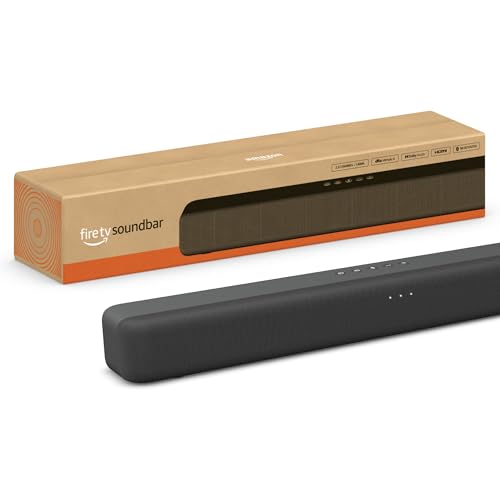
The smaller Fire TV Soundbar is the cleanest option for a cramped entertainment unit. It measures 23.98 inches wide, 3.5 inches deep, and only 2.5 inches high, which makes it easier to place than the 37.07-inch Soundbar Plus. It is designed to improve the sound from a TV without taking over the furniture.
This is a 2.0 speaker system, so its strengths are clarity, simplicity, and virtual spaciousness rather than deep bass. Dolby Audio and DTS Virtual:X attempt to create a more three-dimensional presentation from the two-speaker enclosure. That can make action and music feel less flat, although the effect will not equal a system with a dedicated subwoofer or rear speakers.
Setup uses the included HDMI cable with a television's HDMI eARC or ARC port. Fire TV integration allows compatible systems to use one remote for TV and audio control. Bluetooth covers phone and tablet streaming, making the bar useful for music when the screen is off. Amazon also lists 18% recycled materials in the device, power adapter, and cable category, though the power adapter and cable are not included in the box according to the product information.
The Bose TV Speaker is a stronger speech-first recommendation, while the Fire TV Soundbar has a more obvious connection to Amazon's ecosystem and a virtual surround mode. The Fire TV Soundbar Plus is the better choice for bass and Atmos, but its larger body is less forgiving of tight spaces.
This bar makes sense when the television is small, the stand is narrow, and Fire TV control is useful. It is not the pick for listeners who want cinema bass.
8. Sony S100F: Best for Home Offices

Pros
- Bass Reflex speaker and integrated tweeter
- Voice Enhancement for speech and calls
- HDMI ARC and Bluetooth
- Optical cable and remote included
- Wall-mountable design
Cons
- No dedicated subwoofer
- Larger and taller than several compact rivals
- Older 2.0 platform lacks modern Atmos features
Best for: small televisions, home offices, and conference calls where voice clarity matters.
The Sony S100F is a practical bar for a room that serves two purposes. It is designed for TV viewing, but the Voice Enhancement feature also makes conference call participants easier to hear. That dual role separates it from the more cinema-focused ULTIMEA systems.
Sony lists a 2.0-channel design with an integrated tweeter and Bass Reflex speaker. The Bass Reflex construction gives the bar more low-end support than bare television speakers, while the tweeter is intended to preserve detail in voices and effects. S-Force Pro Front Surround adds virtual processing to make sound seem to come from a wider area.
HDMI ARC keeps TV setup simple, and Bluetooth handles wireless playback. The box includes a remote, batteries, optical cable, AC cord, wall-mount template, and documentation. The bar is also wall-mountable, useful when the TV is mounted and the furniture below it is shallow.
There is a confusing dimension entry in the product information, but the listed feature description identifies the soundbar as slim and suited to small living spaces. It should be treated as a conventional 2.0 bar rather than an Atmos product. The Bose TV Speaker is shorter and more directly focused on dialogue, while the Sony adds the useful home-office angle and a Bass Reflex design.
The S100F is not the right choice for a large open room or a listener expecting chest-thumping bass. Its appeal is steady, intelligible sound from a known audio brand, with enough connectivity to move between a television and a desk.
9. ULTIMEA Wireless Subwoofer Bar: Best Bass-Focused 2.1 System

Pros
- Wireless subwoofer allows flexible placement
- App with 10-band EQ and 121 presets
- VoiceMX dialogue processing
- BassMX low-frequency tuning
- Bluetooth 6.0
Cons
- No Dolby Atmos or rear channels listed
- More pieces to place than a single bar
- App control may be unnecessary for casual viewers
Best for: listeners who want stronger bass and control without a full surround package.
This ULTIMEA system makes one deliberate trade: it gives up Atmos and rear speakers to concentrate on bass, dialogue, and adjustment. The dedicated wireless subwoofer can be placed around the room without an audio cable, which is more convenient than the wired subwoofer supplied with the Poseidon M60.
The system is rated as 2.1-channel with up to 240W peak output, a 45 Hz to 18 kHz frequency response, and a maximum SPL of 95 dB. Its soundbar uses mica-reinforced diaphragms, which ULTIMEA says improve rigidity and reduce unwanted resonance. The wireless subwoofer uses an 18 mm high-excursion driver and a 6.5-liter tuned cabinet, giving the low frequencies a more suitable enclosure than any of the compact 2.0 bars.
VoiceMX processing dynamically boosts the stated 120 Hz to 6 kHz vocal range. That is a useful span for keeping speech audible when music and effects become busy. BassMX focuses on the 45 Hz to 150 Hz range, while the app supplies a 10-band equalizer, 121 preset EQ matrices, and OTA updates. Bluetooth 6.0 is listed for fast pairing and lower-latency streaming.
The ULTIMEA 5.1.2 Atmos Bar offers a far more enveloping presentation, and the Bose TV Speaker is easier to live with if all you need is clear TV dialogue. This 2.1 system sits between those extremes. It has enough hardware for convincing bass, but it avoids the rear-speaker placement and HDMI eARC requirements associated with a full Atmos arrangement.
The weakness is the absence of a listed Atmos mode or physical surround channels. Choose it for movies, music, and games where low-end impact matters. Skip it if overhead effects or sound behind the seating position are the main reason you are replacing the TV speakers.
10. ULTIMEA 5.1.2 Atmos Bar: Best True Surround Package

Pros
- Up-firing Atmos drivers
- Two rear surround speakers
- HDMI eARC for lossless Atmos
- App EQ and surround-level adjustment
- 360-degree SurroundX processing
Cons
- Requires careful speaker placement
- Not compatible with DTS
- Larger installation than an all-in-one bar
Best for: viewers building a dedicated room around physical surround and height channels.
The ULTIMEA 5.1.2 is the most theater-oriented system here. It does not rely only on virtual processing. Two rear surround speakers and up-firing Atmos drivers create the physical layout needed for sound to come from the sides, behind the listener, and above the front stage.
The 5.1.2-channel arrangement combines surround speakers, a subwoofer, and two height channels. ULTIMEA says the up-firing drivers use neodymium internal magnets and 18-core voice coils to improve high-frequency dynamics and vertical projection. Those details matter only when the bar is positioned correctly and the ceiling and room allow reflected height sound to work.
HDMI eARC supports up to 37 Mbps for lossless 5.1.2-channel Dolby Atmos audio, while CEC can synchronize power, volume, and input functions with the TV. The Ultimea app provides a 10-band graphic EQ, 121 presets, and 13 surround-level steps from -6 to +6. SurroundX combines the rear speakers and Atmos drivers into a 360-degree field.
This is the better choice than the Poseidon M60 when sound behind the seating position matters. The M60 is easier to arrange because it uses side-firing drivers in the main bar, while this model needs rear speakers and more cable management. The Amazon Fire TV Soundbar Plus is much simpler, but it cannot provide the same physical surround layout.
The notable limitation is DTS incompatibility. Buyers should also avoid hiding the rear speakers behind furniture or placing them randomly, since placement is central to the effect. For a dedicated movie room, though, this is the most complete surround package in the group.
How to choose best tv soundbar
The right soundbar depends less on a long feature list than on the sound problem you are trying to solve. Start with dialogue and room size, then decide whether you need bass, Atmos, or a simple connection.
Channel layout
A 2.0 bar such as the Bose TV Speaker, Sony S100F, or Amazon Fire TV Soundbar uses left and right speakers. A 2.1 system adds a subwoofer for deeper bass, while 3.1 adds a center channel that can help anchor dialogue. Systems labeled 5.1 or 5.1.2 add surround and height channels, though the physical layout matters as much as the label.
Buy the channel layout your room can support, not the biggest number printed on the box.
Dialogue processing
Look for dedicated center channels, voice enhancement, dialogue modes, or vocal processing. These features are useful when streaming mixes bury conversation beneath music and effects. The Bose TV Speaker, Samsung HW-B400F, Sony S100F, Amazon Fire TV Soundbar Plus, and ULTIMEA bars each approach this problem differently.
A dialogue feature should make voices easier to follow without making every other sound harsh. If speech is your main concern, a simple bar with effective voice processing can be more satisfying than a surround system that needs constant adjustment.
Bass hardware
A built-in woofer keeps the system tidy, but a separate subwoofer generally has more room to produce low frequencies. The ULTIMEA Wireless Subwoofer Bar gives placement freedom, while the Poseidon M60 uses a wired wooden subwoofer. The Fire TV Soundbar Plus and Samsung S60D keep bass inside the main enclosure.
Choose a subwoofer system for films, games, and music with pronounced low-end. A compact 2.0 bar is enough when the priority is speech, news, or background viewing.
Dolby Atmos and surround placement
Atmos can add height effects, but the result depends on compatible content and the room. Up-firing drivers need a suitable ceiling for reflected sound, while rear speakers need clear positions behind or beside the seating area. The ULTIMEA 5.1.2 offers both physical rear and height channels, while the Poseidon M60 uses side-firing drivers in a simpler layout.
Virtual surround can make a compact bar sound wider, but it cannot fully recreate sound originating behind you. Consider the furniture, wall positions, and cable routes before choosing a multi-speaker system.
Connections and ecosystem
HDMI ARC or eARC is usually the simplest TV connection because it can carry audio and allow compatible remote control. Optical remains useful for older televisions. Bluetooth is helpful for music, but it should not be the only connection you consider for a TV.
Ecosystem features can also matter. Samsung's Q-Symphony is aimed at compatible Samsung TVs, while Fire TV models offer one-remote control in compatible setups. App control is useful when you want to adjust EQ, surround level, or presets rather than rely on a few buttons.
Frequently asked questions
Do soundbars make TV dialogue clearer?
Many do, especially models with dialogue modes, voice enhancement, or a dedicated center channel. The Bose TV Speaker emphasizes speech with two angled drivers and a dialogue mode, while the Fire TV Soundbar Plus uses a dedicated center dialogue channel. Room reflections and the source mix still affect how clear voices sound.
Is a 2.0 soundbar enough for a small room?
Yes. A 2.0 bar can make voices clearer and create a wider presentation without adding a subwoofer or rear speakers. The Amazon Fire TV Soundbar, Bose TV Speaker, Sony S100F, and Samsung HW-B400F are all aimed at simpler setups.
Do I need HDMI eARC for Dolby Atmos?
HDMI eARC is the connection specified for full, lossless Dolby Atmos on the ULTIMEA systems in this roundup. Standard ARC may support some compressed formats, but compatibility depends on the television, soundbar, and content source. Check the ports on both devices before buying.
Can a soundbar work with Bluetooth?
The Bose TV Speaker, Assistrust Sound Bar, Samsung S60D, both Amazon Fire TV soundbars, Sony S100F, and the ULTIMEA systems list Bluetooth connectivity. Bluetooth is convenient for music and podcasts, while HDMI ARC or optical is generally more suitable for regular TV audio.
Is a separate subwoofer better than built-in bass?
A separate subwoofer has a larger enclosure and can usually produce deeper, more forceful low frequencies. The ULTIMEA Poseidon M60 and ULTIMEA Wireless Subwoofer Bar are the clearest examples here. Built-in bass, as found in the Fire TV Soundbar Plus and Samsung S60D, keeps the installation cleaner.
Will Dolby Atmos work in every room?
Atmos processing can work in many rooms, but height effects are strongest when compatible content, suitable ceiling reflections, and correct speaker placement are present. The ULTIMEA 5.1.2 uses up-firing drivers, so placement is especially important. A compact bar with virtual surround is less dependent on room layout but creates a less physical effect.
Can I control a soundbar with my TV remote?
HDMI ARC and compatible ecosystem features can allow TV remote control of power and volume. Samsung highlights one-remote control with compatible TVs, and Fire TV soundbars support one-remote control in compatible setups. Optical and Bluetooth connections may require more use of the soundbar's own remote.
The bottom line
The Best best tv soundbar for most people is the Bose TV Speaker. It keeps setup simple, puts dialogue first, fits easily below a television, and still offers Bluetooth, HDMI ARC, optical, and AUX connections. Choose the ULTIMEA Poseidon M60 instead when stronger bass and a wider surround presentation matter more than a one-piece design.
For Samsung TV owners, the Samsung S60D adds Q-Symphony, SpaceFit Sound Pro, and smart integration in a compact enclosure. For a dedicated movie room, the ULTIMEA 5.1.2 Atmos Bar is the more convincing surround choice because it includes rear speakers and up-firing height channels.
If you are undecided, buy the Bose for clear everyday TV speech, or choose the ULTIMEA 5.1.2 when you are ready to build around real surround placement.
As an Amazon Associate we earn from qualifying purchases.