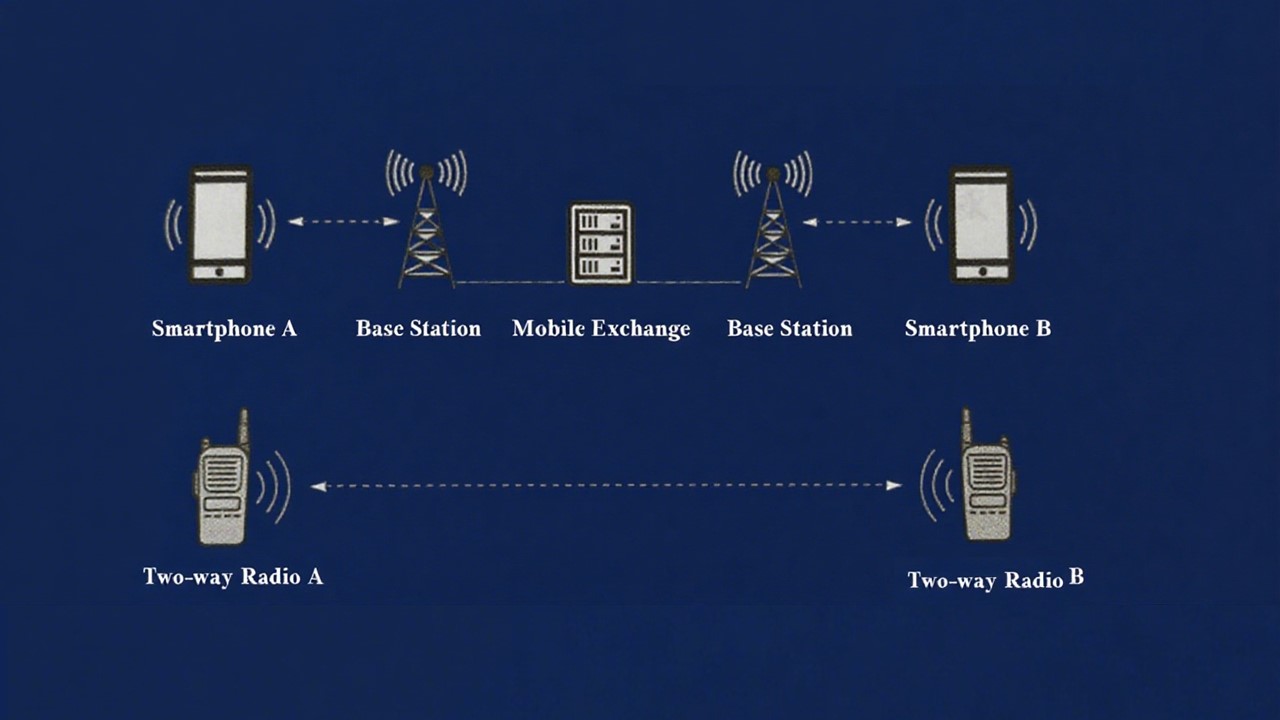

A radio is only useful when it is easy to grab, simple to operate, and still has enough battery when plans go sideways. The wrong model can be bulky on a belt, confusing to set up, or poorly suited to rain and dust. The Best two way radios make those trade-offs clear instead of hiding them behind impressive range claims.
We compared compact family sets, rugged jobsite radios, larger multi-radio bundles, and one cellular model that works very differently from standard FRS radios. Our top pick is the Midland GXT1050VP4, with the Retevis RB48 FRS, Motorola T605 H2O, and DEWALT DXFRS800 covering more specialized needs.
Comparison table
| # | Product | Award | Channels | Battery or protection | Best for |
|---|---|---|---|---|---|
| 1 | Midland GXT1050VP4 | Best overall | 50 GMRS channels | Rechargeable or alkaline, JIS4 splash resistance | Hunting, camping, and general outdoor use |
| 2 | Retevis RB48 FRS | Best rugged compact radio | FRS | 2, 000mAh, IP67, MIL-STD-810H | Harsh work and outdoor conditions |
| 3 | Motorola T605 H2O | Best emergency-ready pair | 22 channels, 121 privacy codes | Rechargeable or dual power, IP67 | Water activities and emergency kits |
| 4 | pxton 4-Pack | Best complete bundle | 16 channels, 165 privacy codes | 1, 500mAh batteries, rainproof shell | Groups needing accessories |
| 5 | Retevis RT22 4-Pack | Best compact family set | FRS | USB-C, about 10 hours | Pocket carry and family outings |
| 6 | DEWALT DXFRS800 | Best jobsite radio | 22 channels, 121 privacy codes | 2W, IP67, up to 18 hours | Construction and large worksites |
| 7 | Rapid Radios G1 | Best nationwide coverage | Cellular push-to-talk | USB-C, stated 5-day battery | Communication across long distances |
| 8 | Retevis RT22 6-Pack | Best multi-radio kit | 16 channels | 1, 000mAh, about 10 hours | Events, teams, and facilities |
| 9 | Retevis RB48 Rugged | Best long-term-duty option | FRS | 2, 000mAh, rugged construction | Repeated professional use |
1. Midland GXT1050VP4: Best Overall

Pros
- 50 GMRS channels offer flexible setup
- NOAA weather scanning and alerts
- Rechargeable and alkaline power options
- Includes headsets and chargers
- EVOX hands-free operation
Cons
- Splash-resistant rather than fully waterproof
- Larger feature set takes time to learn
- GMRS operation may require attention to licensing rules
Best for: families, hunters, and campers who want a feature-rich pair with flexible power options.
The Midland GXT1050VP4 feels like the radio to keep in a camping bin and reach for when the group is heading in different directions. It has the controls and features of a serious outdoor radio without becoming a specialist device. The included rechargeable batteries, chargers, and headsets make the two-radio set ready for coordinated use, while the ability to switch to standard alkaline batteries is useful when you are away from an outlet for longer than planned.
Its 50 GMRS channels give it more room for setup than the simpler FRS models here. Midland also lists 142 privacy codes and 3, 000 channel options, created by combining channels and codes. Those codes do not make a conversation private, but they can reduce the interruptions you hear from other users. The channel scan helps locate an active channel, and nine EVOX sensitivity levels make hands-free use more adjustable than a basic voice-activated radio.
The weather tools are a real reason to choose this model. It can scan 10 NOAA weather band channels and lock onto the strongest one for alerts, which is more useful at a campsite or hunting property than a long range claim that assumes open, unobstructed ground. The radio also includes vibrate mode and five animal call alerts. Those are niche features, but they suit the Mossy Oak outdoor design and make this a more focused hunting radio than the Retevis RT22 4-Pack.
The main limitation is protection. JIS4 splash resistance is suitable for light exposure, but it is not the same as the IP67 protection on the Retevis RB48 FRS, Motorola T605 H2O, or DEWALT DXFRS800. The GXT1050VP4 is also more involved to configure than a small push-to-talk set. Anyone who wants a radio that can be dropped in wet mud or handed to children without much explanation should look elsewhere.
For general outdoor communication, though, the Midland has the broadest feature mix in this group. Readers weighing a family set against more specialized options may also want to see how different radio features help family groups stay coordinated. Choose the GXT1050VP4 if weather alerts, flexible power, scanning, and hands-free operation matter as much as basic voice communication.
2. Retevis RB48 FRS: Best Rugged Compact Radio

Pros
- IP67 water and dust protection
- Tested to MIL-STD-810H
- 2, 000mAh battery with stated 20-hour life
- USB-C charging and charge station
- Large, high-visibility design
Cons
- Substantial body for pocket carry
- Range depends heavily on buildings and terrain
- Less feature-rich than the Midland
Best for: outdoor workers and recreation users who need a tough, visible radio more than a long list of controls.
The Retevis RB48 FRS is built around durability rather than novelty. Its bright yellow shell is easy to spot on a workbench, trail, or vehicle floor, and the silicone button covers make the controls better suited to wet conditions. This is the kind of radio that makes sense when it may be exposed to dust, rain, vibration, or the occasional hard landing.
Retevis lists IP67 water and dust protection, a two-meter drop rating, and testing for up to 1, 000 drops from two meters. It also identifies the radio as tested to MIL-STD-810H, with resistance testing for conditions including heat, cold, vibration, and dust. Those claims do not make the RB48 indestructible, but they place it in a different class from the compact indoor-oriented sets such as the Retevis RT22.
The 2, 000mAh battery is rated for up to 20 hours, and charging happens through USB-C or the included charge station. That combination is convenient for a mixed work setup, since USB-C is easy to find in vehicles and field kits while a dedicated station gives a pair of radios a regular home. Retevis describes coverage up to 300, 000 square feet or 25 floors under suitable conditions. Treat that as an environment-dependent guideline, not a promise through dense walls.
The RB48 FRS gives up some portability for its toughness. Its listed dimensions are 7.1 by 2.4 by 1.3 inches, and the listed weight is about 1.61 pounds. That is a noticeable step up from the RT22 models. The Midland GXT1050VP4 offers more outdoor-specific features, including NOAA scanning and animal call alerts, while the RB48 is the better fit when water and impact resistance come first.
The radio is a sensible pick for a maintenance crew, campground, warehouse, or outdoor event staff. Skip it if the radios need to disappear into small pockets, or if the main goal is the simplest possible family communication. For harsh handling and clear visibility, it is one of the most convincing conventional FRS options in this group.
3. Motorola T605 H2O: Best Emergency-Ready Pair

Pros
- IP67 waterproof construction
- Floats face up for easier retrieval
- Water-activated flashlight
- Dual-power design and USB-C charging
- 22 channels with 121 privacy codes
Cons
- Larger body than compact FRS radios
- Does not offer the Midland's channel count
- Range varies with obstructions
Best for: boaters, hikers, and households building a practical emergency communication kit.
The Motorola T605 H2O is designed around the moment a radio gets dropped into a creek, lake, or puddle. Its IP67 rating is the headline feature, but the details make it more useful in real emergencies: the radio floats face up, and its flashlight activates when it touches water. The orange and black finish should also be easier to find than a dark radio in poor light.
Motorola gives this pair 22 channels and 121 privacy codes, for 2, 662 channel and code combinations. That is enough flexibility for family groups, outdoor parties, and emergency planning without the more involved setup of the Midland GXT1050VP4. The backlit display and easy pairing help when users have to get the radios working quickly rather than study a manual.
Power is handled through USB-C charging and a dual-power design. The product data confirms those features but does not specify a battery runtime, so we would not use the T605 H2O as the choice for a multi-day trip without a separate charging plan. The Midland is more reassuring for off-grid flexibility because it explicitly supports standard alkaline batteries and includes NOAA weather scanning.
The T605 H2O makes more sense than the DEWALT DXFRS800 for a boat or emergency kit because its float-up design and water-activated light address retrieval and visibility. The DEWALT is the stronger worksite alternative, with stated 2W output, support for accessories, and up to 18 hours of battery life. Neither model eliminates the effect of terrain, buildings, or foliage on communication range.
This Motorola is not the smallest radio here, and it is not the most configurable. That is part of its appeal. It gives casual users a recognizable, straightforward interface and adds protection that matters near water. Choose it for boating, hiking, storm preparation, or any situation where finding the radio after a drop is as important as transmitting.
4. pxton 4-Pack: Best Complete Bundle

Pros
- Four radios for group communication
- Earpiece included for each radio
- 16 channels and 165 privacy codes
- Flashlights and VOX operation
- Charging stations and belt clips included
Cons
- Rainproof shell is not an IP-rated waterproof design
- Runtime depends on use and is not a fixed figure
- Less rugged than the RB48 and DEWALT
Best for: groups that need several radios, charging gear, and private earpieces in one kit.
The pxton 4-Pack is aimed at the practical group problem: several people need radios, and nobody wants to assemble a separate pile of chargers, clips, and earpieces. The set includes four handheld units, four 1, 500mAh lithium batteries, four charging stations, four belt clips, four earpieces, four hand straps, and two user manuals. That makes it easy to divide among staff, family members, or a small event team.
The radios have 16 preset channels and 165 privacy codes. A knob selects channels, which is faster for casual users than navigating a deep display menu. VOX voice control supports hands-free use, while scanning, a low-battery alarm, and a night flashlight cover the basic features people tend to want once the radios leave the house.
Battery performance is described as eight to 12 hours of continuous use, with three to four hours required to fully recharge an empty battery. The same product information gives a much wider eight to 96 hour range under normal circumstances, so usage pattern matters. Occasional transmissions and long standby periods will be easier on the batteries than constant conversation. The included individual charging stations make it simple to keep all four topped up.
The shell is described as hard, durable, drop-proof, and rainproof, but there is no IP rating in the supplied information. That makes the pxton less suitable for heavy rain or immersion than the Motorola T605 H2O and Retevis RB48. It is also not as compact as the Retevis RT22 4-Pack, although its included earpieces are a better fit for teams that need quiet communication.
For shoppers comparing the communication needs of a larger family group, the pxton's bundle is its strongest argument. It is a useful choice for hotels, kitchens, warehouses, schools, church groups, and outings where four people need to stay in touch. Skip it for severe weather or wet worksites, where an IP-rated housing matters more than the number of included accessories.
5. Retevis RT22 4-Pack: Best Compact Family Set

Pros
- Compact and light enough for pockets
- Thumb-length, blunted antenna
- USB-C charging
- Separate belt clip design
- 300mW speaker and squelch function
Cons
- About 10 hours of stated battery life
- No IP water-resistance rating supplied
- Fewer advanced features than the Midland
Best for: families and casual groups that want small radios that are easy to carry.
The Retevis RT22 4-Pack gets the everyday details right. Its short, blunted antenna is less awkward around children and in crowded spaces than a long pointed antenna, while the compact body can slip into a pocket or clip onto a belt. This is a radio for keeping track of a group at a campground, theme park, neighborhood event, or large house, not for pretending a small FRS unit can defeat a mountain.
Retevis lists a USB-C charging port and about 10 hours of battery life. That is a useful day of intermittent communication, although a long weekend away from power calls for a charging plan. The separate clip design is a nice usability touch: the clip can stay on a belt while the radio comes free for a conversation, so users do not have to remove the clip each time.
Audio comes from a built-in 300mW speaker, with a squelch function intended to improve clarity and reduce unwanted background noise. There is no complicated screen to manage. That simplicity makes the RT22 easier to hand to a child or a first-time user than the Midland GXT1050VP4, but it also means fewer controls for weather monitoring, scanning, and specialized outdoor work.
The RT22 is not presented as waterproof, and the supplied information does not provide an IP rating. It should not be the first pick for wet construction sites or boating. The pxton 4-Pack includes more accessories and earpieces, while the RT22 wins when small size and a straightforward carry setup matter more than hands-free extras.
This four-pack is a good middle ground for household and recreational use. It is also a strong option for readers who want to understand how compact radios compare with longer-range handheld designs before choosing. Pick it when the radios will spend most of their time clipped to clothing, carried in pockets, or used for short conversations around a defined area.
6. DEWALT DXFRS800: Best Jobsite Radio

Pros
- 2W output for large worksites
- IP67 water and dust protection
- Rated for drops up to two meters
- Up to 18 hours of battery life
- VOX, vibration alert, and roger beep
Cons
- Bulky compared with the RT22
- Earpieces and gang chargers are separate
- Designed more for crews than casual family use
Best for: construction crews and outdoor teams that need rugged housing and hands-free work features.
The DEWALT DXFRS800 is the radio here that most clearly understands a worksite. Its anti-slip housing, large dimensions, and two-meter drop protection are more appropriate for a tool belt or truck than a child's pocket. The design is not subtle, but it should be easy to grip when gloves, dust, or wet hands make smaller controls frustrating.
The headline specification is 2W output, with a stated range of up to 300, 000 square feet or 25 floors under optimal conditions. That is useful context for a spread-out crew, but the radio cannot change the basic limits of FRS communication. Concrete, steel, hills, and dense buildings will reduce coverage. The Retevis RB48 models quote a similar area and floor count, so the choice between them comes down more to the job-focused features and included setup than to a simple range number.
There are 22 channels and 121 privacy codes, plus auto-squelch, VOX, vibration alert, and a roger beep. The vibration alert can be more useful than a loud speaker in a noisy work area, and VOX can help when the user's hands are occupied. Battery life is stated at up to 18 hours per charge. The box includes two lithium-polymer batteries, holsters, a dual-port Micro-USB charger with dock adapters, an AC adapter, and a user guide.
The compromise is portability. At 7.27 by 2.58 by 2.17 inches and a listed 1.83 pounds, it is substantially more imposing than the RT22. It also supports earpieces, headsets, and gang chargers, but those accessories are sold separately. The Motorola T605 H2O is the better choice near water when its float-up design matters, while the Midland is more versatile for recreational users.
Choose the DXFRS800 when radios are part of a crew's equipment rather than an occasional family accessory. It has the protection, battery endurance, and control options to make sense on construction sites, grounds crews, event setup teams, and large properties. Casual users should not carry this much radio for a job that a smaller RT22 can handle.
7. Rapid Radios G1: Best Nationwide Coverage

Pros
- Nationwide cellular communication in the US
- Group talks for up to 200 people
- Stated five-day battery life
- 256-bit AES encryption
- Noise-cancellation technology
Cons
- Requires cellular service
- Includes one year of service per radio
- Not a conventional license-free FRS radio
Best for: users who need communication across cities, states, or widely separated worksites.
The Rapid Radios G1 is the outlier in this roundup. It is not competing with the Midland or Retevis radios on the same local radio spectrum. It uses LTE cellular connectivity for push-to-talk communication, so its stated nationwide coverage is aimed at users who need to reach someone far beyond the practical range of a conventional FRS handheld.
The feature list is built for organized communication. The G1 supports one-to-one or group conversations with up to 200 people per talk group, and noise-cancellation technology is intended to keep voices clear in busy environments. The radios include one year of service per unit, and additional years can be added later. That service requirement is the key distinction to understand before buying.
Rapid Radios states a five-day battery life, with USB-C charging, and says the radio must use the supplied charger. It also lists 256-bit AES encryption. Those features make the G1 more suitable for coordinated teams, event organizers, logistics, and traveling groups than for a family that simply wants two radios around a campsite. The listed body is 7 by 2 by 2 inches and about 0.36 pounds, though the practical carry experience will still depend on the cellular hardware and battery.
The weakness is dependence on a cellular network and an ongoing service arrangement. A standard FRS radio can be useful in a remote area without cellular coverage, while the G1's nationwide claim cannot overcome a local network outage or dead zone. It also does not provide the same simple, license-free local-radio experience as the Motorola T605 H2O or Retevis RT22.
The G1 earns this place because it solves a different communication problem. If everyone is in the same campground, neighborhood, or property, a conventional radio is simpler. If the group is spread across states or needs large talk groups and encrypted communications, the Rapid Radios G1 is the product to consider.
8. Retevis RT22 6-Pack: Best Multi-Radio Kit

Pros
- Six compact radios in one set
- Six-way multi-gang charger
- 16 channels
- About 10 hours of stated battery life
- Key lock prevents accidental changes
Cons
- No water-resistance rating supplied
- 1, 000mAh batteries are smaller than the RB48's
- Basic feature set
Best for: facilities, event teams, and groups that need several identical radios with a shared charger.
The Retevis RT22 6-Pack is essentially the team-oriented version of the compact RT22 concept. Six matching radios are easier to distribute and manage than a collection of mixed models, and the six-way charger gives the kit a clear home between shifts or events. The radios are small enough to fit in a palm, and the listed dimensions are 3.78 by 2.17 by 0.87 inches.
Each unit has 16 channels and is described as license-free FRS. A key lock helps prevent accidental changes when the radios are clipped to a belt or carried through a busy facility. That is a small feature, but it matters when a team needs every radio to remain on the same channel without someone pressing a button while moving equipment.
Battery life is listed at about 10 hours, based on a usage pattern of 5 percent reception, 5 percent transmission, and 90 percent standby. The 1, 000mAh battery is smaller than the 2, 000mAh battery in the RB48, so this set is better suited to a shift, event, or day trip than extended remote work. USB charging is available, and the multi-gang charger includes overcharge, over-voltage, and short-circuit protections.
The RT22 6-Pack shares the smaller model's lack of a supplied IP water rating. That makes it a poor fit for exposed construction work or persistent rain, where the DEWALT DXFRS800 and Retevis RB48 Rugged have more appropriate protection. It also has fewer advanced controls than the Midland GXT1050VP4. Its advantage is operational simplicity at a larger scale.
This is the set to choose for a hotel, school, venue, warehouse, volunteer team, or event crew that needs six people connected inside a defined area. The smaller radio body reduces belt and pocket clutter, and the shared charging arrangement is much more practical than six separate chargers.
9. Retevis RB48 Rugged: Best Long-Term-Duty Option

Pros
- MIL-STD-810H testing
- Tested across 19 harsh-condition tests
- 2, 000mAh battery with stated 20-hour use
- Large front push-to-talk button
- NOAA weather alerts and vibration alerts
Cons
- Heavy and tall for casual carry
- No included pack size stated in the product information
- Less pocket-friendly than the RT22
Best for: professional users who want a rugged radio with a long warranty and prominent controls.
The Retevis RB48 Rugged shares the RB48 name and physical design with the FRS version above, but this listing puts more emphasis on long-term durability and support. It is a tall, substantial handheld with a large front push-to-talk button, making it easier to operate with gloves or when attention is divided. The yellow housing also improves visibility in a busy work area.
Retevis says this version passed 19 tests covering temperature shock, rain, salt fog, humidity, sand and dust, vibration, shock, and immersion. It also describes MIL-STD-810H testing and reinforced internal construction. Those details matter more for a radio that will live in a service vehicle or outdoor facility than for one used occasionally on a family walk.
The 2, 000mAh battery is rated for up to 20 hours of use. NOAA weather alerts add a useful layer for outdoor teams, while vibration alerts help users notice incoming communication when a loud work environment makes speaker audio easy to miss. Retevis gives the radio a stated communication area of up to 300, 000 square feet or 25 floors under suitable conditions, with the usual caveat that buildings and terrain can change results substantially.
This RB48 is not a compact alternative to the RT22. The listed dimensions are 7.1 by 2.4 by 1.3 inches, and the listed weight is about 1.61 pounds. The DEWALT DXFRS800 is a better match if a crew specifically wants 2W output and jobsite-focused accessory support, while the RB48 Rugged is more compelling for users who value the durability testing, NOAA alerts, and stated five-year warranty.
The radio is overbuilt for a casual backyard conversation, and its size will bother anyone who wants a pocket-friendly unit. For repeated professional use, though, that extra structure is the point. Choose it for facilities, outdoor operations, maintenance teams, and other users who would rather carry a larger radio than replace a lightly built one.

How to choose best two way radios
The right radio depends less on the largest number in a product title and more on how far apart users will be, how wet the environment is, and how much equipment the group must manage.
FRS and GMRS channels
FRS radios are designed for license-free personal communication in the United States, and several models here use that format. GMRS radios such as the Midland GXT1050VP4 offer a different operating framework and may require attention to licensing rules. Channel counts and privacy codes help users find a quieter setup, but privacy codes do not encrypt conversations or prevent another person from listening.
Range and obstructions
Range claims are made under favorable conditions. Open fields, clear sightlines, and elevated positions help, while concrete, steel, hills, trees, and dense neighborhoods reduce communication distance. A radio that reaches across a building or campground may not reach the advertised distance in a city. For a deeper look at the trade-offs, consider how terrain changes practical handheld radio range.
A higher range number cannot compensate for a wall, a hill, or a missing cellular signal.
Water and impact protection
IP67 protection is a meaningful advantage for boating, wet trails, and demanding worksites. The Motorola T605 H2O adds a float-up design and water-activated flashlight, while the Retevis RB48 and DEWALT DXFRS800 are built for dust, drops, and rough handling. A radio described only as rainproof or splash-resistant should not be treated as suitable for immersion.
Battery and charging
Battery claims depend on how much time the radio spends transmitting, receiving, and waiting in standby. Look for the capacity, stated runtime, charging connection, and whether the set includes a shared charging station. The RB48 models use 2, 000mAh batteries, the RT22 6-Pack uses 1, 000mAh batteries, and the pxton set uses 1, 500mAh batteries. The Midland's alkaline backup option is useful when recharging is difficult.
Size, controls, and accessories
A compact radio is easier to carry, but a larger model can offer a bigger push-to-talk button, louder audio, and more visible controls. Earpieces are useful when a group needs quiet communication, while VOX helps when hands are occupied. Multi-gang chargers simplify the routine for teams, and key locks prevent users from changing settings by accident.
Cellular coverage
The Rapid Radios G1 is not a conventional local FRS radio. Its LTE connection is intended to provide communication across much larger distances, but it depends on cellular coverage and an included service period. Choose it for dispersed teams and large talk groups, not as a replacement for a simple radio used in a remote place without network access.
Frequently asked questions
Do two way radios work through walls?
They can work through some walls, but thick concrete, steel structures, and large buildings can reduce range considerably. The number printed in a product title usually reflects favorable outdoor conditions rather than a guaranteed indoor distance. Test the radios in the actual building if reliable room-to-room communication matters.
Are FRS radios license free?
The FRS models in this roundup are described as license-free for their intended operation in the United States. GMRS radios follow different rules, so users should check current FCC requirements before operating a GMRS model such as the Midland GXT1050VP4.
Are privacy codes private?
No. Privacy codes filter which transmissions your radio plays through the speaker, but they do not encrypt the conversation. Another radio configured to monitor the same channel can still hear the transmission.
Which radio is best for rain and water?
The Motorola T605 H2O is especially suited to water because it has IP67 protection, floats face up, and includes a water-activated flashlight. The Retevis RB48 and DEWALT DXFRS800 also have IP67 protection. A splash-resistant or rainproof description is not equivalent to an IP67 rating.
How long do two way radio batteries last?
Runtime depends on how often the radio transmits and receives. The Retevis RB48 models state up to 20 hours, the DEWALT states up to 18 hours, and both RT22 models state about 10 hours under their listed usage conditions. The pxton set describes eight to 12 hours of continuous use.
Can these radios communicate with different brands?
FRS radios can often communicate when they share the same channel and compatible privacy-code settings. Different brands may label channels or controls differently, so setup can take a little trial and error. GMRS and cellular models require closer attention to their operating system and compatibility.
Is the Rapid Radios G1 the same as a regular walkie talkie?
No. The G1 uses LTE cellular push-to-talk rather than relying only on local radio communication. It can cover much larger distances where cellular service is available, but it depends on a network and service arrangement.
The bottom line
The Best two way radios choice for most outdoor users is the Midland GXT1050VP4. Its 50 GMRS channels, NOAA weather scanning, flexible battery options, headsets, and hands-free controls give it the broadest set of useful capabilities. The Retevis RB48 FRS is the better alternative when IP67 protection, drop resistance, USB-C charging, and a high-visibility body matter more than advanced outdoor features.
For water and emergency readiness, choose the Motorola T605 H2O. For a demanding jobsite, the DEWALT DXFRS800 is better equipped, while the Retevis RT22 4-Pack is easier to carry for everyday family use. The Rapid Radios G1 belongs on a different shortlist entirely because nationwide cellular coverage solves a different problem.
If you are undecided, choose the Midland for general outdoor use, the Motorola for water, or the Retevis RB48 for rough handling.
As an Amazon Associate we earn from qualifying purchases.