

A loose earbud can ruin a competitive match before the first round starts. Sound cues become vague, the cable catches on an armrest, and a microphone that works for music calls may be useless when teammates need a quick callout. The Best wired earbuds for gaming should stay put, separate footsteps from background noise, and connect directly without pairing delays.
This group covers serious hybrid in-ear monitors, lightweight dynamic-driver models, and familiar everyday earbuds with microphones. The KZ ZS10 Pro without a microphone is our top pick for positional detail, while the rest make different compromises around chat, bass, fit, and simplicity. Linsoul KZ ZS10 Pro Without Mic is the strongest all-around choice, with options ranging from six-driver detail to straightforward plug-and-play earbuds.
Comparison table
| # | Product | Award | Drivers | Connection | Microphone | Best for |
|---|---|---|---|---|---|---|
| 1 | Linsoul KZ ZS10 Pro Without Mic | Best overall | 4BA + 1DD | Detachable cable | No | Competitive game audio |
| 2 | Linsoul KZ ZS10 Pro With Mic | Best with detachable mic cable | 4BA + 1DD | Detachable cable | Yes | Gaming and calls |
| 3 | Yeabomy AK3FILE | Best secure fit | 1DD, 10mm | Fixed cable | Not stated | Active players |
| 4 | Sony MDR-EX15AP | Best lightweight option | 9mm dome driver | Fixed Y-cord | Yes | Casual gaming |
| 5 | Skullcandy Jib Black | Best simple headset controls | Not stated | 3.5mm AUX | Yes | Console and mobile use |
| 6 | KZ ZS12 Pro 2 | Best maximum detail | 5BA + 1DD | Wired, over-ear | Yes | FPS enthusiasts |
| 7 | Skullcandy Jib White | Best white finish | Not stated | 3.5mm AUX | Yes | Simple everyday gaming |
1. Linsoul KZ ZS10 Pro Without Mic: Best Overall

Pros
- Five-driver hybrid design
- Bright, detailed presentation for game cues
- Detachable gold-plated cable
- Ergonomic shell with claimed 26dB noise isolation
Cons
- No microphone included
- Bright treble can be demanding
- Cable versions may vary in appearance
Best for: players who care more about positional detail than built-in voice chat.
The Linsoul KZ ZS10 Pro Without Mic is the pair we would choose when the main job is hearing what is happening around the map. Its 4BA+1DD arrangement gives it a more ambitious sound than a basic single-driver earbud. The two 30095 balanced armatures handle high frequencies, two 50060 units cover the mids, and a second-generation Tesla double magnetic dynamic unit supplies the low end. That division gives voices, reloads, and directional effects room to stay distinct instead of collapsing into one thick mass.
The sound is described as dynamic and bright, and that matters for games where small high-frequency details carry useful information. The claimed extension beyond 40kHz is not something most listeners will directly hear, but the broader design goal is clear: treble resolution and transient response take priority. The PCB dividing board is intended to let the drivers work in their assigned ranges, while the dynamic driver keeps explosions and music from sounding hollow.
Fit is another reason this model leads the list. The resin cavity and 304 stainless steel faceplate form a shaped in-ear design that is meant to sit securely during movement. The feature set claims up to 26dB of noise isolation, which can help keep keyboard noise and room distractions at a distance when the ear tips seal properly. The detachable gold-plated ODC cable is useful over time because a damaged cable does not automatically make the earphones unusable.
The limitation is obvious: this version has no microphone. You will need a separate mic for team chat, and the bright tuning may sound sharp to players who prefer a warm, relaxed presentation. The Linsoul KZ ZS10 Pro With Mic is the more convenient alternative, while the KZ ZS12 Pro 2 offers a six-driver layout for listeners who want to push detail even further. The ZS10 Pro remains easier to recommend because its balance of fit, isolation, upgradeability, and game-ready clarity is more coherent.
Choose it for competitive play, single-player games with a strong soundscape, or music between matches. Skip it if an all-in-one chat solution matters more than a detachable cable and detailed treble.
2. Linsoul KZ ZS10 Pro With Mic: Best With Detachable Mic Cable

Pros
- Same 4BA+1DD hybrid layout as the mic-free version
- Includes an in-line microphone
- Detachable cable design
- Secure over-ear-style in-ear fit
Cons
- Microphone performance is not described in detail
- Bright tuning may not suit every listener
- Cable appearance can vary
Best for: gamers who want the ZS10 Pro sound with built-in voice chat.
The Linsoul KZ ZS10 Pro With Mic is effectively the practical version of our top pick. It retains the 4BA+1DD hybrid configuration, the stainless steel faceplate, the resin cavity, and the detachable cable, but adds the microphone that the first model leaves out. That single difference changes who should buy it. A player using a separate desk microphone may prefer the cleaner mic-free version, but anyone gaming from a console, laptop, or phone gets a simpler setup here.
Its driver arrangement is unusually elaborate for an earbud intended for gaming. Two 30095 balanced armatures target the highs, two 50060 drivers handle the mids, and the dynamic unit is responsible for the lows. The product information describes the result as bright, transient, and detailed, with dynamic bass and clear resolution. In a game, that should give dialogue and environmental cues a stronger chance of remaining intelligible when the soundtrack gets busy.
The molded cavity is designed around ear shape data and is intended to hold securely during movement. The claimed 26dB of noise isolation depends on getting a good seal, but the in-ear shape gives it a better chance than loose earbuds have. The detachable ODC cable also adds flexibility. If you later want to replace the cable, the earphones are not locked to the original one, and the connector protection is designed to reduce stress at the socket.
Compared with the Yeabomy AK3FILE, this model offers a more complex driver system and a replaceable cable, while Yeabomy answers with a memory ear hook and three pairs of ear tips. Compared with the Linsoul KZ ZS10 Pro Without Mic, this is the obvious choice for users who do not already own a microphone. Its weakness is that the listing gives little specific information about the microphone itself, so voice quality is less certain than the convenience suggests.
It suits players who alternate between gaming, music, and calls. Avoid it if you dislike a bright sound or already have a microphone that is better positioned and clearer than an in-line unit.
3. Yeabomy AK3FILE: Best Secure Fit

Pros
- 10mm dynamic driver
- PU memory ear hook helps hold the cable in place
- Three pairs of ear tips
- Lightweight cavity and claimed ambient-noise reduction
Cons
- Fixed cable cannot be replaced
- No microphone detail is provided
- Single-driver design has less separation than the KZ models
Best for: players who need a stable fit for movement and long sessions.
The Yeabomy AK3FILE takes a simpler route than both KZ models. Instead of stacking balanced armatures, it uses one 10mm dynamic driver in each ear. The more important ownership detail is the fit: a PU memory ear hook helps keep the cable routed around the ear, and the lightweight cavity is designed to sit comfortably against it. That makes this a sensible pick for handheld gaming, exercise, or anyone who regularly knocks ordinary earbuds loose.
The single-driver design is tuned for energetic bass, mids, and treble. The listing describes each channel as independent and aims for a rich, vigorous presentation across the range. A 10mm dynamic driver can give effects and music a satisfying sense of body, though it will not separate busy layers in the same way as the five-driver ZS10 Pro or six-driver ZS12 Pro 2. For story games and general listening, that trade-off may be perfectly acceptable.
Yeabomy claims that the fit can block around 90 percent of ambient noise when worn tightly. That should be treated as a seal-dependent claim rather than a guarantee, since the ear tips determine how much sound is actually kept out. Three pairs of tips are included, which gives the buyer some room to adjust the fit. The cable is not detachable, though, so cable damage is a more serious long-term concern than it is with the Linsoul models.
There is also no clear microphone specification in the product information. The earbuds are described for video calling and gaming, but the listing does not give the same explicit microphone control details found on the Skullcandy Jib models. The Sony MDR-EX15AP is a safer choice for straightforward call use, while the Yeabomy is more secure around the ear.
Pick it when stability matters more than the widest soundstage or replaceable hardware. If your priority is hearing subtle directional effects in crowded FPS audio, the KZ ZS10 Pro is the stronger fit for the job.
4. Sony MDR-EX15AP: Best Lightweight Option

Pros
- 9mm dome-type driver
- Three ear-tip sizes
- In-line microphone
- Cord slider helps reduce tangles
Cons
- Fixed cable
- Less driver separation than the hybrid IEMs
- Fit must be tuned carefully for proper sound
Best for: casual players who want a familiar, lightweight earbud with a mic.
The Sony MDR-EX15AP is the uncomplicated option in this lineup. It looks and behaves like a conventional in-ear earbud rather than a large monitor-style IEM. The light construction makes it easy to wear for ordinary gaming, and the included small, medium, and large silicone tips give it a better chance of fitting different ear canals.
Its 9mm dome-type driver uses high-energy neodymium magnets and is intended to produce strong bass with clear treble and midrange. That profile is more suited to general entertainment than strict competitive analysis. Explosions and music should have some weight, while dialogue remains present, but the model does not offer the multi-driver separation of the Linsoul KZ ZS10 Pro Without Mic.
The Y-type cord includes a slider to help manage tangles, a small feature that is useful when the earbuds move between a controller, laptop, and phone. The in-line microphone adds the basic convenience the top-ranked Linsoul without-mic model lacks. Sony also warns that tip size and insertion affect both sound and call performance, which is worth taking seriously. A poor seal can reduce bass and make outside noise more intrusive.
The fixed cable is the main drawback, and the simple shell does not provide the same over-ear stability as the Yeabomy AK3FILE. It is also not the right tool for someone who wants to analyze every positional cue in a competitive shooter. If you need a light pair for occasional sessions, however, it avoids the bulk and complexity of the larger IEMs.
Choose it for casual console or laptop play, voice calls, and music. For tournament-style FPS gaming, move up to one of the KZ models.
5. Skullcandy Jib Black: Best Simple Headset Controls

Pros
- Direct 3.5mm AUX connection
- In-line microphone
- Call and track controls
- Two ear-gel sizes
- One-year USA limited warranty
Cons
- Driver details are not provided
- Fixed cable
- Less information about positional audio
Best for: players who want basic controls and broad device compatibility.
The Skullcandy Jib Black is built around convenience. Its 3.5mm AUX plug connects directly to compatible devices, avoiding Bluetooth pairing and battery management. The in-line microphone and call controls make it useful beyond gaming, particularly for players who switch between a controller, phone, and other everyday devices.
The Jib comes with two different-sized ear gels to help create a noise-isolating fit. That is a narrower range of adjustment than the three tip sizes supplied with the Sony MDR-EX15AP, but it keeps the setup simple. A good seal should help bass feel fuller and reduce distractions, although the product information does not specify a driver size or describe a particular imaging system.
For game audio, the Jib is best understood as a straightforward stereo earbud. It should handle dialogue, music, and general effects without requiring configuration. It is not the model to choose for the layered separation promised by the KZ ZS12 Pro 2, and the fixed cable offers no replacement path if it fails. The direct connection is still useful on hardware where wireless audio is inconvenient or unavailable.
The microphone and track controls are its strongest practical features. The listing says the controls can play, pause, or skip tracks and switch between audio and calls. A one-year USA limited warranty is also included. Those details make the Jib easier to live with than a mic-free IEM, even if the audio design is less ambitious.
Buy it for uncomplicated gaming, calls, and travel. Skip it if positional accuracy, cable replacement, or a detailed driver specification is central to your decision.
6. KZ ZS12 Pro 2: Best Maximum Detail

Pros
- 5BA+1DD hybrid driver layout
- Electronic crossover board
- 10mm dynamic driver for bass
- Over-ear ergonomic cable design
- Microphone included according to the listing
Cons
- More complex tuning may not suit everyone
- No detachable cable detail is provided
- Large feature set may be unnecessary for casual play
Best for: FPS players who want the most elaborate sound design here.
The KZ ZS12 Pro 2 is the most technically ambitious earphone in the group. Each side combines five balanced armatures with one 10mm dynamic driver. Four 31736 armatures target ultra-high frequencies, a 30019 unit handles mid-to-high information, and the dynamic driver is tuned for low frequencies. That gives this model the hardware to present fine treble detail, vocal texture, and substantial bass without asking one driver to do everything.
The electronic crossover board is important because driver count alone does not guarantee a coherent sound. Here it is intended to divide frequencies precisely between the dynamic and balanced-armature drivers and reduce interference. The product description emphasizes clear highs, natural voices, deep bass, and a balanced three-frequency presentation. In an FPS, the appeal is the potential for quick transients and clearer imaging. In music and cinematic games, the additional layers can make complex arrangements feel more separated.
Its shell uses a lightweight metal faceplate and resin body, with an ergonomic over-ear design for stability. The listing says the shape follows KZ ear-data modeling and is intended for long sessions. It also describes compatibility with game consoles, music players, and laptops, plus an omnidirectional HD microphone for calls and team communication. The microphone is a meaningful advantage over the mic-free Linsoul ZS10 Pro.
The Linsoul KZ ZS10 Pro With Mic is the easier recommendation for many players because its five-driver arrangement is less elaborate and its identity is clearer. The ZS12 Pro 2 is for listeners who specifically want its extra balanced armature and crossover architecture. The weakness is that the listing does not provide the same clear detachable-cable information as the ZS10 Pro, so upgradeability is less certain. Its ambitious treble presentation may also expose poor recordings or sound too forward for listeners who prefer warmth.
Choose this model when audio detail is the main reason you are buying wired earbuds. Casual players should not feel obliged to use all six drivers, but competitive FPS players and music-focused listeners may appreciate what the extra hardware is trying to achieve.
7. Skullcandy Jib White: Best White Finish

Pros
- 3.5mm AUX connection
- In-line microphone
- Call and track controls
- Two ear-gel sizes
- One-year USA limited warranty
Cons
- Driver specifications are not listed
- Fixed cable
- White finish may show dirt more readily
Best for: users who want the Jib feature set in a white finish.
The Skullcandy Jib White has the same basic design and feature set as the black version, so the meaningful distinction is its finish. It uses a direct 3.5mm AUX connection, includes an in-line microphone, and provides call and track controls. For a controller or laptop with a compatible headphone jack, that is a simple way to get game audio and voice chat without wireless setup.
Two ear gels are supplied for fit adjustment. The right seal can reduce outside distractions and give the sound more body, although the product information does not state the driver type or size. That omission makes it difficult to judge the Jib against the Sony MDR-EX15AP on technical audio grounds. The Sony gives us a 9mm driver specification and three tip sizes, while the Jib focuses more clearly on controls and everyday use.
The microphone is useful for calls and basic team chat, and the controls can play, pause, or skip tracks. The included one-year USA limited warranty adds some reassurance for an earbud with a fixed cable. Still, the cable cannot be replaced, and the white finish will need more care than the black version if it is regularly carried in a bag.
Sound-wise, this is a general-purpose stereo earbud rather than a specialist positional monitor. It is not a match for the Linsoul KZ ZS10 Pro Without Mic when small directional cues matter, but it is easier to use for casual games and calls. Choose the white Jib when appearance matters and the basic controls fit your setup.
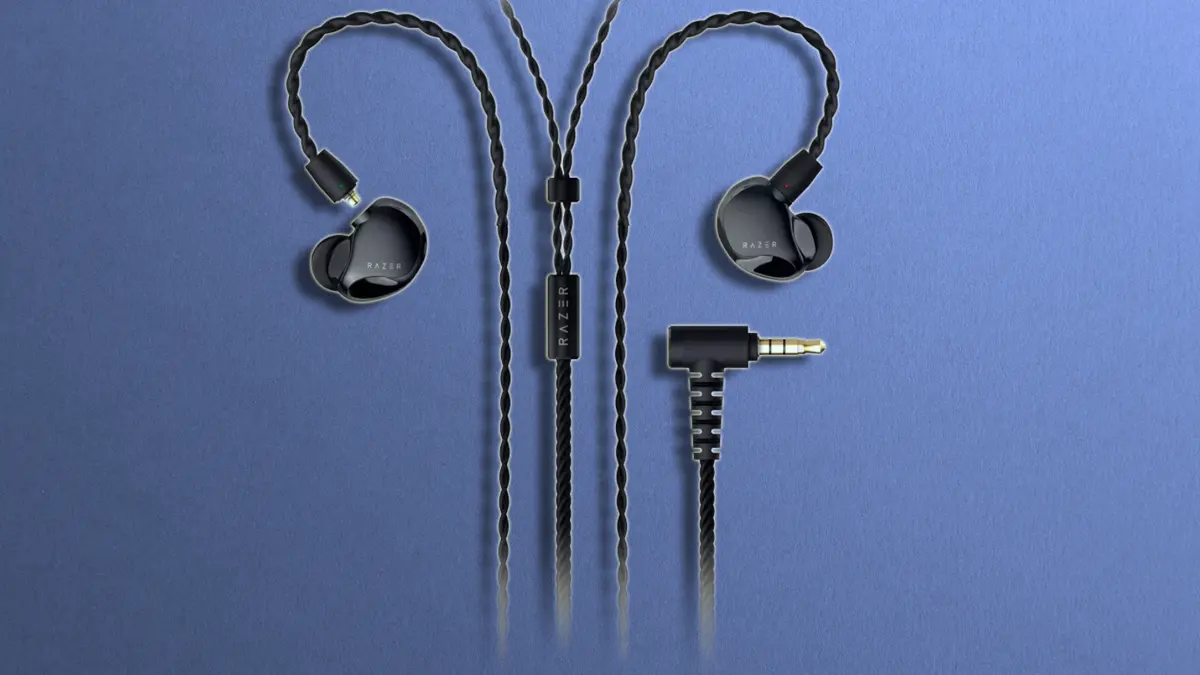
How to choose best wired earbuds for gaming
The right pair depends on the balance between positional detail, stable fit, voice chat, and the device you plan to connect.
Driver layout
A single dynamic driver, such as the 10mm unit in the Yeabomy AK3FILE, handles the full frequency range from one driver and can produce a cohesive, energetic sound. Hybrid designs such as the Linsoul KZ ZS10 Pro and KZ ZS12 Pro 2 divide work between dynamic and balanced-armature drivers. More drivers can help separate bass, voices, and high-frequency effects, but tuning and fit still matter more than the number printed on the box.
Positional detail
For competitive shooters, clear imaging is more useful than overwhelming bass. The ZS10 Pro emphasizes bright resolution, while the ZS12 Pro 2 adds an electronic crossover and another balanced armature for a more elaborate presentation. Basic models like the Skullcandy Jib can handle general game audio, but they provide less information about imaging and driver design.
Pick the earbud that keeps footsteps distinct, not the one that makes every explosion the loudest sound in the room.
Fit and isolation
In-ear monitors need a reliable seal. The Linsoul models use shaped resin cavities, Yeabomy adds a PU memory ear hook, and Sony provides three tip sizes. A poor fit reduces bass, lets in room noise, and can make directional cues less convincing. Claimed isolation figures are less important than whether the included tips actually seal your ears.
Microphone setup
The mic-free Linsoul KZ ZS10 Pro requires a separate microphone. The ZS10 Pro with mic, Sony MDR-EX15AP, Yeabomy AK3FILE, KZ ZS12 Pro 2, and Skullcandy Jib models are aimed at more self-contained use, though the product information gives more microphone detail for some models than others. Check your console or computer's jack arrangement before buying, especially if audio and microphone inputs are separate.
Cable and connector
A detachable cable is easier to replace and can make an IEM more adaptable. Both Linsoul ZS10 Pro versions have detachable ODC cables, while the Yeabomy, Sony, and Skullcandy models use fixed cables. All of these are wired products, but a 3.5mm connection is not automatically guaranteed to work with every modern device without an adapter.
If you are comparing wired and wireless options, the trade-off involves more than convenience. what you give up moving from wired to wireless includes direct connection simplicity, cable freedom, and the need to manage wireless hardware.
The microphone question also changes when you move between form factors. A separate desktop mic may make a mic-free IEM more attractive, while users who play from a phone or handheld system may prefer an in-line control. Players using a phone should also consider how connector compatibility affects everyday listening before choosing a 3.5mm model.

Frequently asked questions
Are wired earbuds good for gaming?
Yes. Wired earbuds avoid Bluetooth pairing and battery management, and they can provide a direct connection to compatible game hardware. The strongest models here also use in-ear designs that can make directional effects easier to hear.
Which product is best for competitive FPS games?
The Linsoul KZ ZS10 Pro Without Mic is our leading choice for positional detail, while the KZ ZS12 Pro 2 is the more elaborate alternative. The ZS12 Pro 2 adds a 5BA+1DD layout and electronic crossover, but the ZS10 Pro is easier to recommend for most players.
Do all of these earbuds include a microphone?
No. The Linsoul KZ ZS10 Pro Without Mic does not include one. The other listings describe microphone capability, with the Skullcandy Jib and Sony models also offering in-line controls.
Are detachable cables important?
They are useful if the cable is damaged or you want to change it later. The two Linsoul KZ ZS10 Pro versions have detachable cables, while the Sony, Yeabomy, and Skullcandy models have fixed cables.
Can these earbuds block outside noise?
The in-ear designs can reduce outside noise when the tips form a good seal. The Linsoul ZS10 Pro listing claims 26dB of isolation, while Yeabomy claims around 90 percent ambient-noise reduction. Those results depend heavily on ear-tip fit and should not be treated as active noise cancellation.
Will a 3.5mm earbud work with every gaming device?
No. It will work with devices that have a compatible 3.5mm audio jack, but some computers and consoles use separate microphone and headphone connections. Devices without a headphone jack may require an appropriate adapter.
Are the Skullcandy Jib Black and White versions different for gaming?
The listings give both versions the same core features, including a 3.5mm connection, in-line microphone, track controls, and two ear gels. The main listed difference is the color.

The bottom line
The Best wired earbuds for gaming in this group are the Linsoul KZ ZS10 Pro Without Mic for players who want detailed positional audio and already have a microphone. Its 4BA+1DD hybrid design, shaped in-ear fit, claimed 26dB isolation, and detachable cable give it the most complete audio-focused package.
Choose the Linsoul KZ ZS10 Pro With Mic if you want nearly the same hybrid design with built-in chat, or the KZ ZS12 Pro 2 if maximum driver complexity and high-frequency detail matter most. The Yeabomy AK3FILE is the better fit-led alternative, while Sony and Skullcandy make more sense for simple everyday use.
If you are undecided, choose the ZS10 Pro with mic for the easiest balance of game detail, fit, and voice chat.
As an Amazon Associate we earn from qualifying purchases.