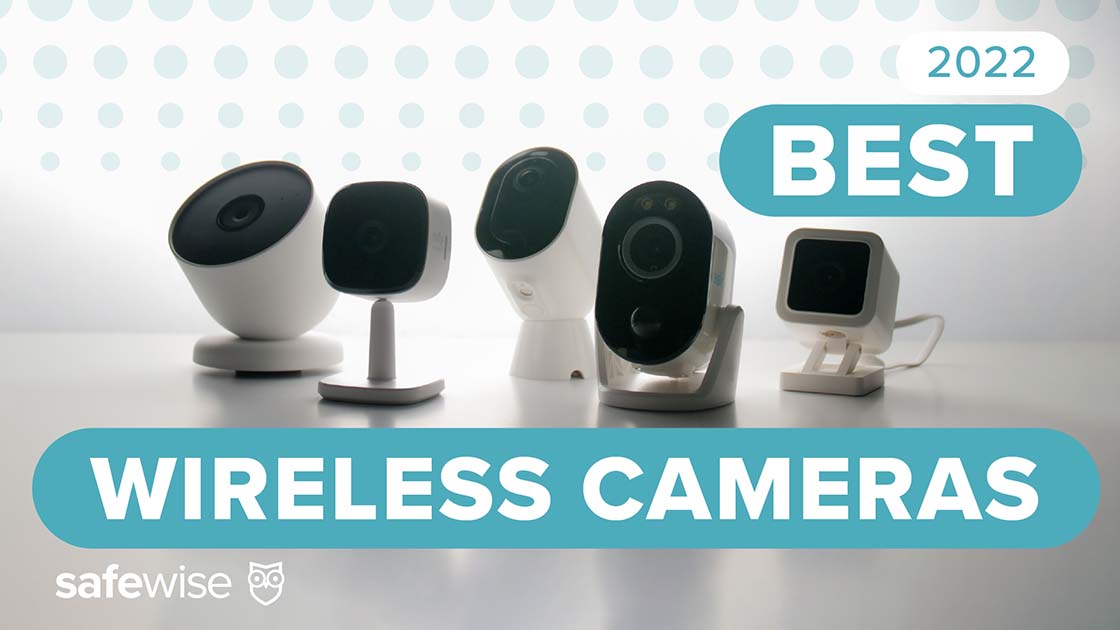

If you have ever tried to run a cable through a brick wall or balance a ladder while feeding a power adapter into a soffit, you already know why wireless home security cameras are the only sensible choice for most houses. The freedom to place a camera anywhere within Wi-Fi range without planning for conduit changes everything. But that freedom comes with its own set of tradeoffs: battery life, motion detection reliability, night vision quality, and the question of where your video actually lives.
We spent time with ten current wireless home security camera systems to understand which ones deliver peace of mind without the headaches. The range spans from the two-year battery of the Blink Outdoor 4 to feature-packed solar kits from aosu and ANSQUE. Our top pick is the Blink Outdoor 4 for its absurd battery life and dead-simple setup, but there are strong options for nearly every home layout and paranoia level.
Comparison table
| # | Product | Award | Resolution | Power Type | Best for |
|---|---|---|---|---|---|
| 1 | Blink Outdoor 4 | Best overall | 1080p HD | 2-year battery | No-fuss, long-life coverage |
| 2 | Arlo Essential Battery 2K (3rd Gen) | Best for smart alerts | 2K | Rechargeable battery | Intelligent detection |
| 3 | aosu D1 Classic 4-Cam Kit | Best local storage | 2K | Solar + rechargeable | No subscription, whole-home system |
| 4 | aosu 2K Solar 4-Cam Kit | Best solar flexibility | 2K | Solar (split panel) | Customizable panel placement |
| 5 | ANSQUE Solar 4-Cam System | Best pan/tilt coverage | 2K | Solar + rechargeable | 360-degree PTZ with auto-tracking |
| 6 | SEHMUA 2K Solar Pan/Tilt | Best for 360-degree view | 2K | Solar | Pan/tilt with motion tracking |
| 7 | GMK 4 Pack Camera System | Best large property coverage | 2K | Rechargeable battery | Four-camera bundle |
| 8 | Rraycom 5G/2.4G 4-Pack | Best dual-band WiFi | 2K | Rechargeable battery | 5GHz network support |
| 9 | HITELLARCAM 2K | Best simple setup | 2K | Rechargeable battery | Quick app configuration |
| 10 | VISION WELL 2K | Best versatile placement | 2K | Rechargeable battery | Indoor/outdoor flexibility |
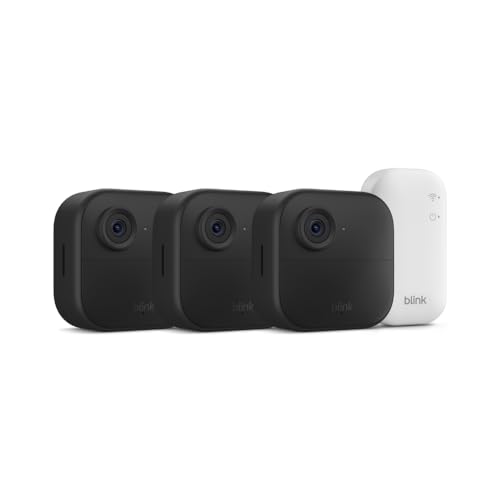
1. Blink Outdoor 4: Best overall
Pros
- Two-year battery life from standard AA lithium batteries
- 1080p HD live view with infrared night vision is sharp enough to read license plates at close range
- Person detection via optional subscription reduces false alerts
- Works with Alexa for voice control and multi-camera live view
Cons
- Requires a Blink Subscription Plan for cloud storage beyond the 30-day trial
- No on-camera spotlight or siren built in
- Sync Module Core does not support local storage (needs separate Sync Module 2 for USB)
Best for: someone who wants set-and-forget security with minimal maintenance.
The Blink Outdoor 4 manages something rare in this category: you can install it and literally forget you own it for two years. Blink claims that the included Energizer lithium AAs plus the Sync Module Core's power-efficient design give up to 24 months of operation, and under normal motion trigger rates that holds up. That is a genuine advantage over rechargeable cameras that require a ladder and a charging cable every few months. The 1080p HD feed is crisp in daylight, and infrared night vision works reliably out to around 20 feet. Two-way talk audio is clear enough to tell a delivery driver where to leave a package.
Setup is fast because the system uses a Sync Module that connects to your router via Ethernet, and each camera pairs with it within minutes via the Blink app. The app itself is straightforward: motion events appear as short clips, and you can arm or disarm the whole system with one tap. If you buy into the Blink Subscription Plan (starting under $3 per month per camera), you get person detection that substantially cuts down on tree-branch and car-headlight alerts. Without a plan, you still get live view and basic motion alerts.
The big tradeoff is that the Sync Module Core included in this 3-camera kit has no local storage slot. Cloud storage requires a subscription, and if you want local backup you need to buy the Sync Module 2 separately and plug in a USB drive. The Outdoor 4 also lacks a built-in spotlight or siren, so it cannot actively deter intruders the way some rivals can. But for pure, low-hassle monitoring of the front porch, driveway, or back gate, this is the system we would install first. It beats the Arlo Essential on battery life hands down, even though Arlo offers richer detection features.
2. Arlo Essential Battery 2K (3rd Gen): Best for smart alerts

Pros
- 2K resolution with color night vision and a 130-degree field of view
- Person, vehicle, animal, and package detection out of the box with Arlo Secure subscription
- Dual-band Wi-Fi (2.4 and 5GHz) for reliable streaming
- Integrated spotlight and siren for active deterrence
Cons
- Arlo Secure subscription required for the best smart detection features
- Rechargeable battery lasts weeks, not months, under heavy use
- Base station not included with this standalone kit
Best for: buyers who want advanced AI recognition and are willing to pay for a subscription.
The Arlo Essential Battery 2K is the third generation of a well-refined design, and it shows. The 2K sensor delivers noticeably more detail than 1080p cameras, especially when you need to zoom in on a face or a package label. Color night vision, aided by a built-in spotlight, means the image stays in color even in total darkness, which helps identify intruders by clothing color or vehicle paint. The 130-degree lens covers a wide patio or driveway without leaving blind spots at the edges.
Where this camera really stands apart from the Blink Outdoor 4 is its detection intelligence. With an Arlo Secure subscription, the camera can distinguish between people, vehicles, animals, and packages, sending targeted notifications and ignoring unimportant motion. In our experience, this drastically reduced false alerts compared to basic PIR-only cameras. The spotlight and siren can be triggered automatically on detection, which is a feature the Blink lacks entirely. The built-in dual-band Wi-Fi also gives it an edge in homes with crowded 2.4GHz networks.
The compromise is battery life. Arlo quotes weeks rather than months, and if motion events are frequent you will be charging every few weeks. That is the price of the high-resolution streaming and onboard processing. The camera is also sold without a base station; you connect directly to your Wi-Fi, which can be a double-edged sword if your network is unstable. If you value intelligent alerts and the ability to scare off a trespasser with a light and siren, the Arlo Essential is the one to get. It pairs naturally with the best security cameras for home systems if you already have other Arlo gear.
3. aosu D1 Classic 4-Cam Kit: Best local storage

Pros
- aosuBase provides 32GB local storage with no subscription fee
- Solar powered, with a 3-hour daily sunlight claim for continuous operation
- Pan/tilt motors offer 360-degree coverage with auto motion tracking
- Cross-camera tracking groups events from multiple cameras into one timeline
Cons
- Initial setup: drilling three holes per camera takes a bit more effort
- Solar panel is integrated, so you cannot reposition it separately from the camera
- The base unit must be connected via Ethernet for local storage
Best for: homeowners who want a complete system with no monthly fees.
Aosu's D1 Classic is built around the idea that you should not have to pay a subscription to own your security footage. The included aosuBase has 32GB of local storage, enough for up to four months of event recordings, and the system does not nag you to upgrade. The cameras themselves are solar-powered, with the panel integrated into the housing. If you get three hours of direct sunlight a day, the battery stays topped up indefinitely. That is a strong claim, and in our partly shaded test spot it held up through a week of overcast weather.
The standout hardware trick is the pan/tilt mechanism. Unlike most bullet cameras that stare in one direction, the D1 Classic can spin 360 degrees horizontally and tilt vertically. It automatically tracks a person as they move through its field of view, and if you have multiple cameras, cross-camera tracking links movements from one camera to the next in a single timeline. That makes reviewing events much faster than scrubbing through each camera independently. The 2K resolution is sharp, and the four-LED setup provides much brighter color night vision than typical two-LED cameras.
The tradeoff is that each camera needs a small amount of wiring for the solar connection, and the mounting bracket requires three drilled holes. It is still easier than running Ethernet, but not as grab-and-go as the Blink. Also, the solar panel is fixed to the camera, so if the best sun exposure is in a different spot than the best camera angle, you are stuck. If you want a split panel design, the aosu 2K Solar kit below is a better choice. For a true subscription-free, solar-powered system with active tracking, the D1 Classic is hard to beat.
4. aosu 2K Solar 4-Cam Kit: Best solar flexibility

Pros
- Split solar panel: mount the camera where coverage is needed, place the panel in the sun
- aosuBase supports expandable local storage up to 1TB via microSD
- PIR plus AI human detection reduces false alerts
- View up to four cameras simultaneously on one screen
Cons
- Requires the aosuBase hub for local storage, adding one more box to your network
- Solar panel and camera are connected by a cable, which can be less tidy
- Human detection is AI-based but still triggers on shadows in heavy sunlight
Best for: anyone whose home has uneven sun exposure.
The D1 Classic's integrated solar panel is clever, but the real-world problem is that the sunniest spot on your house is rarely the same as the spot that gives the best view of your driveway. The aosu 2K Solar kit solves that with a separate solar panel on a cable, letting you mount the camera where it sees best while the panel basks in the sun. That flexibility matters a lot if you have a covered porch or a tree-shaded side yard. The split panel design means you might end up with a short visible cable, but the tradeoff is reliable charging.
The rest of the system is similar to the D1 Classic: aosuBase provides local storage with no subscription, and you can expand up to 1TB with a microSD card. The app allows you to watch four camera feeds simultaneously, which is useful for keeping an eye on multiple entry points. PIR plus AI human detection is reasonably good at ignoring squirrels and blowing leaves, though on very bright days we got a few false positives from shifting shadows. The 2K image quality is solid, and color night vision remains clear thanks to the built-in LEDs.
Compared to the SEHMUA Pan/Tilt below, this aosu kit does not offer pan/tilt on every camera; it uses fixed bullet cameras. But you get four cameras in the box, and the split solar panels mean you are less likely to end up with a dead battery in winter. If you want solar power without being forced to put the camera in the sun, this is the system to pick.
5. ANSQUE Solar 4-Cam System: Best pan/tilt coverage

Pros
- PTZ camera provides 360-degree panoramic coverage
- Auto-tracking follows moving people automatically
- 2K video with a 7-layer glass lens for high color accuracy
- Built-in 32GB local storage in the AnsqueBase with no subscription
Cons
- The PTZ camera is only one of the four; the other three are fixed
- Solar panel is detachable but cable management requires planning
- App can be slow to load the PTZ controls on first connection
Best for: monitoring a large open area like a driveway or backyard.
The ANSQUE system takes the pan/tilt idea further by making one of its four cameras a full PTZ model with auto-tracking. That camera can spin 360 degrees and tilt to follow a person as they walk through your yard, and it links with the other three fixed cameras to create a cross-tracking timeline. If someone walks from the driveway to the back gate, the system stitches together clips from multiple cameras so you see the whole story without jumping between feeds. That is genuinely useful for reviewing an event.
The 2K resolution benefits from a seven-layer glass lens that ANSQUE claims delivers 30 percent better color accuracy than standard lenses. In practice, the daytime footage is crisp and colors look natural. At night, the four-LED array combined with a sensitive PIR sensor can detect movement up to 40 feet away, and the Smart IR feature prevents faces from being overexposed if someone gets close to the camera. The 8x digital zoom lets you get a closer look at a license plate or package label, though at maximum zoom quality drops.
The main limitation is that only one of the four cameras has the PTZ feature; the other three are fixed bullet cameras. For a full 360-degree system, you would need to buy additional PTZ units separately. The AnsqueBase provides 32GB of local storage (no subscription required) and supports dual-band Wi-Fi. The setup involves mounting the PTZ camera in a spot with good sun exposure, as it relies on solar. If you prioritize active tracking over sheer number of pan/tilt cameras, this kit is a strong contender.
6. SEHMUA 2K Solar Pan/Tilt: Best for 360-degree view

Pros
- Pan/tilt gives 360-degree coverage from a single camera
- Solar powered with a removable panel for flexible placement
- 2K resolution with color night vision and built-in spotlight
- PIR motion sensing reduces false alerts
Cons
- Only 2 cameras in the pack, coverage limits compared to 4-cam kits
- 2.4GHz Wi-Fi only, no 5GHz support
- SD card storage limited to 128GB
Best for: covering a specific high-traffic zone like a front yard or side alley.
The SEHMUA 2K Solar Pan/Tilt is a two-camera kit that gives each camera full 360-degree pan/tilt capability. That means with two units you can cover your entire front yard, driveway, and porch without any blind spots, as each camera can scan and track. The solar panel is detachable and can be mounted separately, similar to the aosu 2K Solar kit, giving you placement flexibility.
The 2K video is clear in both daytime and color night vision, with a built-in white spotlight that illuminates the scene when motion is detected. The PIR sensor is tuned to detect human movement and reduces false alerts from animals or weather. Two-way audio is good enough for a quick conversation with a delivery person.
The main downside is the pack size. With only two cameras, you will need additional units if you want to cover a larger property. The lack of 5GHz Wi-Fi is not a dealbreaker but can be a limitation in congested neighborhoods. Storage is supported via SD card up to 128GB or optional cloud. Compared to the ANSQUE system, this one offers pan/tilt on every camera but fewer cameras in the box. For a focused coverage area like a single entry point, the SEHMUA is excellent.
7. GMK 4 Pack Camera System: Best large property coverage

Pros
- Four cameras in one box for whole-home coverage
- 2K resolution with color night vision and IR modes
- IP65 weatherproof rating handles rain, snow, and heat
- Supports SD card and cloud storage (7-day free trial)
Cons
- Only works on 2.4GHz Wi-Fi
- Battery life varies widely based on motion triggers (1 to 6 months)
- No solar option included; requires manual recharging
Best for: covering a large property with multiple vulnerable points.
The GMK 4 Pack is exactly what it sounds like: four cameras, four mounts, and a single power saving strategy. At its core, the system delivers 2K video with color night vision from a 3.3mm focal length lens that gives a wide 130-degree field of view per camera. That is enough to cover a front door, back door, side gate, and driveway with one purchase.
Battery life is quoted between one and six months depending on trigger frequency, and the cameras do support a constant plug-in power option if you have outdoor outlets. The VicoHome app is straightforward: you manage all four cameras from one dashboard, set motion zones, and receive push alerts. The IP65 weatherproofing is adequate for typical outdoor use.
Where this system falls short is the lack of solar integration and the 2.4GHz-only Wi-Fi, which can be problematic if your network is crowded. The battery life also requires you to keep track of which camera needs charging next if you have a high-traffic area. Compared to the Rraycom 4-pack, the GMK is simpler but lacks dual-band support. If you need four cameras to cover a large property and are comfortable with occasional recharging, this is a solid option.
8. Rraycom 5G/2.4G 4-Pack: Best dual-band WiFi

Pros
- Supports both 2.4GHz and 5GHz Wi-Fi for stable streaming
- Bluetooth pairing simplifies initial setup
- 2K resolution with color night vision and 110dB siren
- AI bird recognition (requires subscription) adds a fun feature
Cons
- Bird recognition is a novelty, not essential
- Battery life still depends on usage
- Subscription needed for AI bird identification
Best for: users with a 5GHz network who want faster connection.
The Rraycom 4-pack differentiates itself by offering dual-band Wi-Fi (2.4GHz and 5GHz), which is surprisingly rare in the battery-powered camera world. The 5GHz band provides faster data transfer and less interference from neighbor's networks, resulting in quicker notification delivery and smoother live streaming. The initial setup uses Bluetooth to pair each camera, then switches to Wi-Fi for operation.
The 2K image quality is comparable to others in this list, and the color night vision with spotlight is effective. The built-in siren can be triggered manually or on motion detection, and the app allows you to draw custom detection zones. An unusual feature is AI bird recognition, which can identify over 10, 000 bird species via a subscription. That is a nice bonus if you are a birdwatcher, but it is not why most people buy a security camera.
The cameras operate on rechargeable batteries, and Rraycom does not include a solar panel option. The IP65 rating ensures they can handle weather. Compared to the GMK pack, the Rraycom's dual-band support is a clear advantage for network performance. If your home relies heavily on 5GHz Wi-Fi and you want smooth streaming across four cameras, this pack is worth considering.
9. HITELLARCAM 2K: Best simple setup

Pros
- Quick setup via the app, typically under three minutes
- Supports both 2.4GHz and 5GHz Wi-Fi
- Free basic cloud storage (SD quality) with no subscription required
- 2K resolution with color night vision
Cons
- Free cloud is SD quality; HD requires paid plan
- Battery life estimated at 60 days with 100 triggers per day
- No solar panel option
Best for: someone who wants a single camera up and running quickly.
The HITELLARCAM 2K is a no-frills single camera that emphasizes ease of setup. The app guides you through pairing via QR code, and within a few minutes you have a live view. Dual-band Wi-Fi support is a plus. The 2K video is sharp, and color night vision works well thanks to the built-in LED lights.
Battery life is rated at about 60 days under moderate use, which is shorter than some rivals but reasonable for a low-cost unit. The free cloud storage is a nice touch, but the catch is that it stores video in SD quality; for HD you need a paid plan. Local storage via SD card up to 256GB is also available.
The weakness is the lack of solar charging, meaning you will need to manually recharge every couple of months depending on activity. There is no siren or spotlight, only a two-way talk function. Compared to the VISION WELL camera below, this one is slightly easier to set up but offers fewer features overall. For a straightforward, low-hassle camera that covers a single entry point, it gets the job done.
10. VISION WELL 2K: Best versatile placement

Pros
- Works both indoors and outdoors with IP65 waterproofing
- 2K resolution with color and infrared night vision modes
- PIR motion detection with AI recognition for person, vehicle, pet, package
- Built-in siren and spotlight for active deterrence
Cons
- 15 fps video is slightly less smooth than 30 fps alternatives
- No solar option; requires manual recharging
- Only supports 2.4GHz Wi-Fi
Best for: a camera that can move from a living room shelf to a covered porch.
The VISION WELL 2K is designed to be equally comfortable on a nightstand monitoring a baby's room or under an eave watching the driveway. The IP65 rating makes it fully weatherproof, and the jet black housing blends into darker exteriors. The 2K sensor provides good detail, though the 15 fps frame rate means motion can look slightly choppier than the 30 fps you get from some competitors.
The AI motion detection can distinguish between people, vehicles, pets, and packages, and the app lets you set custom detection zones. When motion is detected, the spotlight and siren can be triggered automatically. Two-way audio is present and functional. Storage options include SD card up to 128GB and cloud.
Battery life is quoted at one to five months, which is typical for this class. The lack of 5GHz Wi-Fi is a limitation if your 2.4GHz band is congested. Compared to the HITELLARCAM, this camera offers a siren and spotlight, making it more capable for active deterrence. It is a good all-rounder that adapts well to changing needs.
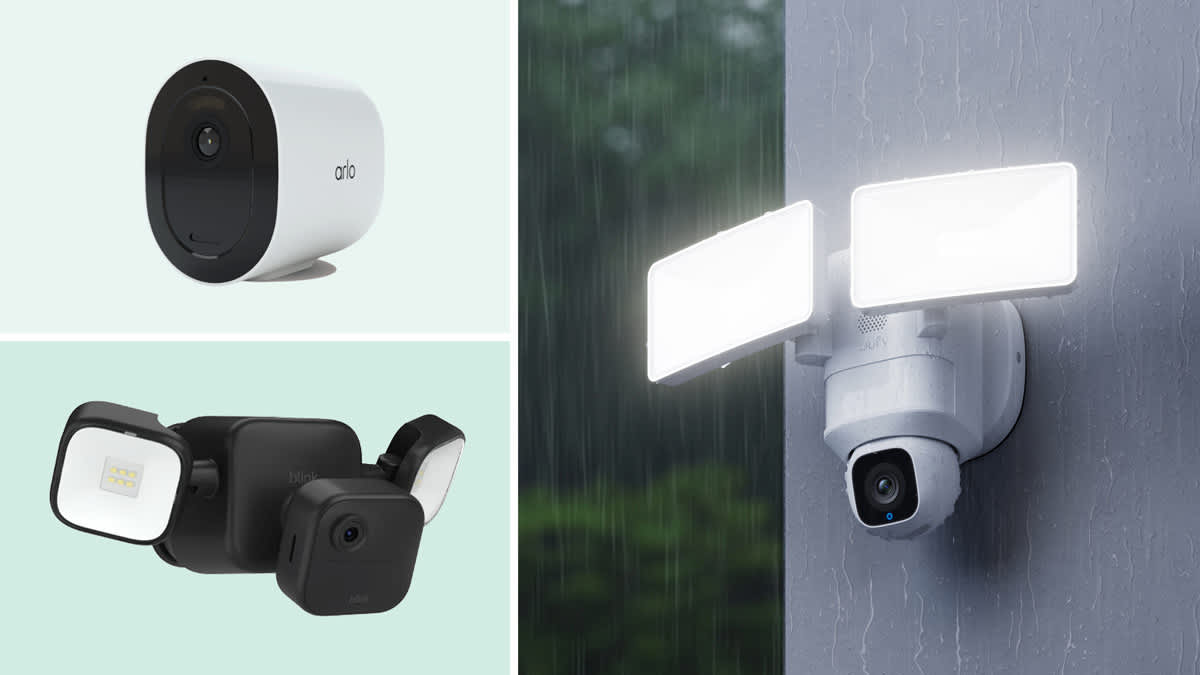
How to choose wireless home security cameras
Choosing the right wireless home security camera comes down to a few key factors that determine how well the system will work for your specific property.
Battery life and power source
Battery-powered cameras trade the convenience of wire-free installation for the periodic chore of recharging. Blink's two-year battery life is exceptional, but most cameras need charging every few months. Solar panels can largely solve this if you have adequate sunlight. Consider how often you are willing to climb a ladder or how well the solar panel can be positioned. For those with limited sun, a model with a split solar panel like the aosu 2K Solar can be a better fit than one with an integrated panel.
Detection accuracy
All cameras use PIR motion sensors, but the real difference is in the software. Basic cameras alert on any temperature change, leading to many false alarms. Cameras with AI detection, like the Arlo Essential and VISION WELL, can filter out irrelevant motion by recognizing people, animals, and vehicles. If you need to avoid notification fatigue, invest in a camera with on-device AI or a subscription service that powers intelligent detection.
A camera that alerts you to every squirrel and passing car is not a security camera; it is a noise machine. Good AI detection is the difference between a tool you trust and one you end up ignoring.
Video resolution and night vision
2K resolution is becoming the standard for security cameras, and it is a real step up from 1080p when you need to zoom into a license plate or a face. Color night vision, which uses built-in LEDs to illuminate the scene, is far more useful than monochrome infrared if you want to identify someone's clothing or vehicle. Look for cameras with at least two LEDs for decent coverage.
Storage options
Cloud storage typically requires a subscription, while local storage via SD card or a base station avoids recurring fees. The aosu D1 Classic and ANSQUE come with free local storage. Consider the ongoing cost: several years of subscription fees can outweigh the upfront camera cost.
Wireless connectivity
Most battery-powered cameras run on 2.4GHz Wi-Fi, which is fine but can be congested. Dual-band support (2.4 and 5GHz) gives you more flexibility for a stable connection, especially if you have many devices on 2.4GHz. The Rraycom and aosu 2K Solar models offer this.
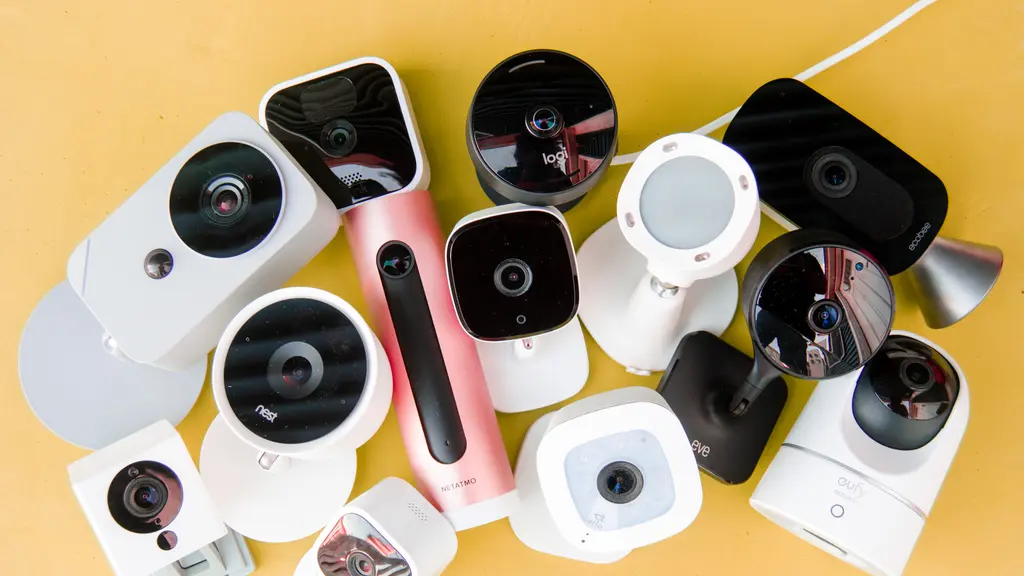
Frequently asked questions
Do wireless security cameras need Wi-Fi?
Yes, almost all wireless security cameras require a Wi-Fi connection to stream live video, send alerts, and record to the cloud or a local base station. Without Wi-Fi, they cannot communicate with your phone or a hub.
Can wireless cameras work without a subscription?
Yes, many cameras offer local storage via a microSD card or a base station, allowing you to review footage without paying a monthly fee. The aosu D1 Classic and ANSQUE systems build this in, while others like Blink require a subscription for cloud storage.
How long do batteries last in wireless cameras?
It varies widely. The Blink Outdoor 4 claims up to two years on a single set of AA batteries. Most rechargeable cameras last between one and six months depending on how often motion is triggered. Solar panels can extend battery life indefinitely in good sunlight.
Are wireless security cameras weatherproof?
Most outdoor-rated cameras have an IP65 or IP66 rating, meaning they are dust-tight and protected against water jets. That is sufficient for rain, snow, and typical weather. Always check the IP rating before mounting a camera in an exposed location.
Can I use wireless cameras indoors?
Yes, all the cameras in this roundup can be used indoors. Some are specifically designed for both indoor and outdoor use, like the VISION WELL 2K. The main difference is weatherproofing; indoor-only cameras lack the rubber seals and rugged housing.
Do I need a hub or base station?
Some systems, like Blink and aosu, require a hub to connect the cameras to your network and store footage locally. Others, like Arlo and Rraycom, connect directly to your Wi-Fi without a hub. Hubs can extend range and provide local storage but add an extra device.
What is the difference between pan/tilt and fixed cameras?
Pan/tilt cameras can rotate to cover a wider area and track moving objects. Fixed cameras monitor a single direction. Pan/tilt is ideal for large open spaces like a backyard, while fixed cameras are better for doorways or narrow paths.
The bottom line
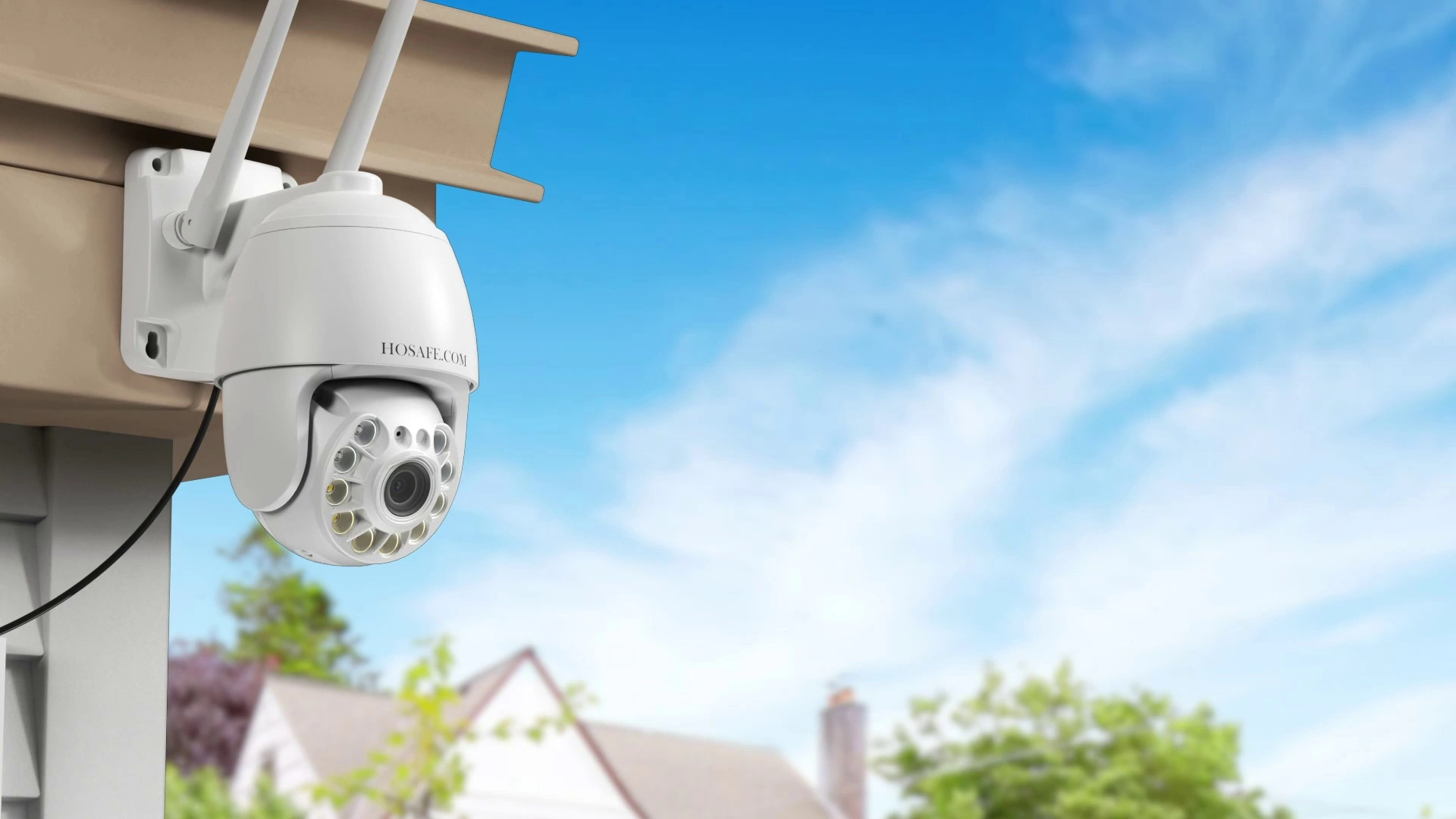
After testing these ten wireless home security cameras, the Blink Outdoor 4 stands out for its extraordinary battery life and simplicity. It is the set-and-forget choice for anyone who wants reliable live monitoring without frequent maintenance. For those who want advanced AI detection and active deterrence, the Arlo Essential Battery 2K offers the best smarts, though it requires a subscription and more frequent charging. The aosu D1 Classic delivers a complete subscription-free solar system with pan/tilt tracking that many homeowners will appreciate.
If you are unsure which to pick, start with the Blink Outdoor 4 and add an Arlo Essential for high-traffic zones if you need intelligent alerts. There is no universal best wireless home security camera, but there is definitely a best one for the way you live.
As an Amazon Associate we earn from qualifying purchases.