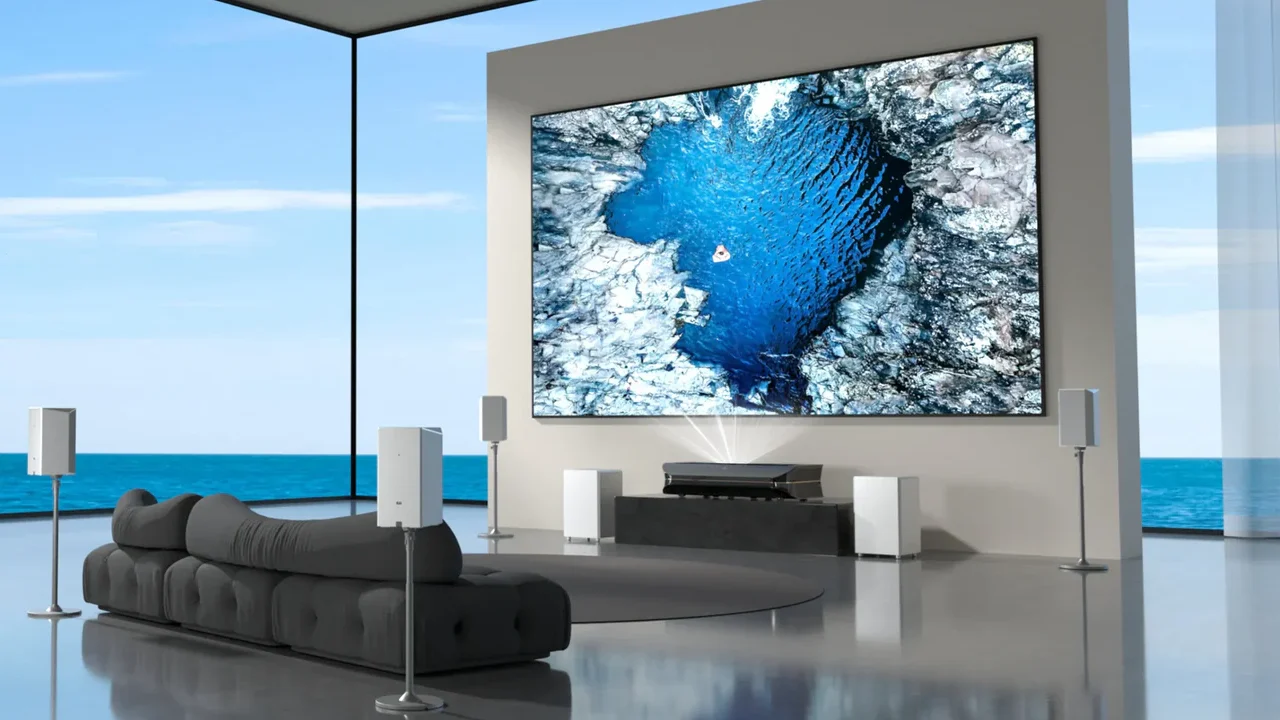

A television can have a sharp picture and still make every movie feel flat when voices come from a narrow panel and effects have nowhere to go. The right surround setup adds a real center channel, room-filling effects, and bass you can feel without turning the living room into a wiring project.
Our Best wireless home theater system picks range from simple soundbars to full AV receiver packages. Some use wireless rear speakers, while others still need speaker wire despite offering Bluetooth streaming. The ULTIMEA Aura A60 Pro is our top pick, with the Skywave X40, LG S40TR, and several full Atmos systems covering the rest of the field.
Quick comparison
| # | Product | Award | Channels | Bass or power | Best for |
|---|---|---|---|---|---|
| 1 | ULTIMEA Aura A60 Pro | Best overall | 7.1ch Dolby Atmos | 5.25-inch wired subwoofer | Flexible surround placement |
| 2 | ULTIMEA Skywave X40 | Best fully wireless Atmos | 5.1.2ch | 530W peak, bass to 35Hz | Powerful wireless setups |
| 3 | LG S40TR | Best for LG TV owners | 4.1ch | Wireless subwoofer | Easy TV integration |
| 4 | Sony BRAVIA Theater 6 | Best for dialogue | 5.1ch | Included subwoofer | Clear speech and streaming |
| 5 | ULTIMEA Poseidon M60 | Best compact Atmos bar | 5.1ch | 300W peak, 45Hz to 18kHz | Rooms without rear-speaker space |
| 6 | ULTIMEA 5.1.2 Atmos System | Best true rear Atmos | 5.1.2ch | Dual up-firing drivers | Height effects with rear surrounds |
| 7 | Yamaha YHT-4950U | Best traditional package | 5.1ch | 28Hz to 25kHz response | Receiver-based home theaters |
| 8 | ULTIMEA Skywave X70 | Best for large rooms | 7.1.4ch | 10-inch subwoofer, 980W peak | Big-screen cinematic sound |
| 9 | ULTIMEA Skywave X50 | Best wireless power | 5.1.4ch | 760W peak, bass to 28Hz | Immersive movies and music |
| 10 | Yamaha YHT-4970U | Best for new AV gear | 5.1ch | Powered subwoofer | 4K/120 and 8K sources |
1. ULTIMEA Aura A60 Pro: Best Overall

Pros
- 7.1-channel Dolby Atmos layout
- Four surround speakers create a wide stage
- Rear speakers connect wirelessly to the soundbar
- Extensive app-based sound adjustment
Cons
- The subwoofer remains wired
- Front surround speakers also need cables
- Best suited to rooms from 108 to 270 square feet
Best for: viewers who want a broad surround field without committing to a separate AV receiver.
The Aura A60 Pro is the most balanced system here because it does not force a choice between a simple soundbar and a sprawling receiver setup. Its soundbar handles three main channels, while four surround speakers widen the presentation. Two of those speakers sit at the front and two at the rear, giving this system a more deliberate room layout than a bar that tries to simulate every effect from one cabinet.
Dolby Atmos is supported, and the arrangement is rated as 7.1 channels. The 5.25-inch wired subwoofer uses BassMX technology to reinforce low frequencies, so explosions and soundtrack percussion have a dedicated low-end source rather than asking the bar to do everything. The rear right surround speaker pairs wirelessly with the soundbar, and the rear speakers connect wirelessly overall, which reduces the most awkward cable run across the room. The front speakers and subwoofer still require wires.
The ULTIMEA app is a real strength. It provides 121 EQ presets, a 10-band equalizer, and six listening modes covering movies, music, voice, sports, games, and night listening. That gives the A60 Pro more room to adapt than the LG S40TR's three-band adjustment. It also makes the system easier to tailor when dialogue is too recessed or bass overwhelms a smaller room.
The ULTIMEA Skywave X40 sounds like the more ambitious alternative, with a fully wireless setup and 5.1.2 channels, but the A60 Pro offers four physical surround speakers and a more straightforward layout. The weakness is its partial, rather than complete, wireless design. Buyers who want every speaker free from speaker cable should move to the Skywave range. For most living rooms, though, the Aura A60 Pro is the one we'd keep because it combines genuine rear separation, useful tuning, and manageable installation.
2. ULTIMEA Skywave X40: Best Fully Wireless Atmos

Pros
- Fully wireless setup with dual 5GHz transmission
- 5.1.2-channel Dolby Atmos presentation
- 530W peak output
- 4K HDR pass-through
Cons
- The 43.31-inch bar needs substantial wall or console space
- No physical speaker layout details beyond the channel configuration
- Its premium styling may not suit every room
Best for: anyone who wants strong Atmos effects with no rear-speaker cable runs.
The Skywave X40 is the cleanest answer for a room where running wires to the back speakers is unacceptable. It uses dual 5GHz wireless transmission and is described as a fully wireless system. That matters more here than a Bluetooth label, since Bluetooth is generally about streaming to the system, not sending synchronized cinema channels around a room.
Its 5.1.2-channel layout adds height information to the conventional front, center, surround, and subwoofer arrangement. The advertised 530W peak output gives the system headroom for loud action scenes, while the Gravus bass system reaches down to 35Hz. That combination should make the X40 feel more physical than a basic television bar, particularly in a medium-sized room.
ULTIMEA also specifies a GaN amplifier with up to 98 percent efficiency and a NEURACORE engine that processes 24-bit/192kHz audio with less than 0.5 percent distortion. Those are technical claims rather than a substitute for room placement, but they point to a system designed around clean dynamic swings. The X40 also passes through 4K HDR, so it can sit between a source and TV without giving up the picture formats named in its feature set.
The X40 is a better fit than the Aura A60 Pro for a buyer who cares most about wireless installation. The A60 Pro counters with four surround speakers and more app presets, while the X40 counters with height channels and a fully wireless architecture. Its main weakness is physical scale: at 43.31 inches long, it is not a discreet bar for a small console. Choose it when the room can accommodate the bar and wireless convenience is the deciding factor.
3. LG S40TR: Best for LG TV Owners
Pros
- Wireless rear speakers and subwoofer
- Dolby Audio compatibility
- WOW Orchestra and WOW Interface features
- Clear Voice Plus dialogue processing
Cons
- No Dolby Atmos support listed
- Four-channel layout is less expansive than the top picks
- App adjustment is limited to a three-band equalizer
Best for: LG television owners who want simple control and real rear speakers.
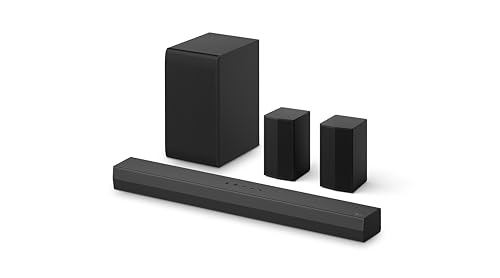
The S40TR is the least complicated recommendation in this group. It has a 4.1-channel layout, a wireless subwoofer, and wireless rear speakers, so the main installation decision is where to place the speakers rather than how to connect a receiver. Its 28.4-inch width also makes it less demanding on a TV stand than the long Skywave bars.
This is a Dolby Audio system rather than a Dolby Atmos model. That distinction matters if overhead effects are a priority. The S40TR can still create a more enveloping presentation than television speakers, and its Smart Up-Mixer converts two-channel content into a multichannel experience. The dedicated center speaker is especially useful for shows where dialogue is easily buried by music and effects.
LG's software features are the reason this model deserves a place above several more ambitious systems for the right household. Clear Voice Plus analyzes output to improve vocal clarity, while WOW Interface lets an LG TV remote adjust volume, sound modes, and connection status. WOW Orchestra can combine compatible LG TV speakers with the soundbar, although that benefit depends on owning a suitable LG television.
The S40TR is easier to live with than the Yamaha packages, and its rear speakers are more convincing for surround placement than a compact virtual surround bar. The Aura A60 Pro offers Atmos and far deeper tuning, while the Sony BRAVIA Theater 6 offers Atmos and a dedicated center channel in a 5.1 arrangement. Skip the LG if height effects or extensive EQ control matter. Pick it when the goal is a tidy surround system that behaves like part of an LG television.
4. Sony BRAVIA Theater 6: Best for Dialogue

Pros
- Dedicated center channel
- Dolby Atmos and DTS:X support
- Included rear speakers and subwoofer
- Voice Zoom 3 with compatible BRAVIA TVs
Cons
- The system is physically broad
- Some dialogue features depend on a compatible Sony TV
- No wireless transmission detail for the rear speakers is provided
Best for: movie watchers who prioritize intelligible speech and already use a BRAVIA television.
Sony's BRAVIA Theater 6 takes a familiar route: three front-firing speakers, two rear speakers, and a subwoofer form a 5.1-channel system. The dedicated center channel is the important part for many households. It anchors voices to the screen instead of leaving speech to a left-right stereo mix, which can make dialogue easier to follow from different seats.
The system supports both Dolby Atmos and DTS:X, so it is not limited to basic surround soundtracks. Its Multi Stereo mode sends the same sound through all speakers for a room-filling presentation, which can work well for ordinary television and music when pinpoint cinematic effects are not the goal. Bluetooth streaming is included for music from a phone or other compatible device.
The BRAVIA connection is more than a logo on the box. Compatible televisions can control the system from the TV menu and use Voice Zoom 3 to enhance dialogue. The BRAVIA Connect app handles volume, sound profiles, and advanced settings from a smartphone. That is a more focused control experience than the extensive 121-preset approach on several ULTIMEA models, but it may feel more approachable for a family room.
The Sony is more dialogue-focused than the ULTIMEA Skywave X40, while the X40 has the clearer installation advantage because its system is described as fully wireless. Sony also lacks the Yamaha YHT-4970U's modern receiver connectivity. Its weak point is dependence on the BRAVIA ecosystem for the most distinctive features. Choose it when speech clarity and a compatible Sony TV matter more than having the most elaborate channel count.
5. ULTIMEA Poseidon M60: Best Compact Atmos Bar

Pros
- 5.1-channel Dolby Atmos support
- No rear speakers required
- HDMI eARC
- 10-band EQ and 121 sound presets
Cons
- Surround is generated without rear speakers
- Wired wooden subwoofer
- Frequency range stops at 18kHz in the listed specifications
Best for: smaller rooms where a physical rear-speaker layout is impractical.
The Poseidon M60 is built around a simple premise: give the television a serious sound upgrade without filling the back of the room with speakers. Its five built-in speakers include two side-firing drivers, and the system uses Dolby Atmos processing to create a wider presentation from the bar itself. That makes it easier to place than the Aura A60 Pro or Sony BRAVIA Theater 6.
The system is rated at 300W peak power and uses a dedicated wired wooden subwoofer with an 18mm high-excursion driver and a 5.3-liter tuned cabinet. Its listed frequency response is 45Hz to 18kHz, with a maximum SPL of 99dB. Those figures describe a system intended to add meaningful bass and volume to a living room, though the lack of rear speakers means effects will not wrap around the listener in the same way as a properly separated 5.1 system.
HDMI eARC is an important connection here. The feature set specifies support for up to 37Mbps and lossless Dolby Atmos 5.1-channel audio, along with CEC for shared power and volume control. Bluetooth 5.4 handles wireless listening from compatible devices. The Ultimea app adds a 10-band EQ, 121 presets, and 13 surround-level adjustments, giving the M60 unusually granular control for a one-bar layout.
Compared with the LG S40TR, the Poseidon M60 offers Atmos and deeper control but gives up physical rear speakers. Compared with the Aura A60 Pro, it is much easier to install but less convincing from behind the sofa. The wired subwoofer is the main compromise. Choose it for a small or awkward room where clear dialogue, strong bass, and a short setup matter more than true rear-channel separation.
6. ULTIMEA 5.1.2 Atmos System: Best True Rear Atmos

Pros
- Physical rear surround speakers
- Dual up-firing Atmos drivers
- HDMI eARC for lossless Atmos
- 13-step surround adjustment
Cons
- Not compatible with DTS
- Requires careful placement of up-firing speakers
- Wireless transmission details are not provided
Best for: viewers who want rear separation and height effects in one compact package.
This ULTIMEA system is the more convincing Atmos proposition when physical placement matters. It combines two rear surround speakers with dual up-firing Atmos drivers in a 5.1.2-channel layout. The rear channels can place effects behind the listener, while the up-firing units attempt to create the vertical layer that a conventional soundbar cannot reproduce as directly.
The up-firing drivers use neodymium internal magnets and 18-core voice coils, according to the listed features. That technical design is intended to improve the precision and vertical throw of high frequencies. In practical terms, the ceiling and speaker position will influence the result heavily. A low, open ceiling and a clear path above the bar give reflected height effects a better chance than an irregular or heavily absorptive room.
HDMI eARC supports up to 37Mbps for lossless 5.1.2-channel Dolby Atmos, with CEC linking power, volume, and input controls to the TV. The app provides a 10-band EQ, 121 presets, and 13 surround-level settings ranging from -6 to +6. Those adjustments help compensate for seating distance and speaker placement, although the system does not support DTS.
The Poseidon M60 is easier to install because it has no rear speakers, but this model creates a more authentic surround field. The Aura A60 Pro offers a wider 7.1-channel arrangement and four surround speakers, while this ULTIMEA system gives Atmos height channels more prominence. Skip it if your sources rely heavily on DTS soundtracks. It is the better fit for a Dolby-focused movie room with space behind the seating.
7. Yamaha YHT-4950U: Best Traditional Package

Pros
- AV receiver and five speakers included
- Four HDMI inputs
- YPAO room optimization
- Flexible physical speaker placement
Cons
- Speaker connections use wires
- Bluetooth is for streaming, not wireless surround
- Receiver and separate speakers need more installation space
Best for: buyers who prefer a conventional receiver and speaker system over a soundbar.
The YHT-4950U is the outlier in this roundup because it is not wireless surround hardware. The package includes an AV receiver, five speakers, a subwoofer, speaker wire, and Bluetooth. Bluetooth makes phone streaming convenient, but the cinema speakers connect to the receiver with wires. That distinction should be clear before choosing it for a wireless installation.
Its traditional design has real advantages. Four HDMI inputs make it easier to connect several sources, and the included YPAO room optimization uses a setup process to adjust the system to the room. Yamaha also allows flexible speaker placement, including a virtual cinema front arrangement when rear-speaker positioning is difficult. The listed frequency response is 28Hz to 25kHz, giving the package a broad stated range.
The receiver, four smaller speakers, center speaker, and subwoofer create a conventional 5.1 layout rather than a soundbar simulation. For people who enjoy adjusting individual channels or plan to add other equipment later, that separation is more adaptable than the self-contained ULTIMEA bars. It also avoids relying on wireless links for the main surround signal.
The newer Yamaha YHT-4970U has a stronger video feature set, including 4K/120 and 8K support, while the ULTIMEA systems are easier to place because most of the audio hardware is consolidated. The YHT-4950U's weakness is the amount of cable and furniture it requires. It is not the right answer for a cable-free room, but it remains a sensible traditional package for someone who wants an actual receiver and separate speakers.
8. ULTIMEA Skywave X70: Best for Large Rooms

Pros
- 7.1.4-channel immersive layout
- Fully wireless dual 5GHz transmission
- 10-inch wireless subwoofer
- 980W peak output and bass to 20Hz
Cons
- The 48.5-pound system is substantial
- The 43.31-inch bar needs a wide installation area
- Too much hardware for a small room
Best for: large living rooms where deep bass and a broad Atmos stage are priorities.
The Skywave X70 is the system to choose when smaller soundbars feel out of scale with the room. Its 7.1.4-channel configuration adds four height channels to a wide surround layout, and the system uses dual 5GHz transmission for a fully wireless installation. That makes it easier to arrange than the Yamaha packages while retaining the visual impact of a larger theater system.
The 10-inch wireless subwoofer is the defining hardware feature. ULTIMEA lists bass down to 20Hz and 980W peak output, with an ultra-linear design intended to keep low frequencies controlled at high volume. A large subwoofer can give explosions, music, and low atmospheric effects more authority than the smaller units in the Aura A60 Pro or Poseidon M60.
The X70 also uses a GaN amplifier and the NEURACORE processing platform. The listed specifications include 24-bit/192kHz processing, less than 0.5 percent distortion, and support for up to 17 channels. It passes 4K HDR, supports CEC synchronization, and works with an app that includes OTA updates, a 10-band EQ, and 121 presets. These controls are useful when a powerful system needs taming in a reflective room.
The X70 is clearly more system than many rooms need. The Skywave X50 is easier to accommodate and still offers a 5.1.4 layout, while the X40 is a more compact fully wireless Atmos option. The X70's size and weight are the real drawbacks, not a lack of capability. Choose it for a large room, a big screen, and seating far enough away to let its extra bass and channels develop.
9. ULTIMEA Skywave X50: Best Wireless Power

Pros
- Fully wireless dual 5GHz system
- 5.1.4-channel Atmos configuration
- 760W peak output
- Bass response down to 28Hz
Cons
- The bar is 43.31 inches long
- Four height channels can be excessive for a small room
- Wireless subwoofer placement still needs planning
Best for: listeners who want a forceful wireless system without moving up to the X70's 7.1.4 layout.
The Skywave X50 occupies the middle of ULTIMEA's Skywave family, but its specification is anything but basic. It has a 5.1.4-channel layout, fully wireless dual 5GHz transmission, and a 760W peak output claim. Four height channels make it more ambitious than the X40's 5.1.2 arrangement, while the wireless design avoids the speaker-wire problem that limits the Yamaha YHT-4950U.
Its Gravus bass system reaches down to 28Hz through an oversized waveguide and acoustic chamber. That is not as low as the X70's listed 20Hz, but it is a meaningful step beyond compact bars. The result should suit action movies and bass-heavy music, especially when the system has enough room around the subwoofer to avoid an overly boomy presentation.
The X50 uses the same general processing approach as the larger Skywave model, with 24-bit/192kHz audio, less than 0.5 percent distortion, and a triple-core DSP plus dual-core MCU. It also passes 4K HDR and includes app controls with a 10-band EQ and 121 sound presets. The rose gold accents and wood-crafted subwoofer give it a more furniture-like appearance than a plain black bar, though that styling will not disappear into every room.
The X70 is the clear choice for the largest rooms because it adds more channels, a 10-inch subwoofer, and greater stated output. The X40 is easier to place and uses fewer channels. The X50 makes sense between them, but its long bar and substantial low-end capability still demand thoughtful placement. Pick it when wireless installation and physical impact matter more than keeping the system visually small.
10. Yamaha YHT-4970U: Best for New AV Gear

Pros
- Dolby Atmos AV receiver
- 4K/120 and 8K/60 video support
- HDMI eARC and modern gaming features
- Automatic room correction with setup microphone
Cons
- Speaker connections are wired
- Requires separate receiver and speaker placement
- More involved to configure than a soundbar
Best for: buyers building around modern game consoles, 8K sources, and a traditional AV receiver.
The YHT-4970U is a receiver-based 5.1-channel package for people who care about connections as much as speakers. It includes the Yamaha RX300A AV receiver, two front speakers, a center speaker, two surround speakers, and a powered subwoofer. Speaker wire and a subwoofer cable are included, so installation is complete in one box but not cable-free.
Its major advantage over the older YHT-4950U is video compatibility. The feature set includes 4K at 120Hz, 8K at 60Hz, Dolby Vision, HDR10+, HDMI eARC, ALLM, and VRR. Those specifications matter for a newer console or a TV that can display high frame rates. Four HDMI inputs also make the receiver a useful hub for several sources rather than just an audio endpoint.
Yamaha includes a setup microphone for automatic room correction. The receiver can measure the room's acoustics and the speaker characteristics, then optimize the sound. Bluetooth Multipoint allows two source devices to pair and switch between them, while sound modes and four Scene presets make repeated listening simpler after the initial configuration.
The ULTIMEA Skywave X50 is much easier for someone who wants a wireless layout, and the Sony BRAVIA Theater 6 is less demanding for a television-first setup. The YHT-4970U wins when the system needs to handle modern video signals and a traditional speaker arrangement. Its weakness is the same one as the YHT-4950U: this is not a wireless surround package. Choose it only if the receiver's connectivity and room correction justify the extra installation work.
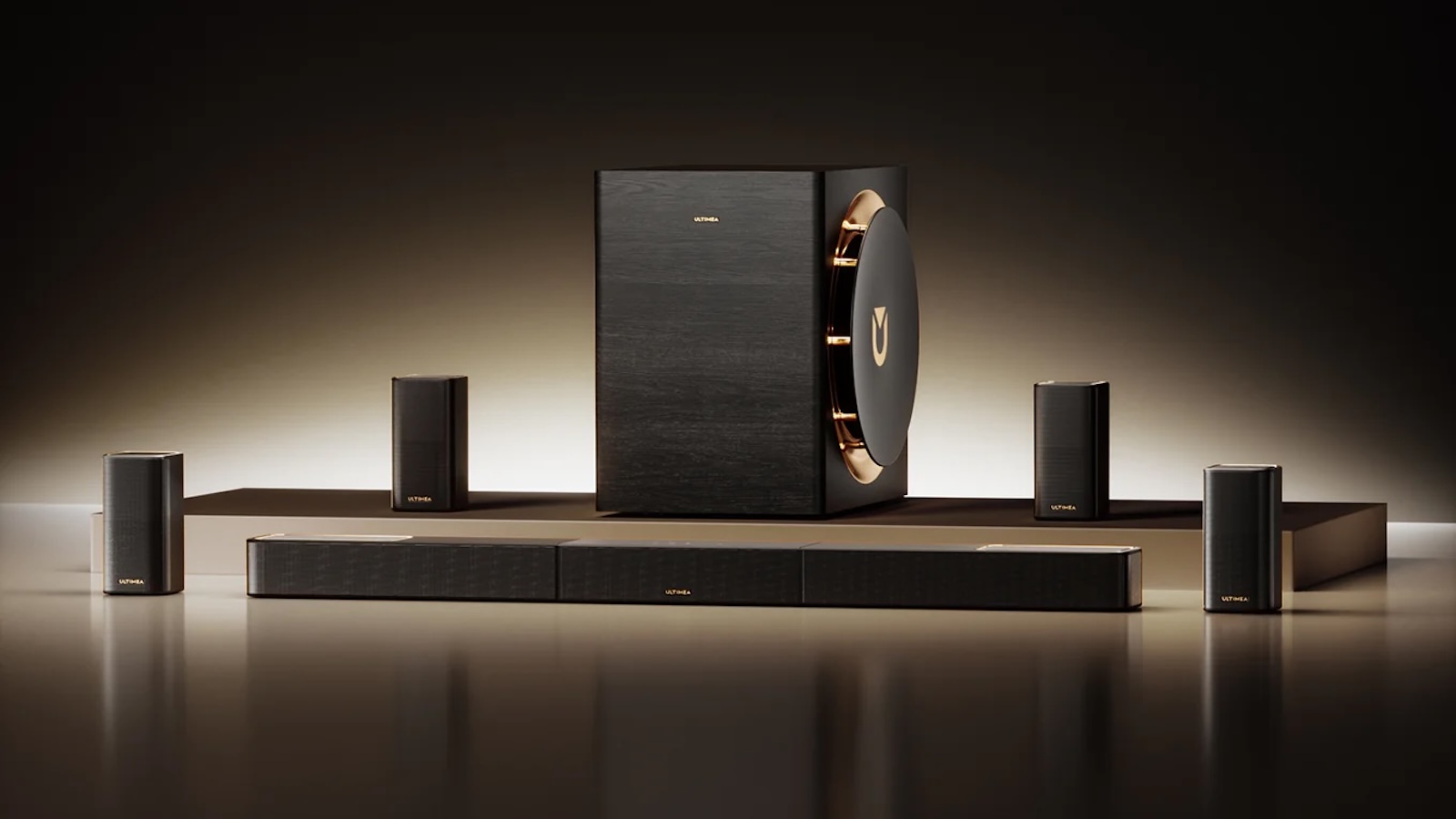
How to choose best wireless home theater system
The right system depends on how much physical separation your room can support, which sound formats your sources use, and whether wireless means the speakers themselves or only Bluetooth streaming.
Channel layout
A 5.1 system has front, center, surround, and subwoofer channels. A 5.1.2 system adds two height channels, while 7.1.4 adds more surround and overhead information. Physical rear speakers usually create more convincing placement than virtual processing from a single bar.
Wireless architecture
Look closely at what wireless means in the listing. The Skywave X40, X50, and X70 are described as fully wireless with dual 5GHz transmission. The Aura A60 Pro has wireless rear connectivity but still uses wires for some front speakers and the subwoofer. The Yamaha packages use speaker wire, even though they include Bluetooth.
Wireless streaming is not the same thing as wireless surround, so check every speaker connection before planning the room.
Dolby Atmos and DTS support
Dolby Atmos uses height information to create sound above the listener. Up-firing drivers need a reasonably suitable ceiling and unobstructed placement, while physical height speakers are a different design. DTS support also matters if your discs or streaming sources use DTS, since the ULTIMEA 5.1.2 Atmos System specifically lists DTS incompatibility.
Dialogue handling
A dedicated center channel anchors speech to the screen. The LG S40TR adds Clear Voice Plus, and the Sony BRAVIA Theater 6 includes a center speaker plus Voice Zoom 3 with compatible BRAVIA TVs. If dialogue is the main frustration, do not judge a system by bass or channel count alone.
Connections and video pass-through
HDMI eARC is useful for sending high-bandwidth audio from a compatible TV to the sound system. The Yamaha YHT-4970U goes further with 4K/120, 8K/60, ALLM, and VRR support. Systems with 4K HDR pass-through can sit between a source and TV, but check the exact video features required by your console or player.
Room size and speaker placement
A large subwoofer and many channels need breathing room. The Aura A60 Pro is recommended for spaces from 108 to 270 square feet, while the X70's 10-inch subwoofer and 43.31-inch bar make more sense in a larger room. For a compact space, a bar such as the Poseidon M60 may produce a cleaner result than an oversized package with speakers placed too close together.
Frequently asked questions
Do wireless home theater systems need any cables?
Most systems still need power cables, and some need speaker wire. The Skywave X40, X50, and X70 are described as fully wireless for the audio system, while the Aura A60 Pro has a mix of wireless rear connectivity and wired speakers. The Yamaha YHT-4950U and YHT-4970U require speaker wire.
Is a soundbar with rear speakers better than a full AV receiver system?
Neither design is automatically better. A soundbar package is usually easier to install and control, while an AV receiver system offers more input flexibility and individual speaker placement. The Yamaha YHT-4970U is the stronger fit for modern source switching, while the Sony BRAVIA Theater 6 is simpler for a television-centered room.
Do all of these systems support Dolby Atmos?
No. The Aura A60 Pro, Skywave X40, Poseidon M60, ULTIMEA 5.1.2 Atmos System, Skywave X70, Skywave X50, Sony BRAVIA Theater 6, and Yamaha YHT-4970U list Dolby Atmos support. The LG S40TR lists Dolby Audio, and the Yamaha YHT-4950U is a conventional 5.1 package without Atmos listed in its features.
What does 5.1.2 mean?
The first number represents the main surround channels, the second represents the subwoofer channel, and the final number indicates two height channels. A 5.1.2 system therefore combines a five-channel surround layout with a subwoofer and two height channels. Actual height performance still depends on speaker placement, room geometry, and the source soundtrack.
Is HDMI eARC necessary?
It is not necessary for every setup, but it is useful for sending higher-bandwidth audio formats from a compatible TV. The Poseidon M60 and ULTIMEA 5.1.2 Atmos System list support for lossless Dolby Atmos through HDMI eARC. If your TV and sources support eARC, it can simplify the connection path.
Can Bluetooth replace a home theater connection?
Bluetooth is useful for music and podcast streaming, but it is not a substitute for a full surround connection. The Yamaha systems use Bluetooth for streaming, while the ULTIMEA Skywave models use separate wireless transmission for their theater channels. Movie and game surround formats are better handled through HDMI or the system's dedicated wireless architecture.
The bottom line
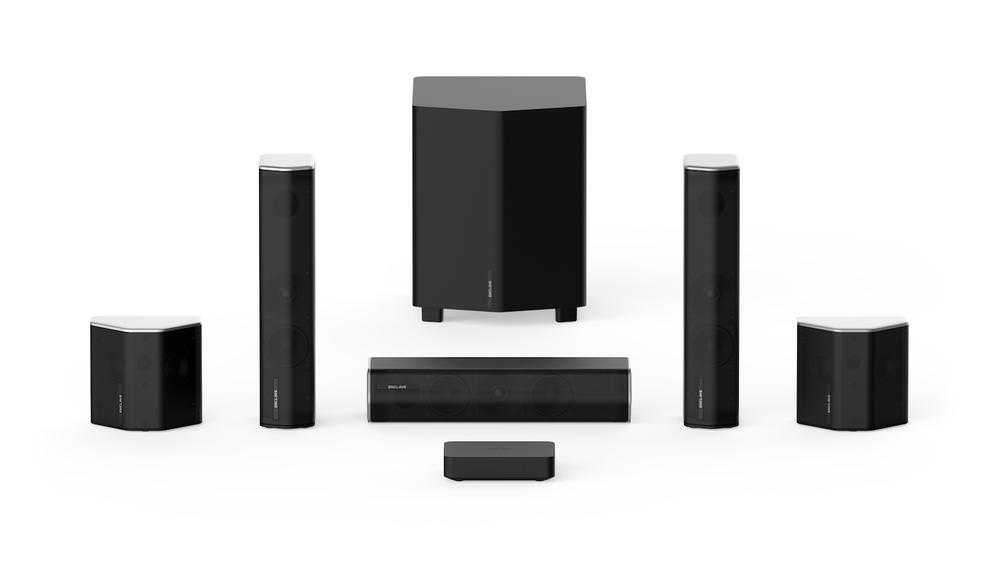
The Best wireless home theater system for most rooms is the ULTIMEA Aura A60 Pro. It combines a 7.1-channel Dolby Atmos layout, four surround speakers, wireless rear connectivity, and unusually extensive app tuning. Choose the ULTIMEA Skywave X40 instead when fully wireless installation matters more than having four physical surround speakers.
For dialogue and easy television control, the Sony BRAVIA Theater 6 and LG S40TR are the more focused picks. For a large room, the ULTIMEA Skywave X70 has the most imposing bass hardware, while the Yamaha YHT-4970U is the specialist choice for 4K/120, 8K, and receiver-based connectivity.
If you are undecided, choose the Aura A60 Pro unless your room requires a fully wireless system or your TV and sources demand the Yamaha's newer video features.
As an Amazon Associate we earn from qualifying purchases.