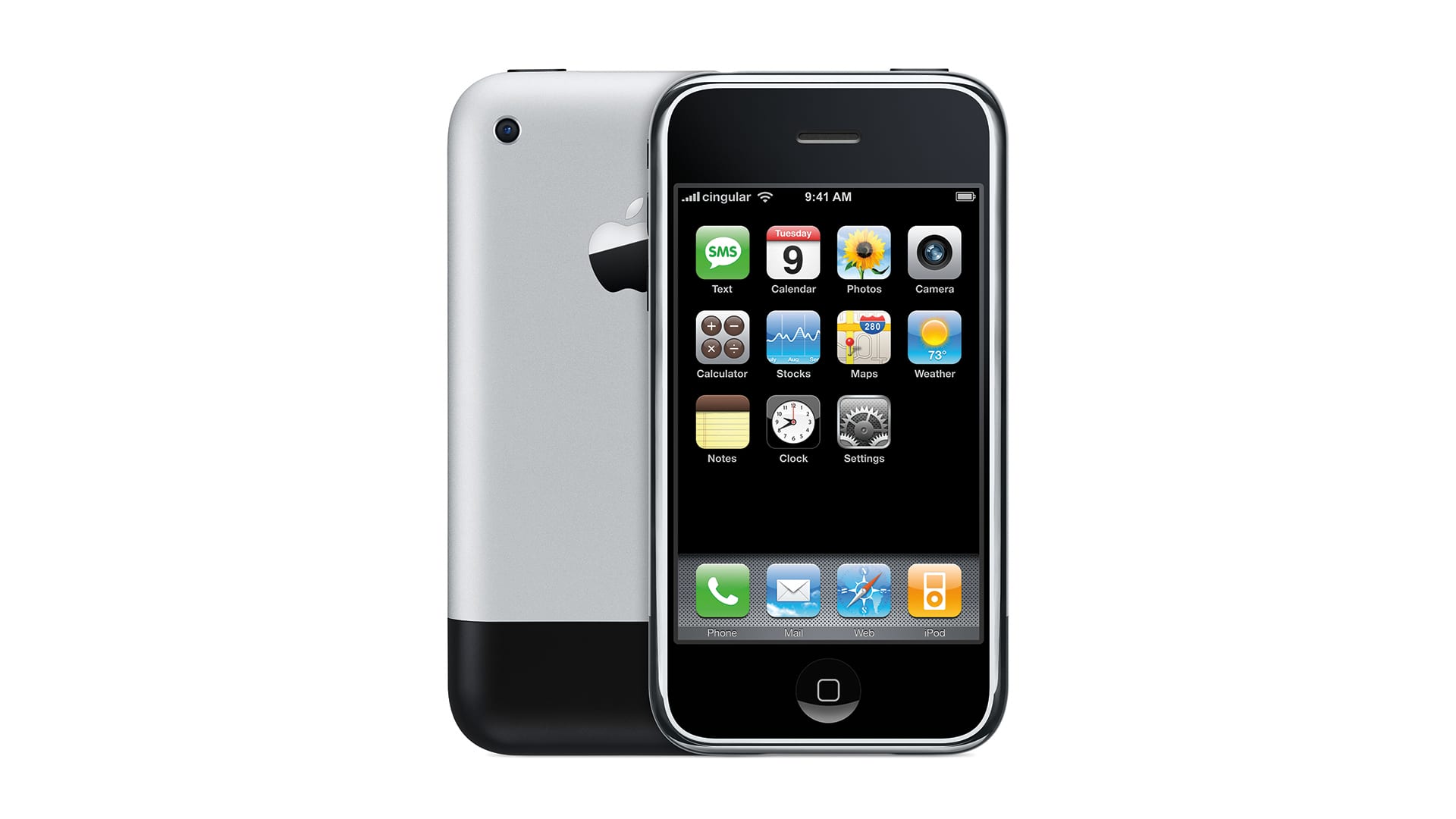

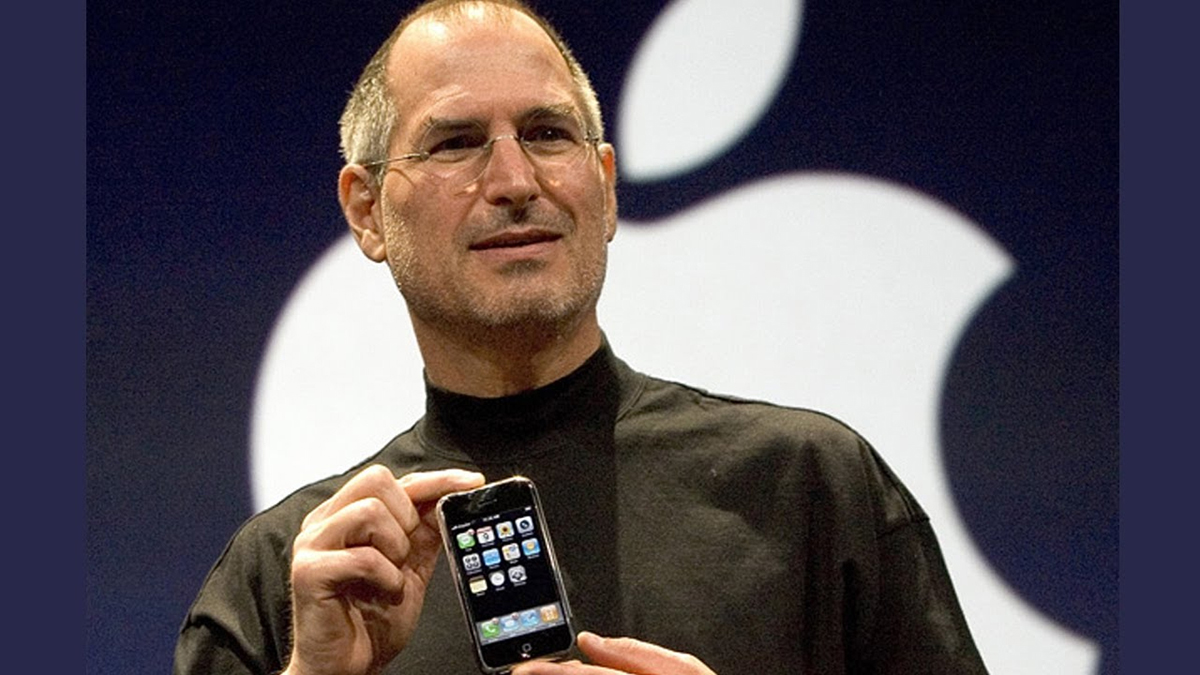
The first iPhone went on sale on June 29, 2007. That original model, announced by Steve Jobs in January of that year, established a pattern of annual updates that has continued for nearly two decades. If you are trying to date a specific iPhone you own or are considering buying, the release timeline below will help you place it.
The First iPhone: June 2007
Apple introduced the original iPhone at Macworld Expo on January 9, 2007. It went on sale in the United States on June 29, 2007, priced with a two-year AT&T contract. The phone had a 3.5-inch display, a 2-megapixel camera, and came in 4 GB and 8 GB storage options. It lacked 3G data, GPS, and the ability to install third-party apps from an App Store (that came a year later).
The original iPhone was sold only in the US. International releases began in late 2007 for the UK, Germany, and France, and expanded to other countries in 2008.
The Annual Release Pattern
After the first model, Apple settled into a yearly cadence. Most iPhones have launched in September, with a few exceptions. Here is a condensed timeline of every major iPhone generation and its US release date.
iPhone 3G, July 11, 2008. Introduced 3G data, GPS, and the App Store.
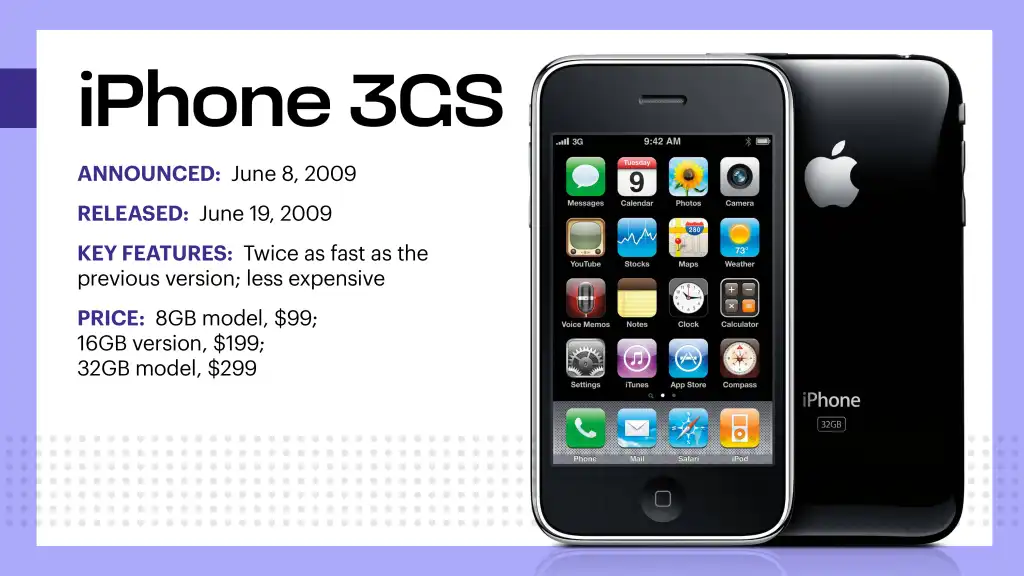
iPhone 3GS, June 19, 2009. Faster processor and a better camera.
iPhone 4, June 24, 2010. Retina display, front-facing camera, and a glass-and-steel design.
iPhone 4S, October 14, 2011. Siri debuted, along with an 8-megapixel camera.
iPhone 5, September 21, 2012. Taller 4-inch screen, Lightning connector.
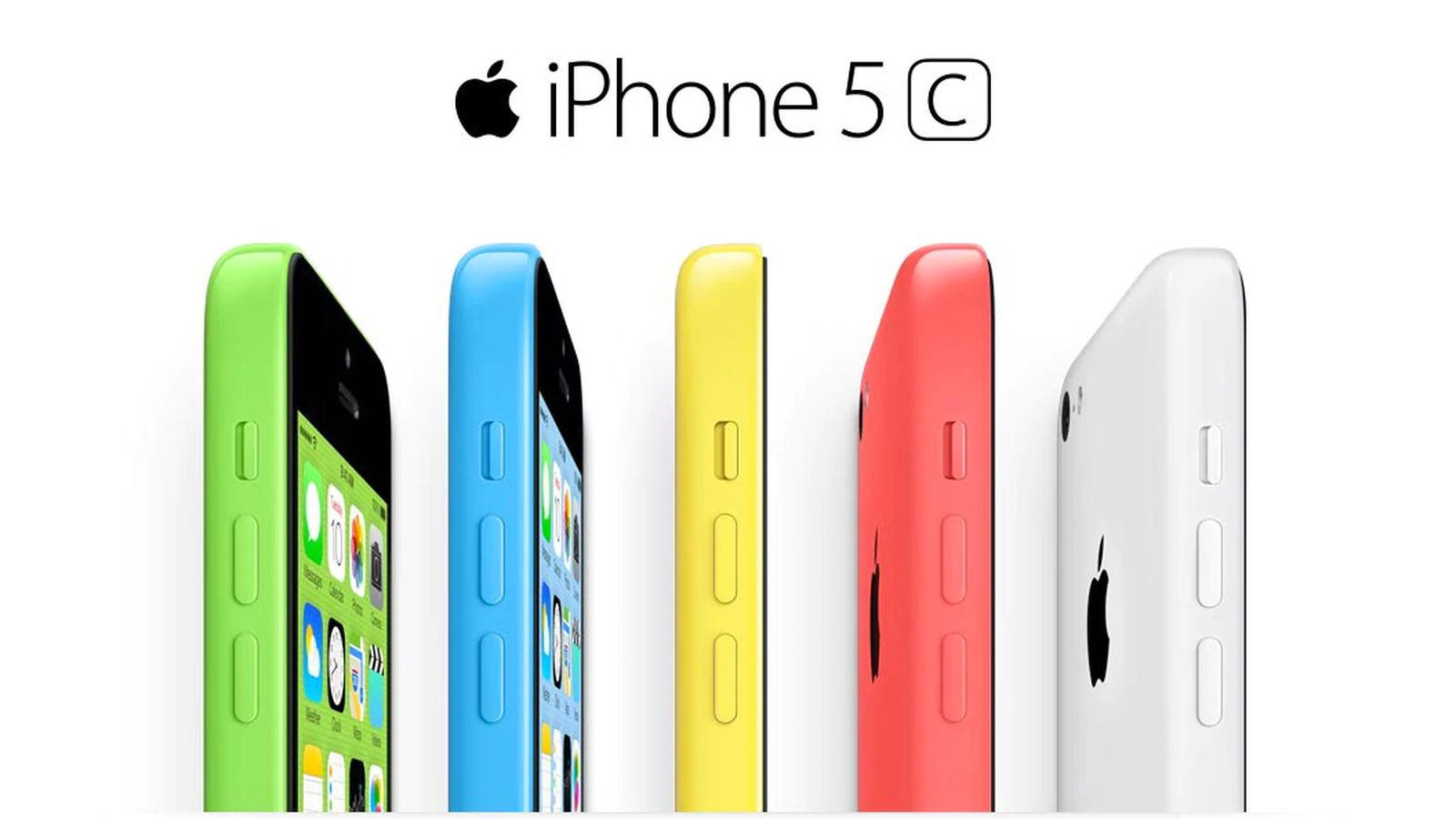
iPhone 5S and 5C, September 20, 2013. The 5S added Touch ID; the 5C was a cheaper plastic model.
iPhone 6 and 6 Plus, September 19, 2014. Larger 4.7-inch and 5.5-inch screens, Apple Pay.
iPhone 6S and 6S Plus, September 25, 2015. 3D Touch and a 12-megapixel camera.
iPhone SE (1st gen), March 31, 2016. A budget model with the iPhone 5S body and iPhone 6S internals.
iPhone 7 and 7 Plus, September 16, 2016. Removed the headphone jack, added water resistance.
iPhone 8 and 8 Plus, September 22, 2017. Wireless charging, glass back.
iPhone X, November 3, 2017. All-screen design, Face ID, OLED display. The 10th-anniversary model launched later than usual.
iPhone XS and XS Max, September 21, 2018. Larger OLED screens, improved cameras.
iPhone XR, October 26, 2018. A more affordable LCD model with the same processor.
iPhone 11, September 20, 2019. Dual cameras, improved battery life.
iPhone 11 Pro and 11 Pro Max, September 20, 2019. Triple cameras, stainless steel frame.
iPhone SE (2nd gen), April 24, 2020. iPhone 8 body with iPhone 11 processor.
iPhone 12 and 12 Pro, October 23, 2020. 5G, flat-edge design, MagSafe.
iPhone 12 Mini and 12 Pro Max, November 13, 2020. Smaller and larger variants.
iPhone 13 and 13 Mini, September 24, 2021. Smaller notch, better cameras, longer battery.
iPhone 13 Pro and 13 Pro Max, September 24, 2021. ProMotion 120 Hz display, telephoto lens.
iPhone SE (3rd gen), March 18, 2022. Same design, A15 chip, 5G.
iPhone 14 and 14 Plus, September 16, 2022. Larger Plus model replaces the Mini.
iPhone 14 Pro and 14 Pro Max, September 16, 2022. Dynamic Island, 48-megapixel camera.
iPhone 15 and 15 Plus, September 22, 2023. USB-C, Dynamic Island for all models.
iPhone 15 Pro and 15 Pro Max, September 22, 2023. Titanium frame, Action button, 5x optical zoom on Pro Max.
iPhone 16 and 16 Pro series, Expected September 2024 (as of this writing, the latest announced models are the iPhone 15 series; Apple typically releases new iPhones every September).
How the Release Schedule Changed Over Time
Apple’s September launch window has been consistent since the iPhone 5. The exceptions were the first-generation SE (March), the iPhone X (November), and the second- and third-generation SE models (April and March). The iPhone 12 family also slipped into October and November due to pandemic-related supply delays.
If you are looking at a used iPhone and want to know its age, the release date is a reliable proxy. Models released in September of any given year are typically sold through the following August, then replaced.
How to Identify Your iPhone’s Generation
If you have an iPhone and are unsure which model it is, the easiest way is to check the model number on the back (for older models) or in Settings > General > About. The model number starts with the letter A followed by four digits (for example, A2487 for the iPhone 12 Pro). You can cross-reference that number with Apple’s support page or a quick web search.
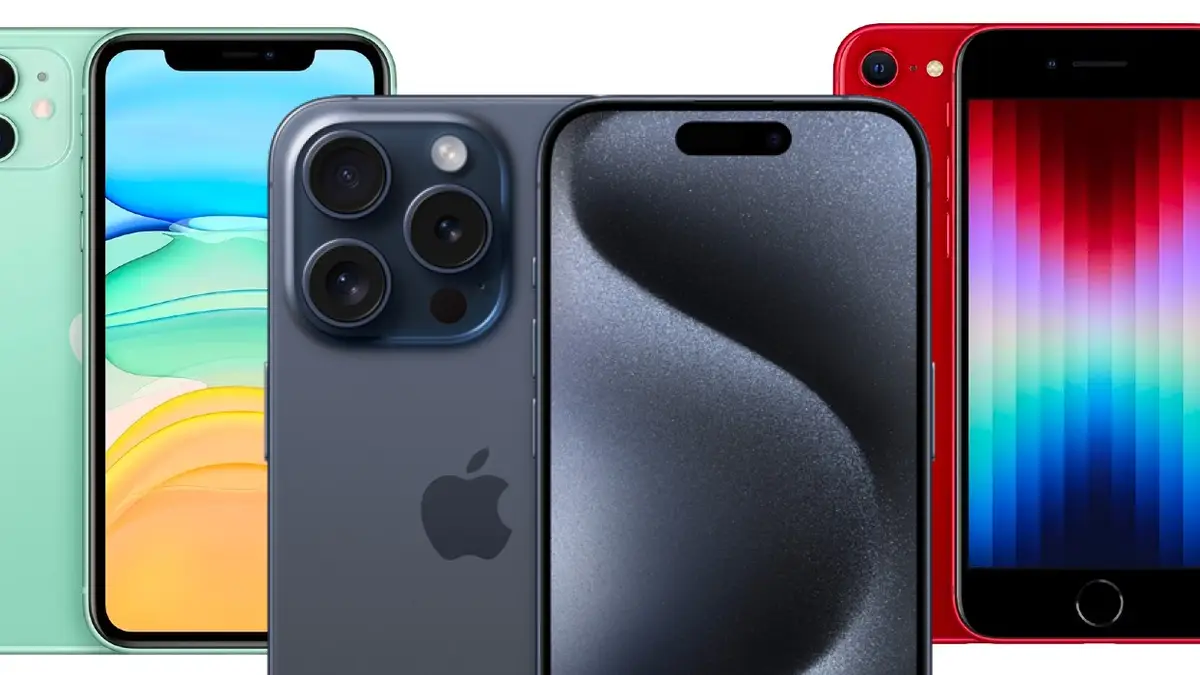
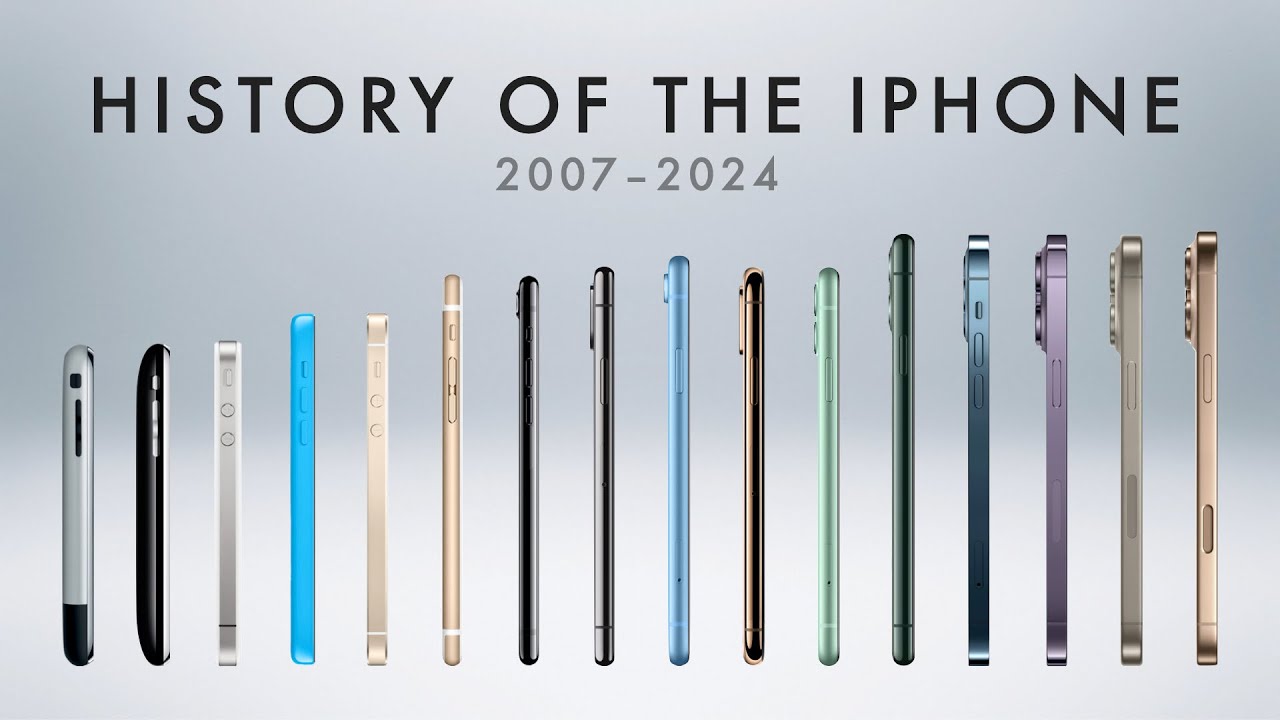
Another method: look at the physical design. The original iPhone had a silver back with a black plastic lower section. The iPhone 4 and 4S have a glass back and a stainless steel band. The iPhone X and later have a notch at the top of the screen. The iPhone 14 and 15 series have a pill-shaped cutout (Dynamic Island) on the Pro models, while the non-Pro models retained the notch until the iPhone 15.
What This Means for Buying a Used or Refurbished iPhone
Knowing the release date helps you judge how much longer a model will receive software updates. Apple typically supports iPhones with new iOS versions for five to six years after release. A phone released in 2018 (iPhone XS) will stop getting major updates sooner than one from 2022 (iPhone 14). If you are shopping for a used iPhone, models from 2020 or later are still receiving current iOS versions as of mid-2026.
Carrier compatibility also depends on generation. 5G arrived with the iPhone 12 in 2020. If you need 5G, avoid anything older than that. For basic calls, texts, and 4G LTE, an iPhone 6S or newer will work on most modern networks, though some carriers have begun phasing out older models.
The iPhone SE line is a special case. The first-generation SE (2016) still works on some networks but lacks modern features like water resistance and a good front camera. The second- and third-generation SE models are more capable and share the same body as the iPhone 8. For a deeper look at whether older SE models are still usable, see how long the iPhone SE remains functional on current networks.
Why the Release Date Matters for Accessories
Cases, screen protectors, and chargers are not universal across all iPhone generations. The Lightning port was used from the iPhone 5 through the iPhone 14; the iPhone 15 switched to USB-C. The physical size changed dramatically with the iPhone 6 (larger screens) and again with the iPhone 12 (flat edges). Knowing the exact model and its release year is essential when buying accessories. For help choosing the right iPhone for your needs, our guide to which iPhone model fits your usage and budget can point you in the right direction.
Frequently Asked Questions
Did the first iPhone support 3G?
No. The original iPhone only supported 2G (EDGE) networks. 3G arrived with the iPhone 3G in 2008.
When did iPhones get waterproofing?
The iPhone 7 (2016) was the first with IP67 water resistance, meaning it could survive immersion in up to 1 meter of water for 30 minutes. The iPhone XS (2018) upgraded to IP68 with deeper immersion.
When did Apple stop including a charger in the box?
Apple removed the power adapter and EarPods from iPhone boxes starting with the iPhone 12 series in 2020. Only a USB-C to Lightning (or USB-C to USB-C for iPhone 15) cable is included.
When did iPhones switch to OLED displays?
The iPhone X (2017) was the first with an OLED screen. All subsequent Pro models have used OLED, while non-Pro models used LCD until the iPhone 12 (which also uses OLED). The iPhone 11 and SE models still use LCD.
When did the iPhone get an always-on display?
The always-on display debuted with the iPhone 14 Pro and Pro Max in 2022. It shows the time, widgets, and wallpaper at a reduced refresh rate.
If you are trying to decide between multiple modern iPhones, our roundup of the best iPhone models for different priorities breaks down the trade-offs between camera quality, battery life, and screen size. Knowing when each model came out is the first step toward making an informed choice.