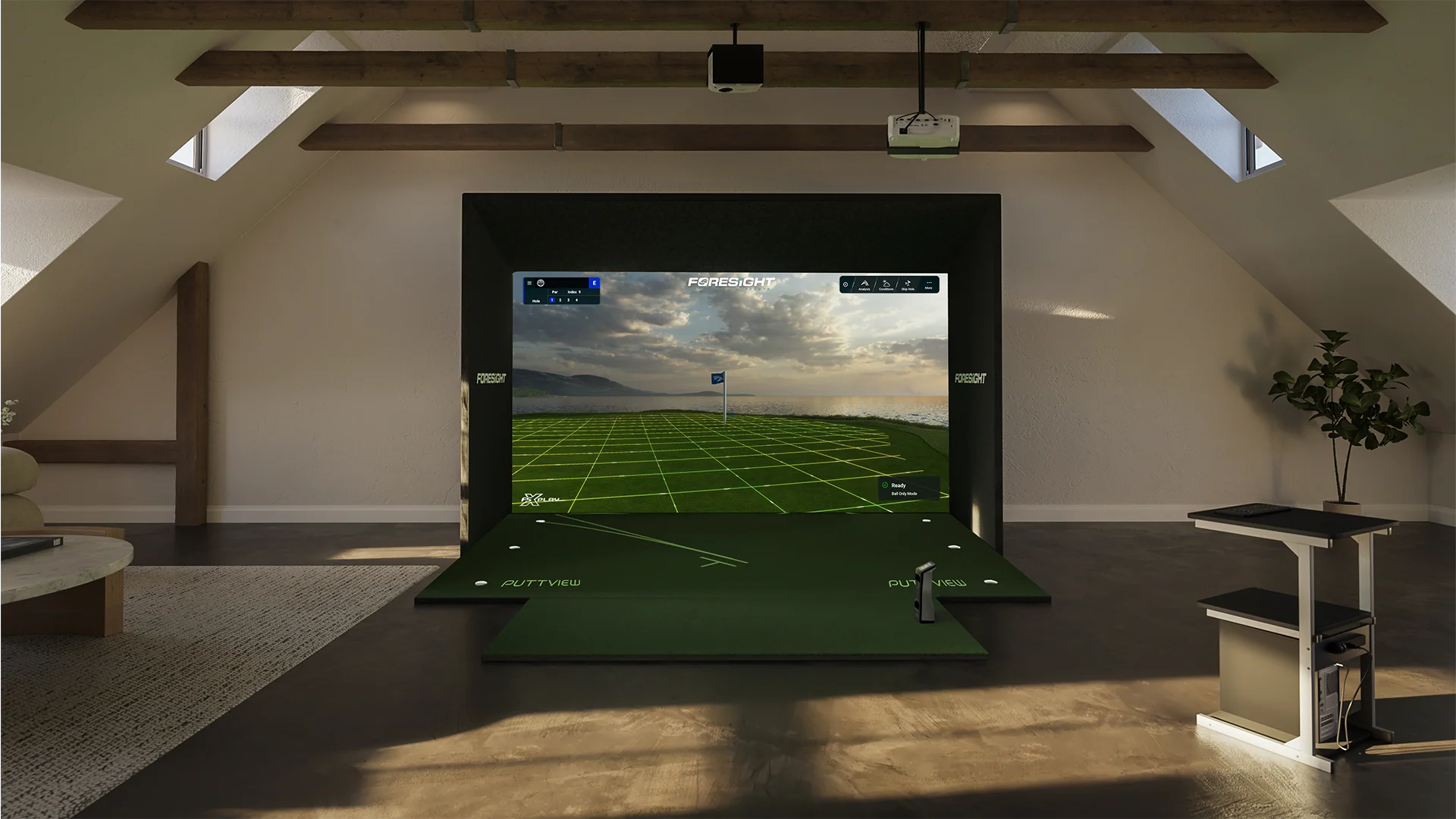

A golf simulator can mean very different things in a spare room. One product here is a motion-tracking swing stick that works with a phone, while another is a full enclosure that needs a projector, launch monitor, and room to swing. Choosing the Best home golf simulator starts with deciding which of those experiences you actually want.
The strongest options fall into three groups: compact trainers for feedback and casual play, launch monitors for measurable shot data, and impact-screen enclosures for building a dedicated bay. We compared the equipment, dimensions, safety features, setup claims, and what each package leaves you to supply.
Our top pick is the Rapsodo MLM2PRO, while the PHIGOLF Home Golf Simulator is the easiest way to practice without building a room around the hobby. The remaining picks range from portable nets to larger blackout enclosures.
| # | Product | Award | Footprint or size | Screen and enclosure | Best for |
|---|---|---|---|---|---|
| 1 | Rapsodo MLM2PRO | Best overall | 12.2 x 6.3 x 2.75 inches | Launch monitor with simulator support | Shot data and serious practice |
| 2 | PHIGOLF Home Simulator | Best compact trainer | 27.6-inch swing stick | App-based motion tracking | Small spaces and casual play |
| 3 | Golf Daddy Swing Trainer | Best no-ball trainer | 6 x 3 feet | App-based AI feedback | Quiet daily practice |
| 4 | ANYTHING SPORTS 11-Foot Enclosure | Best complete enclosure | 11 x 8 feet 4 inches x 5 feet | 4K-ready screen, blackout cage | A dedicated garage bay |
| 5 | GoSports 10 x 8 Enclosure | Best heavy-duty enclosure | 10 x 8 feet | HD impact screen, blackout panels | Repeated full-speed practice |
| 6 | ZivPlay Home Garage Enclosure | Best for safety coverage | 10 feet 7 inches x 8 x 5 feet | 4:3 screen, side shank nets | Indoor family practice |
| 7 | Haokelball 10 x 8 Cage | Best portable cage | 10 x 8 x 6 feet | Anti-sag impact screen | Indoor or outdoor use |
| 8 | LPALNTYS 10 x 8 Practice Net | Best ball-return net | 10 x 8 x 5.5 feet | Dual-layer HD screen | Backyard practice |
| 9 | Tensilex 10 x 8 Enclosure | Best quick-connect frame | 10 x 8 feet | HD screen, blackout panels | Simple simulator builds |
| 10 | ANYTHING SPORTS 12-Foot Enclosure | Best larger enclosure | 12 x 9 feet 4 inches x 5 feet | 4K-ready screen, blackout cage | More hitting width |
1. Rapsodo MLM2PRO: Best Overall

Pros
- Tracks 15 useful shot and club metrics
- Combines Doppler radar with dual-camera capture
- Supports iOS and Android devices
- Includes video capture and slow motion review
- Offers simulator courses and target practice
Cons
- It is a launch monitor, not a complete enclosure
- The full Premium experience begins with a limited trial
- You still need a hitting area and compatible display
Best for: golfers who want meaningful swing and ball data alongside simulator play.
The Rapsodo MLM2PRO is the product here that most closely resembles the brain of a serious home golf simulator. It does not pretend to be a cage, mat, or projector. Instead, it concentrates on the part that makes practice useful: showing what the club and ball did after the swing. Pair it with a suitable hitting area and a phone, tablet, or larger display, and it becomes a flexible foundation rather than a fixed room installation.
Its feature set is unusually specific. Doppler radar and dual-camera capture track 15 metrics, including spin rate, spin axis, ball speed, club speed, club path, launch angle, and carry distance. That mix matters because carry alone tells only part of the story. Club path and launch angle help explain direction, while spin information can reveal why a shot climbed, curved, or fell short. The unit connects over Bluetooth to iPhone, iPad, and Android devices, so you can review shots without being tied to one operating system.
The simulator side is substantial too. Rapsodo lists more than 30, 000 simulator courses, along with target practice, multiple tee boxes, and game formats. Video swing capture and slow-motion review give the data a visual counterpart. That makes the MLM2PRO a more complete practice tool than the motion-only PHIGOLF Home Simulator, especially for someone trying to connect a swing change with the resulting ball flight. It also gives you a more analytical experience than the no-ball Golf Daddy Swing Trainer.
There is a practical limitation: this is not an all-in-one bay. You need to supply the mat, ball flight space, screen or display, and safe surroundings. The included three ProV1 balls are useful for getting started, but they do not turn the unit into a finished room. The 12.2-inch height and 6.3-inch width make the monitor itself easy to position, yet the real space requirement comes from your swing and ball flight.
The 45-day Premium trial is another detail to understand before buying. It includes simulator courses, third-party simulator apps, Target Range, Impact Vision, and Rapsodo Combine during that trial period. After that, the experience may depend on which software features you want to keep using. Choose the MLM2PRO if shot feedback is the priority and you are prepared to build the practice space around it.
2. PHIGOLF Home Simulator: Best Compact Trainer

Pros
- Simple setup with a 9-axis motion sensor
- Works with compatible Android and iOS devices
- Includes swing feedback and AI coaching features
- Supports solo, local, and supported online play
- Offers more than 38, 000 courses through its listed platforms
Cons
- Motion tracking is not the same as measured ball data
- It does not provide an enclosure or projection screen
- The swing stick is intended for indoor use unless paired with a compatible club
Best for: households that want interactive golf practice without a permanent hitting bay.
The PHIGOLF Home Simulator is the most approachable pick in this group. Its included golf swing stick is about 27.6 inches long and weighs roughly 1.3 pounds, so it is far less demanding to accommodate than a full driver swing into a screen. You can pick it up for a quick practice session, play a round with friends, or use the system as a more engaging alternative to repeating dry swings.
A 9-axis motion sensor tracks movement and sends it to the compatible PHIGOLF app on Android or iOS devices. The appeal is not just that it recognizes a swing. The system is designed around practice sessions, virtual driving ranges, course play, and swing feedback. Its listed support for more than 38, 000 courses through PHIGOLF and E6 Connect gives the product a wide range of ways to stay interesting after the novelty of the first few swings wears off.
The AI golf swing coach adds body pose tracking, swing metrics, visual annotations, and corrective feedback. That makes it more instructional than a simple game controller. It still is not a replacement for the ball and club measurements supplied by the Rapsodo MLM2PRO, but the feedback can help a beginner focus on movement and consistency without needing to protect a wall from real shots.
The main weakness is also its defining choice. PHIGOLF tracks swing movement rather than presenting the same depth of ball and club data as a launch monitor. Experienced golfers who need spin rate, ball speed, or club path should choose Rapsodo instead. The included stick can also feel less natural than a full club, although the sensor can be attached to a compatible real golf club for outdoor practice.
PHIGOLF is the pick for a family room, office, or compact practice corner where safety and convenience matter more than a projected image. It is also the easiest way into the Best home golf simulator category for someone who wants game modes and feedback before committing to a cage, projector, and hitting mat.
3. Golf Daddy Swing Trainer: Best No-Ball Trainer

Pros
- Allows practice without hitting golf balls
- AI-powered swing analysis and predicted ball flight
- Includes a phone tripod setup
- Works indoors and outdoors
- The 6 by 3-foot mat suits compact practice areas
Cons
- It is not a real-ball launch monitor
- The app and phone are central to the experience
- It does not create a projected course environment
Best for: golfers who want quiet, repeatable swing work in a living room, office, garage, or backyard.
The Golf Daddy Swing Trainer takes a different route from every enclosure in this roundup. There is no need to send a ball into a screen, and there is no need to find enough room for a complete cage. The package uses a golf practice mat, a phone on a tripod, and an app that analyzes the movement. For daily practice, that can be a more realistic routine than a larger simulator that takes a dedicated room to use.
The mat measures 6 feet by 3 feet, giving you a defined area for setup and stance without taking over a garage. Golf Daddy says the system can be used indoors or outdoors and is designed for apartments, offices, living rooms, backyards, and garages. The no-ball approach also makes it easier to practice when other people, pets, walls, or parked vehicles are nearby.
Its AI-powered tracking analyzes the swing and predicts ball flight, while real-time feedback is intended to help identify mistakes and build consistency. The phone-based setup is deliberately simple: place the phone on the tripod, open the app, and start swinging. This is less data-rich than the Rapsodo MLM2PRO, which tracks 15 ball and club metrics, but it asks much less of the room and the user.
The trade-off is realism. A predicted ball flight is not the same as measuring a struck ball, and golfers who need spin rate, launch angle, or carry distance should move up to Rapsodo. Golf Daddy is also not a social course simulator in the same sense as PHIGOLF Home Simulator. Its strength is focused repetition and feedback, not a complete virtual round with a large projected image.
Choose it if the best practice session is the one you will actually repeat. For a golfer who wants to work on movement every day without assembling a cage, the Golf Daddy setup is more practical than a full enclosure and more focused than a game-first trainer.
4. ANYTHING SPORTS 11-Foot Enclosure: Best Complete Enclosure

Pros
- Includes frame poles, side shank nets, and projector mount
- 4K-ready impact screen
- Blackout cage helps limit light bleed
- Listed setup time is under an hour
- Includes a 12-month warranty
Cons
- Projector and turf are not included
- The enclosure weighs about 86 pounds
- Its 11-foot width and 12-foot height need careful room planning
Best for: golfers building a dedicated garage or basement simulator around their own projector and launch monitor.
The ANYTHING SPORTS 11-Foot Enclosure is the most complete enclosure package in the first version of this design. It includes the frame poles, impact screen, blackout cage, side shank nets, and a projector mount. That matters because the enclosure itself is often only one part of a simulator bay. The package gives you a clearer starting point than a basic net, although you still need to supply the projector and turf shown in the product presentation.
Its listed dimensions are 11 feet wide, 8 feet 4 inches high, and 5 feet deep, with a product weight of about 86 pounds. That is a substantial structure, but it is not unusually deep for a home bay. The height is the detail to check first. A garage may have enough floor area yet still lack the overhead clearance needed for a comfortable full swing and the frame above it.
The impact screen is described as 4K-ready and precision-sized to sit about 1 inch inside the frame. That tight fit is meant to reduce light bleed around the edges and create a cleaner projection surface. The blackout enclosure should help the projector image stand out, while the side shank nets provide a second layer of protection from mis-hits. Those features give it a more finished presentation than the open practice format of the LPALNTYS Practice Net.
Assembly is positioned as a no-special-tools job that can go from unboxing to first swing in under an hour. That is a useful claim, but the actual work will still include finding a clear room, organizing the poles, tensioning the screen, and positioning the separate equipment. The included projector mount is a genuine convenience, though it does not eliminate the need to choose and align a projector.
The real weakness is the space commitment and the incomplete electronics package. This is not the right pick for an apartment or a golfer who only wants swing feedback. It makes sense for someone who wants a proper projected bay, needs blackout coverage, and values the included mounting hardware and 12-month warranty.
For planning the display side, the room and throw-distance questions for a home projector deserve attention before you assemble the frame. A good screen cannot compensate for a projector mounted in the wrong position.
5. GoSports 10 x 8 Enclosure: Best Heavy-Duty Enclosure

Pros
- Commercial-grade multilayer impact screen
- True blackout enclosure design
- Foam padding helps reduce rebound
- Includes frame and installation hardware
- 10 by 8-foot layout suits a dedicated bay
Cons
- It weighs about 79 pounds
- Projector, launch monitor, and hitting mat are separate
- The 127.2-inch length needs more than a shallow wall niche
Best for: golfers who expect frequent high-speed ball impacts and want a substantial enclosure frame.
The GoSports 10 x 8 Enclosure is aimed at the golfer who wants the enclosure to feel like permanent equipment rather than a temporary practice net. Its 10 by 8-foot size is familiar for a home simulator, while the listed 127.2-inch length and 72-inch width in the product dimensions underline that the assembled structure needs a properly measured room. At about 79 pounds, it is not something most people will casually move between sessions.
The multilayer impact screen is described as commercial grade and built for high-speed golf ball impacts. Its job is not only to show the projected image. It also needs to absorb the ball and minimize rebound. GoSports adds foam padding to the enclosure, which should make the area more forgiving around the frame and help create a safer practice environment.
The true blackout design is one of its strongest features. By blocking outside light, the enclosure can help a projector image appear brighter and more immersive. That is particularly useful in a garage where daylight enters from doors or windows. The ANYTHING SPORTS 11-Foot Enclosure also includes blackout coverage and a projector mount, but GoSports puts more emphasis on the heavy-duty screen, padding, and reinforced construction.
Setup is described as straightforward, with quick installation hardware and readable instructions. The frame and HD impact screen kit give you the main physical pieces, but the product remains an enclosure rather than a complete electronic simulator. You will need to choose the launch monitor, hitting mat, projector, and software separately. That separation is useful for customization, but it makes the planning more involved.
Skip it if you want a compact trainer or a cage that can be stored after every session. The weight, length, and dedicated layout are the cost of a more substantial practice environment. For a golfer who expects repeated full-speed swings and wants a dark projection surface with rebound control, GoSports is one of the more convincing enclosure choices.
6. ZivPlay Home Garage Enclosure: Best for Safety Coverage

Pros
- Includes two 8 by 8-foot side shank nets
- Edge foam padding helps control rebound
- 500D polyester impact screen
- 4:3 screen format is designed for projector alignment
- Listed assembly time is 30 minutes
Cons
- Requires a 9-foot ceiling
- Projector, launch monitor, and hitting mat are not included
- The screen format is less suited to people seeking a wide display
Best for: indoor golfers who put mis-hit protection and side coverage ahead of a broad cinematic screen.
The ZivPlay Home Garage Enclosure is built around containment. Its frame measures about 10 feet 7 inches wide, 8 feet high, and 5 feet deep, and the package includes two side shank nets measuring 8 by 8 feet. Those side panels are important in a home setting because a poor strike does not always travel straight toward the impact screen.
ZivPlay also uses edge foam padding over the steel frames to help control rebound and protect players around the structure. The screen is made from high-strength 500D polyester and is described as compatible with major launch monitor systems. That combination makes the enclosure more suitable for real golf balls than a lightweight decorative backdrop, though safe installation still depends on proper clearance and careful inspection.
The 4:3 impact screen is optimized for projector alignment and simulator accuracy. It is a sensible format for a traditional simulator image, but golfers who want a broad modern display may prefer to think carefully about their projector and software setup. The GoSports 10 x 8 Enclosure offers a more explicitly blackout-focused design, while ZivPlay puts more of its identity into side protection and edge padding.
The 30-minute installation claim is appealing for a garage project, but the room requirements should come first. ZivPlay says the setup needs a 9-foot ceiling and adequate hitting distance based on the launch monitor. The listed product dimensions also show why the assembly area needs to be clear before the box is opened.
The weakness is that the screen format and missing equipment limit how turnkey the system feels. You still need a hitting mat, projector, and launch monitor, and the 4:3 layout may not suit every display plan. Pick ZivPlay when safety coverage is the deciding factor, especially for a shared indoor practice space where a shank deserves more attention than a slightly wider image.
A proper indoor bay also depends on the computer or tablet running the software. Before choosing one, consider how much room a simulator computer setup needs around the hitting area, including ventilation and cable routing.
7. Haokelball 10 x 8 Cage: Best Portable Cage

Pros
- Full side and overhead enclosure protection
- 10 x 8 x 6-foot practice area
- Anti-sag support rod and tension points
- Reinforced steel frame with 5-ply netting
- Suitable for indoor or outdoor use
Cons
- Projector, launch monitor, software, and mat are not included
- A six-foot depth still requires careful room planning
- It lacks the included projector mount found on some larger packages
Best for: golfers who want a movable real-ball cage that can work inside or outside.
The Haokelball 10 x 8 Cage is the most versatile physical enclosure in this group. Its stated footprint is 10 feet wide, 8 feet high, and 6 feet deep, giving the golfer room for drivers, irons, wedges, and chip shots. The extra depth compared with some five-foot-deep designs can make the setup more comfortable, but it also needs a longer clear area in a garage or backyard.
The cage uses side netting and overhead protection to contain slices, shanks, and high shots. Its impact screen includes a reinforced top support rod and multiple tension points intended to limit sag. That detail matters for simulation because a loose screen can produce a distracting image and a less predictable impact response.
The frame is reinforced steel and the netting is described as five-ply. Haokelball positions the cage for repeated indoor or outdoor practice, so it is a better fit for someone who wants to move between a garage and backyard than the heavier, more permanent-feeling GoSports 10 x 8 Enclosure. It is also more physically substantial than a simple practice net, with protection above and to both sides.
The package does not include the projector, launch monitor, simulator software, or hitting mat. That omission is not unusual in this category, but it is easy to overlook when a product is described as simulator-ready. You are buying the enclosure and screen, not the electronics that calculate the shot or display a virtual course.
The anti-sag design is a useful advantage, yet this remains a flexible cage rather than a heavily finished blackout room. Users who want the cleanest projected image may prefer the blackout panels on the Tensilex 10 x 8 Enclosure or GoSports. Choose Haokelball if portability, full overhead protection, and indoor or outdoor use matter more than a polished permanent installation.
8. LPALNTYS 10 x 8 Practice Net: Best Ball-Return Net

Pros
- Dual-layer HD impact screen
- Sloped base returns balls toward the golfer
- Six-ply tear-resistant netting
- Includes fiberglass poles, steel base, and four ground stakes
- Indoor and outdoor dimensions suit many practice areas
Cons
- The assembled net is less finished than a blackout enclosure
- Projector, launch monitor, and mat are separate
- The listed product dimensions are not the same as its assembled footprint
Best for: golfers who want repeated ball practice with less time spent retrieving shots.
The LPALNTYS 10 x 8 Practice Net is the most training-oriented net in the roundup. Its assembled dimensions are listed as 10 feet wide, 8 feet high, and 5.5 feet deep, which gives it a useful balance between swing room and manageable depth. The package is intended for backyard use, but the same general layout can fit a garage, basement, or indoor practice area after measuring the ceiling and hitting distance.
The dual-layer HD impact screen is designed for simulator use and is listed at approximately 231 by 218 centimeters. That screen can accept a projected image, but the package is still fundamentally a net system. It does not include the launch monitor, projector, or hitting mat, and it does not provide the blackout treatment found on the ANYTHING SPORTS 11-Foot Enclosure.
The standout feature is the sloped ball-return system. An angled bottom net guides the ball back toward your feet after impact, while the reinforced base net helps stop balls from rolling away. That can change the rhythm of practice. Instead of walking behind the screen or collecting balls from the corners, you can reset and make the next swing sooner.
Construction is aimed at hard use. LPALNTYS lists six-ply tear-resistant netting with dual reinforced stitching, 16mm flexible fiberglass poles, a steel base, and four ground stakes. The flexible poles are intended to cushion vibration while keeping the frame upright. Those details make it more reassuring for repeated shots than a minimal pop-up net, although outdoor stability will still depend on proper staking.
Its weakness is presentation. The open practice-net design will not create the dark, enclosed look of the GoSports 10 x 8 Enclosure, and the screen may need more careful projector positioning. Choose LPALNTYS if efficient ball retrieval and flexible indoor or outdoor practice are more important than a finished simulator-room appearance.
9. Tensilex 10 x 8 Enclosure: Best Quick-Connect Frame

Pros
- 10 by 8-foot enclosure layout
- Includes blackout side and top panels
- Dual shank nets add mis-hit protection
- Quick-connect steel frame
- Screen is designed to absorb repeated strikes
Cons
- The product information does not provide a detailed screen material
- Projector, launch monitor, and hitting mat are separate
- Product dimensions list a 24-inch width that should be verified against the assembled setup
Best for: golfers who want a straightforward frame kit with blackout coverage and side protection.
The Tensilex 10 x 8 Enclosure is a conventional home simulator enclosure with the pieces most buyers expect: a 10 by 8-foot cage, HD impact screen, blackout panels, side shank nets, and a steel frame. Its appeal is simplicity. You can build the physical bay first, then add the projector, launch monitor, and mat that suit your room and software preferences.
The HD screen is described as being able to absorb thousands of real golf ball strikes while maintaining image clarity. The smooth projection surface is intended for practice, training, and virtual play. The blackout panels on the sides and top should reduce ambient light and help contain balls, which gives the setup a more controlled look than an exposed net.
The dual shank nets are useful for golfers who share the room with other people or equipment. A straight impact screen cannot protect every angle of a poor swing, so side coverage is a meaningful part of the enclosure. That brings Tensilex closer to the safety-minded ZivPlay Home Garage Enclosure, although ZivPlay provides more specific information about its 500D polyester screen and edge foam padding.
Assembly uses a quick-connect design and is presented as easy to install. The product dimensions list a height of 98 inches, a length of 120 inches, and a width of 24 inches, while the package itself is described as a 10 by 8-foot enclosure. Because those measurements do not describe the same apparent footprint, measure the available room and verify the assembled configuration before committing to a tight space.
This is not the package for someone seeking a complete electronic simulator. It is a physical enclosure with a screen and safety elements, and its advantage is the frame and blackout treatment rather than included technology. Choose Tensilex when you want a familiar 10 by 8-foot structure, quick-connect assembly, and a darkened practice area without the extra projector mount supplied by the larger ANYTHING SPORTS package.
10. ANYTHING SPORTS 12-Foot Enclosure: Best Larger Enclosure

Pros
- Wider 12-foot package option
- 4K-ready impact screen
- Blackout cage and side shank nets
- Includes projector mount and frame poles
- Backed by a 12-month warranty
Cons
- Projector and turf are not included
- The enclosure weighs about 86 pounds
- It requires more room than the 11-foot version
Best for: golfers with the room for a wider dedicated bay and a preference for the larger ANYTHING SPORTS layout.
The ANYTHING SPORTS 12-Foot Enclosure is the wider sibling to the 11-foot version near the top of this list. The listed package size is 12 feet wide, 9 feet 4 inches high, and 5 feet deep. That extra width can make a simulator bay feel less cramped, especially for golfers who want more lateral room around the hitting position or want the enclosure to serve more than one player.
It uses the same basic concept as the smaller package: a 4K-ready impact screen, blackout cage, frame poles, side shank nets, and a projector mount. The screen is described as being about 1 inch smaller than the frame for near-full coverage and reduced light bleed. That is a useful arrangement for projection because fewer gaps show around the image.
The blackout treatment and side nets provide a more controlled practice environment than the open LPALNTYS 10 x 8 Practice Net. It also has an advantage over a bare enclosure kit because the projector mount is included. Still, the projector and turf shown in the presentation are not part of the package, so the system remains a physical foundation rather than a ready-to-play electronic simulator.
The listed weight is about 86 pounds, matching the smaller ANYTHING SPORTS package. Assembly is advertised as requiring no special tools and taking under an hour, with a 12-month no-questions-asked warranty and U.S.-based phone and email support during stated weekday hours. Those details may matter to a buyer tackling a larger home installation without wanting a custom build.
The obvious limitation is clearance. At nearly 9 feet 4 inches high and 12 feet wide, this is not a fit for every garage, and the wider frame does not remove the need for safe hitting distance behind the ball. Choose it over the 11-foot version only when the room genuinely supports the added width. It is the right final pick for golfers who want the broadest physical bay in this group and plan to add their own electronics.
How to choose best home golf simulator
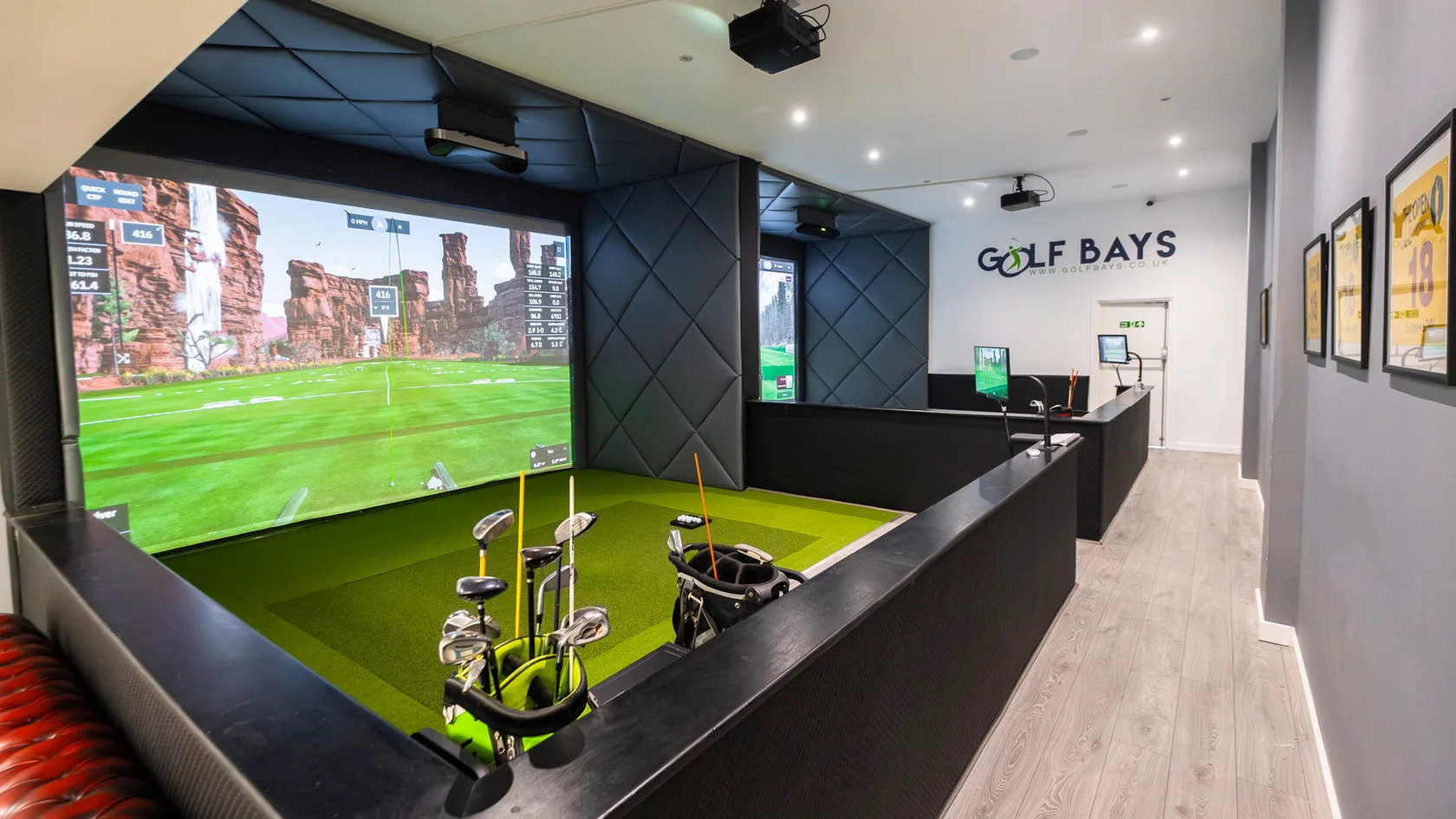
Start by deciding if you want swing analysis, a real-ball launch monitor, or a physical enclosure. The right equipment depends more on that choice than on the word “simulator” in a product title.
Practice method
Motion trainers such as PHIGOLF Home Simulator read movement and turn it into app feedback or gameplay. The Golf Daddy Swing Trainer goes further toward quiet, no-ball repetition with phone-based AI analysis. A launch monitor such as Rapsodo MLM2PRO measures the result of a real strike and gives you more useful information about ball flight.
For beginners or people with limited space, movement feedback may be enough to create a consistent practice routine. Golfers working on carry, spin, launch, or club path should use a system designed to capture those measurements.
The most useful simulator is the one that matches the swing data you are actually trying to improve.
Enclosure dimensions
Measure width, height, depth, ceiling clearance, and hitting distance before choosing a frame. A package described as 10 by 8 feet still needs room for the golfer, mat, launch monitor, projector, cables, and safe movement behind the ball.
The ZivPlay Home Garage Enclosure calls for a 9-foot ceiling, while the larger ANYTHING SPORTS package reaches 9 feet 4 inches. A five-foot-deep cage may fit where a six-foot cage does not, but less depth can make equipment placement more demanding.
Impact screen and rebound control
The screen needs to absorb real strikes while providing a reasonably flat projection surface. Multilayer screens, reinforced stitching, tension points, and padding all matter. The GoSports 10 x 8 Enclosure emphasizes a multilayer commercial-grade screen and foam padding, while Haokelball 10 x 8 Cage uses an anti-sag support rod and multiple tension points.
No screen makes careless installation safe. Check the frame, seams, side protection, and the area behind the enclosure before hitting real balls.
Blackout and projector setup
Blackout panels help reduce ambient light and make a projected image easier to see. They also give a bay a more enclosed appearance. The ANYTHING SPORTS, GoSports, and Tensilex packages include blackout elements, while the open practice nets are more flexible but less controlled visually.
A projector mount can simplify alignment, but it does not replace choosing a projector with suitable throw distance, brightness, and image format. The 4:3 screen on ZivPlay and the 4K-ready screens in the ANYTHING SPORTS packages should be considered alongside the display hardware, not in isolation.
Safety and portability
Side shank nets and overhead coverage matter when the bay is in a shared garage, basement, or family room. ZivPlay includes two side nets, while Haokelball provides side and overhead protection. Outdoor users should also consider stakes, frame flexibility, and whether the net can be secured against movement.
Portable setups are easier to relocate, but permanent frames can provide a more stable projection surface. The LPALNTYS 10 x 8 Practice Net adds a sloped ball return, which is particularly useful for repetitive sessions.
Frequently asked questions
Do these products include a projector?
No. The projector is not included with the ANYTHING SPORTS packages, and the other enclosure products also require you to supply display equipment. The packages provide screens or nets, while the launch monitor, projector, software, and hitting mat vary by product and are usually separate.
Which option measures ball flight?
The Rapsodo MLM2PRO is the clearest choice for measured shot data. It uses Doppler radar and dual-camera capture to track 15 metrics, including spin rate, ball speed, club speed, club path, launch angle, and carry distance.
Can I use a simulator without hitting real golf balls?
Yes. PHIGOLF Home Simulator uses a motion sensor and swing stick, while Golf Daddy Swing Trainer is designed for no-ball practice with phone-based AI feedback. These products need much less space and offer a quieter routine than an impact-screen enclosure.
How much ceiling height do I need?
There is no single answer because the golfer, club, hitting distance, and frame all affect clearance. The ZivPlay enclosure specifically says it requires a 9-foot ceiling, while the larger ANYTHING SPORTS package is listed at 9 feet 4 inches high. Measure your room before buying and leave enough clearance for a comfortable swing.
Are enclosure kits complete golf simulators?
They are complete physical enclosure packages, but not always complete electronic simulators. The frame, impact screen, blackout panels, and shank nets may be included, while the projector, launch monitor, mat, computer, and software are separate.
Is a wider enclosure better?
A wider enclosure gives more lateral room and can make the bay more comfortable for multiple players or different hitting positions. It also needs more wall space and may require more careful projector alignment. The 12-foot ANYTHING SPORTS enclosure makes sense only when the room can accommodate its width and height.
Can these enclosures be used outdoors?
Several are described for indoor and outdoor use, including the Haokelball and LPALNTYS products. Outdoor users should secure the frame properly, inspect the netting regularly, and account for weather and ground conditions. A backyard setup also needs a clear area beyond the enclosure for safety.
The bottom line
The Rapsodo MLM2PRO is the Best home golf simulator choice for golfers who care about real shot information. Its 15 tracked metrics, video review, mobile compatibility, and simulator course support make it more capable than a motion-only trainer, although you must provide the enclosure and hitting setup.
For smaller rooms, the PHIGOLF Home Simulator is easier to live with, while the Golf Daddy Swing Trainer is the better fit for quiet no-ball repetitions. If you are building a dedicated bay, the ANYTHING SPORTS 11-Foot Enclosure has the most useful combination of blackout coverage, a projector mount, side protection, and warranty support. The GoSports 10 x 8 Enclosure is the stronger alternative for golfers focused on a heavy-duty screen and rebound control.
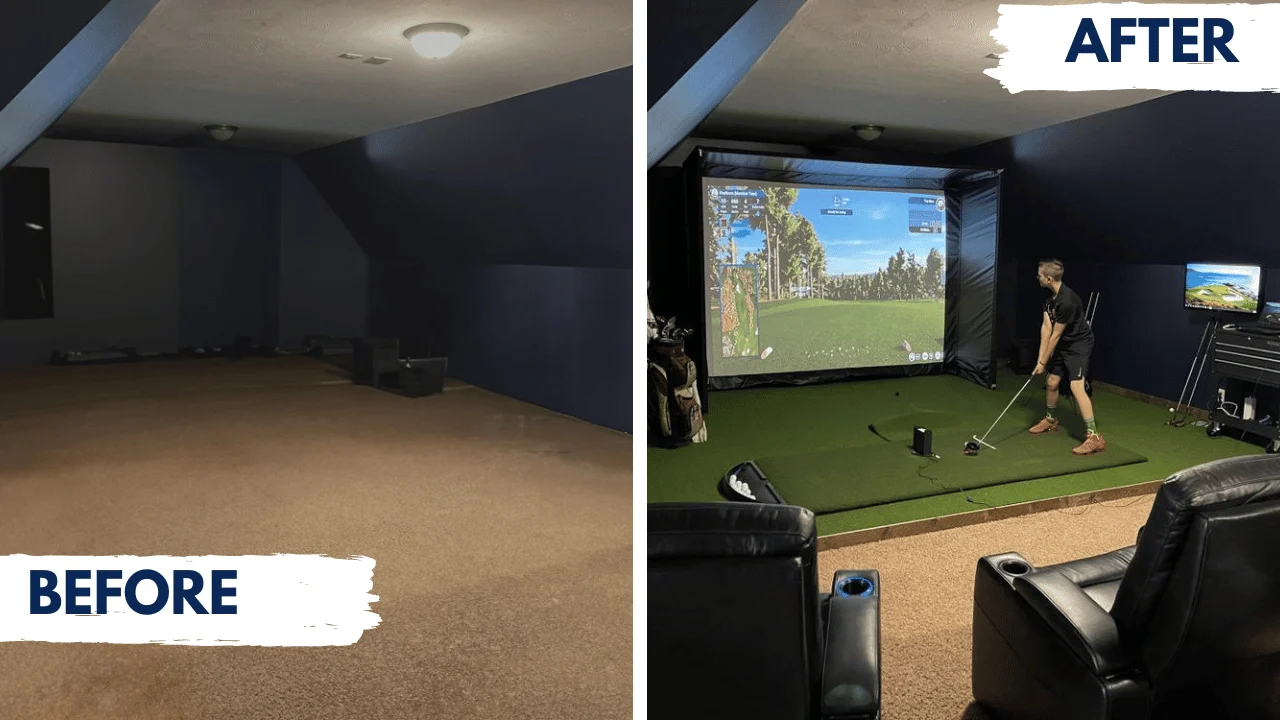
If you are undecided, choose the practice method first, then measure the room before choosing the frame.
As an Amazon Associate we earn from qualifying purchases.