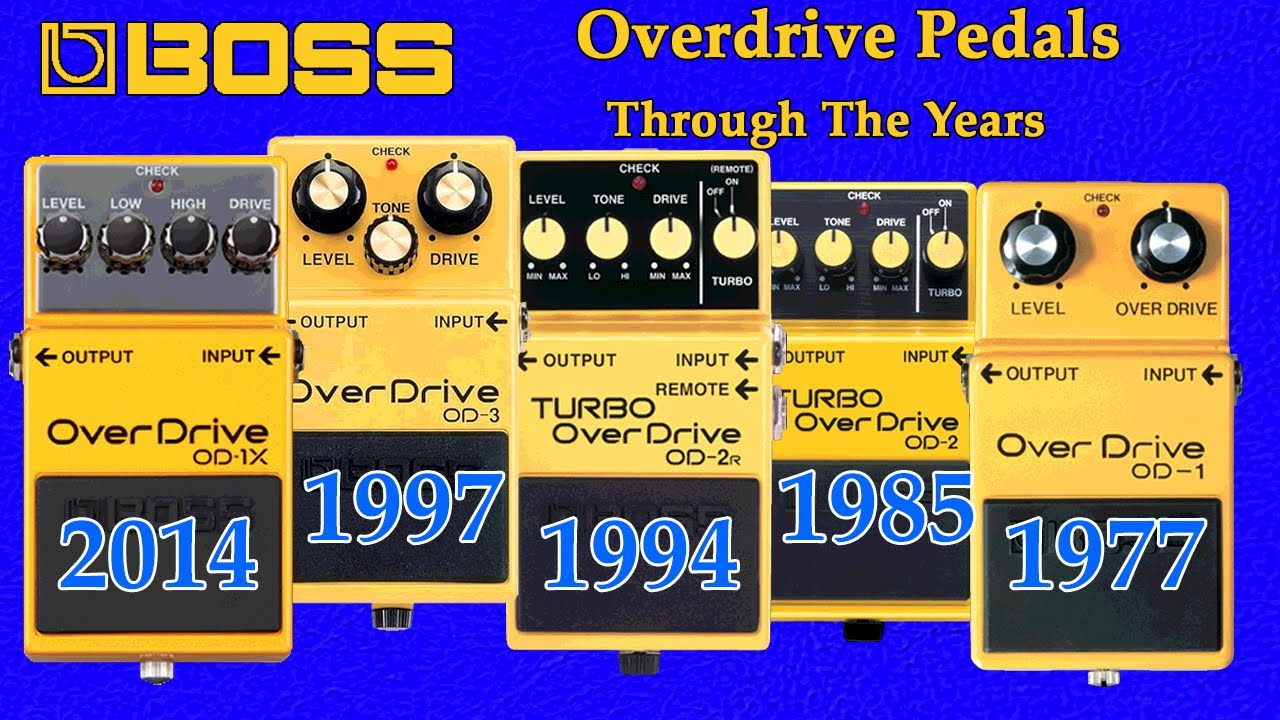

A good overdrive pedal should make your amp feel more alive, not bury your guitar under a layer of generic grit. The difficult part is that Boss uses the same familiar stompbox format for pedals with very different personalities, from the focused midrange of the SD-1 to the expansive two-voice design of the JB-2.
The Best Boss Overdrive Pedals in this roundup cover mild breakup, hard distortion, bass drive, responsive blues tones, and stacked gain. We compared the controls, circuit descriptions, dimensions, included accessories, and the kinds of rigs each pedal is built to serve.
Our top pick is the BOSS SD-1W Waza Craft, with classic SD-1 character, a more refined analog design, and two playing modes. The rest of the list ranges from simple first pedals to specialist options for bassists and players who want several gain voices in one enclosure.
Comparison table
| # | Product | Award | Drive and controls | Format | Best for |
|---|---|---|---|---|---|
| 1 | BOSS SD-1W Waza Craft | Best overall | Standard and Custom modes, analog circuitry | Overdrive | Players who want the classic SD-1 with more flexibility |
| 2 | Boss BD-2 Blues Driver | Best for touch response | Blues overdrive, tube amp simulation | Overdrive | Dynamic clean-to-driven playing |
| 3 | Boss JB-2 Angry Driver | Best dual-voice pedal | Independent drive, tone, and level for two circuits | Overdrive | Players who need multiple gain textures |
| 4 | BOSS SD-1 Super OverDrive | Best complete bundle | Asymmetrical clipping, focused mids, tight low end | Overdrive bundle | New setups needing cables and power |
| 5 | BOSS OS-2 Overdrive/Distortion | Best blended gain | Level, tone, drive, and Color controls | Overdrive and distortion | Players switching between grit and heavier tones |
| 6 | BOSS DS-1 Distortion | Best hard-edged distortion | Distortion and wide-range Tone control | Distortion | Cutting riffs and sustained leads |
| 7 | BOSS OD-1X Overdrive | Best high-definition drive | Real-time processing, natural compression | Overdrive | Players wanting a polished, modern voice |
| 8 | Boss SD-1 Cable Bundle | Best starter SD-1 bundle | Asymmetrical clipping, focused mids | Overdrive bundle | Guitarists starting a small pedalboard |
| 9 | BOSS ODB-3 Bass Overdrive | Best for bass | Two-band EQ and dry/overdriven Balance control | Bass overdrive | Four-string and five-string bass players |
1. BOSS SD-1W Waza Craft: Best Overall

Pros
- Premium all-discrete analog circuit
- Standard and Custom sound modes
- Responds to picking dynamics and volume changes
- Made in Japan
- Five-year BOSS warranty
Cons
- Less immediately simple than a single-voice SD-1
- Does not include cables or a power supply
- The classic voice remains focused rather than wide open
Best for: players who want the familiar SD-1 mid push with a more refined response and a second tonal mode.
The SD-1W is the one we'd keep when the brief is simply to find a Boss overdrive that can stay on a board for years. It has the recognizable SD-1 concept, but the Waza Craft version feels like a more considered instrument rather than a one-purpose gain switch. Its standard and Custom modes give you a practical way to move between the familiar sound and a more tailored variation without adding another pedal.
The important detail is the all-discrete analog circuitry. That does not turn the SD-1W into a radically different effect, and it should not be treated as one. The appeal is the way the pedal retains the focused midrange behavior associated with the SD-1 while giving the player more room to shape the response. BOSS also describes it as responsive to picking dynamics and volume changes, which makes it a better match for players who clean up or push a sound from the guitar rather than relying only on the footswitch.
The compact enclosure measures about 5.08 inches long, 2.87 inches wide, and 2.32 inches high, with a listed weight of about 0.95 pounds. That makes it close in footprint to the regular SD-1 entries here, so the extra flexibility does not demand extra board space. Compared with the Boss BD-2 Blues Driver, the SD-1W has a more concentrated voice. Compared with the BOSS JB-2 Angry Driver, it gives you fewer overall textures but is much easier to understand at a glance.
Its weakness is that the SD-1W is still an SD-1 at heart. Players looking for a broad, open blues response may prefer the BD-2, while anyone wanting a hard-edged distortion sound should look at the DS-1 or OS-2. The Standard and Custom modes are useful, but they do not replace a dedicated second gain pedal.
Choose the SD-1W if you want an overdrive that reacts to your hands, tightens a driven amp, and offers a more premium take on a familiar Boss design. It is the most balanced option here because it adds useful range without losing a clear identity.
2. Boss BD-2 Blues Driver: Best for Touch Response

Pros
- Classic blues guitar tones
- Tube amp simulation
- Responds to playing nuance
- Reacts to volume changes
- Compact, familiar Boss pedal format
Cons
- Less versatile than a dual-circuit design
- The available feature description is intentionally simple
- Not the right pick for bass-specific control
Best for: guitarists who want their picking and guitar-volume changes to shape the amount of breakup.
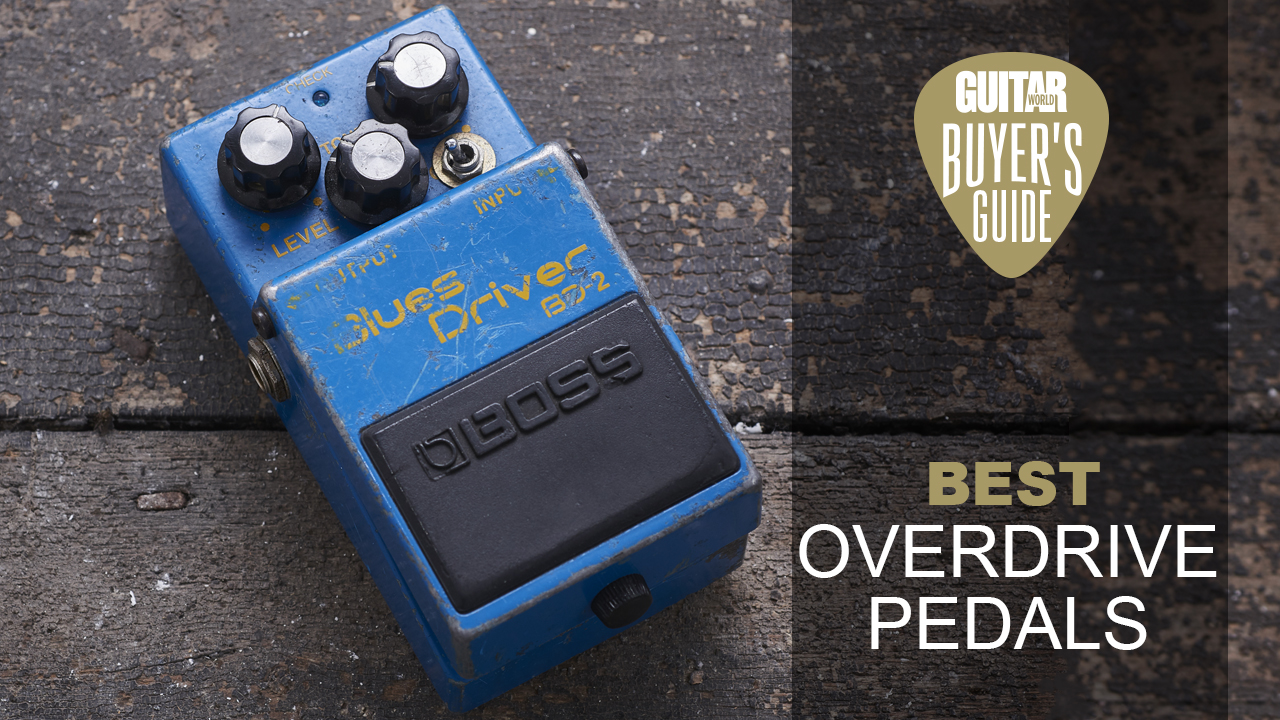
The BD-2 is the most natural choice for a player who wants the guitar to remain the loudest voice in the room. Its central idea is not a stack of modes or an elaborate control section. It is a blues-oriented overdrive with tube amp simulation that responds to nuance and volume changes, so a lighter touch can keep the sound calmer while a harder attack pushes it further.
That response makes the BD-2 a strong contrast to the BOSS SD-1W Waza Craft. The Waza Craft is more focused and deliberately shaped, while the BD-2 is the more expressive pick when you want the pedal to follow your right hand. It also gives the BD-2 a different role from the BOSS DS-1 Distortion, whose hard-edged attack is designed to remain prominent at heavier settings.
The enclosure is listed at approximately 5.95 inches long, 3.75 inches wide, and 2.75 inches high. Its listed weight is about 0.66 pounds. Those dimensions place it in the familiar compact Boss footprint, while the relatively light listed weight should make it easy to fit into a board that already has several pedals. The description does not provide a long control breakdown, so this is not the pedal to choose if you specifically want a large number of shaping options.
That simplicity is also its main limitation. The BD-2 does not offer the separate circuits, routing choices, or independent controls found on the BOSS JB-2 Angry Driver. It will not cover as many radically different gain sounds, and bassists should use the ODB-3 instead of trying to make a guitar-focused blues pedal do a bass pedal's job.
The BD-2 makes sense for a guitarist who plays with dynamics and wants a convincing move from cleanish rhythm to singing blues grit. If you prefer adjusting the guitar's volume and attack over reaching for several knobs, this is the more instinctive option.
3. Boss JB-2 Angry Driver: Best Dual-Voice Pedal
Pros
- Combines BOSS BD-2 and JHS Angry Charlie voices
- Independent drive, tone, and level controls
- Individual, series, and parallel modes
- Built-in switching between the two overdrives
- Broad tonal range
Cons
- More complicated to set up than a single overdrive
- Larger tonal ambition can mean more time spent dialing it in
- A heavier option than the BD-2
Best for: players who want two distinct overdrive voices plus series and parallel combinations in one pedal.
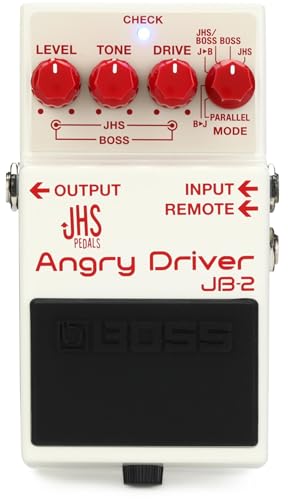
The JB-2 is the most ambitious pedal in this group. Rather than asking you to choose between a compact overdrive and a separate second gain box, it puts two recognizable voices into one enclosure: the BOSS BD-2 Blues Driver and the JHS Angry Charlie. That gives it a broader working range than a conventional single-circuit pedal, but it also makes the control layout something you need to approach with a plan.
Each overdrive gets independent drive, tone, and level controls through three dual-concentric knobs. The mode selector can run the voices individually, connect them in series, or use them in parallel. A built-in pedal switch can also toggle between the BOSS and JHS overdrives. Those are meaningful choices, not cosmetic extras. Series operation can make one gain stage push the next, while parallel operation gives the player a way to combine the two voices without treating them as a simple chain.
This is the pedal to consider if your board needs contrasting gain sounds but has limited space for separate enclosures. It is more flexible than the BOSS OS-2 Overdrive/Distortion, which blends overdrive and distortion through a Color control, because the JB-2 gives you two independent sets of drive, tone, and level controls. The trade-off is that the OS-2 is quicker to understand, especially for someone who wants one sound between overdrive and distortion rather than a small routing system.
The JB-2 measures about 5.95 inches long, 3.75 inches wide, and 2.75 inches high, and its listed weight is about 1 pound. That is a familiar compact-pedal footprint, though the controls are denser than on a simple SD-1 or BD-2. Its weakness is not a lack of capability. It is the risk of buying more flexibility than your playing actually needs. If you mainly want one dependable boost or one touch-sensitive breakup sound, the extra controls may become clutter.
Pick the JB-2 when you know you will use more than one gain character. It is particularly appealing for a player who wants a lower-gain blues voice, a more forceful drive, and the option to stack them without giving up a pedalboard slot.
4. BOSS SD-1 Super OverDrive: Best Complete Bundle

Pros
- Asymmetrical clipping for tube-like overdrive characteristics
- Focused midrange and tight low end
- Works with clean and slightly driven amps
- Can tighten high-gain amp tones
- Includes power adapter, instrument cable, patch cable, and picks
Cons
- The classic SD-1 voice is deliberately focused
- Bundle extras are not useful if you already own cables
- Less adjustable than the OS-2 or JB-2
Best for: a new guitarist who needs the SD-1 pedal and basic connection accessories in one package.
The appeal of this listing is straightforward: it pairs the familiar SD-1 with the pieces a new setup needs to make sound. The pedal itself uses an asymmetrical clipping circuit described as producing tube-like overdrive characteristics. Its intended range is mild to moderate drive, with a focused midrange and tight low end that can help a clean or slightly driven amplifier feel more defined.
The bundle includes a power adapter, a 10-foot instrument cable, a 6-inch patch or pedal cable, and a three-pack of BOSS celluloid picks in varying thicknesses. Those accessories do not change the pedal's sound, but they make this particular package more immediately usable than a bare pedal. The instrument cable gets the guitar to the pedal, while the short patch cable is aimed at connecting the pedal within a board.
The SD-1 itself measures about 5.08 inches long, 2.87 inches wide, and 2.32 inches high, with a listed weight of 0.79 pounds. That is effectively the same pedal footprint as the separate Boss SD-1 Cable Bundle below. The important distinction is the power adapter. The cable-only bundle includes a 10-foot instrument cable, a patch cable, and picks, but does not list a power adapter in its included accessories.
Sonically, the SD-1 is more specialized than the BOSS OS-2 Overdrive/Distortion. The OS-2 can move toward over-the-top distortion and blend drive types, while the SD-1 is better at tightening a sound and emphasizing the midrange. It also stacks well with boost, overdrive, and distortion pedals, making it useful later if the board grows.
The weakness is that the bundle cannot make the SD-1's voice broader. A player who wants several distinct gain colors should choose the JB-2, and a player who already owns cables and a power solution should not select this package for accessories alone. For a first pedalboard, though, this is the cleanest all-in-one route to the classic SD-1 approach.
5. BOSS OS-2 Overdrive/Distortion: Best Blended Gain

Pros
- Covers overdrive and distortion
- Color control blends the two gain characters
- Level, Tone, Drive, and Color controls
- Handles rhythm tones and heavier sounds
- Compact Boss enclosure
Cons
- Less focused than the SD-1 for classic mid-push use
- Does not provide the JB-2's dual independent circuits
- Blending options require careful adjustment
Best for: guitarists who want one pedal to move from moderate overdrive toward more aggressive distortion.
The OS-2 is the practical middle ground between a traditional overdrive and a dedicated distortion pedal. Its Color control is the reason to buy it. Instead of committing to one side, you can shape blended overdrive and distortion sounds, then use the Level, Tone, and Drive controls to set the output and amount of gain around that blend.
That makes it a better fit for a guitarist who plays both rhythm and heavier material than the conventional SD-1. The pedal is described as covering less extreme overdrive tones for rhythm playing as well as over-the-top distortion sounds. It also has enough control range to make the shift between those roles feel deliberate rather than like two unrelated presets.
The enclosure measures approximately 6 inches long, 3.8 inches wide, and 2.65 inches high, with a listed weight of 1.08 pounds. It is slightly broader and heavier on paper than the compact SD-1 listings. In practice, the bigger consideration is the four-control layout. The OS-2 takes more attention than a simple three-knob drive, but that extra control is what lets it cover more ground.
Compared with the BOSS DS-1 Distortion, the OS-2 gives you a less fixed relationship between overdrive and distortion. The DS-1 has a hard-edged attack, smooth sustain, and a wide-ranging Tone control, so it is the stronger pick for a player who specifically wants that classic distortion character. Compared with the BOSS JB-2 Angry Driver, the OS-2 is less elaborate but easier to use as one continuous gain voice.
Its real weakness is that a blended design can be harder to dial in than a pedal with a single obvious identity. If you want a narrow, familiar sound, the SD-1 or BD-2 is a safer choice. If you want to move between moderate breakup and heavier textures without adding a second distortion pedal, the OS-2 earns its place.
6. BOSS DS-1 Distortion: Best Hard-Edged Distortion

Pros
- Clear hard-edged attack
- Smooth sustain at heavier settings
- Wide-range Tone control
- Can work as a booster at low distortion settings
- Cleans up from the guitar's volume control
Cons
- More distortion-focused than the overdrive picks
- Hard-edged character is not ideal for every amplifier
- The listed dimensions are unusually inconsistent in orientation
Best for: guitarists who want cutting riffs, defined attack, and sustained distortion rather than soft breakup.
The DS-1 is not a polite overdrive, and that is exactly why it remains relevant in this comparison. Its stated character is a hard-edged attack paired with smooth sustain, with enough clarity to keep the attack present even at maximum distortion settings. That makes it a natural choice for heavy rhythm parts and solos that need to cut through rather than blur into the amplifier.
Its Tone control is described as offering a wide range of sound shaping. At low distortion settings, the pedal can also act as a booster, so it is not restricted to the heaviest end of its range. The ability to turn down the guitar's volume and clean up without introducing muddiness gives it more interaction with the instrument than its blunt reputation suggests.
The product information lists dimensions of 4 inches, 6 inches, and 3 inches, with a listed weight of about 0.0013 pounds. Because the supplied data does not clearly label those three dimensions by orientation in a conventional order, it is safer to treat the DS-1 as a compact pedal rather than rely on a precise footprint comparison. The important confirmed features are the distortion character, Tone range, and response to the guitar volume.
The DS-1 is a clearer choice than the BOSS OS-2 Overdrive/Distortion when you do not need to blend two gain types. The OS-2 offers more control over the relationship between overdrive and distortion, while the DS-1 commits more strongly to its sharp, recognizable attack. It also differs from the Boss BD-2 Blues Driver, which is aimed at nuance and blues tones rather than hard-edged distortion.
Skip it if your idea of overdrive is a soft, transparent lift that disappears into a clean amp. The DS-1 can be used with restraint, but its strength is definition and aggression. Choose it for riffs, leads, and players who want the guitar's volume knob to remain useful even when the pedal is producing substantial gain.
7. BOSS OD-1X Overdrive: Best High-Definition Drive

Pros
- High-definition overdrive voice
- Rich, wide-range sound
- Natural compression
- Preserves different guitar and pickup characteristics
- Smooth, refined response
Cons
- Less traditional than the SD-1 and BD-2
- Listed dimensions are larger than the standard compact pedals
- Does not offer the JB-2's routing options
Best for: players who want a polished, modern overdrive that keeps the character of different guitars and pickups audible.
The OD-1X takes a different route from the analog SD-1W. Its feature description emphasizes real-time processing, rich wide-range sounds, natural compression, and a bold high-definition tone that remains smooth and refined. That makes it an interesting choice for players who find conventional overdrive too narrow or too obviously colored.
Preserving the tonal characteristics of different guitars and pickup types is central to its appeal. If you switch between instruments and want to hear those changes rather than have every guitar pushed into the same mid-focused shape, the OD-1X is the more appropriate experiment. It is less about reproducing the familiar response of one classic circuit and more about keeping the signal detailed while adding drive.
The listed product dimensions are 9 inches long, 4 inches wide, and 6 inches high, with a listed weight of 1 pound. Those measurements are notably larger than the dimensions supplied for the SD-1W, BD-2, and JB-2. Since the source does not clarify the orientation of the measurements, the useful takeaway is simply that the listed size is not as compact on paper as the standard Boss enclosures in this group. Check your board space before committing.
The OD-1X is more modern in concept than the BOSS SD-1W Waza Craft. The Waza Craft is the better choice for players who specifically want the SD-1 family character and two modes, while the OD-1X is aimed at a broad, controlled, high-definition presentation. It also has less of the immediate routing flexibility of the JB-2, so its appeal depends on the sound itself rather than on multiple operating configurations.
The weakness is its distance from the familiar Boss overdrive shorthand. Guitarists who want a classic push into a tube-style amp may prefer the BD-2 or SD-1W. Choose the OD-1X if your priority is a cleanly defined, refined gain voice that lets changes in guitar and pickup remain part of the sound.
8. Boss SD-1 Cable Bundle: Best Starter SD-1 Bundle

Pros
- Classic asymmetrical clipping circuit
- Focused midrange and tight low end
- Stacks with boost, overdrive, and distortion pedals
- Includes 10-foot instrument cable
- Includes patch cable and three picks
Cons
- No power adapter is listed in the bundle
- The SD-1 voice remains relatively focused
- Accessories add little for an established board
Best for: a new guitarist who needs the standard SD-1 plus the cables required to connect a basic setup.
This is the straightforward SD-1 package for someone assembling a first rig around a guitar, amplifier, and pedal. The pedal uses the same asymmetrical clipping approach as the other standard SD-1 listing, producing mild-to-moderate overdrive with a focused midrange and tight low end. It is particularly suited to clean and slightly driven amps, but it can also bring tightness and definition to a high-gain setup.
The included accessories are a 10-foot instrument cable, a patch or pedal cable, and a three-pack of BOSS celluloid picks in varying thicknesses. The cables are described as using multi-strand, oxygen-free copper core wire and high-density spiral shielding. Those details matter most to a new player who needs the complete physical connection from guitar to pedal and pedal to amplifier or another pedal.
The pedal's listed dimensions are about 5.08 inches long, 2.87 inches wide, and 2.32 inches high, with a listed weight of 0.79 pounds. Those figures match the power-supply bundle closely because the underlying SD-1 pedal is the same size. The difference between the two packages is what comes in the box, not a different overdrive circuit or a new control scheme.
The BOSS SD-1 Super OverDrive power bundle is the more convenient choice if you need a power adapter immediately. This cable bundle is the better fit when you already have a compatible power solution or intend to power the pedal another way. Compared with the BOSS SD-1W Waza Craft, it offers the standard sound and fewer tonal options, but the core SD-1 behavior is exactly what makes it attractive as a first overdrive.
The weakness is simple: the bundle can leave a power question for a new player. It also makes less sense for anyone who already owns cables, picks, and a working supply. Select it when the included connection accessories solve a real setup problem and you want the classic SD-1's focused push rather than a broader multi-voice pedal.
9. BOSS ODB-3 Bass Overdrive: Best for Bass

Pros
- Designed specifically for bass
- Two-band equalizer
- Dry and overdriven signal Balance control
- Covers mild overdrive through hard distortion
- Works with four-string and five-string basses
Cons
- Not the right fit for a standard guitar overdrive search
- More specialized than the other pedals here
- The listed weight appears unusually low and should not guide board planning
Best for: bassists who need drive while retaining control over the dry and overdriven signal mix.
The ODB-3 is the clear specialist in this list. It is designed specifically for bass and covers everything from mild overdrive to hard distortion. The most important control is Balance, which mixes the dry and overdriven signals. That gives a bassist a way to add grit without treating the fundamental dry sound as disposable.
The pedal also includes a two-band equalizer, so it can serve as a bass-focused tone-shaping tool as well as a gain effect. The feature description specifically says it works with four-string and five-string basses. That makes it a much more sensible selection for a bassist than trying to adapt the guitar-oriented SD-1, BD-2, or DS-1 to a low-frequency role.
The listed dimensions are approximately 5.9 inches long, 3.7 inches wide, and 2.5 inches high. The supplied product information gives a listed weight of about 0.0022 pounds, an unusually low figure that does not provide a useful basis for estimating how it will feel on a pedalboard. The dimensions and control layout are the more useful confirmed details for planning space.
This pedal differs from the rest of the roundup in purpose, not just sound. The BOSS SD-1W Waza Craft is the more complete guitar overdrive, and the BOSS JB-2 Angry Driver offers far more guitar-oriented routing and voice combinations. Neither provides the ODB-3's dedicated dry and overdriven Balance control or its stated support for four-string and five-string basses.
Guitarists should skip the ODB-3 unless they specifically want to experiment with a bass-oriented circuit. Bassists who need a controllable blend of clean low end and distorted texture should start here, especially if they want both EQ shaping and a wide gain range from one pedal.
How to choose the best boss overdrive pedal
The right pedal depends less on the famous name on the enclosure than on how you want gain to interact with your instrument, amplifier, and playing dynamics.
Gain character
Overdrive, distortion, and blended gain are not interchangeable. The SD-1 and SD-1W emphasize mild-to-moderate drive, focused mids, and a tighter low end. The DS-1 moves toward hard-edged attack and smooth sustain, while the OS-2 lets you blend overdrive and distortion with its Color control.
Pick the gain character you want to hear at its most useful setting, not the number of sounds listed on the box.
A pedal with a narrow voice can be easier to place in a mix because it has a clear job. A broader pedal is useful when one board needs to cover several styles, but it can take longer to set up.
Dynamic response
Some players use the guitar's volume knob and pick attack as active controls. The BD-2 is explicitly designed to respond to nuance and volume changes, while the SD-1W is described as responsive to picking dynamics and volume changes. These pedals are good choices when you want to move from restrained breakup to stronger drive without switching effects.
The DS-1 also cleans up when you turn down the guitar's volume, but its core voice is more aggressive. If you play with a light touch and want that touch to materially change the sound, start with the BD-2 or SD-1W.
Tone shaping
Count the controls, but also ask what each one does. The SD-1 offers a focused, recognizable overdrive approach. The OS-2 adds Level, Tone, Drive, and Color controls for a more adjustable blend. The ODB-3 adds a two-band equalizer and a Balance control for mixing dry and driven bass signals.
A wide Tone control is useful when your guitar, amplifier, or room makes the pedal sound too dark or too sharp. It does not automatically make a pedal better. A simple control section can be preferable when you already know the sound you want.
Stacking and routing
Overdrives often work as part of a larger gain structure. The standard SD-1 listings are described as stacking well with boost, overdrive, and distortion pedals, and they can add tightness to high-gain amp tones. The JB-2 goes further with individual, series, and parallel modes for its two overdrive voices.
If you want a single pedal to cover several combinations, the JB-2 is the most capable option here. If you want one pedal to push an existing distorted amp, the SD-1 is easier to place and understand. Players building a broader signal chain may also want to consider how different guitar effects fit together on one board.
Instrument and board fit
The first question is whether you play guitar or bass. The ODB-3 is specifically designed for bass and includes controls intended to preserve the dry signal. The other models are guitar-focused, even when they can produce a wide range of gain.
Physical space matters too. Many of the pedals here have listed dimensions close to 5 to 6 inches long and roughly 3 to 4 inches wide, while the OD-1X's listed dimensions are larger. Bundles also change what you need to supply yourself. The power-supply SD-1 package includes an adapter, while the cable bundle lists an instrument cable, patch cable, and picks instead.
Frequently asked questions
Which Boss pedal is best for classic overdrive?
The BOSS SD-1W Waza Craft is the strongest all-around pick for classic Boss overdrive with added flexibility. Its Standard and Custom modes build on the familiar SD-1 approach, while the all-discrete analog circuit and dynamic response give it a more refined role on a working board.
Is the Boss BD-2 better for blues than the SD-1?
The BD-2 is the more natural blues choice when touch response and guitar-volume changes matter most. The SD-1 has a more focused midrange and tighter low end, which makes it especially useful for pushing an amplifier or adding definition to a higher-gain setup.
Which pedal should a bassist choose?
The BOSS ODB-3 is the appropriate pick in this roundup for bass. It is designed for bass, works with four-string and five-string instruments, includes a two-band equalizer, and uses a Balance control to mix dry and overdriven sounds.
What is the difference between the SD-1 and SD-1W?
The SD-1W is the Waza Craft version of the SD-1 concept. It uses an all-discrete analog circuit and adds Standard and Custom sound modes, while the standard SD-1 listings focus on the established asymmetrical clipping circuit and its focused midrange character.
Is the OS-2 an overdrive or a distortion pedal?
It is designed to provide both overdrive and distortion. Its Color control lets you blend those two gain characters, while Level, Tone, and Drive provide the main output, tonal, and gain adjustments.
Which Boss pedal has the most tonal flexibility?
The JB-2 Angry Driver has the broadest operating range because it combines two overdrive voices, provides independent drive, tone, and level controls for each, and supports individual, series, and parallel modes. The OS-2 is simpler but flexible in a different way because it blends overdrive and distortion.
Can the DS-1 be used as an overdrive?
Yes. Its feature description says it can work as a booster at low distortion settings. Its main identity is still hard-edged distortion with smooth sustain, so the SD-1 or BD-2 is a better starting point if mild, touch-sensitive overdrive is your priority.
The bottom line
The Best Boss Overdrive Pedal for most guitarists is the BOSS SD-1W Waza Craft. It keeps the focused, useful SD-1 character, adds Standard and Custom modes, and responds well to picking dynamics and guitar-volume changes. The Boss BD-2 Blues Driver is the better choice for players who want a more touch-led blues response, while the Boss JB-2 Angry Driver is the specialist pick for two voices and stackable routing.
For a new setup, choose the BOSS SD-1 Super OverDrive power bundle if you need the pedal, cables, picks, and adapter together. Bassists should ignore the guitar-centric choices and go straight to the BOSS ODB-3 Bass Overdrive, whose EQ and dry-to-driven Balance control address the needs of a bass rig.
If you are undecided, choose the SD-1W for guitar, the ODB-3 for bass, and the BD-2 when your playing dynamics matter more than maximum control range.
As an Amazon Associate we earn from qualifying purchases.