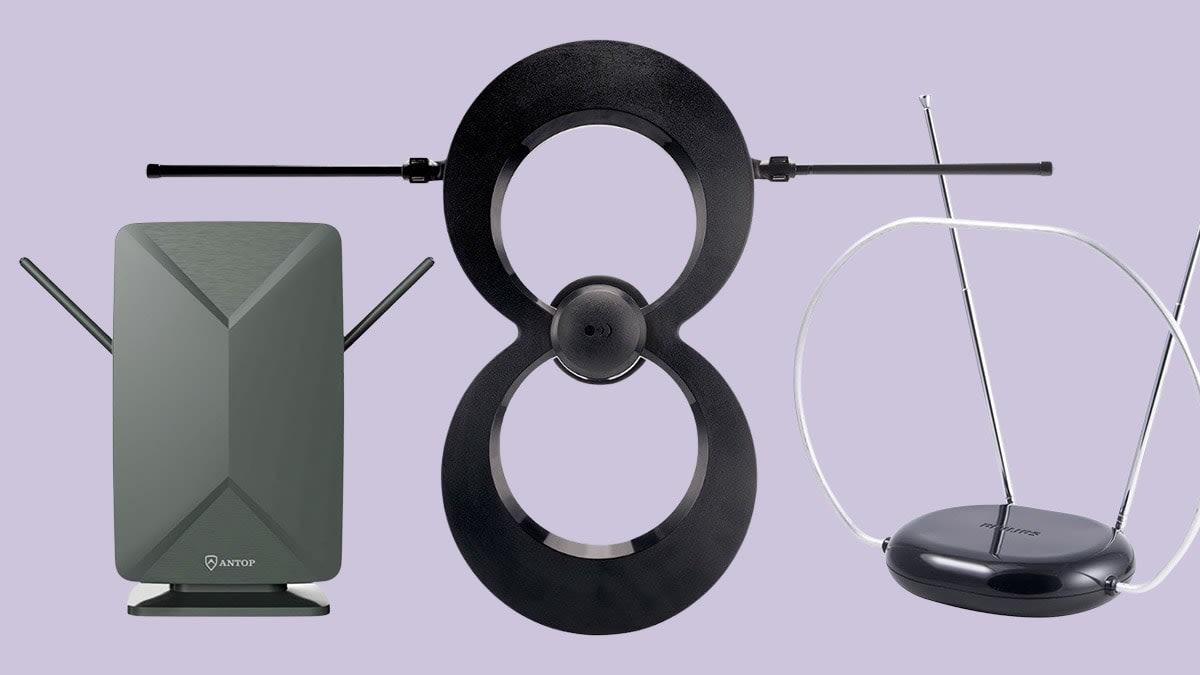

A pixelated picture does not always mean you need a new television. The trouble may be a weak over-the-air signal, a long coaxial run, cellular interference, or a splitter that is bleeding strength from the antenna. The Best TV antennas and boosters in this roundup cover both sides of that problem: complete antennas for finding local channels and amplifiers for improving an antenna you already own.
The GE 42178 Amplifier is our top pick because it is compact, broadly compatible, and includes an LTE filter, while the Channel Master is the better fit for four-room distribution. The rest of the lineup includes adjustable boosters, long-cable antennas, weatherproof designs, and simple indoor options.
Comparison table
| # | Product | Award | Type | Gain or outputs | Cable | Best for |
|---|---|---|---|---|---|---|
| 1 | GE 42178 Amplifier | Best overall | Indoor amplifier | LTE filter | Not specified | Improving an existing antenna |
| 2 | Channel Master 4-Port Amplifier | Best for four TVs | Distribution amplifier | 7.5dB, 4 outputs | Not specified | Sending one antenna to four rooms |
| 3 | ANTOP Smart Boost Amplifier | Best adjustable boost | Antenna amplifier | Adjustable, 2 outputs | Not specified | Two TVs or mixed TV and FM use |
| 4 | Fabriyut 5000+ Mile Antenna | Best weatherproof antenna | Indoor or outdoor antenna | Built-in amplifier | 33.8 feet | Flexible indoor or outdoor placement |
| 5 | JM NEXLOV Indoor Antenna | Best simple indoor antenna | Indoor antenna | High-gain amplifier | 18 feet | Local channels in a straightforward setup |
| 6 | Donstock 5000+ Mile Antenna | Best long cable | Indoor or outdoor antenna | Short and long range settings | 38 feet | Reaching a high window or distant TV |
| 7 | Bigefeixu 25dB Amplifier | Best high-gain USB booster | Antenna amplifier | 25dB, adjustable | Not specified | Weak or unstable OTA signals |
| 8 | HIDB 25dBi Amplifier | Best gain control | Antenna amplifier | 0dB to 25dBi, 2 settings | Not specified | Tuning moderate signal problems |
1. GE 42178 Amplifier: Best Overall

Pros
- Works with all antenna brands
- Built-in 4G and 5G LTE filter
- Supports VHF, UHF, HDTV, and ATSC 3.0
- Compact body and tool-free coaxial installation
- Includes an AC power adapter
Cons
- Designed for one antenna feed rather than multi-room distribution
- It cannot create channels that the antenna cannot receive
- Indoor AC power is required
Best for: someone who wants a broadly compatible amplifier for one existing TV antenna.
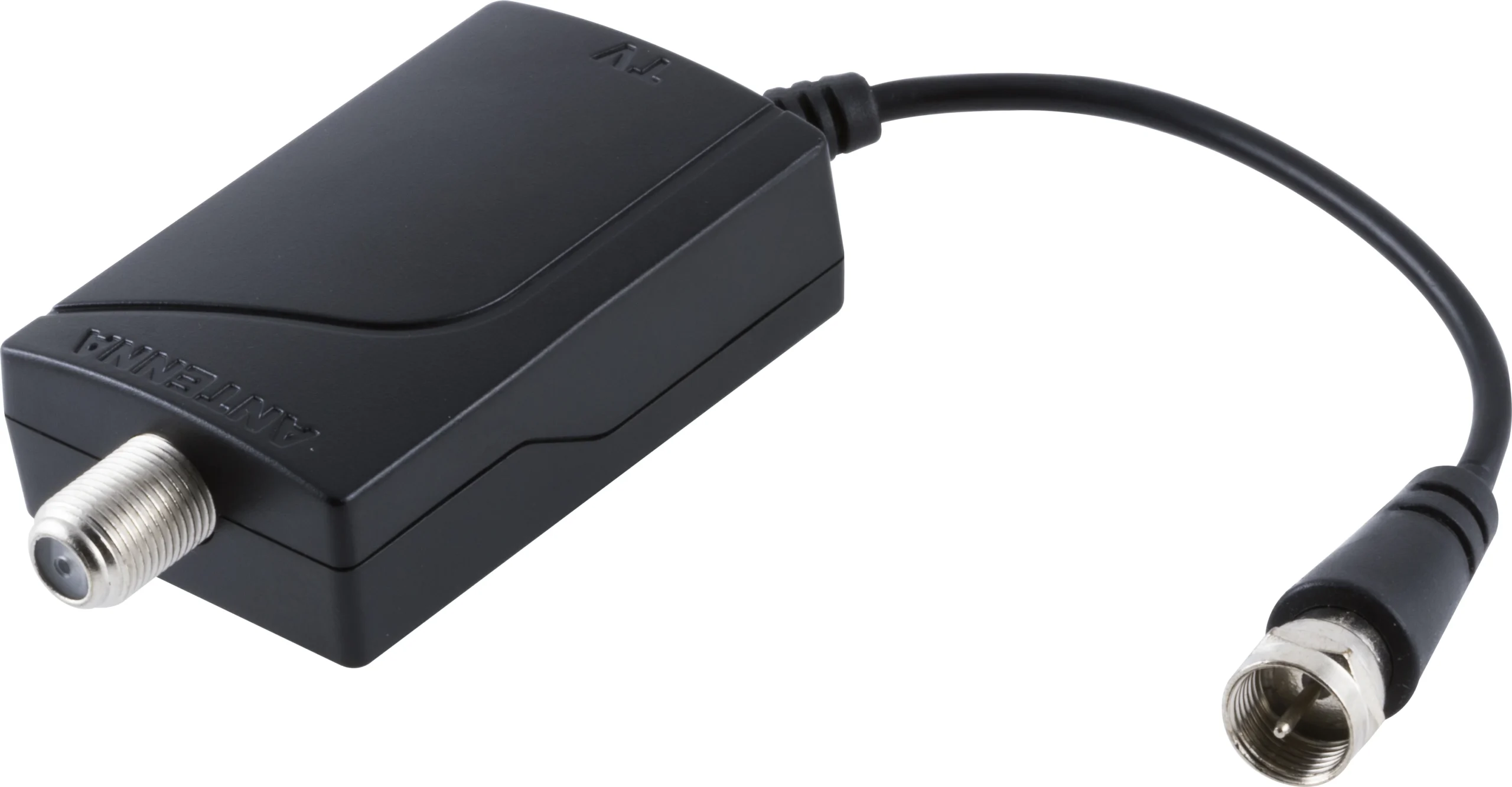
The GE 42178 is the amplifier we would start with when the antenna is basically in the right place but the picture breaks up at inconvenient moments. It is small enough to sit behind a television, and the installation is simply a matter of placing it between the antenna and TV with coaxial connections. That makes it less disruptive than replacing a functioning antenna or rerouting the entire setup.
Its compatibility is unusually broad for this group. GE says it works with all TV and antenna brands and supports HDTV, VHF, UHF, 1080p HD, 4K Ultra HD, and NEXTGEN TV using ATSC 3.0. Those formats describe what the connected television and broadcast can handle, not a promise that the amplifier will pull in every available channel. The useful part is that the booster will not make an older antenna irrelevant when broadcasts use a newer standard.
The integrated amplifier is paired with a 4G and 5G LTE filter. That matters when nearby cellular signals contribute to interference, which can show up as pixelation, dropouts, or an unstable picture. GE also positions the unit as a way to offset cable loss and strengthen signals already reaching the antenna. It is not a replacement for better antenna placement, but it is a sensible next step after moving the antenna and rescanning.
The limitation is the single-feed design. If one antenna needs to serve four rooms, the Channel Master 4-Port Amplifier is a better fit, and the ANTOP Smart Boost Amplifier is more convenient for two connected devices. The GE also needs its included AC adapter, so it is not the cleanest choice for a setup built around USB power.
The GE 42178 is right for the buyer who wants one compact, brand-flexible fix and does not want to decode a complicated installation. Its support for VHF, UHF, and ATSC 3.0 gives it plenty of room to remain useful as the rest of the setup changes.
2. Channel Master 4-Port Amplifier: Best for Four TVs

Pros
- Four output ports
- 7.5dB gain
- Built-in LTE filter
- Indoor, attic, or outdoor installation
- Weatherproof housing
Cons
- Not intended as a preamplifier for very weak signals
- Works with TV antennas, not cable or satellite signals
- More capability than a one-TV setup needs
Best for: a household that needs one antenna feed distributed across four rooms.
The Channel Master 4-Port Amplifier solves a specific problem cleanly: one antenna, several televisions, and the signal loss that comes with ordinary splitting. It replaces a standard four-way splitter while adding amplification, so it makes more sense than attaching a booster after a splitter has already weakened the feed.
The hardware has four output ports and provides 7.5dB of gain. That is a modest, purposeful amount rather than a headline-grabbing high-gain claim. The goal is to distribute an existing antenna signal across four rooms and reduce the losses associated with sending it down multiple coaxial paths. It is a distribution amplifier, not a magic antenna for a distant tower.
The built-in LTE filter is useful in homes where cellular interference complicates reception. Channel Master says the unit is designed exclusively for TV antennas, including indoor and outdoor models. It is not compatible with cable or satellite signals, so it belongs in an over-the-air setup from the antenna forward.
Installation is flexible. The compact enclosure can be used indoors, in an attic, or outdoors, and the heavy-duty housing is weatherproof. That is a meaningful advantage over the indoor-only GE 42178 when the antenna feed enters from outside or the amplifier needs to sit near an exterior antenna. The amplifier weighs 0.6875 pounds and measures 5.25 inches wide, 4.25 inches long, and 1 inch high, so it needs a little more room than the smallest single-TV boosters.
Its main weakness is also the reason to buy it. Channel Master specifically says it is not intended as a preamplifier for low-reception areas. If the antenna receives almost nothing, the GE 42178, Bigefeixu 25dB Amplifier, or a better-positioned antenna may be a more appropriate starting point. Choose the Channel Master when the signal is present and the real challenge is distributing it without making every television compete for it.
3. ANTOP Smart Boost Amplifier: Best Adjustable Boost

Pros
- Adjustable amplifier strength
- Two outputs for two devices
- Built-in 3G and 4G LTE filter
- Supports VHF and UHF
- Can enhance FM reception
Cons
- Intended for non-amplified antennas
- Two outputs cannot replace a four-way distribution amplifier
- Adjustment requires some trial and error
Best for: someone connecting a non-amplified antenna to two devices and wanting control over the boost.
The ANTOP Smart Boost Amplifier stands out because it does not force every installation into the same gain setting. Its Smartpass system includes an adjustment dial, allowing the user to balance reception for the location instead of simply applying maximum amplification. That is helpful because too much amplification can be unhelpful when the incoming signal is already strong.
There are two outputs, so one antenna can feed a second TV, an FM stereo, an OTA-ready streaming device, or a projector. This is a more focused alternative to the Channel Master 4-Port Amplifier. The Channel Master is the obvious choice for four rooms and outdoor placement, while ANTOP makes more sense when the setup has two destinations and needs a hands-on adjustment.
The amplifier supports VHF and UHF signals and includes a professional 4G LTE filter. ANTOP also says it can enhance FM reception, which gives the second output a use beyond another television. The product is compatible with non-amplified antennas, so it should be added to a passive antenna rather than stacked casually with another powered amplifier.
The dial is both the feature and the minor annoyance. Users have to adjust it and rescan or observe the result rather than assuming a higher setting is automatically better. That is not a flaw in the circuit so much as a reminder that local signal conditions vary with antenna position, building materials, terrain, and nearby interference.
For a single television, the GE 42178 Amplifier is simpler. For four outputs, the Channel Master 4-Port Amplifier is better organized. The ANTOP earns its place between them for a two-device setup where adjustable gain and FM support are genuinely useful.
If your antenna is non-amplified and you want to experiment with signal strength without replacing it, ANTOP is the most flexible choice here. It rewards a little patience during setup and gives you more control than a fixed booster.
4. Fabriyut 5000+ Mile Antenna: Best Weatherproof Antenna

Pros
- Indoor and outdoor use
- Waterproof, windproof, and anti-thunder design
- Built-in amplifier
- 33.8-foot coaxial cable
- Supports VHF and UHF broadcasts
Cons
- The advertised mileage figure is not a practical guarantee
- Requires USB power for the amplifier
- Reception still depends heavily on placement and local towers
Best for: a buyer who needs a weather-resistant antenna with a long cable for flexible placement.
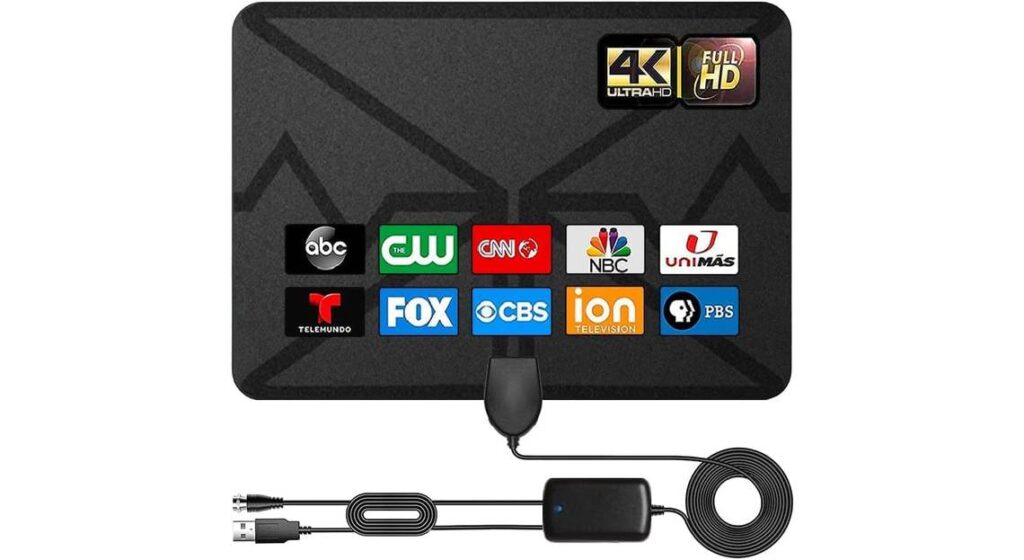
The Fabriyut antenna is the most versatile complete antenna in the group. It can sit indoors or be installed outdoors, and its 33.8-foot cable gives the user more freedom to move the receiving element toward a window, higher wall, attic position, or exterior mounting point. That placement flexibility often matters more than a booster added to an antenna stuck behind a television.
Fabriyut advertises a 5000+ mile range, but that number should not be treated as a literal distance a broadcast signal can travel. Real reception is governed by tower location, terrain, construction materials, antenna orientation, and local interference. The useful facts are the built-in amplifier, support for local HDTV broadcasts, and the ability to place the antenna farther from the TV.
The antenna is described as waterproof, windproof, and anti-thunder for outdoor use. It supports 4K, 1080p, and 8K formats as listed by the manufacturer, although the antenna itself does not create a higher-resolution broadcast. It receives what is available from local transmitters, while the television handles the display format.
Setup is straightforward: connect the coaxial cable to the TV's antenna input, connect USB power for the amplifier, and scan for channels. The long lead can make the difference between a poor location and a workable one. The trade-off is that the cable introduces more distance for the signal to travel, so careful routing and a clean connection remain important.
The JM NEXLOV Indoor Antenna is easier to keep inside and has a shorter 18-foot cable. The Donstock 5000+ Mile Antenna goes farther with a 38-foot cable and adds selectable short and long range settings. Fabriyut is the better middle ground when weather resistance and a reasonably long cable matter more than maximum reach.
Choose the Fabriyut when you want one antenna that can adapt to a window, attic, or outdoor location. Skip it if your only goal is to amplify an existing antenna, since the GE 42178 or ANTOP unit is designed for that job instead.
5. JM NEXLOV Indoor Antenna: Best Simple Indoor Antenna

Pros
- Built-in high-gain amplifier
- 18-foot coaxial cable
- Indoor and outdoor compatibility
- Supports common HD and 4K formats
- Includes guidance to rescan after moving
Cons
- Less cable reach than the Fabriyut and Donstock antennas
- No detailed gain figure is provided
- Placement remains critical
Best for: a household that wants a simple amplified antenna for local channels.
The JM NEXLOV Indoor Antenna is the least complicated complete antenna here. It includes an amplifier and an 18-foot coaxial cable, enough for many living rooms, bedrooms, and office setups without turning the installation into a long cable-management project. The design is also described as suitable for outdoor use, though the product is primarily presented as an indoor antenna.
Its built-in high-gain amplifier is intended to strengthen weak broadcast signals and reduce cellular and radio-frequency interference. There is no stated gain figure, so it is not possible to compare its amplification directly with the 25dB Bigefeixu or the 25dBi HIDB. That missing number is worth keeping in mind if you are choosing specifically by amplifier output.
JM NEXLOV lists support for 720p, 1080i, 1080p, 2K, and 4K HDR. As with the other antennas, those labels describe compatible television and broadcast formats rather than a promise of receiving every format in every location. The antenna should be moved to a better position and rescanned after relocation, a small but important step that many first-time buyers overlook.
The 18-foot cable is long enough to help with window placement but less accommodating than Fabriyut's 33.8 feet or Donstock's 38 feet. That makes JM NEXLOV a better choice for a compact indoor installation than for a home where the TV is far from the strongest reception point. For finding a good reception spot inside a room, placement guidance matters as much as the amplifier label.
Compared with the Fabriyut 5000+ Mile Antenna, JM NEXLOV is the simpler indoor choice, while Fabriyut offers a more clearly weather-oriented build and longer cable. Compared with the GE 42178 Amplifier, JM NEXLOV includes the antenna itself, so it is the more sensible pick when you are starting from nothing.
This is the right antenna for a buyer who wants a direct setup with local-channel support and does not need four-room distribution or a very long cable. Expect to spend time finding the right position, because no built-in amplifier can compensate fully for a poor location.
6. Donstock 5000+ Mile Antenna: Best Long Cable

Pros
- 38-foot coaxial cable
- Indoor and outdoor use
- Short and long range amplifier settings
- Weatherproof design
- Compact and portable
Cons
- The advertised 5000+ mile figure is not a real-world range guarantee
- Long cable runs require careful placement and connections
- The product does not specify amplifier gain
Best for: someone who needs to place an antenna well away from the television.
The Donstock antenna is built around placement flexibility. Its 38-foot coaxial cable is the longest specified cable in this group, which gives it a useful advantage when the strongest signal is near a high window, far wall, attic access point, or outdoor mounting location. A long cable is not automatically better, but it can make an otherwise awkward installation possible.
Its amplifier has a switch for short-range and long-range settings. The listing describes the short setting as up to 38 miles and the long setting as more than 38 miles. Those figures are manufacturer claims, not a substitute for checking local towers and obstructions. The switch is still useful because it lets the setup be adjusted instead of leaving one gain mode active in every location.
Donstock also describes the antenna as weatherproof, with waterproof treatment around the shell and internal circuit board. A ventilation design is intended to limit condensation caused by temperature changes. That makes it more suitable for exterior or semi-exposed placement than an indoor-only antenna, although outdoor installation should still be handled carefully.
The antenna is compact and portable and can be placed on a table, wall, window, cabinet, or outdoor location. The listing also mentions use on trucks, cars, caravans, and motor homes. It is compatible with older televisions and newer smart TVs, provided the television has the appropriate antenna connection and tuner.
The Fabriyut 5000+ Mile Antenna has a shorter 33.8-foot cable but also lists waterproof, windproof, and anti-thunder construction. Fabriyut is the cleaner choice when those weather claims matter most, while Donstock wins when every extra foot of cable helps. The JM NEXLOV is easier for a compact indoor setup, but its 18-foot lead gives it less room to roam.
The weakness is the same one that affects any long cable: it can make placement easier while adding a longer signal path. Keep the cable away from avoidable sources of interference, make secure coaxial connections, and scan after settling on a location. Donstock is the antenna to choose when physical reach is the main obstacle.
7. Bigefeixu 25dB Amplifier: Best High-Gain USB Booster

Pros
- 25dB stated gain
- Adjustable gain design
- USB powered
- Built-in 4G LTE filter
- Supports ATSC, VHF, and UHF
Cons
- Amplification cannot create a missing signal
- Strong-signal homes may not benefit from it
- The listing does not specify output count
Best for: an existing antenna with weak or inconsistent reception and a convenient USB power source.
The Bigefeixu 25dB Amplifier is a focused upgrade for an antenna that already receives channels but loses them intermittently. Its stated 25dB gain is higher than the GE's unspecified amplification and the Channel Master's 7.5dB distribution gain. That makes it more appropriate when the problem is a weak or unstable feed rather than simply dividing one healthy signal among several rooms.
The amplifier supports ATSC, VHF, and UHF broadcasts and includes a 4G LTE interference filter. In practical terms, the filter is meant to reduce the effect of nearby cellular signals, while the amplifier helps counter signal loss and picture breakup. Bigefeixu is careful to note that results depend on distance from broadcast towers, surrounding terrain, and antenna placement.
USB power makes the unit easy to add near a television or other USB power source. Its compact design should fit into most entertainment setups without taking up much room. The product data lists a weight of 0.1322773572 pounds, so it is a particularly light option, although the connecting cables and power arrangement still need to be secured neatly.
The high gain needs restraint. If the incoming signal is already strong, adding amplification may not improve reception and can make troubleshooting less straightforward. Start with the antenna in its best available position, then adjust the booster as needed. If the antenna receives no usable signal at all, moving or replacing the antenna is the better first move.
The HIDB 25dBi Amplifier also targets weak signals and offers a 0dB to 25dBi range, but it uses USB power and a two-position gain design. Bigefeixu is the more direct choice when you want the stated 25dB output and an adjustable booster without the HIDB's display feature. The GE 42178 remains the better general-purpose option when broad compatibility and ATSC 3.0 support are higher priorities.
Pick Bigefeixu for a passive or existing antenna that needs help with dropouts. It is not the right answer for a strong-signal location or for someone who still needs to solve antenna placement.
8. HIDB 25dBi Amplifier: Best Gain Control

Pros
- Adjustable 0dB to 25dBi gain
- Two gain settings
- Built-in 4G LTE filter
- USB powered
- Includes a digital time display
Cons
- Not recommended for already strong signals
- Does not add channels that the antenna cannot receive
- The display adds a feature unrelated to reception
Best for: a user who wants to turn amplification down as well as up.
The HIDB 25dBi Amplifier takes a sensible approach to booster control. Its gain can be adjusted from 0dB to 25dBi, with two settings available, so the user can leave amplification off when the antenna has a strong feed and raise it when obstructions or distance weaken the signal. That range is more useful than a fixed high-output claim in a location where reception changes from one room to another.
The unit includes a 4G LTE filter intended to block 3G and 4G wireless interference. HIDB says the amplifier works with non-amplified indoor antennas and can help reduce fuzzy or pixelated channels. It is powered through USB and connects between the antenna and TV or set-top box, making the installation familiar to anyone who has added a small inline booster before.
A digital time display is built into the amplifier. It may be convenient beside a television, but it does not improve reception, and buyers should not choose this model for the clock alone. The important controls are the gain adjustment and the LTE filter.
HIDB's own guidance is unusually clear that strong signals do not need a booster. That caveat should shape the installation. A booster can enhance a weak or moderate signal, but it cannot add a broadcast that the antenna does not receive. If your picture problem is caused by an antenna behind a wall or pointed away from local towers, repositioning it should come before increasing gain.
The Bigefeixu 25dB Amplifier is a close alternative with a similar high-gain purpose. HIDB has the advantage when starting at 0dB matters, while Bigefeixu has a simpler feature set and the same general focus on USB-powered weak-signal improvement. For a broader antenna setup with support for ATSC 3.0, the GE 42178 Amplifier is the safer all-purpose pick.
HIDB suits a hands-on buyer who wants to tune the amplifier rather than accept one fixed setting. It is a poor fit for a very strong signal, but a useful troubleshooting tool when reception is borderline and the antenna itself is already in a sensible position.
How to choose the Best TV antennas and boosters
Start by deciding whether you need a complete antenna or an amplifier for hardware you already own. The right choice depends on signal strength, antenna location, cable length, and the number of televisions sharing the feed.
Antenna placement
Placement is often more important than amplifier output. An indoor antenna generally performs better near a window or higher on a wall, while an outdoor or attic installation can reduce the obstruction between the antenna and broadcast towers. Look for a model with enough cable to reach a genuinely useful location, not merely the nearest spot behind the TV.
The Fabriyut and Donstock models provide longer cables, while JM NEXLOV is easier to manage in a smaller room. Before adding a booster, move the antenna, rescan channels, and compare the result.
Amplifier gain
Gain describes how much an amplifier increases the signal level. More gain is not automatically better. A 25dB or 25dBi booster can help a weak feed, but a strong incoming signal may not need amplification and can become harder to diagnose when extra gain is added.
The GE 42178 does not state a gain figure, while Channel Master specifies 7.5dB and Bigefeixu specifies 25dB. HIDB offers a 0dB to 25dBi adjustment, giving it the most explicit control over how much amplification is applied.
A booster can strengthen a usable signal, but it cannot recover a channel the antenna never receives.
LTE filtering
Nearby cellular signals can interfere with over-the-air reception and contribute to pixelation or dropouts. An LTE filter is useful when reception problems appear inconsistent or when the antenna is near cellular equipment.
GE, Channel Master, ANTOP, Bigefeixu, and HIDB list LTE or wireless-interference filtering. A filter does not improve every installation, but it is a worthwhile feature when the local environment is noisy.
Number of outputs
One television needs a different amplifier from four televisions. A single-feed booster such as GE is appropriate when the antenna runs directly to one TV. ANTOP provides two outputs, which suits a second TV, FM stereo, projector, or OTA-ready streaming device.
Channel Master's four outputs are designed to replace a four-way splitter while adding 7.5dB of distribution gain. Do not confuse that use with a preamplifier for an antenna receiving almost no signal.
Indoor and outdoor construction
Outdoor placement exposes an antenna or amplifier to moisture, wind, and temperature changes. Look for explicit weatherproof or waterproof construction when the hardware will sit outside. Fabriyut and Donstock list weather-focused construction, and Channel Master specifies a heavy-duty weatherproof housing for indoor, attic, or outdoor installation.
An indoor-only setup has fewer installation demands, but the antenna still needs a sensible location. A long cable can help you reach that location, provided the connections remain secure and the cable is routed cleanly.
Frequently asked questions
Do TV antenna boosters create new channels?
No. A booster can strengthen a signal that the antenna already receives, reduce some signal loss, and help with pixelation or dropouts. It cannot replace a properly positioned antenna or create a broadcast that is blocked by terrain, distance, or buildings.
Should I use a booster with an amplified antenna?
Usually, start with one amplification stage. The Fabriyut, JM NEXLOV, and Donstock antennas already include amplified designs, while the GE, ANTOP, Channel Master, Bigefeixu, and HIDB products are intended to be added to an antenna setup. Stacking boosters can make troubleshooting more difficult, especially in areas with strong signals.
Is a 5000+ mile antenna range realistic?
The 5000+ mile figures listed for the Fabriyut and Donstock antennas should not be treated as literal reception distances. Over-the-air performance depends on broadcast tower location, terrain, building materials, antenna height, and interference. Use the cable length, weather protection, and placement options as more practical points of comparison.
Can one antenna feed several TVs?
Yes, but splitting the signal can reduce the strength available at each output. The Channel Master 4-Port Amplifier is designed for four outputs and replaces a standard four-way splitter while adding distribution gain. ANTOP offers two outputs for a smaller multi-device setup.
Do these products support VHF and UHF broadcasts?
The GE, ANTOP, and Bigefeixu listings explicitly mention VHF and UHF support. The antennas are intended for local digital television reception, but the channels available to you still depend on the transmitters in your area and the antenna's placement.
Should the antenna be rescanned after moving it?
Yes. Move the antenna to a new location, let it settle, and run the television's channel scan again. The JM NEXLOV and other antenna listings specifically point users toward rescanning after repositioning, and the scan is necessary for the TV to update its channel list.
The bottom line
The Best TV antennas and boosters start with the GE 42178 Amplifier for a single existing antenna. Its broad compatibility, LTE filtering, compact form, AC adapter, and support for VHF, UHF, and ATSC 3.0 make it the most balanced choice for improving one TV's reception.
Choose the Channel Master 4-Port Amplifier when one antenna has to serve four rooms, or the Fabriyut 5000+ Mile Antenna when you need a complete antenna with weather protection and a long cable. The ANTOP is the more flexible two-output option, while Bigefeixu and HIDB are better suited to hands-on weak-signal tuning.
If you are undecided, first move the antenna to a better location and rescan. Add a booster only when the antenna is receiving a usable signal that needs strengthening.