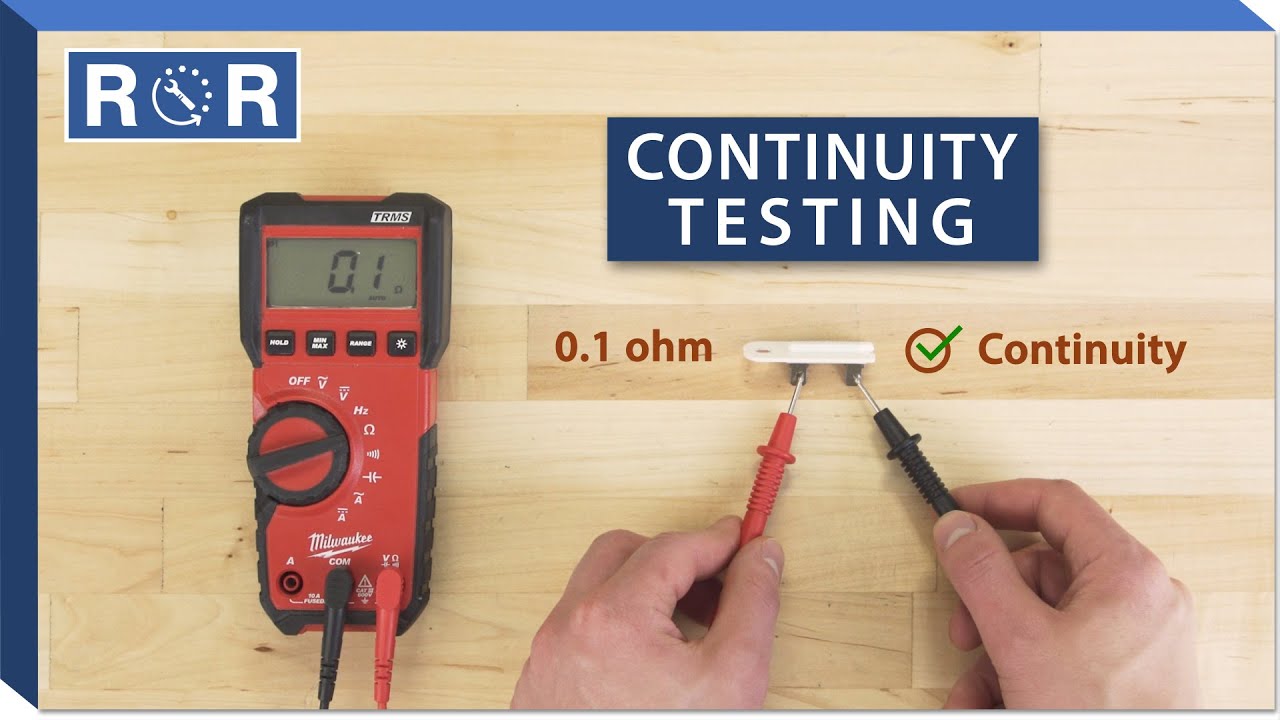

A continuity tester is only useful when you can trust the buzzer, identify the right setting quickly, and keep the probes in the correct sockets. The wrong meter can turn a simple wire check into a confusing sequence of symbols, ranges, and warnings. The Best multimeter with continuity tester should make routine checks clear without giving up the voltage, resistance, and current functions that make a multimeter useful.
This list includes straightforward manual meters, broader auto-ranging models, a clamp meter, and complete electrical test kits. The right choice depends on whether you mainly check batteries and wires, troubleshoot a vehicle, test outlets, or need capacitance, frequency, and temperature measurements.
The AstroAI 6000 Count True RMS is our top pick, with the Klein 69149P Test Kit, KAIWEETS KM602, and several compact meters covering the rest of the range.
Comparison table
| # | Product | Award | Counts | Key functions | Best for |
|---|---|---|---|---|---|
| 1 | AstroAI 6000 Count True RMS | Best overall | 6000 | True RMS, auto-ranging, temperature, capacitance | Automotive and home troubleshooting |
| 2 | Klein MM325 | Best rugged manual meter | Not stated | 600V AC/DC, 10A DC, continuity, battery test | Basic electrical work |
| 3 | Klein 69149P Test Kit | Best complete kit | Not stated | Multimeter, NCV, outlet tester | Home electrical checks |
| 4 | KAIWEETS KM602 | Best smart display | 6000 | True RMS, smart mode, temperature, frequency | Frequent troubleshooting |
| 5 | Crenova MS8233D | Best feature mix | 6000 | NCV, live wire, duty cycle, frequency | Broad household testing |
| 6 | AstroAI Clamp Meter | Best for AC current | 2000 | Clamp measurement, NCV, capacitance | Measuring current without disconnecting wires |
| 7 | AstroAI DM200M | Best compact TRMS meter | 2000 | True RMS, NCV, max recording | Toolboxes and glove compartments |
| 8 | AstroAI 2000 Count Blue | Best simple starter meter | 2000 | AC/DC voltage, DC current, resistance | Batteries, fuses, and continuity |
| 9 | AstroAI 2000 Count Black | Best battery tester | 2000 | Battery modes, continuity, diode test | Household battery checks |
| 10 | LJPXHHU 2000 Count Meter | Best basic display | 2000 | Backlit display, continuity, diode test | Occasional home use |
1. AstroAI 6000 Count True RMS: Best Overall

Pros
- True RMS handles AC measurements more usefully
- Auto-ranging reduces setup friction
- Measures temperature, capacitance, frequency, and duty cycle
- Backlit display, data hold, kickstand, and auto shut-off
- Double ceramic fuses protect against overloads
Cons
- Heavier than the simplest 2000-count meters
- The extra modes can take time to learn
- Test leads need their protective caps removed before use
Best for: home and automotive users who want one meter for a wide mix of diagnostic jobs.
The AstroAI 6000 Count True RMS is the meter we would keep for the widest range of ordinary troubleshooting. It is not just a continuity buzzer in a larger case. Auto-ranging makes routine checks quicker, while the 6000-count display gives finer resolution than the basic 2000-count models lower down this list.
True RMS is the important distinction when AC readings are not simple, clean waveforms. The meter measures AC and DC voltage, AC and DC current, resistance, capacitance, frequency, duty cycle, diode behavior, continuity, and temperature. That makes it useful for checking a vehicle charging system, tracing a household fault, or examining components where a basic voltage-only meter runs out of functions.
The display is backlit, and the kickstand and data-hold function help when the probes need to stay in place while you look at the reading. Its auto shut-off is a small but welcome protection against a drained battery. The double ceramic fuse arrangement, including F400mA/600V and F10A/600V fuse tubes, is more reassuring than an unspecified overload claim.
The compromise is size and complexity. At about 1.08 pounds, it is not as effortless to carry as the AstroAI DM200M, and a beginner may need the manual before using every position on the dial. The Klein MM325 is more deliberately simple, while the KAIWEETS KM602 has a more modern smart mode. Choose this AstroAI when measurement range and flexibility matter more than the smallest footprint.
For readers comparing instruments specifically for electrical work, the difference between routine continuity checks and broader electrical testing is useful context. This meter is the strongest all-round fit for someone who wants one capable instrument rather than several specialized testers.
2. Klein MM325: Best Rugged Manual Meter

Pros
- Measures up to 600V AC/DC
- Clear lead-alert LEDs help prevent socket mistakes
- Rated to withstand a 6.6-foot drop
- Includes battery testing and continuity
- Kickstand and rear lead holders improve bench use
Cons
- Manual ranging is slower for changing signals
- Resistance measurement stops at 2MΩ
- The magnetic hanger is optional
Best for: DIYers and tradespeople who prefer a sturdy, clearly laid-out manual meter.
The Klein MM325 makes a strong case for keeping the controls simple. You select the range yourself, which takes more attention than the AstroAI 6000 Count True RMS, but it also makes the meter's behavior easier to understand when teaching someone basic electrical troubleshooting. Continuity, diode, resistance, battery, current, and AC/DC voltage functions cover the jobs most households actually encounter.
Its 600V AC/DC voltage capability and 10A DC current measurement give it meaningful room for standard residential and automotive checks. Resistance goes to 2MΩ, enough for many wire, switch, fuse, and component checks, though not as broad as a feature-heavy 6000-count model. The backlit LCD is useful in a dim panel or under a car dashboard.
Klein adds practical details that are easy to overlook. LEDs indicate proper test-lead placement, the back has holders for the probes, and the kickstand keeps the face visible on a workbench. The included leads have CAT III/CAT IV safety caps. The stated 6.6-foot drop resistance also makes this a more comfortable choice for a meter that will live in a working toolbox.
Manual ranging is the obvious limitation. It can slow down when you do not know the expected reading, and the meter does not include NCV detection. The Klein 69149P adds a non-contact tester and outlet tester, while the MM325 itself is the better choice when you want one rugged handheld meter without extra pieces. Skip it if automatic range selection or advanced functions are priorities.
3. Klein 69149P Test Kit: Best Complete Kit

Pros
- Combines a multimeter, NCV tester, and outlet tester
- Multimeter measures up to 600V AC/DC
- Outlet tester identifies several common wiring faults
- NCV tester detects 50 to 1000 VAC
- Batteries and leads are included
Cons
- The multimeter is manual-ranging
- Outlet tester does not identify every wiring problem
- Three separate tools take more storage space
Best for: homeowners who want a practical set for outlets, wires, and basic circuit checks.
The Klein 69149P Test Kit is less about adding sophisticated meter functions and more about putting the right tool in reach for common household questions. Its digital multimeter handles AC/DC voltage up to 600V, DC current up to 10A, resistance up to 2MΩ, and continuity. Alongside it are a non-contact voltage tester and an electrical outlet tester.
That combination is valuable because continuity testing and live-voltage detection answer different questions. The multimeter uses leads for direct measurements. The NCV tester can detect 50 to 1000 VAC without touching a conductor, using a bright red LED and audible tone when voltage is detected. The outlet tester checks for correct wiring, open ground, open hot, open neutral, and hot/ground reversal.
The kit is especially approachable for a homeowner who does not yet know which instrument to use. The outlet tester gives a fast indication of common receptacle wiring faults, while the multimeter remains available for battery, resistance, diode, and continuity checks. The included leads and batteries mean there is less setup before the first diagnostic task.
Its limits are the same ones found in the MM325. This is a manual-ranging meter, not an auto-ranging or True RMS model, and the outlet tester cannot report every complex wiring issue. The AstroAI 6000 Count True RMS is the stronger single meter for automotive and component work. Choose the Klein kit when household outlet and live-wire checks matter more than capacitance, temperature, or frequency.
4. KAIWEETS KM602: Best Smart Display

Pros
- Smart mode identifies voltage, resistance, and continuity
- 6000-count True RMS display
- Rechargeable 1200 mAh battery
- Measures temperature, frequency, capacitance, and duty cycle
- CAT III 1000V and CAT IV 600V safety ratings
Cons
- Smart mode does not cover every measurement
- Rechargeable battery requires charging
- The large display and broad feature set may be excessive for simple checks
Best for: frequent users who want automatic identification and a broad diagnostic toolkit.
The KAIWEETS KM602 feels designed for people who use a multimeter often enough to appreciate fewer dial decisions. Its SMART mode automatically identifies voltage, resistance, and continuity and selects an appropriate range. That does not remove the need to understand safe probing, but it can make routine checks less fussy.
For manual measurements, the KM602 covers AC/DC voltage, resistance, continuity, current, capacitance, frequency, diode, duty cycle, temperature, NCV, and live-wire testing. The 6000-count True RMS display gives it the same broad measurement ambition as the AstroAI 6000 Count True RMS. Min, max, and average recording can help when a signal fluctuates instead of holding steady.
The full-screen color display is easy to read, and the built-in flashlight is useful in a dark cabinet or engine bay. A real 1200 mAh rechargeable battery avoids regular disposable battery changes. The package also includes test leads, a charging cable, thermocouples, batteries, a manual, and a storage case.
This is not the simplest meter in the group. Smart mode covers only selected functions, and the number of options can distract from a basic continuity check. Its safety specification is unusually strong for this set, with IEC CAT III 1000V and CAT IV 600V ratings, double-fuse overload protection, and CE and RoHS certifications. Pick it over the AstroAI if you want the display and rechargeable design. Pick the Klein MM325 if you prefer a simpler manual workflow.
5. Crenova MS8233D: Best Feature Mix

Pros
- 6000-count display with backlight
- Auto and manual ranging
- Adds capacitance, frequency, and duty-cycle testing
- Includes NCV and live-wire detection
- Alligator clips, case, and batteries are included
Cons
- Heavier than several compact alternatives
- The feature set is broad but less focused
- NCV is an alert, not a replacement for direct measurement
Best for: users who want many diagnostic modes and a fuller accessory package.
The Crenova MS8233D is a capable middle ground. It includes the functions people look for in a continuity meter, then adds capacitance, frequency, and duty cycle for electronics and electrical troubleshooting. Its switchable auto and manual range modes let you choose convenience or control depending on the job.
A 6000-count LCD gives more room for changing readings than a basic 2000-count display, and the stated sampling speed is three times per second. The backlight helps in dark spaces. Continuity and diode tests are joined by DC/AC voltage, DC/AC current, resistance, capacitance, frequency, duty cycle, NCV, and live-wire detection.
Safety features are well represented. The meter conforms to IEC61010-1 CAT III 600V, has two built-in fuses for overload protection, and uses an insulated rubber holster. The package includes probe leads, alligator clips, two AAA batteries, a carrying box, and a manual. The clips are particularly handy when a continuity check requires a steadier connection than handheld probes provide.
The Crenova weighs about 1.21 pounds, so it is not the lightest option here. The AstroAI DM200M is easier to carry, while the KAIWEETS KM602 offers a more polished smart interface and rechargeable battery. The MS8233D makes more sense for someone who wants maximum function coverage and useful accessories without moving to a specialized instrument.
The extra modes are not automatically better if your work is limited to checking fuses and batteries. For a closer look at which measurements matter when testing electronic components, consider the type of circuits you handle before choosing a feature-heavy meter.
6. AstroAI Clamp Meter: Best for AC Current

Pros
- Measures AC current with a clamp
- Includes continuity, resistance, capacitance, and diode modes
- NCV provides sound and light alerts
- Max/min, data hold, flashlight, and backlight are useful extras
- CAT III 600V safety standard
Cons
- Cannot measure DC current with the clamp
- The jaw is for current only
- A conventional meter is more flexible for probe-based work
Best for: checking AC current around an individual conductor without disconnecting it.
The AstroAI Clamp Meter solves a particular problem that ordinary handheld meters do not. To measure AC current, you open the jaw around one conductor instead of placing the meter in series with the circuit. That can be a safer and more convenient approach when the wire is accessible but disconnecting it would be awkward.
It also works as a conventional multimeter for AC/DC voltage, resistance, capacitance, diode, and continuity tests. The 2000-count display is adequate for this role, and data hold, max/min, auto shut-off, and low-battery indication make it easier to use during a changing measurement. A built-in flashlight and backlit screen are sensible additions for cramped electrical spaces.
NCV testing adds another layer of quick checking. A weak AC signal produces a green light and slow beep, while a stronger signal produces a red light and faster beep. The meter is rated to CAT III 600V and includes visual and audible alarms. The important operating detail is that the jaw must surround the individual conductor, not the whole power cord.
The main limitation is decisive: this model cannot test DC current, and the clamp should not be used to measure voltage. The AstroAI 6000 Count True RMS is a better general-purpose meter, while the Klein 69149P is more useful around outlets. Choose the clamp meter when AC current measurement is the reason you are shopping, not simply because it has a continuity mode.
7. AstroAI DM200M: Best Compact TRMS Meter

Pros
- True RMS measurement in a compact body
- Measures AC/DC voltage and current
- Includes continuity, resistance, diode, and NCV
- Silicone case and kickstand improve handling
- Ceramic fuses and CAT III 600V protection
Cons
- 2000-count display has less resolution than 6000-count models
- Does not include capacitance or temperature testing
- Compact controls can require closer attention
Best for: portable troubleshooting where True RMS matters more than advanced measurement modes.
The AstroAI DM200M is the meter to reach for when space matters. It is described as pocket-sized and suited to a toolbox or glove compartment, yet it still includes True RMS measurement. That gives it a meaningful advantage over basic meters when AC readings are less predictable than a simple waveform.
Its core functions are practical: AC/DC voltage, AC/DC current, resistance, diode, continuity, and NCV. Data hold and maximum-value recording help capture a reading while your attention is elsewhere. The 15-minute auto power-off protects the battery, and the backlit display, silicone protective case, and kickstand make the small format less awkward during use.
The safety details are stronger than its compact body suggests. Two ceramic fuses protect against burning and overload, with F250mA/250V and F10A/250V fuse tubes specified. The meter also exceeds CAT III 600V safety standards. Those features make it more reassuring for ordinary electrical and automotive diagnostics than an unprotected pocket tester.
The 2000-count display is the trade-off, and this model lacks the AstroAI 6000 Count True RMS's capacitance, frequency, duty-cycle, and temperature functions. It is also less physically substantial than the Klein MM325. Choose the DM200M if you need a compact True RMS meter for continuity and everyday voltage checks, and skip it if you routinely diagnose signals or components that benefit from the broader modes.
8. AstroAI 2000 Count Blue: Best Simple Starter Meter

Pros
- Straightforward AC/DC voltage and DC current testing
- Audible continuity buzzer
- Backlit 3 1/2-digit display
- Data hold and low-battery indication
- Double fuse protection and silicone cover
Cons
- Cannot test all AC current
- Cannot test AC voltage below 100mV
- Manual rotary selection needs care
Best for: simple checks of household circuits, batteries, fuses, and wires.
The AstroAI 2000 Count Blue is a conventional meter in the best sense. Turn the dial to the required function, place the leads correctly, and read the result on a backlit display. It measures AC/DC voltage, DC current, resistance, diode behavior, and continuity, which covers the basic diagnostic tasks most occasional users have in mind.
Its 3 1/2-digit LCD has a 1999-count capacity and samples twice per second. That is enough for checking whether a fuse is open, a wire conducts, or a battery has voltage. Data hold keeps a reading visible, while the continuity buzzer gives the quick audible confirmation that makes this type of meter useful.
The protective design includes double fuses, a silicone cover, and low-battery indication. The package includes batteries, test leads, and a user manual. The backlight is useful in a dim utility area, though it does not turn this into an auto-ranging meter.
The limitations need to be read carefully. The manufacturer says it cannot test all AC current and cannot test AC voltage below 100mV AC. The manual rotary switch and lead sockets must be set correctly, especially before current measurements. The AstroAI 6000 Count True RMS is much more versatile, and the Klein MM325 offers clearer lead-alert protection. This blue AstroAI is the better fit for uncomplicated continuity and battery work.
9. AstroAI 2000 Count Black: Best Battery Tester

Pros
- Dedicated 1.5V, 9V, and 12V battery modes
- Continuity buzzer and backlit display
- Data hold and auto shut-off
- Double-fuse overload protection
- Compact, light body
Cons
- Cannot test AC current
- 2000-count display is basic
- Manual setting still requires careful lead placement
Best for: households that mainly check batteries, fuses, wires, and simple circuits.
The AstroAI 2000 Count Black is closely related in function to the blue AstroAI, but its dedicated battery modes give it a clearer purpose. It supports 1.5V, 9V, and 12V battery testing, with automatic status detection and display for the 1.5V and 9V modes. That is more convenient than treating every battery like an undifferentiated voltage measurement.
It also measures AC/DC voltage, DC current, resistance, diode behavior, and continuity. The continuity buzzer is the feature that matters most for tracing a simple wire or checking a fuse. A backlit LCD makes the reading easier to see in a garage or under a desk, while data hold and auto shut-off reduce small annoyances during use.
The body weighs about 0.33 pounds and includes a silicone protective cover. Double anti-burn fuses and low-battery indication add useful safeguards. Batteries, leads, and a manual are included, so the meter is ready for the basic jobs it is intended to handle.
The largest omission is AC current testing, and that rules this meter out for some electrical troubleshooting. The AstroAI 2000 Count Blue is more suitable if you want the broader basic specification, while the AstroAI DM200M adds True RMS and NCV in a still-portable format. Pick the black model for battery-focused household use, not as a replacement for a full automotive or electrical diagnostic meter.
For home maintenance, the kinds of electrical checks most people actually perform at home can help narrow the choice between a basic battery meter and a more capable instrument.
10. LJPXHHU 2000 Count Meter: Best Basic Display

Pros
- Large 2.7-inch backlit LCD
- Audible continuity sensor
- Tests AC/DC voltage, DC current, resistance, diode, and batteries
- Fold-out stand and protective shell
- Includes a 9V battery and leads
Cons
- Does not include auto-ranging
- Function set is narrower than the 6000-count models
- Lead placement and dial selection require attention
Best for: occasional users who prioritize a readable screen and simple measurements.
The LJPXHHU 2000 Count Meter keeps the essential controls familiar and puts a large screen at the center. Its 2.7-inch backlit LCD is useful when you are looking at the meter from an awkward angle or working in dim light. For continuity, the audible sensor provides a direct indication that a wire or circuit path conducts.
The meter measures AC/DC voltage, DC current, resistance, diode behavior, continuity, and batteries. Those functions cover common checks on vehicles, household wiring, fuses, and small electronics. It has overload protection on all ranges, low-battery indication, double insulation, and a fold-out stand for hands-free viewing.
The orange protective shell is designed to help with minor bumps, and the package includes a 9V battery, test leads, and a user manual. At about 0.37 pounds, it is easy to move between a drawer and a workbench. The stated two-year guarantee is also part of the product's listed support package.
This is a deliberately basic meter. It does not offer the auto-ranging, True RMS, NCV, capacitance, or temperature functions found on more advanced picks. The AstroAI 2000 Count Blue has a similar basic role, while the Crenova MS8233D offers a far broader function list. Choose the LJPXHHU when a clear display and occasional continuity checks matter more than diagnostic depth.
How to choose best multimeter with continuity tester
The best multimeter with continuity tester is defined less by the longest feature list than by safe lead placement, a useful continuity alert, and functions that match the circuits you plan to check.
Continuity response
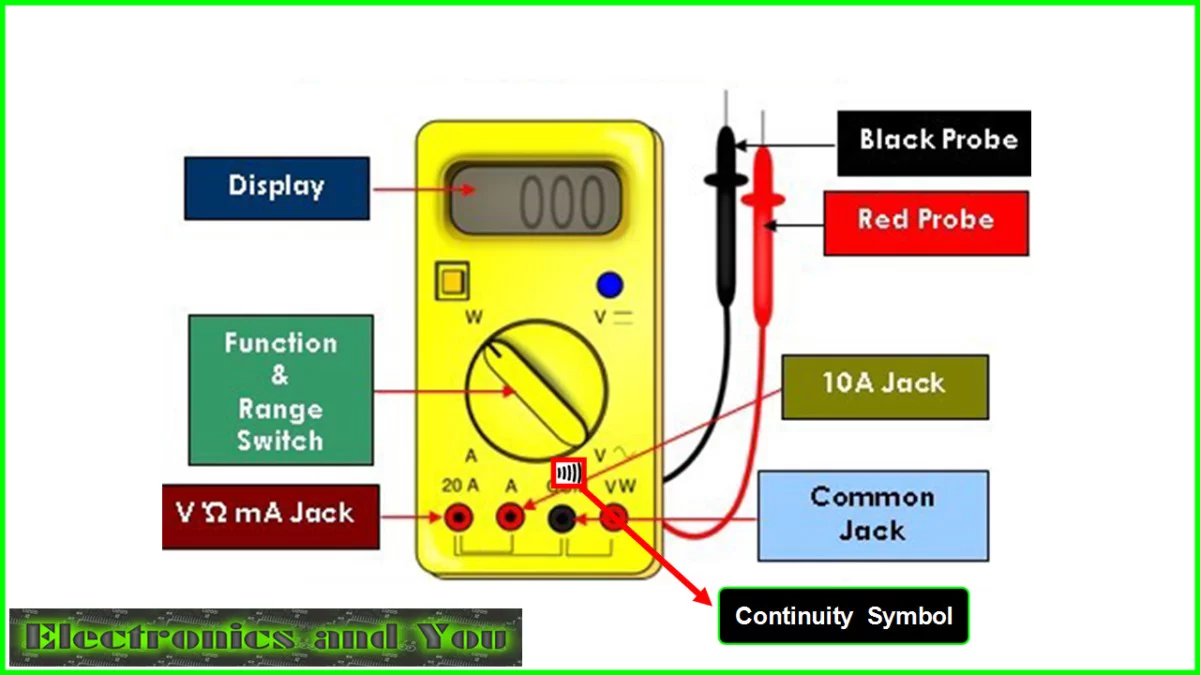
A continuity mode should give a clear audible buzzer and, ideally, a visible indication on the display. This matters when your eyes are on the wire, connector, or fuse rather than the meter. A buzzer is convenient, but it should never replace confirming the displayed reading and using the correct test procedure.
Measurement range and count
A 2000-count display is adequate for basic batteries, fuses, wires, and straightforward voltage checks. A 6000-count display shows finer changes and gives more room for readings that sit between common ranges. Auto-ranging is quicker for unfamiliar circuits, while manual ranging can feel more predictable for repeat measurements.
True RMS capability
True RMS is useful for AC voltage and current that are not clean, simple waveforms. It is not necessary for every continuity check, but it can make AC troubleshooting more informative. The AstroAI 6000 Count True RMS, AstroAI DM200M, and KAIWEETS KM602 include it.
Safety protection
Look for stated category ratings, properly protected inputs, overload protection, and clear lead guidance. Ceramic fuses, insulated cases, lead-alert lights, and safety caps all address different risks. NCV detection is useful for a preliminary indication, but direct measurements still require the correct function, socket, and range.
A continuity buzzer tells you that two points are connected. It does not tell you that the circuit is safe to touch.
Specialized functions
Temperature, capacitance, frequency, duty cycle, diode testing, NCV, and current clamping each have a specific use. Do not treat them as interchangeable. A clamp meter is valuable when you need AC current without opening the circuit, while an outlet tester is the more direct tool for spotting common receptacle wiring faults.
Frequently asked questions
What does continuity testing do?
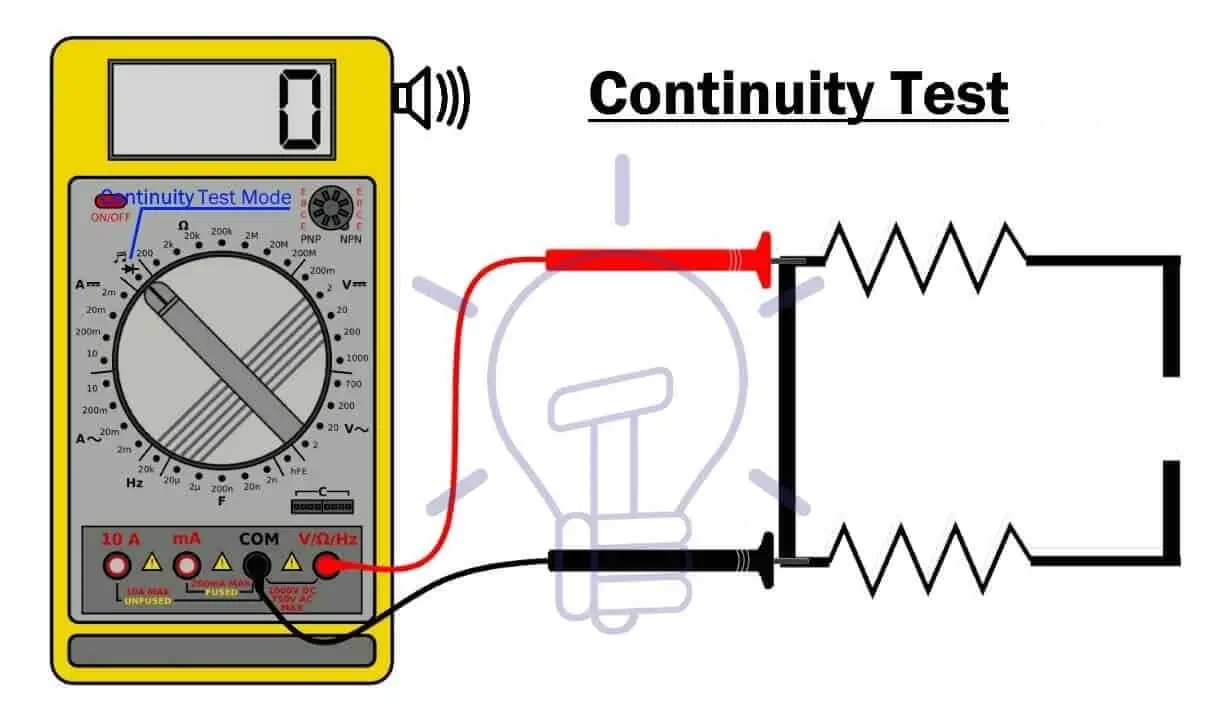
Continuity testing checks whether an electrical path is complete enough for current to pass between two points. The meter commonly shows a reading and sounds a buzzer when the resistance is low. Always disconnect power before using continuity mode.
Can a multimeter test live voltage and continuity?
It can test live voltage when set up for voltage measurement, but continuity testing should be performed only on a de-energized circuit. Switching directly from a voltage check to continuity without confirming that power is off can damage the meter or create a safety hazard.
Is auto-ranging better than manual ranging?
Auto-ranging is easier when you do not know the approximate value or when the signal changes. Manual ranging can be faster for repeated measurements because you select the expected range directly. The Klein MM325 and Klein 69149P use manual-ranging meters, while several AstroAI and other models provide auto-ranging.
Do I need True RMS for continuity testing?
No. Continuity testing does not require True RMS. True RMS is mainly useful for obtaining more meaningful AC voltage or current readings when the waveform is distorted or variable.
Can a clamp meter measure continuity?
The AstroAI Clamp Meter includes a conventional continuity function through its test leads. Its clamp is for AC current measurement and should not be used to measure voltage or to test DC current with this model.
What is the difference between NCV and continuity testing?
NCV, or non-contact voltage detection, looks for an AC electrical field without a direct probe connection. Continuity testing uses two leads on a de-energized circuit to check whether a conductive path exists. They answer different safety and diagnostic questions.
How many counts should a multimeter have?
A 2000-count meter is sufficient for many basic household checks. A 6000-count meter can show finer changes and usually appears in models with broader diagnostic capabilities. Counts alone do not determine safety or accuracy, so compare them with the meter's functions and protection features.
The bottom line
The Best multimeter with continuity tester for most readers is the AstroAI 6000 Count True RMS. It combines auto-ranging, True RMS, continuity, temperature, capacitance, frequency, and duty-cycle measurement in one versatile instrument. The Klein 69149P Test Kit is the better choice for homeowners who need an NCV tester and outlet tester alongside a basic multimeter.
For a compact tool, choose the AstroAI DM200M. For AC current around an individual conductor, choose the AstroAI Clamp Meter, and for a readable basic display, the LJPXHHU 2000 Count Meter is a straightforward option.
If you are undecided, choose the AstroAI 6000 Count True RMS unless your main need is outlet testing, portability, or clamp-based AC current measurement.
As an Amazon Associate we earn from qualifying purchases.