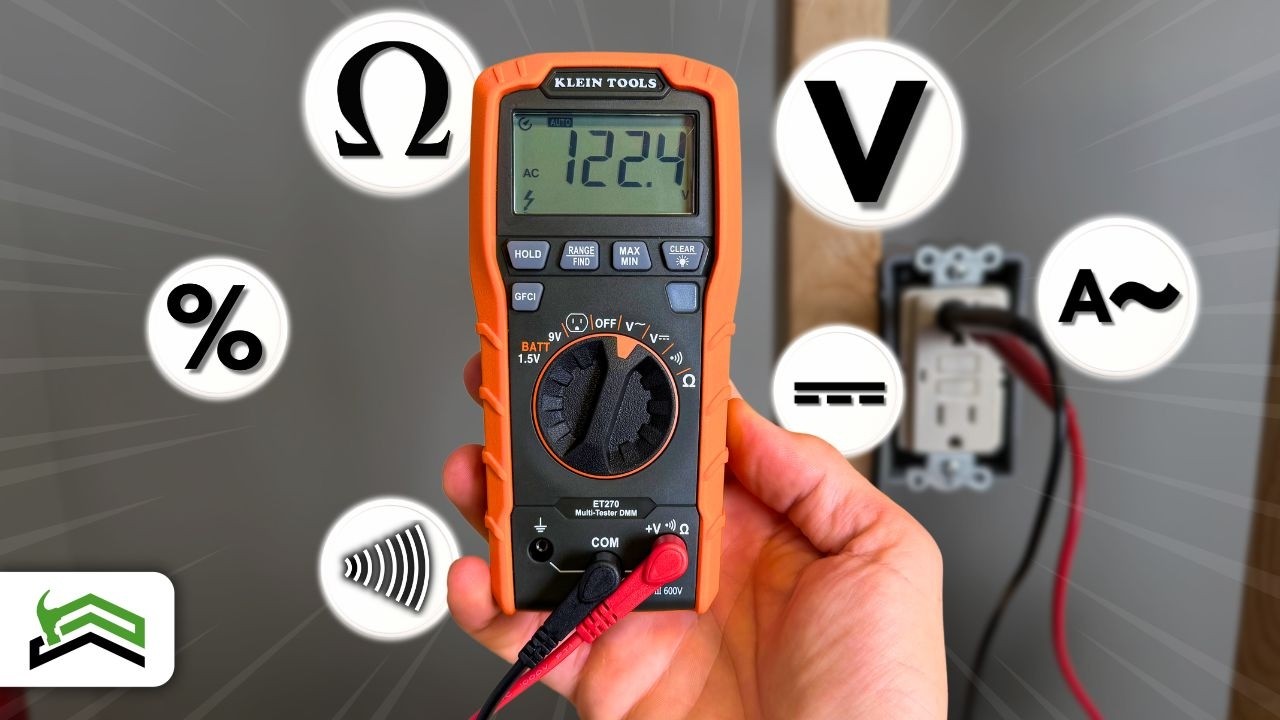

A dead outlet, a weak battery, or a light that suddenly stops working can turn a five-minute repair into guesswork. A multimeter gives you a way to check voltage, continuity, resistance, and more before replacing parts or opening a panel.
The Best best multimeters for home use range from simple manual meters to feature-rich True RMS instruments. Some are built for occasional battery and outlet checks, while others add non-contact voltage detection, temperature, capacitance, and better protection for more demanding electrical work.
Our top pick is the Klein Tools MM325, with the AstroAI 6000 Count close behind and the Fluke 117 as the specialist choice for buyers who want a more advanced professional meter.
Comparison table
| # | Product | Award | Voltage and current | Other measurements | Best for |
|---|---|---|---|---|---|
| 1 | Klein Tools MM325 | Best overall | Up to 600V AC/DC, 10A DC | Resistance, batteries, diodes, continuity | General household troubleshooting |
| 2 | AstroAI 6000 Count | Best feature mix | AC/DC voltage and current | Resistance, capacitance, frequency, duty cycle, temperature | Home and automotive diagnosis |
| 3 | AstroAI 2000 Count | Best simple meter | AC/DC voltage, DC current | Resistance, diodes, continuity | Basic DIY checks |
| 4 | Klein Tools MM420 | Best advanced Klein | Up to 600V AC/DC, 10A AC/DC | 50MΩ resistance, temperature, capacitance, frequency | Frequent electrical work |
| 5 | Klein Tools 69149P Kit | Best electrical starter kit | Up to 600V AC/DC, 10A DC | Non-contact voltage and receptacle testing | Home wiring checks |
| 6 | TESMEN TM-510 | Best easy operation | AC/DC voltage | Resistance, continuity, non-contact voltage | Occasional homeowners |
| 7 | Klein Tools MM320KIT | Best complete tester kit | Up to 600V AC/DC, 10A DC | Batteries, diodes, continuity, receptacle faults | Electrical maintenance |
| 8 | ZMIWNIED FS899L | Best modern interface | 60mV to 600V AC/DC, 300mA to 10A | Resistance, capacitance, frequency, temperature, NCV | Buyers who want rechargeable convenience |
| 9 | AstroAI 6000 Count Black | Best alternate AstroAI | AC/DC voltage and current | Resistance, capacitance, frequency, duty cycle, temperature | Home and vehicle troubleshooting |
| 10 | Fluke 117 | Best professional meter | Automatic AC/DC selection | Resistance, continuity, frequency, capacitance, Min Max Average | Experienced users |
1. Klein Tools MM325: Best Overall

Pros
- Covers the core household measurements
- Lead-alert LEDs help prevent incorrect connections
- Backlit display works in dim areas
- Built to withstand a 6.6-foot drop
Cons
- Manual ranging takes more attention
- Resistance measurement stops at 2MΩ
- Does not include non-contact voltage detection
Best for: homeowners who want a sturdy, straightforward meter for common electrical checks.
The Klein Tools MM325 is the meter we would hand to someone who wants to solve ordinary household electrical problems without learning a crowded control panel. It covers AC and DC voltage, DC current, resistance, batteries, diodes, and continuity. The controls are manual-ranging, so you choose the measurement range yourself, but that arrangement can feel more deliberate when you already know roughly what you are checking.
Its headline voltage range reaches 600V AC/DC, and it can measure up to 10A of DC current. Resistance goes to 2MΩ, which is suitable for many household components, switches, wires, and batteries. The battery mode is a useful touch for checking whether loose cells are still working, while the continuity and diode modes cover common repair tasks.
Klein adds practical protection around the basic design. LEDs indicate proper test lead placement, reducing one of the easiest mistakes to make with a multimeter. The LCD is backlit, the case has a kickstand and rear lead holders, and the meter is rated to survive a 6.6-foot drop. The included leads have CAT III and CAT IV safety caps, and two AAA batteries are included.
The limitation is the manual range selection. The AstroAI 6000 Count is quicker when you are moving between unknown measurements, and the Klein Tools MM420 measures much more resistance and adds AC current. The MM325 remains the cleaner choice for a homeowner who values simple functions and physical durability over a long feature list. Skip it if you want automatic range selection or non-contact voltage sensing.
2. AstroAI 6000 Count: Best Feature Mix

Pros
- True RMS measurement for AC voltage and current
- Auto-ranging reduces setup time
- Measures temperature, capacitance, frequency, and duty cycle
- Backlit display, kickstand, and data hold
Cons
- The broad feature set takes time to learn
- Test leads require attention to their protective caps
- No non-contact voltage function is listed
Best for: DIY users who want one meter for household and automotive diagnosis.
The blue AstroAI 6000 Count is the most versatile general-purpose meter here. It is auto-ranging, which means the meter selects the appropriate range after you choose the type of measurement. That is especially helpful when checking an unfamiliar circuit, where guessing the correct range can slow down the job.
True RMS measurement is the important technical feature. It is designed to give more useful AC readings on non-linear loads than a basic averaging meter. This model also measures AC and DC current, voltage, resistance, continuity, diodes, capacitance, frequency, duty cycle, and temperature. Those extra modes make it more useful for appliances, vehicle electrical systems, and electronic projects than the Klein Tools MM325.
The design is sensible rather than flashy. A large backlit LCD, data hold, auto shut-off, and kickstand all address small frustrations that appear during real repairs. The meter uses double ceramic fuses, including F400mA/600V and F10A/600V fuse tubes, for overload protection. AstroAI also specifically warns users to remove the caps before using the test leads, so setup deserves care.
The AstroAI 6000 Count is a better fit than the simpler AstroAI 2000 Count when you need capacitance, temperature, or automatic ranging. The Klein Tools MM420 has a stronger industrial feel and a wider resistance specification, while the Fluke 117 adds low impedance mode. Choose this AstroAI for broad capability without moving to a professional-only instrument. If you mostly test batteries and continuity, its extra modes may be more than you need.
3. AstroAI 2000 Count: Best Simple Meter

Pros
- Straightforward core measurements
- Backlit display and data hold
- Continuity buzzer
- Protective silicone cover and overload fuses
Cons
- Manual rotary switch requires careful setup
- Does not measure capacitance or temperature
- Cannot test all AC current or AC voltage below 100mV
Best for: occasional battery, fuse, outlet, and continuity checks.
The AstroAI 2000 Count keeps the job narrow. It measures AC and DC voltage, DC current, resistance, diodes, and continuity, which covers the basic questions most homeowners ask of a meter. Its manual rotary selector is familiar and easy to understand, provided you take a moment to match the dial and lead sockets to the task.
The display uses 3.5 digits with a 1999-count readout and updates twice per second. That is adequate for stable household measurements, and the backlight helps when the outlet or fuse box is tucked into a dark corner. Data hold freezes a reading, while the continuity buzzer lets you check a wire or switch without staring at the screen.
A silicone cover adds protection against drops and accidental contact, and the meter uses double fuses for overload protection. The package includes batteries, test leads, and a manual. It is a compact tool at about 0.56 pounds, so it is easy to keep in a drawer or toolbox.
This model is less capable than the AstroAI 6000 Count, which adds auto-ranging, True RMS, capacitance, frequency, duty cycle, and temperature. The Klein Tools MM325 is a better pick if you want a 600V rating, battery testing, and a more rugged case. Pay close attention to AstroAI's warning that this meter cannot test all AC current and AC voltage below 100mV. It is a sensible basic instrument, not a universal diagnostic meter.
4. Klein Tools MM420: Best Advanced Klein

Pros
- True RMS and auto-ranging
- Measures AC and DC current
- Resistance range reaches 50MΩ
- Includes temperature and capacitance testing
- Lead-alert protection and CAT safety caps
Cons
- More controls than a basic homeowner needs
- Does not include non-contact voltage detection
- The meter is designed for more than simple battery checks
Best for: users who want a durable meter with room to grow.
The Klein Tools MM420 is the serious step up from the MM325. Its auto-ranging operation takes away the need to estimate a range, while True RMS technology is intended to improve AC readings on irregular electrical loads. The result is a meter that feels better suited to repeated troubleshooting rather than a tool used once or twice a year.
It measures AC/DC voltage up to 600V, AC/DC current up to 10A, and resistance up to 50MΩ. That resistance ceiling is far beyond the MM325's 2MΩ limit. The MM420 also adds continuity, temperature, capacitance, frequency, duty cycle, and diode testing, so it can cover appliances, HVAC work, electronics, and vehicle circuits.
Klein keeps the physical design familiar. The display is backlit, the meter has rear test lead holders and a kickstand, and optional magnetic hangers can support hands-free work. Lead-alert LEDs show whether the leads are placed correctly. The meter includes a thermocouple, CAT III/CAT IV safety caps, instructions, and two AAA batteries, giving the temperature function an immediate purpose.
The MM420 is more capable than the Klein Tools MM325 and more robustly specified than either AstroAI 6000 Count model. The Fluke 117 is easier for some professional workflows because it offers automatic AC/DC selection and low impedance mode. Choose the MM420 when you want advanced measurement functions in a rugged, familiar format. Skip it if you only need continuity and household voltage.
5. Klein Tools 69149P Kit: Best Electrical Starter Kit

Pros
- Combines a multimeter, voltage detector, and receptacle tester
- Non-contact tester detects 50 to 1000V AC
- Receptacle tester identifies several common wiring faults
- Includes leads and batteries
Cons
- The multimeter is manual-ranging
- Receptacle tester does not identify every complex wiring issue
- Three separate tools take more storage space
Best for: homeowners checking outlets, wiring, and live circuits.
The Klein Tools 69149P Kit makes a strong case for buying a set instead of a meter alone. Its MM320 multimeter handles AC/DC voltage up to 600V, DC current up to 10A, resistance up to 2MΩ, and continuity. The NCVT1P non-contact tester and RT110 receptacle tester address two jobs that ordinary multimeter probes do less conveniently.
The non-contact tester detects 50 to 1000V AC. Its LED changes to red and the unit produces an audible tone when voltage is detected. That is useful as a preliminary check before touching conductors with probes, though non-contact detection should not be treated as a complete circuit diagnosis.
The RT110 receptacle tester checks common outlet wiring configurations, including open ground, open hot, open neutral, and hot/ground reversed. It can indicate whether an outlet appears correctly wired, but the data specifically says it does not identify other complex wiring issues. That boundary matters, especially for older homes and unusual circuits.
Compared with the standalone Klein Tools MM325, this kit gives up nothing important in the multimeter's core range while adding two dedicated testers. The Klein Tools MM320KIT goes further with a different voltage tester, flashlight, carrying case, and broader receptacle testing, but it is also a larger kit. Choose the 69149P when outlet and live-wire checks are central to the job. Anyone focused on electronics, capacitance, or temperature should choose the MM420 instead.
6. TESMEN TM-510: Best Easy Operation

Pros
- Smart auto mode selects common measurements
- Non-contact voltage detection with sound and light
- Backlight and built-in flashlight
- Data hold and automatic shutdown
- Includes a storage bag
Cons
- Limited to voltage, resistance, and continuity
- CAT II 600V rating is less extensive than some picks
- Low battery voltage can trigger automatic resistance measurement
Best for: homeowners who want quick checks with minimal setup.
The TESMEN TM-510 is aimed at convenience. Its Smart Auto Mode switches between AC/DC voltage, resistance, and continuity without requiring you to select a measurement type or range first. That makes it approachable for a homeowner who does not use a multimeter often and would rather avoid a long sequence of dial choices.
Non-contact voltage detection is the other standout feature. The TM-510 can sense AC voltage without connecting the probes, using a visual and audible alarm. A built-in flashlight helps illuminate a dark outlet or cabinet, and the backlit display, data hold, low-battery indicator, and automatic shutdown round out the practical controls.
The meter has a CAT II 600V safety rating and internal overload protection, with a silicone outer cover. Its listed measurements are intentionally narrower than those on the AstroAI 6000 Count or Klein Tools MM420. The package includes two test leads, a storage bag, two AAA batteries, and a user manual.
One unusual detail deserves attention: in auto mode, a detected battery voltage below 0.8V causes the device to measure resistance automatically. That behavior may surprise someone checking a nearly depleted cell. The Klein Tools MM325 is more versatile for manual battery testing, while the TM-510 is easier for quick voltage and continuity checks. Pick it for simplicity, not for advanced electrical analysis.
7. Klein Tools MM320KIT: Best Complete Tester Kit

Pros
- Includes multimeter, non-contact tester, receptacle tester, and case
- Multimeter measures up to 600V AC/DC and 10A DC
- NCVT3P covers 12 to 1000V AC detection
- Receptacle tester checks common wiring problems
- Built-in flashlight on the voltage tester
Cons
- Bulky compared with a standalone meter
- The multimeter is manual-ranging
- More equipment than a casual battery tester needs
Best for: homeowners building a dedicated electrical troubleshooting kit.
The Klein Tools MM320KIT is the most comprehensive home electrical set in this group. It pairs a manual-ranging multimeter with an NCVT3P non-contact voltage tester, an ET45 voltage tester, an RT210 receptacle tester, a carrying case, and batteries. The advantage is coverage: you can approach a wiring problem with the right tool instead of using the multimeter for every preliminary check.
The multimeter measures AC/DC voltage up to 600V, DC current up to 10A, resistance, batteries, diodes, and continuity. The NCVT3P offers dual-range voltage detection from 12 to 1000V AC or 70 to 1000V AC, and it includes a flashlight that works independently of the detection function. That low-voltage range can be useful around control wiring and other circuits where a narrower detector may not respond.
The ET45 checks AC voltages from 28V to 240V and DC voltages from 32V to 330V. The RT210 identifies common problems in standard and GFCI receptacles, including open ground, reverse polarity, open hot, open neutral, and hot/ground reversed. It also has a built-in lead holder for outlet testing. These tools make the set more approachable for outlet work than the standalone MM325.
The 69149P kit is smaller and more focused, with a simpler non-contact detector and receptacle tester. The MM320KIT is the better choice when you want the wider voltage detection range, flashlight, and carrying case. The AstroAI 6000 Count remains the better standalone meter for capacitance, temperature, and frequency. Choose this kit when household wiring is the priority, and make room for its larger case.
8. ZMIWNIED FS899L: Best Modern Interface

Pros
- True RMS with a 6000-count display
- Color screen and built-in torch
- USB-C rechargeable battery
- Includes a 20-piece lead and adapter set
- CAT III 1000V and CAT IV 600V safety ratings
Cons
- Larger feature set may overwhelm occasional users
- The brand has less established recognition than Klein Tools or Fluke
- Accessory quantity does not replace learning safe test procedures
Best for: users who want a rechargeable meter with a large display and broad measurement range.
The ZMIWNIED FS899L stands apart immediately with its color screen, USB-C charging, and included accessory set. It is built around convenience for longer troubleshooting sessions, especially when a meter is used in a workshop or carried between jobs rather than left in a drawer.
Its True RMS system uses a 6000-count display and covers AC/DC voltage from 60mV to 600V. The stated current range is 300mA to 10A, resistance extends from 600Ω to 60MΩ, and capacitance runs from 10nF to 60mF. It also measures frequency, ambient temperature, continuity, and non-contact voltage. Those ranges give it more diagnostic breadth than the Klein Tools MM325.
The large 4.8-inch backlit screen should be easy to read in a basement or cramped panel, while the built-in torch helps with the immediate work area. Data hold is useful when the display cannot stay directly in front of you. The internal battery charges through USB-C in two hours and is listed for up to eight hours of continuous use. The package includes 20 accessories such as alligator clips, probes, and adapters.
The FS899L's stated CAT III 1000V and CAT IV 600V ratings, double fuses, and overload safeguards are substantial on paper, but safe technique still matters more than a specification label. The Fluke 117 has a clearer professional track record and low impedance mode, while the AstroAI 6000 Count offers a more conventional battery-powered design. Choose the FS899L if a modern interface and rechargeable operation matter. Skip it if you prefer a simpler established tool with fewer accessories to sort through.
9. AstroAI 6000 Count Black: Best Alternate AstroAI

Pros
- True RMS and auto-ranging
- Measures voltage, current, capacitance, frequency, and temperature
- Backlit screen, kickstand, data hold, and auto shut-off
- Double ceramic fuses
Cons
- No non-contact voltage detection is listed
- Requires careful lead-cap and socket setup
- Similar capability to the blue AstroAI 6000 Count
Best for: users who want the AstroAI feature set in this separate black version.
The black AstroAI 6000 Count Black has nearly the same working profile as the blue AstroAI 6000 Count. It is an auto-ranging True RMS meter for AC/DC voltage and current, resistance, continuity, diodes, capacitance, frequency, duty cycle, and temperature. For home use, that means one instrument can cover outlets, batteries, appliance components, vehicle circuits, and some electronic troubleshooting.
The 6000-count display gives more room for precise readings than a basic 2000-count design, while the backlight helps in dim locations. Data hold freezes the result, the kickstand supports bench work, and auto shut-off helps preserve the batteries. The stated ceramic fuses are F600mA/250V and F10A/250V, adding overload protection to the meter.
Its dimensions are about 7.48 by 3.54 by 1.38 inches, and the listed weight is about 1.17 pounds. That is compact enough for a toolbox but substantial enough to stay put with the kickstand. AstroAI warns users to remove the caps before using the leads and to consult the manual, a reminder that correct setup is part of safe measurement.
There is little practical separation between this model and the blue AstroAI 6000 Count in the supplied specifications. The Klein Tools MM420 has a 50MΩ resistance range and a stronger rugged-work emphasis, while the ZMIWNIED FS899L adds USB-C charging and a larger color screen. Pick this AstroAI when its form and finish suit your kit. If you need a more distinct upgrade, move to a meter with low impedance mode or a wider resistance range.
10. Fluke 117: Best Professional Meter

Pros
- Automatic AC/DC voltage selection
- Low input impedance helps reduce ghost-voltage readings
- True RMS measurement
- Non-contact AC voltage detection
- Large white LED backlight
Cons
- More instrument than occasional users need
- The supplied feature list does not state a voltage ceiling
- Heavier than the compact basic meters
Best for: experienced users who want professional-oriented voltage handling.
The Fluke 117 is the specialist pick, not the default recommendation for every homeowner. Its AutoVolt function automatically selects AC or DC voltage, removing a common source of setup errors. Its low input impedance is designed to help prevent false readings caused by ghost voltage, which can make a meaningful difference when diagnosing wiring.
The feature set includes resistance, continuity, frequency, capacitance, and Min Max Average measurements. True RMS supports more accurate readings on non-linear loads. The meter also measures DC millivolts to 600.0mV with 0.1mV resolution, according to the supplied details, although the data does not state an overall voltage ceiling.
VoltAlert technology provides non-contact AC voltage detection, and the large white LED backlight is intended for poorly lit work areas. Typical battery life is listed at 400 hours without the backlight, while the operating temperature range is -10°C to +50°C. At about 1.52 pounds, it is heavier than the AstroAI 2000 Count and the TM-510, but the additional mass suits a meter designed for regular use.
The Klein Tools MM420 gives homeowners more explicit measurement ranges and includes a thermocouple, while the Fluke 117's automatic AC/DC selection and low impedance mode are more specialized advantages. The Klein Tools MM325 is easier to justify for simple household checks because it is less complex. Choose the Fluke when ghost voltage, repeatable professional workflows, and long battery life matter. Occasional users should skip it unless they specifically need those features.
How to choose best multimeters for home use
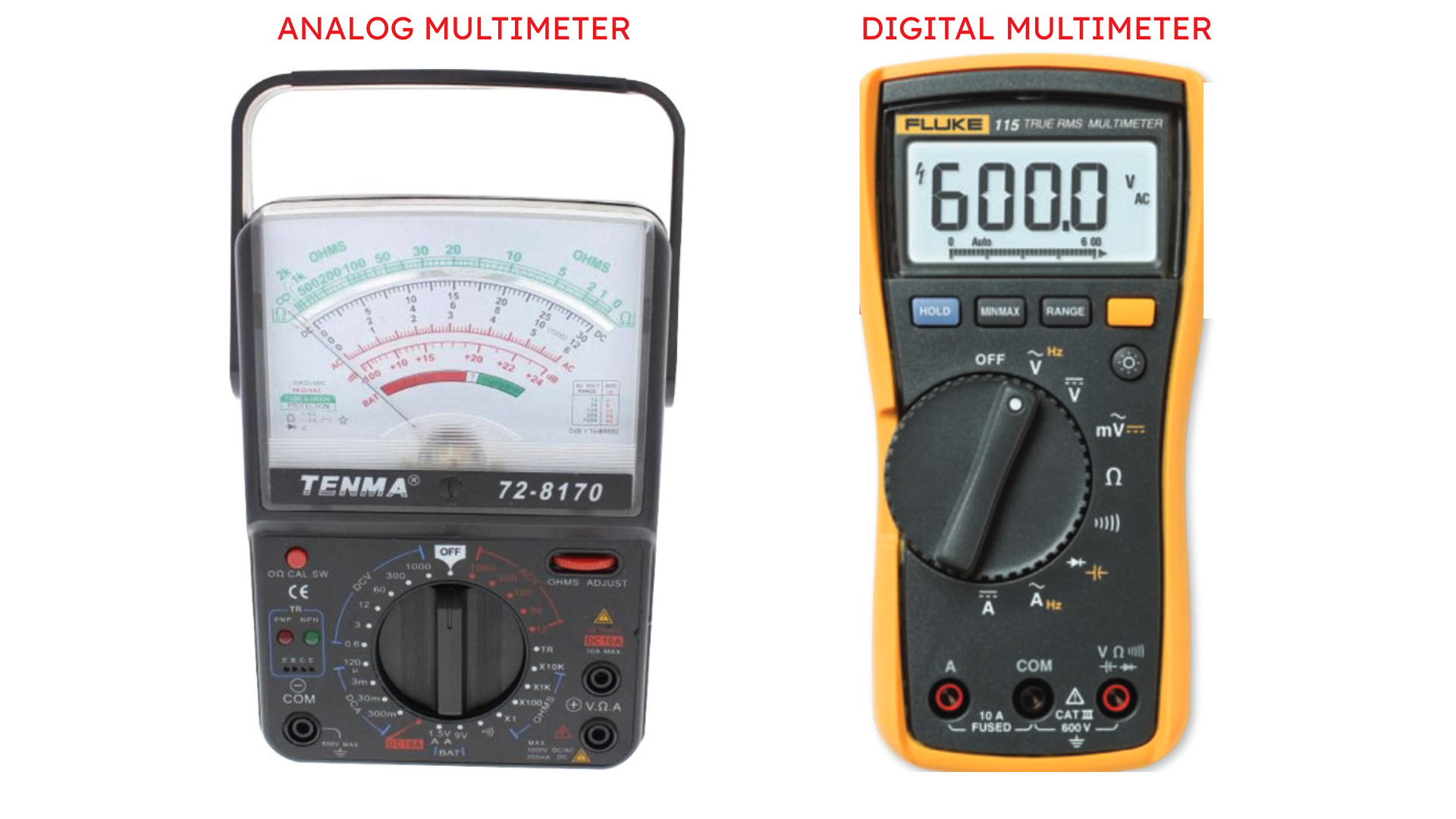
The right meter depends less on the number of modes than on the electrical jobs you actually plan to perform. Focus on measurement range, display behavior, protection, and whether a dedicated tester or kit will make the work safer.
Measurement modes
Every meter here handles some combination of voltage, resistance, and continuity, but the differences become important quickly. Battery checks and simple outlet troubleshooting need less than appliance repair or electronics work. Capacitance, frequency, temperature, diode testing, and duty cycle are useful only when the repair calls for them.
A meter such as the AstroAI 6000 Count or Klein Tools MM420 gives you room to take on more kinds of projects. The AstroAI 2000 Count and Klein Tools MM325 are more focused. Do not choose a long feature list unless you can identify the jobs those functions will support.
Ranging and True RMS
Manual ranging requires you to select a suitable range before measuring. It can be perfectly workable, but a wrong setting may produce an unhelpful reading or require another attempt. Auto-ranging meters such as the Klein Tools MM420 and TESMEN TM-510 are easier when the circuit is unfamiliar.
True RMS matters for AC measurements that do not behave like a simple sine wave. It is a useful feature for modern appliances, variable-speed equipment, and electronic power supplies. It is less important for a basic battery check.
Safety protection
Look for stated safety ratings, overload protection, appropriate fuses, and clear lead placement. The MM325 and MM420 use lead-alert LEDs, AstroAI lists ceramic fuses, and the FS899L lists CAT III 1000V and CAT IV 600V protection. Those details support safer use, but they do not make careless probing safe.
A multimeter's safety rating matters only when the leads are in the correct sockets and the measurement mode matches the circuit.
For household wiring, a non-contact tester can provide a preliminary indication before probes touch anything. It should supplement, not replace, a proper voltage measurement and safe isolation procedure.
Display and physical design
A backlit display is one of the most useful everyday features because electrical work often happens in cabinets, basements, and behind appliances. Data hold helps when you cannot keep the meter at eye level. A kickstand or magnetic hanger can make a stable reading easier.
The FS899L adds a color screen, USB-C charging, a torch, and a large 4.8-inch display. Klein's meters emphasize lead storage, kickstands, and impact resistance. Choose the design that fits the way you will work rather than treating convenience features as decoration.
Test kits and accessories
A standalone meter is enough for voltage, resistance, and continuity. A kit becomes more useful when you expect to inspect receptacles or identify live wires without contacting them. The Klein Tools 69149P and MM320KIT include dedicated testers that make those jobs faster and more approachable.
A carrying case, extra probes, alligator clips, or adapters can help if you work on several types of equipment. The right tools for checking household outlets and wiring should still be chosen around the fault you are trying to find, not the number of accessories in the box.
Frequently asked questions
What can a multimeter check at home?
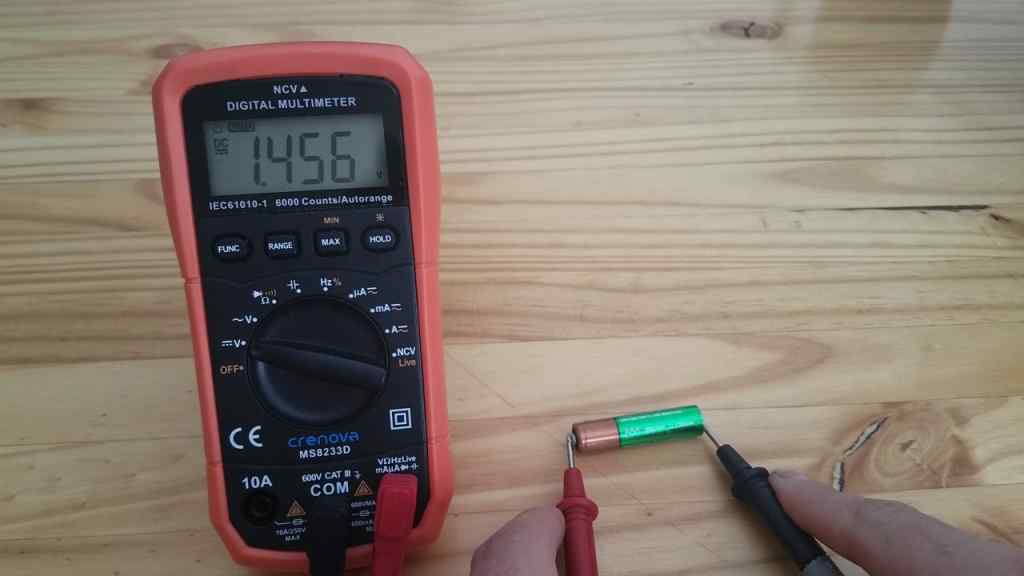
A multimeter can check voltage, resistance, and continuity, depending on the model. Many also test batteries, diodes, capacitance, frequency, temperature, or current. Always confirm that the meter's range and safety rating match the circuit before taking a measurement.
Should a homeowner choose auto-ranging or manual-ranging?
Auto-ranging is easier when you do not know the expected reading. Manual-ranging can be useful when you already understand the circuit and want direct control. The TESMEN TM-510, AstroAI 6000 Count, and Klein Tools MM420 use auto-ranging, while the MM325 uses manual ranging.
Is True RMS important for household electrical work?
True RMS can provide more accurate AC readings on non-linear loads than a basic averaging meter. It is useful around modern appliances, electronics, and variable-speed equipment. For simple batteries and straightforward continuity checks, it is less critical.
Can a multimeter replace a non-contact voltage tester?
A multimeter and non-contact tester serve different roles. A non-contact tester can provide a quick indication that AC voltage may be present, while a multimeter with probes gives a measured result. The 69149P and MM320KIT include separate non-contact testers for this reason.
What does continuity mode do?
Continuity mode checks whether electricity can travel through a circuit path. The meter usually gives an audible tone when the path is continuous. Use it on de-energized circuits, wires, switches, and fuses, not on a live circuit unless the meter instructions explicitly support that procedure.
What is low impedance mode?
Low impedance mode reduces the meter's input impedance to help prevent false readings caused by ghost voltage. It is a notable feature of the Fluke 117. This mode is particularly relevant when troubleshooting wiring where induced voltage may appear on a disconnected conductor.
The bottom line
The Best best multimeters for home use start with the Klein Tools MM325 because it balances core measurements, impact resistance, lead-alert protection, and a readable backlit display. It is the one we would keep for ordinary battery, outlet, fuse, and continuity work.
Choose the AstroAI 6000 Count if auto-ranging, True RMS, temperature, capacitance, frequency, and duty cycle are more important than the Klein's rugged construction. For outlet and wiring projects, the Klein Tools MM320KIT or 69149P Kit makes more sense because each adds dedicated testers.
If you are undecided, buy the Klein Tools MM325 for straightforward household checks, or move to the Klein Tools MM420 when you already know you need broader measurements and auto-ranging.
As an Amazon Associate we earn from qualifying purchases.