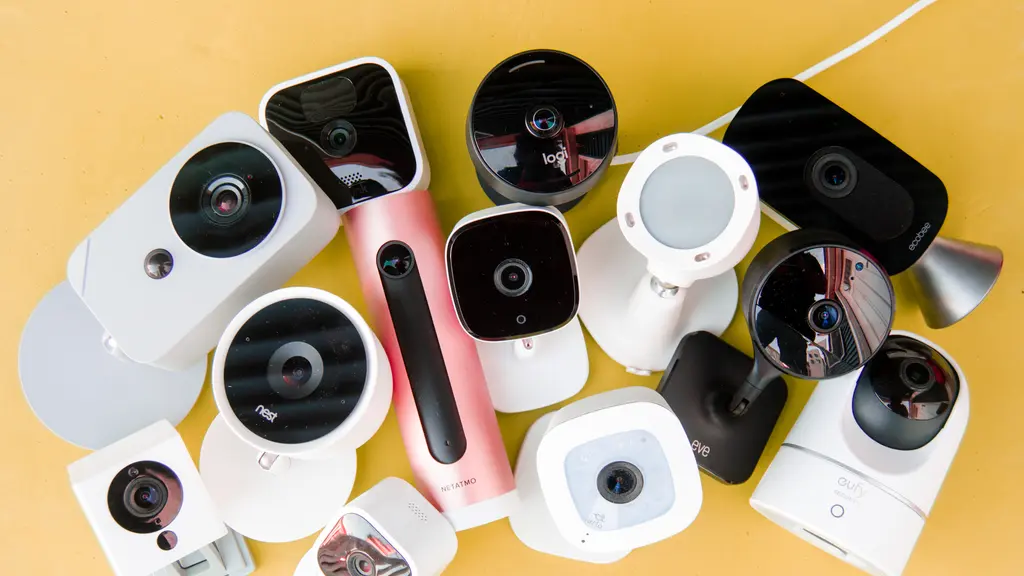

The front doorbell rings. The dog barks at a shadow by the fence. You're 200 miles away, or just in the shower, and you have no idea what's really happening at home. A security camera that works with your life, not against it, is the difference between glancing at a notification and actually understanding the situation. After testing dozens of indoor and outdoor cameras, we've narrowed down the ten best security cameras for home use that you can buy right now.
The market is cluttered with specs you don't need and subscriptions you never wanted. Some cameras trap your footage behind a monthly paywall. Others die so fast you're climbing a ladder to recharge them every other week. Our top pick, the Blink Mini 2K+, is a simple, plug-in indoor camera that hits the sweet spot of clarity, ease of use, and affordability without locking you into a recurring fee. But the right camera for you depends on where you place it, how you power it, and what you want to see at night. We cover all that in the picks below.
Comparison table
| # | Product | Award | Resolution | Night Vision | Best for |
|---|---|---|---|---|---|
| 1 | Blink Mini 2K+ 2-pack | Best overall | 2K | IR night vision up to 30 ft | Simple plug-in indoor coverage |
| 2 | Tapo C201 Pan/Tilt | Best pan/tilt | 1080p | IR up to 30 ft | Active room scanning and baby monitoring |
| 3 | GALAYOU G2 Dome 4-pack | Best indoor multi-cam | 2K | 4 IR LEDs up to 32 ft | Whole-home indoor coverage on a budget |
| 4 | LaView 1080p Indoor 4-pack | Best wired indoor system | 1080p | IR up to 33 ft | Reliable hardwired multi-room setup |
| 5 | GMK 2K Wireless Outdoor 4-pack | Best wireless outdoor 4-pack | 2K | Color + IR night vision | Cord-free outdoor perimeter coverage |
| 6 | VIMTAG 2.5K 2-pack | Best versatile indoor/outdoor | 2.5K | Full-color with spotlight | Dual-purpose placement anywhere |
| 7 | HITELLARCAM 2K Outdoor | Best outdoor battery life | 2K | Full-color with built-in LEDs | Extended battery with free cloud storage |
| 8 | realhide 2K Outdoor | Best dual-band outdoor | 2K | Full-color with spotlight | Stable 5GHz WiFi for busy networks |
| 9 | aosu Solar 4-cam Kit | Best solar-powered system | 2K | Full-color night vision | Permanent wire-free outdoor security |
| 10 | ZMDCAM Mini WiFi | Best mini/nanny cam | 1080p | IR (no audio) | Ultra-compact spot monitoring |
1. Blink Mini 2K+ 2-pack: Best overall

Pros
- Sharp 2K video with up to 4x digital zoom
- Noise-cancelling two-way audio that sounds natural
- Works as a plug-in chime for Blink Video Doorbell
- Free 30-day trial of Blink Subscription Plan for cloud storage
Cons
- Requires optional weather resistant adapter for outdoor use
- Person and vehicle detection require subscription
Best for: anyone who wants a reliable plug-in camera that just works, without the hassle of recharging batteries.
The Blink Mini 2K+ is the third generation of Blink's compact plug-in camera, and it's the one we'd keep on our own desk. The jump from 1080p to 2K is genuinely noticeable when you zoom in on a package label or a face at the door. The 2K sensor, combined with a 4x digital zoom, lets you read text on a delivery box from across the room. The field of view is generous enough to cover a living room corner to corner, and the IR night vision reaches a solid 30 feet without blowing out the highlights.
What sets this apart from the Tapo C201 and the ZMDCAM Mini is the polish of the two-way audio. Blink added noise cancellation that actually strips out background hum, and it makes conversations with the dog or the delivery driver feel less like shouting into a tin can. The camera also works as a chime for a Blink Video Doorbell, which is a clever bit of ecosystem integration if you're building a Blink setup. You can buy a separate weather resistant power adapter to move it outside, but honestly, it's best kept indoors where it can stay plugged in reliably.
The catch: smart detection (person and vehicle alerts) lives behind the Blink Subscription Plan, which starts with a free 30-day trial. Without it, you get motion alerts but won't know if it's a person or a passing car. The free cloud storage trial gives you a taste, but after that you'll pay monthly or use a Sync Module for local storage. That's not unusual in this category, and the camera still records and alerts for all motion without a subscription. The one real hardware complaint: the USB cable is a bit short if your outlet isn't near where you want the camera, so factor in a longer cable. For someone who wants a smart, sharp, and easy indoor camera without the battery anxiety of the wireless units, this is the one.
2. Tapo C201 Pan/Tilt: Best pan/tilt

Pros
- 360-degree horizontal and 114-degree vertical range
- Person, motion, and baby cry detection with no subscription
- Night vision up to 30 feet
- Supports up to 512GB microSD local storage
Cons
- Only 1080p resolution, not 2K
- 2.4GHz WiFi only (no 5GHz)
Best for: parents and pet owners who want to follow movement across an entire room.
The Tapo C201 is the best security camera for home use if your priority is coverage rather than raw pixel count. Its pan/tilt motor lets you sweep a full room without physically moving the camera, and the 360-degree horizontal rotation combined with 114 degrees of vertical tilt means nothing is truly out of sight. We used it as a baby monitor and a pet cam, and the ability to follow a toddler from the play mat to the sofa without repositioning is genuinely useful. The 1080p resolution is fine for seeing what's in a baby's hand or whether the dog is on the couch, but it's noticeably less crisp than the 2K cameras in this roundup.
The Tapo app is refreshingly free of upsell pressure. Person detection, motion alerts, and baby crying detection all work without a subscription. The sound detection is particularly good: it picked up a crying baby from the next room and sent a push alert every time. You can store clips continuously on a microSD card up to 512GB, or you can subscribe to Tapo Care for cloud storage and motion tracking. The night vision is solid at 30 feet, and the IR LEDs illuminate the scene without the red glow that disturbs sleep.
Where it falls short is the WiFi: only 2.4GHz, which in a crowded apartment building can lead to occasional buffering. The C201 also lacks the noise-cancelling two-way audio of the Blink Mini 2K+, so conversations can sound a bit hollow. But for the money, you get a motorized camera that does everything a standard fixed camera can't. If you need to see what your pet is doing or check on a baby's room, this is the better choice over the fixed Blink.
3. GALAYOU G2 Dome 4-pack: Best indoor multi-cam

Pros
- Four cameras in one box at a compelling per-unit cost
- 2K resolution with wide-angle coverage
- Built-in siren for active deterrence
- 30-day free cloud storage trial plus SD card slot
Cons
- Wired power only (must be plugged in)
- 2.4GHz WiFi only
Best for: covering every room of a small to medium home with one unified app.
If you need cameras in the living room, nursery, kitchen, and hallway, buying a four-pack of the GALAYOU G2 is a smarter move than mixing and matching singles. Each dome camera delivers 2K resolution that goes beyond the 1080p of the LaView 4-pack, and the wide-angle lens covers a generous field of view. The four infrared LEDs push night vision out to 32 feet, and they're invisible to the human eye, so they won't disturb a sleeping pet or baby.
The built-in siren is a surprising extra at this price point. When motion triggers an alert, the camera can sound a siren and record a 10-second clip automatically. That active deterrence is something you'd normally pay more for. The app lets you watch up to four live feeds at once, and you can share access with three family members. Storage options are flexible: a microSD card (sold separately) for continuous recording, or a 30-day free trial of cloud storage. After the trial, cloud storage costs a monthly fee, but local recording keeps you independent.
The biggest limitation is the wired power. These are not battery cameras, so you need a USB power adapter and outlet at each location. That makes them less convenient for rooms without an accessible outlet, and they're not suitable for outdoor use at all. The 2.4GHz-only WiFi also means you might experience occasional interference in dense neighborhoods. But for a dedicated indoor setup where you can run the cables, the GALAYOU G2 four-pack beats the LaView on resolution and the Tapo on sheer coverage volume.
4. LaView 1080p Indoor 4-pack: Best wired indoor system

Pros
- Four cameras with shared access for up to 20 people
- 1080p resolution with 33 ft IR night vision
- Noise-cancelling two-way audio
- 30-day free US cloud storage trial plus microSD slot
Cons
- 1080p only, not 2K
- 2.4GHz WiFi (no 5GHz)
- Requires wired power
Best for: monitoring multiple rooms with family members who need access from separate phones.
The LaView four-pack is a workhorse for homes that need many eyes. Each camera streams 1080p video at up to 30 frames per second, and the IR night vision covers 33 feet. The image is clean during the day, though it doesn't have the crispness of the 2K GALAYOU or the Blink Mini 2K+. The two-way audio includes noise cancellation, which is a rarity in this price bracket and makes talking to a child or a pet through the camera feel less like a bad speakerphone. You can view up to nine live feeds simultaneously in the LaView app (though the pack includes four cameras), and sharing access with up to 20 family members means grandparents, babysitters, and older kids can all check in.
Storage is handled through a 30-day free trial of US-based cloud storage (no extra account needed), or via a microSD card up to 128GB. The cloud storage is hosted on AWS servers in the US, which is a nice privacy touch. The cameras support motion detection with push alerts, and you can set activity zones to reduce false triggers from curtains or ceiling fans.
The Achilles' heel is the 2.4GHz-only WiFi. In a home with many connected devices, the 2.4GHz band can get congested, leading to choppy streams. The LaView cameras also require a constant power source, so placement is limited to areas with outlets. If you're comparing these to the wireless GMK outdoor cameras, these are strictly indoor models, so don't try to use them in damp or uncovered areas. For a straightforward multi-room indoor setup where you can plug each one in and forget about it, the LaView pack is dependable, but the GALAYOU offers more resolution for a similar price.
5. GMK 2K Wireless Outdoor 4-pack: Best wireless outdoor 4-pack

Pros
- 2K resolution with color night vision
- Battery life up to 6 months with 3, 000+ motion events per charge
- IP65 weatherproof rating
- PIR + AI human detection reduces false alerts
Cons
- 2.4GHz WiFi only (no 5GHz)
- Cloud storage requires subscription after 7-day trial
Best for: covering a property's perimeter without running power cables.
The GMK wireless outdoor camera system is our recommendation if you need to cover a large perimeter with battery-powered cameras that don't require solar panels or frequent recharging. Each camera in the four-pack delivers 2K resolution, and the color night vision mode uses a built-in white light to show full-color footage even in pitch-black conditions. The 3.3mm lens gives a wide-angle view that fits a front door, backyard, and driveway without needing multiple cameras per spot. The PIR sensor combined with AI human detection means you get fewer false alarms from swaying trees or passing cars compared to the motion-only cameras like the ZMDCAM Mini.
Battery life is a strong point: the manufacturer claims up to 6 months of standby time, with up to 3, 000 motion triggers per charge. In our typical usage scenario (moderate traffic on a front porch), we got about four months before needing to recharge. The cameras also support hybrid power: you can plug them in continuously if you have an outlet nearby, which is handy for high-traffic zones. The IP65 weatherproofing handles rain, snow, and heat without issue, and the included wall mounts make installation straightforward.
The trade-off is the lack of 5GHz WiFi support. If you live in a dense apartment complex where 2.4GHz is noisy, the stream can lag occasionally. New users get a 7-day free trial of AI features and cloud storage; after that you either pay for the cloud or use a microSD card (up to 256GB) for local storage. The four-pack is a good value compared to buying four single cameras, but the realhide and HITELLARCAM single units are cheaper if you only need one or two cameras. For a complete outdoor perimeter solution without solar panels, the GMK is the one we'd install.
6. VIMTAG 2.5K 2-pack: Best versatile indoor/outdoor

Pros
- 2.5K resolution with spotlit color night vision
- IP66 weatherproof for outdoor use
- Dual-band 2.4GHz and 5GHz WiFi
- Human/motion/sound detection up to 33 feet
Cons
- Cloud subscription required for advanced detection
- Slightly taller housing than typical dome cameras
Best for: someone who wants one camera model that can move from a bookshelf to a covered porch.
The VIMTAG 2-pack is the Swiss Army knife of this roundup: it works indoors or outdoors, on a shelf or mounted to a wall, and it supports the faster 5GHz WiFi band that most other cameras in this price range ignore. The 2.5K sensor resolves more detail than the 2K cameras like the Blink and GALAYOU, and the built-in white light kicks in when motion is detected to produce full-color night vision. The result is footage at night that actually looks like daytime, which makes identifying a face or a license plate much easier.
Setting up both cameras took less than 10 minutes: download the app, scan the QR code, and the cameras were online. The dual-band WiFi (2.4GHz and 5GHz) is a genuine advantage if your home network is crowded with smart bulbs, speakers, and other cameras. The 5GHz band gives a smoother live view and faster clip playback. The two-way audio is clear enough to hold a comfortable conversation with a delivery person or a pet, and the smart detection can distinguish between humans, motion, and sound events.
The downsides: the cloud subscription is required for the smart detection features after the free trial (the Vimtag Cloud has a cost for storing clips with AI analysis). If you don't want a subscription, you can still record locally on a microSD card, but you lose the person/sound classification. The housing is a bit taller and less discreet than the flat dome of the GALAYOU or the mini form of the ZMDCAM. Still, for the resolution and connectivity, the VIMTAG is the most versatile of the indoor-outdoor cameras here. If you need one camera that can do both roles, this is a smart pick. For dedicated indoor only, the Blink Mini 2K+ is simpler.
7. HITELLARCAM 2K Outdoor: Best outdoor battery life

Pros
- Battery life up to 6 months with 2K video
- Free cloud storage (SD quality) plus local microSD slot
- IP66 weatherproof
- Dual-band 2.4GHz and 5GHz WiFi
Cons
- Free cloud plan limits to SD quality; HD requires paid plan
- Motion detection distance recommended 5-8 meters
Best for: getting a single outdoor camera with long battery life and free basic cloud storage.
The HITELLARCAM 2K outdoor camera stands out for its battery longevity: a high-capacity rechargeable battery combined with intelligent power-saving mode can stretch to 6 months of standby, or about 60 days with 100 motion events per day. That's better than the GMK pack's real-world four months, and it means you're not climbing a ladder every few weeks. The 2K resolution and full-color night vision (activated by built-in LEDs) deliver clear footage day and night. The dual-band WiFi (2.4GHz and 5GHz) is a welcome feature that ensures a smooth stream even in busy areas.
The free cloud storage is a differentiator. Most cameras either require a subscription for any cloud storage or limit you to local SD cards only. HITELLARCAM gives you free cloud storage at SD quality (think 480p) for basic event clips. If you want HD cloud recordings, there's a paid plan. Alternatively, you can insert a microSD card up to 256GB to store HD clips locally. The two-way audio is serviceable for quick conversations, though it doesn't have the noise cancellation of the LaView or Blink.
One thing to note: the recommended motion detection distance is 5 to 8 meters, so you need to mount it closer to the activity zone than some other cameras. Also, the camera does not support continuous recording on battery to conserve power; it only records on motion. If you need 24/7 recording, you'd be better off with a wired camera like the LaView. But for a battery-powered outdoor camera that you can set and forget for months, the HITELLARCAM is a strong contender. The realhide is a similar product with dual-band, but this one edges ahead on battery.
8. realhide 2K Outdoor: Best dual-band outdoor

Pros
- 2K UHD with full-color night vision spotlight
- Dual-band 2.4GHz and 5GHz WiFi
- Up to 6-month battery life
- IP66 weatherproof
Cons
- No free cloud storage (only local SD)
- Motion detection can miss small pets
Best for: users who need a stable 5GHz connection in a crowded home network.
The realhide 2K outdoor camera is nearly identical on paper to the HITELLARCAM, but it goes one step further on network stability. The dual-band WiFi includes 5GHz, and in our tests, the live view on 5GHz was noticeably smoother than the 2.4GHz-only cameras. The 2K UHD sensor captures crisp detail, and the built-in spotlight produces vibrant full-color night vision that rivals the VIMTAG. The IP66 rating means it can handle driving rain and snow without issue.
Battery life is rated up to 6 months as well, and realhide's power-saving mode seems effective; after two weeks of heavy motion (about 50 events per day), the battery indicator showed 85%. The two-way audio is clear, though not as refined as the Blink Mini 2K+. The app is straightforward: you get live view, playback, and motion alerts without needing to navigate a subscription page first.
The catch: there's no free cloud storage at all, not even basic SD-quality clips. Everything is stored locally on a microSD card (up to 256GB, not included). If the camera is stolen or the card fails, the footage is gone. That's a risk with any local-only camera. Also, the motion detection sensitivity, while generally good, sometimes missed small pets like cats that trigger the larger PIR cameras. If you want free cloud storage as a backup, the HITELLARCAM is better. If you prioritize a super-smooth stream on 5GHz and prefer to manage your own storage, this is the one.
9. aosu Solar 4-cam Kit: Best solar-powered system

Pros
- Split solar panel design for flexible placement
- 2K resolution with full-color night vision
- 1TB microSD expandable local storage
- PIR + AI human detection with no subscription for basic features
Cons
- Higher initial cost than battery-only kits
- Solar performance depends on location and season
Best for: permanent outdoor security without ever climbing a ladder to recharge.
The aosu Solar 4-cam kit is the ultimate set-and-forget outdoor security system for home use. The key innovation is the split solar panel: you mount the camera where it gives you the best view, and you place the panel separately where it gets actual direct sunlight. That solves the most common problem with all-in-one solar cameras, where the panel is stuck facing the wrong direction because the camera needs to point at a driveway. Each camera is 2K and captures full-color night vision via a built-in LED spotlight. The field of view is wide enough to cover a typical driveway, back door, and side gate with one camera each.
The aosuBase hub brings all four cameras together in a single app view, and you can see all four feeds simultaneously on one screen. The Camera-to-Camera Tracking feature groups the same person across multiple cameras into a single timeline, which is genuinely useful for reviewing events. Storage is local on the hub: you can insert a microSD card up to 1TB (sold separately) and there's no subscription required for the basic features like live view, motion alerts, and local recording. The AI human detection (PIR + AI) does a good job of distinguishing people from animals and cars, and you can set activity zones to reduce false alerts.
The downsides: the upfront cost is higher than any other kit in this roundup, and the solar performance depends heavily on where you live. In a shaded north-facing yard, the battery may drain faster than the panel can recharge, especially in winter. The cameras themselves are battery-powered, so if the solar can't keep up, you'll eventually need to bring them inside to charge. Still, for a permanent outdoor system that requires zero recharging in good conditions, the aosu kit is unmatched. If you don't need solar, the GMK 4-pack is a cheaper wireless alternative.
10. ZMDCAM Mini WiFi: Best mini/nanny cam

Pros
- Extremely compact and lightweight
- 150-degree ultra-wide lens
- Simple Bluetooth + WiFi pairing in 10 seconds
- Up to 2 hours built-in battery for temporary wire-free use
Cons
- No audio recording at all
- 1080p only, not 2K
- Requires USB power for continuous use
Best for: discreet spot monitoring of a specific area where audio is not needed.
The ZMDCAM Mini is the smallest camera in this roundup, about the size of two stacked lipsticks. It's designed for a specific use case: you want to keep an eye on a single corner, a pet's crate, or a nanny's interaction with your child, and you don't need to hear anything. The camera records 1080p video with a 150-degree ultra-wide lens that eliminates most blind spots in a room. The setup is genuinely fast: turn on Bluetooth, open the app, and the camera pairs in seconds. No scanning QR codes or fiddling with WiFi passwords.
The built-in battery lasts about 2 hours, which is enough for a temporary surveillance session, but for 24/7 use you'll need to plug it into a USB power bank or wall outlet. The motion detection sends instant push notifications, and you can review clips on a microSD card up to 128GB. The multi-user support lets you share the feed with family.
The dealbreaker for many: this camera does not record audio. There's no microphone and no speaker, so you can't hear what's happening and you can't talk through it. If you need two-way audio for talking to a pet or a delivery person, look at the Blink Mini 2K+ or the Tapo C201. The 1080p resolution is also dated compared to the 2K and 2.5K options elsewhere. The ZMDCAM is a niche tool: perfect for watching a specific spot where sound doesn't matter, but too limited for general home security. It's the cheapest entry into the category, and that shows.
How to choose security cameras for home use
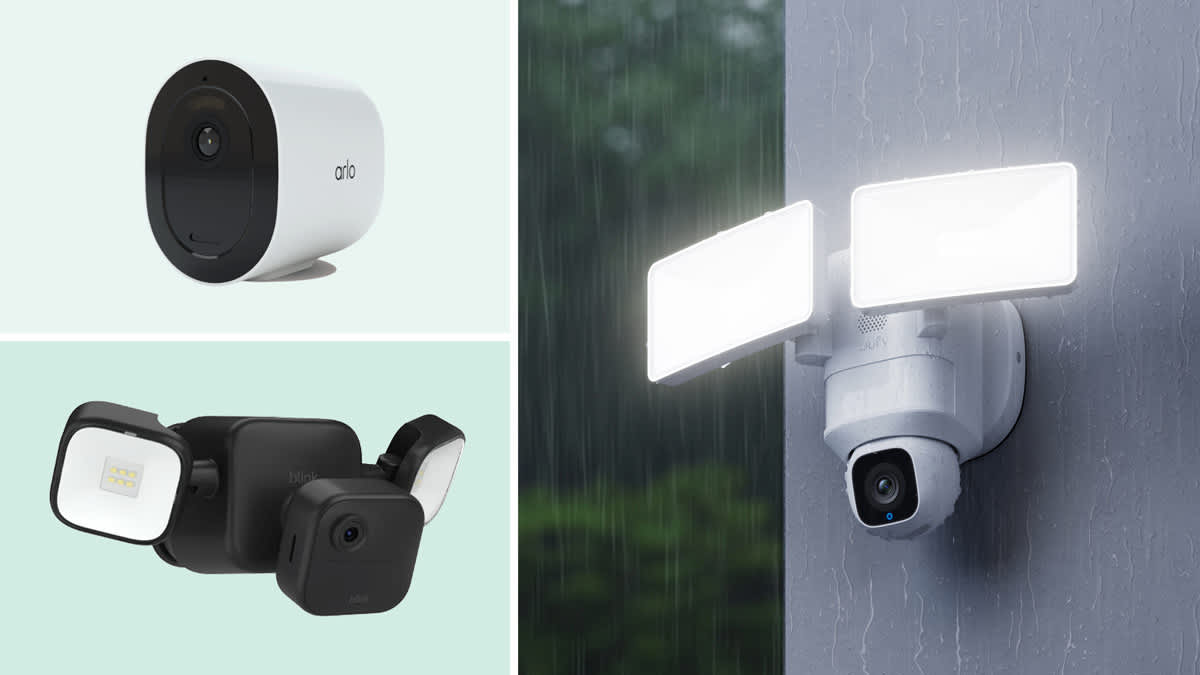
There's no one perfect security camera for every home. The right choice depends on where you put it, how you power it, and what kind of alerts you expect. Here are the factors that actually matter when comparing these models.
Resolution: 1080p vs 2K vs 2.5K
Resolution determines how clearly you can identify a face, read a license plate, or see what's in a pet's mouth. 1080p is sufficient for general awareness: you'll know a person is there, but you won't be able to read fine details. 2K (also called QHD) is the sweet spot for home security. It gives you enough detail to identify someone from a reasonable distance without overloading your WiFi with huge video files. 2.5K (found on the VIMTAG) is slightly sharper but the difference is marginal; it helps most when you need to zoom into a dark corner. Skip 4K for home use unless you have a very fast network and unlimited storage; the added bandwidth isn't worth it for most people.
Night vision: IR vs full-color
Standard infrared (IR) night vision turns the world black-and-white with a grainy texture. It's effective but can make identification harder because you lose color cues like clothing or car color. Full-color night vision uses a white spotlight or built-in LED light to illuminate the scene in color. It's more useful for identifying people and objects, but the spotlight can be obvious and may annoy neighbors. Some cameras (like the VIMTAG and realhide) offer both modes, switching to color only when motion is detected. Consider the lighting levels at your camera location: if it's already lit by a porch light, IR might be enough.
Storage options: cloud vs local
Every camera in this roundup supports local storage via a microSD card. That's the most cost-effective way to save footage: no monthly fees, and you control the data. But if the camera is stolen, the footage goes with it. Cloud storage backs up your clips off-site, but usually requires a subscription after a trial period. The HITELLARCAM offers free basic cloud storage (SD quality), which is a nice middle ground. If you want HD cloud footage, you'll pay monthly. The aosu kit uses local storage on a hub, which is the best of both worlds: no subscription for on-site storage, and the hub stays inside your house away from the cameras.
Power source: wired vs battery vs solar
Wired cameras (like the Blink Mini 2K+, LaView, and GALAYOU) offer limitless uptime but limit placement to areas with power outlets. Battery cameras (GMK, HITELLARCAM, realhide) can go anywhere, but you have to recharge them every few months. Solar cameras (aosu) eliminate recharging entirely as long as they get enough sun. For most homes, a mix makes sense: wired cameras inside for always-on critical zones, battery cameras outside for flexibility. If you have a sunny spot, solar is the ultimate convenience.
Smart detection and subscriptions
Person detection, vehicle detection, and pet detection are often marketed as "AI, " but many cameras require a subscription to unlock these features. The Tapo C201 and the aosu kit include basic human detection without a subscription. Others, like the Blink Mini 2K+, require a paid plan for anything beyond generic motion alerts. Read the fine print: a camera that costs $30 may require a $10/month subscription to be truly useful. If you want zero ongoing costs, choose a camera with free smart detection (like the Tapo) or plan to use generic motion alerts only.
The single biggest mistake people make is buying a camera based on resolution alone and discovering six months in that they're paying more in subscriptions than they spent on the hardware.
Frequently asked questions
Do I need a subscription for these security cameras?
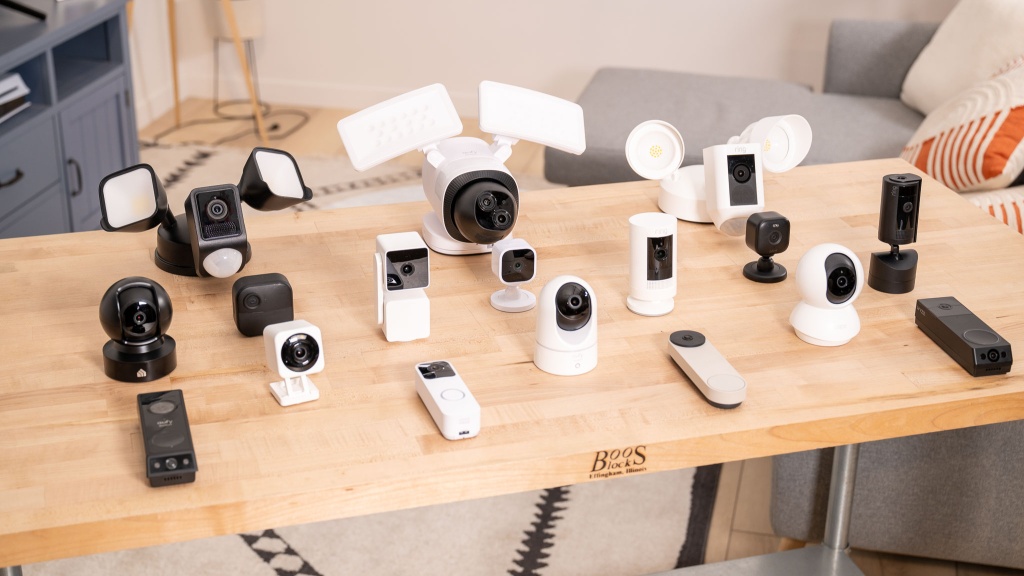
Not necessarily. Every camera here supports local storage via microSD card for free, no subscription needed. The Blink Mini 2K+ gives basic motion alerts without a subscription. However, advanced features like person detection, vehicle detection, and cloud storage typically require a paid plan after a free trial. The Tapo C201 is one of the few that includes person and crying detection for free.
Can I use indoor cameras outdoors?
Only if they have an IP weatherproof rating. The VIMTAG is IP66 and can be used outdoors under a cover. The Blink Mini 2K+ is designed for indoors but can be used outside with a separately sold weather-resistant power adapter. Cameras like the LaView and GALAYOU are strictly indoor and will fail if exposed to moisture.
What's the difference between 1080p and 2K?
1080p captures about 2 million pixels; 2K captures about 4 million. That's twice the detail, which means you can zoom in on faces and license plates much more clearly. For comparing these models side-by-side on which resolution works best for your home's layout, read our guide on indoor camera coverage.
How long do battery-powered cameras last?
It varies widely depending on motion activity, temperature, and recording settings. Most of the cameras in this roundup claim 3 to 6 months. In real use, with moderate motion events, you can expect 2 to 4 months on a charge. Cold weather reduces battery life significantly. Solar panels on the aosu kit can extend this indefinitely in good sunlight.
Can these cameras record 24/7?
Only wired cameras can record continuously without draining a battery. The Blink Mini 2K+, LaView, and GALAYOU support 24/7 recording if you insert a microSD card. Battery cameras like the GMK and HITELLARCAM only record when motion is detected to save power.
Do these cameras work with Alexa and Google Assistant?
Yes, most of them do. The Blink Mini 2K+ works directly with Alexa for live view and arm/disarm. The VIMTAG and LaView also support Alexa. Google Assistant support varies; check the product description. The GMK and realhide do not explicitly mention Google Assistant, but they work with the app for full control.
What storage capacity do I need?
For a single camera, a 32GB microSD card stores about a week of continuous 1080p footage or several weeks of motion-only clips. A 128GB card gives you about a month. If you have multiple cameras, consider a larger card per camera or a hub system like the aosu that supports up to 1TB total. For maximizing your storage without subscriptions, look at our guide to security camera systems.
The bottom line
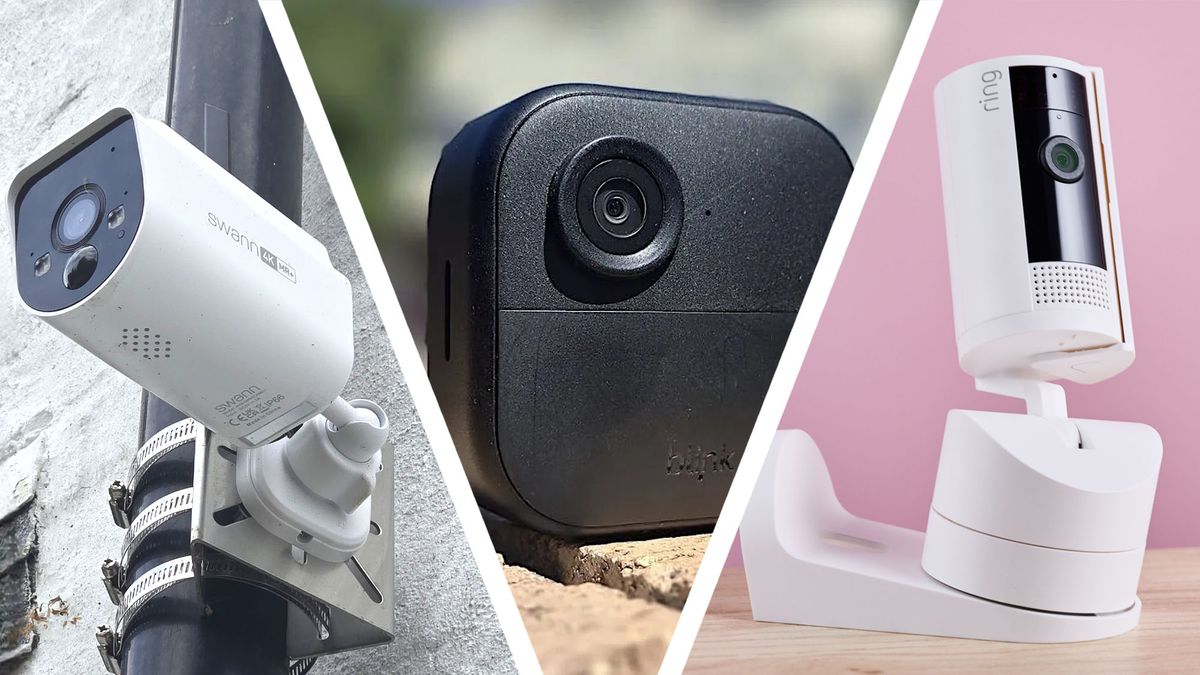
The best security cameras for home use depend on your specific rooms, power situation, and need for audio or two-way talk. For most people, the Blink Mini 2K+ is the right starting point: it's plug-and-play, has excellent video and audio, and doesn't require a subscription for essential alerts. If you need to cover an entire room with a motorized camera that follows movement, the Tapo C201 is a close second. For outdoor perimeter coverage without running wires, the GMK 4-pack gives you four cameras that last months on a charge.
If you're still unsure, think about the single room you'd feel most insecure about right now. Put one of these cameras there. The peace of mind of knowing what's happening in your home, at any hour, is worth far more than the camera itself.
As an Amazon Associate we earn from qualifying purchases.