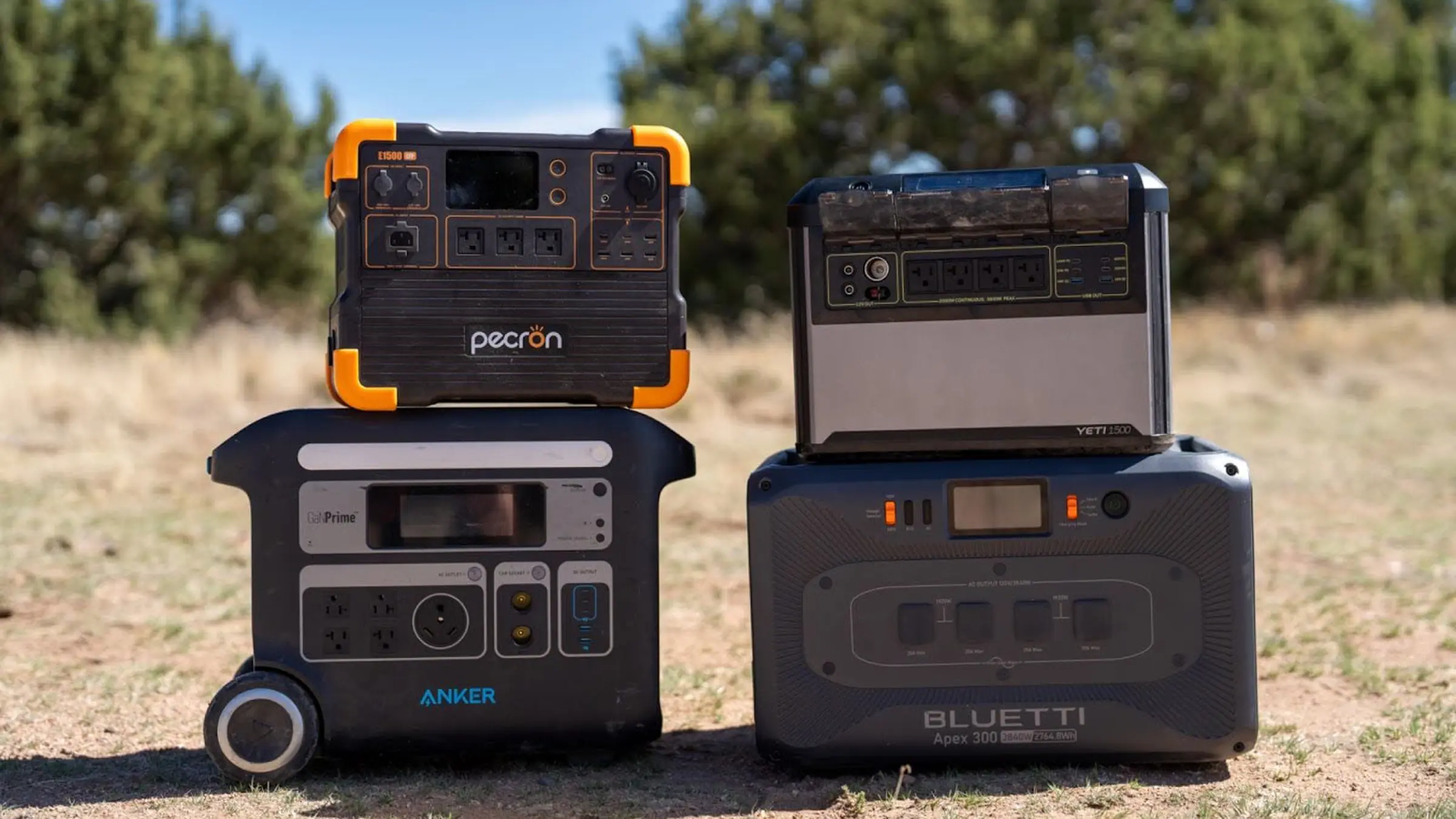

A dead phone is inconvenient at a campsite. A dead CPAP machine, cooler, or laptop can change the entire trip. The tricky part is choosing a battery that has enough capacity for your gear without turning the trip into a weightlifting exercise.
The Best power station for camping depends on what you actually need to run. Small 192Wh and 288Wh models suit phones, lights, cameras, and compact electronics, while 1, 000Wh-class stations make more sense for longer stays or appliances with demanding startup loads.
Jackery Explorer 1000 v2 is our top pick for the broadest mix of capacity, output, portability, and useful controls. The rest of this list covers lightweight essentials, high-output camping, fast recharging, and compact emergency backup.
| # | Product | Award | Capacity | AC output | Weight | Best for |
|---|---|---|---|---|---|---|
| 1 | Jackery Explorer 1000 v2 | Best overall | 1, 070Wh | 1, 500W | 23.8 lb | Long camping trips and mixed loads |
| 2 | EnginStar 300W | Best lightweight basic station | 296Wh | 300W | 6.5 lb | Small electronics and CPAP backup |
| 3 | DaranEner Cubus 350L | Best compact LiFePO4 option | 288Wh | 350W | 7.17 lb | Road trips and short campsite stays |
| 4 | DaranEner 192Wh | Best ultra-light pick | 192Wh | 300W | 5.73 lb | Lights, phones, and cameras |
| 5 | Anker SOLIX C300 | Best port selection | 288Wh | 300W | 9.1 lb | Charging many devices at once |
| 6 | Anker SOLIX C1000 Gen 2 | Best high-output Anker station | 1, 024Wh | 2, 000W | 24.9 lb | Appliances and serious backup |
| 7 | ALLWEI 300W | Best flexible recharging | 256Wh | 300W | 6.4 lb | Solar, car, and dual charging |
| 8 | BLUETTI Elite 30 V2 | Best compact high-output model | 288Wh | 600W | 9.5 lb | Small appliances and CPAP use |
| 9 | AFERIY 1024Wh | Best quiet large-capacity option | 1, 024Wh | 1, 800W | 25.57 lb | Longer off-grid stays |
1. Jackery Explorer 1000 v2: Best Overall

Pros
- 1, 070Wh capacity covers a wide range of camping loads
- 1, 500W AC output with 3, 000W surge capability
- Fast charging and a useful quiet charging mode
- Three AC outlets plus USB-C, USB-A, and DC car output
- LFP battery rated for more than 4, 000 cycles
Cons
- Heavier than the compact stations in this roundup
- Solar panel is not included
- Solar charging is limited to compatible Jackery panels
Best for: campers who want one station for phones, laptops, coolers, lights, and larger AC appliances.
The Jackery Explorer 1000 v2 is the easiest station here to recommend when the camping kit is not limited to USB devices. Its 1, 070Wh battery gives you meaningful reserve for a long weekend, and its 1, 500W AC output leaves room for appliances that would overwhelm the small 300W models. It is still manageable at 23.8 pounds, particularly because the foldable handle makes the shape easier to carry from a vehicle to a campsite.
The output layout is practical rather than exotic. Three pure sine wave AC ports sit alongside two USB-C ports, one USB-A port, and a DC car port. The USB-C ports can provide up to 100W, which is enough to charge compatible laptops without carrying a separate power brick. Pure sine wave AC power is also a sensible choice for sensitive electronics and small appliances that do not respond well to rougher inverter output.
Charging is where the Explorer 1000 v2 separates itself from the smaller stations. It normally reaches a full charge in 1.7 hours, while the Jackery app can activate a one-hour emergency charging mode. That faster setting is not the default, which is a sensible battery-health trade-off. The app also adds a 30 dB quiet overnight mode and an energy-efficiency mode, so this is more adaptable at a quiet campsite than a basic battery with a single charging behavior.
The LFP battery is specified to retain more than 70% of its original capacity after 4, 000 cycles, with a lifespan exceeding 10 years. That makes it a more durable long-term camping companion than the lithium-ion EnginStar 300W, while its capacity is much larger than the Anker SOLIX C300. The Anker SOLIX C1000 Gen 2 has a higher output ceiling, but the Jackery is slightly lighter and offers a more compact footprint.
There are two catches. The solar panel is not included, and the station is compatible only with Jackery solar panels for solar charging. It is also too much hardware for a minimalist overnight trip where the only loads are phones and lanterns. Pick it when your camping plans include mixed AC and USB loads, variable weather, or the possibility of using a cooler or other higher-draw appliance.
2. EnginStar 300W: Best Lightweight Basic Station
Pros
- Compact 6.5-pound design
- Two pure sine wave 110V AC outlets
- Regulated 12V and 24V DC outputs
- Eight output ports for simultaneous charging
- Supports wall, car, and solar recharging
Cons
- 296Wh capacity is limited for appliance use
- USB-C output is 18W
- Solar panel is not included
Best for: campers who need a light station for personal electronics, lights, and occasional CPAP backup.
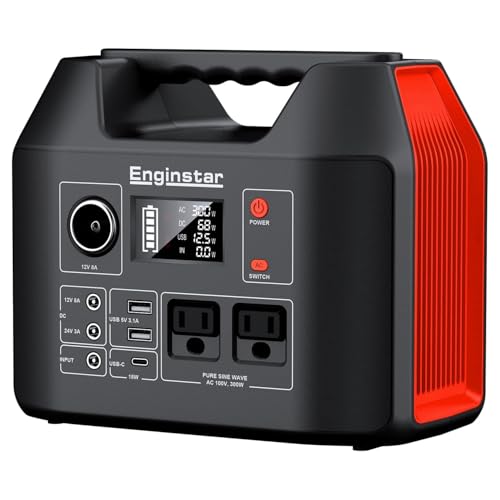
The EnginStar 300W is shaped around the needs of a person who wants backup power in the car without giving up much cargo space. It weighs 6.5 pounds and measures about 9.1 by 5 by 7 inches, so it is far easier to move around than the 1, 000Wh stations. The 296Wh battery is enough for phones, a camera, a laptop, lights, and other modest campsite loads, but it is not intended to run a collection of appliances through a multi-day trip.
Its two 110V pure sine wave AC outlets are a strong detail at this size. They provide clean AC power for sensitive electronics, while the two regulated DC outputs can provide 12V or 24V power for compatible devices such as a mini fridge or car vacuum. USB charging is more basic: the USB-A output reaches 5V and 3.1A, and USB-C is rated at 18W. That is adequate for many phones and accessories, though slower than the 45W and 60W USB-C ports on several competitors.
EnginStar gives you eight output ports, which matters when a group is charging several small devices at once. Recharging is similarly flexible, with wall, car, and solar options. The station can charge at up to 65W and reaches 80% in two hours according to the listed specifications. A built-in controller is included for compatible 12V to 25V solar panels, but the panel itself is not supplied.
Compared with the DaranEner 192Wh, the EnginStar has more stored energy and a second AC outlet. Compared with the ALLWEI 300W, it has a slightly larger battery but a less powerful USB-C connection. Its lithium-ion battery is also not the LFP design used by many other picks here, although the listing states support for more than 1, 000 charge cycles.
The limitation is straightforward: 296Wh disappears quickly when an AC appliance runs continuously. It is a sensible personal station, not a substitute for a large battery generator. Choose it for a tent, car-camping setup, or CPAP backup where low weight matters more than extended runtime.
3. DaranEner Cubus 350L: Best Compact LiFePO4 Option

Pros
- 350W pure sine wave output with 700W surge
- LiFePO4 battery rated for more than 3, 500 cycles
- 45W USB-C PD output
- MPPT controller supports solar charging
- 7.17-pound body with integrated handle
Cons
- Solar panel is sold separately
- Less capacity than the larger stations
- Only two DC5221 ports
Best for: campers who want a compact LFP station with enough output for laptops and modest AC gear.
The DaranEner Cubus 350L occupies a useful middle ground. It weighs 7.17 pounds and measures 9 by 5.9 by 6.2 inches, yet its 288Wh battery and 350W inverter give it more headroom than the smallest personal power banks. The integrated handle makes it easy to move between the car, picnic table, and tent without treating it like a piece of luggage.
Its 350W pure sine wave AC output can handle ordinary electronics and modest appliances, with a 700W surge rating for startup demand. That is a more comfortable limit than the EnginStar's 300W output, though neither station is meant for high-wattage heating appliances. The port selection includes two AC outlets, a 45W USB-C PD port, two 18W USB-A QC ports, and two DC5221 ports with listed 80W input and 60W output figures.
The 45W USB-C port is the feature that makes this model particularly appealing for modern camping kits. It can charge many phones and tablets quickly and is better suited to compatible laptops than an 18W port. The built-in MPPT controller is also useful when recharging from solar. DaranEner lists a zero to 80% solar charging time of as little as 3.2 hours under optimal conditions, though actual results depend on the panel and sunlight.
The LiFePO4 cells are rated for more than 3, 500 cycles to 80% capacity. That is a meaningful advantage over the lithium-ion EnginStar for people who plan to cycle a station frequently. The station can recharge from an AC outlet, a car socket, or solar panels, but the solar panel is not included. Its battery management system is designed to protect against overcharging, overheating, and short circuits.
The Cubus 350L gives up capacity to the Jackery Explorer 1000 v2 and output to the BLUETTI Elite 30 V2. It also lacks the broader charging flexibility of the ALLWEI, which supports dual AC and solar charging. Still, it is a strong fit when you want a small LFP station that feels more capable than a basic phone battery. Skip it if you need overnight appliance runtime or a large reserve for several people.
4. DaranEner 192Wh: Best Ultra-Light Pick

Pros
- Lightest station in this roundup at 5.73 pounds
- 300W pure sine wave output with 600W surge
- 60W USB-C PD port
- LiFePO4 battery rated for more than 3, 500 cycles
- Four-mode LED light with SOS
Cons
- 192Wh capacity limits runtime
- Solar input is limited to 60W
- Car charging cable and solar panel are not included
Best for: minimalist campers carrying lights, cameras, phones, tablets, and other small electronics.
The DaranEner 192Wh is the station to choose when every pound matters. At 5.73 pounds and 8.66 by 7.09 by 5.12 inches, it is small enough to fit naturally into a day-trip or car-camping kit. The capacity is modest, but the 300W pure sine wave inverter is not undersized for the battery. It can run compatible devices under 300W, including laptops, lights, cameras, fans, and some CPAP machines.
A 600W surge rating gives the inverter a little flexibility during startup, but the product listing is clear about what it cannot do. High-draw appliances such as rice cookers, hair dryers, and mini fridges that exceed the output limit are outside its intended use. This is a personal electronics station, not an all-purpose campsite power source.
The output arrangement is better than the size suggests. There are two AC outlets, a 60W USB-C PD port, two 18W USB-A QC 3.0 ports, and a 12V DC output, allowing six devices to charge at once. The 60W USB-C port is especially useful for a laptop or tablet because it avoids carrying a separate charger in many setups. The built-in LED has four brightness modes, including SOS, which adds practical utility after dark.
Its LiFePO4 battery is rated for more than 3, 500 cycles, and the listing says the battery management system guards against overcharging, overheating, and short circuits. You can recharge through an AC outlet, car charging, or a compatible solar panel with a maximum 60W DC input. The listed AC input reaches 100W, while the solar panel and car cable are not included.
The key compromise is the 192Wh capacity. It is smaller than the EnginStar 300W and DaranEner Cubus 350L, so it will need more careful load management on longer trips. For a solo camper who wants a lightweight source for communications, photography, and lighting, its durable battery and 60W USB-C port make a compelling combination. For a family campsite, move up to a larger model.
5. Anker SOLIX C300: Best Port Selection

Pros
- Eight output ports in a compact design
- Two 140W USB-C ports
- 288Wh LiFePO4 battery
- 25 dB operating noise at the listed distance
- Wall charging to 80% in 50 minutes
Cons
- 9.1-pound weight is high for its capacity
- Solar panel and carrying strap are optional
- 300W AC output limits appliance choices
Best for: groups carrying phones, cameras, drones, laptops, and other devices with different charging connections.
The Anker SOLIX C300 is designed around a crowded charging table. Its 288Wh battery is not unusually large, but eight outputs let a group connect a broad collection of devices without constantly swapping cables. At 9.1 pounds, it is heavier than the DaranEner models with similar capacity, though its tall 9.45-inch body remains easy to carry around a campsite.
The port mix is the standout feature. The C300 has three AC outlets with 300W total output, a 120W car socket, two USB-C ports rated at 140W each, another USB-C port rated at 15W, and a 12W USB-A port. The high-output USB-C connections can handle demanding laptops and tablets far more comfortably than the 18W port on the EnginStar. For a group with several USB-C devices, that difference is more useful than an extra AC outlet.
Anker lists a 600W surge rating and a LiFePO4 battery designed for 3, 000 cycles. It can recharge to 80% from a wall outlet in 50 minutes, or use a car, solar panel, or the PD 3.1 USB-C port. The company recommends a 100W or 60W Anker solar panel, and the C300 is not compatible with several other Anker panel models listed in the product details. Check compatibility before building a solar setup.
The C300 is also one of the quieter options here, with a listed noise level of 25 dB from 3.3 feet away. That matters when the station is close to a sleeping area. It is 15% smaller than similar designs according to Anker, and a strap is available separately. Its five-year warranty and stated 10-year battery design add confidence for regular use.
The compromise is capacity relative to weight. The C300 is heavier than the 6.4-pound ALLWEI 300W and 5.73-pound DaranEner 192Wh, while its 300W AC output is no stronger than theirs. Its reason to exist is the excellent USB-C arrangement and quiet operation. If you are building a device-heavy campsite, it is more convenient than the simpler stations. If you need to run AC appliances, choose the BLUETTI Elite 30 V2 or a 1, 000Wh model.
6. Anker SOLIX C1000 Gen 2: Best High-Output Anker Station
Pros
- 1, 024Wh capacity with 2, 000W output
- 3, 000W peak capability
- Ten ports for a larger campsite setup
- Full recharge in 49 minutes with HyperFlash
- 10 ms UPS and 600W solar input
Cons
- Nearly 25 pounds
- Fast charging requires the Anker app
- Larger than the compact camping options
Best for: campers who need to run demanding appliances, several devices, or a remote work setup.
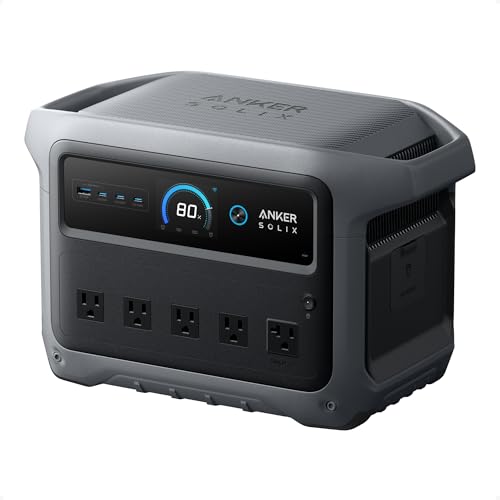
The Anker SOLIX C1000 Gen 2 is the power station for campers who do not want to negotiate with their appliance list. Its 1, 024Wh capacity and 2, 000W output are a major step above the compact models. A 3, 000W peak rating provides extra startup headroom, and ten ports make it possible to run a larger mix of AC and USB devices at the same time.
That capability comes with a physical cost. The C1000 Gen 2 weighs 24.9 pounds and measures 15.1 by 8.2 by 9.6 inches. It is portable in the car-camping sense, but it is not the station most people will want to carry far from the trailhead. The Jackery Explorer 1000 v2 is slightly lighter and has a similar battery size, while the Anker offers substantially more AC output.
Recharging is its biggest technical advantage. HyperFlash can fully recharge the station in 49 minutes at 1, 600W, though the feature must be enabled in the Anker app. Solar charging accepts up to 600W and can refill the battery in a listed 1.8 hours. That makes the C1000 Gen 2 a better fit for longer off-grid stays than the 288Wh stations, particularly when paired with a suitable solar setup.
The battery is designed to retain at least 80% capacity after 4, 000 cycles. The station also includes a UPS with a switchover under 10 ms, which can help keep a CPAP machine or laptop powered during an interruption. App controls include time-of-use mode and monitoring features, useful when you want to track a remote setup without repeatedly walking over to the station.
The C1000 Gen 2 is more station than many camping trips require. It is also less convenient to lift than the Jackery and does not have the same compact proportions as the smaller Anker SOLIX C300. Choose it for a camper who uses appliances, works remotely, or wants substantial reserve power. For a broader look at larger backup setups, the equipment that makes sense for longer household outages is a useful comparison point.
7. ALLWEI 300W: Best Flexible Recharging

Pros
- 256Wh capacity in a 6.4-pound body
- AC, car, solar, and dual charging
- 60W USB-C PD output
- Pass-through charging support
- Three-level LED light with SOS
Cons
- Only one AC outlet
- 300W output limits larger appliances
- Solar panel is sold separately
Best for: campers who want several ways to refill a compact station.
The ALLWEI 300W makes a strong case for keeping charging options open. Its 256Wh battery and 300W pure sine wave output are aimed at ordinary camping essentials, while the 6.4-pound weight keeps it in the portable end of this group. The 9 by 4.7 by 7.8-inch body can fit into a car or gear bin without taking the space of a large generator.
Its output panel is simple but useful. There is one AC outlet, two DC5521 ports, a car cigarette lighter port, an 18W USB-A fast-charge port, and a 60W USB-C PD port. Six devices can charge simultaneously, and the USB-C port is strong enough for many laptops and tablets. The single AC outlet is the main limitation compared with the two-outlet DaranEner stations and the three-outlet Anker SOLIX C300.
ALLWEI lists four recharging methods. AC wall charging and 12V car charging take 3.5 to 4 hours, while a 100W solar panel takes 4 to 5 hours. Dual AC and solar charging can reduce the listed full-charge time to 2 to 2.5 hours. The built-in MPPT controller helps optimize solar input, but the panel is separate. Pass-through charging also lets the station recharge while powering connected devices.
The LiFePO4 battery is rated for 3, 000 charge-discharge cycles, and the battery management system provides six layers of protection against issues such as short circuits, over-current, and over-voltage. A three-level LED with SOS mode is handy at night. The listing also states a five-year warranty and round-the-clock customer service.
The ALLWEI is less powerful than the BLUETTI Elite 30 V2 and less capacious than the Jackery, but it is easier to carry and more flexible to recharge than many compact alternatives. It is a particularly sensible choice for road trips where car charging is common and solar is an occasional backup. If you expect to run several AC devices, the single outlet and 300W ceiling will feel restrictive.
8. BLUETTI Elite 30 V2: Best Compact High-Output Model

Pros
- 600W continuous output from a compact station
- 1, 500W Power Lifting Mode
- 10 ms UPS
- 380W wall charging
- 9.5-pound design with 288Wh LFP battery
Cons
- Capacity remains modest for high-draw appliances
- Power Lifting Mode is not the same as continuous 1, 500W output
- Dimensions listed for the body are unusually broad
Best for: campers who need more AC output than a 300W station without moving to a 1, 000Wh battery.
The BLUETTI Elite 30 V2 is the outlier among the small stations because it offers 600W of continuous output. Its 288Wh battery is similar in size to the Anker SOLIX C300 and DaranEner Cubus 350L, but the inverter has more than double the continuous output of those 300W-class models. At 9.5 pounds, it remains manageable for car camping and short trips.
BLUETTI also lists a Power Lifting Mode that reaches 1, 500W. That is useful for compatible resistive appliances such as a small kettle or toaster, but it should not be confused with a 1, 500W continuous rating. The regular 600W limit is the figure to use when deciding what can run reliably for an extended period. The pure sine wave output is appropriate for sensitive electronics, laptops, and CPAP machines.
The station supports eight charging modes and wall charging at up to 380W. BLUETTI lists a 0 to 80% time of 45 minutes and a full charge in 70 minutes when using its stated charging approach. Solar and car charging are also supported, and the product is designed to pair with the PV60L solar panel. The included box contents are the station, an AC charging cable, a car charging cable, and a manual.
Power efficiency is another point in its favor. BLUETTI says its UltraCell technology and smart cooling system reduce power consumption by 50%, with listed standby, DC, and AC consumption figures of 4.5W, 5W, and 8W. A 10 ms UPS mode adds a layer of protection for devices that need to stay running during a sudden interruption.
The catch is that 288Wh goes quickly when a 600W appliance is actually drawing power. The Jackery Explorer 1000 v2 is a much better fit for extended appliance use, while the Anker SOLIX C300 is more convenient for USB-heavy groups. Pick the Elite 30 V2 when output bursts matter more than long runtime, such as powering a compact kettle, toaster, CPAP, or laptop setup during a short trip.
9. AFERIY 1024Wh: Best Quiet Large-Capacity Option

Pros
- 1, 024Wh capacity and 1, 800W output
- 4, 000-plus cycle LiFePO4 battery
- Four AC outlets and 13 total ports
- Under 30 dB in most listed daily-use scenarios
- AC and solar dual charging
Cons
- Heaviest station in the roundup
- App and extra features may be unnecessary for simple trips
- Large body is better suited to car camping than hiking
Best for: campers who want substantial battery reserve, high AC output, and quiet operation.
The AFERIY 1024Wh is built for the campsite that starts to resemble a small mobile worksite. Its 1, 024Wh battery can support longer trips than any of the compact stations, while the 1, 800W pure sine wave output and four AC outlets leave room for appliances, tools, and several sensitive electronics. It is a large unit, but the 13.77 by 8.66 by 10.35-inch shape is reasonably easy to place in a car trunk or RV.
At 25.57 pounds, it is the heaviest product here. AFERIY says the design is 16% smaller and 25% lighter than most models with similar capacity, but this remains a car-camping station rather than something to carry down a long trail. The Anker SOLIX C1000 Gen 2 is slightly lighter and offers a higher 2, 000W output, while the AFERIY counters with a stated operating level below 30 dB in most daily-use scenarios.
The charging system has four routes: AC, solar, car, and combined AC plus solar. Listed times include 55 minutes from zero to 80% using rapid AC and 35 minutes from zero to 80% with AC and solar together. The station includes an MC4 to XT60 cable for solar connections. These figures depend on the charging setup and conditions, but the combination is promising for campers who plan to use a panel rather than return to a wall outlet.
The battery is a LiFePO4 design rated for more than 4, 000 cycles and a 10-year lifespan. A UPS mode switches in under 10 ms, which can help maintain power to a laptop, camera system, or other critical device. The station also includes a 140W USB-C port, two QC3.0 USB-A ports, four 1, 800W AC outlets, an app for monitoring and scheduling, and a three-mode LED light.
The AFERIY is less compact than the Jackery Explorer 1000 v2 and does not have the same clearly described app charging modes. Its strongest argument is quiet, high-capacity operation with a generous output panel. Choose it for an RV, base camp, or longer vehicle-supported trip. For ordinary weekend camping with phones and lights, the smaller DaranEner or Anker models are easier to live with.
How to choose best power station for camping
The right station comes down to the loads you plan to run, how far you need to carry it, and how you expect to recharge it.
Battery capacity
Capacity is measured in watt-hours, or Wh. It indicates how much energy the battery stores, though the usable amount depends on conversion losses and the device being powered. A 192Wh or 256Wh station is suitable for phones, cameras, lights, and occasional laptop charging. A 1, 000Wh station gives you a much larger reserve for several days, coolers, medical equipment, or appliances.
Do not choose capacity by looking only at the biggest number. A large station is worthwhile only if your vehicle can carry it and your trip needs the reserve. For a short solo outing, the DaranEner 192Wh can be more practical than a 1, 024Wh unit.
AC output and surge capacity
Continuous AC output tells you how much power the inverter can provide during normal operation. Surge capacity covers the brief startup demand of some motors and appliances. A 300W station is comfortable with electronics but unsuitable for many heating appliances. The BLUETTI Elite 30 V2's 600W continuous output gives it more room, while the Jackery, AFERIY, and Anker C1000 can handle substantially larger loads.
Check the appliance's running wattage and startup demand before buying. Power Lifting Mode can help with some compatible resistive appliances, but it does not turn a small battery into a high-output generator for every device.
Capacity determines how long the campsite stays powered. Inverter output determines what you can plug in at all.
Battery chemistry and cycle life
LiFePO4 batteries appear throughout most of this roundup because they are designed for frequent cycling and long service. The listed cycle claims vary from 3, 000 to more than 4, 000 cycles, and the stated retention conditions differ, so those numbers are not directly interchangeable. The EnginStar uses lithium-ion cells and lists support for more than 1, 000 cycles.
For occasional emergency use, cycle life may not be the deciding factor. For regular camping, RV travel, or frequent solar charging, an LFP model is the more suitable starting point.
Weight and dimensions
A power station is only portable if you can move it without a struggle. The DaranEner 192Wh weighs 5.73 pounds, while the ALLWEI and EnginStar remain below 7 pounds. The Jackery Explorer 1000 v2 weighs 23.8 pounds, and the large Anker and AFERIY models are around 25 pounds.
Think about the distance between the vehicle and the campsite. A heavy unit is fine at a picnic table or RV, but a lighter model is better when the station must travel with the rest of the gear.
Ports and recharging
Count the devices you expect to connect, then look at the port types rather than the total number alone. USB-C PD is useful for newer phones, tablets, and laptops, with higher wattage allowing faster charging for demanding devices. AC outlets are necessary for standard plugs but draw more energy through the inverter.
Solar, wall, and car charging each suit different trips. The ALLWEI supports dual AC and solar charging, the Jackery uses compatible Jackery panels, and the Anker SOLIX C300 has specific panel compatibility limits. For household outage planning, how to match a generator to essential home circuits covers a different, larger-scale decision than campsite charging.
Frequently asked questions
How much capacity do I need for camping?
A station around 192Wh to 296Wh is enough for phones, lights, cameras, and occasional laptop charging. Choose around 1, 000Wh if you need several days of reserve or plan to run a cooler, CPAP machine, or other AC appliance. The correct size depends on the wattage and runtime of each device.
Can a portable power station run a CPAP machine?
Several products in this roundup list CPAP machines among compatible devices, including the EnginStar, DaranEner models, ALLWEI, and BLUETTI Elite 30 V2. Actual runtime depends on the CPAP's settings, humidifier use, and the station's battery capacity. Check the CPAP manufacturer's power requirements before relying on any battery during an overnight trip.
Are portable power stations safe for laptops?
Pure sine wave AC output is designed to provide stable power for sensitive electronics. USB-C PD can be an even more efficient way to charge a compatible laptop because it avoids converting battery power to AC and back again. Confirm that the station's USB-C wattage meets the laptop's charging requirement.
Can I recharge a power station from a car?
All of the products listed support car charging in some form, though included cables and charging limits vary. Car charging is convenient during a road trip, but it is usually slower than high-wattage AC charging. Check the product details before assuming the required cable is included.
Do I need a solar panel?
You do not need a solar panel if you can recharge from a wall outlet or car. A panel becomes useful for multi-day trips, remote campsites, and emergency preparation. Panels are not included with the products in this roundup, and compatibility differs, especially with the Jackery and Anker models.
Can a power station run a mini fridge?
Some can, but the fridge's running wattage and startup surge matter. The Jackery Explorer 1000 v2, Anker SOLIX C1000 Gen 2, and AFERIY 1024Wh have the output and capacity to make this more realistic than the 192Wh and 288Wh stations. Runtime will still depend on insulation, ambient temperature, compressor cycling, and other connected loads.
How long do LiFePO4 power stations last?
The listed products claim roughly 3, 000 cycles to more than 4, 000 cycles, with retention conditions varying by model. Cycle life is not the same as guaranteed runtime on every trip. Keeping the station within its recommended charging and storage conditions should help preserve the battery.
The bottom line
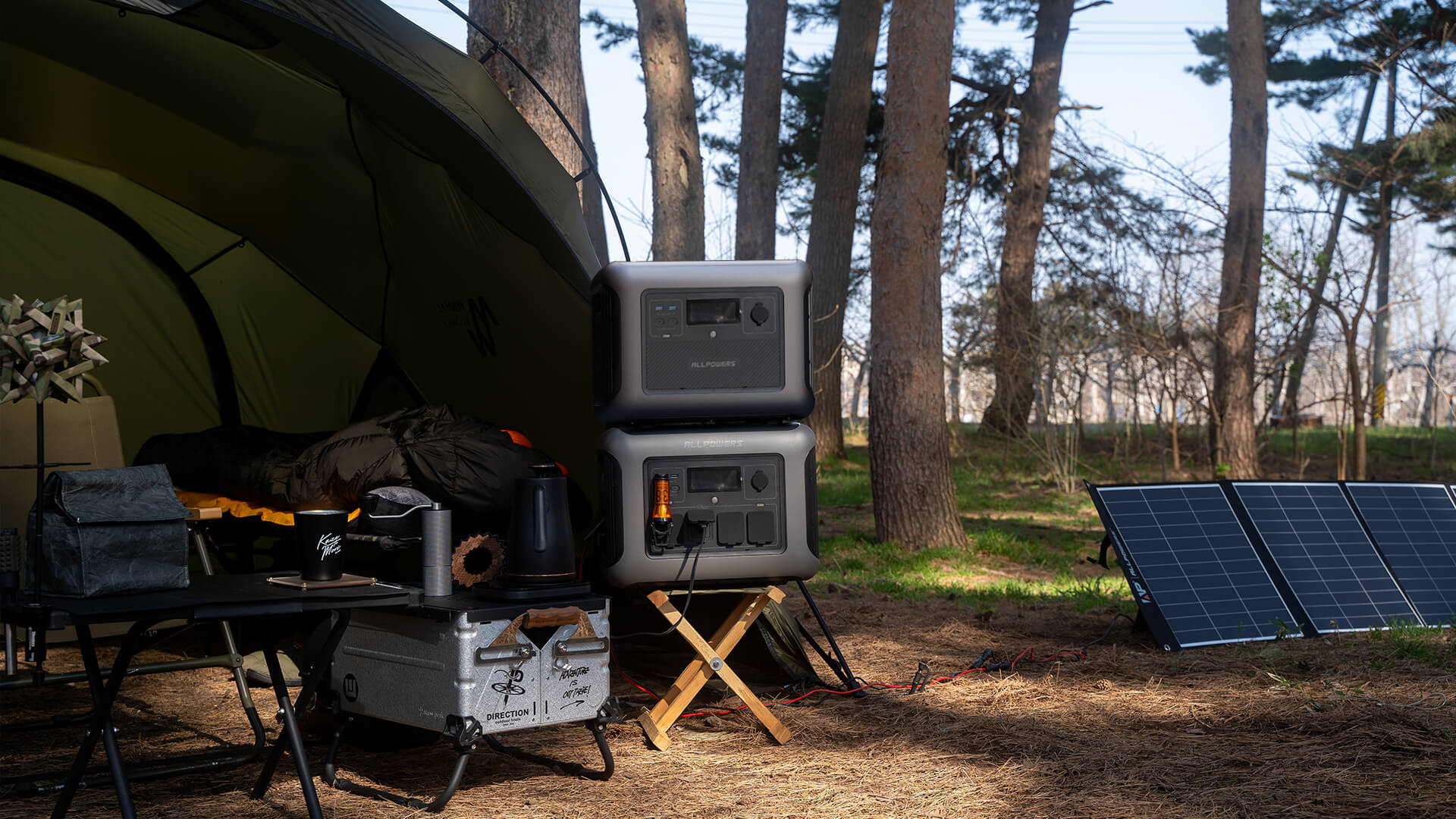
The Best power station for camping in this group is the Jackery Explorer 1000 v2. Its 1, 070Wh capacity, 1, 500W output, useful app modes, broad port selection, and manageable 23.8-pound design make it the most balanced choice for campers who do not know exactly what the next trip will demand.
For a lighter setup, the DaranEner 192Wh is the easiest to carry, while the Anker SOLIX C300 is the better pick for groups charging several USB-C devices. If appliance output matters more than portability, the Anker SOLIX C1000 Gen 2 and AFERIY 1024Wh provide the reserve and inverter strength to support a more demanding campsite.
If you are undecided, list every device you will run, add its expected hours of use, and choose the lightest station that clears both the capacity and output requirements.
As an Amazon Associate we earn from qualifying purchases.