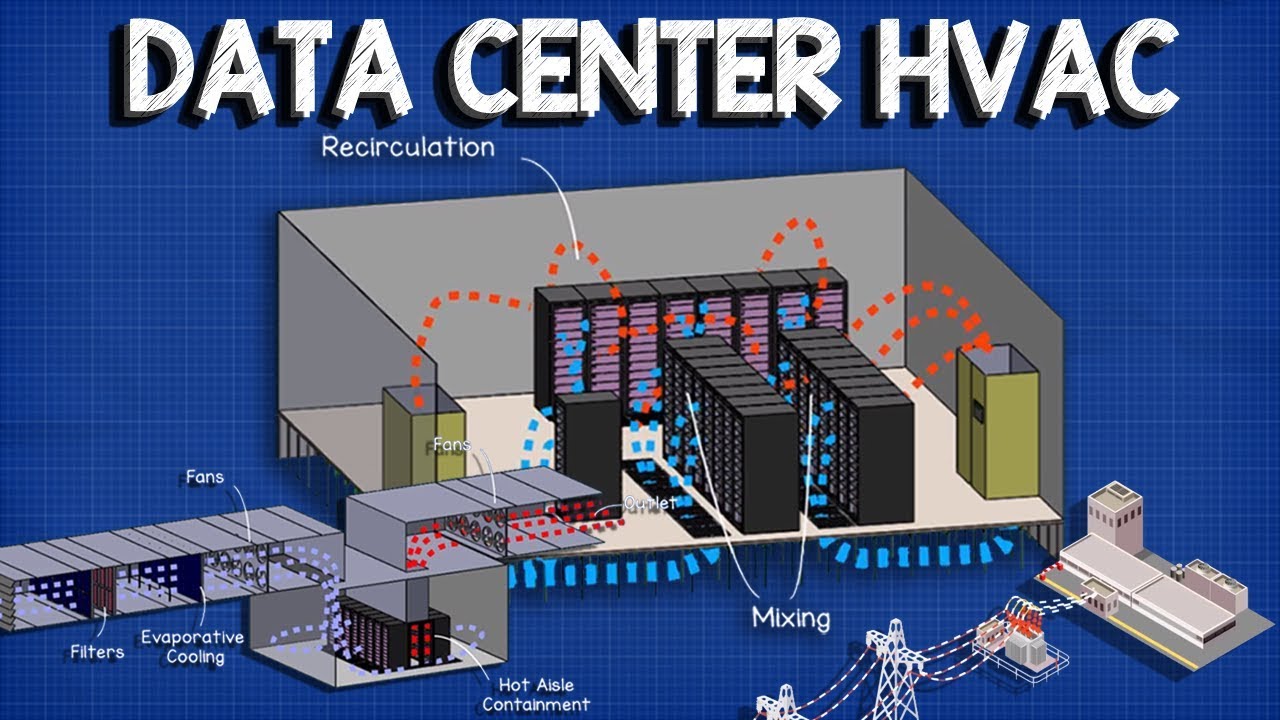

A hot rack rarely gives you much warning. Fans get louder, equipment becomes less reliable, and a cabinet that looked adequately ventilated on paper starts trapping heat around the hardware that needs it most. The right fix might be a rack exhaust panel, a cabinet fan, or a much larger misting installation.
Our Best data center cooling systems picks range from compact AC Infinity cabinet fans to 1500 PSI industrial misting systems. They are not interchangeable, so the useful question is not simply which one moves the most air. It is which cooling method fits the enclosure, environment, power setup, and level of control you actually have.
For most rack-based installations, NavePoint 2-Fan 1U is the best pick, while the mistcooling 140-nozzle system is the serious choice for large industrial spaces. The rest cover quieter cabinet ventilation, compact server racks, centralized fan control, and high-output exhaust.
| # | Product | Award | Format | Cooling capacity | Power or control | Best for |
|---|---|---|---|---|---|---|
| 1 | NavePoint 2-Fan 1U | Best overall | 1U rack unit | 2 fans | 110V, rocker switch | Standard server cabinets |
| 2 | AC Infinity AIRPLATE S7 | Best quiet cabinet fan | Dual 120 fan system | 104 CFM | Multi-speed, wall or USB | Quiet enclosed cabinets |
| 3 | mistcooling 100-Nozzle System | Best industrial coverage | High-pressure misting | 100 nozzles, 200 ft line | 1500 PSI pump | Large industrial cooling zones |
| 4 | PROCOOL TV440E | Best compact exhaust | 1U rack exhaust fan | High-power exhaust | Rack-mounted | Focused hot-air extraction |
| 5 | mistcooling 140-Nozzle System | Best maximum mist coverage | High-pressure misting | 140 nozzles, 280 ft line | 1500 PSI pump | Extensive industrial layouts |
| 6 | NavePoint 3-Fan 3U | Best multi-fan rack panel | 3U rack panel | 3 fans | 110V, rocker switch | Cabinets needing extra extraction |
| 7 | AC Infinity AIRPLATE S5 | Best mid-size quiet fan | Dual 80 fan system | 52 CFM | Multi-speed, wall or USB | Medium cabinets |
| 8 | mistcooling 40-Nozzle System | Best smaller industrial system | High-pressure misting | 40 nozzles, 80 ft line | 1500 PSI pump | Smaller cooling zones |
| 9 | Kaeltsyn Four-Port PWM Hub | Best centralized fan control | Four-port PWM hub | Four fan connections | PWM signal sharing | Multi-fan installations |
| 10 | AC Infinity AIRPLATE S1 | Best compact option | Single 80 fan system | 26 CFM | Multi-speed, wall or USB | Small enclosures |
1. NavePoint 2-Fan 1U: Best Overall

Pros
- Fits a standard 1U rack position
- Two fans provide straightforward cabinet extraction
- Lighted rocker switch is simple to reach
- 110V input suits conventional rack power
Cons
- No airflow figure is provided
- No speed control is listed
- Takes a full rack unit
Best for: standard server cabinets that need direct, simple exhaust.
The NavePoint 2-Fan 1U is the sensible starting point for a conventional rack. It does not ask you to redesign airflow around a cabinet or add a separate control board. It occupies a 1U space, carries two fans, and uses a lighted on and off rocker switch. That makes it a practical fit for a rack that needs more extraction but does not need an elaborate monitoring system.
Its listed dimensions are 1.75 inches high, 19 inches wide, and 6.69 inches deep. The 19-inch width is the important figure here because it matches the familiar rack format, while the shallow depth gives you a better chance of keeping the unit from colliding with equipment and cable runs behind the panel. The input is 110V at 50/60Hz, so this is a direct powered rack accessory rather than a USB cabinet fan.
The limitation is the missing airflow rating. With AC Infinity AIRPLATE S7, you get a stated 104 CFM and a multi-speed controller. With the NavePoint unit, the buying decision is based on its two-fan rack format and simple extraction role rather than a published airflow number. That makes the AC Infinity easier to tune in a noise-sensitive cabinet, but the NavePoint easier to deploy when a rack-mounted 110V panel is the priority.
The unit is not the right answer for a high-density installation that needs variable control, temperature automation, or a quantified airflow target. It is also not a substitute for room-level cooling. Still, among the rack panels here, it has the cleanest balance of physical fit, conventional power, and uncomplicated operation.
Choose the NavePoint 2-Fan 1U when you want a dedicated rack position for exhaust and prefer a physical switch over a more configurable controller.
2. AC Infinity AIRPLATE S7: Best Quiet Cabinet Fan

Pros
- Published 104 CFM airflow
- Quiet 19 dBA operation
- Multi-speed controller
- Wall outlet or USB power
- Aluminum frame with dual ball bearings
Cons
- Not a standard 1U rack panel
- Airflow depends on cabinet placement
- No automatic temperature control is listed
Best for: enclosed equipment cabinets where noise matters as much as airflow.
The AC Infinity AIRPLATE S7 is the most polished choice for a cabinet where a loud exhaust fan would be a constant nuisance. Its dual 120 fan arrangement produces a listed 104 CFM, but the more useful part of the specification is the 19 dBA noise figure. That combination gives it a clear role in offices, studios, network closets, and other spaces where equipment cooling cannot sound like a small industrial blower.
The S7 measures 11.69 by 6.3 by 1.3 inches in its feature listing, with the product information also describing it as roughly 11 inches long and 5.75 inches wide. The minor difference between the published dimension sets is a reason to measure the mounting area rather than assume the nominal 12-inch label tells you everything. It is a cabinet cooling system, not a universal rack blank, so the installation surface matters.
A multi-speed controller lets you trade airflow against noise instead of running the fans at one fixed setting. It can run from a wall outlet or USB port, and the included Turbo Adapter is said to increase performance by 25 percent. The CNC-machined aluminum frame and dual ball bearings are reassuring details for a fan intended to stay in service, although the data does not specify a service life or temperature trigger.
Compared with the NavePoint 2-Fan 1U, the S7 is quieter and gives you a published airflow figure, but it does not provide the same obvious 19-inch rack-panel format. The AC Infinity AIRPLATE S5 is smaller and moves 52 CFM, so it makes more sense in a less demanding cabinet. The S7 is the one to choose when the enclosure can accept its form factor and there is enough heat to justify its larger airflow.
Skip it if your rack has only an open 1U position and you need a panel that mounts directly into the rails. For enclosed cabinets and sound-sensitive rooms, this is one of the most convincing Best data center cooling systems choices in the group.
3. mistcooling 100-Nozzle System: Best Industrial Coverage

Pros
- 1500 PSI Tri-Plex pump
- 100 ultrafine mist nozzles
- 200 feet of welded stainless steel line
- Outdoor-rated pump enclosure
- Five-micron commercial filtration
Cons
- Requires a suitable industrial installation
- Misting adds moisture management concerns
- Heavy 65-pound pump assembly
Best for: large industrial cooling layouts where evaporative misting is appropriate.
The mistcooling 100-Nozzle System belongs in a different conversation from the rack fans. It is a distributed industrial system with a 1500 PSI high-pressure Tri-Plex pump, 100 ultrafine nozzles, and 200 feet of welded stainless steel mist line. That makes it a way to address a broad cooling zone rather than a hot spot inside one cabinet.
The package includes twenty 10-foot welded stainless steel lines, a 50-foot flexible 3/8-inch feed line, compression unions, an end plug, stainless steel clamps, and a five-micron commercial filter for the pump. The listed nozzle orifice sizes are 0.006 or 0.008 inches. Those details matter because the installation is built around fine mist distribution and pressure retention, not simply pushing room air through a rack.
The stainless tubing is described as reducing friction and pressure loss compared with flexible tubing, and the line carries a lifetime warranty according to the listing. The pump enclosure is outdoor-rated, while the system is positioned for industrial cooling, humidification, dust suppression, odor control, pre-cooling, and data center cooling. Those broad applications do not remove the need for a site-specific engineering review. Water, humidity, filtration, drainage, and equipment exposure all need careful consideration around electronics.
The mistcooling 140-Nozzle System covers more area with 280 feet of line and 140 nozzles, while the 40-nozzle version is easier to limit to a smaller zone. The 100-nozzle model is the middle ground, with enough distribution for a substantial installation without automatically committing to the largest listed layout.
Its 65-pound pump assembly measures 12 by 24 by 14 inches in the product information. This is not a plug-in cabinet accessory, and anyone seeking a simple rack fix should choose the NavePoint 2-Fan 1U or PROCOOL TV440E instead. Select this system only when evaporative industrial cooling fits the facility and the installation can properly manage moisture.
4. PROCOOL TV440E: Best Compact Exhaust

Pros
- 1U rack-mounted format
- Designed for exhaust
- 19-inch rack width
- Compact 1.5-pound chassis
Cons
- The listing provides very few technical details
- No airflow or noise figure is listed
- No speed control is specified
Best for: a rack with one open 1U position and a need for focused exhaust.
The PROCOOL TV440E is appealing because its role is so direct. It is a 1U rack-mount exhaust fan intended for network servers, data center equipment, industrial cabinets, and 19-inch rack cabinets. If the immediate problem is hot air lingering at the top or rear of a rack, a dedicated exhaust unit can be a cleaner answer than placing a loose cabinet fan nearby.
The available specifications are sparse. The product information gives a height of 1.75 inches, a length of 19 inches, a width of 1.5 inches, and a weight of 1.5 pounds. The title identifies it as 1U and 19-inch rack equipment, while the feature list contributes only the 1U designation. There is no published CFM figure, noise rating, voltage detail, fan count, or control method to use for a more precise comparison.
That lack of information is the reason it sits below the NavePoint 2-Fan 1U. NavePoint tells you it has two fans, 110V input, and a lighted rocker switch. The PROCOOL is physically more compact in the available product data and has the right rack identity, but buyers have less information with which to plan airflow or acoustics.
Against AC Infinity AIRPLATE S7, the PROCOOL wins on rack integration and loses on documented airflow and noise. Against the NavePoint 3-Fan 3U, it takes less rack space but offers less stated capacity. This is a focused tool for a specific installation, not a universal cooling platform.
Skip it when the cabinet needs a known airflow target or variable fan control. It makes sense when the 1U format and exhaust orientation matter more than detailed performance documentation.
5. mistcooling 140-Nozzle System: Best Maximum Mist Coverage
Pros
- Largest nozzle count in this group
- 280 feet of stainless steel mist line
- 1500 PSI Tri-Plex pump
- Five-micron commercial filtration
- Outdoor-rated pump enclosure
Cons
- Largest installation footprint here
- Requires careful moisture and water planning
- 65-pound pump assembly
Best for: extensive industrial layouts requiring broad mist distribution.
The mistcooling 140-Nozzle System is the broadest system in this roundup. It includes 140 ultrafine brass and stainless steel nozzles, 28 welded stainless steel lines measuring 8 feet each, and a total of 280 feet of 3/8-inch mist line. A 50-foot flexible feed line gives the installer room to connect the distribution network, while the 1500 PSI Tri-Plex pump supplies the pressure needed for the fine nozzles.
The pump includes a built-in solenoid, pressure switch, and pressure bypass, and it sits in an outdoor-rated enclosure. The package also includes 28 compression unions, an end plug, a five-micron commercial filter, fittings, and stainless steel clamps. The nozzle orifice options are 0.006 or 0.008 inches. Those are meaningful details for an industrial installation because filtration and pressure management are part of maintaining a usable mist system, not just accessories added after the fact.
The product information lists a 12 by 24 by 14-inch pump assembly weighing 65 pounds. The complete cooling layout is much larger once the tubing is installed. The supplier describes DIY installation and technical support, but this should not be read as permission to treat a data center as a casual patio project. Moisture control, equipment separation, water quality, drainage, and local operating conditions all deserve attention before the pump is connected.
Compared with the 100-nozzle version, this model extends coverage with 40 more nozzles and 80 additional feet of mist line. The mistcooling 40-Nozzle System is the better fit for a contained zone, while the 100-nozzle version is the more balanced industrial choice. This 140-nozzle model is for facilities that can use the additional distribution.
It is the wrong purchase for rack-level cooling and a poor fit for any site that cannot confidently manage humidity. For a properly planned industrial application, it is the most expansive misting option in the group.
6. NavePoint 3-Fan 3U: Best Multi-Fan Rack Panel

Pros
- Three-fan rack panel
- 110V, 50/60Hz input
- Physical illuminated rocker switch
- Standard 19-inch rack width
- Useful for cabinets needing more fan positions
Cons
- Uses 3U of rack space
- Listed noise reaches 47 dB-A
- No airflow figure is provided
Best for: rack cabinets that can spare 3U and need more direct fan capacity.
The NavePoint 3-Fan 3U takes the basic rack-panel idea and adds a third fan. It is a straightforward answer for a cabinet where two fans are not enough, but a more complicated cooling controller would be unnecessary. The lighted on and off rocker switch keeps operation simple, and the 110V 50/60Hz input matches the electrical specification of the smaller NavePoint panel.
The listed panel dimensions are 5.25 inches high, 19 inches wide, and 1.5 inches deep. That means it consumes 3U, which is the key trade-off. A rack with limited free space may get more practical cooling from a smaller panel or an external cabinet fan, while a roomy cabinet can use the extra fan position to pull more air through a problem area.
Noise is listed from 43 dB-A to 47 dB-A maximum. That is not a silent office accessory, and the lack of a CFM rating makes it difficult to compare the panel by raw airflow with the AC Infinity products. The NavePoint 2-Fan 1U is more space-efficient and easier to place in a crowded rack. This model earns its position when three fans and a larger panel are more important than conserving rack units.
The product information describes a unit weighing 5 pounds, with approximate product dimensions of 4 by 20 by 8 inches. Measure the cabinet and mounting clearance carefully because the listing contains more than one dimension set. The physical installation needs to be treated as part of the airflow plan, especially if adjacent equipment blocks the intake or exhaust.
Choose this panel for a rack that needs a simple, switched, multi-fan solution and has 3U available. Avoid it in quiet work areas or tightly packed cabinets where the space cost outweighs the extra fan.
7. AC Infinity AIRPLATE S5: Best Mid-Size Quiet Fan

Pros
- 52 CFM airflow
- 18 dBA listed noise level
- Multi-speed controller
- Wall outlet or USB power
- Dual ball bearings and aluminum frame
Cons
- Not a rack-mounted panel
- Lower airflow than the AIRPLATE S7
- No temperature automation is listed
Best for: medium-sized cabinets that need controlled airflow without much noise.
The AC Infinity AIRPLATE S5 is the middle sibling in the AIRPLATE range here. Its dual 80 fan configuration is rated at 52 CFM and 18 dBA, placing it between the compact S1 and larger S7 in both physical scale and airflow. It is a good match for a cabinet that has real heat to move but does not have room for a larger fan system.
The listed dimensions are 8.5 by 4.4 by 1.3 inches, while the product information describes it as 8 by 4.5 by 1.5 inches and gives a weight of 1.5 pounds. Those differences are small but worth allowing for when the fan is being fitted into a tight panel. The aluminum frame and dual ball bearings add a sturdier feel than a disposable loose fan, although the listing does not provide a rated operating life.
Like the S7, the S5 has a multi-speed controller and can use a wall outlet or USB port. The included Turbo Adapter is said to increase performance by 25 percent. That flexibility makes it easier to run gently in a lightly loaded cabinet and increase airflow when equipment load rises, but the system does not list automatic temperature sensing or remote management.
The AC Infinity AIRPLATE S7 is the better choice for larger enclosures because it lists 104 CFM. The S1 is easier to fit in a very small opening, but its 26 CFM rating limits how much heat it can move. The S5 is the practical center option when cabinet space and noise both matter.
It should not be treated as a replacement for a rack exhaust panel when direct rail mounting is required. If the cabinet can accept the S5 and the goal is steady, quiet ventilation, it is a well-targeted choice. Readers comparing room airflow can also consider how to size quiet air movement for a smaller enclosed space before choosing a cabinet fan.
8. mistcooling 40-Nozzle System: Best Smaller Industrial System
Pros
- 1500 PSI Tri-Plex pump
- 40 ultrafine mist nozzles
- 80 feet of welded stainless steel line
- Five-micron pump filtration
- 24/7 support is listed
Cons
- Still requires industrial installation planning
- Moisture control is essential near electronics
- Nozzle coverage is limited compared with larger systems
Best for: a contained industrial cooling zone that does not need a full 200 or 280 feet of line.
The mistcooling 40-Nozzle System is the smallest of the three industrial misting packages in this list, but it is not a small appliance. It combines a 1500 PSI high-pressure Tri-Plex pump with 40 ultrafine brass and stainless steel nozzles and eight 10-foot welded stainless steel lines. The total line length is 80 feet, with a 50-foot flexible 3/8-inch feed line for the connection.
The kit includes 3/8-inch compression unions, an end plug, a five-micron commercial pump filter, fittings, and stainless steel clamps. Its nozzles use 10/24 threads and offer 0.006 or 0.008-inch orifice sizes. The welded stainless line is intended to reduce friction and pressure loss compared with flexible tubing, and the listing says custom spacing is available on request.
The pump has a built-in solenoid, pressure switch, and pressure bypass, and the enclosure is described as outdoor-rated. The product is also presented for humidification, dust suppression, odor control, pre-cooling, warehouse cooling, and data center cooling. Those applications make the package adaptable, but they also underline why the installation needs to be designed around the actual environment. Cooling electronics with mist requires more than simply placing nozzles near a rack.
The 100-nozzle system extends to 200 feet of line and is more appropriate for a broad facility. The mistcooling 140-Nozzle System goes further still. This 40-nozzle version makes sense when the target area is constrained and a larger distribution network would be unnecessary or difficult to route.
It is not a substitute for dry rack ventilation, and buyers who need a direct cabinet solution should look at NavePoint or AC Infinity instead. Select it when a planned industrial zone can accommodate water management and the smaller nozzle count matches the intended coverage.
9. Kaeltsyn Four-Port PWM Hub: Best Centralized Fan Control

Pros
- Four PWM fan ports
- Centralized speed signal sharing
- Helps reduce cable clutter
- Suits server racks and NAS upgrades
- Supports multi-fan arrangements
Cons
- It is a controller, not a cooling fan
- No power specification is listed
- Compatibility depends on the fans and control source
Best for: coordinating several compatible PWM fans from one control connection.
The Kaeltsyn Four-Port PWM Hub is easy to misunderstand if you are shopping for a complete cooling system. It does not provide the fans, rack panel, pump, or exhaust housing. It is a four-port fan hub that centralizes PWM control, making it useful as part of a larger thermal setup rather than as a standalone cooling product.
The listing positions it for IT professionals, data center technicians, enthusiasts, server racks, overclocked workstations, and NAS upgrades. Its four ports let multiple fans share PWM speed signals, which can make a multi-fan installation tidier and keep adjustments consistent. That is especially useful when several fans are intended to respond together to the same control input.
There is no airflow rating because airflow comes from the connected fans. There is also no listed voltage, current capacity, connector specification, or supported fan size in the available data. That omission matters. Before selecting the hub, confirm that the fans, motherboard or controller, and power arrangement are compatible with the hub's PWM signal-sharing design.
Compared with the AC Infinity AIRPLATE products, the Kaeltsyn offers more centralized control potential but no built-in airflow. Compared with the NavePoint panels, it provides less physical cooling by itself but may be useful in a custom fan array. It is a supporting component, not a replacement for a complete rack exhaust unit.
Skip it if you need a ready-to-install cooling panel. Choose it when you already have compatible PWM fans and want one four-way control point. For a mixed setup, how separate cooling components work together under sustained loads can help clarify which parts provide airflow and which parts only manage it.
10. AC Infinity AIRPLATE S1: Best Compact Option

Pros
- Compact single-fan format
- 26 CFM airflow
- Quiet 17 dBA rating
- Multi-speed control
- Wall outlet or USB power
Cons
- Lowest airflow among the AIRPLATE models
- Not a 1U rack panel
- No automatic temperature control is listed
Best for: small enclosures with limited mounting space and modest heat loads.
The AC Infinity AIRPLATE S1 is the compact answer in this group. It uses a single 80 fan and lists 26 CFM airflow with a 17 dBA noise level. That is enough to improve air movement in a small cabinet or enclosure, but it is not intended to compete with a three-fan rack panel or an industrial misting network.
The feature dimensions are 4.6 by 4.6 by 1.3 inches, while the product information gives approximate dimensions of 4.5 by 4.5 by 1.5 inches. The compact footprint is the reason to choose it. A larger fan can provide more airflow, but it may not fit the available opening or leave enough room around cables and equipment.
A multi-speed controller allows the S1 to run at a quieter setting when the cabinet load is light. It can be powered from a wall outlet or USB port, and the included Turbo Adapter is said to increase performance by 25 percent. The CNC-machined aluminum frame and dual ball bearings are shared points of interest with the larger AIRPLATE units, while the S1's smaller single-fan layout keeps the physical installation simple.
The AC Infinity AIRPLATE S5 produces 52 CFM and is the better choice when the enclosure can accommodate its larger format. The S7 goes to 104 CFM for more demanding cabinets. The S1 wins only when space, noise, and modest airflow needs all point toward the smallest unit.
Do not use it as the sole answer for a dense server rack without first establishing that 26 CFM is sufficient for the equipment load. For a small network enclosure or localized hot spot, it is a neat, quiet way to add controlled ventilation.
How to choose best data center cooling systems
The right cooling hardware starts with the type of heat problem you have. A rack-mounted exhaust panel, a cabinet fan, a PWM control hub, and an industrial misting system solve different problems.
Cooling method
Dry air movement is the straightforward choice for server cabinets and racks. Rack panels and cabinet fans remove or circulate hot air without introducing moisture. High-pressure misting systems cover larger industrial areas, but they require a facility that can manage water, humidity, filtration, drainage, and equipment exposure.
Never choose evaporative misting for electronics until moisture control is part of the installation plan.
For a contained rack, start with a fan or exhaust panel. Reserve misting for a properly designed industrial cooling zone where the environmental conditions support it.
Airflow capacity
Airflow is listed in CFM for the AC Infinity models, with the S1 at 26 CFM, the S5 at 52 CFM, and the S7 at 104 CFM. A higher CFM figure can move more air, but only if the fan is positioned so intake and exhaust paths are not blocked. A rack panel without a published CFM figure needs more cautious selection because the available data does not let you quantify its output.
Misting systems use nozzle count and line length rather than CFM as their most visible capacity indicators. The 40-nozzle package covers 80 feet of line, the 100-nozzle system covers 200 feet, and the 140-nozzle system covers 280 feet. Those figures describe distribution scale, not a direct comparison with fan airflow.
Rack format and clearance
A 1U panel uses 1.75 inches of nominal rack height, while the NavePoint three-fan panel uses 3U. That space may be easy to spare in a lightly populated cabinet or impossible to give up in a dense one. Check rear clearance, cable paths, intake openings, and exhaust direction before buying.
The AC Infinity AIRPLATE models are not presented as standard 19-inch rack panels. They are better suited to cabinet openings or custom mounting locations. Measure the actual opening because the listings include both nominal size labels and detailed dimensions.
Noise and speed control
Noise matters in offices, studios, and network closets located near people. The S1 lists 17 dBA, the S5 lists 18 dBA, and the S7 lists 19 dBA. Those figures make the AC Infinity units easier to tune for quieter spaces than the NavePoint 3U panel, which is listed at 43 dB-A to 47 dB-A maximum.
A multi-speed controller gives you a practical way to reduce noise when heat output is lower. The NavePoint panels use illuminated rocker switches, which are simpler but do not provide the same listed adjustment range. The PROCOOL listing does not specify a noise level or speed control.
Power and control
The NavePoint rack panels specify 110V at 50/60Hz. The AC Infinity AIRPLATE models can use a wall outlet or USB port and include a Turbo Adapter. The Kaeltsyn hub is different because it shares PWM signals across four fan connections instead of supplying a complete cooling system.
If you are building a custom fan array, verify the control source, fan compatibility, and electrical limits before connecting several fans to one hub. A hub can simplify control, but it cannot compensate for fans that are mismatched or an enclosure with poor airflow paths.
Frequently asked questions
Are misting systems suitable for data center cooling?
They can be suitable for a properly engineered industrial installation, but they are not a simple replacement for rack fans. Misting introduces water and humidity concerns, so filtration, drainage, condensation prevention, and equipment protection must be addressed first.
Which cooling system is best for a standard server rack?
The NavePoint 2-Fan 1U is the most direct fit in this group. It uses a standard 1U rack position, has two fans, and specifies 110V input with a physical rocker switch.
Is a cabinet fan the same as a rack exhaust panel?
No. A cabinet fan such as the AC Infinity AIRPLATE S7 is designed for placement in or against a cabinet opening, while a rack exhaust panel is designed around rack mounting. They can perform related jobs, but their installation requirements are different.
What does CFM mean for server cabinet cooling?
CFM means cubic feet per minute and describes the volume of air a fan is rated to move. It is useful for comparing the AIRPLATE models, but actual cooling also depends on cabinet openings, obstruction, fan placement, and the heat produced by the equipment.
Does the Kaeltsyn hub cool a server by itself?
No. The Kaeltsyn Four-Port PWM Hub is a control and connection component. It can coordinate compatible PWM fans, but it does not include the fans or provide its own airflow.
Is quieter always better for a rack cooling system?
Not necessarily. A quiet fan is preferable where people work nearby, but the system still needs enough airflow to remove heat. A higher-noise rack panel may be more appropriate when cooling capacity and direct exhaust matter more than acoustics.
How much rack space does a cooling panel use?
The NavePoint 2-Fan panel is listed as 1U, while the NavePoint three-fan panel is listed as 3U. The PROCOOL TV440E is also identified as a 1U unit. Always check the cabinet's available height and rear clearance before installation.
The bottom line
The Best data center cooling systems choice for a conventional rack is the NavePoint 2-Fan 1U. It has the clearest rack-focused design in this group, two fans, a 110V input, and a simple rocker switch. Choose the AC Infinity AIRPLATE S7 instead when the equipment is in an enclosed cabinet and quiet, adjustable airflow is more important than a standard 1U installation.
For large industrial cooling zones, the mistcooling 100-Nozzle System is the most balanced misting package, while the 140-nozzle model is the better fit for the widest layout. These systems need serious moisture and site planning, so they should not be treated as rack accessories.
If you are undecided, match the hardware to the physical problem first: use a rack panel for a rack, a cabinet fan for an enclosure, and misting only where the facility is designed to handle it.
As an Amazon Associate we earn from qualifying purchases.