
A DJ headphone has to do more than sound pleasant. It needs to let you isolate a cue track, check a beat with one ear, and hear the room without losing the details in the mix. A poor fit or an awkward cable becomes irritating quickly when you are practicing for hours.
Our Best best dj headphones picks cover focused DJ models, studio monitors, and a few wireless designs that can still work in a wired setup. The Pioneer DJ HDJ-X5 is the best all-round pick, while the list also includes lighter on-ear options, capable studio headphones, and straightforward choices for beginners.
The Pioneer DJ HDJ-X5 is the one to buy for most DJs, with the Pioneer DJ HDJ-CUE1, Audio-Technica ATH-M50X, and Sennheiser HD 25 covering different priorities.
Comparison table
| # | Product | Award | Driver | Design | Best for |
|---|---|---|---|---|---|
| 1 | Pioneer DJ HDJ-X5 | Best overall | 40 mm | Over-ear, swivel earcups | Regular mixing and booth use |
| 2 | Pioneer DJ HDJ-CUE1 | Best for new DJs | Not specified | On-ear, foldable, swivel earcups | Learning to mix |
| 3 | Audio-Technica ATH-M50X | Best studio crossover | 45 mm | Over-ear, detachable cable | DJing and studio work |
| 4 | Sennheiser HD 25 | Best lightweight option | Not specified | On-ear, detachable cable | Long sessions and travel |
| 5 | OneOdio Pro-10 | Best for flexible connections | 50 mm | Over-ear, 90-degree swivel | Mixed DJ and home use |
| 6 | Sony MDR7506 | Best classic monitor | 40 mm | Closed-back, foldable | Monitoring and recording |
| 7 | OneOdio A70 | Best wireless option | 40 mm | Over-ear, foldable | Wireless listening and wired DJ use |
| 8 | Audio-Technica ATH-M20x | Best for studio basics | 40 mm | Over-ear, single-sided cable | Tracking and practice |
| 9 | Tascam TH-02 | Best compact starter | Not specified | Closed-back, foldable | Casual mixing and recording |
| 10 | Pioneer DJ HDJ-CUE1 Bundle | Best with a travel case | Not specified | On-ear, rotating earcups | Portable beginner setups |
1. Pioneer DJ HDJ-X5: Best Overall

Pros
- Clear monitoring from 40 mm drivers
- Swivel earcups make one-ear cueing easy
- Good insulation for loud booths
- Durable design for regular use
Cons
- Heavier than the lightest DJ options
- No detachable cable listed
- Less convenient for casual wireless listening
Best for: DJs who want a dependable wired headphone for regular practice and gigs.
The Pioneer DJ HDJ-X5 gets the fundamentals right without trying to be a general-purpose lifestyle headset. Put it on and the useful thing is its focus: the closed design helps keep the cue track intelligible when the room is loud, while the swivel earcups support the one-ear listening technique that DJs actually use.
Its 40 mm drivers are a sensible fit for cueing and beatmatching. They are specified to provide clear, accurate sound rather than simply emphasizing bass, which matters when a kick drum and bass line need to stay distinct. The ergonomic earpads are intended for longer practice sessions, and the overall construction is designed for daily use rather than occasional desk listening.
Compared with the Pioneer DJ HDJ-CUE1, the HDJ-X5 feels more like a serious step into regular booth work. The CUE1 is lighter and easier to carry, but the X5 offers a more substantial over-ear design and stronger positioning as a durable DJ monitor. The Audio-Technica ATH-M50X gives you a more studio-oriented alternative with 45 mm drivers and a detachable cable, but it is less specifically shaped around beginner-friendly DJ handling.
The main drawback is bulk. The listed product weight is 2.1 pounds, which makes it notably less appealing for someone who wants a light headphone for commuting. The fixed cable also means a damaged lead is less convenient to replace than the detachable designs on the ATH-M50X and HD 25. Skip it if wireless listening is essential or if you strongly prefer an ultralight on-ear fit.
For a first serious DJ headphone, though, the HDJ-X5 is the most balanced choice here. It gives a new mixer the monitoring tools to learn properly and gives a more experienced user enough durability and isolation for regular sessions.
2. Pioneer DJ HDJ-CUE1: Best for New DJs

Pros
- Lightweight 0.47-pound build
- Swivel earcups support one-ear cueing
- Foldable for easier transport
- Soft earpads suit long practice sessions
Cons
- On-ear fit gives less isolation than over-ear models
- Wired only
- Driver size is not specified
Best for: first-time DJs who want simple, portable headphones for learning to mix.
The Pioneer DJ HDJ-CUE1 is the friendliest model in this group for someone learning the mechanics of DJing. It is light enough not to become the center of attention during a practice session, and its on-ear design makes it easier to move one ear away from the room when checking the main mix.
Pioneer DJ tunes the CUE1 for clear cueing in noisy rooms, with a balanced presentation that also works for everyday listening. The swivel earcups are the feature that matters most in a DJ context. They let you monitor a track with one ear while keeping the other ear open, rather than forcing you to remove the whole headphone whenever you need to hear the room.
The 0.47-pound listed weight is a real advantage over the heavier Pioneer DJ HDJ-X5. The trade-off is that the CUE1 sits on the ears instead of around them, so it cannot provide the same physical isolation as the HDJ-X5 or Audio-Technica ATH-M50X. If you are learning in a quiet bedroom, that is rarely a problem. In a busy booth, the larger over-ear models have the advantage.
It is also a wired headphone, so there is no battery to manage and no wireless mode to complicate a connection. That is useful for mixing, but less appealing if you want one headset for phone listening. The product data does not specify a driver size, so we would choose it for its handling and comfort rather than making a claim about driver performance.
The CUE1 is the better beginner pick than the more accessory-focused Pioneer DJ HDJ-CUE1 Bundle when the headphones themselves are the priority. Choose the bundle only if the included case is important. For a learner who wants a light, foldable headphone that teaches proper one-ear cueing, the standard CUE1 is an easy recommendation.
3. Audio-Technica ATH-M50X: Best Studio Crossover

Pros
- Detailed 45 mm drivers
- Excellent sound isolation from the circumaural design
- 90-degree swiveling earcups
- Detachable cable
- Durable professional-grade padding
Cons
- Less compact than the on-ear Pioneer models
- Studio fit can feel warm during long sessions
- Not a wireless headphone
Best for: DJs who also record, edit, or mix music at a desk.
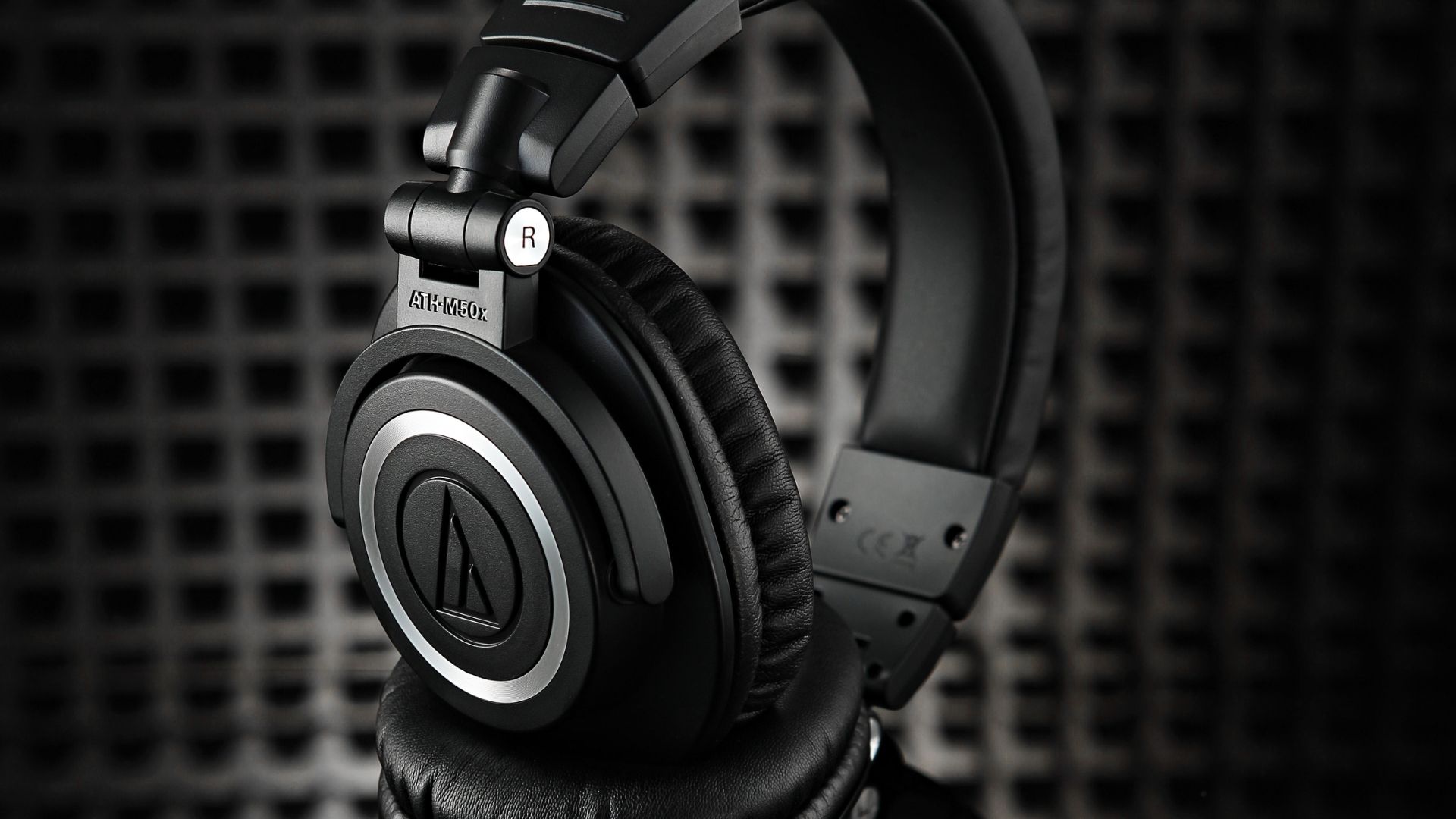
The Audio-Technica ATH-M50X is the strongest choice when DJing is only one part of the job. It is built as a studio monitor, but the 90-degree swiveling earcups make one-ear monitoring practical, and the closed circumaural fit keeps outside sound from taking over.
The 45 mm large-aperture drivers are the biggest specified drivers in this roundup. Audio-Technica describes them as providing clarity across an extended frequency range with deep, accurate bass. That combination is useful when you move between cueing tracks and checking a recording, because the headphone is designed to reveal more than just the obvious bass impact.
The detachable cable is a meaningful ownership advantage. DJs are hard on cables, and being able to remove the lead makes storage easier and gives you a simpler path if the cable needs replacing. The professional-grade earpad and headband material also gives the ATH-M50X a more durable feel than basic studio headphones. For a deeper look at how monitor headphones differ from more relaxed listening designs, the trade-offs between studio accuracy and listening comfort are worth considering.
Compared with the Pioneer DJ HDJ-X5, the ATH-M50X is the better studio tool but not necessarily the more natural DJ tool. The X5 is easier to recommend to a new mixer because its design is focused on booth use. The ATH-M50X is also heavier and more enclosing than the Sennheiser HD 25, so it is not the right pick for someone who values minimal weight above isolation.
Its weakness is that studio seriousness can become fatigue. The closed over-ear pads isolate well, but they may feel warm during a long set, and the headphone has no wireless option for casual use. Choose it if you want one wired headphone for DJing, recording, editing, and critical listening. Skip it if you want something small and nearly weightless.
4. Sennheiser HD 25: Best Lightweight Option

Pros
- Extremely light 0.31-pound construction
- Handles high sound pressure levels
- High sensitivity
- Detachable single-sided cable
- Comfortable for extended wear
Cons
- On-ear pads provide less isolation than closed over-ear models
- No wireless mode
- Less suited to listeners who prefer a roomy over-ear fit
Best for: DJs who want minimal weight and strong performance in a compact on-ear design.
The Sennheiser HD 25 is the headphone to pick when weight is the problem. Its listed weight is only 0.31 pounds, making it dramatically lighter than the Pioneer DJ HDJ-X5 and Tascam TH-02. That matters during long sets, travel, and any session where a heavy headband becomes distracting.
Its high sensitivity comes from lightweight aluminium voice coils, and the design is capable of handling very high sound pressure levels. Those traits suit DJ work, where a headphone must remain usable when the monitoring environment is energetic. The on-ear design also keeps the headphone compact while making it possible to lift or shift one side during cueing.
The detachable single-sided cable is a particularly good detail. It keeps the cable from becoming a permanent part of the headphone and makes the connection less awkward when moving around a controller. The HD 25 is more focused than the wireless OneOdio A70, and it is much lighter than the Audio-Technica ATH-M50X.
The compromise is isolation. On-ear headphones do not surround the ear in the same way as a circumaural model, so the HD 25 is not the strongest choice for a very loud booth if maximum isolation is your priority. It also offers no Bluetooth mode, which limits its appeal as an everyday travel headset. Readers comparing compact designs may also want to consider how a smaller earcup changes isolation and comfort before choosing.
The HD 25 makes sense for the working DJ who values agility over a plush, spacious fit. It is also a smart choice for anyone who dislikes heavy headphones. Choose the ATH-M50X instead for studio versatility, but choose the HD 25 when you want a light, purpose-built monitor that stays out of the way.
5. OneOdio Pro-10: Best for Flexible Connections

Pros
- Large 50 mm drivers
- 90-degree swiveling earcups
- Works with 3.5 mm and 6.35 mm jacks
- Share audio port
- Adjustable headband and padded cushions
Cons
- Wired only
- Heavier than the lightest on-ear models
- Bass-forward description may not suit neutral monitoring
Best for: home DJs who need one wired headphone for mixers, computers, instruments, and mobile devices.
The OneOdio Pro-10 is built around connection flexibility. It is a straightforward wired over-ear headphone with a 3.5 mm and 6.35 mm compatibility claim, so it can move between a phone, computer, audio interface, amplifier, or DJ mixer without making the user hunt for a special setup.
Its 50 mm drivers are paired with neodymium magnets. OneOdio describes the result as powerful bass, clear vocals, and crisp highs, which gives the Pro-10 a more energetic character than a strictly neutral monitor. That can make cueing enjoyable and easy to follow, though DJs who want the most restrained presentation may prefer the ATH-M50X or Sony MDR7506.
The 90-degree swiveling earcups are the feature that keeps it in this roundup rather than treating it as a general music headphone. Single-ear monitoring is practical, and the adjustable, stretchable headband helps spread the fit across the head. The 0.66-pound listed weight is reasonable for an over-ear design, though the Sennheiser HD 25 remains far lighter.
A shared audio port is unusual and useful for listening with another compatible pair without a splitter. The weakness is that the Pro-10 is wired only, despite its broad device compatibility. It is also less compact than the foldable OneOdio A70 and does not offer the A70's wireless convenience.
For a home setup with multiple sources, the Pro-10 is an uncomplicated pick. It beats the Tascam TH-02 on connection flexibility and beats the A70 when Bluetooth is not needed. Skip it if your main goal is a neutral studio reference or a very light headphone for carrying between venues.
6. Sony MDR7506: Best Classic Monitor

Pros
- Detailed sound from 40 mm drivers
- Closed-ear design reduces outside noise
- Foldable for storage
- Includes a soft case
- 1/4-inch adapter included
Cons
- Long 9.8-foot cable
- Cable is not detachable
- Less convenient for compact DJ controllers
Best for: recording, monitoring, and DJs who prefer a traditional closed wired headphone.
The Sony MDR7506 has the character of a working studio tool rather than a fashion accessory. Its closed-ear construction provides effective reduction of external noise, and the foldable frame makes it easier to store than its long cable initially suggests.
Sony pairs 40 mm drivers with neodymium magnets and lists a 10 Hz to 20 kHz frequency response. The useful point is not the span by itself, but the headphone's stated role in professional and home audio systems. It is meant to make details easy to hear while keeping the outside world from competing with the signal.
The supplied 9.8-foot cable is helpful when monitoring from a rack, console, or recording position. It is less helpful around a compact DJ controller, where excess cable can get in the way. The cable is not detachable, so the MDR7506 gives up an important serviceability advantage found on the ATH-M50X and HD 25.
The foldable design and included soft case help with transport, and the 1/4-inch adapter broadens its connection options. Still, the long fixed lead makes the Sony a weaker mobile DJ choice than the Pioneer DJ HDJ-CUE1. It also does not offer one-ear swivel monitoring in the product information, so it is more natural for monitoring than active booth work.
Choose the MDR7506 when you want a proven closed monitoring format for recording and home use. It is less compelling if your priority is a short, replaceable cable or quick one-ear cueing. The Sony is a practical specialist, not the most versatile DJ headphone here.
7. OneOdio A70: Best Wireless Option

Pros
- Bluetooth and wired modes
- Up to 72 hours of wireless playtime
- Includes 3.5 mm and 6.35 mm audio cables
- Foldable and rotatable design
- 40 mm neodymium drivers
Cons
- Wireless mode is not the right choice for latency-sensitive mixing
- More general-purpose than booth-focused
- Product dimensions are not specified
Best for: listeners who want wireless convenience but still need a wired route for DJ equipment.
The OneOdio A70 is the obvious choice for someone who wants one headphone to cover commuting, casual listening, calls, and occasional DJ work. Bluetooth handles everyday listening, while wired mode keeps it usable when a mixer or audio interface is involved.
OneOdio specifies up to 72 hours of wireless playtime, alongside 40 mm neodymium drivers and a presentation described as powerful bass with dynamic stereo sound. That is a useful combination for general listening. The included 3.5 mm to 6.35 mm and 3.5 mm to 3.5 mm cables make the A70 more adaptable around audio equipment than a typical wireless headset.
The over-ear design uses memory cotton and protein leather padding, and the headphone folds for transport. Its rotatable structure helps with fit and isolation, while the jack lock is intended to keep the wired connection stable. A built-in microphone with noise reduction also gives it a role outside DJing, although calls are not the reason to buy a DJ headphone.
The important limitation is wireless latency. For active beatmatching, use the wired mode rather than Bluetooth, since a wireless connection can make timing feel less direct. The A70 is also less purpose-built than the Pioneer DJ HDJ-X5, and its 0.56-pound weight is higher than the Sennheiser HD 25. If you are deciding between wireless convenience and direct monitoring, what changes when you move from wired to wireless listening is the key distinction.
The A70 is a good hybrid, not a dedicated booth monitor. Choose it when the headphone will spend as much time with a phone or laptop as it does with a DJ mixer. Skip it if every feature must serve cueing, isolation, and fast one-ear monitoring.
8. Audio-Technica ATH-M20x: Best for Studio Basics

Pros
- 40 mm drivers with rare earth magnets
- Circumaural isolation
- Tuned for enhanced low frequencies
- Single-sided cable exit
- Designed for tracking and mixing
Cons
- Cable is not listed as detachable
- Less flexible than the ATH-M50X
- No swivel earcup feature listed
Best for: home recording and basic DJ practice with a conventional over-ear fit.
The Audio-Technica ATH-M20x is a sensible studio headphone for someone who wants a conventional over-ear fit and does not need a long list of extras. It contours around the ears, which helps separate the music from room noise during tracking and practice.
Its 40 mm drivers use rare earth magnets and copper-clad aluminium wire voice coils. Audio-Technica tunes the M20x for enhanced low-frequency performance, so it is not presented as a completely flat reference. That extra low-end emphasis can make beat-driven material easy to follow, though the ATH-M50X is the more capable choice when fine detail and extended clarity matter.
The single-sided cable exit keeps the lead from splitting across both sides of the headband. That is a small but useful detail when moving around a controller. The listed weight is 0.46 pounds, placing it close to the Pioneer DJ HDJ-CUE1 and well below the listed weight of the HDJ-X5.
This model gives up flexibility compared with the ATH-M50X. The cable is not listed as detachable, and the product features do not mention swiveling earcups, so one-ear cueing is less clearly supported. The Pioneer DJ HDJ-CUE1 is the better choice for a learner who expects to use that technique constantly.
The ATH-M20x suits a stationary setup, especially one centered on tracking, mixing, or practice at a desk. Pick it when isolation and an over-ear fit matter more than portability. DJs who need a replaceable cable or more adaptable earcup movement should move up to the ATH-M50X.
9. Tascam TH-02: Best Compact Starter

Pros
- Closed-back over-ear design
- Foldable for transport
- Padded headband and earpads
- Includes 3.5 mm to 6.3 mm adapter
- Rich bass and crisp highs
Cons
- Driver size is not specified
- No swivel earcups listed
- Cable is not listed as detachable
Best for: casual DJ practice, podcast monitoring, and simple home recording.
The Tascam TH-02 is a compact, uncomplicated over-ear headphone for someone starting to record, practice, or monitor audio at home. Its closed-back dynamic design helps keep sound contained, while the foldable frame makes it easier to put away or carry.
Tascam describes the sound as clean, with rich bass response and crisp highs. The product data does not specify a driver size, so there is no reason to compare it with the 40 mm, 45 mm, or 50 mm models on driver dimensions alone. What is clear is the intended balance: the TH-02 aims to make bass and high-frequency detail easy to hear rather than presenting itself as a high-end reference monitor.
The padded headband and ear pads are useful for longer sessions, and the supplied snap-on adapter changes a 3.5 mm connection to 6.3 mm. That lets the headphone work with common consumer sources and larger audio equipment without a separate adapter. The 0.66-pound listed weight is the same as the OneOdio Pro-10, though the Tascam has a more basic feature set.
The main issue for DJs is the lack of a listed swivel earcup feature. One-ear cueing is central to the Pioneer DJ models, OneOdio Pro-10, and Audio-Technica ATH-M50X, while the TH-02 is better understood as a conventional monitor. Its cable is also not listed as detachable, which limits long-term flexibility.
Choose the TH-02 for straightforward home use, not for demanding booth work. It is a reasonable starting point for someone who wants closed-back comfort and broad jack compatibility. Move to the Pioneer DJ HDJ-CUE1 if learning one-ear monitoring is the main goal.
10. Pioneer DJ HDJ-CUE1 Bundle: Best with a Travel Case

Pros
- Includes a protective case
- Lightweight, folding design
- 90-degree rotating earcups
- Reinforced metal sliders
- Cushioned headband
Cons
- Bundle extras do not change the headphone performance
- On-ear design isolates less than over-ear models
- Driver size is not specified
Best for: beginner DJs who need the CUE1 format and a case for carrying it.
The Pioneer DJ HDJ-CUE1 Bundle is fundamentally the same type of beginner-focused headphone as the standard HDJ-CUE1, but its reason to exist is portability. The case gives the folding headphones a defined place in a DJ bag, and the polishing cloth is a small extra for keeping the set clean.
The headphones use dynamic drivers, with the product description promising powerful bass, crisp mids, and clear highs. Driver dimensions are not specified, so the more useful details are the handling features. The 90-degree rotating earcups support one-ear listening, while the cushioned headband and lightweight folding build make transport less troublesome.
Pioneer DJ also calls out durable moving parts and reinforced metal sliders. Those details matter more than the included cloth because sliders and hinges take regular punishment in a travel bag. The listed weight is 1.2 pounds for the bundle listing, so we would not use that figure as a direct comparison with the standard CUE1's headphone-only listing.
The bundle's weakness is simple: its extra accessories do not make the headphone itself more capable. The standard Pioneer DJ HDJ-CUE1 remains the cleaner choice when you do not need a case. The HDJ-X5 is the stronger move for frequent gigs, with a more substantial over-ear design and 40 mm drivers.
Buy this bundle when you are building a portable beginner setup and want protection included. Skip it if the case will stay in a drawer or if you need maximum isolation. It is an accessory-led variant of a good starter headphone, not a different tier of DJ monitor.
How to choose best dj headphones
The right DJ headphone should make cueing obvious, stay comfortable through a full practice session, and connect cleanly to the equipment you already use.
Earcup design
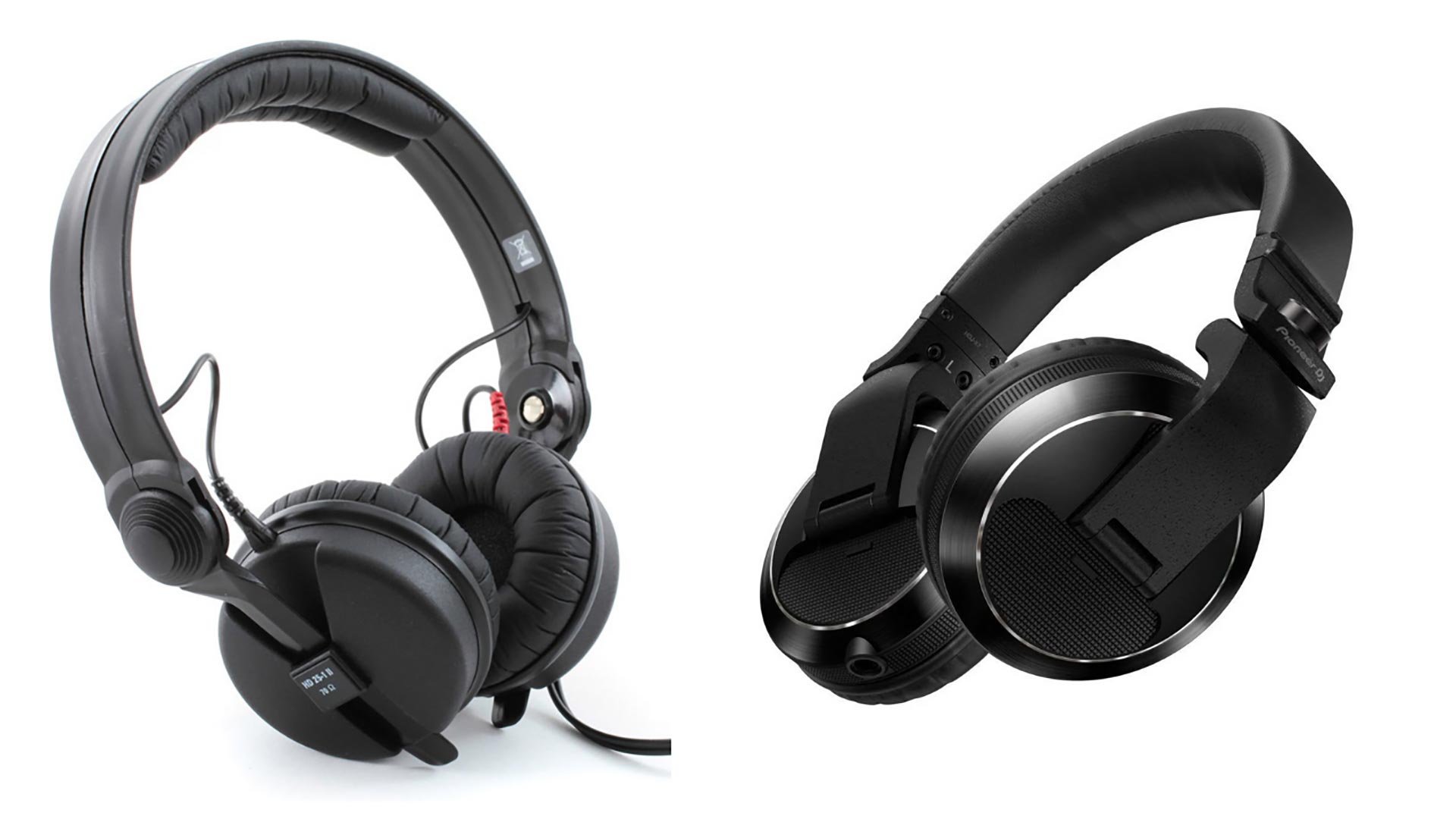
On-ear headphones such as the Pioneer DJ HDJ-CUE1 and Sennheiser HD 25 are compact and easy to shift during one-ear monitoring. Over-ear models such as the Pioneer DJ HDJ-X5 and Audio-Technica ATH-M50X generally provide more physical isolation and a roomier fit.
For DJing, a headphone that makes one-ear cueing easy is often more useful than one with the biggest driver.
Swivel movement
A 90-degree or rotating earcup lets you monitor a cue track while keeping the other ear open to the room. The HDJ-X5, HDJ-CUE1, ATH-M50X, OneOdio Pro-10, and HDJ-CUE1 Bundle all list movement suited to this task. If the product description does not mention swivel movement, treat it as a conventional monitoring headphone rather than assuming it has a DJ-specific hinge.
Driver presentation
Driver size alone does not determine sound quality. The OneOdio Pro-10 lists 50 mm drivers, the ATH-M50X lists 45 mm drivers, and several others list 40 mm drivers, but their tuning and enclosure designs differ. Look for clear mids and controlled bass so kicks, vocals, and bass lines do not blur together during beatmatching.
Isolation
Closed-back and circumaural designs help reduce room noise and limit sound leakage. The ATH-M50X, Sony MDR7506, ATH-M20x, and Tascam TH-02 are particularly conventional choices for isolation. On-ear models can still work well, but they may need more volume in a loud booth.
Cable and connection
A wired connection is the safest choice for live cueing because it avoids wireless delay and battery management. Detachable cables on the ATH-M50X and HD 25 make those models easier to maintain, while the OneOdio Pro-10 and A70 offer both 3.5 mm and 6.35 mm connection options. Check your mixer or interface before choosing a cable arrangement.
Weight and portability
A light headphone is easier to wear for long sessions, with the Sennheiser HD 25 and Pioneer DJ HDJ-CUE1 standing out in this group. Folding designs help with transport, while a protective case such as the one in the Pioneer DJ HDJ-CUE1 Bundle adds useful protection. Heavier over-ear models can still be preferable when isolation matters more than compactness.
Frequently asked questions
Are DJ headphones required to be wired?
Wired headphones are the safest option for cueing because the connection is direct and does not depend on a battery or wireless transmission. The OneOdio A70 can work wirelessly for everyday listening, but its wired mode is the better choice for mixing.
Are on-ear headphones good for DJing?
Yes. On-ear designs can be excellent for one-ear monitoring because they are easy to shift away from the ear. They usually provide less isolation than over-ear designs, so they may be less comfortable in a very loud booth.
Do DJ headphones need swivel earcups?
Swivel earcups are not mandatory, but they make one-ear cueing much easier. Models such as the Pioneer DJ HDJ-X5, Pioneer DJ HDJ-CUE1, and Audio-Technica ATH-M50X list earcup movement designed for this use.
Is a large driver better for DJ headphones?
Not automatically. Driver size is only one part of the design, and tuning, isolation, and fit affect how useful a headphone is for beatmatching. The 50 mm OneOdio Pro-10 may sound more energetic, while the 45 mm ATH-M50X is positioned more strongly as a studio monitor.
Can studio headphones be used for DJing?
Yes, especially when they have good isolation and a swivel earcup. The Audio-Technica ATH-M50X is the clearest example here, combining studio monitoring features with 90-degree earcup movement.
Should DJ headphones be over-ear or on-ear?
Choose over-ear for stronger isolation and a more enclosed fit. Choose on-ear for lower weight, easier one-ear listening, and a smaller footprint. The best fit depends on whether you spend more time in a loud booth or practicing in a quiet room.
The bottom line
The Best best dj headphones choice for most people is the Pioneer DJ HDJ-X5. Its 40 mm drivers, over-ear isolation, swivel earcups, and durable DJ-focused design give it the broadest mix of useful abilities.
The Pioneer DJ HDJ-CUE1 is the better first step for a new DJ who wants a light, foldable on-ear model, while the Audio-Technica ATH-M50X is the stronger choice for anyone who also records or mixes at a desk. The Sennheiser HD 25 is the specialist pick for keeping weight to a minimum.
If you are undecided, choose the HDJ-X5 for booth work, the HDJ-CUE1 for learning, or the ATH-M50X for one headphone that can handle both DJing and studio duties.
As an Amazon Associate we earn from qualifying purchases.