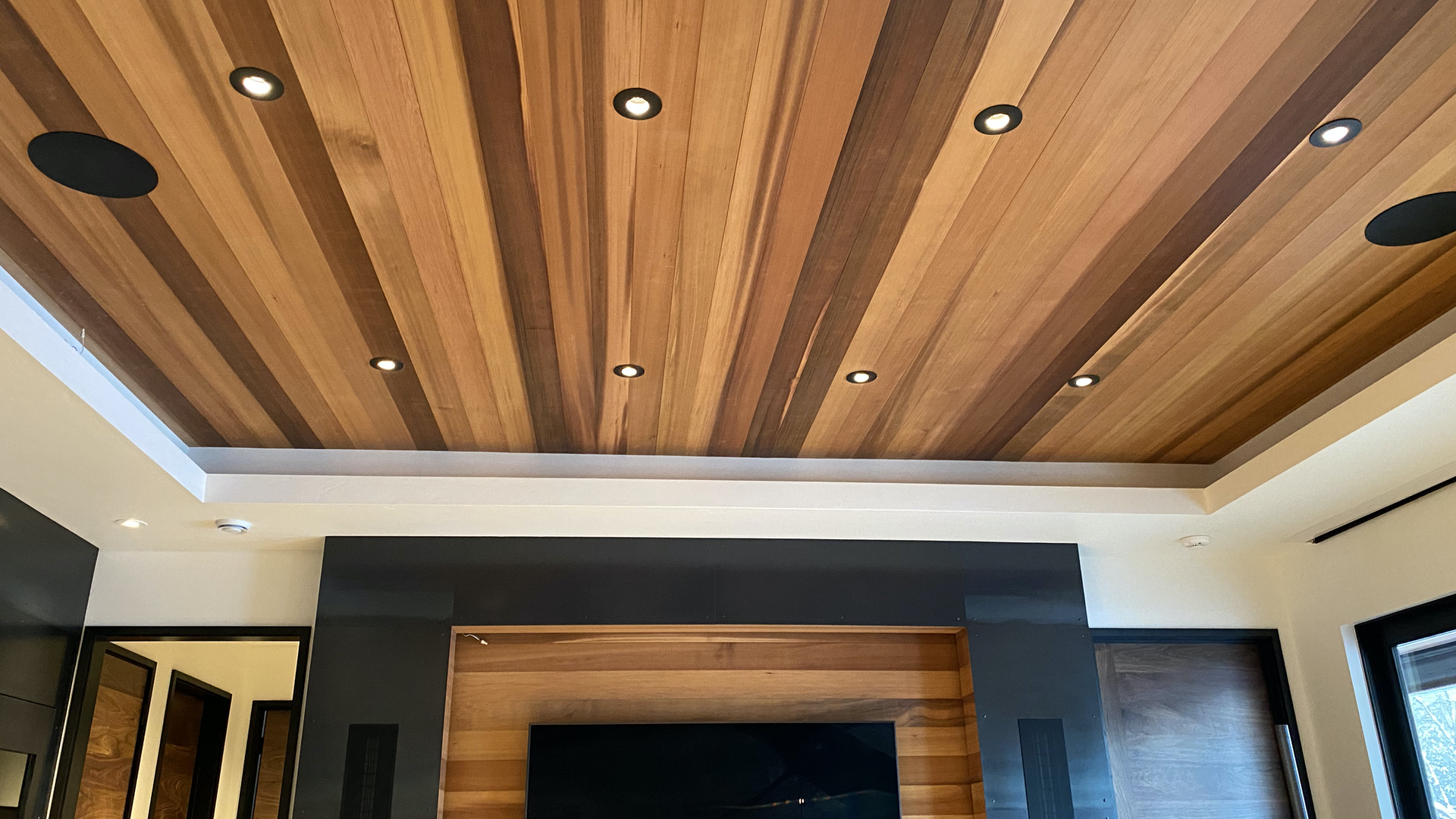

A ceiling speaker has to do two jobs at once: disappear into the room and still sound convincing from a listening position several feet away. The wrong model can leave music thin, voices vague, or installation needlessly difficult. The right one turns a ceiling into a clean, capable part of a whole-home or theater system.
Our Best best in ceiling speakers picks include compact 6.5-inch designs, fuller 8-inch models, multipacks for several rooms, and specialist options with controlled dispersion or automatic room tuning. The Polk Audio RC80i is our top pick for most installations, while the rest cover tighter ceilings, larger distributed systems, and Sonos-based setups.
Comparison table
| # | Product | Award | Woofer | Tweeter | Pack | Best for |
|---|---|---|---|---|---|---|
| 1 | Polk Audio RC80i | Best overall | 8-inch dynamic balance | 1-inch aimable | Pair | Full sound in music and movies |
| 2 | Micca M-8C | Best for clear specifications | 8-inch poly | 1-inch pivoting silk dome | Single | Flexible home audio installations |
| 3 | Polk Audio RC60i | Best compact Polk pair | 6.5-inch polypropylene | 0.75-inch swiveling silk dome | Pair | Smaller ceiling cutouts |
| 4 | Micca M-6C | Best compact single | 6.5-inch poly | 1-inch pivoting silk dome | Single | Bedrooms and modest rooms |
| 5 | Klipsch R-1650-C | Best four-speaker package | 6.5-inch polymer | 1-inch polymer dome | Four | Multiroom coverage |
| 6 | Klipsch CDT-5800-C II | Best controlled dispersion | 8-inch class | Horn-loaded | Single | Focused home theater sound |
| 7 | Micca Architecture 8-Inch 4-Pack | Best rimless four-pack | 8-inch polypropylene | 0.5-inch PEI dome | Four | Nearly invisible distributed audio |
| 8 | Klipsch CDT-5650-C II | Best directional single | Not specified | 1-inch titanium | Single | Aiming sound toward a seat |
| 9 | Micca Architecture 6.5-Inch 4-Pack | Best discreet smaller pack | 6.5-inch polypropylene | 0.5-inch PEI dome | Four | Smaller rooms and hallways |
| 10 | Sonos Sonance In-Ceiling | Best for Sonos Amp | 165 mm woofer | 25 mm tweeter | Pair | Trueplay-equipped Sonos systems |
1. Polk Audio RC80i: Best Overall

Pros
- Full-bodied sound from the 8-inch woofer
- Aimable tweeter helps direct detail
- Moisture-resistant design for humid rooms
- Paintable aluminum grille
Cons
- Larger cutout than compact models
- Pair format may not suit a single-speaker installation
- No detailed frequency or power figures are provided
Best for: homeowners who want a versatile pair for music, movies, kitchens, bathrooms, or covered porches.
The Polk Audio RC80i is the easiest recommendation here because it avoids the usual ceiling-speaker compromise. Its 8-inch woofer gives it a better foundation than the smaller Polk Audio RC60i, while the 1-inch aimable tweeter lets you point high-frequency detail toward the main seating area instead of firing it straight down. That matters when a speaker is mounted away from the center of a room.
Polk uses a mineral-filled polymer cone for the woofer, a construction intended to improve damping and keep the presentation controlled with both music and movie soundtracks. The speaker also has a rubber seal designed to limit moisture intrusion and improve audio response. That makes it a more reassuring choice for kitchens, bathrooms, and covered outdoor porches than a basic indoor-only design, though any ceiling cutout still needs careful protection from water.
Installation is designed around three steps, and the paintable aluminum grille gives the RC80i a clean final appearance. The pair weighs 9 pounds in total according to the listed product dimensions, so the ceiling material and the mounting area need to be sound. Its listed outer dimensions are about 12.1 inches long by 11.8 inches wide and 9.8 inches high, which is more substantial than the Micca M-6C and worth checking against joists and obstructions before cutting.
The RC80i is less specialized than the Klipsch CDT-5800-C II, which offers switches and controlled dispersion, and it does not have the Sonos Sonance model's Trueplay integration. It also lacks the detailed published sensitivity and power figures supplied for several Micca speakers. Still, its combination of woofer size, moisture-conscious construction, and aimable treble makes it the strongest all-rounder. For a broader system comparison, the choice between overhead speakers and in-wall placement for a cleaner front soundstage can be just as important as the speaker model.
Skip it if your ceiling cannot accommodate a larger opening or if you need one individual speaker rather than a pair. For a conventional pair of hidden speakers that can handle background listening and home theater duties, this is the one we'd install first.
2. Micca M-8C: Best for Clear Specifications

Pros
- 8-inch woofer with robust bass output
- Pivoting 1-inch silk dome tweeter
- Published 40 Hz to 20 kHz response
- Secure built-in mounting tabs
Cons
- Sold as a single speaker
- Requires a 9.4-inch cutout
- Traditional rimmed grille is less subtle than a rimless design
Best for: a single-room installation where predictable dimensions and published specifications matter.
The Micca M-8C is a practical, straightforward 8-inch speaker with unusually useful installation and performance information. It is sold individually, so it works well when you need to replace one unit, add a center overhead channel, or build a system one speaker at a time. Buyers planning stereo music should remember that one unit is not a pair.
Its high-excursion 8-inch poly woofer is the main reason to choose it over the Micca M-6C. Micca lists a 40 Hz to 20 kHz frequency response, 100 watts of power handling per speaker, 90 dB sensitivity, and 8-ohm impedance. Those figures do not guarantee a particular room result, but they give an amplifier a clearer target and suggest that the M-8C is comfortable producing a more substantial lower range than the smaller Micca models.
The 1-inch silk dome tweeter pivots so it can be aimed toward the listening zone. A 6 dB crossover manages the transition between the woofer and tweeter, with the goal of keeping the upper midrange coherent. In practical terms, that combination should suit voices, acoustic music, and general background listening without forcing the speaker to point directly at the floor.
The M-8C needs a 9.4-inch cutout, has a 10.7-inch outer diameter, and reaches 3.5 inches into the ceiling. Its built-in mounting tabs grip drywall or wood panels without extra brackets or a backing box. Those dimensions make it easier to plan than a model with sparse documentation, although the rimmed grille protrudes more than the Micca Architecture 8-Inch 4-Pack. Readers planning a complete theater should also consider how overhead channels fit into a wider home theater speaker layout before choosing locations.
The weakness is simple: this is not the most discreet or flexible speaker in the group, and the single-speaker format complicates a two-channel installation. Choose it when you want an 8-inch driver, aimable treble, and concrete technical information. It is a particularly sensible pick for a room where you already know the required cutout and amplifier load.
3. Polk Audio RC60i: Best Compact Polk Pair

Pros
- Smaller 6.5-inch ceiling footprint
- Pair format suits stereo installations
- Swiveling silk dome tweeter
- Moisture-resistant construction
- Paintable grille
Cons
- Less low-end potential than the RC80i
- No detailed frequency response listed
- Larger outer diameter than the woofer size suggests
Best for: stereo music or surround channels where a smaller woofer and Polk's moisture-conscious construction are preferred.
The Polk Audio RC60i is the compact counterpart to the RC80i, but it does not feel like a stripped-down afterthought. Its 6.5-inch Dynamic Balance polypropylene woofer is intended to produce rich, room-filling sound while fitting into a smaller ceiling opening. The pair format also makes it more immediately useful for stereo listening than the single Micca M-6C.
Polk fits the RC60i with a swiveling 0.75-inch silk dome tweeter. That is smaller than the RC80i's tweeter, but it still gives the installer some control over where upper-frequency detail lands. In a room with off-center seating, that ability is more useful than a fixed coaxial arrangement. It can also help balance speakers mounted at different distances from the listening area.
The listed outer dimensions are 10.8 inches by 10.8 inches by 3.3 inches, and each speaker weighs 5.7 pounds according to the product information. Polk does not provide a cutout measurement or detailed frequency response in the supplied specifications, so the installer should confirm the template before cutting. The paintable grille helps the speakers blend into the ceiling, and the moisture-resistant materials make them suitable for humid areas such as kitchens and bathrooms.
Compared with the Micca M-6C, the RC60i gives you a matched pair and moisture-conscious construction, while the Micca supplies more detailed figures including its 50 Hz to 20 kHz response and 80-watt handling. The RC80i remains the better choice for deeper, fuller sound when the ceiling allows a larger speaker. Polk's smaller pair makes more sense when visual scale and installation flexibility matter more than maximum bass.
The main limitation is the lack of detailed technical data. You are choosing based on the design and application rather than a complete specification sheet. Pick the RC60i for a compact Polk stereo pair that can fade into the ceiling and handle ordinary music and movie duties without dominating the room.
4. Micca M-6C: Best Compact Single

Pros
- Compact 6.5-inch woofer
- Pivoting 1-inch silk dome tweeter
- Published cutout and mounting depth
- Built-in mounting tabs
- Paintable grille
Cons
- Sold individually
- Lower sensitivity than the M-8C
- Less low-frequency extension than the M-8C
Best for: a single ceiling location in a bedroom, hallway, kitchen, or smaller listening room.
The Micca M-6C is the smaller, easier-to-place member of Micca's Media Series. It is sold as one speaker, which is useful for a single-zone installation or a replacement, but anyone building stereo sound should plan on ordering two. Its 6.5-inch poly woofer gives it a less imposing ceiling presence than the M-8C while retaining the same basic two-way approach.
Micca lists a 50 Hz to 20 kHz frequency response, 80 watts of power handling per speaker, 87 dB sensitivity, and 8-ohm impedance. The 50 Hz lower limit points to a speaker suited to normal whole-room music and ambient listening, but not one intended to replace a dedicated subwoofer in a theater system. The M-8C reaches lower on paper and has higher sensitivity, so it is the better fit for a larger room or more demanding playback.
A pivoting 1-inch silk dome tweeter helps the M-6C keep voices and high-frequency detail from sounding locked to one narrow spot. Micca also uses a 6 dB crossover to integrate the woofer and tweeter. The speaker has a 9-inch outer diameter, a 7.6-inch cutout, and a 3-inch mounting depth. Those dimensions are easy to work with, especially when ceiling space is limited, but the cutout still needs to avoid framing, wiring, and ductwork.
The built-in mounting tabs grip drywall or wood panels without separate brackets or a back box. Its rimmed grille protrudes minimally and can be painted to match the ceiling. Compared with the Polk Audio RC60i, the M-6C offers more explicit technical guidance and a larger tweeter, but the Polk arrives as a pair and uses moisture-resistant materials. The choice comes down to whether a single-speaker format and a known cutout are more useful than a ready-made stereo set.
The M-6C is not the right pick when you want strong low-end impact or when buying one speaker would leave an incomplete system. For compact rooms, distributed background audio, and installations where every inch of mounting depth matters, it is a clean and sensible option.
5. Klipsch R-1650-C: Best Four-Speaker Package

Pros
- Four speakers in one package
- 6.5-inch polymer-cone woofer
- Wide-area coaxial tweeter coverage
- Paintable aluminum grille
- Rust protection for moisture-prone areas
Cons
- No frequency response or sensitivity figures listed
- Fixed coaxial tweeter design
- Requires a sizable 8.3-inch cutout
Best for: covering several rooms or creating consistent overhead sound across a larger space.
The Klipsch R-1650-C makes the most sense when the project needs four matching speakers rather than one or two individual units. It is a distributed-audio pick, suited to a hallway, several rooms, or a larger open area where consistent voicing matters more than the ability to finely aim each tweeter.
Each speaker uses a 6.5-inch polymer-cone woofer and a coaxially mounted 1-inch polymer-dome tweeter. Klipsch says the woofer uses a large motor structure for high sensitivity and that the tweeter spreads clear highs over a wide area. Because the tweeter is fixed, you lose the directional adjustment found on the Polk Audio RC60i, Micca M-6C, and Micca M-8C. The trade-off is a simple, consistent coaxial layout that does not require much setup once the speakers are installed.
The listed outer dimensions are 9.5 inches by 9.5 inches, with an 8.3-inch cutout. That makes the R-1650-C physically larger than the Micca M-6C's required opening, so measure the ceiling before ordering. Its paintable aluminum grille adds rust protection in moisture-prone areas such as bathrooms, kitchens, and saunas. The product information also lists a 5-year manufacturer warranty, a useful detail for a multi-speaker installation where long-term consistency matters.
The weakness is the thin technical documentation. Klipsch does not provide frequency response, sensitivity, impedance, power handling, or mounting depth in the supplied product details. The Micca Architecture 6.5-Inch 4-Pack is easier to evaluate on paper because it lists all of those core figures, while the R-1650-C has the advantage of a polymer tweeter and the Klipsch installation package.
Use this set when the four-speaker format is central to the project. It is less compelling for a single listening position that needs precise aiming, but it is a tidy route to even overhead coverage without mixing different models across rooms.
6. Klipsch CDT-5800-C II: Best Controlled Dispersion

Pros
- Controlled Dispersion Technology
- Horn-loaded design
- Treble attenuation switch
- Midbass attenuation switch
- 8-inch class format
Cons
- Sold individually
- Sparse published specifications
- Larger and more specialized than basic ceiling speakers
Best for: a theater or listening room where overhead sound needs more deliberate directional control.
The Klipsch CDT-5800-C II is the specialist in this group. Its headline feature is Controlled Dispersion Technology, which is designed for situations where a ceiling speaker cannot simply spray sound evenly in every direction. The horn-loaded design and adjustment switches make it more configurable than the conventional coaxial speakers in this roundup.
The supplied data does not identify the woofer or tweeter dimensions, frequency response, sensitivity, impedance, or power handling. It does list an 8-inch size and calls out treble and midbass attenuation switches. Those controls can help tailor the speaker to a room's acoustic character or compensate for a bright surface, though they do not replace careful placement and amplifier matching.
This is a single speaker, so it is best considered as part of a planned system rather than an instant stereo solution. Its listed dimensions are 11 inches by 11 inches, with a listed height of 5.4 inches. The product information also reports an unusually low weight figure, so installers should rely on the supplied mounting instructions and verify the physical template rather than assuming the cabinet will fit a shallow ceiling.
Compared with the Polk Audio RC80i, the CDT-5800-C II offers more control but less straightforward information about the underlying driver system. The Sonos Sonance In-Ceiling is better for listeners who want software-assisted room correction, while the Klipsch is the more hardware-focused choice for someone willing to set up dispersion and tonal controls manually. If your project is a theater, it can be useful to consider how it works alongside other speakers in a complete home audio system.
Skip it if you want a simple, fully documented speaker for casual background music. Choose it when the installation has a defined listening area, ceiling placement is part of a theater design, and the ability to adjust midbass and treble is worth more than a long list of published figures.
7. Micca Architecture 8-Inch 4-Pack: Best Rimless Four-Pack

Pros
- Four speakers for broad room coverage
- Rimless grille protrudes less than 3/16 inch
- 8-inch polypropylene woofer
- Wide-dispersion PEI tweeter
- Detailed installation dimensions
Cons
- Deep 4-inch mounting requirement
- 6-ohm impedance needs amplifier attention
- Four-speaker package is excessive for a single room
Best for: a new multiroom installation where a nearly invisible grille and broad sound coverage are priorities.
The Micca Architecture 8-Inch 4-Pack is designed around coverage and concealment. Four speakers make it suitable for several rooms or a large area where one pair would leave uneven sound. Its rimless grille protrudes less than 3/16 of an inch from the ceiling, making it noticeably more discreet than the rimmed grille on the Micca M-8C.
Each speaker uses an 8-inch polypropylene cone woofer with a rubber surround and a 0.5-inch PEI dome tweeter. Micca describes the tweeter as wide-dispersion, and the combination is intended to create a broad sweet spot with clear vocals and soundstage imaging. The smaller tweeter and different driver arrangement give this model a different design emphasis from the M-8C, which uses a pivoting 1-inch silk dome tweeter.
The listed specifications include 50 Hz to 20 kHz frequency response, 80 watts of power handling per speaker, 87 dB sensitivity, and 6-ohm impedance. The 6-ohm load deserves attention when several speakers are connected to one amplifier. A 9.75-inch cutout, 11-inch outer diameter, and 4-inch mounting depth are also listed. That depth is the major installation constraint, especially in older ceilings with limited space above the drywall.
The built-in mounting tabs attach to drywall or wood panels without extra brackets or a backing box. The installation instructions include recommendations for mounting locations and speaker wire selection, which is helpful when laying out four units. Compared with the Klipsch R-1650-C four-pack, the Micca has more complete technical information and a much less visible grille, while Klipsch offers a polymer-dome tweeter and a shallower listed height.
The real catch is not sound but planning. A 4-inch depth and 6-ohm impedance make this a poor choice for a shallow ceiling or an amplifier that is not comfortable with the load. For a new multiroom project where the speakers should visually recede almost completely, this is one of the most convincing packages here.
8. Klipsch CDT-5650-C II: Best Directional Single

Pros
- Directional Klipsch CDT design
- 1-inch titanium tweeter
- Compact 9.5-inch outer dimensions
- Suited to whole-house audio layouts
Cons
- Sold individually
- Few technical details are provided
- No woofer specification is listed
Best for: a single planned listening zone where directional treble and system integration matter.
The Klipsch CDT-5650-C II is a focused alternative to the broad-coverage designs. It belongs in a system where speaker position has already been chosen and the installer wants to direct sound toward the listening area. That is a different brief from the Micca Architecture models, which emphasize a wide sweet spot and visual concealment.
The supplied features identify a 1-inch titanium tweeter and describe the speaker as part of an integrated whole-house audio approach. The CDT name indicates the same controlled-direction design family as the larger Klipsch CDT-5800-C II, but the available product information does not provide a frequency response, power rating, impedance, woofer size, or sensitivity. Those omissions make amplifier matching and output expectations harder to judge.
The product dimensions list 9.5 inches in height and width with a 4.5-inch length, while the product is sold individually and weighs about 1.1 pounds according to the supplied information. The unusual dimension format means installers should confirm the actual cutout and mounting template before beginning work. A 1-inch titanium tweeter should appeal to listeners who want crisp detail, but it is not enough information to predict the speaker's full tonal balance.
The CDT-5800-C II is the more substantial option if you want an 8-inch class speaker and adjustment switches. The Polk Audio RC60i is easier to choose for a conventional stereo pair because it includes two speakers and publishes a clearer description of its woofer and moisture-resistant construction. The 5650-C II earns its place for the buyer who has a particular seating area and wants a directional Klipsch design rather than a general-purpose ceiling speaker.
This is not the model to buy casually for a whole house without checking the rest of the system. Choose it when the installer can verify the mounting details and amplifier requirements, and when aiming the high frequencies toward the seating area is the main reason for choosing Klipsch.
9. Micca Architecture 6.5-Inch 4-Pack: Best Discreet Smaller Pack

Pros
- Four-speaker distributed system
- Rimless grille nearly disappears
- Polypropylene woofer with rubber surround
- Wide-dispersion PEI tweeter
- Shallower than the 8-inch Architecture model
Cons
- 60-watt power handling per speaker
- 6-ohm impedance
- Less bass extension than the 8-inch version
Best for: hallways, bedrooms, kitchens, and other areas where four compact speakers need to blend into the ceiling.
The Micca Architecture 6.5-Inch 4-Pack is the smaller counterpart to Micca's 8-inch Architecture set. Its purpose is not maximum output. It is a way to spread sound across several locations while keeping the visible hardware to a minimum. The rimless grille protrudes less than 3/16 of an inch, so painting it to match the ceiling can make the speakers almost disappear.
The 6.5-inch polypropylene woofer uses a rubber surround, and the 0.5-inch PEI dome tweeter is designed for wide dispersion. That arrangement suits ambient music and speech across a room because listeners do not need to sit directly below one speaker. Micca lists a 60 Hz to 20 kHz frequency response, 60 watts of power handling per speaker, 86 dB sensitivity, and 6-ohm impedance.
The installation dimensions are more manageable than the larger Architecture model. Each speaker has a 9-1/8-inch outer diameter, an 8-inch cutout, and a 3.5-inch mounting depth. That is still deep enough to require a look above the ceiling, but it is less demanding than the 8-inch model's 4-inch depth. The four-speaker format also allows wider spacing, which can produce more even listening levels than trying to make a single pair cover a large room.
The Klipsch R-1650-C is another four-pack with a 6.5-inch woofer, but it uses a coaxial 1-inch polymer tweeter and a paintable aluminum grille. Micca's advantage is the nearly invisible rimless design and much more complete published specification set. The larger Micca Architecture 8-Inch 4-Pack is the better fit when deeper bass and a lower frequency limit matter more than ceiling clearance.
The 6-ohm impedance and 86 dB sensitivity mean the amplifier deserves attention, especially if all four speakers share one zone. It is not the pick for high-output theater listening, but it is a strong fit for distributed music in rooms where concealment and manageable installation depth matter most.
10. Sonos Sonance In-Ceiling: Best for Sonos Amp

Pros
- Tuned for Sonos Amp
- Trueplay room adjustment
- 165 mm woofer and 25 mm tweeter
- 90-degree nominal coverage
- Paintable round or optional square grilles
Cons
- Requires a Sonos Amp for its key software features
- Deeper 120 mm installation requirement
- Less universal than conventional passive speakers
Best for: Sonos owners who want architectural speakers with Trueplay-assisted room tuning.
The Sonos Sonance In-Ceiling is the clearest system-specific pick here. It is not simply a passive ceiling speaker chosen in isolation. Its main advantage appears when it is paired with a Sonos Amp, which can use Trueplay to account for room size, construction, and furnishings. That gives it a different ownership experience from the Polk, Micca, and Klipsch models, which depend on amplifier settings and physical placement.
The speaker uses a 165 mm woofer and a 25 mm tweeter, with a listed 90-degree nominal coverage angle. Sonos specifies a 36 Hz to 20 kHz response within plus or minus 3 dB with DSP and a maximum output of 110 dB at 1 meter. The DSP qualification matters because the published result is tied to the system's processing, not just the raw passive speaker.
Sonos describes the pair as suitable for ambient listening from anywhere in the room. A single Sonos Amp can power up to three pairs of Sonos by Sonance architectural speakers, which makes the model attractive for a coordinated multiroom setup. The grilles are designed to disappear and can be painted, with round or optional square grille designs available.
The installation depth is listed as 120 mm, or roughly 4.7 inches, so it needs more ceiling space than the Micca M-6C or Polk Audio RC60i. It is also a less flexible choice if you plan to change amplifiers later. The Micca M-8C offers an 8-ohm load and detailed conventional specifications, while the Sonos model's strengths are room correction, app-based control through the Amp, and integration with a Sonos system.
Skip it if you do not already want to build around Sonos Amp. For Sonos households that want hidden speakers and automatic tuning rather than manual system setup, it is the most coherent choice in the roundup. It is also the best fit for listeners who value consistent whole-room coverage over experimenting with separate amplifiers.
How to choose best in ceiling speakers
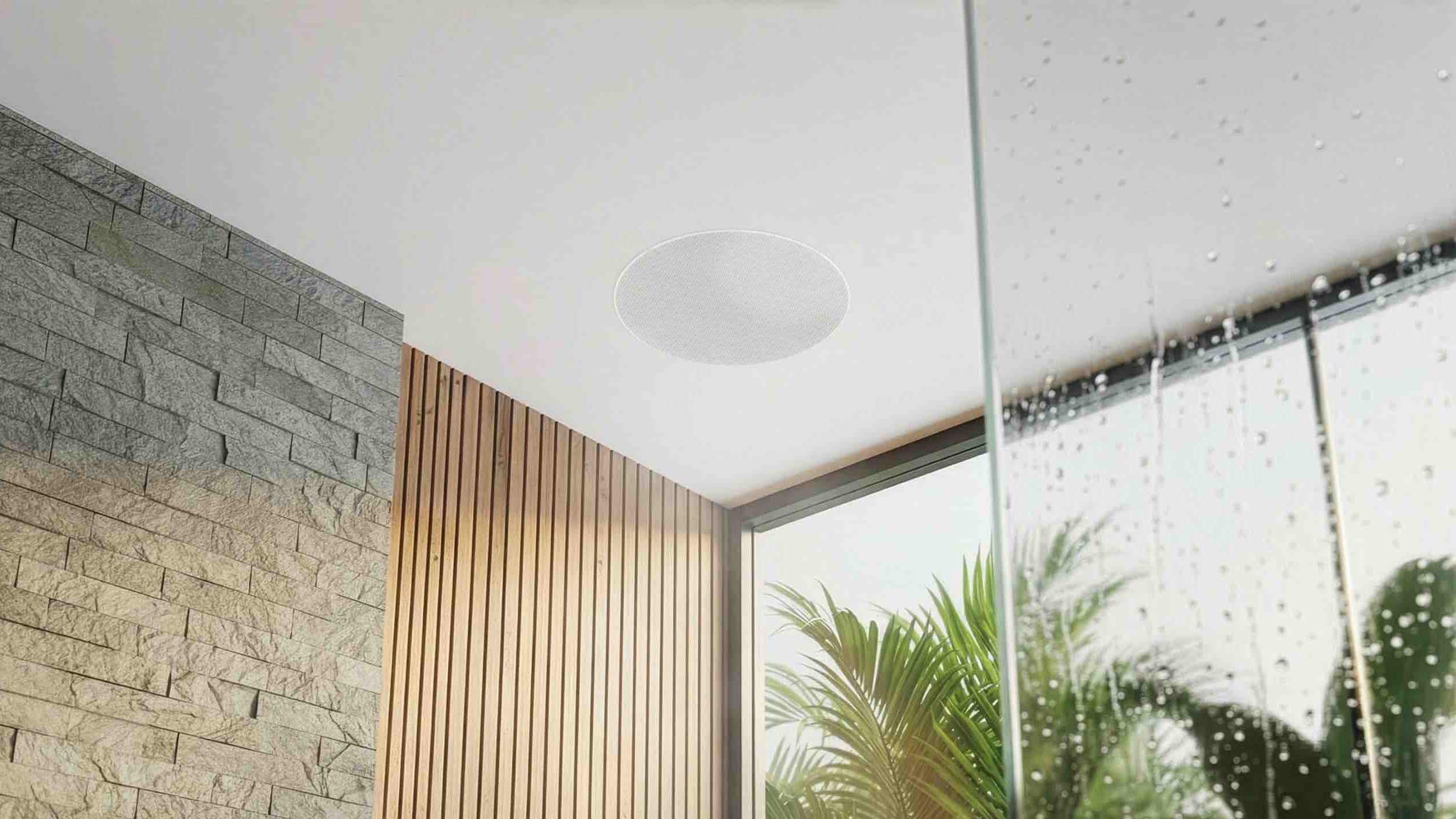
The right ceiling speaker depends on the room above the ceiling as much as the room below it. Start with the opening and amplifier, then choose driver size, coverage, and installation style.
Woofer size
An 8-inch woofer generally has more surface area for producing lower frequencies than a 6.5-inch design. That can make music sound fuller and give movie effects more weight, though a subwoofer remains the better way to handle serious low bass. The Polk Audio RC80i and Micca M-8C are the most straightforward larger-driver options here.
A 6.5-inch speaker is easier to place and can be a better visual match for a smaller room. The Micca M-6C, Polk Audio RC60i, and Micca Architecture 6.5-Inch 4-Pack all make sense when the room does not need the broadest low-frequency presentation.
Cutout and mounting depth
The cutout is the hole required in the ceiling, while mounting depth describes how much space the speaker needs above it. These measurements are not interchangeable. The Micca M-6C needs a listed 7.6-inch cutout and 3-inch depth, while the Micca Architecture 8-Inch 4-Pack needs a 9.75-inch cutout and 4-inch depth.
Look for joists, ductwork, electrical wiring, insulation, and plumbing before cutting. A speaker with a smaller outer diameter can still require a surprisingly large opening, so use the manufacturer's template rather than estimating from the woofer size.
The best ceiling speaker is the one that fits the ceiling you actually have, not the one with the largest driver on the box.
Tweeter direction and coverage
Aimable or swiveling tweeters help direct detail toward seating that is not directly below the speaker. The Polk Audio RC80i, Polk Audio RC60i, Micca M-8C, and Micca M-6C all offer some form of tweeter adjustment. That is useful in a living room where speakers must sit around lights or joists.
Wide-dispersion and fixed coaxial designs can be preferable when the goal is even sound across many positions. The Micca Architecture models emphasize a broad sweet spot, while the Klipsch CDT models take a more controlled approach for defined listening areas.
Amplifier compatibility
Check impedance, sensitivity, and power handling before connecting several ceiling speakers to one amplifier. The Micca M-8C and M-6C are listed at 8 ohms, while both Micca Architecture models are listed at 6 ohms. Four speakers on one zone can place a greater demand on an amplifier than a single pair.
The Sonos Sonance model is a special case. Its published performance includes DSP, and its key tuning features are designed around Sonos Amp. It can be a strong system choice, but it is not the same as buying a universal passive speaker and connecting it to any amplifier.
Grille and room conditions
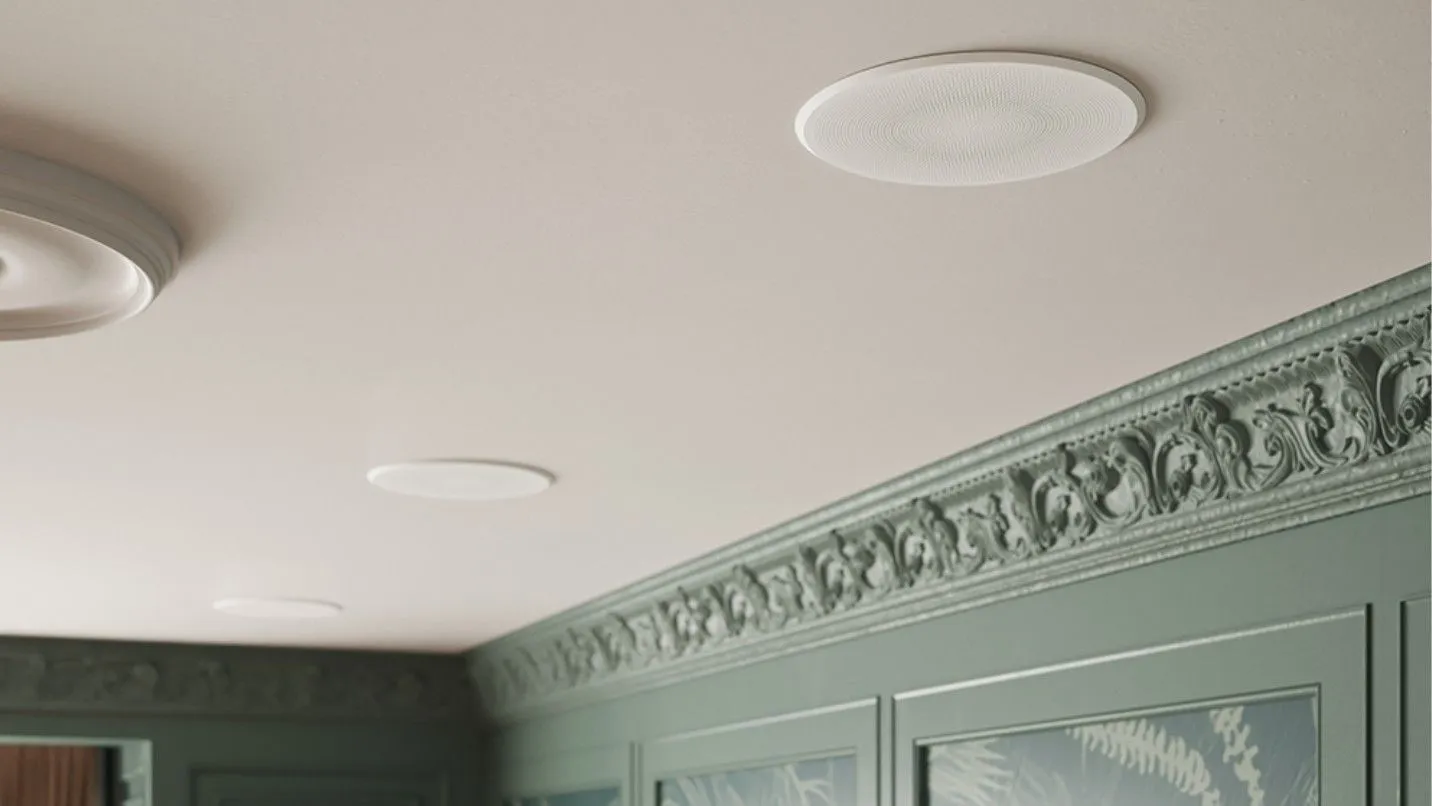
Paintable grilles help architectural speakers blend into a ceiling. Rimless designs such as the Micca Architecture series protrude less than 3/16 of an inch, while conventional grilles remain more visible even after painting.
For bathrooms, kitchens, and covered porches, moisture-conscious construction matters. Polk describes the RC80i and RC60i as moisture-resistant, and the Klipsch R-1650-C uses a paintable aluminum grille with added rust protection. These features do not make a speaker suitable for direct exposure to water, so location and ventilation still matter.
Frequently asked questions
Do in-ceiling speakers need an amplifier?
Yes. These models are passive speakers and need power from an amplifier or receiver. The Sonos Sonance model is designed to work with Sonos Amp, while the Polk, Micca, and Klipsch models can be used with compatible conventional amplification.
Are 6.5-inch or 8-inch ceiling speakers better?
An 8-inch woofer can provide more low-frequency authority and fuller sound, while a 6.5-inch speaker is often easier to place in a smaller room or restricted ceiling. The best choice depends on the room, the available mounting space, and whether a subwoofer handles the lowest frequencies.
Can ceiling speakers be used for home theater?
Yes. They can serve as surround or overhead channels, and some can also support whole-room music. A complete theater normally benefits from carefully placed front, center, and low-frequency speakers rather than relying on ceiling speakers for every channel.
Can I paint the grilles?
Many of the models in this roundup have paintable grilles. Remove the grille and follow the manufacturer's preparation guidance before painting, because excess paint can obstruct the perforations and affect sound.
Do I need two ceiling speakers for stereo music?
Two speakers are normally needed for left and right stereo playback. Several products here are sold individually, including the Micca M-8C, Micca M-6C, Klipsch CDT-5800-C II, Klipsch CDT-5650-C II, and Sonos Sonance listing, while others are sold as pairs or four-speaker packages.
Can ceiling speakers go in a bathroom?
Some models are designed with moisture-resistant materials or grilles intended for humid spaces. Polk identifies the RC80i and RC60i for areas such as bathrooms, while Klipsch describes the R-1650-C as suitable for moisture-prone areas. They should still be installed where they are protected from direct water.
The bottom line
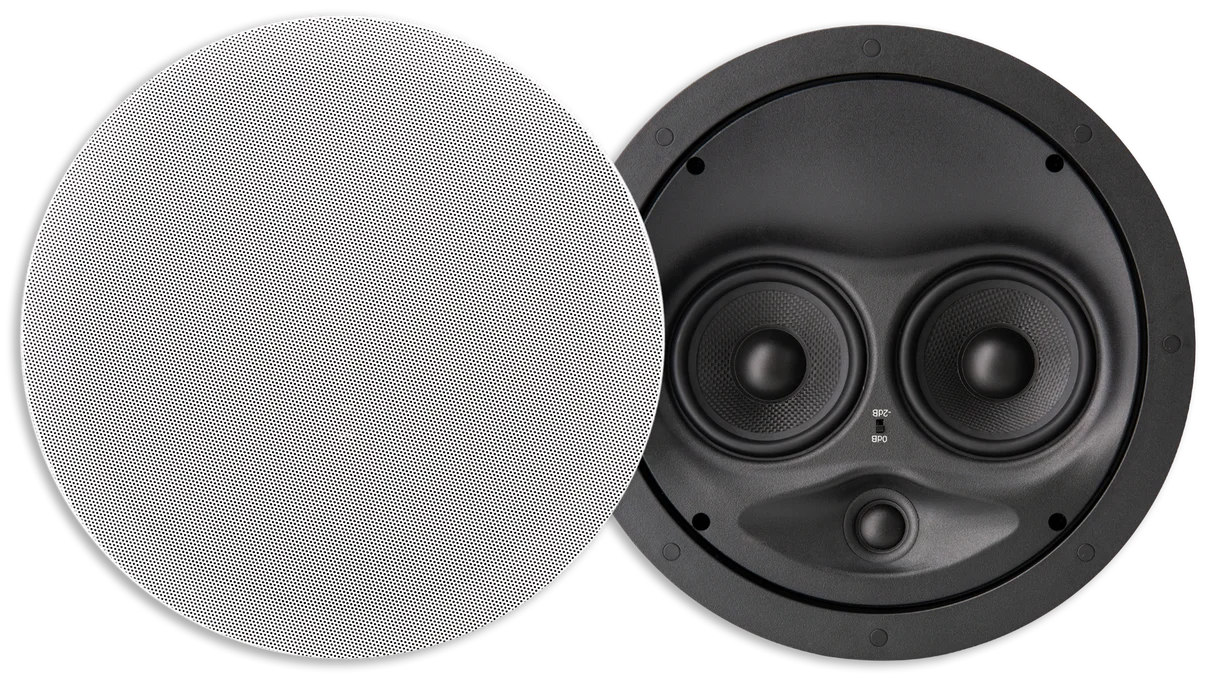
The Best best in ceiling speakers choice for most rooms is the Polk Audio RC80i. Its 8-inch woofer, aimable tweeter, paintable grille, pair format, and moisture-conscious construction make it versatile for music, movies, and everyday whole-room listening. The Micca M-8C is the better alternative when you want a single speaker with detailed installation and performance specifications.
For multiroom coverage, the Micca Architecture 8-Inch 4-Pack combines a larger woofer with a nearly invisible rimless grille. Sonos households should choose the Sonos Sonance In-Ceiling instead if Trueplay and Sonos Amp integration are central to the system.
If you are undecided, measure the cutout and ceiling depth first, then choose the speaker whose installation and amplifier requirements fit that space.
As an Amazon Associate we earn from qualifying purchases.