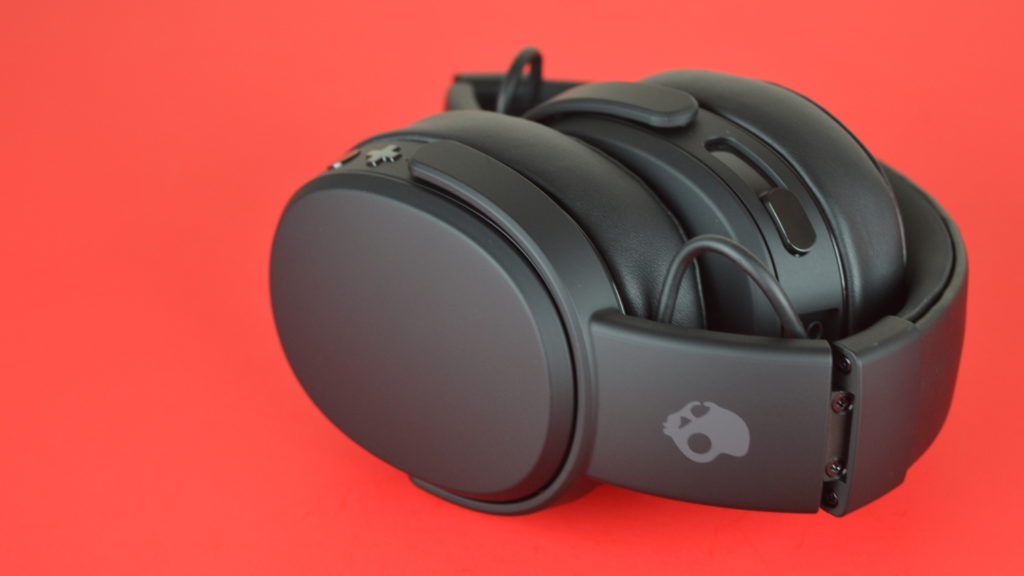

A bass-heavy headphone should make a kick drum feel physical without turning vocals into a blur. That is harder than it sounds, especially when active noise cancellation, long battery life, and a comfortable over-ear fit enter the picture. The Best bass headphones balance impact with enough control to keep guitars, voices, and detail intact.
This group ranges from the unusually physical Skullcandy Crusher models to the more controlled Bose and Beats options. There are also two versions of the Soundcore Q20i, a long-running JBL option, and Sony's dedicated ULT bass button. Our top pick is Soundcore Q20i, with the range covering adjustable bass, extreme sensory low end, travel-focused noise cancellation, and marathon battery life.
Comparison table
| # | Product | Award | Battery | Bass and noise control | Weight | Best for |
|---|---|---|---|---|---|---|
| 1 | Soundcore Q20i Black | Best overall | 40 hours with ANC, 60 hours normal | BassUp, hybrid ANC | 0.57 lb | Most listeners |
| 2 | Skullcandy Crusher Wireless | Best physical bass | Up to 50 hours | Crusher multi-sensory bass | 0.606 lb | Bass you can feel |
| 3 | Skullcandy Crusher ANC 2 | Best bass and ANC | Up to 60 hours without ANC | Crusher bass, adjustable four-mic ANC | 1.23 lb | Maximum customization |
| 4 | Bose QuietComfort | Best for comfort | Up to 24 hours | Adjustable EQ, Quiet and Aware modes | 0.525 lb | Long quiet listening |
| 5 | Soundcore Q20i White | Best light travel pick | 40 hours with ANC | BassUp, hybrid ANC | 0.54 lb | Commuting and remote work |
| 6 | Sony ULT WEAR | Best bass button | Up to 30 hours | ULT bass boost, dual noise canceling | 0.562 lb | Instant bass boost |
| 7 | Skullcandy Crusher Evo | Best personalized bass | Up to 40 hours | Crusher bass, Personal Sound | Listed weight is unusually low | Personal sound profiles |
| 8 | JBL Tune 720BT | Best battery life | Up to 76 hours | JBL Pure Bass, app EQ | 0.485 lb | Simple wireless listening |
| 9 | Beats Studio Pro | Best for Apple and Android | Up to 40 hours | ANC, Transparency, spatial audio | 0.573 lb | Travel and mixed devices |
1. Soundcore Q20i Black: Best Overall

Pros
- BassUp adds punch without locking you into one sound
- Hybrid ANC and Transparency modes cover commuting and office use
- Long battery life with rapid charging
- Dual-device Bluetooth connection
- App EQ includes 22 presets and custom adjustment
Cons
- ANC battery life is shorter than normal-mode battery life
- The wired AUX mode does not support the active noise cancellation
- Less physically intense bass than the Crusher models
Best for: listeners who want adjustable bass, useful noise control, and dependable everyday battery life.
The Soundcore Q20i Black is the sensible starting point for this entire group. Its bass has a clear enhancement mode rather than a permanently exaggerated character, so it can handle a bass-forward playlist one minute and a podcast or acoustic recording the next. The 40mm dynamic drivers are designed for detailed audio and thumping beats, while the Soundcore app gives you room to pull the low end back if the default presentation feels too strong.
The useful part of the Q20i is how many listening situations it covers. Four microphones support hybrid active noise cancellation, with two internal and two external microphones working together to reduce external noise by up to 90 percent. That is the kind of feature that matters on a train or in an office, where low-frequency background noise can cover the very bass you bought the headphones to hear. Transparency mode lets announcements and nearby conversation through without removing the headphones.
Battery performance is a major reason this model takes the top spot. It is rated for 40 hours with ANC enabled and 60 hours in Normal mode. A five-minute charge adds four hours of listening, which is enough to rescue a commute or a work session. Bluetooth 5.0 supports simultaneous connection to two devices, so a laptop and phone can remain connected as you move between music and calls.
Compared with the JBL Tune 720BT, the Q20i gives you much stronger noise-control options and more sound adjustment, though JBL lasts longer between charges. The Skullcandy Crusher Wireless produces a more dramatic physical thump, but it is less flexible for people who want bass that can be tailored. The Q20i's main weakness is that ANC is not available when using the AUX cable, and its bass still will not satisfy someone specifically chasing the vibrating Crusher effect.
Choose the Q20i Black if you want one pair to handle travel, work, calls, and bass-heavy music without forcing a single sound signature. It is also the easiest recommendation for a household where different listeners may want different EQ settings.
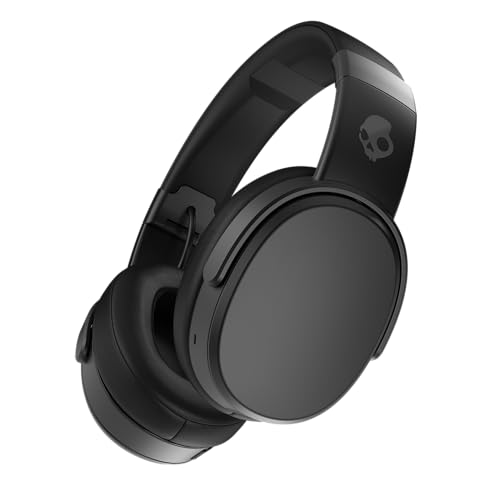
2. Skullcandy Crusher Wireless: Best Physical Bass
Pros
- Dual bass drivers create a physical low-end effect
- Two full-range 40mm drivers cover the rest of the mix
- Up to 50 hours of battery life
- Rapid charge adds four hours in 10 minutes
- Folding and collapsible design
Cons
- No active noise cancellation listed
- Bass effect can dominate balanced recordings
- Fewer sound-shaping tools than Crusher ANC 2
Best for: listeners who want bass they can physically feel in music and movies.
The Skullcandy Crusher Wireless is not trying to win a neutrality contest. Its appeal is the multi-sensory Crusher system, which adds dual bass drivers to the pair of full-range 40mm audio drivers. That arrangement gives low frequencies a physical presence that ordinary bass boost cannot reproduce. Electronic music, hip-hop, action films, and games are the obvious matches.
The adjustable character is important here. Crusher bass is a sensation as much as a tonal change, and the strongest setting will not suit every track. The two regular drivers still have to carry vocals and instruments, but the additional bass hardware makes this a more specialized listen than the Soundcore Q20i. If your favorite moment is the drop, engine rumble, or movie impact, the specialization is the point.
Battery life is rated at up to 50 hours, and a 10-minute Rapid Charge session provides four hours of listening. Physical controls handle calls, volume, track changes, and playback, which keeps the experience straightforward. The flat-folding, collapsible design also makes it easier to pack than a bulky bass headset might suggest.
The trade-off is the missing noise-canceling system. The Crusher Wireless can provide passive isolation through its over-ear design, but it does not offer the Quiet and Aware modes found on the Bose QuietComfort or the adjustable four-mic ANC in the Crusher ANC 2. It also lacks the broader app-based EQ approach of the Soundcore Q20i. Those omissions matter if you regularly listen in loud transport or want one pair for many different genres.
Pick this model over the Sony ULT WEAR when physical bass matters more than a dedicated noise-canceling system. Pick the Q20i instead if you need a more adaptable daily headphone. The Crusher Wireless is the direct, uncomplicated choice for someone who wants the bass effect first and everything else second.
3. Skullcandy Crusher ANC 2: Best Bass and ANC

Pros
- Crusher bass adds physical impact
- Adjustable four-microphone active noise cancellation
- Personal Sound by Mimi and adjustable EQ
- Up to 60 hours without ANC
- Multipoint pairing
Cons
- Listed weight of 1.23 pounds is high for this group
- Strong bass is not the right fit for every recording
- ANC reduces the maximum stated battery life
Best for: bass enthusiasts who also need modern noise control and extensive personalization.
The Skullcandy Crusher ANC 2 takes the Crusher idea and adds the features that make it easier to live with away from home. The dual bass drivers remain the headline, but this version includes adjustable four-mic active noise cancellation, Stay-Aware mode, app controls, and multipoint pairing. It is the model for someone who wants exaggerated bass without giving up the everyday conveniences found on travel headphones.
Its bass is fundamentally different from the low-end lift on the Q20i or Bose QuietComfort. Those headphones alter the balance of the sound. The Crusher ANC 2 adds a physical sensation through its dedicated bass drivers, making the effect especially noticeable in films and electronic music. Personal Sound by Mimi can tailor the sound to the listener, and the app also allows EQ adjustment and control over the listening modes.
Battery life reaches up to 60 hours with ANC off. A 10-minute Rapid Charge session adds four hours, so a short top-up can cover a substantial listening block. Multipoint pairing lets two devices stay connected, a useful feature for anyone who alternates between a phone and a computer. That gives it a clear practical advantage over the older Crusher Wireless.
There is a physical cost to all this hardware. The listed weight is 1.23 pounds, considerably more than the Bose QuietComfort, Sony ULT WEAR, or Beats Studio Pro in this group. That does not automatically make the fit uncomfortable, but it does make the Crusher ANC 2 a less obvious pick for long sessions if you are sensitive to heavier headphones. Its bass can also overwhelm delicate mixes, even with the available adjustments.
The Sony ULT WEAR is a better fit if you want a single button for a bass boost and a lighter listed design. The Crusher ANC 2 wins when you want to tune the bass, noise control, and hearing profile more deeply. Choose it for bass-first listening in which ANC and app customization are requirements rather than extras.
4. Bose QuietComfort: Best for Comfort

Pros
- Plush over-ear cushions and padded headband
- Quiet and Aware listening modes
- Adjustable bass, mid-range, and treble
- Wired listening works even when the battery is depleted
- Multipoint Bluetooth
Cons
- Shorter battery life than most picks here
- Bass is adjustable rather than physically forceful
- Only two main listening modes are listed
Best for: people who prioritize comfortable noise-canceling listening with controllable low end.
The Bose QuietComfort is the calm alternative to the Skullcandy models. Its bass does not try to shake the head. Instead, it gives the listener a clean foundation that can be raised or reduced using the adjustable EQ. That makes it a stronger choice for people who enjoy bass but still want vocals, piano, and upper-register detail to stay easy to follow.
Comfort is the clearest reason to choose it. Bose uses plush over-ear cushions and a padded band designed for extended listening, and the listed weight is about 0.525 pounds. That is one of the lighter figures in this group. A secure but comfortable fit also helps passive isolation work alongside the active noise cancellation, keeping distractions from competing with the music.
Quiet mode is the full noise-canceling setting, while Aware mode brings the surroundings back in. The included cable adds an important fallback: the headphones can be used without a Bluetooth connection or even when the battery is depleted. Multipoint Bluetooth makes switching between devices easier, and the Bose app provides software updates and access to the headphones' features.
The main limitation is stamina. Bose rates the QuietComfort for up to 24 hours on one charge, while the Soundcore Q20i reaches 40 hours with ANC and the JBL Tune 720BT reaches up to 76 hours. A 15-minute USB-C charge provides up to 2.5 hours, which helps, but frequent travelers may prefer a longer-running model. The bass is also less visceral than the Crusher Wireless or Crusher ANC 2.
For a closer look at the brand's broader lineup, the differences that matter between comfortable Bose models are useful to consider before choosing. Within this group, select the Bose QuietComfort when comfort, noise reduction, and a polished adjustable sound matter more than physical bass impact.
5. Soundcore Q20i White: Best Light Travel Pick

Pros
- Hybrid ANC with Transparency mode
- BassUp enhancement and 22 EQ presets
- 40 hours with ANC and 60 hours in Normal mode
- Five-minute charge adds four hours
- Dual-device connection
Cons
- AUX mode does not support ANC
- Less powerful physical bass than Skullcandy Crusher models
- Bluetooth 5.0 rather than a newer listed Bluetooth version
Best for: commuters who want the Q20i feature set in a lighter white finish.
The Soundcore Q20i White is functionally the same kind of recommendation as the black Q20i, but it deserves its own place because it is a separate product in this selection. Its advantage is balance: BassUp gives music a more forceful bottom end, while the app lets you move back toward a more restrained profile for speech, podcasts, or songs with already-heavy mastering.
Four built-in microphones work together to filter background noise, and the product information describes ANC as useful in packed offices, crowded commutes, and busy streets. Transparency mode is the quick way to hear a station announcement or speak with a colleague. These modes make it more versatile than the JBL Tune 720BT, which focuses on wireless playback and app EQ without a listed ANC system.
The battery specification is strong for travel. The Q20i White is rated for 40 hours with ANC on and 60 hours in Normal mode. A five-minute charge adds four hours, which is a meaningful emergency top-up. Dual-device connection also suits remote workers who keep a laptop and phone active at the same time, with audio switching to the device that needs attention.
As with the black version, the wired AUX connection unlocks Hi-Res certified audio but does not support ANC. That means the Q20i is at its most capable over Bluetooth. Its listed weight is 0.54 pounds, slightly below the black version's listed 0.57 pounds, although both are standard-size over-ear headphones and the practical difference is small.
The Q20i White is a better travel tool than the Skullcandy Crusher Evo because it has active noise cancellation and stronger battery claims. The Bose QuietComfort feels like the more comfort-focused option, while this Soundcore gives you more battery and more aggressive app customization. Choose the white Q20i when you want a capable commuter headphone and prefer its lighter appearance.
6. Sony ULT WEAR: Best Bass Button

Pros
- Dedicated ULT button for bass enhancement
- Dual noise-canceling technology and V1 processor
- Swivel-fold design with compact carry case
- Multipoint connection
- Three-minute charge adds up to 90 minutes
Cons
- Maximum battery life is shorter than several rivals
- Bass boost is less adjustable than the Skullcandy app approach
- No detailed driver size is provided in the product information
Best for: listeners who want a quick, obvious bass boost alongside travel-friendly noise cancellation.
The Sony ULT WEAR makes bass a physical control rather than an app exercise. Press the ULT button and the headphones add their signature low-end boost. That is appealing when you want to change the character of a track immediately, without opening an EQ screen or setting up a personalized hearing profile.
Sony pairs that control with dual noise-canceling technology and its V1 processor. The product is designed for travel, with swivel folding, a compact carry case, and a listed weight of about 0.562 pounds. Thermo-foaming cushions are intended to mold comfortably around the ears, while intelligent wearing detection pauses and resumes playback as the headphones are removed and put back on.
Battery life is rated at up to 30 hours, with quick charging that provides up to 90 minutes after three minutes of charging. That is a useful short-charge figure, though the full runtime trails the Soundcore Q20i, Skullcandy Crusher Wireless, and JBL Tune 720BT. Multipoint connection lets two devices remain linked, and beamforming microphones are designed to improve hands-free calls.
The ULT button is also the model's central compromise. It gives you an immediate choice, but the supplied details do not describe the same level of detailed EQ control found in the Q20i or the Personal Sound system in the Crusher ANC 2. Listeners who want different bass levels for different genres may prefer those models. The Sony is better for someone who knows they want a bold mode they can engage on demand.
Compared with the Bose QuietComfort, the ULT WEAR is the more overtly bass-focused option and has a faster listed quick-charge result. The Bose is lighter and rated for longer comfort-oriented listening features, while the Sony is more playful and easier to operate when the music calls for extra impact. Pick Sony when a dedicated bass switch is more appealing than fine-grained customization.
7. Skullcandy Crusher Evo: Best Personalized Bass

Pros
- Crusher bass uses dedicated bass drivers
- Personal Sound hearing analysis in the app
- Up to 40 hours of battery life
- Rapid charge adds four hours in 10 minutes
- Folding and collapsible design
Cons
- No active noise cancellation is listed
- Older model with fewer connected features than Crusher ANC 2
- Product data lists an unusually low weight that may not be reliable for fit comparisons
Best for: listeners who want Skullcandy's physical bass with a personalized sound profile.
The Skullcandy Crusher Evo sits between the original Crusher Wireless and the newer Crusher ANC 2 in this lineup. Its reason to exist is the same recognizable physical bass system, with two full-range 40mm drivers and additional dual bass drivers. The result is designed to make bass something you feel as well as hear, which gives it a very different personality from the Bose QuietComfort and Beats Studio Pro.
The app adds Personal Sound through a hearing analysis that automatically adjusts sound levels for the listener. That is more individualized than simply increasing the bass slider, although the underlying Crusher effect remains the star. It is a good match for music and video where impact matters, but people who mostly listen to acoustic recordings or spoken content may find the presentation more specialized.
Battery life reaches up to 40 hours, and 10 minutes of charging provides four additional hours. Call, track, and volume controls are placed on the headphones, and the flat-folding design makes them easier to carry. Those basics keep the Evo practical even though it does not include the broader noise-control feature set of the ANC 2.
The missing active noise cancellation is the most important limitation. Unlike the Q20i White, the Evo does not list ANC or a Transparency mode, so crowded travel environments are not its natural setting. The supplied product information also lists its weight as 0.000625 pounds, an unusually low figure that should not be used as a serious guide to expected comfort or portability.
The Crusher ANC 2 is the stronger Skullcandy pick when ANC, multipoint, and longer battery life without ANC matter. The original Crusher Wireless is simpler and offers up to 50 hours, while the Evo adds Personal Sound. Choose the Evo if tailoring the sound to your hearing matters and you mainly listen in places where active noise cancellation is not essential.
8. JBL Tune 720BT: Best Battery Life

Pros
- Up to 76 hours of wireless battery life
- JBL Pure Bass sound
- Bluetooth 5.3
- App EQ customization
- Five-minute charge adds three hours
Cons
- No active noise cancellation is listed
- Less specialized bass impact than the Crusher headphones
- The strongest battery figure requires the headphones to remain in their basic wireless role
Best for: listeners who want simple bass-forward wireless headphones with very long battery life.
The JBL Tune 720BT is the uncomplicated pick. Its JBL Pure Bass tuning aims for a familiar low-end lift, but the product does not promise the physical bass sensation of the Crusher models or the dedicated ULT control of the Sony. That makes it easier to recommend to people who want a lively everyday sound rather than a highly specialized bass effect.
JBL includes Bluetooth 5.3 for wireless streaming and a companion Headphones app with EQ adjustment. The app is useful because it gives you some control over the balance, even though the supplied details do not list the 22 presets found on the Soundcore Q20i. Voice prompts can be set to your preferred language, and buttons on the earcup handle playback and calls.
The standout specification is battery life. JBL rates the Tune 720BT for up to 76 hours, with a full recharge taking as little as two hours through the Type-C USB cable. A five-minute charge supplies three more hours of music. That is the longest stated runtime in this group and a strong reason to choose the JBL for long trips, shared spaces, or anyone who regularly forgets to charge headphones.
There is no active noise cancellation listed, so this is not the best choice for blocking engine noise or creating a quiet listening bubble. The over-ear design may provide some passive isolation, but it cannot replace the Q20i's ANC or the Bose QuietComfort's Quiet mode. The JBL also cannot compete with the Crushers for a bass you can physically feel.
If you are also choosing speakers for a room, how low-end speaker sound changes across a room is a useful related consideration. For headphones, choose the Tune 720BT when battery life and simple controls rank above ANC, spatial features, and dramatic bass hardware.
9. Beats Studio Pro: Best for Apple and Android

Pros
- Active noise cancellation and Transparency mode
- USB-C lossless audio and included 3.5mm cable
- Up to 40 hours of battery life
- Personalized spatial audio with dynamic head tracking
- One-touch pairing for Apple and Android
Cons
- Bass is less physical than the Skullcandy Crusher models
- Spatial audio features are most relevant for compatible content
- The product data does not specify driver size
Best for: listeners who move between Apple and Android devices and want travel-ready features.
The Beats Studio Pro is the most feature-rich all-rounder near the bottom of this ranking. Its custom acoustic platform is described as producing rich, balanced audio, which puts it closer to the Bose QuietComfort and Soundcore Q20i than to the sensory punch of the Crusher range. Bass is present, but this is not the model to choose if the physical movement of a bass driver is your main goal.
Travel is where the Studio Pro makes its case. Active noise cancellation blocks distractions, while Transparency mode lets environmental sound mix with the music. The over-ear UltraPlush cushions are designed for long listening, and the listed weight is about 0.573 pounds. A woven carrying case is included, along with both a 3.5mm audio cable and a USB-C charging cable.
The connection options are unusually broad. USB-C lossless audio supports wired listening from compatible devices, and a standard 3.5mm cable provides an analog option. Wireless pairing works with Apple and Android, while Class 1 Bluetooth is intended to provide stable connections. Up to 40 hours of battery life gives it useful endurance, and a 10-minute Fast Fuel charge provides up to four hours.
Personalized spatial audio with dynamic head tracking adds an immersive mode for compatible music and movies. It is a different kind of enhancement from simply adding bass, so it will appeal to people who want a wider presentation as well as a strong low end. Calls also benefit from voice-targeting microphones designed to reduce background noise.
The Sony ULT WEAR is more direct if bass intensity is the priority, and the Bose QuietComfort is the safer comfort-first alternative. The Beats earns its place through its combination of ANC, USB-C lossless audio, wired fallback, spatial audio, and cross-platform pairing. Pick it for travel or mixed-device households where flexibility matters as much as bass.
How to choose best bass headphones
Bass headphones differ less in the word used on the box than in how they create and control low frequencies. Focus on these factors before choosing a pair.
Bass design
Some headphones use EQ to raise the low end, while others add dedicated bass drivers or a physical vibration effect. The Soundcore Q20i, Bose QuietComfort, JBL Tune 720BT, and Beats Studio Pro are primarily adjustable or tuned bass options. Skullcandy's Crusher models are the more physical choice, and Sony provides a dedicated ULT boost.
The strongest bass is not always the best bass. Look for control when vocals and instruments matter as much as impact.
Noise cancellation
Active noise cancellation uses microphones and processing to reduce outside sound, which is especially helpful with aircraft, trains, offices, and streets. The Q20i, Crusher ANC 2, Bose QuietComfort, Sony ULT WEAR, and Beats Studio Pro include noise-control features. The original Crusher Wireless, Crusher Evo, and JBL Tune 720BT do not list ANC, so their over-ear fit must do more of the isolation work.
A Transparency or Aware mode matters when you need announcements or conversation without removing the headphones. Bose offers Quiet and Aware modes, while Soundcore provides ANC, Normal, and Transparency settings.
Battery life and charging
Battery claims vary considerably. The JBL Tune 720BT leads this group with up to 76 hours, while the Crusher ANC 2 reaches up to 60 hours with ANC off. Remember that noise cancellation can reduce the maximum runtime, as shown by the Q20i's 40 hours with ANC compared with 60 hours in Normal mode.
Rapid charging is useful when the headphones are often used away from a charger. Soundcore adds four hours after five minutes, Sony lists up to 90 minutes after three minutes, and Bose adds up to 2.5 hours after 15 minutes.
Fit and weight
Over-ear cushions should surround the ears rather than press directly on them. A lighter listed weight can help during long sessions, with Bose, JBL, Sony, Beats, and the Q20i all listed below or around 0.6 pounds. The Crusher ANC 2 is listed at 1.23 pounds, so it deserves more careful consideration for extended wear.
The Crusher Evo's supplied weight is unusually low and should not be treated as a reliable comfort comparison. Cushion shape, headband pressure, and ear size still matter more than a number alone.
Connections and controls
Multipoint pairing is useful when a phone and laptop need to stay connected. The Q20i, Crusher ANC 2, Bose, and Sony list two-device or multipoint connection features. Wired options add security for flights, gaming, or a depleted battery. Bose supports cable listening when the battery is depleted, while Beats offers both USB-C lossless audio and a 3.5mm cable.
If you prefer a more analytical presentation over a bass-first tuning, the traits that separate detailed headphone sound are worth comparing before you decide.

Frequently asked questions
Which headphones have the strongest physical bass?
The Skullcandy Crusher Wireless, Crusher ANC 2, and Crusher Evo use multi-sensory Crusher bass with dedicated bass drivers. They are designed to make low frequencies something you can feel, not just hear. The Crusher ANC 2 adds active noise cancellation and more personalization.
Are the Soundcore Q20i headphones good for bass?
Yes. The Q20i uses 40mm dynamic drivers and BassUp technology to add punch, while its app provides 22 presets and custom EQ adjustment. It is less physically intense than a Skullcandy Crusher, but it is more flexible across different types of music.
Which pick has the longest battery life?
The JBL Tune 720BT has the longest stated battery life at up to 76 hours. The Skullcandy Crusher ANC 2 reaches up to 60 hours with ANC off, and the Soundcore Q20i reaches up to 60 hours in Normal mode. Noise cancellation can reduce the maximum runtime.
Do all of these headphones have active noise cancellation?
No. The Soundcore Q20i, Skullcandy Crusher ANC 2, Bose QuietComfort, Sony ULT WEAR, and Beats Studio Pro list active noise cancellation. The Skullcandy Crusher Wireless, Skullcandy Crusher Evo, and JBL Tune 720BT do not list ANC.
Which headphones are best for travel?
The Soundcore Q20i is the strongest general travel pick because it combines ANC, Transparency mode, dual-device connection, and long battery life. The Bose QuietComfort is a better fit for comfort-focused travel, while the Beats Studio Pro adds USB-C lossless audio, spatial audio, and wired options.
Can these headphones be used with a cable?
Several can. The Soundcore Q20i supports AUX and Hi-Res certified audio, Bose includes an audio cable that works without Bluetooth and when the battery is depleted, and Beats includes both a 3.5mm cable and USB-C audio support. The supplied details for the other models emphasize wireless listening and do not specify the same wired options.
Should I choose adjustable bass or a bass vibration effect?
Choose adjustable bass if you listen to many genres and want vocals and instruments to remain balanced. Choose a Crusher model if the physical sensation of low frequencies is the main attraction. Sony's ULT WEAR sits between those approaches with a dedicated bass boost button.
The bottom line
The Best bass headphones for most people are the Soundcore Q20i Black or Soundcore Q20i White. They combine BassUp, app EQ, effective listening modes, dual-device Bluetooth, and long battery life without locking you into one extreme sound. Choose the black or white version based on the finish you prefer.
For maximum physical impact, choose the Skullcandy Crusher ANC 2. It adds adjustable ANC, Personal Sound, multipoint pairing, and up to 60 hours without ANC to the Crusher experience. The Bose QuietComfort is the better alternative for comfort and controlled bass, while the JBL Tune 720BT is the battery-life specialist.
If you are undecided, choose the Q20i for flexibility, the Crusher ANC 2 for bass you can feel, or the Bose QuietComfort for long quiet listening.
As an Amazon Associate we earn from qualifying purchases.