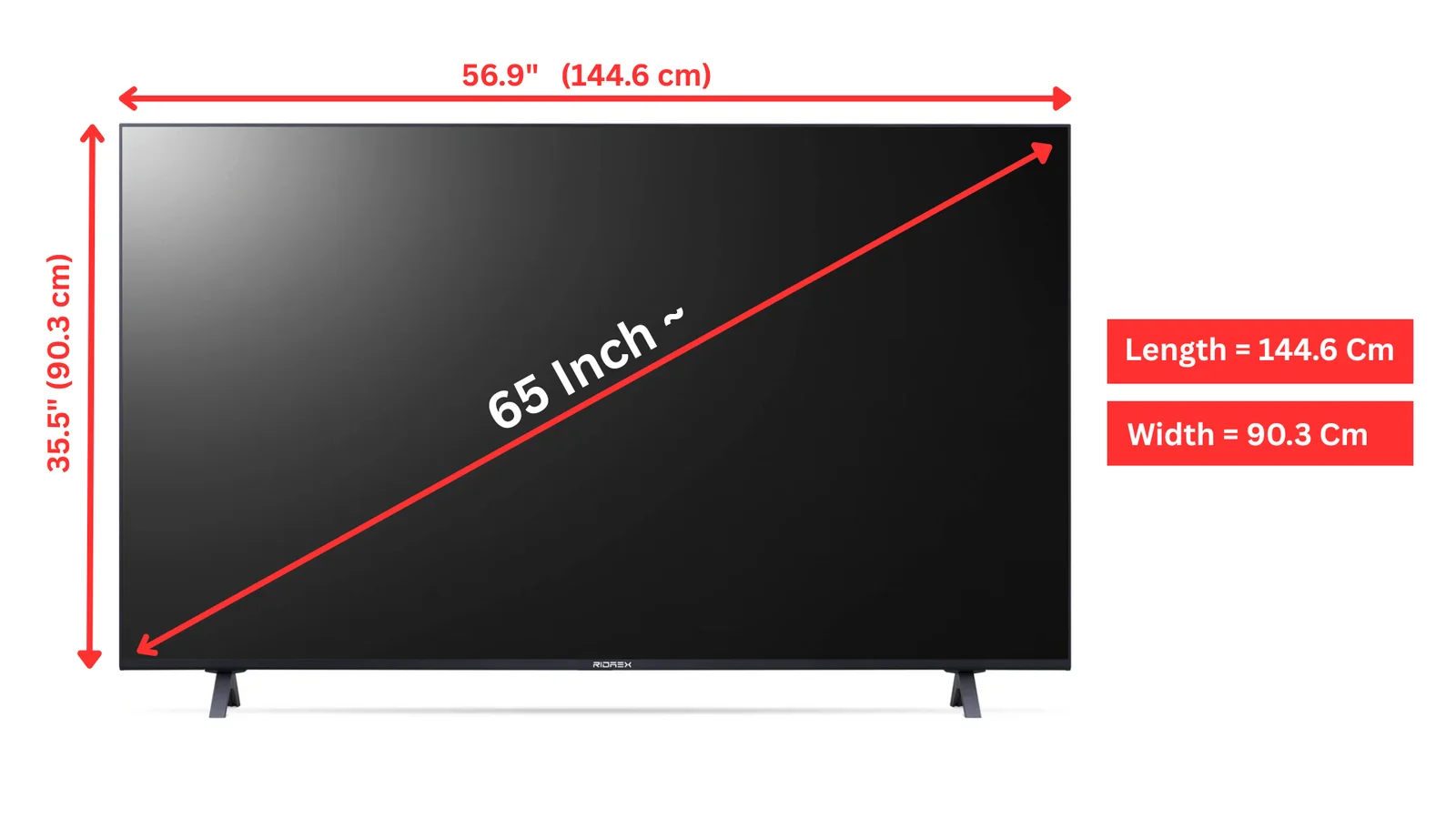

A 65-inch screen can turn a living room into a convincing home theater, but size alone does not guarantee a good picture. Weak black levels, reflections, sluggish motion, or a cluttered smart interface can become obvious once the display fills your field of view.
We compared ten current models across OLED, QLED, Mini LED, and conventional LED designs. The Best 65 inch tv for most people is the LG C5 OLED, while the TCL T7, Hisense U6 Pro, Samsung U8000H, and Roku Select QLED make strong alternatives for different rooms and priorities.
The list runs from straightforward streaming screens to fast gaming displays with advanced HDR and high refresh rates.
| # | Product | Award | Panel or backlight | Refresh rate | HDR or smart platform | Best for |
|---|---|---|---|---|---|---|
| 1 | LG C5 OLED | Best overall | OLED | Up to 144Hz | Dolby Vision, HDR10, webOS | Movies and gaming |
| 2 | TCL T7 | Best for gaming | QLED | 144Hz | HDR PRO+, Google TV | Fast action |
| 3 | Hisense U6 Pro | Best Mini LED | Mini LED ULED | 144Hz | Dolby Vision IQ, Fire TV | Bright rooms and sports |
| 4 | Hisense E7 | Best HDR versatility | Mini LED Hi-QLED | 144Hz | Dolby Vision IQ, Fire TV | Mixed viewing |
| 5 | Samsung U8000H | Best simple Samsung | Crystal UHD LED | Up to 60Hz | Samsung TV Plus | Everyday streaming |
| 6 | Hisense E6 | Best adaptive picture | Hi-QLED LED | Motion Rate 120 | Dolby Vision, Fire TV | Changing light |
| 7 | Roku Select QLED | Best simple interface | QLED | Not specified | HDR10, Roku TV | Easy streaming |
| 8 | Insignia QF QLED | Best Fire TV QLED | QLED direct LED | Not specified | Dolby Vision, Fire TV | Alexa households |
| 9 | Sony Bravia 3 | Best upscaling | LED | Not specified | Dolby Vision, Google TV | Broadcast and older content |
| 10 | Insignia F50 | Best connected LED | LED | Not specified | HDR10, Fire TV | Many wired devices |
1. LG C5 OLED: Best Overall

Pros
- Self-lit pixels produce deep blacks
- Up to 144Hz refresh rate
- 0.1ms response time
- Four HDMI 2.1 inputs
- Dolby Vision and Filmmaker Mode
Cons
- OLED is not the right fit for every consistently bright room
- The feature set may be more than casual viewers need
Best for: someone who wants the most complete movie and gaming display in this group.
The LG C5 OLED is the one we'd keep for a mixed-use living room. Its self-lit OLED pixels can switch off individually, so dark scenes have genuinely deep blacks rather than the gray haze that can appear when an LED backlight struggles to control a shadow. Bright highlights also stand out cleanly against that darkness, which makes films, prestige television, and games feel more dimensional.
LG's Brightness Booster technology increases the impact of individual pixels, while its 8.3 million self-lit pixels handle color and contrast at the pixel level. The Alpha 9 AI Processor Gen8 works on upscaling and picture processing, so older broadcasts and lower-resolution streams do not simply appear as a soft, enlarged image. Filmmaker Mode is useful for viewers who prefer a picture closer to the source material, and Dolby Vision covers compatible HDR movies.
This is also the strongest gaming set here. The panel supports up to 144Hz, has a listed 0.1ms response time, and includes VRR, NVIDIA G-Sync, and AMD FreeSync Premium. Four HDMI 2.1 inputs leave room for several modern consoles and a gaming PC without constantly swapping cables. The TCL T7 and Hisense U6 Pro also offer 144Hz performance, but the C5 combines that speed with OLED contrast and a faster listed response time.
The weakness is the same one that follows every OLED recommendation: buyers who leave a static news channel, game interface, or desktop image on screen for long periods should think carefully about that ownership pattern. It is also a poor match for someone who wants the most forgiving screen for direct sunlight. For movie fans, console players, and anyone who notices black-level quality first, the LG C5 is the clearest Best 65 inch tv choice in this roundup.
2. TCL T7: Best for Gaming

Pros
- Native 144Hz panel
- Four HDMI inputs
- Dolby Vision, HDR10+, HDR10, and HLG
- Motion Rate 480 with MEMC
- Adjustable feet
Cons
- QLED cannot match OLED black levels
- Wi-Fi 5 is older than the Wi-Fi 6 support on some Hisense models
Best for: console and PC players who want high refresh motion without moving to OLED.
The TCL T7 is built around motion. Its 144Hz panel makes rapid camera movement, racing games, sports, and action films look more fluid than a standard 60Hz television. That matters most when the source can provide a high frame rate, but even ordinary content benefits from a display that is not designed solely around slow cinematic scenes.
Its QLED layer is intended to produce rich color across nearly the entire DCI-P3 color space. TCL's AIPQ Pro Processor handles color, contrast, and clarity adjustments, while HDR PRO+ accepts Dolby Vision, HDR10+, HDR10, and HLG. The broad HDR support means fewer compatibility surprises when switching between streaming services and game consoles.
Connectivity is a real advantage. Four high-speed HDMI inputs, including one with eARC, give this set more room for consoles, a soundbar, a receiver, and a streaming device than the three HDMI inputs on the Insignia models. The adjustable feet can also be positioned for different furniture widths or to make space for a soundbar.
The LG C5 still has the more convincing dark-room picture, thanks to OLED's self-lit pixels. The TCL T7 is the more practical pick for someone who wants fast play across multiple devices and prefers a bright, colorful QLED presentation. It should be skipped by viewers who care more about perfect blacks than responsiveness, but it is an easy recommendation for a gaming-first setup.
3. Hisense U6 Pro: Best Mini LED

Pros
- Mini LED backlight with precise light zones
- Native 144Hz refresh rate
- Anti-reflection and glare-free display
- Built-in subwoofer
- Dolby Vision IQ and HDR10+ Adaptive
Cons
- Heavier than several competing models
- Fire TV recommendations may feel busy
Best for: sports viewers and movie fans dealing with a bright living room.
The Hisense U6 Pro addresses two problems that often conflict in a large television: bright-room visibility and smooth action. Its Mini LED backlight uses hundreds of precise light zones to improve the separation between bright highlights and darker areas. That does not make it an OLED, but it gives the U6 Pro a more controlled picture than a basic edge-lit or conventional LED screen.
The Hi-QLED layer emphasizes vivid color, and the set supports Dolby Vision IQ, HDR10+ Adaptive, HDR10, and HLG. The adaptive formats can use scene and room information to keep HDR from looking too dim or too aggressive. Hisense also includes a glare-free, anti-reflection screen, a useful feature when windows or lamps sit across from the viewing position.
Motion is a major reason to choose this model over the Samsung U8000H or Insignia F50. The native 144Hz refresh rate is better suited to fast sports and gaming, and the set's AI picture engine adjusts brightness, contrast, and color by content type. A built-in subwoofer adds low-end weight to the television's sound, though a separate sound system remains the better route for a spacious theater effect.
The U6 Pro is not as slim or light as some of the simpler LED options, weighing 40.8 pounds and measuring 56.9 inches wide. Its Mini LED specification also should not be mistaken for a guarantee of OLED-level black uniformity. Still, the anti-glare screen, fast panel, HDR flexibility, and built-in bass make this the strongest choice when the room is bright and the content moves quickly.
4. Hisense E7: Best HDR Versatility

Pros
- Mini LED backlighting
- Native 144Hz Game Mode
- Dolby Vision IQ and HDR10+ Adaptive
- AI Picture and AI Light Sensor
- Filmmaker Mode
Cons
- Processing features may need adjustment for purist viewing
- Not an OLED panel
Best for: households that switch between films, sports, games, and daytime viewing.
The Hisense E7 is the more cinema-focused sibling to the U6 Pro, with a similar emphasis on Mini LED contrast and fast movement. Its backlight uses thousands of precise light zones according to the product information, helping reveal more detail in deep shadows while keeping bright scenes forceful. That makes the E7 especially interesting for viewers who want one screen to handle a wide range of material.
The native 144Hz Game Mode is its clearest performance feature. AI Smooth Motion with MEMC reduces blur in sports and action scenes, while AI Picture analyzes content scene by scene and adjusts brightness, contrast, and color. The AI Light Sensor adapts the backlight to the room, which can reduce the need to switch picture settings when daylight fades into evening.
HDR support is unusually broad. Dolby Vision IQ, HDR10+ Adaptive, HDR10, and HLG cover the major formats, and Filmmaker Mode provides a more restrained alternative to aggressive processing. The E7 also includes AI Sports Mode, which recognizes sports content and adjusts picture and sound for the faster pace and crowd atmosphere.
The TCL T7 is a simpler choice for gamers who mainly want a high refresh rate and four HDMI inputs. The E7 is better suited to someone who wants automatic picture changes and more HDR options. It should be skipped by viewers who dislike image processing or want the absolute cleanest OLED blacks, but it is a flexible large-screen centerpiece for mixed households.
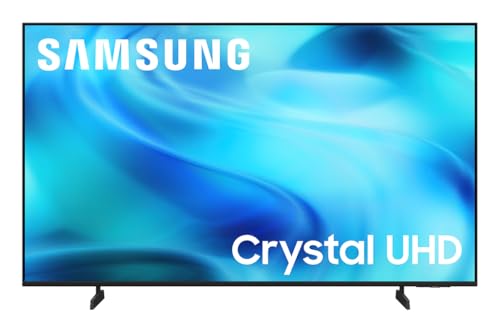
5. Samsung U8000H: Best Simple Samsung
Pros
- Crystal Processor sharpens and upscales content
- Color Booster improves color intensity
- Samsung TV Plus includes free channels
- Motion Xcelerator supports up to 4K 60Hz
- Relatively light 31.8-pound design
Cons
- Limited to up to 4K 60Hz performance
- Conventional LED backlight lacks Mini LED control
Best for: viewers who want a familiar Samsung interface and uncomplicated everyday streaming.
The Samsung U8000H is a straightforward television that puts clean 4K presentation and familiar software ahead of enthusiast features. It is a sensible fit for a family room where the screen will handle broadcast television, streaming shows, sports, and occasional console gaming without needing constant picture adjustments.
Samsung's Crystal Processor works on color, detail, and 4K upscaling. That last part matters because much of what people watch is still below native 4K. A good upscaler can make older shows and lower-resolution streams look cleaner without pretending to create detail that was never in the source. Color Booster increases the intensity of reds, blues, and other hues for a more vivid presentation.
Motion Xcelerator supports up to 4K 60Hz performance and estimates frame transitions in real time. That is enough for ordinary console play and most television content, but it is not in the same class as the 144Hz TCL T7, Hisense U6 Pro, or LG C5. The set also lacks the Mini LED zone control found in the two Hisense models above it.
The U8000H is lighter than most of the larger models here at 31.8 pounds, which can make installation less awkward. Samsung TV Plus also supplies more than 2, 700 free streaming options, including more than 750 subscription-free channels. Choose it for a simple Samsung experience and regular viewing. Skip it if high-frame-rate gaming, deep HDR contrast, or glare control is central to the room.
6. Hisense E6: Best Adaptive Picture

Pros
- AI Light Sensor adjusts brightness
- Dolby Vision and Dolby Atmos
- Filmmaker Mode
- AI 4K upscaler
- Wi-Fi 6
Cons
- Motion Rate 120 is not the same as a native 144Hz panel
- Standard LED backlighting is less controlled than Mini LED
Best for: households that watch in rooms with changing light levels.
The Hisense E6 stands out because it tries to solve the daily annoyance of a television that looks right at night but too dim or too harsh during the day. Its AI Light Sensor detects ambient light and adjusts screen brightness automatically. That will not replace careful calibration, but it can make the set easier to live with when the room changes from sunny afternoon to dark evening.
Hi-QLED color gives the picture more intensity than a basic LED design, while the Total HDR Solution supports Dolby Vision, HDR10+ Adaptive, HDR10, and HLG. Dolby Vision adds compatible HDR movie support, and Dolby Atmos processing gives supported soundtracks a broader sense of space through the television's audio system.
The E6 also includes Filmmaker Mode and AI 4K Upscaler. The former favors the original aspect ratio, frame rate, color, and audio choices, while the latter works to sharpen lower-resolution material and reduce visible softness. Wi-Fi 6 is a useful modern inclusion for homes with many connected devices, since it is designed for greater capacity and lower latency than Wi-Fi 5.
Its Motion Rate 120 and MEMC processing can help sports look clearer, but the E6 is not aimed at the same high-refresh gaming audience as the E7 or TCL T7. The standard LED backlight also cannot create the same zone-level contrast as the Mini LED Hisense sets. It is a good fit when automatic brightness and broad HDR support matter more than competitive gaming speed.
7. Roku Select QLED: Best Simple Interface

Pros
- Easy Roku home screen
- QLED color with HDR10
- Voice control and lost remote finder
- AirPlay support
- Bluetooth Headphone Mode
Cons
- Refresh rate is not specified
- HDR support is narrower than the TCL and Hisense models
Best for: families who want quick access to streaming apps with minimal setup.
The Roku Select QLED is the least intimidating television in this group. Roku's home screen is uncluttered, the remote keeps the controls understandable, and setup is designed to take only a few minutes. For a household that does not want to learn a manufacturer-specific layout, that simplicity can matter more than a long list of picture modes.
The QLED screen uses quantum dot technology to produce brighter, more accurate color, while HDR10 works with compatible content. Roku Smart Picture cleans up incoming signals and selects a picture mode automatically. The product information does not specify a refresh rate, so buyers who want a documented high-refresh gaming panel should choose the TCL T7, Hisense U6 Pro, Hisense E7, or LG C5 instead.
The software has several thoughtful touches. Roku Voice can search across apps, Apple AirPlay can share content from compatible Apple devices, and a lost remote finder helps when the remote disappears into the sofa. Bluetooth Headphone Mode is useful for late-night viewing, while personalized recommendations and free live channels reduce the amount of menu hunting.
The picture is not as technically ambitious as the Mini LED Hisense models, and its HDR format support is not as broad as the TCL T7's. The Roku Select QLED wins on ease, not enthusiast control. It is the right pick for someone who wants a large screen that gets out of the way and makes streaming feel immediate.
For more interface-focused options, it helps to consider how a television organizes streaming apps and live channels before choosing a platform.
8. Insignia QF QLED: Best Fire TV QLED

Pros
- QLED color enhancement
- Dolby Vision and Dolby Atmos
- Three HDMI inputs including eARC
- Alexa voice remote
- Bezel-less metal design
Cons
- Refresh rate is not specified
- Three HDMI inputs offer less expansion room than the TCL T7
Best for: Alexa users who want a QLED Fire TV with straightforward connections.
The Insignia QF QLED is a familiar Fire TV proposition with a more color-focused panel than the F50 below it. Quantum dot technology is designed to improve brightness and color, and the direct LED backlight aims for uniform illumination across the screen. The result is a television suited to general streaming and casual viewing rather than a specialized dark-room cinema setup.
HDR support includes Dolby Vision, which is a meaningful step beyond the HDR10 support listed for the Insignia F50 and Roku Select QLED. Dolby Atmos processing is also included for compatible movies, shows, and games. These formats can make supported content look and sound more involving, although the effect still depends on the source and the television's built-in speakers.
Fire TV brings apps and live content together on one home screen, and the Alexa voice remote lets users search, launch, and control content without typing. Three HDMI inputs, one with eARC, cover a console, soundbar, and set-top box in many rooms. The TCL T7 is more flexible for a larger collection of devices because it provides four HDMI inputs.
The refresh rate is not specified, so this is not the set we'd select for high-frame-rate gaming. Its bezel-less metal design should also blend neatly into a wall or media cabinet, but the display technology cannot compete with the LG C5's pixel-level black control or the Hisense E7's Mini LED backlight. Pick the QF when Fire TV, Alexa, Dolby Vision, and QLED color are the priorities.
9. Sony Bravia 3: Best Upscaling

Pros
- 4K HDR Processor X1
- 4K X-Reality PRO upscaling
- Triluminos Pro color
- Dolby Vision and Dolby Atmos
- AirPlay 2 and Chromecast built-in
Cons
- Refresh rate is not specified
- LED backlighting cannot match OLED black levels
Best for: viewers who watch a lot of broadcast television and older lower-resolution content.
The Sony Bravia 3 is the specialist among the conventional LED models. Its main appeal is processing rather than a high refresh rate or Mini LED backlight. The 4K HDR Processor X1 analyzes scenes in real time, while 4K X-Reality PRO works to restore detail to older or lower-resolution material. That combination is useful when a television will show more than pristine 4K streams.
Triluminos Pro is designed to produce lifelike color across a broad range of shades. The set supports 4K HDR, Dolby Vision, and Dolby Atmos, giving compatible films a stronger cinematic foundation than a basic HDR10-only display. Sony Pictures Core is also included with five movie credits and a 12-month subscription to hundreds of classic titles, according to the product information.
Google TV gathers streaming apps in one place, and Google Assistant handles voice search. AirPlay 2 and Chromecast built-in make it easy to send video, photos, and music from compatible devices. That makes the Bravia 3 a natural fit for homes already using Google or Apple devices alongside their television.
This set is less compelling for players seeking documented high-refresh performance. The LG C5, TCL T7, and Hisense U6 Pro offer much stronger gaming specifications, while the Roku Select QLED has the simpler interface. Choose the Bravia 3 when clean upscaling, Sony's picture processing, and Google TV matter more than gaming speed.
If most of your viewing comes from older broadcasts, how much upscaling helps with lower-resolution television is a more useful question than the badge on the panel.
10. Insignia F50: Best Connected LED

Pros
- Four-times Full HD resolution in 4K
- Three HDMI inputs plus composite and USB
- Ethernet and Wi-Fi connectivity
- eARC and optical audio output
- Alexa voice remote
Cons
- LED picture lacks QLED and Mini LED enhancements
- Refresh rate is not specified
Best for: viewers who need broad physical connectivity and a simple Fire TV setup.
The Insignia F50 is the practical, connection-heavy choice. It uses a conventional LED display with 4K UHD resolution and HDR10 support, then pairs that picture with Fire TV software and a wide selection of physical inputs. It is the sort of model that makes sense in a family room with a cable box, game console, older player, antenna, and audio equipment all competing for ports.
The connections include three HDMI ports, composite AV jacks, a digital optical output, USB, a headphone jack, coaxial, Ethernet, and Wi-Fi. HDMI eARC can send the original full-resolution audio signal to a compatible soundbar or receiver. That assortment is more flexible for older equipment than the cleaner, more modern approach taken by the LG C5 and TCL T7.
Fire TV brings services such as Prime Video, Netflix, Disney+, Hulu, and HBO Max into one interface, with Alexa voice control through the remote. The television also supports free ad-supported content and parental controls that can block programs or entire channels behind a PIN. DTS Virtual:X processing is intended to create a more three-dimensional sound field from the built-in speakers.
The F50 does not have the QLED color layer of the Insignia QF, the upscaling emphasis of the Sony Bravia 3, or the Mini LED contrast of the Hisense models. Its refresh rate is not specified, so it is not the right choice for a high-speed gaming setup. Choose it for its inputs, Fire TV features, and straightforward role as a connected household display.
How to choose best 65 inch tv
The right large television depends on the room, the content, and the devices you plan to connect. These are the specifications that most affect daily use.
Panel and backlight
OLED uses self-lit pixels, allowing individual areas of the screen to turn off for deep blacks. That is why the LG C5 is especially strong for movies in a darker room. QLED and Hi-QLED televisions use quantum dot color technology over an LED backlight, while Mini LED models use smaller, more precisely controlled light sources to improve contrast.
Refresh rate and motion
A 60Hz panel is suitable for ordinary television, films, and casual gaming. Native 144Hz panels such as those in the TCL T7, Hisense U6 Pro, and Hisense E7 are better suited to fast games and sports. Motion labels such as Motion Rate 480 or Motion Rate 120 can include processing and should not be treated as the same thing as native panel refresh.
For gaming, look for a documented native refresh rate first, then check the HDMI and variable refresh features that let your hardware use it.
HDR formats
Dolby Vision, HDR10+, HDR10, and HLG are different ways of carrying expanded brightness and color information. Wider support gives you fewer compatibility gaps across streaming services, discs, and consoles. HDR still depends on the screen's brightness and contrast, so a television with many format badges is not automatically better than one with a stronger backlight.
Smart TV platform
Roku emphasizes a clean home screen and simple search. Fire TV is a natural fit for Alexa households and combines apps with live content. Google TV works well for users who rely on Google Assistant, Chromecast, or a broad app library, while Samsung offers its own interface and Samsung TV Plus channels.
HDMI and audio connections
Count your devices before buying. A console, soundbar, streaming box, receiver, and disc player can use ports quickly. HDMI eARC is useful for sending high-quality audio to a soundbar or receiver, while optical, composite, coaxial, USB, Ethernet, and headphone connections matter when older or specialized equipment is part of the setup.
Frequently asked questions
Is OLED better than QLED for a 65-inch television?
OLED usually has the advantage in black levels because each pixel can turn off independently. QLED can be a better fit for a very bright room or for viewers who prefer an LED-based display. The LG C5 is the OLED choice here, while the TCL T7 and Hisense models use QLED or Hi-QLED technology.
Is 144Hz useful on a television?
It is useful for compatible gaming hardware and fast sports, especially when paired with variable refresh features. It is less important for films and ordinary streaming content. The TCL T7, Hisense U6 Pro, Hisense E7, and LG C5 are the clearest high-refresh options in this group.
Do all these televisions support Dolby Vision?
No. Dolby Vision is listed for the LG C5, Hisense U6 Pro, Hisense E7, Hisense E6, Insignia QF, Sony Bravia 3, and TCL T7. The Samsung U8000H, Roku Select QLED, and Insignia F50 list different HDR support in their product information.
Which smart TV platform is easiest to use?
Roku generally offers the simplest navigation, with a straightforward home screen and clear search tools. Fire TV is convenient for Alexa users, while Google TV is a strong choice for people who use Google Assistant and Chromecast. Samsung's platform makes the most sense for households already using Samsung services.
Can a 65-inch television work in a bright room?
Yes, but screen reflection and peak brightness matter. The Hisense U6 Pro specifically lists anti-reflection and glare-free features, while the Hisense E6 and E7 include AI light sensors that adjust brightness for changing conditions. OLED can also work in bright rooms, but placement still matters.
Do I need a soundbar?
Not necessarily, but a soundbar or receiver can provide fuller bass, greater volume, and a wider soundstage than built-in television speakers. The Hisense U6 Pro has a built-in subwoofer, and several models support Dolby Atmos or eARC for compatible audio equipment.
The bottom line
The Best 65 inch tv for the broadest mix of movies, shows, and gaming is the LG C5 OLED. Its self-lit pixels, Dolby Vision support, up to 144Hz refresh rate, 0.1ms response time, and four HDMI 2.1 inputs give it a clear technical edge.
Choose the TCL T7 for fast gaming and flexible HDMI connectivity, or the Hisense U6 Pro for Mini LED contrast, glare control, and sports in a bright room. The Samsung U8000H and Roku Select QLED are better suited to simpler everyday streaming, while the Sony Bravia 3 earns its place through upscaling.
If you are undecided, choose the LG C5 for picture quality, the TCL T7 for gaming, or the Hisense U6 Pro when room brightness is the problem.
As an Amazon Associate we earn from qualifying purchases.