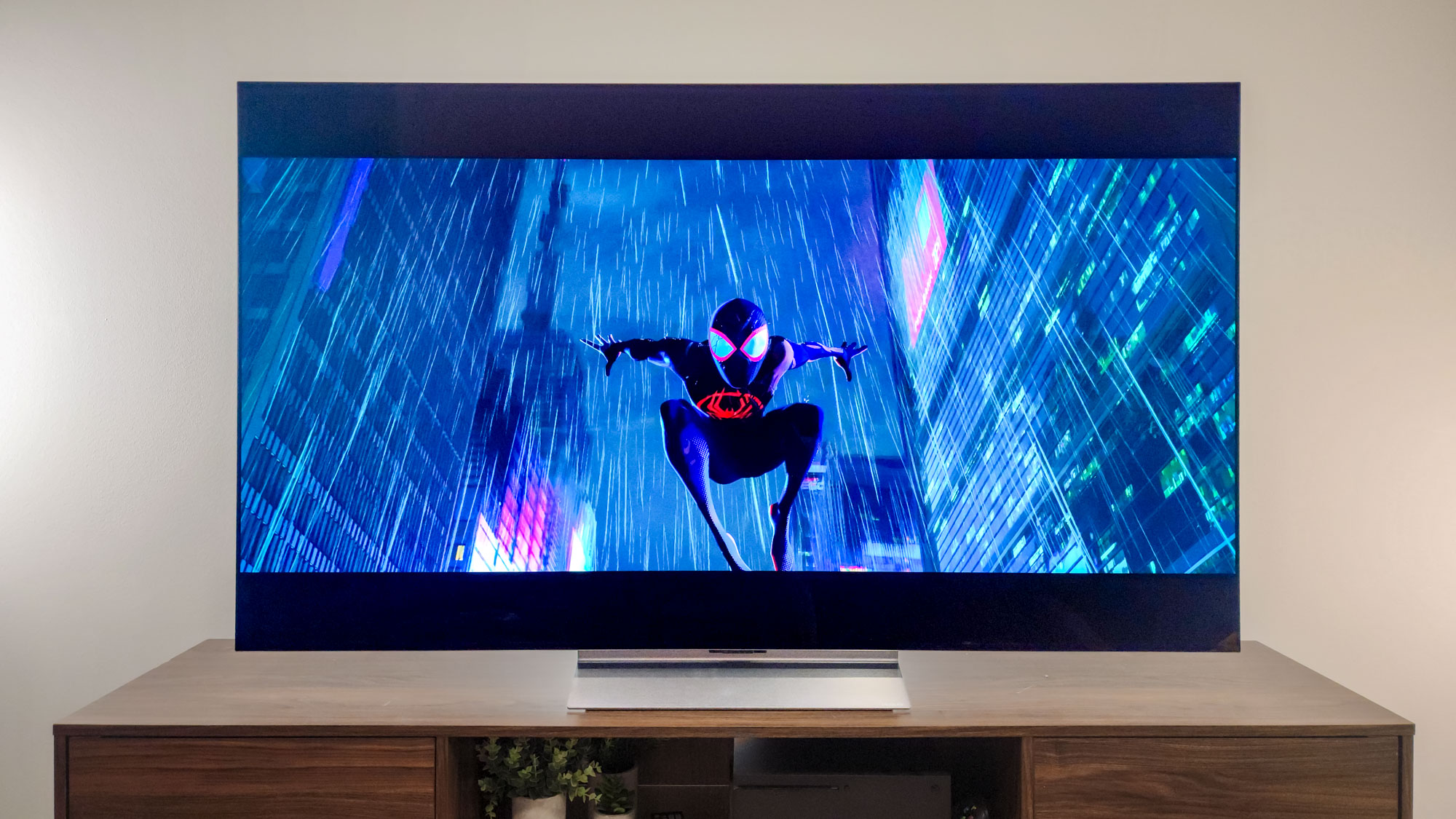

A 65 inch television can dominate a room in the wrong way. A dim panel looks flat across that much screen, while a complicated interface can make finding something to watch feel like work. The right model gives you a large, sharp picture without turning everyday streaming into a project.
Our Best 65 Inch Smart TV picks cover simple streaming sets, QLED and Mini-LED models for brighter rooms, and OLED for deep contrast and serious gaming. We looked at picture technology, motion features, HDR support, smart platforms, connections, and the practical compromises behind each screen.
The Samsung U8000H is our top pick for most rooms, with the LG C5, Hisense U6 Pro, and Roku Select offering strong alternatives for different priorities.
Best 65 Inch Smart TV comparison
| # | Product | Award | Panel and picture | Motion | Smart platform | Best for |
|---|---|---|---|---|---|---|
| 1 | Samsung U8000H | Best overall | Crystal UHD, 4K upscaling | Up to 4K 60Hz | Samsung TV Plus | Everyday viewing |
| 2 | INSIGNIA F50 | Best Fire TV starter | LED, 4K UHD, HDR10 | Not specified | Fire TV | Straightforward streaming |
| 3 | Roku Select | Best simple interface | QLED, 4K, HDR10 | Not specified | Roku TV | Easy navigation |
| 4 | Hisense U6 Pro | Best bright-room gaming TV | Mini-LED ULED, Hi-QLED | Native 144Hz | Fire TV | Gaming and sports |
| 5 | Hisense E6 | Best adaptive picture | Hi-QLED, 4K UHD | Motion Rate 120, MEMC | Fire TV | Mixed content |
| 6 | INSIGNIA QF | Best QLED Fire TV | QLED, direct LED, Dolby Vision | Not specified | Fire TV | HDR streaming |
| 7 | Hisense E7 | Best Mini-LED cinema TV | Mini-LED, Hi-QLED, FALD | Native 144Hz, MEMC | Fire TV | Movies and gaming |
| 8 | Samsung M80H | Best Samsung gaming upgrade | Mini LED, 4K | 144Hz with VRR | Samsung smart TV | Fast gaming |
| 9 | LG C5 OLED | Best OLED picture | OLED evo, self-lit pixels | Up to 144Hz | LG smart TV | Movie lovers and gamers |
1. Samsung U8000H: Best Overall
Pros
- 4K upscaling improves lower-resolution content
- Color Booster gives ordinary programming more intensity
- Samsung TV Plus adds extensive free viewing
- Motion processing supports clear sports and games
Cons
- Motion performance tops out at 4K 60Hz
- The feature set is less ambitious than the Mini-LED models
- The data does not specify Dolby Vision support
Best for: households wanting a polished 65 inch Samsung for everyday TV, movies, sports, and streaming.
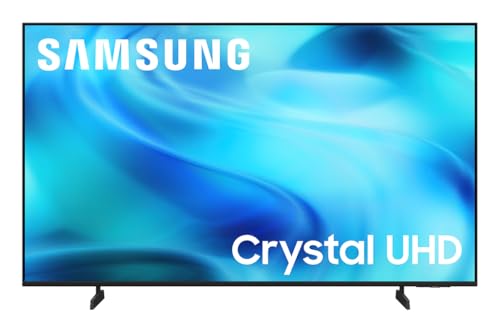
The Samsung U8000H is the sensible center of this group. It does not chase every premium television feature, but its Crystal Processor focuses on the things most people notice first: clean detail, convincing color, and a picture that does not fall apart when the source is older or heavily compressed. The 65 inch screen measures 56.9 inches wide, so it has the visual presence expected from this size without an unusually bulky profile.
Samsung's 4K upscaling is especially useful for broadcast television, older films, and lower-resolution streams. Instead of showing those sources at their original softness, the processor works to sharpen detail and improve clarity. Color Booster gives reds, blues, and other strong shades extra intensity, while the Crystal UHD picture is intended to keep that color lively rather than cartoonish. The listed Motion Xcelerator performance reaches up to 4K 60Hz, enough for ordinary sports and console play, but not a match for the 144Hz Hisense U6 Pro or Samsung M80H.
The built-in Samsung TV Plus service is a practical bonus for anyone who likes to browse without opening a paid app. Samsung lists more than 2, 700 free streaming options, including more than 750 subscription-free channels. That does not replace a full streaming setup, but it makes the TV feel useful immediately. The interface and upscaling also make the U8000H a calmer everyday choice than the more feature-heavy Fire TV models.
Its weakness is straightforward. There is no Mini-LED backlight, no listed 144Hz mode, and no Dolby Vision specification in the supplied information. Buyers who watch mostly in a bright room or play fast competitive games should look at the Hisense U6 Pro or Samsung M80H instead. For general viewing, however, the U8000H is the one we'd keep because it balances picture enhancement, motion, free content, and a familiar smart experience without making any one feature carry the whole television.
2. INSIGNIA F50: Best Fire TV Starter

Pros
- Fire TV brings major streaming apps together
- HDR10 support adds contrast and color range
- Three HDMI inputs cover common equipment
- eARC supports full-resolution audio transmission
- Alexa voice remote simplifies searching
Cons
- The panel type is standard LED rather than QLED or Mini-LED
- Refresh performance is not specified
- Its built-in DTS Virtual:X sound cannot replace a dedicated system
Best for: viewers who want a large Fire TV with broad connections and familiar voice control.
The INSIGNIA F50 makes a strong case for keeping the television experience uncomplicated. Fire TV puts services such as Prime Video, Netflix, Disney+, Hulu, and HBO Max in one place, with free channels and ad-supported services available from the same home screen. That arrangement suits a family room where several people need to find their own shows without learning a new system.
Its 4K Ultra HD resolution gives a clear foundation for films and television, while HDR10 expands the range between bright whites and dark areas. The F50 also upscales existing content to an Ultra HD level, which can help older broadcasts and standard high-definition streams look more at home on a 65 inch screen. The supplied information does not specify the panel's refresh rate, so this is not the model to choose when a precise high-refresh gaming mode is central to the decision.
The connections are unusually useful for a straightforward set. Three HDMI ports give room for a console, sound system, and another source, while composite AV, digital optical, USB, headphone, coaxial, Ethernet, and Wi-Fi connections cover older equipment and conventional home theater setups. HDMI eARC can send the original full-resolution audio signal to a compatible receiver or soundbar. DTS Virtual:X adds a wider sense of sound from the television speakers, though it cannot create the control of a separate audio system.
Compared with the Samsung U8000H, the F50 offers more explicit connection details and a Fire TV interface, but Samsung has the stronger stated picture-processing story. The Roku Select is easier for some families to navigate, while the INSIGNIA QF adds QLED and Dolby Vision. The F50's real limitation is that it does not offer the richer backlighting or gaming specifications found higher in this list. Choose it when accessible streaming and flexible connections matter more than advanced picture hardware.
3. Roku Select: Best Simple Interface

Pros
- Clean Roku home screen is easy to learn
- QLED and HDR10 support vivid color
- Personalized picks reduce endless browsing
- Voice control works with Roku, Siri, Alexa, and Google Assistant
- Bluetooth Headphone Mode supports private listening
Cons
- The feature list does not specify a refresh rate
- Picture hardware is less advanced than Mini-LED alternatives
- The clear-sound focus does not replace a soundbar for cinema
Best for: families who care more about a calm, intuitive streaming interface than advanced gaming hardware.
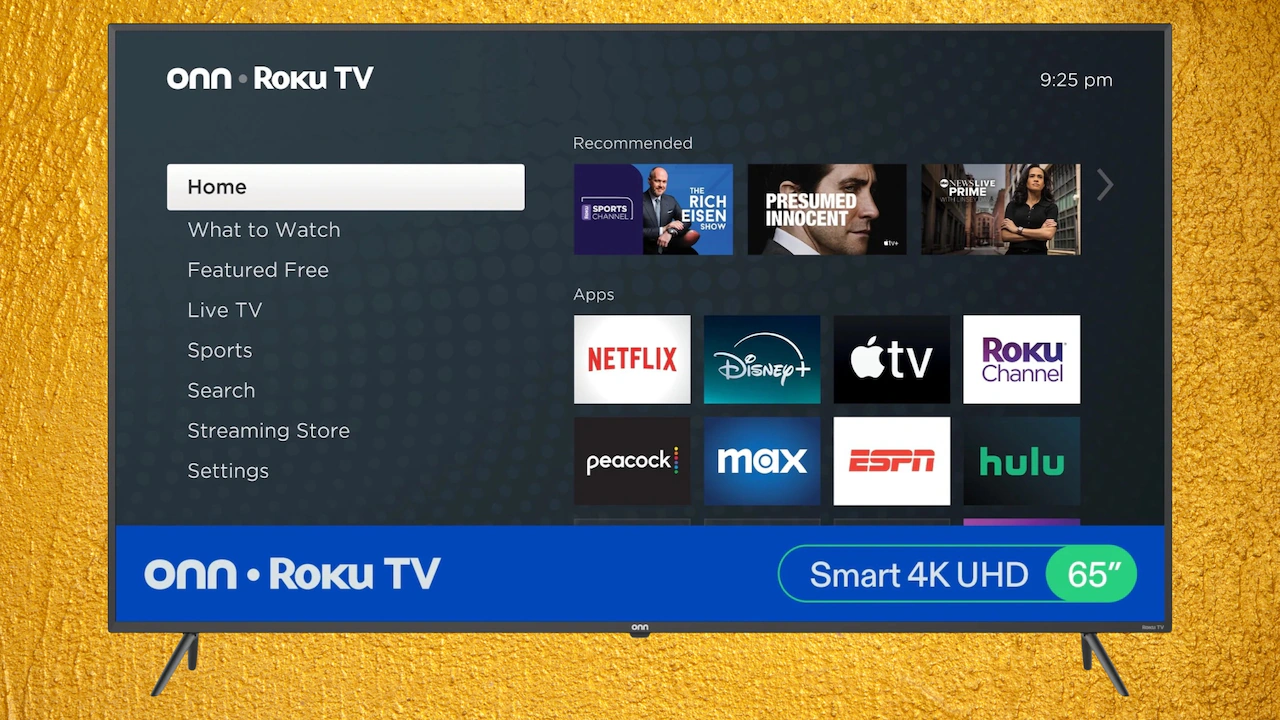
The Roku Select succeeds because it gets out of the way. Its home screen is designed around quick access, personalized picks, and search rather than a crowded grid of promotions. The enhanced voice remote can search across apps, set shortcuts, and help locate a misplaced remote. That is the kind of small convenience that matters every evening, especially when the television is shared by people with different streaming habits.
Picture quality is more capable than the stripped-back interface suggests. The Select uses a QLED screen with 4K resolution and HDR10, giving color more intensity and helping bright highlights stand apart from darker parts of the image. Roku Smart Picture cleans up incoming signals and selects a picture mode based on the content. That automatic approach is useful for viewers who would rather watch a film than adjust settings, although the supplied specifications do not state a refresh rate or advanced gaming mode.
The Roku platform is also unusually flexible. Voice control can work through Roku Voice, Siri, Alexa, or Google Assistant, and Apple AirPlay lets compatible Apple devices share video, photos, and music. Bluetooth Headphone Mode is a welcome feature for late-night viewing. Roku also emphasizes clearer speech and louder sound from the built-in speakers, which should help dialogue in ordinary programs, even though a dedicated soundbar remains the better route for big movie sound.
The main trade-off appears beside the Hisense E6 and INSIGNIA QF. Those sets list broader HDR formats and, in the Hisense's case, motion processing and Wi-Fi 6. The Roku Select counters with the least intimidating interface in the group. It is a good fit for someone who wants a large screen that feels straightforward from the first day, not a set packed with controls that may never be touched.
4. Hisense U6 Pro: Best Bright-Room Gaming TV

Pros
- Mini-LED backlighting uses precise light zones
- Native 144Hz refresh suits fast games and sports
- Anti-reflection and glare-free screen helps in bright rooms
- Dolby Vision IQ and HDR10+ Adaptive support
- Built-in subwoofer adds deeper bass
Cons
- The 40.8 pound set needs careful handling
- Advanced picture processing can be more than casual viewers need
- Fire TV may feel busier than Roku's interface
Best for: gamers and sports viewers who need smooth motion and a screen that can handle ambient light.
The Hisense U6 Pro is the first television here that feels built around action rather than simply accommodating it. Its Mini-LED backlight uses hundreds of precise light zones to improve contrast across the screen, while Hi-QLED technology aims for richer color. That combination should make a dark scene more legible and a bright sports broadcast more forceful than the standard LED sets. The anti-reflection and glare-free display are equally important in a room with windows or strong lamps.
Native 144Hz refresh is the headline feature for fast movement. It gives compatible games and sports more opportunities to show fluid transitions, reducing the blur that can make a quick camera pan hard to follow. The U6 Pro also lists Motion Rate 480, although that label is not the same thing as the native panel refresh. For a buyer comparing it with the Samsung U8000H, the difference is clear: Samsung is designed around 4K 60Hz viewing, while this Hisense is the more convincing choice for high-speed content.
HDR support is broad. Dolby Vision IQ, HDR10+ Adaptive, HDR10, and HLG cover the major formats listed in the product information. Dolby Vision IQ and HDR10+ Adaptive can adjust HDR presentation based on scene and room conditions, while the Hi-View AI Engine continuously adapts the picture for movies, sports, and games. An integrated subwoofer also gives explosions and music more low-end presence than many thin television cabinets manage.
The compromise is size and complexity. At 40.8 pounds, this is not the lightest set to mount, and the Fire TV interface may take more attention than the Roku Select's uncluttered layout. The newer Hisense E7 also offers Mini-LED, native 144Hz, Dolby Vision IQ, and MEMC, while the Samsung M80H adds Samsung's processing and VRR. The U6 Pro remains the better bright-room pick because its glare control is called out directly. Skip it if your viewing is mostly casual sitcoms in a dim room and you have no use for high-refresh gaming.
5. Hisense E6: Best Adaptive Picture

Pros
- Hi-QLED color gives the LED panel extra vibrancy
- Dolby Vision and Dolby Atmos support
- AI light sensor responds to room brightness
- Motion Rate 120 and MEMC help with action
- Wi-Fi 6 improves capacity for connected homes
Cons
- It lacks the Mini-LED backlight of the U6 Pro and E7
- The native refresh rate is not stated
- AI processing may need adjustment for purists
Best for: mixed households that move between streaming, films, sports, and occasional gaming.
The Hisense E6 is a versatile middle ground. It uses Hi-QLED color to make the picture more vivid than a conventional LED screen, but its most interesting feature is the AI light sensor. The television detects ambient light and adjusts screen brightness, which can make daytime viewing more comfortable without forcing you to change settings every evening. That is a meaningful convenience for a living room that serves as both a sunny daytime space and a darker movie room.
Its HDR support includes Dolby Vision, HDR10+ Adaptive, HDR10, and HLG. That wide compatibility matters because streaming services and discs do not all use the same format. Dolby Vision can add scene-by-scene contrast and color instructions, while HDR10+ Adaptive is intended to respond to viewing conditions. Filmmaker Mode provides a more faithful presentation by preserving the original aspect ratio, frame rate, color, and audio choices.
Motion handling is also stronger than the basic specification might imply. Motion Rate 120 combines with AI Smooth Motion, MEMC, AI noise reduction, and a responsive panel to make quick sports plays and action scenes easier to follow. The supplied information does not identify a native 120Hz panel, so buyers should not confuse Motion Rate 120 with the native 144Hz capability listed for the Hisense U6 Pro and E7. Wi-Fi 6 is useful when multiple connected devices compete for wireless capacity.
The E6 is a better fit for mixed viewing than the INSIGNIA F50 because it adds broader HDR support, an ambient light sensor, and more ambitious motion processing. The Hisense U6 Pro goes further with Mini-LED and native 144Hz, but that extra capability is unnecessary for someone who mainly watches series, films, and live television. Choose the E6 when you want the picture to adapt to the room and the content without stepping up to the more gaming-focused models.
For more context on panel choices, how room lighting changes the picture you see can help before you decide between standard LED, QLED, Mini-LED, and OLED.
6. INSIGNIA QF: Best QLED Fire TV

Pros
- QLED improves color intensity
- Dolby Vision and Dolby Atmos are supported
- Direct LED backlight aims for even brightness
- Three HDMI inputs include one eARC port
- Metal bezel-less design looks clean on the wall
Cons
- Refresh performance is not specified
- Direct LED does not offer Mini-LED zone control
- Fire TV includes more features than some viewers need
Best for: Fire TV users who want QLED color and Dolby formats in a clean, uncomplicated design.
The INSIGNIA QF improves on the basic formula with a QLED panel and direct LED backlight. Quantum dot technology is intended to make color brighter and more lifelike, while direct LED provides the backlight across the screen rather than relying on edge illumination. The result should be a more vivid presentation for sports, animation, and colorful streaming shows than a plain LED model, though it does not promise the fine light control of the Mini-LED Hisense televisions.
HDR support is one of its clearer advantages. The QF lists Dolby Vision alongside HDR, giving compatible films and shows a way to express brighter highlights, deeper contrast, and more nuanced color. Dolby Atmos processing is included for supported content, creating a wider sound field from the television. Those features make the QF a more cinema-oriented choice than the INSIGNIA F50, whose listed HDR format is HDR10 and whose audio feature is DTS Virtual:X.
Fire TV brings the familiar mix of apps, live programming, Alexa skills, and voice control. The QF lists access to more than 500, 000 streaming movies and TV episodes, though content availability varies and some services require subscriptions. Three HDMI inputs, including one with eARC, give enough room for a game console, soundbar, and another source. The metal bezel-less design keeps the visible frame restrained, which helps the picture command attention.
The missing piece is high-refresh information. The QF may suit ordinary console gaming, but the data does not establish the 144Hz performance offered by the Hisense U6 Pro, Hisense E7, Samsung M80H, or LG C5. The Roku Select is simpler to navigate, while the Hisense E6 offers an ambient light sensor and Wi-Fi 6. Choose the QF for its specific combination of QLED color, Dolby Vision, Dolby Atmos, and Fire TV. Skip it if competitive gaming or Mini-LED contrast is the priority.
7. Hisense E7: Best Mini-LED Cinema TV

Pros
- Mini-LED backlighting and FALD improve contrast
- Native 144Hz supports games and sports
- AI Picture adjusts the image scene by scene
- Dolby Vision IQ and Dolby Atmos support
- Filmmaker Mode preserves cinematic intent
Cons
- The feature set may be excessive for simple streaming
- Fire TV is less minimal than Roku TV
- It is heavier than the E6 at 38.4 pounds
Best for: movie fans who also want high-refresh gaming and advanced HDR flexibility.
The Hisense E7 is the cinema-minded alternative to the U6 Pro. Its Hi-QLED Mini-LED system uses thousands of precise light zones, and full-array local dimming is designed to control those zones for deeper shadows and brighter highlights. That matters on a 65 inch screen because broad dark scenes can otherwise look gray and flat. The E7 is built to make a night-time film feel dimensional without abandoning the brightness needed for daytime sports.
Native 144Hz refresh gives it a serious gaming foundation. Fast transitions stay smoother, and AI Smooth Motion with MEMC is intended to reduce blur in games, live sports, and action films. The AI Picture system analyzes content scene by scene, adjusting brightness, contrast, and color rather than applying one fixed look to everything. AI Sports Mode goes a step further by recognizing sports content and tuning picture and sound for the action.
HDR compatibility is comprehensive. Dolby Vision IQ, HDR10+ Adaptive, HDR10, and HLG are all listed, while Dolby Atmos adds immersive audio processing. Filmmaker Mode is valuable for viewers who dislike excessive motion smoothing or over-processed color because it preserves the source's aspect ratio, color, frame rate, and sound. An AI light sensor also adjusts the backlight as room conditions change, giving this model more automatic awareness than many competitors.
Compared with the Hisense U6 Pro, the E7 emphasizes cinematic processing and full-array local dimming, while the U6 Pro calls out anti-reflection and a built-in subwoofer. The Samsung M80H matches the E7's 144Hz refresh and adds VRR, but the E7 lists Dolby Vision IQ and Filmmaker Mode. The LG C5 still has the contrast advantage of self-lit OLED pixels. Pick the E7 when you want a bright, flexible movie screen that can also handle demanding games.
If your priority is the deepest possible black level, why self-lit OLED pixels change movie contrast is a useful comparison before choosing between the E7 and LG C5.
8. Samsung M80H: Best Samsung Gaming Upgrade

Pros
- Mini LED improves brightness and contrast control
- 144Hz Motion Xcelerator suits fast games
- Variable Refresh Rate helps reduce tearing
- AI processing enhances clarity and color
- Auto HDR Remastering improves SDR-style content
Cons
- The supplied information does not list HDR formats
- Samsung's platform may appeal less to Roku fans
- It offers less explicit cinema format detail than the Hisense E7
Best for: Samsung fans who want a high-refresh Mini-LED screen for gaming and sports.
The Samsung M80H is a clear step above the U8000H for fast content. Mini LED gives the backlight smaller, more efficient light sources, and Samsung's AI Mode uses processing to refine clarity, color, and contrast scene by scene. That should help both a bright sports broadcast and a game with a mixture of shadow and highlight detail. The 65 inch chassis is 56.9 inches wide and weighs 31.7 pounds, making it comparatively manageable for a Mini-LED television.
Motion Xcelerator 144Hz is the defining feature. Unlike the U8000H's listed up-to-4K 60Hz motion performance, the M80H is specified for 144Hz and includes Variable Refresh Rate technology. VRR can match the display's timing to a game's output, reducing stutter and tearing when frame rates change. That makes the M80H more relevant to PC gamers and console owners who care about responsive movement, although the supplied data does not identify which external sources support every mode.
Samsung's NQ4 AI Gen2 Processor handles 4K AI upscaling and real-time picture enhancement. Auto HDR Remastering attempts to give SDR content HDR-like highlights, stronger colors, and clearer detail. Pure Color Spectrum is listed as producing one billion true-to-life colors, which supports the television's goal of a lively, polished image. Buyers should note that no specific HDR format support is supplied here, unlike the explicit Dolby Vision and HDR10+ listings on the Hisense E7.
The M80H beats the U8000H for gaming and backlight technology, while the Hisense U6 Pro offers glare-free treatment and the E7 offers a longer list of cinema formats. The LG C5 remains the stronger choice for absolute black levels and response time, but the M80H avoids the OLED panel type altogether. Choose it when you already like Samsung's processing and smart environment and want a faster screen for games, sports, and action films.
9. LG C5 OLED: Best OLED Picture

Pros
- Self-lit OLED pixels produce deep black
- Brightness Booster improves luminous highlights
- Dolby Vision, Dolby Atmos, and Filmmaker Mode
- Up to 144Hz refresh and 0.1ms response time
- Four HDMI 2.1 inputs support multiple devices
Cons
- OLED is not the right fit for every viewing environment
- The 40.8 pound set requires careful installation
- LG's interface and processing may take adjustment
Best for: viewers who want the most cinematic contrast and fast, feature-rich gaming from a 65 inch screen.
The LG C5 is the picture-quality specialist in this group. Its OLED evo panel uses more than 8.3 million self-lit pixels, allowing each pixel to control its own light rather than relying on a shared backlight. That creates the perfect black described in the product information and gives dark films, space scenes, and games a level of separation that standard LED sets cannot reproduce in the same way. Brightness Booster is intended to make highlights more luminous, and the screen is listed as verified for discomfort glare reduction.
LG's Alpha 9 AI Processor Gen8 handles AI Super Upscaling, sharpening lower-quality content and adjusting the picture across sports, movies, and ordinary television. Dolby Vision adds advanced HDR imaging, while Filmmaker Mode preserves the director's intended presentation instead of forcing a heavily processed look. Dolby Atmos provides the matching immersive sound format, though a soundbar or receiver remains the better choice for a room-filling soundtrack.
Gaming hardware is a major reason to choose the C5. The listed 0.1ms response time is exceptionally quick, and the panel supports up to 144Hz. Four HDMI 2.1 inputs make it easier to connect several current consoles, a gaming PC, or an audio system without constantly swapping cables. NVIDIA G-Sync, AMD FreeSync Premium, VRR, Game Dashboard, and Game Optimizer add control over responsiveness and picture settings.
The LG C5 is not automatically right for everyone. A Mini-LED set such as the Hisense E7 or Samsung M80H may be preferable when intense room brightness is the main challenge, while the Samsung U8000H is simpler for basic viewing. OLED also asks the buyer to think carefully about viewing habits rather than treating the panel as a universal answer. For film lovers, serious gamers, and anyone who notices black-level differences immediately, the C5 is the premium pick. For more detail on the wider OLED field, the contrast and gaming traits OLED buyers should compare are the important place to start.
How to choose best 65 inch smart tv
The right 65 inch television depends less on a long feature list than on how your room, viewing habits, and connected equipment line up with the panel.
Panel and backlight
OLED uses self-lit pixels, so it can turn individual pixels off for very deep black. That gives the LG C5 an obvious advantage for dark films and contrast-heavy games. QLED adds quantum dot color to an LED television, as seen on the Roku Select and INSIGNIA QF, while Mini-LED uses smaller backlight sources and many light zones to improve contrast without using OLED.
Standard LED televisions can still look sharp and colorful, especially when their processing and upscaling are good. They are a sensible choice when the room is bright, the content is varied, and absolute black is not the main concern.
Refresh rate and motion
A television's native refresh rate tells you more about fast gaming and sports than a broad marketing label. The Samsung U8000H is listed for up to 4K 60Hz, while the Hisense U6 Pro, Hisense E7, Samsung M80H, and LG C5 list native or maximum 144Hz performance. Higher refresh can make motion look smoother when the source supports it.
Motion Rate 120 or Motion Rate 480 can describe processing and should not automatically be read as a native panel rate. Look for native refresh information, VRR, response time, and the inputs required for the gaming setup you actually use.
For gaming, native refresh, VRR, response time, and compatible inputs matter more than a dramatic motion number.
HDR formats
HDR gives compatible content more range between dark shadows and bright highlights, but the format support varies. The Hisense E6 and INSIGNIA QF list Dolby Vision, while the Hisense U6 Pro and E7 add Dolby Vision IQ and HDR10+ Adaptive. The LG C5 lists Dolby Vision and HDR10. HDR10 and HLG remain useful for common streaming and broadcast sources.
A television with more formats can handle a wider mix of content, but processing and backlight control determine how convincing HDR looks. Mini-LED and OLED sets generally have more specialized hardware for showing the difference.
Smart TV platform
Roku TV is the most stripped-back option here, with a simple home screen, voice search, AirPlay, and Bluetooth Headphone Mode. Fire TV on the INSIGNIA and Hisense models offers broad app access, live channels, Alexa controls, and smart home features. Samsung provides its own interface and Samsung TV Plus, including free channels and streaming options. LG uses its own smart TV environment with gaming tools and AI picture features.
Choose the platform your household already understands if several people will use the television. A technically strong television can still be frustrating when its menus and search tools do not suit the people watching it.
Connections and sound
Count HDMI inputs before buying, especially if you use a console, streaming box, disc player, soundbar, or receiver. The INSIGNIA F50 lists three HDMI ports and eARC, the INSIGNIA QF lists three with one eARC port, and the LG C5 lists four HDMI 2.1 inputs. eARC is important when you want compatible high-resolution audio sent to a sound system.
Built-in speakers can improve dialogue or add virtual height, but television cabinets leave limited room for real bass. The Hisense U6 Pro includes a built-in subwoofer, while several models list Dolby Atmos or virtual surround processing. Treat those features as useful enhancements, not substitutes for dedicated audio.
Frequently asked questions
Is a 65 inch TV too large for a living room?
It depends on the seating distance and the room layout. A 65 inch screen is about 57 inches wide in this group, so measure the wall, stand, and viewing area before ordering. The best placement also leaves enough space for speakers, ventilation, and comfortable viewing angles.
Is OLED better than Mini-LED for a 65 inch TV?
OLED has the advantage for pixel-level black control and contrast, which is why the LG C5 is the strongest cinema pick. Mini-LED models such as the Hisense U6 Pro, Hisense E7, and Samsung M80H can be compelling in bright rooms and offer strong high-refresh gaming features. Room lighting and viewing habits should decide the panel type.
Which 65 inch TV is best for gaming?
The LG C5 has a 0.1ms response time, up to 144Hz refresh, VRR, G-Sync, FreeSync Premium, and four HDMI 2.1 inputs. The Samsung M80H, Hisense U6 Pro, and Hisense E7 also list 144Hz performance. The right choice depends on whether you prioritize OLED contrast, Samsung processing, glare control, or broad HDR support.
Do all of these TVs support Dolby Vision?
No. The supplied information lists Dolby Vision for the Hisense E6, INSIGNIA QF, Hisense U6 Pro, Hisense E7, and LG C5. Dolby Vision is not listed for the Samsung U8000H, Roku Select, or Samsung M80H, and the INSIGNIA F50 lists HDR10 instead.
Is Roku easier to use than Fire TV?
The Roku Select is designed around a simple home screen, quick search, personalized picks, and a less crowded remote. Fire TV provides broader integration with Alexa, live channels, apps, and compatible smart home devices. Roku is usually the calmer choice for simple streaming, while Fire TV is better for households already using Alexa services.
Do I need a soundbar with a 65 inch smart TV?
Not necessarily, but a soundbar can improve dialogue, bass, and spatial effect. The Hisense U6 Pro includes a built-in subwoofer, and several models support Dolby Atmos or DTS Virtual:X processing. Use HDMI eARC when available if you want to pass compatible audio to a soundbar or receiver.
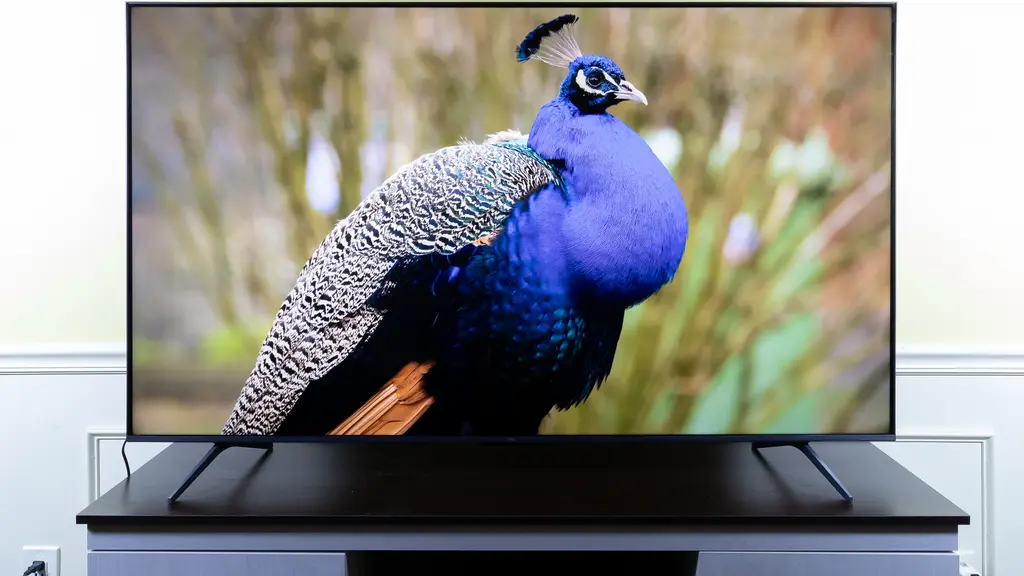
The bottom line
The Best 65 Inch Smart TV for most people is the Samsung U8000H. Its 4K upscaling, color processing, 4K 60Hz motion support, and Samsung TV Plus features make it a balanced everyday screen. The Roku Select is the better choice for a household that values simple menus, while the Hisense E6 adds adaptive brightness and broader HDR support.
For a more ambitious picture, choose the LG C5 OLED for deep black, fast gaming, and cinematic contrast. The Hisense U6 Pro is the stronger bright-room alternative, and the Hisense E7 combines Mini-LED contrast with movie-focused formats and high-refresh gaming.
If you are undecided, buy the Samsung U8000H for uncomplicated daily viewing, or step up to the LG C5 when picture contrast and gaming response matter most.
As an Amazon Associate we earn from qualifying purchases.