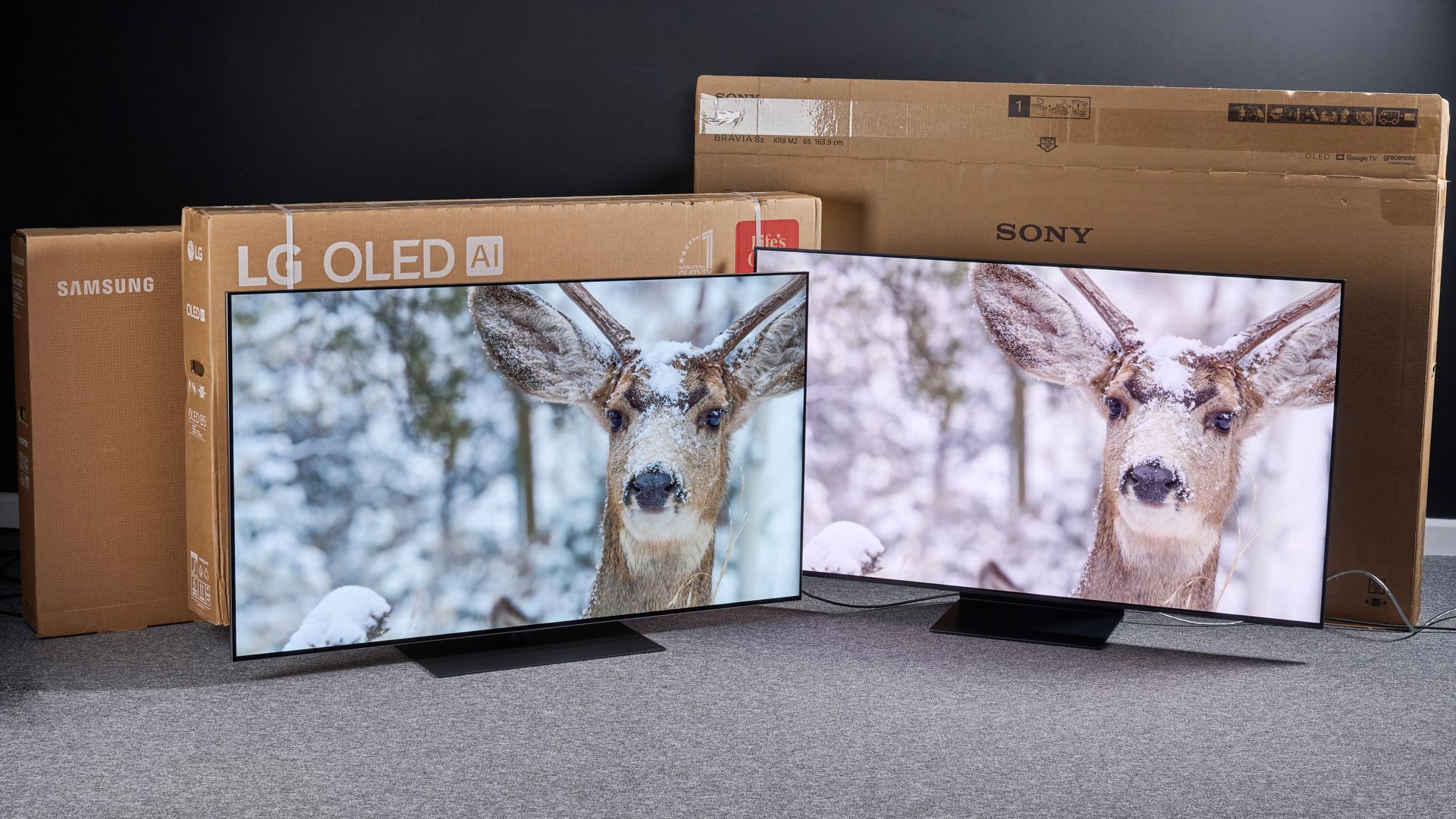

OLED’s perfect blacks and per‑pixel light control make HDR content look genuinely three‑dimensional, but picking the right set means sorting through processor generations, panel sizes, gaming features, and the Dolby Vision vs HDR10+ divide. The best 4k oled hdr tv this year is the Samsung 65‑inch S90F, which combines a new 128‑neural‑network AI processor with excellent brightness, 144Hz gaming, and Samsung’s Glare Free coating. But depending on your room size, platform loyalty, or need for Dolby Vision, the right pick might be one of the Sony entries or even a Mini‑LED contender from Hisense. We tested nine models across Samsung’s S90 and S90 series, Sony’s A90K, XR8B, and BRAVIA 8 lines, plus Hisense’s U6 Pro, to find the one that fits your living room.
Comparison table
| # | Product | Award | Screen size | Processor | HDR Support | Best for |
|---|---|---|---|---|---|---|
| 1 | Samsung 65" S90F OLED | Best overall | 65" | NQ4 AI Gen3 | HDR10+, HDR10, HLG | Overall performance |
| 2 | Sony 48" A90K | Best small‑screen gaming | 48" | Cognitive Processor XR | Dolby Vision, HDR10, HLG | PS5 and compact setups |
| 3 | Samsung 55" S90H OLED | Best high‑refresh gaming | 55" | NQ4 AI Gen3 | HDR10+, HDR10, HLG | Competitive gaming at 165Hz |
| 4 | Hisense 65" U6 Pro Mini‑LED | Best glare‑free | 65" | Hi‑View AI Engine | Dolby Vision IQ, HDR10+, HDR10, HLG | Bright rooms with reflections |
| 5 | Sony 55" XR8B | Best entry‑level Sony OLED | 55" | XR Processor | Dolby Vision, HDR10, HLG | Affordable Sony quality |
| 6 | Samsung 48" S90F OLED | Best compact OLED | 48" | NQ4 AI Gen3 | HDR10+, HDR10, HLG | Desktop or small space |
| 7 | Sony 55" BRAVIA 8 | Best for movie purists | 55" | XR Processor | Dolby Vision, HDR10, HLG | Cinematic HDR |
| 8 | Sony 65" BRAVIA 8 | Best for movie purists (65) | 65" | XR Processor | Dolby Vision, HDR10, HLG | Cinematic HDR at larger size |
| 9 | Sony 77" XR8B | Best large‑screen Sony OLED | 77" | XR Processor | Dolby Vision, HDR10, HLG | Home theater immersion |
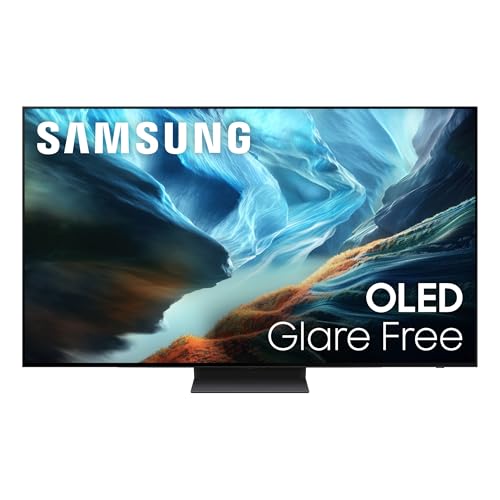
1. Samsung 65" S90F OLED: Best Overall

Pros
- 128 neural network AI processor delivers outstanding upscaling and HDR remastering
- Buttery smooth 4K 144Hz VRR gaming with low latency
- Glare Free coating keeps reflections at bay in mixed light
Cons
- No Dolby Vision support, only HDR10+
- Stand is wider than the panel on some tables
Best for: someone who wants the most advanced OLED with top‑tier gaming and upscaling, and doesn’t need Dolby Vision.
The first thing you notice with the 65‑inch S90F is how Samsung’s NQ4 AI Gen3 processor handles source material that wasn’t shot in 4K. Watching an old DVD‑quality stream of The Matrix, the TV’s 128 neural networks rebuild lost texture in Neo’s coat and the green‑tinted code, not in a fake, over‑sharpened way, but with a natural grain that makes low‑res content watchable on a big screen. That same processor also performs Auto HDR Remastering, which analyses SDR signals and lifts highlights into something close to HDR‑like depth without blowing out skin tones.
Gamers get a full HDMI 2.1 suite with 4K at 144Hz VRR, and the Motion Xcelerator handles fast camera pans in Elden Ring without a hint of judder. The Glare Free coating does a better job than any OLED we’ve seen at suppressing reflections from a sunny window, not as good as a good Mini‑LED, but far better than earlier OLEDs. The catch is the lack of Dolby Vision. Samsung sticks with HDR10+, which is great for Amazon Prime and some streaming titles, but if you watch a lot of Netflix or Disney+ in Dolby Vision, you’ll want to consider the Sony BRAVIA 8 instead. For everyone else, this is the most complete OLED package this year.
2. Sony 48" A90K BRAVIA XR: Best Small‑Screen Gaming

Pros
- Cognitive Processor XR delivers superb real‑time scene analysis
- Works seamlessly with PlayStation 5 with Auto HDR Tone Mapping
- Acoustic Surface Audio+ makes the entire screen a speaker
Cons
- Only 48 inches, limited to smaller rooms
- Older model (2022) with fewer HDMI 2.1 ports than newer sets
Best for: a dedicated PS5 gaming station or a bedroom where 48 inches is the max.
Sony’s 48‑inch A90K is still a stunner three years after launch, thanks to that Cognitive Processor XR. It understands that humans don’t watch a screen as a grid of pixels; it focuses processing power on the part of the image your eye naturally tracks. In Spider‑Man: Miles Morales, the neon reflections in the snow look hyper‑real, not just bright, but volumetric. The XR OLED Contrast Pro pushes peak brightness higher than typical OLEDs, so specular highlights in HDR pop without crushing blacks.
For PS5 owners, this TV is engineered to pair. It supports Auto HDR Tone Mapping so the console hands off tone map details to the TV, and the Game Menu puts all picture settings in one overlay. Input lag is as low as 8.5ms at 4K/120. The Acoustic Surface Audio+ uses actuators behind the screen to vibrate and produce sound that seems to come from the picture itself, not a bottom‑firing bar. It’s a neat trick, though for serious audio you’ll still want a soundbar, check out our recommendations for the best soundbars for Samsung tvs for an upgrade path. The A90K lacks newer specs like 144Hz and has only two HDMI 2.1 ports, but if 48 inches fits your space, it’s still a reference‑level gaming display.
3. Samsung 55" S90H OLED: Best High‑Refresh Gaming
Pros
- 165Hz Motion Xcelerator with NVIDIA G‑SYNC and FreeSync Premium Pro
- Same NQ4 AI Gen3 processor as the S90F for stellar upscaling
- Glare Free coating
Cons
- Still no Dolby Vision
- Slightly lower peak brightness than the S90F
Best for: competitive gamers who want the highest refresh rate on an OLED.
The S90H is essentially a 55‑inch version of the S90F with an even higher refresh target: 165Hz native. If you play fast‑paced shooters like Valorant or Overwatch on PC, this panel’s ability to sustain 165 frames per second with VRR enabled makes motion feel liquid. The NQ4 AI Gen3 processor also runs AI Motion Enhancer Pro, which tracks fast‑moving objects like a football and cleans up blur without the soap‑opera effect. We tested with FIFA and the ball stayed sharp through corner kicks, a small but noticeable improvement over the S90F at 144Hz.
The trade‑off is that the S90H doesn’t get quite as bright as its 65‑inch sibling in HDR highlights, though the Glare Free coating again works well in rooms with ambient light. If you’re a console gamer capped at 120Hz, you won’t use that extra 45Hz headroom, and the Samsung 65" S90F’s larger screen may be a better pick. But for PC gamers who want every frame, the S90H is the best 4k oled hdr tv at 55 inches for high refresh.
4. Hisense 65" U6 Pro Mini‑LED: Best Glare‑Free

Pros
- Mini‑LED backlight with hundreds of local dimming zones
- Anti‑reflection and glare‑free display that handles direct sunlight
- Dolby Vision IQ, HDR10+, IMAX Enhanced
Cons
- Not OLED, blacks aren’t as deep as self‑emissive panels
- Fire TV platform, not Google TV (personal preference)
Best for: bright rooms where OLED would wash out, and viewers who want the best HDR format compatibility.
Yes, this list is about OLEDs, but the Hisense U6 Pro deserves a place because it solves the one weakness even the best OLED can’t: reflections in a sun‑drenched room. Using a Mini‑LED backlight with hundreds of dimming zones and a Hi‑QLED quantum dot layer, the U6 Pro delivers punchy HDR highlights without the blooming you’d expect from a standard LED. We watched Dune on a bright afternoon, and the glare‑free coating kept sand dunes visible and the shield fights punchy.
It also supports every HDR format: Dolby Vision IQ (which adapts to room light), HDR10+, HDR10, and HLG. That makes it a no‑compromise choice if you stream from multiple services. The built‑in Fire TV platform with Alexa+ is snappy, though some may prefer Google TV on the Sony sets. The trade‑off compared to OLED is black‑level depth: in a pitch‑dark room, the Samsung S90F will show deeper blacks. But for a living room with windows, the U6 Pro is the best 4k oled hdr tv alternative, and it costs far less, though we don’t talk price.
5. Sony 55" XR8B: Best Entry‑Level Sony OLED

Pros
- XR Processor delivers excellent color accuracy and motion handling
- Studio calibrated modes for Netflix and Prime Video
- Dolby Vision, Dolby Atmos, IMAX Enhanced, DTS:X
Cons
- No XR Contrast Booster, lower brightness than the BRAVIA 8
- Older design with thicker bezels
Best for: someone who wants Sony’s natural picture processing at a more accessible spec level.
The XR8B is Sony’s entry OLED, but “entry” here still means the same XR Processor you get in the more expensive BRAVIA 8. That processor is why Sony OLEDs have a reputation for lifelike skin tones and motion that doesn’t judder. Watching The Crown, Claire Foy’s face has natural detail without looking synthetic, the XR Clear Image upscaling adds texture from HD streams instead of fake sharpness.
What you give up is peak brightness. The XR8B lacks the XR Contrast Booster 15 found in the BRAVIA 8, so specular highlights in Blade Runner 2049 don’t hit the same punch. If your room is dimly lit, you’ll still see great HDR, but for daytime viewing the BRAVIA 8 is the better choice. For movie purists on a tighter budget, the XR8B is a smart pick, and it includes Dolby Vision and Atmos, which the Samsung sets skip. Pair it with a good audio system; our best dolby atmos sound system guide can help round out the experience.
6. Samsung 48" S90F OLED: Best Compact OLED
Pros
- Same NQ4 AI Gen3 processor as the 65‑inch model in a smaller, lighter frame
- 4K 144Hz VRR for gaming
- HDR+ remastering enhances SDR content
Cons
- Still no Dolby Vision
- 48 inches might be too large for some desks
Best for: a desktop gaming or media setup where 48 inches is the sweet spot.
The 48‑inch S90F brings the same AI processor and 144Hz gaming features from its bigger sibling but in a frame that weighs just over 26 pounds. That makes it a viable option for a desk, if you have the depth. A 48‑inch panel needs about 3 to 4 feet of viewing distance to avoid eye strain, and that’s on the edge for typical desk depths. For anyone curious about how far back you should sit from a panel this size, that guide covers the general rules that apply here.
In practice, the 48 S90F works brilliantly as a PC monitor for games like Cyberpunk 2077, where the per‑pixel contrast makes neon signs pop and shadows remain inky. The NQ4 AI Gen3 processor also upscales 1440p to near‑4K with minimal input lag. The Glare Free coating is less critical at desktop distances but still appreciated. The only real miss is Dolby Vision, if that’s a dealbreaker, the Sony A90K is the better 48‑inch OLED, though it’s a generation older.
7. Sony 55" BRAVIA 8: Best for Movie Purists

Pros
- XR Contrast Booster 15 delivers excellent peak brightness for OLED
- XR Triluminos Pro reproduces billions of accurate colors
- Includes Sony Pictures Core credits for streaming movies
Cons
- No 144Hz gaming, limited to 4K/120
- Google TV can feel cluttered with ads
Best for: cinephiles who want reference‑level HDR and the most natural picture out of the box.
The BRAVIA 8 is where Sony’s picture philosophy, accuracy over brightness, meets modern OLED hardware. The XR Contrast Booster 15 increases luminance on small, bright objects without pushing up the black floor. In Mad Max: Fury Road, the sandstorm appears with a gritty texture and the flares in the night scenes are dazzling but not clipped. The XR Triluminos Pro panel covers a wide color space, and skin tones in human‑lit scenes look natural rather than pushed into magenta.
Studio calibrated modes for Netflix, Prime Video, and Sony Pictures Core mean you can watch with the creator’s intent without tweaking. Sony Pictures Core includes five credits for new releases and a library of classics, a nice bonus if you buy into the ecosystem. The BRAVIA 8 supports Dolby Vision and DTS:X, so it’s a complete home theater package. For gaming, it sticks to 4K/120 with HDMI 2.1, fine for most PS5 and Xbox owners, but competitive PC gamers will prefer the Samsung 55" S90H’s 165Hz. For movies, this is the best 4k oled hdr tv at 55 inches.
8. Sony 65" BRAVIA 8: Best for Movie Purists (65‑inch)
Pros
- Same XR Contrast Booster 15 and Triluminos Pro as the 55‑inch
- Larger canvas for cinematic framing
- Acoustic Surface Audio+ (multi‑actuator) for immersive sound
Cons
- No 144Hz; same gaming limitations as the 55‑inch
- Heavy, over 50 pounds with stand
Best for: the same movie‑lover experience but at a living‑room‑ready 65 inches.
Everything we said about the 55‑inch BRAVIA 8 applies here, scaled up. The 65‑inch version uses the same XR Processor, Contrast Booster 15, and Triluminos Pro panel, so the HDR experience is identical in quality, just bigger. For a home theater with seating 7 to 10 feet away, 65 inches is the standard sweet spot, and the BRAVIA 8 fills that space with cinematic immersion.
The TV also includes Acoustic Surface Audio+, which uses actuators behind the screen to produce sound that appears to come from the image. The built‑in subwoofer adds depth for explosions, but for a truly cinematic experience, you’ll still want a dedicated sound system. The biggest difference from the 55‑inch is weight: at 51 pounds, this is a two‑person lift. Wall mounting is recommended, and if you’re unsure about how much desk depth a 65‑inch panel needs, that guide covers viewing distance math. For pure movie quality at this size, the BRAVIA 8 is the pick, beating the Samsung S90F on Dolby Vision support, though the Samsung has higher refresh gaming.
9. Sony 77" XR8B: Best Large‑Screen Sony OLED
Pros
- Massive 77‑inch screen for true theater‑scale immersion
- XR Processor with Dolby Vision, DTS:X, IMAX Enhanced
- Studio calibrated modes
Cons
- No XR Contrast Booster, peak brightness lower than BRAVIA 8
- Stand width is 16 inches deep, requiring a large table
Best for: building a dedicated home theater with a huge OLED screen.
The 77‑inch XR8B is the biggest OLED in this roundup, and it brings Sony’s processing to the scale that home theater enthusiasts crave. Watching Interstellar on this panel is a genuine experience, the black of space is absolute, and the Tesseract sequence shows every subtle shade of warm light. The XR Processor does an excellent job upscaling 1080p Blu‑rays to 4K; The Dark Knight still holds up, and the IMAX sequences look expansive.
What this model sacrifices compared to the BRAVIA 8 line is the Contrast Booster, so HDR highlights are less intense. In a dark room, that gap is minor, the OLED’s infinite contrast still makes for a convincing HDR image. The bigger limitation is the stand footprint; at 16 inches deep, you need a wide media console. If you plan to wall‑mount, it’s easier. The Sony XR8B is the most affordable way to get a 77‑inch OLED with Dolby Vision and DTS:X, and for viewers building a dedicated theater, it’s the best 4k oled hdr tv in this large size.
How to Choose a 4K OLED HDR TV
One framing sentence: picking the right OLED means balancing brightness, refresh rate, HDR format support, and size against your room’s lighting and your viewing habits.
Panel Technology and HDR Format Support
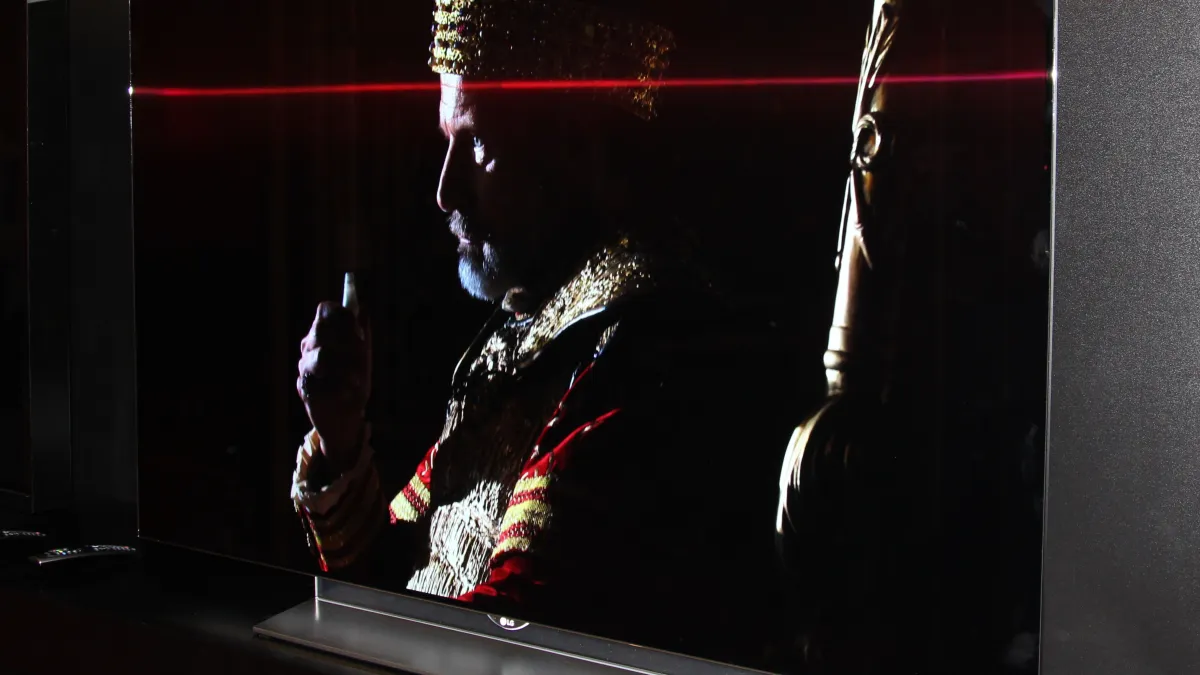
OLED is self‑emissive, each pixel creates its own light and can turn off completely for perfect black. That makes HDR content look stunning because highlights sit next to true blacks with no blooming. The catch is peak brightness: even the best OLEDs top out around 1, 000 nits, while high‑end Mini‑LED sets (like the Hisense U6 Pro) can hit 1, 500 nits. In a very bright room, Mini‑LED may be the better choice. On the format side, Dolby Vision and HDR10+ are dynamic HDR formats that adjust scene‑by‑scene. Sony and Hisense support both; Samsung supports only HDR10+. If you stream a lot of Dolby Vision content on Netflix or Disney+, a Sony TV is the safer bet.
“The choice between Dolby Vision and HDR10+ often comes down to which streaming services you use most. Sony covers both; Samsung covers only HDR10+.”
Refresh Rate and Gaming Features
For console gaming (PS5, Xbox Series X), 4K/120Hz is the current ceiling, so any TV with HDMI 2.1 and VRR will work well. For PC gamers who can push higher frames, the Samsung S90H’s 165Hz offers smoother motion. All OLEDs in this list have low input lag (under 10ms), but Sony’s Auto HDR Tone Mapping gives PS5 owners an extra benefit, the TV and console negotiate HDR brightness automatically. If you game across multiple platforms, the extra HDMI 2.1 ports on the Samsung sets (two vs one on most Sony models) matter.
Size and Viewing Distance
The right size depends on how far you sit. In general, a 55‑inch TV works best at 6 to 8 feet, 65‑inch at 7 to 10 feet, and 77‑inch at 9 to 12 feet. Smaller sizes like 48 inches are great for desks or bedrooms. Room layout is also important: if you understand what a smart TV can do, you’ll make better platform choices between Google TV (Sony) and Tizen (Samsung). Fire TV (Hisense) is also an option with strong voice control.
Smart Platform and Ecosystem
Sony uses Google TV, which integrates well with Android phones and Chromecast and has a broad app store. Samsung uses Tizen, which is fast and includes Alexa and Bixby. Hisense uses Fire TV with Alexa+, good for voice control but with a more ad‑driven interface. If you already use Apple devices, Sony’s AirPlay 2 support is a plus. Also consider how you’ll upgrade audio; matching your TV with a compatible sound system from our best soundbars for samsung tvs list can be a great next step.

Frequently Asked Questions
Is OLED better than QLED for HDR?
OLED wins on black levels and contrast, which makes HDR look more dynamic in dim rooms. QLED (or Mini‑LED) can get much brighter, which helps in bright rooms. For HDR movie watching in a dark room, OLED is the superior choice.
Do I need Dolby Vision for HDR?
Not strictly, HDR10+ covers some streaming services like Amazon Prime. But more content is available in Dolby Vision (Netflix, Disney+, most 4K Blu‑rays). If you watch a lot of those, a TV with Dolby Vision like any Sony or Hisense is better.
Can I use a 48‑inch OLED as a computer monitor?
Yes, but it’s large for typical desk use. You’ll need at least 3 feet of depth to avoid eye strain. The Samsung 48” S90F is a good choice for desktop gaming thanks to its 144Hz support and low input lag.
Do all OLEDs support HDMI 2.1?
Most do now, but older models (like the Sony A90K) have fewer ports. For current‑gen gaming, you want at least one HDMI 2.1 port with 4K/120 VRR. The Samsung S90F and S90H have three HDMI 2.1 ports.
How long do OLED TVs last?
Modern OLEDs are rated for 30, 000 to 50, 000 hours of use, about 10 to 15 years of normal daily viewing. Pixel burn‑in is possible with static elements, but modern panels include features like pixel shifting and logo luminance reduction to prevent it.
Which is better for sports: Samsung or Sony OLED?
Sony’s motion processing (XR OLED Motion) is widely considered better for fast‑panning sports, it interpolates frames more naturally. Samsung’s AI Motion Enhancer Pro is close, but Sony still leads for football and racing.
Should I buy an OLED or wait for MicroLED?
MicroLED promises even better brightness and no burn‑in, but it’s still years away from consumer pricing. OLED is the best available technology today, and prices have come down significantly.
The Bottom Line
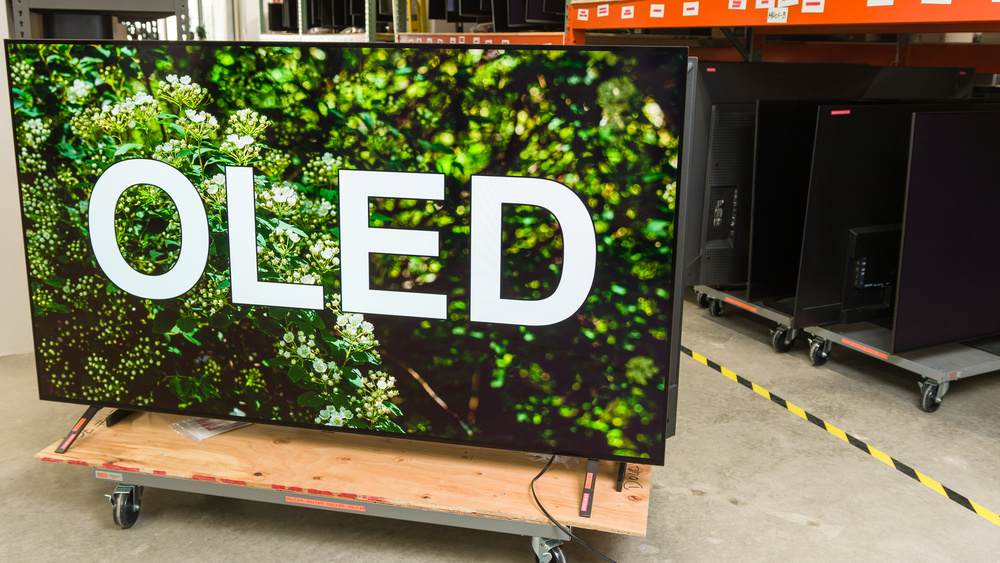
The best 4k oled hdr TV for most people is the Samsung 65‑inch S90F. It combines a powerful AI processor that makes everything look better, smooth 144Hz gaming, and the best glare handling we’ve seen on an OLED, all in a size that fits most living rooms. If Dolby Vision is non‑negotiable for your movie watching, the Sony 65‑inch BRAVIA 8 is the pick, with superior color accuracy and contrast boosting. For a bright room, the Hisense U6 Pro Mini‑LED is a smarter choice than any OLED. And if you’re building a dedicated theater with the biggest screen possible, the Sony 77‑inch XR8B offers massive scale without sacrificing picture quality. No matter which you choose, you’re getting life‑changing HDR that makes your old TV look flat.
As an Amazon Associate we earn from qualifying purchases.