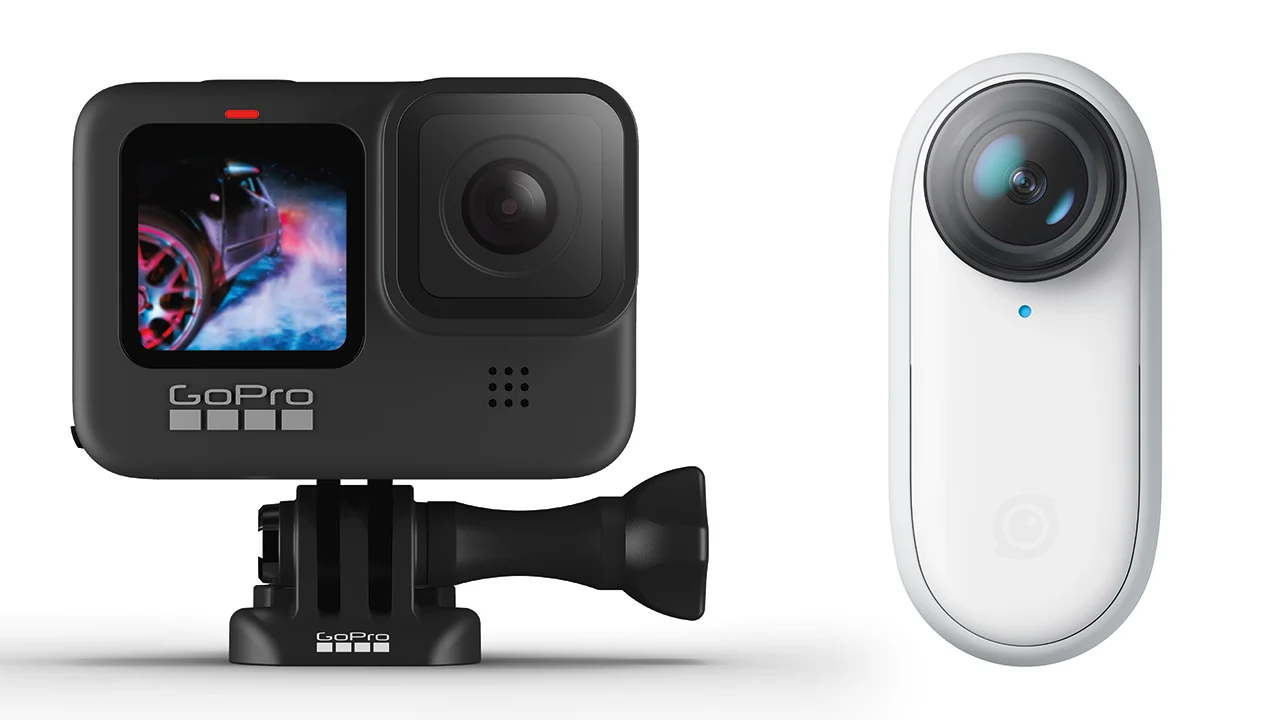

An action camera has to cope with the moments that make ordinary cameras awkward: a mountain bike landing, a sudden splash, a windy motorcycle ride, or a face that keeps moving out of frame. The Best action camera should also be simple enough to start recording without interrupting the activity.
This list ranges from the small AKASO EK7000 to advanced 8K models from DJI and Insta360. Some prioritize stable traditional footage, while others offer better low-light imaging, 360-degree reframing, or creator-friendly audio.
For most people, the DJI Osmo Action 6 Enhanced is the strongest all-round pick. The rest of the list covers 360-degree shooting, underwater use, vlogging, long battery life, and straightforward entry-level recording.
Comparison table
| # | Product | Award | Video | Waterproofing | Best for |
|---|---|---|---|---|---|
| 1 | DJI Osmo Action 6 Enhanced | Best overall | 8K, 1/1.1-inch sensor | 20m without a case | Creators who want the widest feature set |
| 2 | Insta360 X5 | Best 360 camera | 8K 360-degree video | Waterproof design | Reframing action after recording |
| 3 | DJI Osmo Action 5 Pro Bundle | Best for long outings | 4K, 1/1.3-inch sensor | 20m without a case | Extended recording and cold weather |
| 4 | Insta360 Ace Pro 2 | Best for low light | 8K, 1/1.3-inch sensor | 12m without a case | Vlogging and night scenes |
| 5 | DJI Osmo Action 6 Essential | Best built-in storage | 8K, 1/1.1-inch sensor | 20m without a case | Shooters who want fewer card swaps |
| 6 | DJI Osmo Action 4 Standard | Best 4K motion camera | 4K at 120fps | 18m without a case | Cycling, skiing, and FPV footage |
| 7 | DJI Osmo Action 4 Essential | Best compact DJI option | 4K at 120fps | 18m without a case | Everyday adventure recording |
| 8 | AKASO Brave 4 | Best for basic underwater use | 4K at 30fps | 40m with case | Casual swimming and travel |
| 9 | AKASO EK7000 | Best simple starter camera | 4K at 30fps | 40m with case | First-time action camera buyers |
| 10 | DJI Osmo Action 5 Pro Essential | Best streamlined Pro model | 4K, 1/1.3-inch sensor | 20m without a case | Users who want the Action 5 Pro camera alone |
1. DJI Osmo Action 6 Enhanced: Best Overall

Pros
- Records detailed 8K footage
- Variable aperture adapts to changing light
- Up to four hours of recording in normal conditions
- 50GB of built-in storage
- Enhanced Combo includes two batteries and a multifunctional battery case
Cons
- Enhanced Combo adds accessories that some users will not need
- 8K recording creates large files
- The camera's deeper feature set takes time to learn
Best for: creators who want one camera for action, travel, water, and social video.
The DJI Osmo Action 6 Enhanced is the most complete conventional action camera here. It does not ask you to choose between high resolution, stabilization, storage, or creator controls. The result is a camera that suits someone who records everything from a bike ride to a talking-head clip and does not want to change systems for each job.
Its 1/1.1-inch square sensor supports 8K video, while the variable f/2.0 to f/4.0 aperture gives the lens more flexibility than the fixed designs used by the DJI Osmo Action 4 and Action 5 Pro. A wider aperture can help in dimmer scenes, while the narrower setting can be useful in brighter conditions. The square sensor also supports 4K Custom Mode, which gives you room to reframe footage for different social formats.
Stabilization is a major reason to choose it. RockSteady 3.0 handles ordinary shake, while 360-degree HorizonSteady can keep the horizon level during substantial rotation. HorizonSteady works up to 4K at 60fps, so the feature is not limited to low-detail recording. Voice and gesture controls are useful when the camera is mounted out of reach, and direct connection to two DJI microphone transmitters makes two-person interviews much easier.
The Enhanced Combo includes a 1.5m extension rod, two batteries, and a multifunctional battery case. The camera itself can record for up to four hours in normal conditions, includes 50GB of built-in storage, and can go underwater to 20m without a case. Those capabilities make it more flexible than the DJI Osmo Action 5 Pro Bundle, although the bundle has a larger collection of included accessories.
The weakness is complexity. Someone who only wants to press record for occasional family clips may find the modes and reframing options excessive. The 8K files also need more storage and editing power than 4K footage. For serious creators, though, this is the Best action camera in the group because its sensor, aperture, storage, audio, and stabilization work together rather than solving just one part of the job.
2. Insta360 X5: Best 360 Camera

Pros
- Records 8K 360-degree video
- Dual 1/1.28-inch sensors improve detail and dynamic range
- Replaceable lenses reduce the impact of scratches
- Invisible selfie stick effect enables unusual viewpoints
- Wind Guard helps reduce outdoor wind noise
Cons
- 360-degree footage requires reframing before sharing
- The body is heavier than the compact DJI options
- A traditional forward-facing camera is simpler for quick clips
Best for: adventurers who want to decide the viewing angle after the action is over.
The Insta360 X5 changes the basic action camera decision. Instead of pointing a lens at the subject and hoping the framing works, it records in every direction. You can then select the angle later, which is particularly useful when the camera is attached to a helmet, extension rod, bicycle, or vehicle.
Two 1/1.28-inch sensors produce 8K 360-degree video, giving reframed clips more detail to work with than a lower-resolution spherical camera. InstaFrame Mode can create a ready-to-share flat video by automatically tracking the subject or holding a chosen angle. You can also return to the full 360-degree recording later when an unexpected moment happens outside the original frame.
FlowState Stabilization and 360-degree Horizon Lock keep footage smooth and level through bumps and rotations. The invisible selfie stick effect adds another creative advantage, creating a floating third-person perspective without the stick appearing in the final view. A four-microphone array with a built-in Wind Guard makes spoken footage more usable outdoors.
The X5 is also more practical around rough use than a camera with exposed, irreplaceable lenses. Its lenses are designed to be replaced, so a scratch does not necessarily end the camera's useful life. The camera has a listed three-hour battery and a waterproof design, but the tall body and 1.102-pound listed weight make it less discreet than the DJI Osmo Action 6 Enhanced.
The main drawback is workflow. A conventional action camera gives you a finished viewpoint immediately, while the X5 asks you to edit, reframe, and export. It is the clear pick for capturing every angle during fast-moving activities, but less suitable for someone who wants to send unedited clips straight from the camera.
3. DJI Osmo Action 5 Pro Bundle: Best for Long Outings

Pros
- 1950mAh battery supports up to four hours of recording
- Two extra batteries are included in the bundle
- 1/1.3-inch sensor with 13.5-stop dynamic range
- 360-degree HorizonSteady stabilization
- Direct DJI microphone connectivity
Cons
- The bundle is much more than a casual user needs
- No 8K recording
- The included accessory kit can add packing bulk
Best for: travelers and outdoor shooters who need several recording cycles.
The DJI Osmo Action 5 Pro Bundle is built around endurance. Its 1950mAh battery is rated for up to four hours of recording, and the bundle adds two extra batteries, a 64GB microSDXC card, and a 58-in-1 accessory kit. That combination makes it a sensible choice for a trip where charging opportunities are limited.
The 1/1.3-inch sensor uses 2.4 µm pixels and offers 13.5 stops of dynamic range according to the product specifications. In practical terms, that combination is intended to preserve more detail between darker and brighter areas, which helps when a ride moves between shade and open sky. A color temperature sensor also helps maintain natural color underwater and on land without requiring filters.
The camera can keep a fast subject centered in either 16:9 or 9:16 recording. That is helpful for a rider, pet, or vlogger who wants footage for both conventional video and vertical social posts. 360-degree HorizonSteady corrects roll-axis movement, while the dual OLED touchscreens make it possible to frame from either side.
It is waterproof to 20m and rated for up to 3.6 hours of use at -20 degrees Celsius. Voice control works within one meter, and the camera can connect directly to DJI Mic 2 or Mic Mini transmitters without a receiver. Compared with the Insta360 X5, it gives you a simpler finished clip and more conventional controls. Compared with the Action 6 Enhanced, it lacks the newer model's 8K capture, variable aperture, and built-in storage.
The bundle's weakness is its physical sprawl. Multiple batteries and a large accessory kit are useful only if you will actually carry them. The DJI Osmo Action 5 Pro Essential is a cleaner option for a lighter kit, while this version is better for a person who expects long days outside and wants the extras ready.
4. Insta360 Ace Pro 2: Best for Low Light

Pros
- 1/1.3-inch sensor records 8K at 30fps
- PureVideo mode supports low-light recording up to 4K at 60fps
- Leica co-engineered lens and color profiles
- 2.5-inch flip touchscreen
- Dual battery bundle includes two batteries
Cons
- Waterproofing is limited to 12m without a case
- It is less suited to full 360-degree reframing than the X5
- The flip screen adds moving hardware
Best for: vloggers and travelers who regularly record in difficult light.
The Insta360 Ace Pro 2 is a conventional forward-facing camera with a strong emphasis on image processing. Its 1/1.3-inch sensor, Leica Summarit lens, and dual AI chips are aimed at producing cleaner footage when the light is not generous. That makes it more appealing for evening walks, indoor scenes, and changing outdoor conditions than a basic 4K camera.
PureVideo mode supports low-light recording up to 4K at 60fps. The dual-chip design combines a dedicated imaging processor with a 5nm AI chip for noise reduction and other processing tasks. It also supports 8K at 30fps and 4K60 Active HDR, giving creators room to choose between high detail, motion, and highlight control.
The 2.5-inch flip touchscreen is one of its most useful physical features. It can face the user for vlogging or sit flush for conventional shooting, and the product information says it has increased pixel density and brightness over the previous design. FlowState Stabilization handles movement, while the 157-degree wide-angle lens and MegaView field of view allow a broad perspective without forcing an extreme fisheye look.
Audio is treated more seriously than on the AKASO models. The detachable Wind Guard reduces wind interference, and gesture control, pre-recording, 4K Clarity Zoom, and magnetic mounting make the camera easier to use in a creator workflow. If your work includes choosing a camera for clear spoken video, the flip screen and wind handling are meaningful advantages.
The limitation is underwater depth. The Ace Pro 2 is waterproof to 12m, while the DJI Osmo Action 6 models reach 20m and the AKASO Brave 4 reaches 40m with its case. It also does not offer the X5's ability to record in every direction. Pick it for low-light vlogging and polished forward-facing footage, not for carefree deep-water use.
5. DJI Osmo Action 6 Essential: Best Built-in Storage

Pros
- 50GB of built-in storage
- 8K video from a 1/1.1-inch square sensor
- Variable f/2.0 to f/4.0 aperture
- Up to four hours of recording in normal conditions
- Direct support for two DJI microphone transmitters
Cons
- Essential Combo omits the extension rod and multifunctional battery case
- 8K files require substantial storage during editing
- It has the same learning curve as the Enhanced model
Best for: creators who want Action 6 imaging without a larger accessory package.
The DJI Osmo Action 6 Essential has the same central camera capabilities as the Enhanced version, but the package is more compact. That distinction matters for people who already own mounts and do not need an extension rod or multifunctional battery case. The Essential Combo includes the camera rather than trying to turn every buyer into a fully equipped kit owner.
The 1/1.1-inch square sensor supports 8K recording and 4K Custom Mode. The latter is particularly useful for modern publishing because you can reframe one recording into several aspect ratios. The variable f/2.0 to f/4.0 aperture helps the camera adjust to different lighting conditions, an advantage over the fixed-lens approach of the DJI Osmo Action 5 Pro and Action 4.
Storage is the standout feature. With 50GB built into the camera, you can keep recording when a microSD card is not immediately available. Wireless cloud upload is also supported for backup and sharing. That does not eliminate the need to manage files, but it reduces the chance of missing a shot because the card was left at home.
RockSteady 3.0 and 360-degree HorizonSteady provide the same stabilization story as the Enhanced Combo. The camera is rated for 20m underwater without a case, supports voice and gesture control, and can connect directly to two DJI microphone transmitters. Its listed weight is about 0.328 pounds, close to the Enhanced version.
The compromise is the box, not the camera. If you need the 1.5m extension rod and extra battery, the DJI Osmo Action 6 Enhanced is more convenient. If you already have a mounting setup and want the latest DJI imaging platform with less kit to carry, the Essential Combo is the neater choice.
6. DJI Osmo Action 4 Standard: Best 4K Motion Camera

Pros
- 4K recording at 120fps
- 1/1.3-inch sensor with 2.4 µm pixels
- 10-bit color and D-Log M
- 155-degree ultra-wide field of view
- Waterproof to 18m without a case
Cons
- No 8K recording
- Battery capacity is lower than the Action 5 Pro and Action 6
- Standard Combo is less compact than Essential Combo
Best for: fast-moving 4K footage where slow motion and wide framing matter.
The DJI Osmo Action 4 Standard remains a strong specialist camera because it gets the motion fundamentals right. Recording 4K at 120fps gives you smooth high-frame-rate footage and the option to slow action down in editing. Its 155-degree field of view captures a broad slice of a trail, road, or landscape without requiring a 360-degree workflow.
The 1/1.3-inch sensor uses 2.4 µm pixels for improved low-light performance, and 10-bit color with D-Log M preserves more color information for editing. Those modes are valuable to people who grade their footage rather than simply posting the original file. Auto white balance is designed to keep colors natural and flicker-free, including underwater scenes.
Three stabilization modes keep footage smooth, and the magnetic quick-release system makes it quick to switch between mounting positions. The self-locking design helps keep the camera secure, while Pre-Rec can capture the 5, 10, 15, 30, or 60 seconds before the record button is pressed. That last feature is genuinely useful for unpredictable events such as a jump, strike, or sudden catch.
The 1770mAh battery is rated for up to 150 minutes and operates down to -20 degrees Celsius. Waterproofing reaches 18m without a case. DJI OsmoAudio allows a direct connection to DJI Mic 2 or Mic Mini transmitters, so the camera can serve as a simple vlogging setup as well as a sports camera.
The limitation is its age relative to the Action 6 models. You do not get 8K, 50GB of built-in storage, a variable aperture, or the Action 6's listed four-hour recording capability. Still, for keeping a camera stable on a motorcycle or bicycle, the Action 4 Standard has the right combination of wide footage, high frame rate, stabilization, and quick mounting.
7. DJI Osmo Action 6 Essential: Best Compact 8K Option
Pros
- 8K recording and 4K Custom Mode
- 50GB built-in storage
- Variable aperture
- Gesture and voice controls
- 20m waterproofing without a case
Cons
- The Essential package does not include the Enhanced Combo's extension rod
- It still needs careful file management for 8K footage
- A 4K camera may be simpler for casual users
Best for: users who want a capable 8K camera in the smallest Action 6 package.
The DJI Osmo Action 6 Essential appears again in this roundup's package comparison because the Essential version makes a particularly focused proposition. It gives you the Action 6 camera, its 8K imaging, built-in storage, and underwater construction without the extra accessories found in the Enhanced Combo.
Its square 1/1.1-inch sensor is built for reframing as well as conventional 16:9 video. The 4K Custom Mode can create different aspect ratios from a single recording, which is useful when one outing needs to produce a landscape clip, a vertical post, and a square crop. The f/2.0 to f/4.0 variable aperture is a more unusual feature in this category and gives the camera a way to respond to different light levels.
The stabilization package is substantial. RockSteady 3.0 handles normal movement, while 360-degree HorizonSteady corrects roll and keeps the horizon level up to 4K at 60fps. Gesture and voice controls let you start recording without reaching for the camera. Direct support for two DJI microphone transmitters also gives it a role in interviews and two-person vlogging.
The camera can record for up to four hours in normal conditions, has a cold-resistant design, and stores 50GB internally. It can be used underwater to 20m without a case. These traits make it more versatile than the DJI Osmo Action 4 Essential, while the Action 4 remains a sensible choice for people who specifically want 4K at 120fps.
The Essential package is not the right fit if your camera will live on an extension rod or if you want a battery case ready in the same bag. Those buyers should move up to the Enhanced Combo. Everyone else gets the same core camera in a less cluttered setup.
8. DJI Osmo Action 4 Essential: Best Compact DJI Option

Pros
- 4K at 120fps
- 10-bit color and D-Log M
- Dual full-color touchscreens
- Magnetic quick-release mounting
- 18m waterproofing without a case
Cons
- No 8K recording
- The 1770mAh battery is shorter-lived than newer DJI models
- Essential Combo omits the curved adhesive base
Best for: users who want DJI's core Action 4 features in a straightforward package.
The DJI Osmo Action 4 Essential keeps the parts of the Action 4 that matter most and removes some of the package extras. It is still a serious camera for cycling, travel, and vlogging, but it does not try to compete with the Action 6's 8K capture or built-in storage.
The 1/1.3-inch sensor and 2.4 µm pixels are designed to improve low-light footage, while 10-bit color and D-Log M give experienced editors more flexibility. The camera records 4K at 120fps and uses a 155-degree ultra-wide view, so it is well suited to fast movement and immersive first-person clips.
Its magnetic quick-release system is one of the best reasons to choose this model. Moving from a chest mount to a handheld setup or a vertical orientation is quick, and the self-locking mechanism adds reassurance. Three stabilization modes smooth out movement, while Pre-Rec can retain footage from up to 60 seconds before you press record.
The dual full-color touchscreens make framing easier from either side. The camera can connect directly to DJI Mic 2 or Mic Mini transmitters, and it remains waterproof to 18m without a case. The 1770mAh battery is rated for up to 150 minutes and works at temperatures down to -20 degrees Celsius.
The trade-off against the DJI Osmo Action 4 Standard is the package. The Standard Combo includes the curved adhesive base, while the Essential Combo is described as the compact version without it. Choose the Essential model if your existing mounts cover that gap and you want a clean, capable 4K camera rather than the newer Action 6 platform.
9. AKASO Brave 4: Best for Basic Underwater Use

Pros
- 4K at 30fps and 20MP photos
- Four selectable viewing angles
- Waterproof to 40m with the case
- Front and rear screens
- Includes two 1050mAh batteries and a dual charger
Cons
- The wrist remote is not waterproof
- Stabilization and image processing are less advanced than DJI and Insta360
- The case is required for the listed underwater depth
Best for: casual swimmers, travelers, and families recording basic outdoor clips.
The AKASO Brave 4 is a practical camera for someone who wants to record an outing without entering a complex creator system. It covers the essentials: 4K video, still photos, a waterproof case, two screens, and a collection of useful accessories. The emphasis is on accessibility rather than advanced color workflows or sophisticated tracking.
Video options run from 4K at 30fps to 1080p at 60fps, and still images reach 20MP. Four viewing angles, from 170 degrees to 70 degrees, let you adjust how much of the scene appears in the frame. A wide setting suits action and group scenes, while a narrower angle can reduce the stretched look around the edges.
The built-in gyroscope-based stabilization is intended to reduce shock and keep footage smoother. Wi-Fi reaches up to 10m through the companion app, and HDMI provides a direct way to show clips on a television. The front 0.96-inch screen and rear 2-inch screen are useful for framing from different positions.
The waterproof case takes the camera to 40m, making this a more suitable choice for basic underwater use than the Insta360 Ace Pro 2, whose listed depth is 12m without a case. The Brave 4 includes two rechargeable 1050mAh batteries, each rated for up to 90 minutes, plus a dual charger. Its wrist remote is not waterproof, so underwater recording still requires using the camera's controls before sealing it.
The limitations become clear next to the DJI Osmo Action 4 Essential. The AKASO does not offer 4K at 120fps, 10-bit color, direct DJI microphone support, or the same stabilization feature set. It is better for a family holiday, swimming clips, and simple travel recording than for someone building a polished video workflow.
10. AKASO EK7000: Best Simple Starter Camera

Pros
- 4K at 30fps and 20MP photos
- Compact 0.125-pound listed weight
- Electronic image stabilization
- Waterproof to 40m with the case
- Includes a wrist remote and Wi-Fi
Cons
- The microSD card is not included
- The wrist remote is not waterproof
- The camera has fewer advanced controls than newer models
Best for: first-time buyers who want a small camera for occasional action clips.
The AKASO EK7000 is the least complicated camera in this group. Its compact body has a listed weight of 0.125 pounds, and the included wrist remote makes starting and stopping recording easier when the camera is mounted. For casual users, that simplicity can be more useful than a long list of advanced recording modes.
It records 4K at 30fps and 2.7K at 30fps, with 20MP photos and electronic image stabilization. The stabilization is intended to smooth footage during fast movement, though it is not presented with the more advanced horizon correction found on the DJI models. The camera also supports 4x zoom, and an external microphone is supported according to the product title.
The waterproof case is rated to 40m, matching the Brave 4's listed case depth. Built-in Wi-Fi reaches up to 10m and works with the AKASO GO app for editing and sharing. The camera is small enough to mount easily, but the microSD card is not included, so recording requires preparing storage separately.
The EK7000's biggest weakness is its age and narrower feature set. It lacks the Brave 4's front screen and selectable viewing angles, and it falls well behind the DJI Osmo Action 4 Essential in low-light handling, frame rates, color depth, and audio integration. The Brave 4 is the better AKASO choice when underwater framing and battery flexibility matter.
Choose the EK7000 if the goal is an inexpensive-to-use, compact recorder for occasional trips, simple bike footage, or a first experiment with action cameras. Skip it if you expect polished night footage, high-frame-rate slow motion, or direct microphone recording to be central to the project.
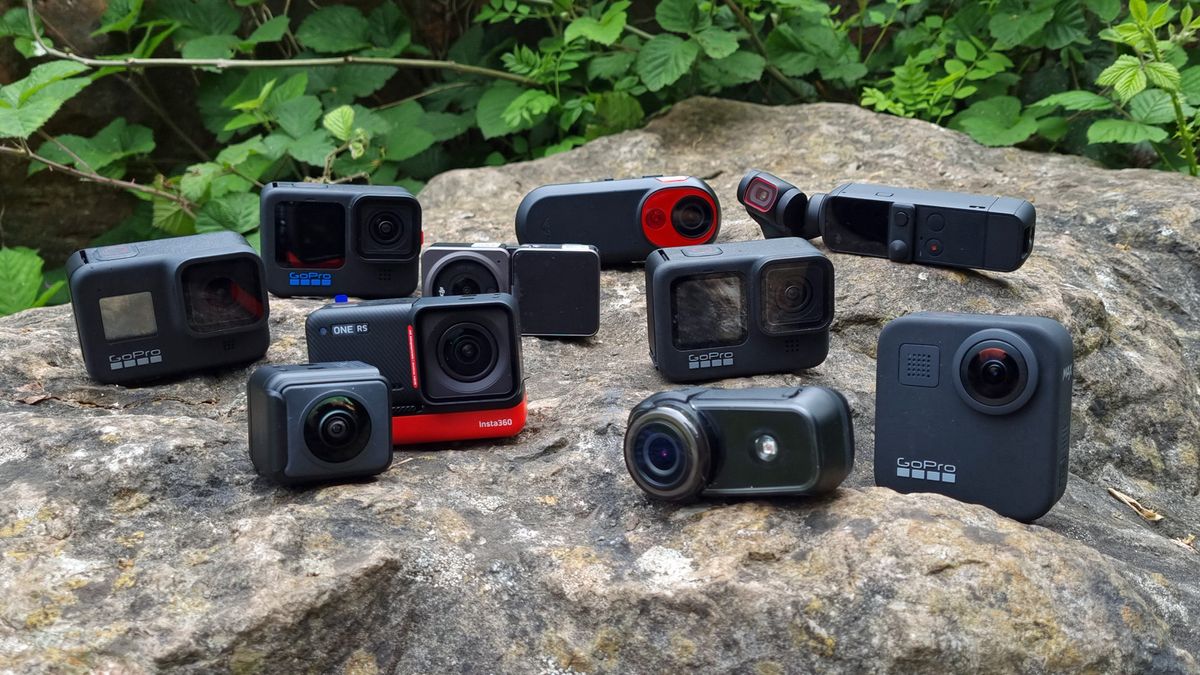
How to choose best action camera
The right camera depends less on the largest resolution number than on how you record, mount, edit, and share your footage.
Resolution and frame rate
Resolution controls how much detail the image contains, while frame rate affects motion and slow-motion flexibility. The DJI Osmo Action 6, Insta360 X5, and Insta360 Ace Pro 2 offer 8K modes for cropping and reframing. The DJI Osmo Action 4 models trade 8K for 4K at 120fps, which is often more useful for fast sports and slow motion.
A basic 4K30fps camera can look good in daylight, but it gives you less flexibility when the subject moves quickly or when you need to crop the frame.
Sensor and low-light imaging
Larger sensors and larger pixels generally give an action camera more information to work with in dim scenes. The DJI Osmo Action 6 uses a 1/1.1-inch sensor, while several other advanced models use 1/1.3-inch sensors. Insta360's X5 uses dual 1/1.28-inch sensors for its 360-degree system.
Processing matters too. The Ace Pro 2 uses PureVideo mode and dual AI chips, while the X5 uses a triple AI chip design. These features are more relevant to evening streets, indoor scenes, and shaded trails than to bright midday recording.
Stabilization and horizon control
Electronic stabilization reduces visible shake, but not every system does the same job. Basic EIS can smooth a handheld clip. DJI's RockSteady and HorizonSteady modes go further by controlling rolling movement and, in some modes, keeping the horizon level.
The Insta360 X5 takes a different route because it records a full sphere before applying FlowState Stabilization and Horizon Lock. That gives you more reframing freedom, but it also adds editing work.
The best stabilization is the one that matches the movement you actually make, not the one with the longest feature name.
Waterproofing and mounting
Check whether the listed underwater depth applies to the camera itself or to a protective case. The DJI Osmo Action 6 reaches 20m without a case, the DJI Osmo Action 4 reaches 18m, and the Insta360 Ace Pro 2 reaches 12m. The AKASO Brave 4 and EK7000 reach 40m with their waterproof cases.
Mounting affects day-to-day usability just as much. DJI's magnetic quick-release system is convenient for changing angles, while the Action 6 Enhanced Combo adds a 1.5m extension rod. The X5's invisible selfie stick effect opens up perspectives that ordinary forward-facing cameras cannot produce.
Battery, storage, and audio
Battery capacity and recording time matter when the camera is mounted somewhere difficult to access. The Action 5 Pro and Action 6 models list up to four hours of recording in normal conditions. The Action 6 models also include 50GB of built-in storage, while the AKASO EK7000 requires a separate microSD card.
For vlogging, microphone support can matter more than another resolution mode. DJI's Action 4, Action 5 Pro, and Action 6 models can connect directly to compatible DJI microphone transmitters. The Insta360 Ace Pro 2 adds a detachable Wind Guard, and the X5 uses a four-microphone array with wind handling.
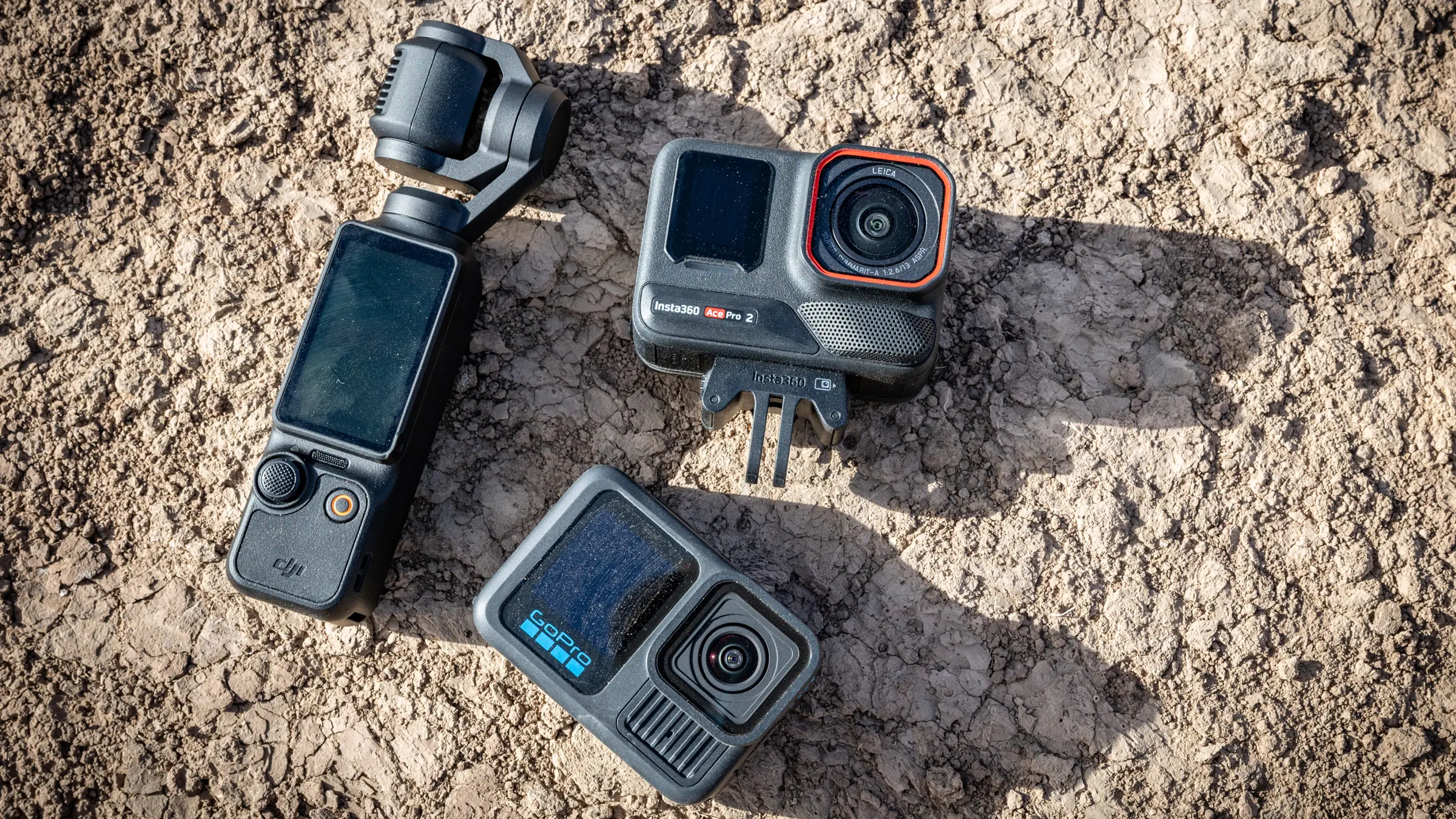
Frequently asked questions
Is 8K necessary for an action camera?
No. 8K can provide extra room for cropping and reframing, especially on the DJI Osmo Action 6 and Insta360 X5. For fast sports, 4K at 120fps may be more useful because it captures smoother motion and supports slow-motion edits.
Which action camera is best for underwater use?
The answer depends on depth and whether you are comfortable using a case. The DJI Osmo Action 6 reaches 20m without a case, while the AKASO Brave 4 and EK7000 reach 40m with their waterproof cases. The Insta360 Ace Pro 2 is rated to 12m without a case.
Is a 360-degree camera better than a regular action camera?
A 360-degree camera is better when you want to choose the viewpoint after recording or create third-person perspectives. A regular camera is easier when you already know where the lens should point and want a finished clip with minimal editing.
Which model is best for vlogging?
The Insta360 Ace Pro 2 has a 2.5-inch flip touchscreen, low-light modes, a Leica co-engineered lens, and a Wind Guard. DJI's Osmo Action models are also strong for vlogging because they support direct connections to compatible DJI microphone transmitters.
Do action cameras work in cold weather?
Several models in this list are designed for cold conditions. The DJI Osmo Action 5 Pro is listed as working for up to 3.6 hours at -20 degrees Celsius, while the Action 4 is listed as operating down to -20 degrees Celsius. Cold can still reduce battery performance, so spare batteries should be kept warm until needed.
Do these cameras include memory cards?
The DJI Osmo Action 5 Pro Bundle includes a 64GB microSDXC card. The AKASO EK7000 specifically does not include a microSD card, and the DJI Osmo Action 6 models rely partly on their 50GB built-in storage. Check the individual package before heading out.
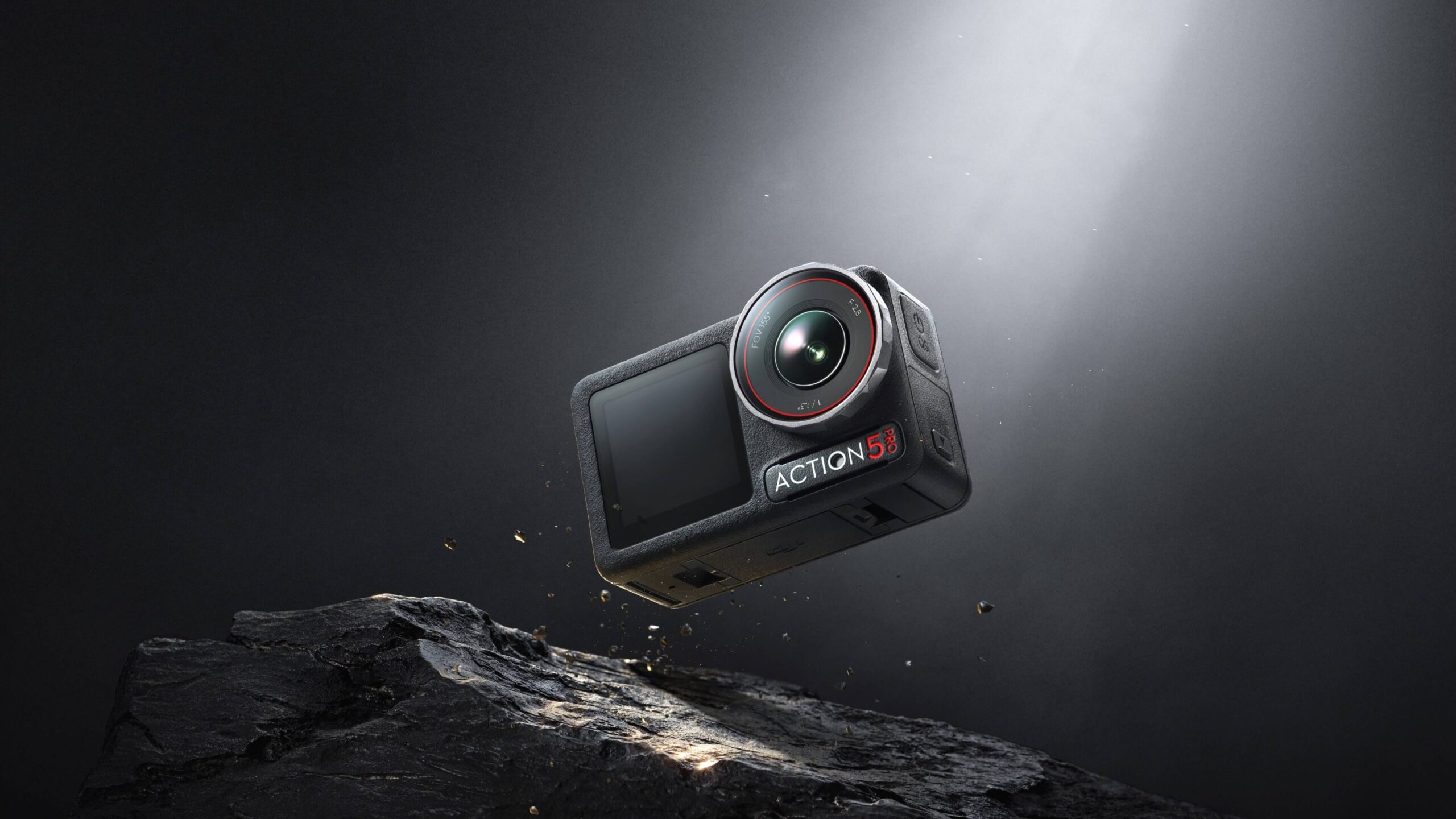
The bottom line
The DJI Osmo Action 6 Enhanced is the strongest all-purpose pick in this Best action camera roundup. Its 8K capture, 1/1.1-inch sensor, variable aperture, 50GB built-in storage, stabilization, direct microphone support, and 20m waterproofing give it the broadest range of useful capabilities.
Choose the Insta360 X5 instead when the ability to reframe a 360-degree recording matters more than a simple forward-facing workflow. For low-light vlogging, the Insta360 Ace Pro 2 is the more specialized alternative, while the DJI Osmo Action 4 models remain compelling for 4K at 120fps.
If you are undecided, choose the Action 6 Enhanced for maximum flexibility, or the DJI Osmo Action 4 Essential for a simpler 4K setup.
As an Amazon Associate we earn from qualifying purchases.