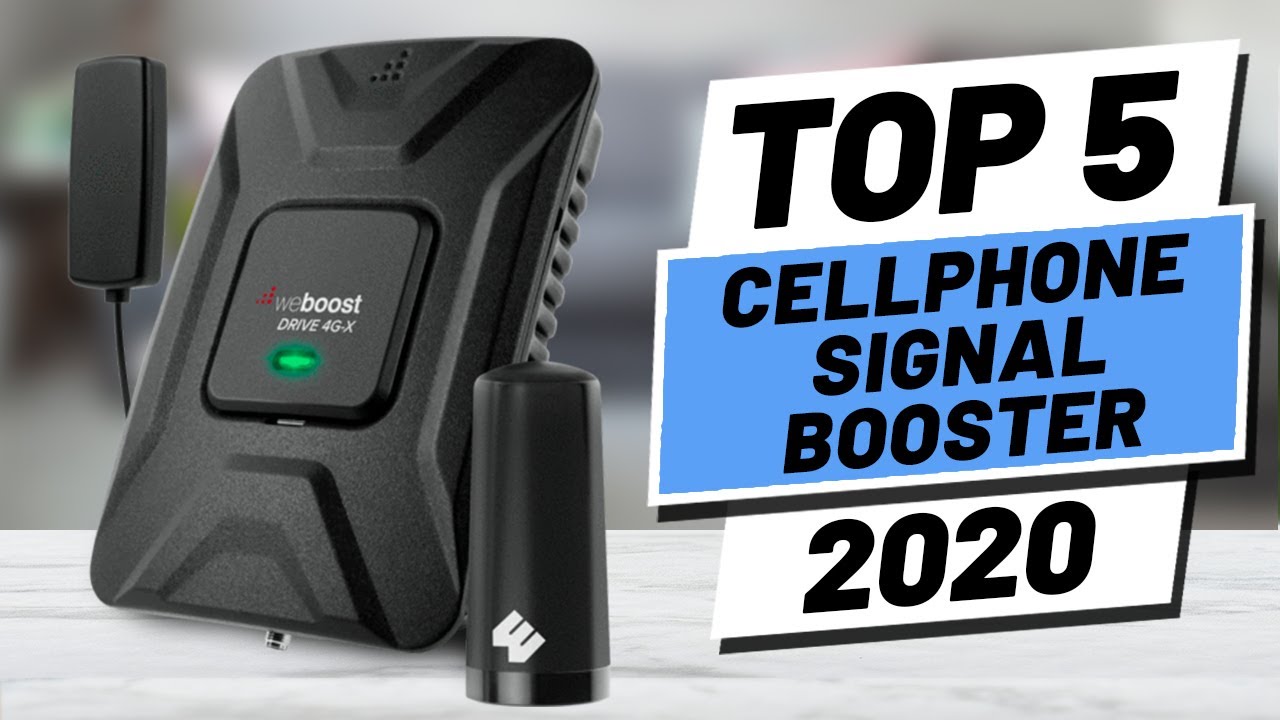

Weak signal becomes a real problem when a call drops in the home office, a video stalls in the cabin, or a truck loses connectivity miles from town. The Best cell phone booster for you depends less on the headline gain number than on usable outdoor signal, supported bands, antenna placement, and the space you need to cover.
We compared ten home, office, vehicle, and rural-area boosters. The group ranges from compact single-room units to multi-room systems and a purpose-built off-road model. Every option here requires some existing signal outside, since an amplifier cannot create a connection where the antenna receives none.
For most home offices, the HiBoost Home Office 2000 is the best starting point, while the list also includes larger rural systems, a truck and RV specialist, and the rugged weBoost Drive Reach Overland.
| # | Product | Award | Coverage | Supported bands or gain | Best for |
|---|---|---|---|---|---|
| 1 | HiBoost Home Office 2000 | Best overall | Up to 2, 000 sq. ft. | Bands 12, 13, 17, 5, 2/25, 4 | Home offices and small homes |
| 2 | Nstcell 7000 Sq Ft | Best for large rural homes | Up to 7, 000 sq. ft. | Up to 70 dB gain | Multi-room rural coverage |
| 3 | SignalBrick Truck RV | Best for trucks and RVs | Vehicle focused | 5G, 4G LTE, 3G | Mobile connectivity |
| 4 | SNDcellup 5500 Sq Ft | Best for broad home coverage | Up to 5, 500 sq. ft. | Up to 70 dB gain | Homes with one or two rooms needing help |
| 5 | Phonetone Band 12/13/17 | Best for low-band coverage | Up to 4, 500 sq. ft. | Bands 12, 13, 17 | Verizon and AT&T low-band users |
| 6 | weBoost Drive Reach Overland | Best rugged vehicle pick | 4x4 and Overland use | Up to 50 dB gain | Off-road vehicles |
| 7 | HiBoost Home Office 2500 | Best app-guided setup | Up to 2, 500 sq. ft. | 62 dB gain, bands 12, 13, 17, 5, 2/25, 4 | Offices and basements |
| 8 | Bamwirz Multi Room 2500 | Best simple multi-room option | Up to 2, 500 sq. ft. | Up to 65 dB gain, bands 5, 12, 13, 17 | Smaller homes and garages |
| 9 | HiBoost Hero 3000 | Best antenna flexibility | Up to 3, 000 sq. ft. | Up to 65 dB gain, bands 2/4/5/12/13/17/25 | Users who want two indoor antenna choices |
| 10 | ZORIDA ACE 5S | Best compact setup | Up to 2, 000 sq. ft. | Up to 72 dB gain, bands 12/17, 13, 5, 4, 2/25 | Single rooms and small homes |
1. HiBoost Home Office 2000: Best Overall

Pros
- Supports all major U.S. carriers
- Covers up to 2, 000 square feet
- LCD and app help locate the outdoor antenna
- Directional antenna can pull in a distant tower
- AGC adjusts gain automatically
Cons
- Requires at least one bar outside
- Directional antenna takes more careful aiming
- Coverage is smaller than the largest systems here
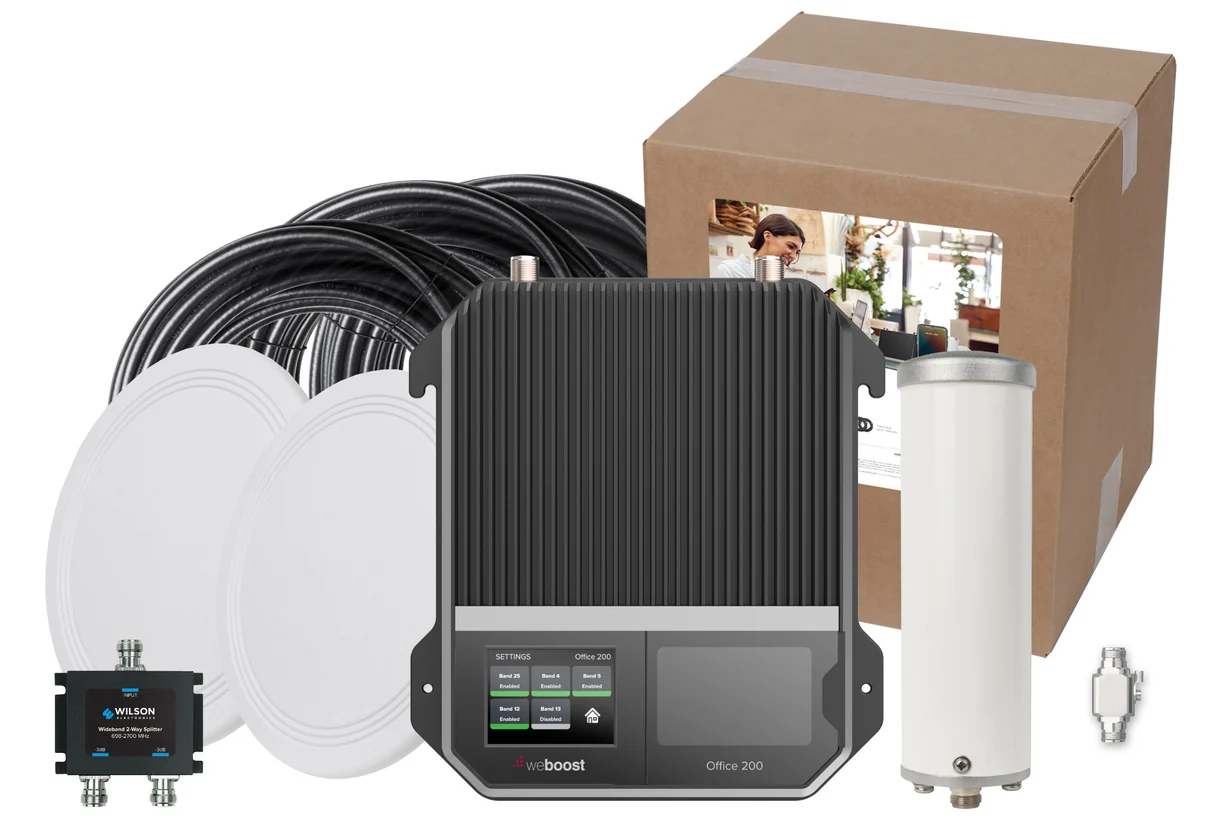
Best for: home office users who want broad band support and clear installation feedback.
The HiBoost Home Office 2000 is the easiest recommendation for a typical office, basement, or compact home. Its useful advantage is not just the coverage claim. The color LCD gives you a live view of signal strength, while the HiBoost Signal Supervisor app can help locate a better outdoor antenna position. That turns a trial and error installation into a more understandable process.
The booster supports bands 12, 13, and 17 in the 700 to 750 MHz range, band 5 from 800 to 850 MHz, bands 2 and 25 around 1900 MHz, and band 4 from 1700 to 2100 MHz. That broad spread matters because carrier coverage varies by region and tower. It is described as compatible with 5G and 4G LTE, but the 5G support is tied to 5G deployed through existing supported bands, not every future or high frequency 5G signal.
The directional outdoor antenna is a good fit for a rural property or a house where the strongest tower is in one known direction. AGC, or automatic gain control, keeps the amplifier from running at one fixed level when the incoming signal changes. Multiple devices can use the boosted connection at once, which suits a work-from-home space with phones, tablets, and hotspots nearby.
Compared with the HiBoost Home Office 2500, this model has the same broad band approach but a smaller stated coverage area. The newer HiBoost has a stronger app-focused setup and 62 dB maximum gain, while this version offers the more informative LCD and a directional antenna. Its weakness is the installation discipline that a directional antenna demands. Skip it if you cannot get any outdoor signal or do not want to aim an antenna. For a small home office with a real but weak outside signal, it is the most balanced pick.
2. Nstcell 7000 Sq Ft: Best for Large Rural Homes

Pros
- Designed for three to five rooms
- Includes two indoor panel antennas
- Up to 70 dB maximum gain
- Supports all U.S. carriers
- Useful coverage guidance based on outdoor signal
Cons
- Maximum coverage depends heavily on outside signal
- Needs about 32 feet between outdoor and indoor antennas
- Installation is more involved than a single-room system
Best for: rural homes with several rooms and enough outdoor signal to distribute indoors.
The Nstcell 7000 Sq Ft is the large-property specialist in this group. Its two indoor panel antennas are better suited to spreading coverage through several rooms than a single small whip antenna. That makes it a logical choice for a rural home, office, or broad floor plan where one central indoor point would leave dead areas.
Nstcell lists 70 dB maximum gain and 17 dBm maximum output power. Those figures describe amplification potential, not a guarantee that every room will receive full service. The manufacturer gives a more useful explanation: with one or two outside bars, expected indoor coverage is about 800 square feet, while three to four bars may reach about 3, 000 square feet and five bars may approach 7, 000 square feet. That is the kind of limitation buyers need to understand before mounting anything.
The unit supports 5G and 4G LTE signals on the existing bands permitted for cellular enhancement. It works with all U.S. carriers and uses an outdoor log-periodic antenna. The recommended roughly 32-foot separation between the outdoor and indoor antennas helps reduce feedback, so the layout of your home matters as much as the amplifier itself.
The SNDcellup 5500 Sq Ft is a better match for one or two rooms, but the Nstcell has the stronger multi-room design because it includes two panel antennas. Its main weakness is also its defining feature: you need room to position multiple antennas correctly. A cramped apartment or small office does not need this much hardware. A rural house with weak but measurable outdoor signal does.
If the challenge is specifically cellular reception rather than indoor Wi-Fi distribution, it helps to understand why cellular and home network coverage are separate problems. This booster addresses the signal reaching your phones, not the wireless network created by your router.
3. SignalBrick Truck RV: Best for Trucks and RVs

Pros
- Built for truck and RV use
- Supports multiple connected users
- Omnidirectional outdoor antenna receives from different directions
- Includes a 12V DC power cord
- Outdoor antenna resists dust, oil, water, and shaking
Cons
- Not intended as a home coverage system
- Omnidirectional reception is less targeted than a directional antenna
- Maximum-distance claim depends on terrain and signal conditions
Best for: truckers, RV travelers, and mobile users who need a vehicle-focused installation.
The SignalBrick Truck RV makes more sense on a moving vehicle than any of the home units here. It is designed for stationary and mobile use, and the included 12V DC power cord fits the practical needs of a truck or RV installation. Multiple users can connect at the same time, including phones, tablets, and data modems.
Its omnidirectional outdoor antenna is the key design choice. Instead of aiming at one tower, it receives signals from different directions, which is helpful when the vehicle changes position or when the best tower is not obvious. The spring design is intended to handle movement, while the exterior is described as resistant to dust, oil, and water. Those details matter more in a vehicle than a display or app.
SignalBrick lists support for 5G, 4G LTE, and 3G across U.S. carriers. It also claims a communication distance of five to eight miles, but terrain, tower position, obstructions, and the actual signal at the antenna will determine what you experience. The booster needs a signal to enhance, just like the home models.
The weBoost Drive Reach Overland is the more rugged and established-feeling vehicle alternative, with a 50 dB maximum gain rating and a dedicated off-road mounting bracket. SignalBrick counters with easier one-person installation and an omnidirectional antenna. The weakness is that its feature list does not identify specific supported bands, so buyers with a carrier or region that relies on particular frequencies should verify compatibility before ordering.
For a truck cabin, RV interior, or mobile work setup, this is the more sensible design than adapting a home booster. It is not the choice for someone trying to blanket a house.
4. SNDcellup 5500 Sq Ft: Best for Broad Home Coverage

Pros
- Supports all U.S. carriers
- Up to 70 dB maximum gain
- Covers one or two rooms
- Supports bands used by major U.S. networks
- Automatic gain control helps manage changing signal levels
Cons
- Coverage depends sharply on outdoor signal
- The light purple finish will not suit every installation
- Requires outdoor antenna placement and cable routing
Best for: homes needing stronger cellular service across one or two rooms.
The SNDcellup 5500 Sq Ft is a straightforward home amplifier with an unusually large headline coverage figure for a system described as best for one or two rooms. That apparent mismatch is explained by the signal conditions. The listing estimates about 300 square feet with one or two outside bars, 2, 500 square feet with three or four bars, and up to 5, 500 square feet with five bars.
It supports bands 2 and 25, band 4 and 66, band 5, bands 12 and 17, and band 13. That gives it useful coverage across the major U.S. carrier bands. Its 70 dB maximum gain and 17 dBm maximum output power provide the amplification headroom, while AGC adjusts operation as the incoming signal changes.
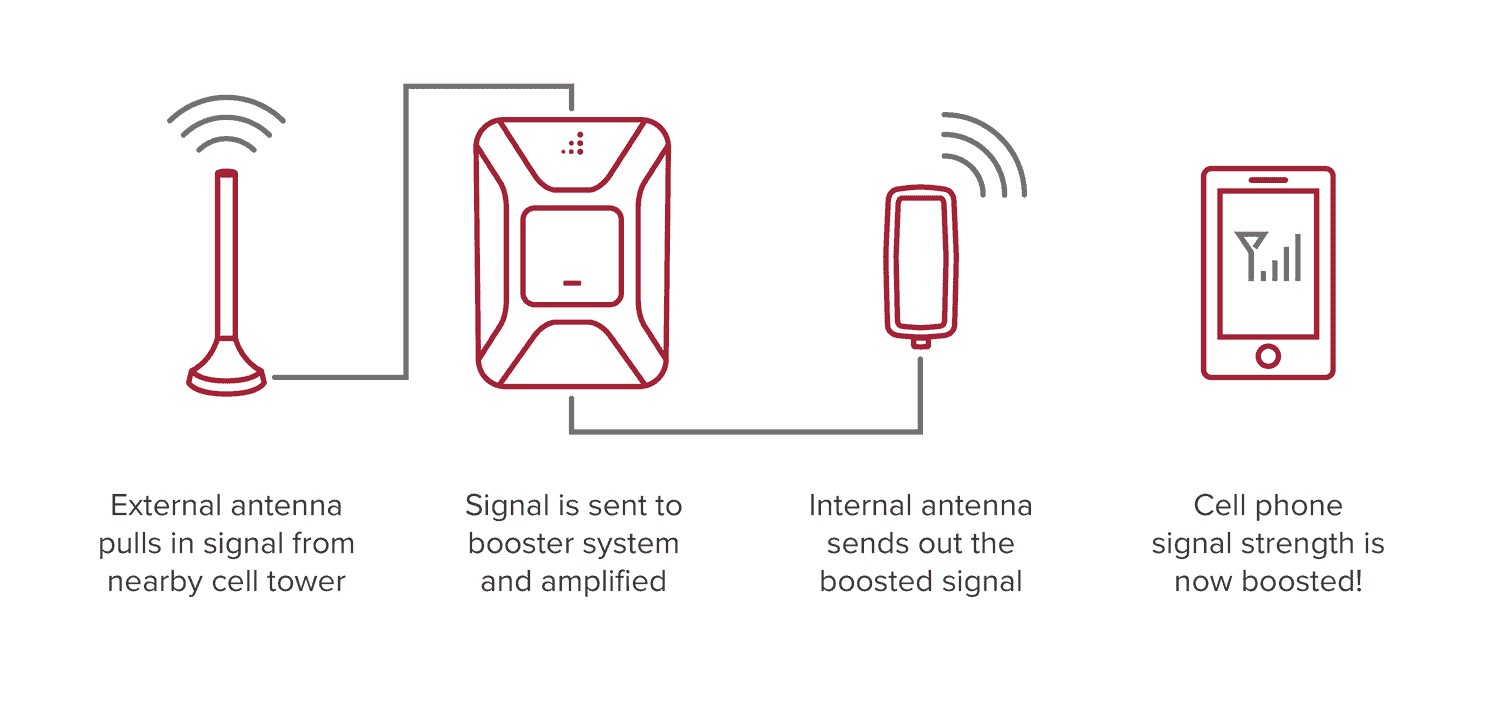
The installation follows the familiar booster pattern. The outdoor log-periodic antenna collects the available signal, the amplifier processes it, and the indoor antenna distributes it. The product recommends about 32 feet between outdoor and indoor antennas, and the power should be off while antennas are installed or adjusted.
Compared with the Nstcell 7000 Sq Ft, SNDcellup is more appropriate for a smaller footprint and has one fewer indoor panel antenna. The Nstcell is the stronger choice for three to five rooms, while this model avoids overbuilding a one or two-room setup. Its weakness is that the 5, 500-square-foot claim requires excellent outdoor signal, something many rural properties do not have. Pick it when the outside signal is present and the interior problem is concentrated in a few rooms.
5. Phonetone Band 12/13/17: Best for Low-Band Coverage

Pros
- Focuses on bands 12, 13, and 17
- Supports 5G through existing supported bands
- Directional antenna helps target a tower
- Covers up to 4, 500 square feet
- AGC and LED status indicator
Cons
- Band support is narrower than most options here
- 5G depends on carrier deployment through those bands
- Directional antenna needs careful positioning
Best for: Verizon and AT&T users whose local service relies on bands 12, 13, or 17.
The Phonetone Band 12/13/17 is the most specialized home unit in the roundup. Rather than covering a broad mix of cellular frequencies, it concentrates on bands 12, 13, and 17. Those lower-frequency bands can travel well across distance and through obstacles, making this design relevant to rural homes, cabins, basements, and other places where coverage arrives from far away.
The booster supports 4G LTE and 5G when the carrier has deployed 5G through those existing 4G bands using Dynamic Spectrum Sharing. It does not mean that every 5G connection or every 5G frequency is supported. That distinction is important, especially if your phone regularly switches between different network bands.
Phonetone lists indoor coverage up to 4, 500 square feet and includes a high-gain directional antenna. Pointing that antenna toward the nearest tower can produce a stronger incoming signal than an omnidirectional design when the tower direction is known. AGC adjusts the gain automatically, and an LED indicator shows the working condition without requiring a phone app.
The HiBoost Home Office 2000 is the better all-carrier choice when you need bands 2, 4, 5, 12, 13, 17, and 25. Phonetone wins only when its narrower band set matches the actual network in your area. Its weakness is obvious: T-Mobile or rural users relying on other supported frequencies should not assume this unit will cover them. Check your carrier bands first, then choose it for a focused low-band installation.
6. weBoost Drive Reach Overland: Best Rugged Vehicle Pick

Pros
- Designed for 4x4 and Overland vehicles
- Includes a tough outdoor antenna and mounting bracket
- Compatible with all U.S. carriers
- Supports current 5G technology
- U.S.-based support and a two-year warranty
Cons
- Weighs 6.5 pounds
- The 20.75-inch length needs mounting space
- Maximum gain is 50 dB, lower than several home units
Best for: off-road drivers who need a purpose-built, durable vehicle system.
The weBoost Drive Reach Overland is the clear specialist for demanding vehicle use. It combines the booster with a tough outdoor antenna and versatile mounting bracket, so the package is designed around an off-road vehicle rather than adapted from a home kit. That difference shows in the physical design and the emphasis on mounting.
It supports all U.S. carriers, including Verizon, AT&T, T-Mobile, and U.S. Cellular, and supports 5G technology. The listed maximum gain is 50 dB, which is lower on paper than the 70 dB and 72 dB figures claimed by some home models. Gain numbers are not directly comparable across completely different antenna and vehicle setups, though. In a moving 4x4, antenna durability and placement can matter more than chasing the largest number.
The hardware is substantial. It measures 20.75 inches long, 11.5 inches wide, and 3.75 inches high, and weighs 6.5 pounds. That is not a discreet accessory to toss in a glovebox. It needs a secure mounting plan, particularly if the vehicle sees rough tracks. U.S.-based support is available through the app, chat, phone, or email, and the product includes a two-year warranty.
The SignalBrick Truck RV is easier to position for general truck and RV use and uses an omnidirectional outdoor antenna. weBoost is the better fit when the vehicle itself is part of the adventure and the installation must tolerate rough conditions. Its weakness is bulk, weight, and the fact that it is excessive for an ordinary commuter car. For an off-road build, it is the vehicle booster we would keep.
Before installing a vehicle unit, it is useful to separate cellular reception from the phone's own hotspot behavior and understand what affects coverage when you leave urban areas. A booster helps only with the signal reaching its outdoor antenna.
7. HiBoost Home Office 2500: Best App-Guided Setup

Pros
- App and display support installation
- Covers up to 2, 500 square feet
- 62 dB maximum gain
- Supports all U.S. carriers
- Three-year warranty and lifetime technical support
Cons
- Coverage varies greatly with outside signal
- The unit still requires outdoor antenna installation
- Less coverage than the large multi-room systems
Best for: home office users who want guided setup and broad band compatibility.
The HiBoost Home Office 2500 is the more modern, app-centered alternative to the first-place HiBoost. The SignalSupervisor app offers installation videos, outdoor signal detection, online support, and a way to monitor the system. The main unit also has an HD display, so you are not forced to use a phone for every adjustment.
Its 62 dB maximum gain is paired with support for bands 12, 13, and 17, band 5, bands 2 and 25, and band 4. That is a useful spread for all U.S. carriers and for 5G deployed through compatible existing bands. HiBoost says the unit can serve two to three rooms and reach up to 2, 500 square feet under suitable conditions.
Automatic gain adjustment helps the booster respond to the incoming signal instead of amplifying at a fixed level. The product also supports multiple users, which makes it a reasonable home office solution when several phones and connected devices need more reliable service. The three-year manufacturer warranty and lifetime technical support add reassurance for an installation that may require some troubleshooting.
The original HiBoost Home Office 2000 has a directional antenna and a more detailed LCD-oriented pitch, while this model gives the app a larger role and extends the stated coverage to 2, 500 square feet. Neither eliminates the need for an outdoor antenna and cable route. The weakness is its middle-ground position: it does not have the largest coverage or the highest stated gain. Choose it when guided setup is more important than maximum scale.
8. Bamwirz Multi Room 2500: Best Simple Multi-Room Option

Pros
- Supports all U.S. carriers
- Works with bands 5, 12, 13, and 17
- Automatic gain control
- LCD screen shows operating information
- Designed for homes, garages, farms, and warehouses
Cons
- Band support is narrower than the HiBoost models
- Coverage depends on outside signal
- No app is listed for installation guidance
Best for: smaller homes or workspaces that need a simple low-band booster.
The Bamwirz Multi Room 2500 keeps the feature set uncomplicated. It is designed for homes, offices, garages, farms, remote areas, warehouses, and metal buildings, with a stated coverage range from 3, 000 to 7, 000 square feet depending on the outside signal. The product information separately identifies a 2, 500-square-foot size, so it is better understood as a smaller multi-room unit than a guaranteed whole-property system.
Its supported bands are 5, 12, 13, and 17. That covers several important low and midrange cellular bands, and the listing says it works with all U.S. carriers and compatible 5G service. It does not offer the broader band list found on the HiBoost Home Office models or the Phonetone's more focused directional setup.
The unit lists up to 65 dB maximum gain and uses AGC to detect signal strength and adjust operation. An LCD screen provides local status information. FCC and IC certification are listed, and the product says it does not require registration, a subscription, or carrier consent. Installation still depends on putting the outdoor antenna where it can receive at least one or two bars.
The SNDcellup 5500 Sq Ft is the stronger alternative when the house needs more room coverage and you want bands 2, 4, 25, and 66 included. Bamwirz is simpler, but its lack of listed app support means more of the antenna positioning work falls to you. It is a reasonable choice for a modest home or garage when bands 5, 12, 13, and 17 match your local service.
Do not confuse a cellular amplifier with a router extender. If the problem is poor wireless signal after your internet connection reaches the house, the right way to extend a router connection indoors is a different decision.
9. HiBoost Hero 3000: Best Antenna Flexibility

Pros
- Up to 65 dB maximum gain
- Two indoor antenna options
- Supports bands 2, 4, 5, 12, 13, 17, and 25
- App provides installation help
- Three-year manufacturer warranty
Cons
- Outdoor antenna and cable routing are required
- Hotspot devices cannot be boosted according to the listing
- Setup may take one to two hours
Best for: buyers who want to choose between a panel antenna and a compact whip antenna.
The HiBoost Hero 3000 stands out because it gives the installer two indoor antenna choices. The panel antenna is intended for broader coverage in a larger space, while the compact whip antenna suits a more localized or mobile arrangement. That flexibility is useful when the room layout is uncertain or when a panel would be awkward to mount.
Coverage is listed up to 3, 000 square feet, with 65 dB maximum gain. The supported bands include 2, 4, 5, 12, 13, 17, and 25, giving it one of the broadest frequency profiles in this group. HiBoost specifically ties its 5G support to DSS within the permitted 4G bands, so it will not enhance every type of 5G signal.
The HiBoost app can help find the outdoor antenna position, provide installation guidance, and connect users with live technical support. The listing says most users complete installation within one to two hours with guidance. It also recommends an outdoor signal between roughly minus 100 dBm and minus 120 dBm, described as approximately one or two bars, and notes that a compatible tower should be within three to five miles.
The HiBoost Home Office 2500 is a cleaner choice for an office that values display and app integration, while Hero is more adaptable physically. The HiBoost Home Office 2000 offers similar broad bands with a directional antenna and a more compact coverage target. Hero's weakness is the installation work and the explicit limitation that hotspot devices cannot be boosted. Pick it when antenna choice matters more than a simpler, smaller package.
10. ZORIDA ACE 5S: Best Compact Setup

Pros
- Compact indoor unit
- Up to 72 dB maximum gain
- Supports all U.S. carriers
- App offers installation assistance
- Covers up to 2, 000 square feet
Cons
- Band support is not as broad as the HiBoost Hero
- Coverage depends on outdoor signal
- App registration is needed for the listed one-to-one support
Best for: a small home, studio, office, or single room with usable outside signal.
The ZORIDA ACE 5S is the smallest-looking home option in this roundup, with an indoor unit measuring 5.5 inches long, 3 inches wide, and 1 inch high. Its compact whip antenna can attach directly to the booster, which makes placement easier than a separate indoor panel in a small room.
ZORIDA lists up to 72 dB maximum gain and coverage for as many as 2, 000 square feet. It supports bands 12 and 17, band 13, band 5, bands 4 and 2/25, and 3G, 4G LTE, and 5G through compatible existing frequencies. Multiple devices can use the enhanced signal at the same time.
The ZORIDA app provides one-to-one technical support, step-by-step installation videos, outdoor antenna placement help, and before-and-after signal data. The product also lists FCC and IC certification, a three-year warranty, and lifetime online technical support. Those features are helpful because the high gain figure does not remove the need to find a suitable outside signal.
The Bamwirz Multi Room 2500 is a similar compact-home alternative, but Bamwirz covers only bands 5, 12, 13, and 17. ZORIDA has the broader band set and the more explicit app service. The HiBoost Home Office 2000 remains the better choice for a directional outdoor antenna and a live LCD, while ZORIDA is easier to fit on a desk or shelf. Choose it for a small space where physical size and guided setup matter.
How to choose best cell phone booster
A cellular booster is only as effective as the signal captured outside, so start with the carrier, outdoor signal, and installation layout before comparing headline coverage.
Carrier bands
A booster must support the frequencies your carrier uses nearby. Bands 12, 13, and 17 are common lower-frequency options in this group, while bands 2, 4, 5, 25, and 66 add broader compatibility for different networks and regions.
For the widest carrier flexibility, the HiBoost Home Office models and HiBoost Hero list more supported bands than Phonetone or Bamwirz. A narrower band set can still work well when it matches your local tower. Check your phone and carrier information rather than assuming every product labeled 5G handles every 5G signal.
Outdoor signal
A booster amplifies an existing cellular signal. It cannot create service in a place where the outdoor antenna receives nothing. Several products specify that at least one or two bars outside are needed, and the actual indoor coverage can shrink sharply when the outside signal is weak.
Walk around the roofline, upper floor, or exterior wall with your phone before buying. The strongest point may not be where you originally planned to mount the antenna.
The most important coverage number is the signal available at the outdoor antenna, not the largest square-foot figure on the box.
Coverage layout
Coverage claims vary with signal strength, walls, antenna separation, and the indoor antenna type. A single whip antenna is practical for a small office, while panel antennas spread signal more deliberately through multiple rooms.
The Nstcell uses two indoor panel antennas for broader distribution. The HiBoost Hero lets you choose between a panel and whip antenna. For one room, a large multi-room system may add installation complexity without solving a problem that a smaller design could handle.
Gain and automatic control
Gain describes how much the amplifier can increase a received signal, but a higher number does not guarantee better results. AGC is useful because it automatically adjusts amplification as signal conditions change and can help prevent unstable operation.
The listed maximum gain ranges from 50 dB on the weBoost Drive Reach Overland to 72 dB on the ZORIDA ACE 5S. Compare those figures only alongside antenna design, supported bands, and the intended setting. A rugged vehicle system and a home directional system face different reception challenges.
Antenna installation
Outdoor antenna position, cable routing, and separation between outdoor and indoor antennas determine whether the system works cleanly. Directional antennas can be stronger when the tower direction is known, while omnidirectional antennas are convenient for moving vehicles.
Keep the amplifier powered off while connecting or adjusting antennas. Follow the recommended separation, especially where a product specifies roughly 32 feet, and plan the cable route before drilling or mounting anything.
Frequently asked questions
Do cell phone boosters work with every carrier?
The products in this roundup are described as compatible with all or multiple U.S. carriers, but compatibility still depends on supported bands. A carrier may use frequencies that a narrower booster does not list. Check the bands used in your area before choosing a model.
Can a cell phone booster improve 5G?
Yes, but the 5G support described by these products generally applies to 5G deployed through existing supported 4G bands, often using Dynamic Spectrum Sharing. It does not mean the booster supports every high-frequency or future 5G deployment. Your carrier, phone, and local tower must use a compatible band.
Will a booster work if there is no signal outside?
No. A booster needs an existing signal at the outdoor antenna. If the exterior has no usable reception, moving the antenna higher or to a clearer location may help, but an amplifier cannot generate a connection from nothing.
How much area can one booster cover?
The answer depends on the outside signal, building materials, antenna placement, and indoor antenna design. A product rated for 7, 000 square feet may cover far less with only one or two outside bars. Treat the stated area as a best-case guide rather than a guarantee for every room.
Do I need an app to install a cellular booster?
Not always. The HiBoost, ZORIDA, and some other products use apps for signal detection, setup instructions, or technical support, while other systems can be installed from the included manual and local display. An app is helpful when finding the strongest outdoor antenna position is difficult.
Can a home booster be used in a truck or RV?
A home booster is not automatically suited to a moving vehicle because it may use different power, antenna, and mounting arrangements. The SignalBrick Truck RV and weBoost Drive Reach Overland are designed specifically for vehicle use. Choose a vehicle model when vibration, 12V power, and changing tower direction are part of the job.
Will a booster improve Wi-Fi?
A cellular booster improves the cellular signal received by phones and compatible cellular devices. It does not extend the wireless range of a home router. If your phone has a strong cellular connection but weak Wi-Fi in another room, you need to address the router or Wi-Fi network instead.
The bottom line
The Best cell phone booster for most small homes and offices is the HiBoost Home Office 2000. Its broad band support, directional outdoor antenna, LCD, app assistance, and 2, 000-square-foot target make it easier to match to a normal home office than the larger multi-room systems.
Choose the Nstcell 7000 Sq Ft when a rural home needs coverage across several rooms and you can provide the outdoor signal and antenna separation it requires. For vehicles, the weBoost Drive Reach Overland is the stronger dedicated pick for off-road use, while the SignalBrick Truck RV is a practical alternative for general truck and RV installations.
If you are undecided, measure the signal outside first, then choose the smallest system whose bands and antenna layout match your building.
As an Amazon Associate we earn from qualifying purchases.