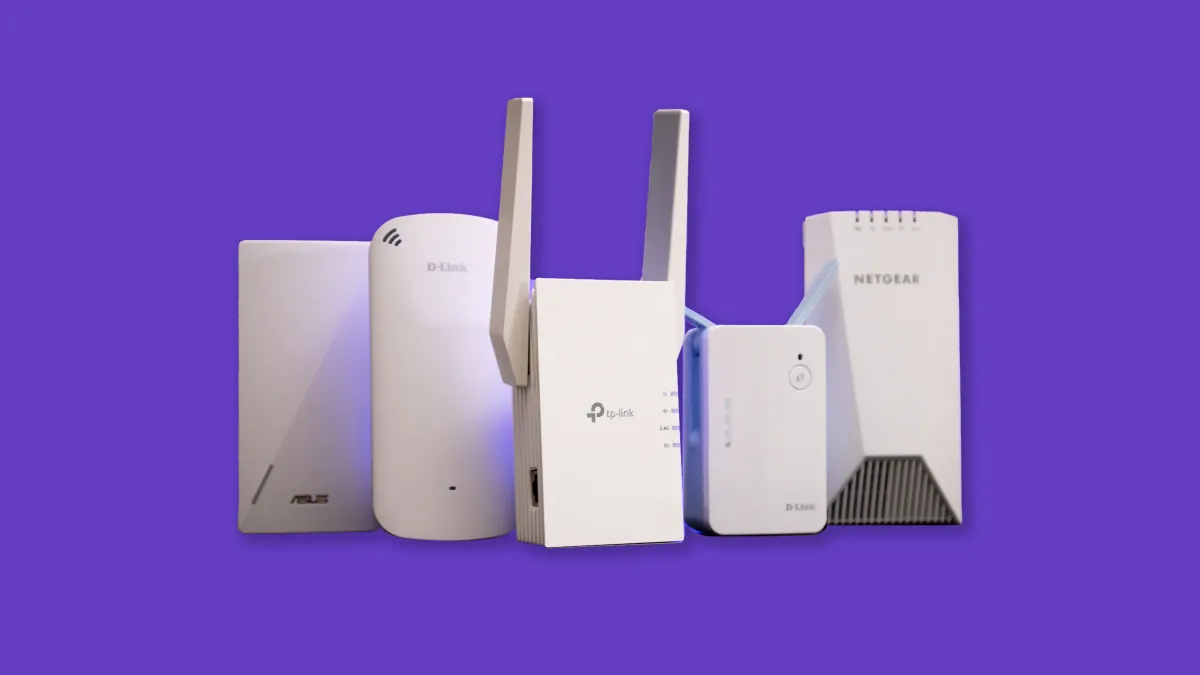

A weak signal in one bedroom, garage, or upstairs office is usually a placement problem before it is a speed problem. The right extender can pull a usable connection into that dead zone, but the wrong one can simply repeat a weak signal and leave every device frustrated.
We compared ten genuine home range extenders across older dual-band designs, WiFi 6, and WiFi 7 hardware. The Best wifi boosters for home start with the TP-Link RE315 for ordinary coverage problems, while the rest range from compact low-demand repeaters to high-capacity WiFi 7 models.
Our top pick is the TP-Link RE315, with options below for large homes, wired access points, crowded networks, and newer WiFi 7 routers.
Comparison table
| # | Product | Award | Bands | Claimed coverage | Device capacity | Best for |
|---|---|---|---|---|---|---|
| 1 | TP-Link RE315 | Best overall | 5 GHz, 2.4 GHz | Up to 1, 500 sq. ft. | Up to 32 | Most homes |
| 2 | Eboous Long Range Extender | Best for broad coverage | Not specified | Up to 15, 000 sq. ft. | 65+ | Large homes |
| 3 | TP-Link RE223BE | Best dual-band WiFi 7 | 5 GHz, 2.4 GHz | Up to 2, 400 sq. ft. | Up to 64 | WiFi 7 routers without 6 GHz |
| 4 | Aodcaopul WiFi Extender | Best simple repeater | 2.4 GHz | Up to 9, 789 sq. ft. | More than 40 | Basic dead zones |
| 5 | TGDLLF WiFi Extender | Best compact option | 2.4 GHz, dual-band | Up to 5, 000 sq. ft. | Up to 45 | Small homes and travel |
| 6 | RAGOAT WiFi Extender | Best for operating modes | 5 GHz, 2.4 GHz | Up to 12, 880 sq. ft. | Up to 105 | Flexible setups |
| 7 | Nonser AX1800 Extender | Best for many devices | WiFi 6 | Up to 19, 999 sq. ft. | 135+ | Busy households |
| 8 | Techtex WiFi Extender | Best mode selection | Not specified | Up to 15, 588 sq. ft. | Up to 65 | Access point flexibility |
| 9 | Nonser 1200Mbps Extender | Best lightweight design | 5 GHz, 2.4 GHz | Up to 15, 999 sq. ft. | Not specified | Straightforward dual-band coverage |
| 10 | TP-Link RE653BE | Best high-performance WiFi 7 | 6 GHz, 5 GHz, 2.4 GHz | Up to 2, 800 sq. ft. | Up to 128 | WiFi 7 power users |
1. TP-Link RE315: Best Overall

Pros
- Clear dual-band design
- EasyMesh support for compatible routers
- Tether app includes a signal indicator
- Ethernet port for a wired device
Cons
- No 6 GHz band
- Coverage is intended for smaller homes
- Not compatible with Deco mesh systems
Best for: households that want a dependable fix for one or two dead zones.
The TP-Link RE315 is the extender we would put in the average home first. It avoids the inflated coverage claims common in this category and gives you a familiar dual-band layout, a simple setup process, and enough capacity for ordinary browsing, streaming, smart-home devices, and work-from-home gear.
Its advertised total bandwidth is 1.2 Gbps, split between up to 867 Mbps on 5 GHz and 300 Mbps on 2.4 GHz. The 5 GHz band is the better choice for nearby phones, laptops, and streaming devices, while 2.4 GHz travels farther and handles walls more effectively. The two adjustable external antennas and Adaptive Path Selection are aimed at keeping the connection stable rather than magically increasing the internet service itself.
Setup runs through the TP-Link Tether app on Android or iOS, and the intelligent signal indicator helps identify a sensible outlet before you move the extender too far from the router. The single Ethernet port is useful for a TV, desktop, or game console that sits in the newly covered area. EasyMesh compatibility is a meaningful advantage if your existing router supports it, though Deco mesh systems are explicitly excluded.
Compared with the TGDLLF WiFi Extender, the RE315 has a clearer dual-band specification and stronger ecosystem support. The TP-Link RE223BE is more capable with a WiFi 7 router, but it is a larger step than most homes need. Skip the RE315 if you need 6 GHz, a multi-gig wired connection, or coverage across a sprawling property.
For a normal house with a stubborn upstairs room or distant office, the RE315 is the least complicated answer. It is the one we'd keep for a conventional router and a clearly defined dead zone.
2. Eboous Long Range Extender: Best for Broad Coverage

Pros
- Claims coverage up to 15, 000 square feet
- Four high-gain antennas and 4+4 FEM antennas
- Supports five operating modes
- Handles 65 or more devices
Cons
- Wireless speed details are not broken out by band
- Large coverage claims depend heavily on placement
- Brand and support information are less established than TP-Link
Best for: owners of large homes who need flexible repeater and access-point modes.
The Eboous Long Range Extender is built around reach. Its listing claims coverage up to 15, 000 square feet, with four high-gain antennas and 4+4 high-power FEM omnidirectional antennas intended to push the signal through floors and walls. Those figures should be treated as a ceiling rather than a guarantee, but the hardware is clearly aimed at larger spaces than the RE315.
Eboous says the extender can connect 65 or more devices simultaneously. That makes it more interesting for a home with cameras, speakers, televisions, phones, and smart plugs spread across several rooms. The listing also mentions a bionic chip and claims six-times-faster performance, but it does not provide the kind of precise band-by-band throughput information that makes the TP-Link models easier to evaluate.
The five modes are the real differentiator. Repeater, bridge, access point, mesh, and router modes give it more ways to fit an awkward network. WPS setup is designed to take only a button press, and WEP, WPA, and WPA2 encryption are supported. The Ethernet port can also help when a wired connection is available near the extender.
This is a more ambitious choice than the Aodcaopul WiFi Extender, and the coverage claim is much broader. The RAGOAT WiFi Extender offers similarly flexible modes with clearer dual-band figures, while the TP-Link options provide a more established management app and ecosystem. Buyers should skip Eboous if they want detailed WiFi generation and channel information before purchasing.
If your priority is getting a signal toward a basement, yard, or distant room, Eboous has the right feature mix. It suits someone willing to spend time finding the best outlet rather than expecting the largest printed coverage number to solve placement automatically.
3. TP-Link RE223BE: Best Dual-Band WiFi 7

Pros
- WiFi 7 features with MLO
- Up to 3.2 Gbps total bandwidth
- EasyMesh support
- Supports up to 64 devices
Cons
- No 6 GHz band
- WiFi 7 benefits require compatible equipment
- Dual-band design is less advanced than the RE653BE
Best for: owners of WiFi 7 routers who do not need a 6 GHz extension.
The TP-Link RE223BE is the sensible middle ground in TP-Link's WiFi 7 range extender lineup. It brings newer wireless features to a dual-band design, so it is easier to place and less specialized than a full tri-band model.
The headline figure is 3.2 Gbps of total bandwidth, with up to 2, 594 Mbps on 5 GHz and 688 Mbps on 2.4 GHz. That extra 5 GHz capacity is useful for several nearby high-throughput devices, while 2.4 GHz remains the longer-range band. The extender also supports Multi-Link Operation, Multi-RUs, 160 MHz channels, and 4K-QAM when paired with suitable WiFi 7 equipment.
Four antennas and beamforming are used to direct the signal, with claimed coverage up to 2, 400 square feet and support for up to 64 devices. The Tether app handles setup and offers a signal indicator. EasyMesh compatibility can make roaming more seamless with a compatible router, although this is not a Deco mesh accessory.
The important catch is printed directly into the product description: there is no 6 GHz band. That makes the TP-Link RE653BE the better technical match for a tri-band WiFi 7 router, while the TP-Link RE315 remains simpler for an older network. The RE223BE makes sense when your router and client devices can use WiFi 7 features but your coverage problem does not require 6 GHz.
Choose it for a modern dual-band WiFi 7 setup and a busy household. Skip it if your current router is older and you are unlikely to replace it soon.
4. Aodcaopul WiFi Extender: Best Simple Repeater

Pros
- Straightforward plug-and-play setup
- Ethernet port
- Supports more than 40 devices
- WPA and WPA2 security support
Cons
- Listed wireless performance is limited to 2.4 GHz
- No detailed band split
- Very large coverage claim needs realistic expectations
Best for: a basic room-by-room coverage fix with modest wireless demands.
The Aodcaopul WiFi Extender is a straightforward repeater for people who do not need a long feature list. Its main job is to push an existing wireless signal into a bedroom, garage, basement, or garden area, and the listing emphasizes a plug-and-play setup.
This model specifies up to 300 Mbps on the 2.4 GHz frequency. That band is useful through walls and over distance, but it is not the right foundation for demanding local transfers or a crowded household full of high-bandwidth clients. Aodcaopul claims coverage up to 9, 789 square feet and support for more than 40 devices, though actual results will depend on the router signal reaching the extender strongly enough.
The Ethernet port adds a useful wired option for a device nearby. Security protocols include WEP, WPA, and WPA2, and the extender is described as compatible with common wireless devices such as phones, laptops, smart TVs, cameras, and robotic vacuums.
The TGDLLF WiFi Extender offers dual-band language and two operating modes, making it more versatile. The Aodcaopul WiFi Extender is the simpler pick, but its limited wireless detail makes it a poor choice for serious streaming or gaming. It also lacks the app-based placement guidance found on the TP-Link models.
Use it when the problem is a single low-demand dead zone and simplicity matters most. Skip it for a large collection of modern 5 GHz devices.
5. TGDLLF WiFi Extender: Best Compact Option

Pros
- Compact plug-wall design
- Repeater and access-point modes
- Ethernet port
- Supports up to 45 devices
Cons
- Listed 2.4 GHz speed tops out at 300 Mbps
- Coverage claims exceed what small homes usually require
- No app management is specified
Best for: small homes, travel, and simple wireless expansion.
The TGDLLF WiFi Extender stands out for its compact shape and uncomplicated controls. It measures 3.3 inches high, 2.3 inches long, and 2.1 inches wide, so it should be easier to fit around other plugs than the longer extenders in this roundup.
The listing describes dual-band technology but gives a specific speed of up to 300 Mbps on 2.4 GHz. That points to a device for ordinary browsing, smart-home accessories, and moderate video use rather than a high-performance wireless backhaul. It claims coverage up to 5, 000 square feet and connections for up to 45 devices.
Repeater mode extends an existing network, while access-point mode turns a wired connection into wireless coverage. The Ethernet port is therefore more than a token addition. WPS setup or browser-based configuration works from common mobile platforms, and the supported security protocols include WEP and WPA/WPA2.
The Aodcaopul WiFi Extender makes a similar basic promise but does not offer the same clearly stated two-mode flexibility. The TP-Link RE315 is a stronger all-around choice when 5 GHz performance and better management matter. TGDLLF is easier to justify in a small apartment, travel bag, or occasional-use room, where a large WiFi 7 extender would be unnecessary.
Choose this one for a modest coverage gap and limited outlet space. Skip it if several people will be streaming, gaming, and transferring files at once.
6. RAGOAT WiFi Extender: Best for Operating Modes

Pros
- Repeater, access-point, and two-Ethernet-port modes
- Dual-band wireless
- Four high-gain antennas
- Signal indicator helps with placement
Cons
- Coverage figures are difficult to verify in a real home
- Brand does not provide a named management app
- The specification varies between 867 and 1, 200 Mbps for 5 GHz
Best for: households that need more than one way to configure an extender.
The RAGOAT WiFi Extender is the flexible hardware option. It supports repeater mode, access-point mode, and a setup involving two Ethernet ports, which gives it a better chance of fitting an unusual network than a single-purpose plug-in repeater.
RAGOAT lists dual-band operation with up to 300 Mbps on 2.4 GHz and up to 867 to 1, 200 Mbps on 5 GHz. The four high-gain antennas are intended to improve range and reliability, while a signal indicator shows when the extender has a stronger connection to the main router. The claimed coverage reaches 12, 880 square feet, and the listing says it supports up to 105 devices.
Setup uses WPS, followed by a password entry. WPA and WPA2 security are mentioned, and the product is described as compatible with most routers and devices. The broad device capacity is useful on paper, but a repeater's real performance still depends on the strength and congestion of the link back to the router.
The Techtex WiFi Extender offers even more operating modes, including bridge, router, and client modes, while the RAGOAT WiFi Extender provides the more clearly described dual-band figures. The TP-Link RE315 is easier to manage, but it does not offer the same emphasis on multiple physical networking arrangements.
RAGOAT is the pick for someone who understands the network problem and wants configuration choices. Skip it if you prefer a polished app and a tightly documented ecosystem.
7. Nonser AX1800 Extender: Best for Many Devices

Pros
- WiFi 6 AX1800 class
- Claims support for more than 135 devices
- Gigabit Ethernet port
- Setup without a dedicated app
Cons
- Coverage claim is extremely broad
- Product listing repeats conflicting Ethernet claims
- No detailed management platform is specified
Best for: busy homes with a high number of connected devices.
The Nonser AX1800 Extender is aimed at homes where the challenge is not one laptop but a growing collection of connected devices. It uses WiFi 6 and claims support for more than 135 devices, including streaming hardware, cameras, speakers, phones, and smart-home equipment.
Its listed speeds are up to 1, 200 Mbps and 600 Mbps, though the product information does not clearly assign those figures to specific bands. Four antennas are used for coverage, with a claimed range up to 19, 999 square feet. That number is far beyond what most wireless extenders can provide consistently through real walls, so placement remains more important than the headline.
A gigabit Ethernet port provides a wired connection for a nearby device or network arrangement. The extender supports WEP, WPA, WPA2, and 802.1X security protocols, and setup is described as taking about three minutes through a phone or computer browser. No app is required, which some buyers will appreciate.
The Nonser 1200Mbps Extender also uses four antennas and offers three work modes, but this AX1800 model has the more modern WiFi 6 positioning and higher stated device capacity. The TP-Link RE223BE is a better documented choice for a WiFi 7 household. Be aware that the Ethernet description repeats two different speed claims, so buyers needing a precisely specified wired link should look elsewhere.
This is the Nonser to choose when device count matters more than a polished software ecosystem. Skip it if you want detailed channel information or dependable coverage guidance.
8. Techtex WiFi Extender: Best Mode Selection

Pros
- Five operating modes
- WPS setup
- Claims coverage up to 15, 588 square feet
- Includes an Ethernet cable
Cons
- Wireless band details are not specified
- Large physical footprint
- Coverage claim requires careful placement
Best for: buyers who need repeater, bridge, access-point, router, or client modes.
The Techtex WiFi Extender is less about a particular wireless standard and more about flexibility. It supports repeater, bridge, access point, router, and client modes, so it can adapt to a home network that does not fit the usual plug-in repeater pattern.
Techtex claims coverage up to 15, 588 square feet and support for up to 65 devices. The product description does not identify its wireless bands or provide a detailed speed split, which makes it harder to compare directly with the TP-Link models. Its 8.2-inch length also makes it physically more substantial than compact designs such as the TGDLLF.
Setup uses WPS, and the extender includes an RJ45 Ethernet cable. WPA2, WPA, and WEP security protocols are listed. The product also states that it includes 24 months of after-sales service and a US technical phone team, which may matter to buyers who want help with a more involved configuration.
The RAGOAT WiFi Extender offers fewer modes but clearer dual-band performance information. The Eboous Long Range Extender also supports five modes and has a broader device claim, while Techtex includes the useful client and bridge options. Skip Techtex if you want WiFi 6 or WiFi 7 specifications rather than network-role flexibility.
Choose it when you know you need a particular operating mode. It is not the first pick for someone who simply wants an app to guide a basic dead-zone repair.
9. Nonser 1200Mbps Extender: Best Lightweight Design

Pros
- Dual-band operation
- Three work modes
- Ethernet port
- Very light design
Cons
- No device capacity is specified
- Coverage claim is much larger than typical home layouts
- No app or detailed placement system is mentioned
Best for: users who want a light dual-band repeater with access-point capability.
The Nonser 1200Mbps Extender is a light, uncomplicated dual-band model. Its listed weight is about 0.2 pounds, and its tall, narrow body measures 6.81 inches high, 2.16 inches long, and 3.54 inches wide. That shape may suit an outlet where a wider unit would block neighboring plugs.
The extender advertises 1, 200 Mbps transmission across 5 GHz and 2.4 GHz bands. It also claims coverage up to 15, 999 square feet, with four antennas intended to spread the signal. As with the other very large coverage claims here, the result will depend on the router's signal at the extender location and the construction of the home.
Three work modes are included: repeater, access point, and Ethernet use. WPA and WPA2 security protocols are specified, and the product is described as broadly compatible with routers and devices. The listing does not provide a maximum number of connected devices, so it is harder to place in a crowded smart home than the Nonser AX1800 Extender.
The TP-Link RE315 gives clearer band speeds and better placement support through its app. The TGDLLF WiFi Extender is smaller overall and offers a similar basic role, while Nonser adds a more explicit 1, 200 Mbps dual-band claim. Skip this model if you need a stated device limit or advanced mesh integration.
It fits a buyer who wants a simple dual-band extender without much physical weight. Keep expectations realistic about the claimed coverage.
10. TP-Link RE653BE: Best High-Performance WiFi 7

Pros
- Tri-band WiFi 7 with 6 GHz
- Up to 10 Gbps total bandwidth
- 2.5 Gbps Ethernet port
- Supports up to 128 devices
- EasyMesh compatibility
Cons
- Requires compatible WiFi 7 equipment to show its advantages
- Larger and heavier than basic extenders
- 6 GHz has shorter range through walls
Best for: WiFi 7 homes with multi-gig networking and demanding wireless clients.
The TP-Link RE653BE is the most capable extender here, and it is also the easiest to overbuy. This is a serious WiFi 7 range extender for a serious WiFi 7 network, not a casual fix for a weak signal in one corner.
Its tri-band system provides up to 5, 188 Mbps on 6 GHz, 4, 320 Mbps on 5 GHz, and 688 Mbps on 2.4 GHz, for a stated total of 10 Gbps. The 6 GHz band offers more spectrum and less congestion, while 5 GHz generally travels more effectively through walls. The 2.4 GHz band remains useful for distance and older smart-home devices.
Multi-Link Operation, Multi-RUs, 4K-QAM, and ultra-wide 320 MHz channels are available when paired with compatible WiFi 7 equipment. Four high-gain directional antennas and beamforming support claimed coverage up to 2, 800 square feet and up to 128 devices. The 2.5 Gbps Ethernet port is the major wired advantage, especially for a multi-gig desktop, NAS, or access-point arrangement.
The TP-Link RE223BE is the better fit for a WiFi 7 router that does not need 6 GHz, while the TP-Link RE315 is more sensible for an older network. RE653BE also weighs 0.95 pounds and measures 7.95 inches long, 5.63 inches wide, and 4.69 inches high, so it needs more room than a small plug-in repeater. The 6 GHz signal can also lose strength faster through walls.
Choose it when your router, clients, and wired network can all take advantage of its capacity. For everyone else, its hardware is more than the problem requires.
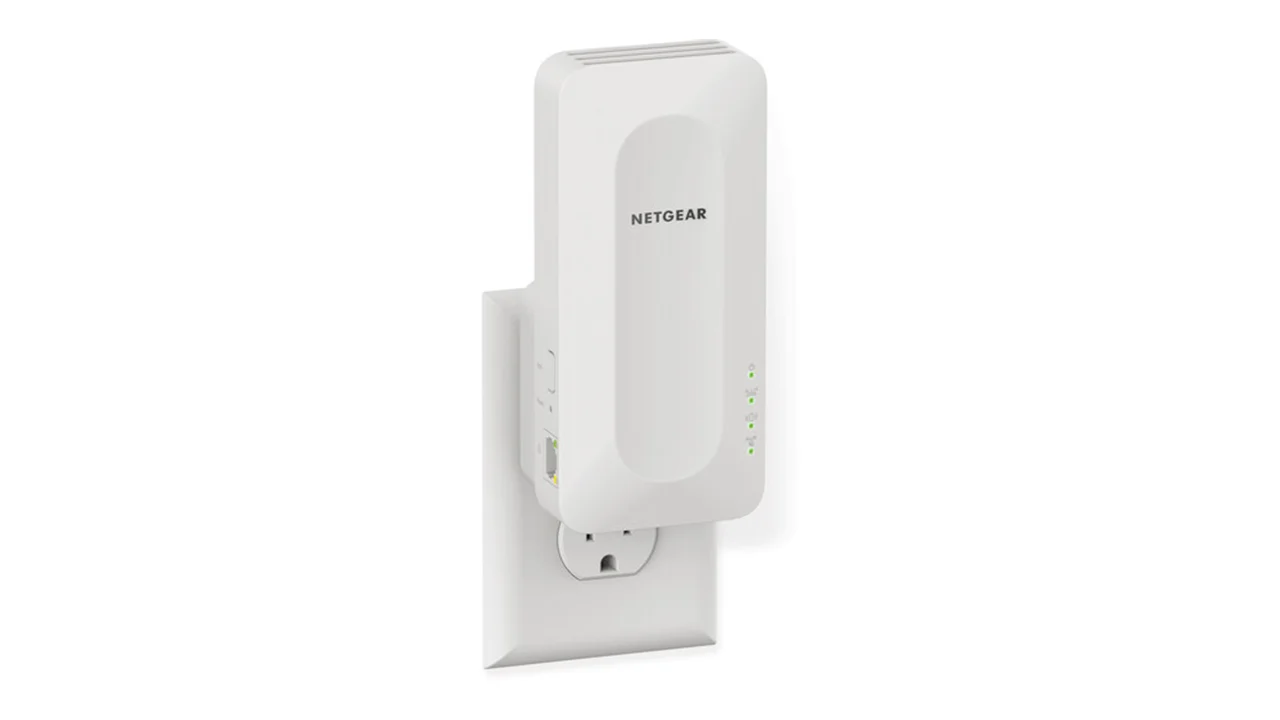
How to choose the best wifi boosters for home
A good extender improves coverage only when it receives a healthy signal from the router, so start with the location of the dead zone and the quality of the signal halfway between that area and the router.
Wireless bands
Dual-band models use 2.4 GHz for longer range and 5 GHz for higher throughput at shorter distances. A 2.4 GHz-only repeater can work for smart plugs or basic browsing, but dual-band hardware is the safer choice for streaming, video calls, and several active devices.
WiFi 7 models add newer features, but the benefits depend on having compatible routers and client devices. A WiFi 7 extender will not turn an older router into a WiFi 7 network.
Backhaul and Ethernet
A wireless extender repeats traffic over the air, which means the link back to the router matters as much as the link to your phone. An Ethernet port can connect a nearby TV, desktop, or console, and access-point mode can use a wired network connection to avoid a weak wireless backhaul.
The RE653BE goes further with a 2.5 Gbps port. Basic models in this list offer a simpler wired connection, but the listing does not always identify the port speed.
Coverage and placement
Treat a claimed square-foot figure as a rough marketing limit, not a guarantee. Thick walls, floors, metal appliances, neighboring networks, and the router's own position can change results dramatically.
Place the extender where the router still has a strong connection, not inside the dead zone itself. For a broader look at the category, the trade-offs between different extender designs are useful before choosing a model.
The strongest extender in the wrong outlet is weaker than a modest extender in the right one.
Device capacity
Device limits matter in homes with cameras, speakers, smart TVs, phones, and computers all connected at once. The figures in this roundup range from 32 devices on the RE315 to 135 or more on the Nonser AX1800 Extender.
Capacity claims do not guarantee equal performance for every device. A crowded network still benefits from a strong router, sensible channel use, and an extender with enough wireless bandwidth.
Mesh compatibility
EasyMesh support can help compatible routers and extenders share a more coordinated network. It is not universal, though. The RE315 specifically does not work with Deco mesh systems, while the newer TP-Link WiFi 7 models list EasyMesh compatibility.
If you are replacing the router as well, how a home router handles coverage and device traffic may matter more than adding a repeater to an already struggling network.
Frequently asked questions
Do WiFi boosters increase internet speed?
A WiFi extender is mainly designed to improve coverage, not increase the speed supplied by your internet service. A stronger signal can improve real-world throughput and reduce dropouts in a dead zone, but it cannot create bandwidth your connection does not provide.
Should I choose a dual-band or tri-band extender?
Dual-band hardware is enough for many homes and usually provides both 2.4 GHz and 5 GHz coverage. Tri-band models such as the TP-Link RE653BE make more sense with WiFi 7 equipment, multiple demanding clients, or a need for 6 GHz.
Where should a WiFi extender be placed?
Place it between the router and the weak area, close enough to receive a strong signal. An extender placed at the edge of the dead zone may repeat a poor connection and produce disappointing results.
Can a WiFi extender connect wired devices?
Many products here include an Ethernet port, including the TP-Link RE315, RAGOAT WiFi Extender, and TP-Link RE653BE. The port can connect a nearby wired device or support access-point use, depending on the model.
Is WiFi 7 useful with an older router?
The extender can still provide coverage with compatible older routers, but features such as Multi-Link Operation, wider channels, and 4K-QAM require suitable WiFi 7 equipment. For an older network, a simpler dual-band model may be easier to justify.
Are large square-foot coverage claims reliable?
They are best treated as estimates under favorable conditions. Walls, floors, interference, router placement, and the distance between the router and extender all affect the usable range.
The bottom line
The Best wifi boosters for home begin with the TP-Link RE315 for most households. Its dual-band layout, Ethernet port, Tether app, signal indicator, and EasyMesh support make it a balanced answer to ordinary dead zones, even though it lacks 6 GHz and is not designed for very large properties.
For newer equipment, the TP-Link RE223BE is the better dual-band WiFi 7 match, while the TP-Link RE653BE is the high-performance choice for a tri-band WiFi 7 network with multi-gig wired devices. Buyers with large spaces or unusual network requirements should consider Eboous, RAGOAT, or Techtex instead.
If you are undecided, choose the TP-Link RE315 unless your router and devices already justify WiFi 7.
As an Amazon Associate we earn from qualifying purchases.