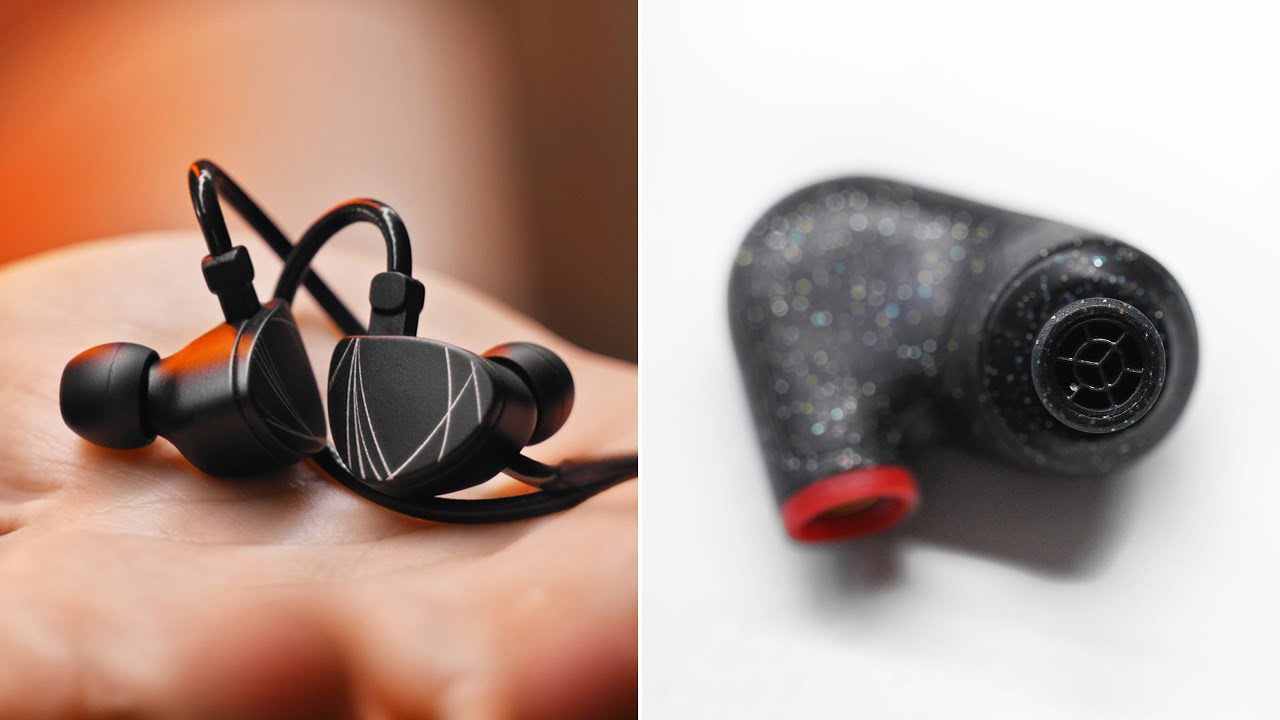

A gaming IEM has to do more than make explosions sound exciting. It needs a secure seal, a cable that will not become the loudest part of your match, and enough separation to keep footsteps, reloads, voices, and environmental noise from collapsing into one blur. The wrong tuning can make a game sound busy rather than informative.
The Best iem for gaming in this group is the Linsoul KZ ZS10 Pro No Mic, thanks to its energetic hybrid driver layout, useful passive isolation, comfortable over-ear fit, and replaceable cable. The other seven range from the more technically ambitious KZ ZS12 Pro 2 and SIMGOT EW300 to the warm Tipsy M1 and the simple, lightweight YINYOO KZ ZST.
Comparison
| # | Product | Award | Driver setup | Fit / cable | Best for |
|---|---|---|---|---|---|
| 1 | Linsoul KZ ZS10 Pro No Mic | Best overall | 4BA + 1DD | Ergonomic shell, detachable cable, 26dB isolation | Competitive play and mixed listening |
| 2 | KZ ZS12 Pro 2 | Best for positional detail | 5BA + 1DD | Over-ear design, cable details not stated | FPS players who want layered sound |
| 3 | TRUTHEAR Zero RED | Best dual-dynamic tuning | 10mm + 7.8mm dynamic drivers | DLP-3D printed cavity, copper-plated silver cable | Detailed game audio and music |
| 4 | Linsoul KZ ZS10 Pro Dark Black | Best alternative finish | 4BA + 1DD | Ergonomic shell, detachable cable, 26dB isolation | Players who want the ZS10 Pro design |
| 5 | YINYOO KZ ZST | Best lightweight pick | 1BA + 1DD | Memory wire, removable cable, 3.5mm plug | Casual gaming and portable use |
| 6 | Tipsy M1 | Best warm tuning | Single dynamic driver | Resin shell, detachable 0.78mm 2-pin cable, up to 36dB isolation | Vocal-heavy games and long sessions |
| 7 | Linsoul KZ ZS10 Pro With Mic | Best for voice chat | 4BA + 1DD | Ergonomic shell, detachable cable, 26dB isolation | Team chat with a familiar sound |
| 8 | SIMGOT EW300 | Best adjustable tuning | 1DD + 1 planar + 1 PZT | Replaceable nozzles, 0.78mm 2-pin cable | Players who want tuning options |
1. Linsoul KZ ZS10 Pro No Mic: Best Overall

Pros
- Four balanced armatures and one dynamic driver create an energetic presentation
- Ergonomic shell stays secure during movement
- Detachable cable makes replacement straightforward
- Claimed 26dB passive noise isolation
- Stainless steel faceplate feels more substantial than a basic plastic shell
Cons
- No microphone is included
- Bright presentation may not suit treble-sensitive listeners
- Cable appearance can vary
Best for: competitive players who want a lively wired IEM with strong isolation and an upgradeable cable.
The Linsoul KZ ZS10 Pro No Mic is the easiest recommendation here because it gets the important gaming fundamentals right without making the design complicated. It has the familiar over-ear IEM shape, a resin cavity, and a stainless steel faceplate. The shell is shaped around ear data rather than being a generic round earbud, and that matters when a match turns into a long session. A loose earbud gradually becomes a distraction. This one is built to stay put.
Its driver arrangement is unusually ambitious for a compact wired monitor. Each side uses four balanced armatures and one dynamic driver, with two 30095 units handling the highs and two 50060 units handling the mids. The second-generation Tesla double magnetic dynamic unit is intended to provide the low-end foundation. In play, that combination should give effects plenty of attack while keeping dialogue and midrange cues from disappearing behind bass. The included PCB crossover is there to divide the work between drivers, and the listing describes the resulting sound as dynamic in the lows and bright in resolution.
The isolation claim is 26dB, which is passive isolation rather than electronic noise cancellation. That distinction is important at a desk. A good seal can reduce keyboard noise, fans, and nearby conversation, but it will not remove them as an active noise-cancelling headset might. The over-ear routing also helps keep cable movement under control. If you are comparing this with a full gaming headset, the difference between a compact in-ear fit and a padded headset is worth considering before choosing your form factor.
The weakness is the sound balance. The bright character can help small details cut through, but listeners who are sensitive to treble may find it more forward than relaxing. There is also no microphone in this version, so a separate mic or controller microphone is needed for team chat. The detachable gold-plated cable is a practical advantage, although the product notes that several cable appearances may be shipped at random.
The Linsoul KZ ZS10 Pro No Mic beats the simpler YINYOO KZ ZST on driver sophistication and isolation, while the KZ ZS12 Pro 2 offers a more elaborate six-driver configuration for listeners chasing maximum separation. The ZS10 Pro is the better middle ground. It has enough detail for competitive games, enough bass energy for cinematic campaigns, and a secure design that makes sense for everyday listening.
2. KZ ZS12 Pro 2: Best for Positional Detail

Pros
- Five balanced armatures and one dynamic driver
- Electronic crossover is designed to separate driver duties
- Over-ear shape supports a stable fit
- Listing specifically emphasizes imaging for FPS games
- Metal faceplate and resin shell combine durability with a shaped fit
Cons
- Product information is inconsistent about microphone availability
- More drivers do not automatically guarantee a better fit
- Sound may be more detail-focused than bass-focused
Best for: FPS players who want a highly separated presentation and are prepared to confirm the exact microphone configuration.
The KZ ZS12 Pro 2 is aimed directly at players who listen for direction and timing. Its product description calls out imaging, transient response, and opponent location in FPS titles. Those claims line up with the hardware on paper: each side has five balanced armatures and one 10mm dynamic driver. The point is not simply to count drivers. It is to give low frequencies, vocals, and high-frequency detail separate responsibilities so busy effects have less chance of masking one another.
The driver layout is unusually specific. Four 31736 balanced armatures are assigned to the ultra-high range, while a 30019 unit handles mid to high frequencies. The 10mm dynamic driver is intended for low-frequency depth. An electronic crossover board divides those ranges and is described as reducing interference between the hybrid drivers. For games, that arrangement could make the difference between hearing a distant cue and hearing only the impact that arrives at the same time.
The ZS12 Pro 2 also has an over-ear cable design and a shell shaped around the natural curve of the ear. The listing describes a lightweight metal faceplate paired with a skin-friendly resin shell. Those details are more useful than a generic claim of comfort because they explain how the IEM is supposed to stay stable. A secure seal is part of positional audio. If the left or right side shifts, the perceived balance changes with it.
There is one issue that buyers should not ignore. The title identifies this version as being without a microphone, while one of the feature descriptions says it includes a high-performance omnidirectional microphone. That is a direct conflict in the supplied product information. Treat the microphone as unconfirmed and check the specific listing configuration before ordering. Players who need dependable voice chat should look at the Linsoul KZ ZS10 Pro With Mic instead.
Compared with the Linsoul KZ ZS10 Pro No Mic, the ZS12 Pro 2 promises a more complex driver arrangement and a stronger emphasis on precise imaging. Compared with the Tipsy M1, it should appeal more to players who want crisp separation than to listeners who prefer warmth. It is the pick for analytical FPS play, provided the fit and microphone details match your setup.
3. TRUTHEAR Zero RED: Best Dual-Dynamic Tuning

Pros
- Separate 10mm and 7.8mm dynamic drivers
- DLP-3D printed cavity construction
- Copper-plated silver cable is included
- Dual-cavity internal magnetic circuit design
- Strong choice for games and music
Cons
- No microphone is specified
- Heavier than the YINYOO KZ ZST according to the listed product information
- Dual dynamic drivers may not suit listeners seeking an especially bright presentation
Best for: players who want a coherent dual-driver sound with a more carefully constructed shell.
The TRUTHEAR Zero RED takes a different route from the KZ models. Instead of stacking several balanced armatures alongside a dynamic driver, it uses two dynamic drivers in each earpiece. One measures 10mm and the other 7.8mm. That gives the design a clear identity: it is built around dynamic-driver impact and a dual-driver division rather than a large multi-armature array.
Its internal construction is a notable part of the package. The product uses a dual-cavity internal magnetic circuit and a polyurethane suspension composite liquid-crystal dome diaphragm with an N52 rubidium magnet. Those are real design details, but their importance is practical. The two-driver arrangement is intended to manage bass and the rest of the range without relying on a large number of tiny armatures. For game audio, that can make effects feel substantial while preserving enough structure for voices and environmental cues.
The cavity is made with DLP 3D printing, a process the listing associates with high-end multi-driver products and custom earphones. It also describes a layered sandwich-like structure with a front cavity, decorative panel, and glue-filled seams. That construction should appeal to buyers who care about how the shell is made, not just how many drivers appear in the title. The copper-plated silver cable has a thicker single-strand design and is supplied with the IEM.
The Zero RED is not the obvious choice for someone who wants the brightest possible upper range. The KZ ZS12 Pro 2 makes the stronger case for an explicitly detail-focused FPS presentation, while the SIMGOT EW300 gives you replaceable nozzles for tuning flexibility. The Zero RED is more straightforward. It is a good fit for a player who wants game audio to retain weight and musicality instead of sounding thin or clinical.
No microphone is specified in the supplied information, so plan on using a separate voice solution. The listed weight is 0.220462262 pounds, which is more than the listed weight of the YINYOO KZ ZST. Weight alone does not determine comfort, but it reinforces the need to pay attention to shell fit and cable routing. Readers comparing this style with other in-ear options can also see how different wired designs handle sound, fit, and voice chat.
The TRUTHEAR Zero RED is the right choice for a player who wants a carefully engineered dual-dynamic IEM and listens to music as often as game soundtracks. It is less about a long driver count and more about a focused acoustic design.
4. Linsoul KZ ZS10 Pro Dark Black: Best Alternative Finish

Pros
- Same 4BA plus 1DD architecture as the other ZS10 Pro listing
- Stainless steel faceplate and resin cavity
- Detachable gold-plated cable
- Claimed 26dB passive isolation
- Secure ergonomic fit
Cons
- No microphone is included in the listed configuration
- Bright tuning may not be comfortable for everyone
- This listing is closely related to the other ZS10 Pro versions
Best for: shoppers who prefer this dark-black configuration of the established ZS10 Pro design.
The Linsoul KZ ZS10 Pro Dark Black is not a different acoustic concept from the first-place ZS10 Pro. It uses the same 4BA plus 1DD hybrid arrangement, the same stainless steel faceplate and resin cavity description, and the same claimed 26dB isolation. Its place in this list comes from the separate product configuration and dark-black finish, not from a new driver design.
That similarity is useful when comparing the two listings. The four balanced armatures include two 30095 drivers for high frequencies and two 50060 drivers for mids. The second-generation Tesla double magnetic dynamic unit handles the dynamic foundation, while a PCB dividing board coordinates the drivers. The product description characterizes the sound as bright and detailed with dynamic lows. That combination can make gunfire, movement, and other sharp cues easy to notice, although it can also make poorly mixed audio feel aggressive.
The shell is designed around the shape of the ear and is intended to remain secure during vigorous movement. The detachable gold-plated ODC cable includes slot protection intended to reduce stress on the connection. A replaceable cable is especially useful on a gaming desk, where repeated chair movement and controller handling can eventually damage the section nearest the plug. The product notes that cable appearance may vary, so buyers should not assume the delivered cable will look identical to the product image.
The Linsoul KZ ZS10 Pro Dark Black has the same major limitation as the first ZS10 Pro: the supplied configuration does not include a microphone. It also has less of a reason to exist for someone who does not care about the finish or the exact listing. The KZ ZS12 Pro 2 is the more ambitious choice for layered positioning, and the YINYOO KZ ZST is a lighter, simpler option.
Still, the ZS10 Pro formula remains well suited to gaming. It offers more driver separation than the KZ ZST and a more secure, substantial build than a basic cable-down earbud. Pick this version when the dark-black configuration is the one you want, or when you specifically prefer this separate listing. It is a capable second path to the same lively ZS10 Pro sound.
5. YINYOO KZ ZST: Best Lightweight Pick

Pros
- Lightweight listed design
- One balanced armature plus one dynamic driver
- Memory wire helps hold the ear loop in place
- Removable cable with a 3.5mm L plug
- Three pairs of silicone ear tips are included
Cons
- Less driver separation than the multi-driver KZ models
- No microphone in this configuration
- Isolation and shell construction are less extensively specified
Best for: casual players who want a light, secure wired IEM for a PC, console, or mobile device.
The YINYOO KZ ZST is the uncomplicated option in this group. Its shell is colorful, its listed weight is 0.0440924524 pounds, and its one balanced armature plus one dynamic driver keeps the hardware straightforward. That lightness can matter more than a complex driver count for a player who dislikes the feeling of a larger monitor hanging from the ear.
The product uses memory-wire routing to create a locked-in fit, and its cable terminates in a 3.5mm L plug. That combination suits a controller, laptop, phone, or desktop audio jack without requiring a separate digital connection. The cable is removable, which gives the ZST a useful path to replacement if the original cable develops a fault. The package also includes three pairs of silicone ear tips, although the supplied information does not identify their sizes.
The sound description emphasizes rich, energetic bass, mids, and treble, with an independent channel for each driver. That is a broad tuning claim rather than a detailed positional specification. The ZST should be enjoyable for action games and general listening, but it cannot make the same hardware argument for layered separation as the KZ ZS12 Pro 2 or Linsoul KZ ZS10 Pro No Mic. Players focused on small directional cues should keep that distinction in mind.
The ZST also uses patent-design silicone tips that are intended to improve contact with the ear and direct sound toward the eardrum. Fit will determine how well that works. A poor seal weakens bass and lets outside noise into the game, while the correct tip can make the presentation more stable. The product is described as noise-cancelling, but the supplied information does not provide a decibel isolation figure, so do not compare that claim directly with the 26dB or 36dB figures listed for other models.
There is no microphone in this configuration. That makes the ZST a better match for solo play, portable listening, and setups with a built-in controller or laptop microphone than for serious team communication. For a broader look at the trade-offs between in-ear monitors and larger listening options, the way earbud fit affects gaming comfort is a useful place to start.
The YINYOO KZ ZST is the pick for someone who values low weight and a familiar 3.5mm connection over complex driver architecture. It is not the most technically equipped IEM here, but its simple design is exactly why it remains appealing.
6. Tipsy M1: Best Warm Tuning

Pros
- Bamboo fiber diaphragm in a single dynamic driver
- Warm, lively presentation with prominent vocals
- Claimed passive isolation of up to 36dB
- Resin shells shaped from more than 20, 000 ear profiles
- Detachable 0.78mm 2-pin cable
Cons
- Warm tuning may soften some competitive cues
- No microphone is specified
- Single-driver design offers less hardware separation than the hybrid KZ models
Best for: players who prefer full bass, forward vocals, and comfortable isolation over an especially bright competitive sound.
The Tipsy M1 is the most deliberately warm-sounding IEM here. Its single dynamic driver uses a bamboo fiber diaphragm, and the product is voiced for warm, dynamic listening with standout bass and vocals. That character makes sense for story games, music, and dialogue-heavy sessions. Voices should have body rather than sounding thin, and impact effects should retain weight.
A single driver also has a practical advantage. There is no need to coordinate multiple driver types across a complicated crossover network. Tipsy describes the M1 as following a “less is more” philosophy, using one dynamic driver and Dual-Chamber Airflow technology to focus on a cohesive presentation. That does not automatically make it more accurate for competitive play, but it does give the M1 a clear alternative to the bright, multi-driver approach taken by the ZS10 Pro and ZS12 Pro 2.
Fit is one of the stronger parts of the specification. The resin shells are said to be refined from more than 20, 000 ear profiles, and the product claims up to 36dB of passive noise isolation. That is the highest isolation figure in this group, though the actual result will depend on ear-tip seal and ear shape. A good seal can keep external distractions down during a long session, while the shell shape and over-ear cable routing should help the monitors stay secure.
The weakness is the same thing that makes the M1 distinctive. A warm, bass-forward presentation can make a game feel more involving, but it may not put subtle high-frequency movement cues as far forward as the SIMGOT EW300 or KZ ZS12 Pro 2. The listing describes the M1 as suitable for entry-level FPS gaming, not as a specialized competitive monitor. No microphone is specified, so team chat requires another solution.
The detachable cable uses a 0.78mm 2-pin connection, which makes replacement possible if the cable wears out. The hand-polished resin shells also give the M1 a more individual appearance, with each faceplate described as having a light-sensitive pattern inspired by painted artworks. That visual character will not improve aim, but it does separate the M1 from the industrial-looking metal plates on several KZ models.
Choose the Tipsy M1 if comfort, isolation, bass, and vocals matter more to you than the sharpest possible positional emphasis. It is not the obvious tournament pick, but it is the most inviting choice for players who use one IEM for games, music, and long spoken-content sessions.
7. Linsoul KZ ZS10 Pro With Mic: Best for Voice Chat

Pros
- Same energetic 4BA plus 1DD layout as the ZS10 Pro family
- Included microphone supports team communication
- Detachable cable
- Ergonomic shell with claimed 26dB isolation
- Stainless steel faceplate and resin cavity
Cons
- Microphone quality is not specified
- Bright presentation may fatigue some listeners
- No reason to choose it over the no-mic version if you already own a separate microphone
Best for: players who want the ZS10 Pro sound and a microphone in the same wired setup.
The Linsoul KZ ZS10 Pro With Mic is the practical version of the ZS10 Pro for players who do not want to add a separate microphone. It uses the same 4BA plus 1DD architecture found in the other ZS10 Pro listings, with two 30095 balanced armatures for highs, two 50060 units for mids, and a second-generation Tesla double magnetic dynamic unit. The product describes the resulting sound as dynamic in the lows and bright in resolution.
That profile is well suited to games that reward quick attention to sound. The bright emphasis can bring sharp effects and movement cues forward, while the dynamic driver gives bass-heavy moments some physical weight. The PCB dividing board is intended to let the drivers work across their assigned ranges. It is a more involved design than the one balanced armature and one dynamic driver arrangement in the YINYOO KZ ZST, although driver count alone does not decide which shell will fit your ears better.
The included microphone is the main reason to choose this listing. The supplied data does not specify its pickup pattern, controls, or performance, so it would be irresponsible to promise broadcast-quality voice. It does, however, remove one common complication from a wired gaming setup. Players who use a controller, laptop, or console can connect a single cable rather than managing an IEM plus a separate voice device.
The shell combines an imported resin cavity with a 304 stainless steel faceplate. Its ergonomic shape is intended to remain secure during movement, and the product claims 26dB of noise isolation. That should help reduce nearby distractions when the seal is good. The cable is detachable, and the connector design includes slot protection intended to reduce stress around the pins.
The main drawback is duplication. The Linsoul KZ ZS10 Pro No Mic offers the same core driver and shell concept for buyers who already have a microphone, while the KZ ZS12 Pro 2 makes a stronger technical case for layered positional detail. Choose this version when voice chat is central to your setup and you want the ZS10 Pro sound without another accessory.
This is also the most sensible ZS10 Pro variant for a console player who wants a compact wired arrangement. Its limits are clear: the microphone details are sparse, and the bright tuning will not be universally comfortable. For the right buyer, though, the built-in voice option makes the design easier to live with.
8. SIMGOT EW300: Best Adjustable Tuning

Pros
- One dynamic, one planar, and one piezoelectric ceramic driver
- Replaceable nozzles provide two tuning styles
- Gaming-focused nozzle is designed around the H-2019 curve
- CNC alloy body
- Detachable 0.78mm 2-pin silver-plated OFC cable
Cons
- No microphone is specified
- Metal body may feel heavier than simpler resin shells
- Nozzle changes add another choice to manage
Best for: players who want to adjust the sound rather than accept one fixed tuning.
The SIMGOT EW300 is the most flexible IEM in the group. Each side combines one dynamic driver, one planar driver, and one piezoelectric ceramic driver. That tri-matrix design is paired with replaceable nozzles, so the EW300 is not locked to one acoustic presentation. One nozzle is described as a gaming-focused option using the H-2019 curve, while the product also provides a second tuning based on the SIMGOT-Golden2023 curve.
For gaming, the useful part is the ability to shift emphasis without replacing the IEM. The H-2019-oriented nozzle is specifically intended to make gunfire and footsteps easier to distinguish. That is a more direct gaming claim than the general music-first descriptions attached to the Tipsy M1 and TRUTHEAR Zero RED. It also makes the EW300 appealing to players who alternate between competitive games and music and want a different balance for each.
The body is made from high-density alloy using CNC manufacturing, with a mirror-plated finish and an ergonomic shape based on 3D ear contour analysis. A metal body can feel robust, but the listed product weight is 0.5732018812 pounds, so buyers who are particularly sensitive to heavier shells should pay attention to fit. The nozzles use a threaded connection for swapping, which is more secure than a loose push-fit design but still adds a small maintenance step.
The cable is a detachable 0.78mm 2-pin high-purity silver-plated oxygen-free copper design. The listing describes a large-diameter, multi-strand construction inside transparent anti-oxidation PVC. A replaceable cable is useful for a gaming setup, especially when the IEM is connected to a controller or desktop where the cable is repeatedly moved. No microphone is specified, so voice chat still needs a separate route.
The EW300 is a better fit than the Linsoul KZ ZS10 Pro No Mic for someone who wants to tune the presentation, but the KZ is simpler to understand and has a clearly stated 26dB isolation claim. The KZ ZS12 Pro 2 is the more aggressive choice for a multi-armature approach to separation. The EW300 instead wins through adaptability. You can choose the nozzle that makes your games easier to parse, then change it when music becomes the priority.
The SIMGOT EW300 is the right closing pick for listeners who enjoy experimenting with sound. It has more moving parts than a basic IEM, but those parts serve a purpose. If you want one fixed, lively gaming sound, choose the ZS10 Pro. If you want the option to alter the balance, the EW300 is the more interesting tool.

How to choose best iem for gaming
The right gaming IEM comes down to how well its tuning, seal, cable, and voice-chat setup match the games you actually play.
Driver configuration
Driver count describes the hardware arrangement, not a guaranteed performance level. The YINYOO KZ ZST uses one balanced armature and one dynamic driver, while the Linsoul KZ ZS10 Pro No Mic uses four balanced armatures and one dynamic driver. The TRUTHEAR Zero RED takes another approach with two dynamic drivers, and the Tipsy M1 uses one bamboo-fiber dynamic driver.
For competitive games, look for a design that keeps bass from masking voices and directional effects. A larger driver count can support more separated frequency duties, but careful tuning matters more than the number printed in the title. A single-driver IEM can sound cohesive, while a poorly balanced hybrid can sound busy.
For footsteps, a clean midrange and stable fit matter more than a dramatic bass boost.
Tuning and positional cues
A bright or balanced presentation can make small high-frequency details more noticeable. That is why the ZS10 Pro and ZS12 Pro 2 appeal to FPS players. The Tipsy M1 leans warm, with full bass and forward vocals, which is better suited to players who want impact and a relaxed listening character.
The SIMGOT EW300 gives you two replaceable nozzles, including one designed around the H-2019 curve for gaming. That is useful when one IEM has to cover several types of play. Do not assume that more treble always means better positioning. Excessive brightness can become tiring and may make loud effects unpleasant.
Fit and passive isolation
An IEM only works as intended when the ear tips seal properly. A weak seal reduces bass, lets outside sound into the game, and can make the left and right channels feel less stable. Over-ear routing, memory wire, and an ergonomic shell can help the monitor stay in place, but ear shape still determines the final result.
The ZS10 Pro listings claim 26dB of isolation, and the Tipsy M1 claims up to 36dB. Those are passive isolation figures, not active noise cancellation. The ZST uses memory wire and patent-designed silicone tips, but the supplied information does not give a comparable decibel figure.
Cable and connection
Every product here is wired, but the connection details differ. Detachable cables are useful because the cable is often the part that receives the most movement at a desk. The Tipsy M1 and SIMGOT EW300 use 0.78mm 2-pin cable connections, while the ZST uses a removable cable with a 3.5mm L plug. The KZ ZS10 Pro models use detachable cables and include connector protection details.
Check the audio output on your console, PC, phone, or controller before choosing. A 3.5mm connection is simple, but some modern devices may require an adapter that is not included in the supplied product information.
Microphone setup
Only some of these listings clearly address voice chat. The ZS10 Pro With Mic is the obvious choice when you want a microphone attached to the cable. The ZS10 Pro No Mic, TRUTHEAR Zero RED, Tipsy M1, and SIMGOT EW300 do not specify an included microphone in the supplied data.
The KZ ZS12 Pro 2 presents a special problem because its title identifies a no-microphone configuration while one feature claims an omnidirectional microphone. Treat that information as unresolved and verify the exact version. If communication is central to your games, a separate microphone can be more dependable than an unclear product configuration.

Frequently asked questions
Are IEMs good for gaming?
Yes. A well-sealed IEM can provide clear game audio while taking up less space than an over-ear headset. The best result depends on fit and tuning, not just the number of drivers.
Is a hybrid IEM better for FPS games?
Not automatically. Hybrid models such as the KZ ZS10 Pro and KZ ZS12 Pro 2 divide the sound between different driver types, which can support detailed presentation. A simpler dynamic-driver model can still be easier to listen to if its tuning is balanced and its seal is secure.
Do these IEMs block outside noise?
They use passive isolation rather than electronic noise cancellation. The KZ ZS10 Pro listings claim 26dB of isolation, while the Tipsy M1 claims up to 36dB. Actual isolation depends on the ear tips and how well the shells fit.
Which model includes a microphone?
The Linsoul KZ ZS10 Pro With Mic is the clear microphone configuration in this group. The KZ ZS12 Pro 2 has conflicting supplied information, with its title saying without microphone and a feature description claiming an omnidirectional microphone. The other products do not specify an included microphone.
Can these IEMs work with a console controller?
The products are wired, and the YINYOO KZ ZST specifically uses a 3.5mm L plug. Compatibility depends on the controller or device having a suitable audio connection. The supplied data does not confirm adapters or console-specific accessories.
Are more drivers better for gaming?
More drivers can allow a manufacturer to divide frequencies across more components, but the result depends on tuning, crossover design, and fit. The TRUTHEAR Zero RED uses two dynamic drivers and the Tipsy M1 uses one, yet both have a clear acoustic purpose.
Which IEM is best for music as well as games?
The TRUTHEAR Zero RED, Tipsy M1, and SIMGOT EW300 are the most distinctive choices for mixed listening. The Zero RED focuses on a dual-dynamic design, the M1 emphasizes warm bass and vocals, and the EW300 lets you switch between two nozzle tunings.

The bottom line
The Linsoul KZ ZS10 Pro No Mic is the Best iem for gaming in this group for most players. Its 4BA plus 1DD design, secure ergonomic shell, detachable cable, and stated 26dB isolation make it a well-rounded choice for competitive play and ordinary listening. Choose the Linsoul KZ ZS10 Pro With Mic instead if built-in voice chat matters more than using a separate microphone.
The KZ ZS12 Pro 2 is the more ambitious choice for FPS players who want layered detail, while the SIMGOT EW300 is the better pick for listeners who want to change the tuning with replaceable nozzles. The Tipsy M1 makes more sense for warm vocals and long sessions, and the YINYOO KZ ZST keeps things light and simple.
If you are undecided, start with the ZS10 Pro for a lively, secure all-purpose gaming sound, or choose the ZS10 Pro With Mic when team communication must stay in one cable.
As an Amazon Associate we earn from qualifying purchases.