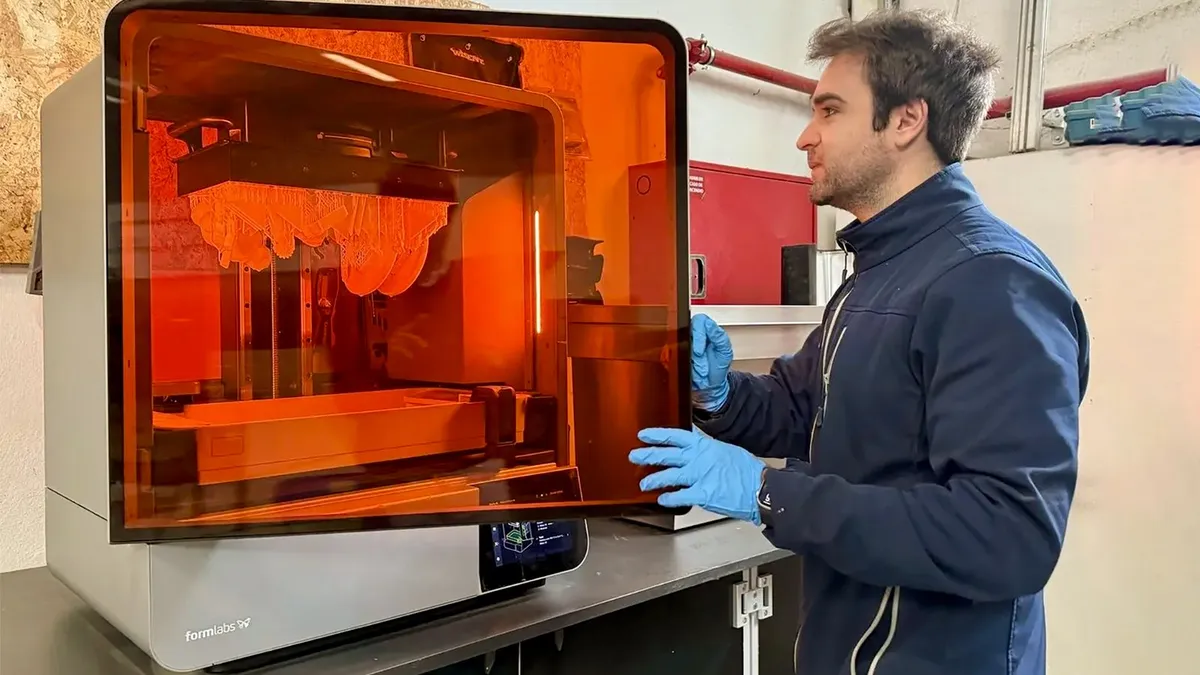

Resin printing is capable of remarkable detail, but the wrong machine can turn a small model into a long session of leveling, failed layers, and cleanup. The important differences are not limited to resolution. Build volume, release systems, resin handling, monitoring, and automatic setup can matter just as much.
We compared 10 machines spanning compact beginner models, fast high-resolution printers, large-format options, and specialist systems for dual-material work. The Best best resin 3d printer for most serious hobbyists is the ELEGOO Saturn 4 Ultra, while the rest of this list covers easier entry points, bigger machines, and more specialized tools.
Comparison table
| # | Product | Award | Resolution or screen | Speed | Build volume or special feature | Best for |
|---|---|---|---|---|---|---|
| 1 | ELEGOO Saturn 4 Ultra | Best overall | 16K | Up to 150 mm/h | Heated resin tank, AI camera | Detailed models and dependable automation |
| 2 | ELEGOO Mars 5 | Best for beginners | 4K mono LCD | Not stated | Auto-leveling, self-check | First resin printer owners |
| 3 | ANYCUBIC Photon Mono 4 | Best compact detail | 10K, 17 by 17 micrometers | Not stated | 153.4 by 87 by 165 mm build volume | Fine detail in a compact machine |
| 4 | ELEGOO Mars 5 Ultra | Best fast compact printer | 9K, 18 micrometers XY | Up to 150 mm/h | AI camera, Wi-Fi cluster printing | Fast small-batch production |
| 5 | Heygears Reflex RS Turbo | Best precision workflow | Amber screen, 566:1 contrast | 4.5 seconds per layer | C5 Z-axis, automated setup | Technical and repeatable work |
| 6 | ELEGOO Jupiter 2 | Best large format | 16K, 20 by 26 micrometers XY | Not stated | 302.4 by 161.98 by 300 mm | Large objects and batch printing |
| 7 | ANYCUBIC Mono 4 Ultra | Best fast 10K printer | 10K, 17 by 17 micrometers | Up to 120 mm/h | Intelligent self-check | Fast detailed hobby printing |
| 8 | ANYCUBIC Mono M7 Pro | Best high-speed model | 14K, 16.8 by 24.8 micrometers XY | Up to 170 mm/h | Temperature-controlled vat, auto-fill | High-throughput printing |
| 9 | ANYCUBIC Photon P1 | Best dual-material printer | Not stated | Not stated | Dual-color or dual-material printing | Multi-material creative work |
| 10 | ANYCUBIC Photon Mono 4 Ultra | Best straightforward 10K printer | 10K, 17 by 17 micrometers | Up to 120 mm/h | Five intelligent inspections | Simple detailed printing |
1. ELEGOO Saturn 4 Ultra: Best Overall

Pros
- 16K resolution is built for exceptionally fine surface detail
- Heated resin tank maintains 30 °C
- Automatic leveling removes a common setup chore
- AI camera can flag empty plates and warped models
- Tilt release supports speeds up to 150 mm/h
Cons
- Large, heavy machine that needs a dedicated workspace
- AI detection can vary with the model and resin
- Its feature set may be more than casual users need
Best for: users who want high resolution, automation, and a broad set of monitoring features.
The ELEGOO Saturn 4 Ultra is the machine we would choose when the goal is to spend less time correcting printer behavior and more time preparing models. Its automatic leveling is a meaningful convenience, but the more interesting feature is the combination of tank heating, residue detection, resin shortage alarms, and leveling-failure alerts. Those systems address the small interruptions that can ruin a long resin print.
The 16K display is designed for smooth surfaces and fine textures, giving this printer a resolution advantage over the 9K ELEGOO Mars 5 Ultra and 10K machines from ANYCUBIC. Resolution alone does not guarantee a successful print, so the heated tank matters too. Keeping resin at 30 °C is intended to improve fluidity and layer adhesion, which can help reduce bubbles and layer separation when the working conditions are less than ideal.
Tilt release technology helps the Saturn 4 Ultra separate models from the release film more quickly, and ELEGOO lists a maximum speed of 150 mm/h. That puts it alongside the Mars 5 Ultra for rated speed, though the Saturn has the larger and more advanced platform. Its built-in AI camera can monitor for an empty build plate or a warped model, and the chamber light makes it easier to inspect progress in a dark room. The company warns that detection results vary with the environment, model, and resin, so this is a safety net rather than a guarantee.
The drawback is physical. The printer measures 24 inches long, 17 inches wide, and 15 inches high, and it weighs about 35.5 pounds. It is not a machine to move casually between a desk and a shelf. The ELEGOO Saturn 4 Ultra is the right fit for an enthusiast who wants detailed figures, miniatures, and functional prototypes with as much setup assistance as possible. Beginners can use it, but the size and resin workflow still demand a prepared workspace.
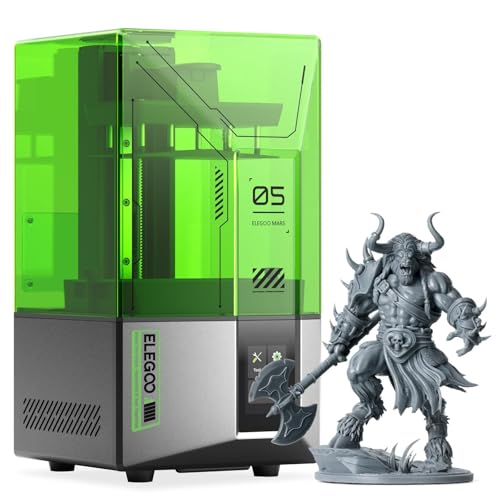
2. ELEGOO Mars 5: Best for Beginners
Pros
- One-click automatic leveling
- One-click self-check before printing
- 4K mono LCD with COB light source
- Residue and resin shortage detection
- Overheat protection can stop a print automatically
Cons
- Lower display resolution than the other compact picks
- Smaller build platform than the large-format printers
- App and remote-control features are not listed
Best for: newcomers who want a simple path into resin printing.
The ELEGOO Mars 5 makes the most sense for someone who has never owned a resin printer and does not want the first experience dominated by calibration. Its one-click automatic leveling is the headline feature, but the self-check is just as useful. Before a print, the machine checks key functions so obvious setup problems can be caught before resin and time are committed.
Its 4K mono LCD is paired with a COB light source for detailed models and textures. That is a step behind the 9K Mars 5 Ultra and 10K compact printers in raw display resolution, but it remains a sensible specification for miniatures, small figures, and decorative models. The printer also includes residue detection, resin shortage alarms, and leveling-failure alerts, all of which give a beginner more warning before a problem becomes a damaged screen or failed print.
ELEGOO adds overheat protection that stops printing and triggers an alarm if the LED temperature exceeds 80 degrees Celsius. An efficient cooling system is intended to protect the machine during operation. That combination makes the Mars 5 less intimidating than a bare-bones printer, although it does not remove the need for washing, curing, ventilation, and careful resin handling.
The Mars 5 measures about 18.5 inches wide, 15.75 inches long, and 9.1 inches high, with a listed weight of roughly 14.6 pounds. It is notably easier to place than the Saturn 4 Ultra or Jupiter 2. The weakness is that its 4K screen gives up fine resolution compared with the ANYCUBIC Photon Mono 4, which has a 10K screen and a stated 17 by 17 micrometer pixel size. Choose the Mars 5 when easy setup matters more than chasing the finest possible detail.
For more context on the learning curve, the setup decisions that help new resin printers succeed are useful to settle before buying.
3. ANYCUBIC Photon Mono 4: Best Compact Detail

Pros
- 10K screen with 17 by 17 micrometer pixels
- 7-inch mono LCD
- Compact 153.4 by 87 by 165 mm build volume
- Improved laser-engraved platform adhesion
- Power-loss resume function
Cons
- Four-point leveling still requires an initial manual setup
- Anycubic app service is not supported
- Smaller build volume than the Saturn and Jupiter models
Best for: detail-focused users working on a compact desk.
The ANYCUBIC Photon Mono 4 is a small printer with a specification that reaches well beyond what its footprint suggests. The 7-inch 10K mono LCD has a 9024 by 5120 resolution, and each pixel measures 17 by 17 micrometers on the X and Y axes. That makes it especially appealing for small models where tiny facial features, sharp edges, and textured surfaces matter.
Anycubic uses its LighTurbo matrix light source to provide stable and balanced exposure. The stated purpose is to reduce layer lines and rasterization while keeping illumination uniform across the screen. That does not make resin post-processing optional, but it gives the printer a strong foundation for smooth-looking models. The laser-engraved Print Platform 2.0 is designed to improve adhesion while keeping model removal manageable.
The build volume is 153.4 by 87 by 165 mm, enough for many figures, tabletop pieces, and small functional parts. It is much less accommodating than the 302.4 by 161.98 by 300 mm space in the ELEGOO Jupiter 2, but the smaller chassis is easier to fit into a home workspace. The printer uses a four-point leveling method. After the initial leveling and tightening of four screws, Anycubic says repeated leveling should not be necessary.
This model is more specialized than the beginner-friendly ELEGOO Mars 5. The Mars 5 offers one-click automatic leveling and a self-check, while the Photon Mono 4 gives you higher display resolution and a stated pixel size advantage. There is one important limitation: Anycubic app service is not supported. The printer can resume after power is restored, but users expecting app control should look elsewhere. The ANYCUBIC Photon Mono 4 suits the buyer who values compact size and precise small models over remote features or large parts.
4. ELEGOO Mars 5 Ultra: Best Fast Compact Printer

Pros
- Up to 150 mm/h printing speed
- 9K display with 18 micrometers XY resolution
- Tilt release technology
- AI camera for empty plates and warped models
- Automatic leveling and self-check
Cons
- Compact build area limits large projects
- AI detection is not infallible
- Wi-Fi cluster features make more sense with multiple printers
Best for: hobbyists who want fast production from a compact machine.
The ELEGOO Mars 5 Ultra is the performance-oriented version of the Mars 5. It keeps the automatic leveling, self-check, and smart mechanical sensor, then adds a 9K mono LCD, an AI camera, and tilt release technology. The result is a printer aimed at people who make several models regularly rather than someone who expects to print only occasionally.
The 7-inch screen provides 9K resolution and an 18 micrometer XY resolution. That is a clear step up from the standard Mars 5's 4K display, though the ANYCUBIC Photon Mono 4 reaches 10K and 17 by 17 micrometers. In practical terms, the Mars 5 Ultra should be comfortable with detailed miniatures and textured parts, while the Anycubic model has the narrower edge in pixel-level detail.
Tilt release helps the model peel from the release film quickly, and ELEGOO lists speeds up to 150 mm/h. Fast mode is not appropriate for every resin or model geometry, so the ability to switch between fast and slow print modes is more useful than the headline number on its own. The AI camera watches for an empty build plate and warped models, while residue detection and resin alarms provide another layer of operational monitoring.
The printer also supports Wi-Fi cluster printing, which lets one device control multiple Mars 5 Ultra units. That is a compelling workflow for a small production setup but has little impact for a single-printer owner. Measuring roughly 18.5 inches wide, 15.75 inches long, and 9.1 inches high, it remains relatively manageable, although its listed weight of about 19.4 pounds is higher than the standard Mars 5. The ELEGOO Mars 5 Ultra is the one to choose when speed and monitoring matter more than having the absolute highest resolution.
5. Heygears Reflex RS Turbo: Best Precision Workflow

Pros
- Amber screen with 566:1 contrast ratio
- Claimed 4.5 seconds per layer
- C5 ball-screw Z-axis
- Automated model repair and support generation
- Force monitoring with 0.1 N sensitivity
Cons
- Large and heavy enclosure
- Workflow is more specialized than a basic hobby printer
- Some performance claims depend on resin and process settings
Best for: users who want a controlled, repeatable printing workflow.
The Heygears Reflex RS Turbo takes a different approach from the straightforward ELEGOO and ANYCUBIC machines. Its focus is process control. The amber screen uses a custom composite design and a stated contrast ratio of 566:1, while the system combines automated preparation, force sensing, motion control, and a precision Z-axis.
Heygears says its one-click slicing workflow can detect and repair inverse normals, holes, and intersecting shells, then generate supports automatically. That is a useful distinction for users who spend as much time preparing files as they do waiting for prints. Floating Screen Auto-Leveling corrects deviations up to 0.15 degrees, which is intended to reduce setup adjustments before a job begins.
The C5 ball-screw Z-axis is specified for repeat positioning accuracy of up to 2 micrometers, with testing over 10, 000 cycles under a 50 kilogram load. The LCD is divided into 60 zones, and the company states that light-intensity variation stays within plus or minus 3 percent. Heygears also lists printing tolerances of up to 0.05 mm. These figures describe a tightly managed system, but they should not be treated as a promise that every resin and model will produce identical results.
Its force-monitoring system reads data 80 times per second, with 0.1 N sensitivity and residue detection as fine as 0.2 mm. The printer can auto-pause and create a diagnostic report after a job. Claimed speed is 4.5 seconds per layer, and Heygears lists support for adaptive process packages and dynamic motion control. The tradeoff is size: the machine is about 23 inches wide, 15 inches long, and 15 inches high, with a listed weight of roughly 50.7 pounds. Skip it if you want a small, uncomplicated printer. Choose it if repeatability, preparation automation, and diagnostic feedback are central to your work.
6. ELEGOO Jupiter 2: Best Large Format

Pros
- 302.4 by 161.98 by 300 mm build volume
- 16K display
- Smart tank heating at 30 °C
- Automatic resin feeding
- Dual-band Wi-Fi and cluster management
Cons
- Very large and heavy
- Large resin prints require more preparation and cleanup
- Manual leveling remains part of the maintenance workflow
Best for: large models or several smaller models in one job.
The ELEGOO Jupiter 2 is the obvious choice when compact printer dimensions stop being practical. Its build volume measures 302.4 by 161.98 by 300 mm, which gives it room for bigger objects and multiple smaller pieces in the same print. That is the capability the Saturn 4 Ultra cannot match, and it changes the kind of work you can plan without splitting a model into sections.
The printer uses a 16K display with 15120 by 6230 resolution and 20 by 26 micrometer XY resolution. A fully enclosed light source is intended to eliminate light leaks and keep exposure uniform. The build plate has a laser-engraved surface and quick-release design, while the double-door enclosure and transparent viewing window make access and monitoring more convenient.
Jupiter 2 also brings several automation features that are particularly helpful on long, material-intensive jobs. Smart tank heating maintains 30 °C after a quick preheat, and an automated resin system can feed the vat so it does not run dry during a print. A mechanical sensor adds alarms for resin shortages, residue, and leveling failures. The machine supports power-loss recovery, LCD cooling, and high-temperature protection.
The compromises are mostly physical and procedural. It measures about 27.95 inches long, 20.08 inches wide, and 19.29 inches high, with a listed weight close to 63.9 pounds. The printer includes an intuitive manual leveling system with real-time feedback, so automatic features do not eliminate every adjustment. It also supports dual-band Wi-Fi, Wi-Fi cluster management, an 8 GB ROM, a camera with HDR, and time-lapse photography. The ELEGOO Jupiter 2 is the right call for creators who truly need its volume. For tabletop figures and small parts, the Saturn 4 Ultra is easier to accommodate.
If your main requirement is physical capacity, the workspace and handling concerns that come with larger printers deserve attention before choosing a machine this substantial.
7. ANYCUBIC Mono 4 Ultra: Best Fast 10K Printer

Pros
- 10K screen with 17 by 17 micrometer pixels
- Up to 120 mm/h with high-speed resin
- COB light source with Fresnel lens
- Intelligent self-check
- 4.3-inch touchscreen with eight-language support
Cons
- Maximum speed depends on high-speed resin
- No stated build volume in the supplied specifications
- Smaller display than the 7-inch printing screen
Best for: users who want detailed models without moving to a larger machine.
The ANYCUBIC Mono 4 Ultra is built around a clean combination of detail, speed, and simple controls. Its 7-inch 10K LCD has a resolution of 9024 by 5120, with 17 by 17 micrometer pixels. That is a strong fit for small models where a rough edge or softened texture is easy to see.
The COB light source works with a Fresnel lens and a light angle within 3 degrees. Anycubic states that light uniformity reaches at least 90 percent, helping reduce dimensional errors between layers. The printer also uses an 8 mm T-type screw rod and precision guide rails, which are intended to keep movement controlled as the build plate rises and lowers.
ACF film and an intelligent release algorithm reduce release force, and the listed maximum speed is 120 mm/h with high-speed resin. That makes it quicker than a basic compact resin printer, but the qualification matters. Standard and high-speed resins can require different exposure and lift settings, so users should not assume the maximum figure applies to every material.
The interface is handled by a 4.3-inch high-definition touchscreen with a redesigned user interface and support for eight languages. Five intelligent inspections cover printer self-inspection, residual resin, leftover resin, failed-print detection, and release-film lifespan management. Its listed dimensions are roughly 15 inches long, 15 inches wide, and 27 inches high, with a weight of about 11 pounds. The ANYCUBIC Mono 4 Ultra is a sensible pick for detail-conscious users who want speed and guided checks, while the ANYCUBIC Photon Mono 4 is the simpler choice if its stated compact build volume and power-loss resume matter more.
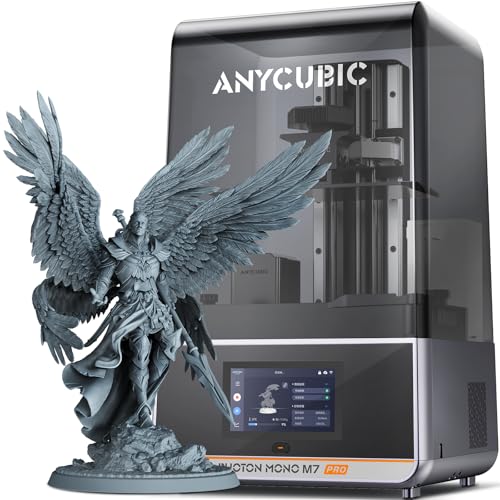
8. ANYCUBIC Mono M7 Pro: Best High-Speed Model
Pros
- Up to 170 mm/h with high-speed resin
- 14K monochrome LCD
- Temperature-controlled resin vat
- Automatic resin filling and one-key recycling
- Six types of intelligent detection
Cons
- Fastest rating depends on high-speed resin and a 0.1 mm layer
- Large footprint
- More automation means more systems to understand
Best for: high-throughput users who want fast, monitored printing.
The ANYCUBIC Mono M7 Pro is the speed specialist in this group. Anycubic lists up to 170 mm/h at a 0.1 mm layer thickness with high-speed resin, and up to 130 mm/h with standard resin. That distinction gives the specification useful context. It is still a fast machine, but the highest figure belongs to a defined material and layer setup.
The 14K monochrome LCD has a 13312 by 5120 resolution and a 16.8 by 24.8 micrometer XY resolution. Anycubic says the printer can produce holes as small as 0.3 mm, which makes it suitable for fine technical details as well as decorative models. Its COB LighTurbo 3.0 system combines Fresnel lenses and front-facing reflectors, with a light angle within 3 degrees and more than 90 percent light uniformity.
The M7 Pro is also designed to reduce interruptions. Its dynamic temperature-controlled vat adjusts resin temperature, while automatic filling can add resin and recycle remaining material with one key. Detection covers component connections, residue, resin level, failed prints, release-film lifespan, and build-plate installation. That is a more comprehensive operational system than the basic Mars 5, though it also creates more settings and alerts to understand.
The machine measures approximately 25 inches long, 15 inches wide, and 35 inches high, and weighs about 33.3 pounds. That makes it a substantial piece of equipment beside the compact ELEGOO Mars 5 Ultra. The M7 Pro is the better fit when print throughput is the deciding factor. Users who mainly want fine models at a moderate pace may prefer the Saturn 4 Ultra's heated tank, tilt release, and AI camera combination.
9. ANYCUBIC Photon P1: Best Dual-Material Printer

Pros
- Dual-color and dual-material printing
- Handles resin viscosity up to 8, 000 cps
- Factory-calibrated automatic leveling
- Wave Release Technology reduces release force by 60 percent
- AI monitoring for plate and resin issues
Cons
- Dual-material workflow is more specialized
- Large chassis
- Supplied data does not state screen resolution or print speed
Best for: creative projects that need two colors or materials in one print.
The ANYCUBIC Photon P1 stands apart because its main advantage is not a larger screen or a faster layer cycle. It can print with two different colors or materials simultaneously. That opens up projects that would otherwise need separate prints, manual painting, or a material swap during production.
Anycubic says the dual-material system can also reduce initial resin consumption for small models. More important for the buyer is the creative flexibility. A two-color print can make a miniature, sign, or display piece more expressive straight from the printer, while dual-material work can let a model combine different material characteristics.
The P1 uses a stable ball screw and precision guide rails to reduce vibration. Wave Release Technology creates micro-airflow as the build plate lifts, and Anycubic says this reduces release force by 60 percent. Smart Leveling 3.0 comes factory-calibrated, performs a self-check before each print, and gives pressure feedback across four corners. The intended result is a more controlled setup with less manual bed adjustment.
The printer can handle ultra-high-viscosity resin up to 8, 000 cps, which Anycubic describes as 40 times the viscosity of standard resins. Preconfigured settings for Anycubic resins are intended to simplify preparation. AI inspection checks build-plate installation and bottom-layer separation, with resin-level and residue monitoring in the vat. The listed dimensions are about 28 inches long, 14 inches wide, and 13 inches high, with a weight of 39 pounds. The ANYCUBIC Photon P1 is not the obvious choice for someone seeking a conventional first resin printer. It earns its place for users who will actually use the dual-color, dual-material system or need support for high-viscosity materials.
10. ANYCUBIC Photon Mono 4 Ultra: Best Straightforward 10K Printer

Pros
- 10K display with 17 by 17 micrometer pixels
- Up to 120 mm/h
- Light uniformity of at least 90 percent
- Five intelligent inspections
- Eight-language interface
Cons
- No build volume listed in the supplied data
- Maximum speed requires high-speed resin
- Lacks the larger format of the Jupiter 2
Best for: users who want a conventional 10K printer with guided checks.
The ANYCUBIC Photon Mono 4 Ultra is closely related to the other Mono 4 Ultra entry in this list, so its appeal comes from the specific package of features rather than a radically different printing concept. It combines a 7-inch 10K screen with a new-generation ACF film and an intelligent release algorithm. That combination is intended to improve release while preserving model accuracy.
Its 9024 by 5120 display resolution and 17 by 17 micrometer XY pixels support detailed models. The COB light source and Fresnel lenses keep the light angle within 3 degrees, and the light uniformity algorithm is rated at least 90 percent. Consistent exposure is important because uneven illumination can show up as differences in dimensional accuracy across the build plate.
The printer's maximum speed is listed at 120 mm/h. ACF film reduces the frosted texture that can interfere with light penetration, while the release algorithm is designed to shorten the time needed to separate each layer. The machine also includes five inspections covering printer status, leftover resin, residual resin, failed-print detection, and release-film lifespan. These checks do not replace sensible supports and correct exposure settings, but they can catch avoidable mistakes.
A 4.3-inch high-definition screen provides the controls, with a redesigned interface and support for eight languages. The listed dimensions are about 15 inches long, 10 inches wide, and 20 inches high, and its weight is approximately 8.8 pounds. That makes it lighter than the other Mono 4 Ultra entry, though the supplied information does not state a build volume for either model. Compared with the ANYCUBIC Mono 4 Ultra, this printer is the better fit for someone prioritizing a simple conventional workflow and inspection features. Buyers who need a known build volume should consider the Photon Mono 4 instead.
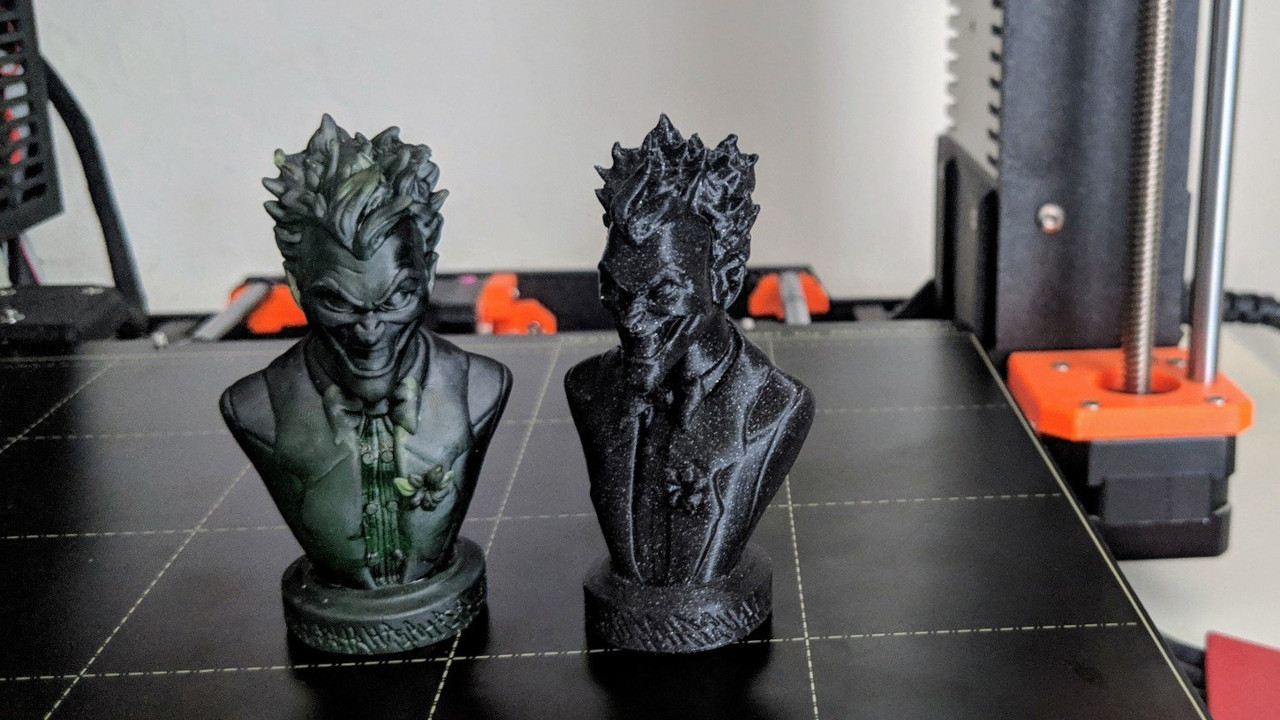
How to choose best resin 3d printer
The right resin printer depends on the models you make, the space available for the machine, and how much setup and monitoring you want the printer to handle.
Resolution and light uniformity
Resolution affects how finely the printer can place details across the X and Y axes. A 16K or 14K screen can be useful for intricate textures, small holes, and sharp edges, but the pixel dimensions and light uniformity also matter. The Saturn 4 Ultra lists 16K resolution, while the Mono M7 Pro lists 14K with 16.8 by 24.8 micrometer XY resolution. The Mono 4 and Mono 4 Ultra models list 10K screens with 17 by 17 micrometer pixels.
Look for a stated XY resolution and a well-controlled light source rather than choosing solely by the K number. COB systems with Fresnel lenses, such as those in several ANYCUBIC models, are designed to make exposure more even across the screen.
Build volume
Build volume determines the largest object you can print in one piece and how many smaller parts fit into a single job. The ELEGOO Jupiter 2 is the clear large-format option here, with a build volume of 302.4 by 161.98 by 300 mm. The ANYCUBIC Photon Mono 4 lists 153.4 by 87 by 165 mm, which is more suitable for compact models.
A larger platform is useful for batch work, but it also requires more resin preparation, more room around the printer, and more post-processing space. Measure the enclosure, not just the build plate, before choosing a large machine.
A high-resolution screen cannot compensate for a build plate that is too small for the models you actually make.
Speed and release technology
Print speed depends on layer height, resin, exposure, model geometry, and release settings. The ANYCUBIC Mono M7 Pro lists 170 mm/h with high-speed resin at a 0.1 mm layer thickness, while the Saturn 4 Ultra and Mars 5 Ultra list up to 150 mm/h. The Mono 4 Ultra models list up to 120 mm/h with high-speed resin.
Tilt release and ACF film can reduce the force needed to separate a layer from the release film. These features may shorten print cycles, but they do not make every resin or model suitable for the fastest setting. Treat the top speed as a process capability, not a standard result for every print.
Automatic leveling and monitoring
Automatic leveling is one of the most useful features for a new resin printer. The ELEGOO Mars 5 and Mars 5 Ultra use one-click automatic leveling, while the Heygears Reflex RS Turbo uses Floating Screen Auto-Leveling. The Photon P1 uses factory-calibrated Smart Leveling 3.0 with pressure feedback.
Monitoring features can detect residue, resin shortages, failed prints, or a warped model. AI cameras in the Saturn 4 Ultra and Mars 5 Ultra provide visual checks, while the Jupiter 2 and M7 Pro use multiple sensors. These systems help reduce avoidable failures, but they should supplement proper supports, clean resin handling, and ventilation.
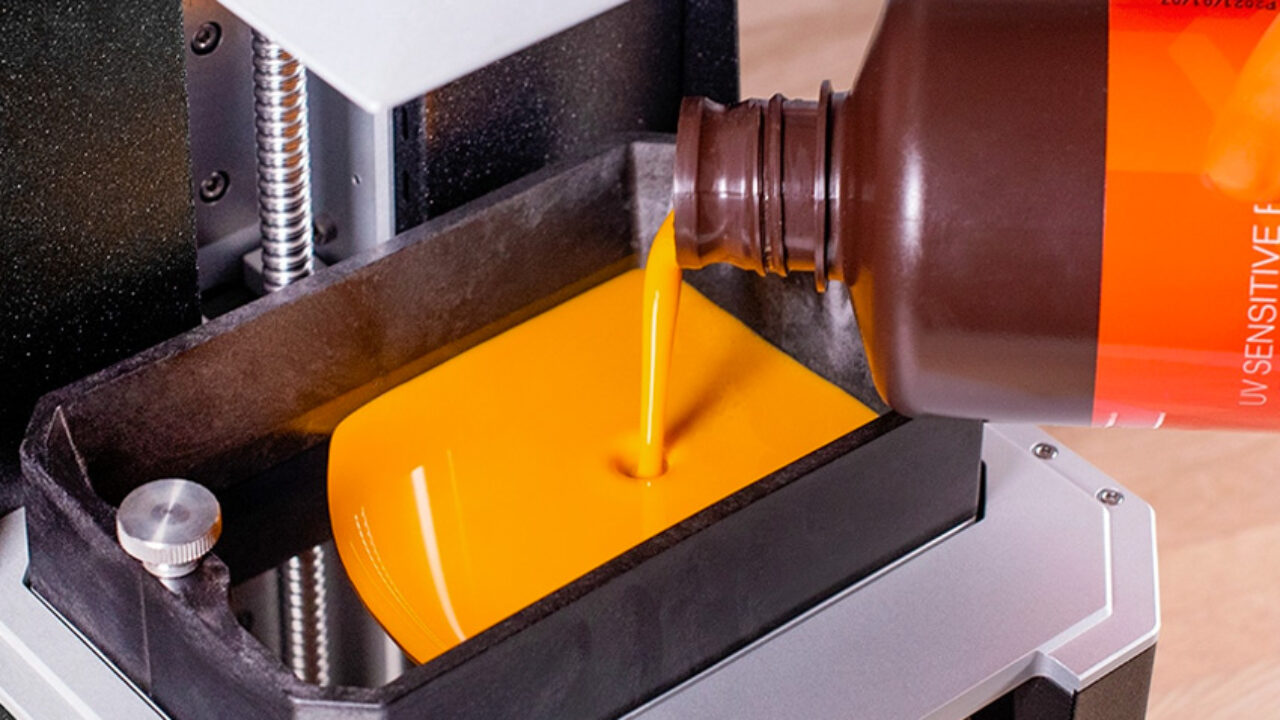
Resin handling and temperature control
Temperature affects resin flow and layer adhesion. The Saturn 4 Ultra and Jupiter 2 use smart tank heating to maintain 30 °C, while the Mono M7 Pro has a dynamic temperature-controlled vat. Automatic resin feeding on the Jupiter 2 and automatic filling on the M7 Pro can help during long jobs.
Check the resin types you plan to use before buying. The Photon P1 specifically lists support for viscosity up to 8, 000 cps, while other models in this group do not provide the same stated figure. High-viscosity and specialty resins can require different exposure, lift, and temperature settings.
Frequently asked questions
Is a 10K resin printer better than a 4K model?
A 10K printer can reproduce finer detail than a 4K model when the pixel size, light uniformity, resin, and model preparation support that result. The ELEGOO Mars 5 remains easier to set up because it combines a 4K screen with automatic leveling and self-checks. Choose higher resolution when fine surface detail matters more than the simplest possible entry point.
Which resin printer is easiest to set up?
The ELEGOO Mars 5 is one of the simplest options in this group because it has one-click automatic leveling and a one-click self-check. The Mars 5 Ultra adds those features to a faster 9K platform. The ANYCUBIC Photon P1 also uses factory-calibrated automatic leveling and preconfigured settings for Anycubic resins.
Which model is best for large prints?
The ELEGOO Jupiter 2 is the large-format choice, with a 302.4 by 161.98 by 300 mm build volume. It can handle larger objects or several smaller objects in one job. Its physical size means you need a stable workspace with room for resin handling and post-processing.
Do resin printers need heated vats?
Not every resin printer needs a heated vat, but temperature control can help keep resin fluid and improve layer adhesion. The Saturn 4 Ultra and Jupiter 2 maintain a stated 30 °C, while the Mono M7 Pro dynamically controls vat temperature. A heated vat is most useful when your workspace conditions or chosen resin make temperature consistency difficult.
Can these printers detect failed prints?
Several can detect some common failure conditions. The Saturn 4 Ultra and Mars 5 Ultra use AI cameras for issues such as empty build plates and warped models, while the Jupiter 2 and Mono M7 Pro use sensors for residue, resin level, and other conditions. Detection varies by model, environment, resin, and failure type, so it cannot replace correct slicing and inspection.
Which resin printer supports two materials?
The ANYCUBIC Photon P1 is the only model here explicitly designed for dual-color or dual-material printing. It also supports ultra-high-viscosity resins up to 8, 000 cps. It is a specialist choice for users whose projects require two materials or colors in one print.
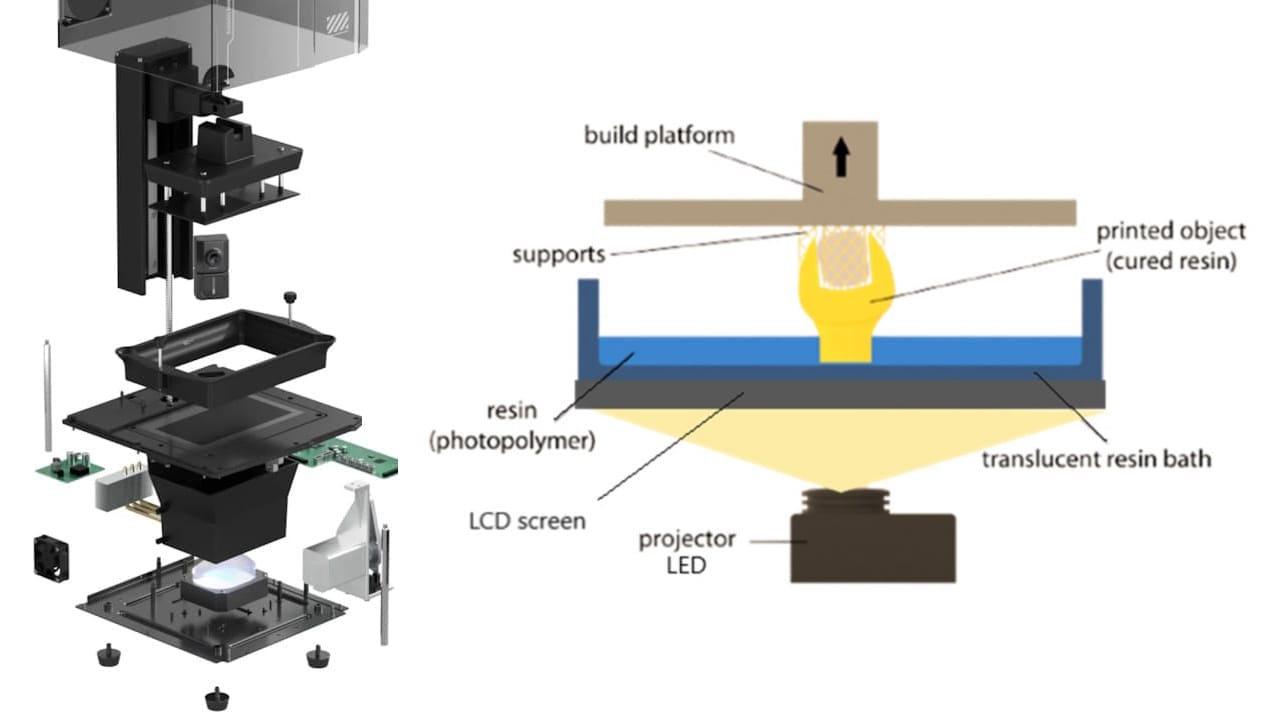
The bottom line
The Best best resin 3d printer for most demanding hobbyists is the ELEGOO Saturn 4 Ultra. Its 16K display, 30 °C heated tank, tilt release, automatic leveling, AI camera, and resin monitoring cover the parts of resin printing that most often create frustration. It is large, but its combination of detail and automation is unusually complete.
Choose the ELEGOO Mars 5 if this is your first resin printer and straightforward setup matters most. Choose the ELEGOO Jupiter 2 for genuinely large models, the ANYCUBIC Mono M7 Pro for speed, or the ANYCUBIC Photon P1 when dual-material printing is the reason you are buying.
If you are undecided, start with the build volume you need, then choose the highest level of automation that fits your workflow.
As an Amazon Associate we earn from qualifying purchases.