
A portable monitor has one job: give your laptop, console, or phone more useful screen space without turning your bag into office equipment. The hard part is separating genuinely convenient displays from models that look slim on a listing but need extra cables, awkward stands, or more power than your device can provide.
The Best best portable monitor picks range from simple 15.6-inch 1080p work screens to fast QHD gaming displays and a larger 18.5-inch option. MNN 15.6-inch Portable Monitor is our top pick for most people, while the rest cover better mounting, lighter travel, larger viewing area, and higher refresh rates.
Comparison table
| # | Product | Award | Resolution | Refresh rate | Size and weight | Connections | Best for |
|---|---|---|---|---|---|---|---|
| 1 | MNN 15.6-inch Portable Monitor | Best overall | 1920 x 1080 | 60Hz | 15.6 inches, 1.53 lb | 2 USB-C | Flexible laptop and console use |
| 2 | cocopar 15.6-inch Portable Monitor | Best for mounting | 1920 x 1080 | 60Hz | 15.6 inches, 1.5 lb without cover | 2 USB-C, HDMI | VESA-mounted workspaces |
| 3 | KYY 15.6-inch Portable Monitor | Best with speakers | 1920 x 1080 | Not listed | 15.6 inches, 1.7 lb | 2 USB-C, mini HDMI, 3.5mm audio | Travel entertainment |
| 4 | VisionOwl 18.5-inch Portable Monitor | Best large screen | 1920 x 1080 | 100Hz | 18.5 inches, 2.6 lb | 2 USB-C, HDMI | A larger mobile workspace |
| 5 | ASUS ZenScreen MB169CK | Best for business travel | 1920 x 1080 | Not listed | 15.6 inches, 0.78 kg listed | USB-C | Lightweight one-cable work setups |
| 6 | InnoView 15.6-inch Monitor | Best for broad compatibility | 1920 x 1080 | Not listed | 15.6 inches, 2.65 lb | 2 USB-C, HDMI | Mixed devices and consoles |
| 7 | Anyuse 15.6-inch Portable Monitor | Best lightweight option | 1920 x 1080 | 60Hz | 15.6 inches, 1.42 lb | 2 USB-C, mini HDMI | Carrying the lightest setup |
| 8 | InnoView 15.6-inch Monitor with Stand | Best built-in stand | 1920 x 1080 | Not listed | 15.6 inches, 1.5 lb listed | 2 USB-C, HDMI | Flexible desk positioning |
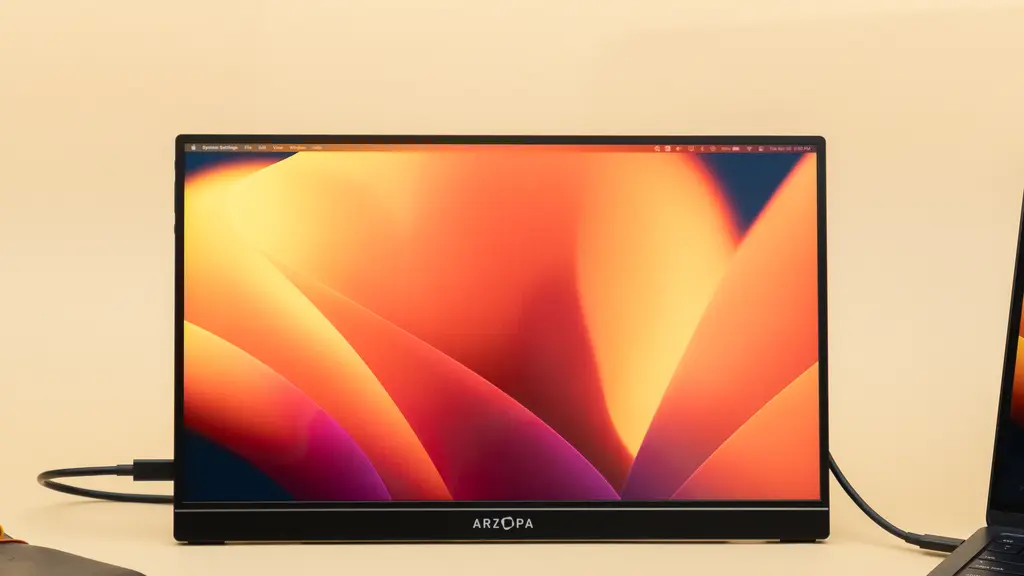
| 9 | ARZOPA 16.1-inch QHD Monitor | Best for gaming | 2560 x 1440 | 180Hz | 16.1 inches, 1.72 lb | 2 USB-C, mini HDMI | High-refresh PC and console gaming |
| 10 | VisionOwl 15.6-inch Monitor | Best color-focused design | 1920 x 1080 | Not listed | 15.6 inches, 1.4 lb without cover | 2 USB-C, HDMI | Portable creative work |
1. MNN 15.6-inch Portable Monitor: Best Overall

Pros
- Two full-featured USB-C ports
- 178-degree IPS viewing angle
- Landscape and portrait modes
- HDR mode and low blue light features
- Protective cover doubles as a stand
Cons
- No HDMI port listed
- USB-C device must support DP Alt Mode
- 60Hz is not aimed at high-refresh gaming
Best for: someone who wants a versatile second screen for laptops, phones, and consoles.
The MNN 15.6-inch Portable Monitor gets the fundamentals right without making the setup feel complicated. Its 15.6-inch IPS panel has a 1920 x 1080 resolution, which is a sensible match for a travel display. Text stays readable, windows have enough room for a second workspace, and 1080p content does not force a connected laptop or console to work harder than necessary.
The two full-featured USB-C ports are the standout practical detail. When the connected device supports Thunderbolt 3.0 or USB 3.1 Type-C DP Alt Mode, one USB-C cable can carry the display signal and power. That makes this a particularly clean companion for compatible laptops. The limitation is just as important: a regular USB-C port without video output will not provide the same one-cable experience.
MNN also gives the screen more flexibility than a basic travel panel. The monitor supports copy, extended, second-screen, and portrait modes, so it can sit beside a laptop for documents or turn vertically for long pages and code. Its 178-degree viewing angle helps when the screen is not directly in front of you, while HDR mode is intended to add brighter highlights and deeper color in supported content. The cover protects the panel and acts as a stand, though cover-based stands are less adjustable than a true integrated hinge.
Compared with the KYY 15.6-inch Portable Monitor, MNN has a similar 1080p IPS foundation but puts more emphasis on USB-C flexibility and display modes. The ARZOPA 16.1-inch QHD Monitor is the clear choice for faster gaming and finer detail, but it is a more specialized screen. MNN’s weakness is the absence of a listed HDMI input, which makes it less convenient for older laptops, consoles, or devices that rely on HDMI. Choose it if your main source has compatible USB-C video and you want one screen for work, travel, and occasional gaming.
2. cocopar 15.6-inch Portable Monitor: Best for Mounting

Pros
- Two full-featured USB-C ports and HDMI
- 85% sRGB color gamut
- 75 x 75mm VESA mounting
- Supports landscape and vertical orientation
- Cover stand and power pass-through
Cons
- Heavier with the cover attached
- USB-C video requires DP Alt Mode
- Standard 60Hz refresh rate
Best for: a remote worker who wants a portable display that can also live on a monitor arm or stand.
The cocopar 15.6-inch Portable Monitor is the most adaptable pick for someone who does not want portability to mean giving up a proper desk setup. It uses a 15.6-inch 1920 x 1080 IPS screen with a 60Hz refresh rate, 178-degree viewing angle, HDR support, and an 85% sRGB gamut. That combination is well suited to documents, browser windows, meetings, and general media.
Its real advantage is the pair of VESA holes. A portable screen can be useful on a hotel desk, but the ability to mount it in landscape or portrait orientation makes it more useful at home too. Vertical placement works well for long documents, chat windows, and coding, while horizontal mode is more natural for video and presentations. The supplied cover stand gives a quick travel setup when mounting hardware is not available.
Connectivity is strong for this group. Two full-featured USB-C ports and an HDMI port cover modern laptops as well as many older sources. A compatible USB-C laptop can send video and power through one cable, and the monitor supports power pass-through reverse charging. The specification requires the source to support Thunderbolt 3.0 or 4.0, or USB 3.1 Type-C DP Alt Mode, so buyers should check the laptop before expecting a cable-minimal setup.
The MNN 15.6-inch Portable Monitor is lighter in listed weight and more straightforward for a USB-C-first kit, while cocopar is the better fit for a semi-permanent workstation. It is also more flexible than the ASUS ZenScreen MB169CK, which focuses on one-cable simplicity rather than multiple input options. The cocopar’s drawback is its 2.4-pound listed weight with the cover, and its 60Hz panel is not a gaming specialist. Pick it when mounting and orientation matter as much as packing it away.
3. KYY 15.6-inch Portable Monitor: Best with Speakers

Pros
- 1080p IPS display with HDR
- Two USB-C ports and mini HDMI
- Built-in stereo speakers
- 3.5mm audio input
- Portrait and landscape support
Cons
- Mini HDMI needs the right cable
- Cover offers limited angle choices
- Refresh rate is not listed
Best for: travelers who want a second screen that can handle both work and casual entertainment.
The KYY 15.6-inch Portable Monitor is an easy screen to understand. It has a 15.6-inch IPS display at 1920 x 1080, a 178-degree viewing angle, and HDR support. That is enough resolution for a comfortable second-screen layout, and the wide viewing angle helps when the monitor is sitting off to one side of a laptop.
KYY includes two full-function USB-C ports plus a mini HDMI input. Compatible USB-C devices can use a single cable for signal and power, while mini HDMI opens the door to laptops, consoles, and other equipment that does not support USB-C video. The catch is the connector itself. Anyone who regularly moves between devices should keep the appropriate mini HDMI cable nearby.
The built-in stereo speakers and 3.5mm audio input give KYY an edge for entertainment. You can connect a console or use the display away from a desk without relying entirely on a laptop’s speakers. The monitor also has a menu control wheel, which should make changing settings less fiddly than repeatedly pressing small buttons. Its 1.7-pound weight and 0.3-inch profile are reasonable for a 15.6-inch travel display.
The InnoView 15.6-inch Monitor offers a similar input mix and a protective cover, while KYY is the more obvious choice when built-in audio matters. The cocopar 15.6-inch Portable Monitor is stronger for VESA mounting and gives a more clearly specified color gamut. KYY’s weakness is the two-groove cover stand, which provides some angle choice but is not as flexible as an integrated kickstand. It suits a traveler who wants a simple second screen and occasional audio without carrying another speaker.
4. VisionOwl 18.5-inch Portable Monitor: Best Large Screen

Pros
- Largest display in this roundup
- 100Hz refresh rate
- 125% sRGB and 8-bit color depth
- Integrated metal stand
- 75 x 75mm VESA mounting
Cons
- Heavier and larger than 15.6-inch models
- 1080p is less dense across the larger panel
- Refresh rate advantage depends on the source
Best for: anyone who wants a genuinely roomy mobile workspace or smoother casual gaming.
The VisionOwl 18.5-inch Portable Monitor solves a problem that smaller displays cannot: cramped layouts. Its 18.5-inch screen gives spreadsheets, timelines, and side-by-side windows more breathing room than the many 15.6-inch models here. It still uses 1920 x 1080 resolution, so the image is not as dense as the QHD panel in the ARZOPA, but the physical size is useful when the display is positioned farther away.
VisionOwl raises the refresh rate to 100Hz and lists 125% sRGB, 88% NTSC, 8-bit color depth, and 16.7 million colors. The higher refresh rate can make scrolling and supported games look smoother than a 60Hz screen. The wider color specification is also appealing for media and creative tasks, although the 1080p resolution remains the main limit for detailed image work.
The integrated metal stand is a better travel design than a cover that must be folded into a particular groove. It is built into a metal back panel and can be used on different surfaces. Two USB-C ports and a standard HDMI port provide a broad connection range, and a compatible Thunderbolt or full-featured USB-C device can use a single USB-C cable for video and power. The 75 x 75mm VESA holes offer another route when desk space is tight.
At 2.6 pounds and up to 0.55 inches thick, this is not the screen to choose for the smallest backpack. The ASUS ZenScreen MB169CK is far easier to pack, and the ARZOPA 16.1-inch QHD Monitor has the sharper, faster gaming panel. VisionOwl wins when screen area is the priority, but buyers should be comfortable carrying a display that is closer to a small desktop monitor than an ultra-light travel accessory.
5. ASUS ZenScreen MB169CK: Best for Business Travel

Pros
- 15.6-inch anti-glare IPS display
- Single USB-C connection
- 11.8mm thickness listed
- 360-degree kickstand
- Tripod socket and auto-rotate software
Cons
- USB-C is the only listed connection
- Listed weight is higher than several rivals
- Refresh rate is not listed
Best for: office travelers who want a polished one-cable second screen for compatible laptops.
The ASUS ZenScreen MB169CK takes a focused approach. Rather than trying to be a console display, speaker-equipped entertainment panel, and mounting monitor at once, it centers on a portable 15.6-inch 1920 x 1080 IPS screen with an anti-glare surface. That finish is useful in cafes, hotel rooms, and coworking spaces where reflections can make a glossy display tiring to use.
Its single USB-C connection is both the appeal and the constraint. With a compatible laptop, one cable carries power and video, which keeps the travel setup clean. There is no HDMI connection listed, so this is not the strongest option for a console or older laptop. Buyers should verify that their USB-C port supports the required display functionality before packing it for a trip.
ASUS adds useful physical flexibility. The 360-degree kickstand allows more positioning options than a simple folded cover, and a tripod socket supports mounting it on a compatible stand. Auto-Rotate DisplayWidget software can switch between portrait and landscape modes, which is handy for long documents and code. The listed 11.8mm thickness also keeps it reasonably slim, although the product information lists a 0.78kg weight, heavier than the lightest choices here.
The MNN 15.6-inch Portable Monitor is more versatile for consoles and mixed inputs, while the cocopar 15.6-inch Portable Monitor is the better choice if VESA mounting matters. ASUS is the cleaner business tool, especially for users who value anti-glare viewing and a more considered kickstand design. Skip it if your devices depend on HDMI or mini HDMI, and choose it when your main use is a compatible USB-C laptop.
6. InnoView 15.6-inch Monitor: Best for Broad Compatibility

Pros
- Two full-function USB-C ports
- HDMI input
- HDR and low blue light features
- Built-in speakers
- Landscape and portrait modes
Cons
- Listed weight is 2.65 pounds
- HDMI setup requires separate power
- USB-C video depends on DP Alt Mode
Best for: households connecting laptops, phones, tablets, and several game consoles.
The InnoView 15.6-inch Monitor is the practical all-rounder for a mixed-device home. Its 15.6-inch A+ IPS panel runs at 1920 x 1080, supports a 178-degree viewing angle, and adds HDR, low blue light, and flicker-free features. That makes it a sensible screen for office work and video, with enough flexibility for a console or phone when the main laptop is not available.
The port selection is the reason to look at it. Two full-function USB-C ports support a one-cable connection when the source supports Thunderbolt 3.0 or 4.0, or USB 3.1 Type-C DP Alt Mode. HDMI provides a more familiar fallback for devices without USB-C video. In that setup, InnoView says a separate power cable is needed, and the package does not include that power cable for the HDMI connection, so the one-cable convenience does not apply universally.
The protective PU leather cover doubles as a stand and has two grooves for angle adjustment. Landscape and portrait orientation expand its usefulness, especially for reading or a vertical chat panel. Built-in speakers are a welcome addition for console play and casual viewing, although the product information does not give a speaker output figure. The listed 2.65-pound weight makes it one of the less effortless screens to carry.
The KYY 15.6-inch Portable Monitor is lighter and includes a 3.5mm audio input, while the InnoView 15.6-inch Monitor with Stand has a more flexible integrated stand and a lighter claimed body. This model makes the most sense when connection variety matters more than minimum carry weight. If your use is almost entirely a single USB-C laptop, ASUS or MNN is a cleaner fit.
7. Anyuse 15.6-inch Portable Monitor: Best Lightweight Option

Pros
- 1.42-pound listed weight
- 1920 x 1080 resolution
- 60Hz refresh rate
- Two full-featured USB-C ports
- Mini HDMI connectivity
Cons
- Few feature details are listed
- Mini HDMI is less convenient than standard HDMI
- Stand and speakers are not specified
Best for: travelers who care more about a light bag than extra features.
The Anyuse 15.6-inch Portable Monitor is the stripped-back option in this group. It offers the familiar 15.6-inch size, a 1920 x 1080 FHD resolution, and a 60Hz refresh rate without adding a long list of claimed extras. That can be an advantage for a buyer who wants a basic second display for a laptop and does not need VESA mounting, speakers, or a high-refresh gaming mode.
Connectivity is straightforward. Anyuse lists two full-featured Type-C ports and one mini HDMI port. A compatible USB-C device can connect with one cable, while HDMI-equipped laptops and consoles have another route. As with the other USB-C displays here, the source must support Thunderbolt 3.0 or 4.0 or USB 3.1 Type-C DP Alt Mode for USB-C video. Mini HDMI is less convenient than a standard HDMI socket, so cable planning matters.
The listed 1.42-pound weight is the strongest physical advantage. It is lighter than the MNN, KYY, and most of the other 15.6-inch alternatives, which matters when the display is carried every day. The data does not specify a built-in stand, speakers, HDR, or a cover, so those should not be assumed. This is a simple screen rather than a complete mobile workstation accessory.
The ASUS ZenScreen MB169CK is a more polished business travel choice with an anti-glare display, kickstand, and software features. The MNN 15.6-inch Portable Monitor offers more clearly described orientation modes and a protective cover. Choose Anyuse when the main requirement is a light 1080p panel with USB-C and mini HDMI, and skip it if you need a sturdy integrated stand or detailed entertainment features.
8. InnoView 15.6-inch Monitor with Stand: Best Built-in Stand

Pros
- Built-in stand adjusts through 90 degrees
- Two USB-C ports and standard HDMI
- 1200:1 contrast ratio
- Protective sleeve included
- Four-button quick access controls
Cons
- Stand adds structure and weight
- HDMI use needs separate power
- Refresh rate is not listed
Best for: users who dislike folding cover stands and want adjustable positioning on a desk.
The InnoView 15.6-inch Monitor with Stand has one feature that changes daily use more than its title suggests: the stand is built into the monitor. It adjusts within 90 degrees, so the screen can be positioned without folding a cover into one of a couple of fixed slots. That is useful on uneven tables, narrow desks, and hotel surfaces where a small change in angle makes the display easier to see.
The panel is a 15.6-inch 1920 x 1080 IPS display with HDR, low blue light technology, and a listed 1200:1 contrast ratio. The contrast figure suggests stronger separation between dark and light areas than a basic panel, while HDR can improve supported content. It also supports landscape and portrait use, giving the display a role as a vertical document screen or a conventional second monitor.
Two full-function USB-C ports and a standard HDMI port make this model easier to integrate than a monitor using mini HDMI. A compatible USB-C device can carry video and power through one cable, with support for power pass-through reverse charging. HDMI connections need separate power, and InnoView recommends a 15W or higher adapter if the screen flickers or restarts because of limited device output.
The included sleeve protects the display without forcing the stand to serve as the cover. The listed dimensions are 13.9 by 8.7 by 0.25 inches in the feature description, and the product information lists a 2-pound weight. The Anyuse 15.6-inch Portable Monitor is lighter, while the InnoView 15.6-inch Monitor offers built-in speakers and similar broad compatibility. This is the better InnoView for buyers who care about stable, adjustable placement more than the lowest carry weight.
9. ARZOPA 16.1-inch QHD Monitor: Best for Gaming

Pros
- 2560 x 1440 QHD resolution
- 180Hz refresh rate
- 400-nit brightness listed
- 107% sRGB listed
- Built-in kickstand
Cons
- Mini HDMI instead of standard HDMI
- High refresh rate depends on source support
- QHD can demand more from a laptop or console
Best for: PC and console players who want a fast, detailed screen they can carry.
The ARZOPA 16.1-inch QHD Monitor is the clear specialist here. Its 2560 x 1440 resolution gives games, photos, and desktop interfaces more detail than the 1920 x 1080 panels used by the other entries. On a 16.1-inch screen, that extra resolution can make small text and fine interface elements look more defined, though it also asks more of the connected computer.
The 180Hz refresh rate is the headline feature. It can show far more motion updates than a 60Hz travel monitor, making quick camera movement and scrolling appear smoother when the source and game can drive it. ARZOPA also lists a 1000:1 contrast ratio, 400 nits brightness, HDR, and 107% sRGB. Those specifications point to a more entertainment-focused display, with the brightness and color gamut useful for games and video in addition to ordinary work.
Two full-function USB-C ports and a mini HDMI port support laptops, Mac computers, Xbox, PS5, and Steam Deck. The monitor has a built-in kickstand for tilt adjustment and supports horizontal and vertical viewing. Mini HDMI is the compromise, since it is less universal than the standard HDMI port on the cocopar or InnoView models. Buyers should also confirm that their device can output the desired resolution and refresh rate.
The VisionOwl 18.5-inch Portable Monitor offers a larger physical image and 100Hz, but ARZOPA is sharper and much faster. The MNN 15.6-inch Portable Monitor is a more sensible work-first pick with a simpler 1080p workload. ARZOPA is not the right choice for someone who only needs email and documents, but it is the one to keep in mind when gaming performance matters more than a one-cable office setup.
10. VisionOwl 15.6-inch Monitor: Best Color-Focused Design

Pros
- 15.6-inch 1080p IPS panel
- 85% sRGB gamut
- HDR and 178-degree viewing angle
- Two USB-C ports and HDMI
- VESA mounting and built-in speakers
Cons
- Cover increases the listed carry weight
- Standard 1080p resolution
- USB-C video requires a compatible source
Best for: portable work that benefits from a wider color range and flexible mounting.
The VisionOwl 15.6-inch Monitor is the more compact alternative to VisionOwl’s 18.5-inch model. It uses a 15.6-inch 1920 x 1080 IPS panel with a 178-degree viewing angle and an 85% sRGB gamut. That gives it a useful balance for documents, streaming, presentations, and general creative work without making it as large to carry as the 18.5-inch screen.
Connectivity is well covered. Two full-function USB-C ports support one-cable video and power on compatible Thunderbolt 3, 4, or 5 and DP Alt Mode devices, while standard HDMI supports PC, Mac, PS5, and Xbox. VESA holes support 75 x 75mm mounting in landscape or portrait mode, which is unusual for a screen this portable and helpful for coding, vertical documents, or a fixed workstation.
VisionOwl uses an aluminum alloy body and includes a magnetic smart cover that doubles as a stand. The listing also includes a power adapter and USB-C to USB-C, USB-A to USB-C, and HDMI cables, giving this model a more complete out-of-box connection kit than some rivals. Built-in dual stereo speakers make it more useful for entertainment, although no speaker power specification is provided.
The panel remains 1080p, so it cannot match the detail of the ARZOPA 16.1-inch QHD Monitor, and its refresh rate is not listed. The cocopar 15.6-inch Portable Monitor offers a similar size, VESA mounting, and an 85% sRGB specification, while this VisionOwl adds the metal build and listed accessories. Choose VisionOwl if you want a compact display that can travel, mount, and handle more than office documents.
How to choose best portable monitor
The right portable monitor depends less on a long feature list than on the source device, the way it will stand on a desk, and how much screen quality you need while traveling.
Resolution and screen size
Most portable displays in this group use 1920 x 1080 resolution, which is a practical fit for a 15.6-inch screen. It keeps text and video clear without placing excessive demands on a laptop. A larger 18.5-inch 1080p monitor gives you more physical workspace, while the 16.1-inch ARZOPA uses 2560 x 1440 for visibly finer detail.
Choose 1080p for office work, streaming, and ordinary console use. Choose QHD when the connected computer can drive it and you care about sharper games, photos, or dense desktop layouts.
USB-C and HDMI compatibility
A USB-C port does not automatically carry video. The source needs Thunderbolt support or USB 3.1 Type-C DP Alt Mode, and the monitor may still need separate power if the device cannot provide enough output. HDMI is more broadly familiar, but it usually requires a separate power connection. Standard HDMI is easier to live with than mini HDMI because replacement cables are more common.
Before buying, confirm that your laptop's USB-C port supports video output, not just charging and data.
Refresh rate and gaming response
A 60Hz screen is adequate for documents, video, and many consoles. A 100Hz panel makes general movement feel smoother, while 180Hz is the meaningful gaming upgrade in this group. The high refresh rate only helps when the source, cable, resolution, and game can support it.
The ARZOPA is the specialist choice for fast play. The VisionOwl 18.5-inch model is a useful middle ground for larger-screen gaming, while the 60Hz MNN and cocopar models make more sense for work-first setups.
Stand and mounting
A cover stand is compact and protective, but it normally provides only a few fixed angles. An integrated kickstand is quicker to position and less dependent on the cover. VESA mounting is the most flexible choice for a desk, arm, or portrait setup, though it can add hardware and reduce the simplicity that makes a display portable.
The ASUS kickstand, InnoView integrated stand, and VisionOwl VESA options each suit different desks. If the screen will move between a hotel table and a permanent workspace, mounting support is especially useful. For more guidance on choosing a second screen for laptop travel, think about the stand and cable arrangement before focusing on panel extras.
Weight and protection
A 15.6-inch display around 1.4 to 1.7 pounds is easier to carry every day than an 18.5-inch model weighing more than 2.5 pounds. Covers protect the panel but add to the load. A sleeve protects during transit but does not always help with setup.
The Anyuse is the lightest listed option, while the VisionOwl 18.5-inch is the largest. If your bag already carries a laptop, charger, and accessories, the difference between a bare display and a covered one becomes noticeable.
Frequently asked questions
Can a portable monitor work with any USB-C laptop?
No. The laptop's USB-C port must support video output, such as DP Alt Mode or compatible Thunderbolt functionality. A USB-C port used only for charging or data will not send an image to the monitor.
Do portable monitors need their own power?
It depends on the source and connection. Some compatible USB-C laptops can provide both power and video through one cable, while HDMI setups generally need a separate power connection. If the source provides limited output, the display may flicker or restart until an external power adapter is connected.
Is 1080p enough for a portable monitor?
For most 15.6-inch work and entertainment displays, 1080p is a sensible resolution. It is clear enough for documents and video and is easier for laptops and consoles to drive. QHD makes more sense for gaming, photo work, and users who want finer detail.
Are portable monitors good for gaming?
They can be, especially when they offer a high refresh rate and suitable inputs. The ARZOPA supports 180Hz at QHD, while the VisionOwl 18.5-inch model supports 100Hz. A standard 60Hz model is still fine for slower games and general console use, but it will not provide the same motion smoothness.
Can these monitors be used vertically?
Several can. MNN, cocopar, KYY, InnoView, VisionOwl, and ARZOPA list portrait or vertical support. The monitor still needs a stand or mount that can hold it securely in that orientation.
Do portable monitors have speakers?
Some do, but not all. KYY, the InnoView 15.6-inch Monitor, and the VisionOwl models list built-in speakers. Speaker quality and output are not specified for these products, so a separate speaker or headphones may still be preferable for serious listening. For a different mobile setup, the right compact audio option for travel can be easier to choose separately.
Can a portable monitor be mounted to a monitor arm?
A monitor needs VESA mounting holes for that use, and the stand or arm must support the screen's size and weight. The cocopar and both VisionOwl models list 75 x 75mm VESA mounting. Displays without those holes generally need a compatible clamp or their supplied stand.
The bottom line
The Best best portable monitor for most people is the MNN 15.6-inch Portable Monitor. Its 1080p IPS panel, two USB-C ports, portrait support, HDR mode, and protective cover make it a flexible second screen for compatible laptops, phones, and consoles. The lack of a listed HDMI input is its real limitation, so users with HDMI-first devices should look at cocopar or InnoView instead.
For gaming, the ARZOPA 16.1-inch QHD Monitor is the clear step up, with 2560 x 1440 resolution and a 180Hz refresh rate. For a larger mobile workspace, the VisionOwl 18.5-inch Portable Monitor makes more sense, while ASUS is the cleaner business travel choice for a compatible USB-C laptop.
If you are undecided, buy MNN for general use, ARZOPA for fast gaming, and cocopar when VESA mounting is part of the plan.
As an Amazon Associate we earn from qualifying purchases.