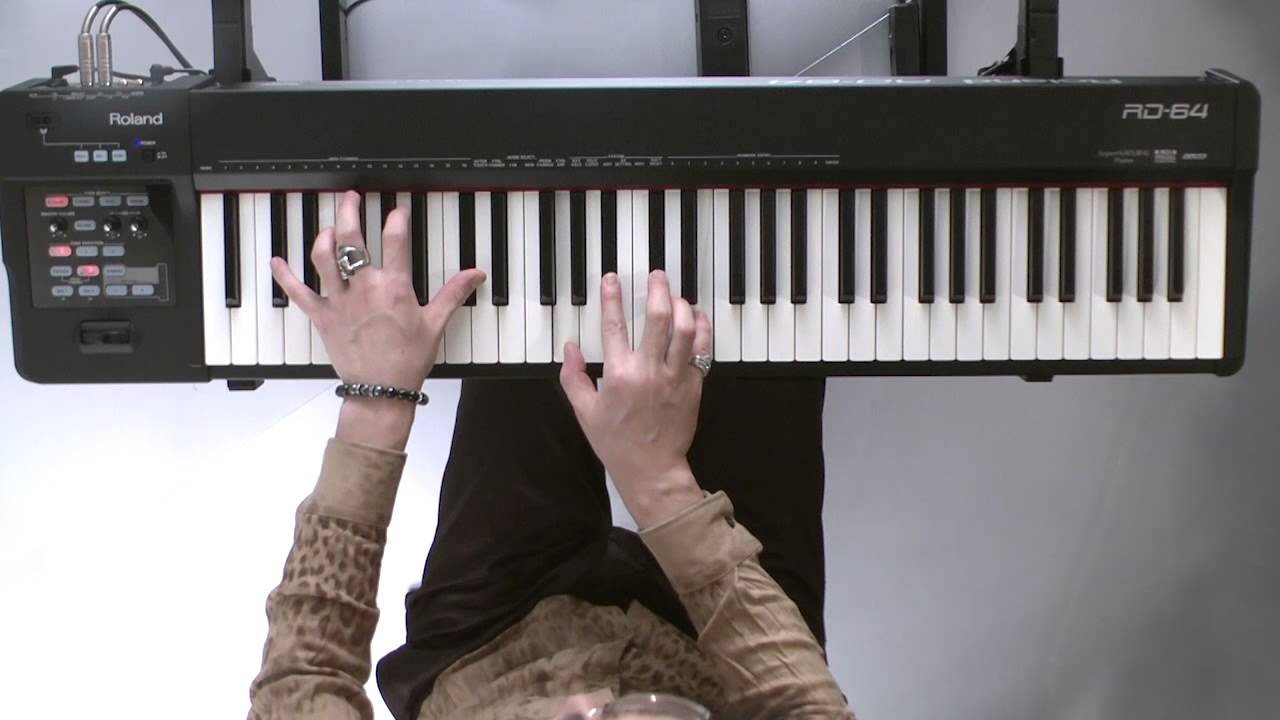

A beginner keyboard can make practice inviting or frustrating. The difference is not just the number of keys. It is the way the keys respond, how convincing the piano voice sounds through the speakers, and whether the controls help you play instead of getting in the way. The Best best sounding piano keyboard choices here range from serious weighted digital pianos to compact learning keyboards with rhythms and lessons.
The Yamaha P145BT is the strongest pick for realistic piano playing, while the Alesis Recital Play is the most approachable full-size bundle. The list also includes capable teaching keyboards, several complete starter kits, and one set of removable stickers for learners who already own a keyboard.
For the most convincing piano experience, choose the Yamaha P145BT. The rest of the roundup covers portable 61-key models, feature-heavy beginner bundles, and useful learning accessories.
Comparison table
| # | Product | Award | Key layout | Sound and features | Best for |
|---|---|---|---|---|---|
| 1 | Yamaha P145BT | Best overall | 88 weighted keys | Grand piano tone, Bluetooth audio, Smart Pianist support | Serious home practice |
| 2 | Alesis Recital Play | Best complete 88-key bundle | 88 touch-sensitive keys | 480 sounds, 160 rhythms, lesson and record modes | Beginners who want everything included |
| 3 | Yamaha P45B | Best simple weighted piano | 88 weighted keys | 10 voices, touch-sensitive response, built-in speakers | Focused piano practice |
| 4 | UISCOM 88-Key Digital Piano | Best home setup | 88 semi-weighted keys | 600 tones, 800 rhythms, Bluetooth audio and USB MIDI | A furnished practice corner |
| 5 | Donner DEP-1S | Best connected beginner piano | 88 velocity-sensitive keys | Five-level velocity, Bluetooth audio and MIDI | App-based learning |
| 6 | JIKADA 61-Key Keyboard | Best teaching bundle | 61 keys | 255 tones, 255 rhythms, three teaching modes | Kids and casual learners |
| 7 | RockJam RJ561 | Best straightforward starter kit | 61 full-size keys | 50 tones, 100 rhythms, teaching functions | First-time players |
| 8 | RockJam RJ5061 | Best compact learning kit | 61 keys | 200 tones, 200 rhythms, pitch bend wheel | Shared rooms and beginners |
| 9 | PYangTian 88-Key Piano | Best feature-packed bundle | 88 semi-weighted keys | 1, 000 tones, 1, 000 rhythms, Bluetooth and USB MIDI | Experimenting with sounds |
| 10 | COYAHO Piano Stickers | Best learning accessory | Fits 37 to 88 keys | Removable, waterproof note labels | Learners who need visual guidance |
1. Yamaha P145BT: Best Overall

Pros
- Weighted, touch-sensitive 88-key action
- Graded Hammer Compact feel
- Bluetooth audio for play-along practice
- Supports Smart Pianist and Rec’n’Share apps
Cons
- Less varied than an arranger keyboard
- Larger and heavier than the portable 61-key options
Best for: players who care most about convincing piano tone and a traditional playing feel.
The Yamaha P145BT is the keyboard we would choose when the word “piano” matters more than a long list of novelty sounds. Its 88 weighted keys have Yamaha’s Graded Hammer Compact action, so the playing experience is designed around the changing resistance found on an acoustic piano. That gives scales, chords, and quieter passages a more natural sense of control than the semi-weighted action in the UISCOM or PYangTian.
The sound is just as focused. Yamaha describes the main voice as a grand piano tone with natural resonance and a rich, full character, and the built-in speakers are intended for direct home practice. Bluetooth audio is a particularly useful addition because you can play along with music from a phone or tablet without running another cable. The included music rest and sustain foot switch keep the setup simple.
The P145BT is also more useful for guided practice than its stripped-back appearance suggests. It works with Smart Pianist and Rec’n’Share, giving players app-based ways to practice, play, and share. That wireless audio connection is the major distinction from the older Yamaha P45B, while the P45B remains appealing to anyone who wants the simplest possible controls.
The weakness is intentional: this is not the keyboard for 480 or 1, 000 voices, elaborate rhythm programming, or a built-in microphone setup. The Alesis Recital Play and UISCOM are more playful and more generous with accompaniment features. Choose the P145BT if your priority is a credible piano feel, a clean control layout, and a sound that supports serious practice rather than distracting from it.
2. Alesis Recital Play: Best Complete 88-Key Bundle

Pros
- Full-size 88-key touch-sensitive layout
- 480 sounds and 160 rhythms
- Split, lesson, record, and transpose modes
- Stand, pedal, headphones, and carry case included
- Can run from six AA batteries
Cons
- Keys are not described as weighted
- Battery cells are not included
Best for: beginners who want a complete, flexible setup for lessons and creative playing.
The Alesis Recital Play feels like a keyboard built to remove the usual barriers between opening the box and starting a lesson. It includes an adjustable stand, sheet music or tablet stand, sustain pedal, headphones, carry case, and power supply. That makes it easier to create a usable practice station without assembling a collection of separate accessories.
Its 88 full-size, touch-sensitive keys give beginners the complete range of a piano and respond to playing strength. They do not offer the weighted action found in the Yamaha P145BT or P45B, so this is not the closest match for an acoustic piano. It is still a more expressive starting point than a basic non-touch-sensitive keyboard, especially for students learning to control volume with their fingers.
Sound variety is the Recital Play’s main attraction. It offers 480 realistic sounds, adjustable reverb, 160 rhythms, and 140 built-in demo songs. Split mode can put different sounds across the keyboard, while the one-touch song mode makes it easy to begin playing with accompaniment. Lesson, record, metronome, and transpose functions give a new player several useful ways to practice.
The Alesis also has a practical connection panel, with USB MIDI for Mac or PC software, a 1/4-inch sustain pedal input, 1/8-inch auxiliary input, and 1/8-inch headphone output. It can run from six AA batteries when the included adapter is not convenient. The Yamaha P145BT sounds more piano-focused and feels more authentic under the fingers, but the Recital Play is the better fit for a student who wants lessons, sounds, rhythms, portability, and accessories in one package.
3. Yamaha P45B: Best Simple Weighted Piano

Pros
- Weighted 88-key keyboard
- Touch-sensitive response
- Built-in speakers and sustain foot switch
- Simple one-button control
- Ten instrument voices
Cons
- No Bluetooth audio listed
- Much narrower sound selection than arranger keyboards
Best for: beginners and advancing players who want a direct piano experience without a crowded control panel.
The Yamaha P45B is an exercise in restraint. There is no attempt to turn it into a full entertainment keyboard. Instead, it gives the player 88 weighted, touch-sensitive keys, built-in speakers, a music rest, and a sustain foot switch. For someone learning piano, that focus can be more useful than hundreds of sounds that rarely get used.
The weighted action is the reason to choose it over the RockJam and JIKADA models. Keys respond to touch, and the keyboard is designed to replicate the feel of an acoustic piano. That does not make it identical to a traditional instrument, but it gives finger strength, dynamics, and sustained notes a more appropriate foundation than the lighter actions in most beginner bundles.
Yamaha includes 10 instrument voices, including the sound of a Yamaha grand piano, rather than a large rhythm library. The built-in speakers provide a self-contained practice setup, and the one-button operating approach keeps attention on playing. Players who need a keyboard for recording or arranging can connect it through USB, but the feature set is intentionally less adventurous than the Alesis Recital Play or Donner DEP-1S.
Its age shows beside the newer P145BT. The newer model adds Bluetooth audio and support for Smart Pianist and Rec’n’Share, while the P45B remains the simpler option. Skip the P45B if streaming play-along tracks wirelessly is important. Keep it in mind if you want Yamaha’s weighted piano approach with as few distractions as possible.
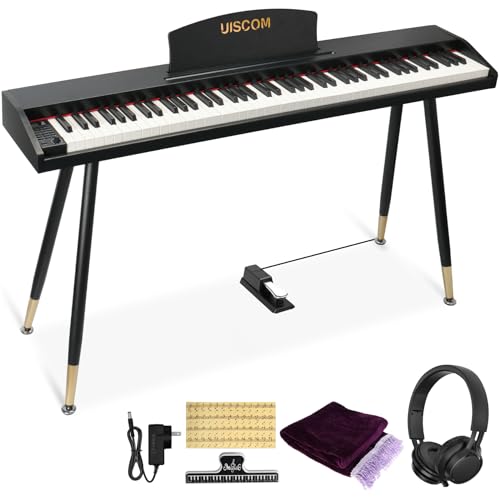
4. UISCOM 88-Key Digital Piano: Best Home Setup
Pros
- Full-size 88-key semi-weighted action
- Matching wooden stand and triple pedal
- 600 tones and 800 rhythms
- Bluetooth audio and USB MIDI
- Includes headphones, cover, stickers, and music stand
Cons
- Semi-weighted action is lighter than Yamaha’s weighted keys
- Furniture-style setup is less convenient to move
Best for: a beginner who wants a permanent-looking practice corner with lots of sounds and functions.
The UISCOM 88-Key Digital Piano is less like a portable keyboard on a folding stand and more like a complete home instrument. Its matching wooden stand gives it a settled presence in a bedroom, living room, or dedicated music corner. The package also includes a triple pedal, music stand, headphones, music clips, cover, and key stickers.
The 88 semi-weighted keys respond to playing strength and return more quickly than fully weighted keys, according to the product information. That lighter action can be comfortable for beginners, but it will not give the same resistance or graduated feel as the Yamaha P145BT or P45B. A learner focused on developing traditional piano technique should understand that difference before choosing it.
UISCOM goes in the opposite direction from Yamaha on sounds. It includes 600 tones, 800 rhythms, and 80 demo songs, along with metronome, split keyboard, dual voice, transpose, recording, and playback functions. Bluetooth audio lets it act as a speaker for play-along sessions, while USB MIDI connects it to phones, tablets, or computers and compatible learning apps.
The stand and large feature set are its strengths, but they also define the weakness. This is not the cleanest choice for someone who wants to move a keyboard between rooms or carry it to lessons. The Alesis Recital Play is easier to transport and includes a carry case, while the Yamaha models are more convincing as dedicated pianos. For home learners who want furniture-style presentation and plenty of creative options, UISCOM makes a persuasive case.
5. Donner DEP-1S: Best Connected Beginner Piano

Pros
- 88 velocity-sensitive keys with five levels
- Bluetooth audio and MIDI
- Record and playback functions
- Split mode and dual headphone support
- Stand, pedal, and stickers included
Cons
- Less piano-focused than the Yamaha models
- Smaller sound library than the UISCOM
Best for: beginners who want wireless app connections and a broad set of practice tools.
The Donner DEP-1S is aimed at the learner who wants a piano-shaped starting point but also expects modern connections. Its 88-key velocity-sensitive keyboard has five levels of touch response, giving the player a way to control expression rather than triggering every note at one fixed volume. The data does not describe the keys as weighted, so the feel sits closer to an expressive beginner keyboard than to the Yamaha P145BT.
The DEP-1S includes Bluetooth audio and Bluetooth MIDI. Audio is useful for playing along with music from a phone, while MIDI can connect the keyboard to learning and composing apps. A USB port supports saving songs to flash drives for playback on other devices, and the record and playback functions make it possible to review practice without another recording setup.
The sound engine offers 128 tones, 100 rhythms, and 88 demo songs, with chord accompaniment, split mode, and dual headphones for quiet practice. That is a solid spread for experimenting, though it is not as extensive as the UISCOM’s 600 tones and 800 rhythms or the PYangTian’s larger library. The included adjustable X-style stand, sustain pedal, and piano stickers make it ready for beginner use.
The Donner is a stronger connected learning tool than the simple Yamaha P45B, but the Yamaha has the more clearly defined piano identity. Its compact presentation also suits a classroom or bedroom better than a large furniture-style instrument. If you are choosing a keyboard partly for wireless app use, the DEP-1S is one of the more complete options here. If your only goal is the most traditional key feel, choose one of the Yamaha models instead.
The keyboard’s Bluetooth MIDI focus may also appeal to tablet learners. For more ideas about pairing instruments with a tablet, the practical details of using a keyboard with an iPad are useful before you buy.
6. JIKADA 61-Key Keyboard: Best Teaching Bundle

Pros
- Three teaching modes with light-up keys
- 255 tones and 255 rhythms
- Record and playback functions
- Includes stand, stool, headphones, microphone, and music rest
- Sustain, split, transpose, and chord controls
Cons
- Only 61 keys
- Not intended for users under 12 years old
Best for: older children and beginners who learn best through guided features and accompaniment.
The JIKADA 61-Key Keyboard is built around active learning rather than quiet, traditional piano study. Its three teaching modes and light-up keys give beginners visual prompts, while the included note stickers reinforce the location of notes. That approach can make early sessions less intimidating, especially for a student who is not ready to read music independently.
The 61-key layout is shorter than the 88-key Yamaha, Alesis, UISCOM, Donner, and PYangTian models. It still offers room for basic melodies, chords, and accompaniment, but it is not the right foundation for pieces that require the full piano range. The product is also marked as not intended for users under 12 years old, so parents should take that guidance seriously.
JIKADA includes 255 tones, 255 rhythms, 50 demo songs, and 61 types of keyboard percussion. A status memory function saves tone, rhythm, tempo, and other changed parameters for quick shifts during playing. Sustain, vibrato, split, transpose, metronome, single-finger chords, fingered chords, record, and playback give a student many ways to explore music.
The bundle is generous, with an X-shaped stand, foldable stool, headphones, microphone, music rest, and power adapter. That makes it more engaging than the simpler RockJam RJ561, though the RockJam is a less complicated first step. JIKADA is not the pick for realistic piano sound or weighted technique. It is the more interesting choice for a learner who wants lights, accompaniment, singing, and a structured path through the first lessons.
7. RockJam RJ561: Best Straightforward Starter Kit

Pros
- 61 full-size keys
- Stand, stool, headphones, and stickers included
- 100 rhythms and 50 tones
- Teaching functions and demo songs
- Simple starting setup
Cons
- Fewer tones than the RJ5061
- Does not provide the range of an 88-key piano
Best for: a first-time player who wants a basic seated setup without a crowded feature list.
The RockJam RJ561 is the uncomplicated beginner kit in this group. It includes a 61-key keyboard, stand, stool, headphones, and stickers, so a new player can sit down and begin without figuring out which accessories are essential. The full-size key layout is friendlier for adult hands than a compact mini-key keyboard, while the shorter range keeps the instrument manageable.
Its sound selection is modest but useful. There are 50 tones, 100 rhythms, teaching functions, and demo songs. That gives beginners enough variety to practice melodies, try accompaniment, and stay interested without making the control panel feel like a workstation. The included headphones also support private practice in a shared room.
Compared with the JIKADA, the RJ561 is less ambitious. JIKADA adds 255 tones, 255 rhythms, light-up keys, three teaching modes, recording, playback, and a microphone. The RJ561 answers with a simpler layout and fewer features to learn. Compared with the RockJam RJ5061, it has fewer tones but retains the same useful 61-key concept and a seated starter format.
The main limitation is the 61-key range. It will not provide the same left-hand and right-hand space as the 88-key models, and there is no claim of weighted or touch-sensitive action in the supplied information. Choose it for casual learning and straightforward practice. Skip it if the sound and feel of a traditional piano are the main reasons you are shopping.
8. RockJam RJ5061: Best Compact Learning Kit

Pros
- 61-key beginner layout
- 200 tones and 200 rhythms
- Pitch bend wheel
- Stand, bench, headphones, and note stickers included
- Headphones support private practice
Cons
- No weighted action listed
- Not a full 88-key piano layout
Best for: beginners who want more sound variety than a basic starter keyboard and need quiet practice.
The RockJam RJ5061 improves on the basic starter formula with a larger sound library and a pitch bend wheel. Its 61-key layout keeps the keyboard relatively easy to place in a bedroom or shared room, while the included stand, bench, headphones, and note stickers create a complete first setup.
The 200 tones and 200 rhythms give it twice the selection listed for the RJ561. That matters for a learner who enjoys trying different accompaniment patterns or moving between piano, organ, and other instrument sounds. The pitch bend wheel adds expressive control that the RJ561 does not list, though neither keyboard is presented as a weighted piano action.
RockJam also emphasizes lessons and note-by-note guidance through Simply Piano access and keynote stickers. The headphones are a practical part of the kit, not just an accessory, since they let a student practice without filling a shared room with repeated scales. This makes the RJ5061 more suitable for households where quiet hours matter.
The Yamaha P145BT and Alesis Recital Play are far better choices for a full piano range and more convincing piano technique. The JIKADA has a deeper teaching feature set, including light-up keys and three teaching modes. The RJ5061 sits between them: more playful than a basic piano, simpler than a feature-heavy teaching keyboard, and well suited to a beginner who wants a compact, ready-to-use kit.
9. PYangTian 88-Key Piano: Best Feature-Packed Bundle

Pros
- Full 88-key semi-weighted layout
- 1, 000 tones and 1, 000 rhythms
- 150 demo songs
- Bluetooth, USB MIDI, and recording
- Stand, carrying case, pedal, headphones, and stickers included
Cons
- Semi-weighted keys are not the same as Yamaha’s weighted action
- The feature list may overwhelm a piano-first learner
Best for: beginners who want the widest range of built-in sounds and accompanying functions.
The PYangTian 88-Key Piano is the maximalist option. It gives a beginner a full 88-key range, a double-X stand, carrying case, sustain pedal, music rest, headphones, microphone, USB power adapter, and key stickers. The result is a kit aimed at immediate experimentation rather than a minimalist piano routine.
Its semi-weighted keys respond more sensitively than a fixed-response keyboard and are described as reducing the force needed compared with fully weighted keys. That can be approachable for a new player, but it is still a compromise. The Yamaha P145BT and P45B are the stronger choices for players who want resistance and a more acoustic-piano-like touch.
The sound library is unusually large for this group, with 1, 000 tones, 1, 000 rhythms, and 150 demo songs. Dual keyboard mode can support lessons or layered playing, while recording and playback let users review performances. Bluetooth, USB MIDI, USB MP3 playback, microphone support, and a sustain pedal connection broaden its role beyond basic piano practice.
The weakness is focus. A huge selection can encourage exploration, but it does not automatically make the main piano voice more convincing. The Alesis Recital Play offers fewer sounds but more clearly organized lesson and record modes, while the Donner DEP-1S has a cleaner Bluetooth MIDI story. Pick PYangTian if variety, accessories, and full-range coverage matter more than a refined piano action.
10. COYAHO Piano Stickers: Best Learning Accessory

Pros
- Fits 88, 61, 54, 49, and 37-key keyboards
- Large, clear note lettering
- Removable adhesive leaves no glue
- Waterproof and wipe-clean
- Thin surface feels smooth under the fingers
Cons
- An accessory, not a keyboard
- Labels can become a crutch for advancing players
Best for: beginners and children who need a visible map of the notes on an existing keyboard.
The COYAHO Piano Stickers are the odd one out here, but they solve a real beginner problem. If the keyboard is already in the house and the player cannot yet identify the notes, clear labels can make the first exercises less abstract. They fit keyboards with 88, 61, 54, 49, or 37 keys, so they can work with nearly every instrument in this roundup.
The stickers use large lettering that is easy to read from the player’s position. Their adhesive is designed for repeated removal and placement without leaving residue, and the product information says the surface is waterproof and can be wiped with a damp cloth. That is useful for a learning tool handled frequently by children.
At about 0.078 inches thick, they are intended to sit unobtrusively on the keys. The supplied details also describe a smooth surface with little resistance during techniques such as arpeggios and portamento. That is preferable to labels that create a noticeable ridge beneath the fingers.
These stickers cannot improve a keyboard’s speakers, tone, or key action, so they do not belong in the same performance tier as the Yamaha P145BT or Alesis Recital Play. They are a support tool for someone who owns one of those keyboards, or a RockJam, JIKADA, Donner, or PYangTian. Use them to learn note positions, then gradually remove the labels as recognition becomes automatic.
How to choose best sounding piano keyboard
The right keyboard depends on the balance between piano realism, learning support, sound variety, and the space available for practice.
Key action
Key action determines how the instrument responds beneath your fingers. Weighted keys on the Yamaha P145BT and P45B are the closest match here to the resistance of an acoustic piano, while semi-weighted keys on the UISCOM, Donner, and PYangTian offer a lighter compromise. Touch-sensitive or velocity-sensitive keys are important because they let playing strength affect expression.
If traditional piano technique is the goal, prioritize 88 weighted keys. If the keyboard is mainly for casual songs, lessons, and accompaniment, a lighter action can be easier to approach.
Piano voice and sound library
A large sound library is not the same as a convincing piano sound. The Yamaha P145BT and P45B focus on piano voices, while the Alesis Recital Play, UISCOM, JIKADA, and PYangTian add hundreds or thousands of tones and rhythms for experimentation.
Look for a piano-first model when dynamics, sustain, and a natural-feeling voice matter most. Choose a broader arranger-style instrument when changing sounds, adding rhythms, and playing demo songs are likely to keep practice engaging.
A keyboard with 88 keys and weak piano action is not automatically better for piano study than a focused model with fewer distractions.
Key count and layout
An 88-key layout gives both hands the full range used by piano music. It is the sensible choice for students following formal lessons or anyone who wants to avoid running out of notes. A 61-key keyboard is easier to place and transport, and it is sufficient for many beginner melodies, chords, and pop songs.
The RockJam and JIKADA models use 61 keys, while the Yamaha, Alesis, UISCOM, Donner, and PYangTian provide 88. Consider the music the player expects to learn, not just the available room.
Learning functions
Lesson modes, light-up keys, note stickers, demo songs, metronomes, recording, and transpose controls can make the first months less frustrating. JIKADA is the most teaching-focused 61-key option, while Alesis combines lessons, split mode, recording, metronome, and transpose functions.
A recording feature is particularly useful because it lets a learner hear timing and missed notes from a listener’s perspective. Removable stickers can help at the beginning, but they should eventually give way to memorized note positions.
Connections and quiet practice
Headphone outputs make regular practice easier in shared homes. Bluetooth audio is useful for playing along with songs, while Bluetooth MIDI and USB MIDI can connect a keyboard to learning or recording software.
The Yamaha P145BT includes Bluetooth audio and works with Smart Pianist and Rec’n’Share. Donner, UISCOM, and PYangTian also list wireless or USB connections. For a broader look at choosing digital pianos around playing feel and home use, the features that matter in a home digital piano are a useful reference.
Frequently asked questions
Are weighted keys important for piano practice?
Yes, especially for players learning traditional piano technique. Weighted keys provide more resistance and encourage control that is closer to an acoustic piano. Touch-sensitive or velocity-sensitive keys still add expression, but they do not necessarily provide the same physical feel.
Is an 88-key keyboard better than a 61-key keyboard?
An 88-key keyboard provides the full piano range and is better for formal study or advanced pieces. A 61-key model is easier to fit into a small room and can be perfectly suitable for melodies, chords, accompaniment, and beginner lessons.
Which keyboard has the most sounds?
The PYangTian lists 1, 000 tones and 1, 000 rhythms. The UISCOM lists 600 tones and 800 rhythms, while the Alesis Recital Play includes 480 sounds and 160 rhythms. More sounds increase creative options, but they do not necessarily mean the main piano voice will sound more realistic.
Can these keyboards be used with headphones?
Several of the keyboards include headphones in the bundle or list headphone support. The Alesis Recital Play, JIKADA, RockJam models, UISCOM, PYangTian, and Donner all provide headphone-related features or accessories in the supplied information. Headphones are useful for practicing in shared rooms.
What is Bluetooth useful for on a piano keyboard?
Bluetooth audio lets the keyboard play music from a compatible phone or tablet so you can practice along with it. Bluetooth MIDI can connect the instrument to compatible learning or composing apps. The Yamaha P145BT lists Bluetooth audio, while Donner, UISCOM, and PYangTian list broader wireless connectivity.
Do beginners need note stickers?
Note stickers can help a beginner identify keys during the first lessons. They should be treated as temporary visual support rather than a permanent substitute for learning note positions. The COYAHO stickers are removable and fit several common keyboard sizes.
Which keyboard is closest to an acoustic piano?
The Yamaha P145BT and Yamaha P45B are the closest matches in this group because both use 88 weighted keys and focus on acoustic-piano-style playing. The P145BT adds Bluetooth audio and app support, while the P45B keeps the controls simpler.
The bottom line
The Best best sounding piano keyboard for realistic piano practice is the Yamaha P145BT. Its 88 weighted keys, Graded Hammer Compact action, grand piano voice, built-in speakers, Bluetooth audio, and app support give it the most complete piano-first experience here. The Alesis Recital Play is the better alternative for a beginner who wants a stand, pedal, headphones, carry case, lesson features, rhythms, and a large sound library from the start.
The Yamaha P45B remains a strong choice for anyone who prefers a simple weighted piano with little clutter. For more playful learning, the JIKADA 61-Key Keyboard and RockJam RJ5061 offer guided functions and ready-to-use bundles, while the Donner DEP-1S is the more connected beginner option.
If you are undecided, choose the Yamaha P145BT for piano feel, or the Alesis Recital Play when a complete learning bundle matters more.
As an Amazon Associate we earn from qualifying purchases.