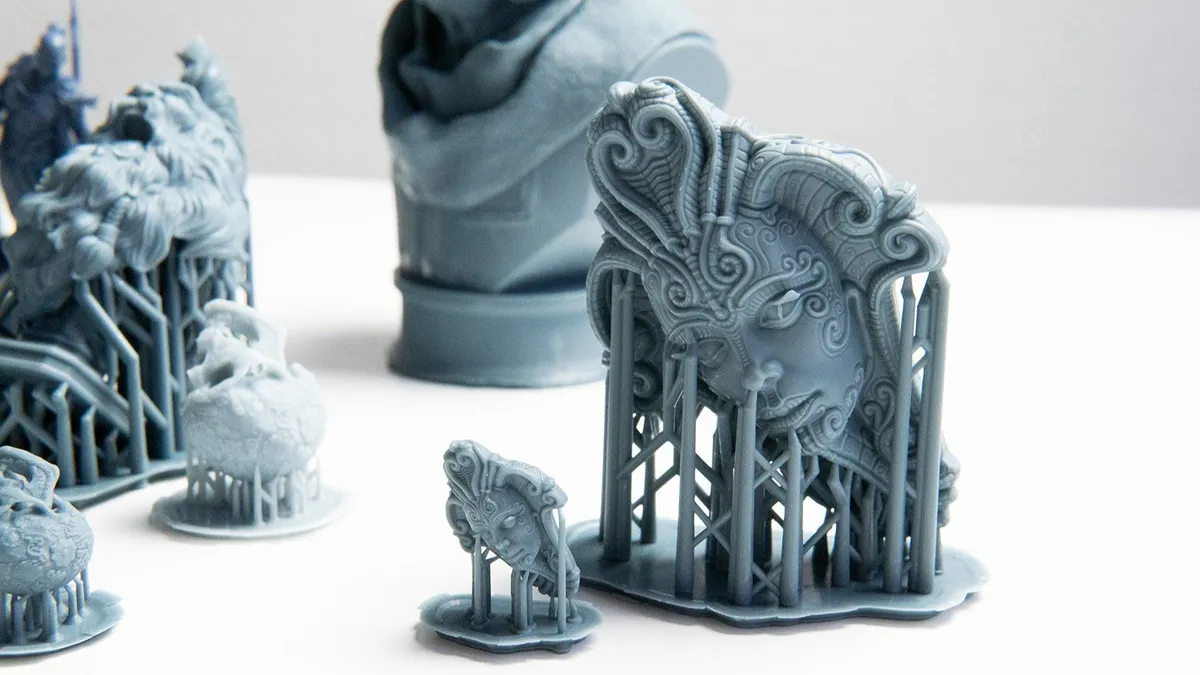

Small miniature details expose a printer's weaknesses quickly. Soft facial features, visible layer lines, failed supports, and rough edges can turn an exciting model into a cleanup project. The right choice depends first on whether you want resin's fine detail or the cleaner, simpler workflow of filament.
This guide compares nine real options, from high-resolution resin machines for display models to enclosed printers designed for children. The Best 3D Printer for Miniatures for most serious hobbyists is the ELEGOO Saturn 4 Ultra 16K, while the FlashForge Adventurer 5M is the stronger all-purpose filament alternative.
| # | Product | Award | Printing method | Detail or speed | Best for |
|---|---|---|---|---|---|
| 1 | FLASHFORGE Adventurer 5M | Best overall | Filament | Up to 600mm/s, 280°C extruder | Fast, low-fuss general printing |
| 2 | ANYCUBIC Photon Mono 4 | Best compact resin pick | Resin | 7-inch 10K LCD, 17µm XY | Detailed tabletop miniatures |
| 3 | Phrozen Sonic Mini 8K S | Best fine-detail resin | Resin | 22µm XY, 8K LCD | Sharp faces and small textures |
| 4 | Bambu Lab A1 mini LED Kit | Best beginner filament pick | Filament | Automatic calibration | Easy first printer |
| 5 | ELEGOO Mars 5 | Best easy resin setup | Resin | 4K mono LCD | New resin users |
| 6 | FLASHFORGE Adventurer 5M Pro | Best enclosed filament printer | Filament | Up to 600mm/s, 280°C extruder | Materials and remote monitoring |
| 7 | ELEGOO Saturn 4 Ultra | Best large resin detail | Resin | 16K, up to 150mm/h | Larger batches of miniatures |
| 8 | Magic Jimmy Kids Printer | Best for children | Filament | Up to 400mm/s | Supervised creative play |
| 9 | Bambu Lab A1 Mini Combo | Best multicolor option | Filament | AMS lite, up to 10, 000mm/s² acceleration | Multicolor figures and props |
1. FLASHFORGE Adventurer 5M: Best Overall

Pros
- Automatic bed leveling removes a common setup headache
- CoreXY frame supports fast movement
- Quick-change nozzles and a dual-sided PEI platform
- Direct extruder supports a broad range of filament
Cons
- Filament cannot match resin for tiny facial details
- Large and fairly heavy for a desktop printer
- Mobile monitoring depends on the Flash Maker app
Best for: hobbyists who want one fast, flexible printer for miniatures and general projects.
The Adventurer 5M is the printer we'd choose for someone who wants miniatures without committing to resin handling. It is a conventional filament machine, so it will not reproduce a tiny sword hilt or a character's expression as cleanly as the resin models here. Its appeal is the broader, simpler workshop role: print terrain, storage trays, display stands, toys, and larger figures without building your entire process around washing and curing.
FlashForge gives it a CoreXY structure and a 220 by 220 by 220mm print volume. That is ample room for batches of small terrain pieces or a large single prop. The advertised travel speed reaches 600mm/s, with acceleration up to 20, 000mm/s², but the more useful detail is the combination of speed with automatic bed leveling and vibration compensation. Those systems are intended to keep fast movement from turning into a poor first layer or visibly uneven surfaces.
The 280°C direct extruder broadens the material options, while the high-flow nozzle is specified at 32mm³/s. The 35-second warm-up to 200°C is useful when a quick print should not become a long ritual. Nozzle sizes from 0.25mm to 0.8mm let you move toward finer detail or faster, sturdier terrain. The dual-sided PEI platform should also make model removal less fussy than a plain rigid build surface.
Compared with the Bambu Lab A1 mini, the Adventurer 5M offers a larger stated print volume and a more ambitious high-speed design. The resin printers, especially the ELEGOO Saturn 4 Ultra, remain the better route for painted character miniatures with crisp microdetail. The weakness here is fundamental rather than hidden: filament lines remain more apparent on small figures, and regular nozzle and platform cleaning is still part of ownership.
Choose the Adventurer 5M if you want a capable general-purpose machine that can make miniatures, scenery, functional parts, and gifts. It is also the more comfortable choice for anyone who does not want resin odor, liquid cleanup, and post-processing to dominate the hobby.
2. ANYCUBIC Photon Mono 4: Best Compact Resin Pick

Pros
- 7-inch 10K monochrome LCD
- 17µm pixel size on the X and Y axes
- Laser-engraved platform is designed to improve adhesion
- Power-resume function can recover an interrupted print
Cons
- Anycubic app support is not available
- Four-point leveling still requires an initial setup
- Smaller build area than the large resin pick
Best for: tabletop hobbyists who want highly detailed resin models in a compact machine.
The Photon Mono 4 makes a strong case for resin miniature printing because it concentrates on the part that matters most: exposing small details cleanly. Its 7-inch 10K monochrome LCD has a 9024 by 5120 resolution and a stated 17 by 17µm pixel size on the X and Y axes. That fine pixel structure is particularly relevant to faces, armor texture, thin accessories, and the edges of small bases.
Its maximum build area measures 153.4 by 87 by 165mm. That is enough for a useful run of tabletop figures, though it gives less room than a larger resin machine when you want to print several tall models at once. The LighTurbo matrix light source is designed to provide even exposure across the screen, which should help avoid the inconsistent surface appearance that can undermine otherwise detailed prints.
Setup is more approachable than the usual image of resin printing suggests. The four-point leveling process requires an initial adjustment and screw tightening, but the product information says it should not need repeating after that first leveling. The laser-engraved platform is intended to improve adhesion while keeping finished models removable. Power-resume support is another practical touch for a machine that may run long jobs.
The Photon Mono 4 is a more compact choice than the Phrozen Sonic Mini 8K S and less ambitious than the Saturn 4 Ultra. It also has a clear limitation for connected workflows because the Anycubic app is not supported. That does not affect the printer's core detail capabilities, but users expecting app-based control should skip it. Resin still requires careful handling, washing, curing, and ventilation.
For a deeper look at the equipment and workflow around resin printing, the cleanup steps that resin printing adds to the hobby are worth considering before buying. If those steps fit your workspace, the Photon Mono 4 is a compact, detail-focused route to convincing miniatures.
3. Phrozen Sonic Mini 8K S: Best Fine-Detail Resin

Pros
- 22µm XY resolution
- 8K monochrome LCD
- Open software compatibility
- Precise Z-axis calibration
- Strong tabletop footprint for a compact resin printer
Cons
- Build volume is limited for larger models
- Resin cleanup and curing remain necessary
- The printer weighs 22 pounds
Best for: miniature painters who prioritize fine surface detail and software flexibility.
The Sonic Mini 8K S is aimed squarely at the person who studies a miniature under a lamp and notices the texture on a cloak or the separation between fingers. Its 22µm XY resolution and 8K monochrome LCD give it a detail-first identity. That does not remove the need for good supports and exposure settings, but it gives the printer a strong foundation for small, sharply defined forms.
The stated printing volume is 16.5 by 7.2 by 17cm, or approximately 165 by 72 by 170mm. Its narrow footprint is well matched to individual figures and small batches, but less suited to broad terrain or several large action figures. The product information also lists a load capacity of up to 22 pounds, though that should not be confused with usable print volume.
Phrozen emphasizes precise Z-axis calibration, which matters because a resin printer's first layers determine whether the rest of a carefully detailed model survives. Support for open source software and slicers including Lychee, Chitubox, and Tango is a useful advantage for hobbyists who already have a preferred workflow. You are less boxed into one software path than with a printer built around a single ecosystem.
The ANYCUBIC Photon Mono 4 offers a smaller, lighter machine with a finer stated 17µm pixel size, while the Sonic Mini 8K S counters with its 8K display and flexible slicer support. The Saturn 4 Ultra is the better choice when production volume matters. The Sonic's real weakness is its limited width, so skip it if your typical project is scenery, large busts, or several bulky models in one run.
This is the pick for a detail-conscious maker who wants a focused resin machine rather than a general printer. It makes the most sense when the models are small enough for its build area and the owner is comfortable learning support placement and resin post-processing.
4. Bambu Lab A1 mini LED Kit: Best Beginner Filament Pick

Pros
- Automatic calibration and simple setup
- Quiet operation for a home workspace
- Connected Bambu Lab ecosystem
- Includes an LED lamp kit for compatible printed designs
- Compact pre-assembled format
Cons
- Filament detail is below resin for tiny figures
- The smaller format limits larger models
- The lamp kit is specialized rather than miniature-focused
Best for: beginners who want an uncomplicated filament printer with creative extras.
The A1 mini is the least intimidating printer in this group. Automatic calibration, simple setup, and a connected app make it easier to get from unopened box to first model without learning every adjustment at once. For a newcomer making chunky fantasy figures, terrain, tokens, or display pieces, that approach can be more important than having the highest possible resolution.
Bambu Lab describes it as fast and quiet, and the compact machine is intended to fit naturally in a home or studio. The product information lists dimensions of 15.21 by 16.77 by 17.94 inches and a weight of about 12.1 pounds. Those numbers make it easier to move than the FlashForge machines, though the tall shape still deserves a stable spot with room around it.
This particular package includes an LED lamp kit. That does not improve miniature resolution, but it gives the printer a useful creative direction for compatible lamp models, room decor, and personalized gifts. The wider Bambu ecosystem also connects the machine to MakerWorld and the Bambu Handy app, which can make finding and sending beginner-friendly models less tedious.
The A1 mini is easier to recommend to a first-time filament user than either FlashForge model, but the Adventurer 5M has a larger stated 220 by 220 by 220mm print volume and a more adaptable nozzle system. Resin models such as the Photon Mono 4 remain better for tiny faces and intricate armor. The A1 mini's weakness is its ceiling for miniature detail, not its ease of use.
Readers still deciding where setup complexity matters most should compare the features that make a first printer easier to live with. The A1 mini is right for someone who wants a friendly introduction, quiet operation, and a printer that can handle everyday creative projects after the first miniature.
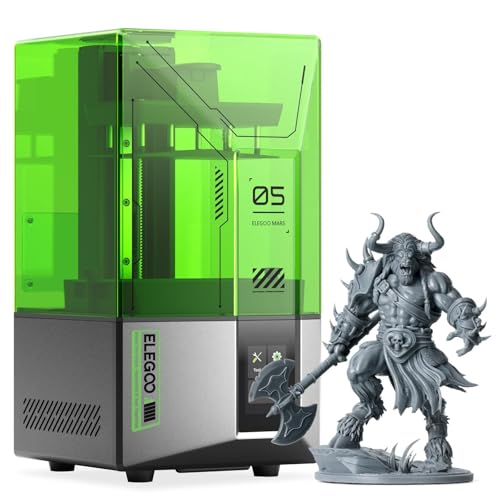
5. ELEGOO Mars 5: Best Easy Resin Setup
Pros
- One-click automatic leveling
- 4K monochrome LCD
- Residue detection helps protect the LCD
- Self-check routine before printing
- Overheat protection with an alarm
Cons
- Build volume is not specified in the supplied product details
- 4K resolution is below the higher-resolution resin picks
- Resin still requires careful post-processing
Best for: first-time resin users who want automated checks and leveling.
The Mars 5 is built around removing the small moments of uncertainty that make resin printing feel demanding. One-click automatic leveling is the headline feature, and a self-check routine can verify the printer's components before a job begins. That makes it a sensible entry point for someone who wants detailed figures but does not want to start with manual calibration as a central part of the hobby.
ELEGOO uses a 4K monochrome LCD with a COB light source. A 4K screen is not as fine on paper as the 10K Photon Mono 4, the 8K Sonic Mini 8K S, or the 16K Saturn 4 Ultra, but it can still produce sharply detailed tabletop models when the resin, exposure, supports, and layer settings are properly matched. The number alone does not decide whether a finished miniature will succeed.
The useful safeguards are mechanical as well as software-based. Residue detection is intended to prevent leftover material from damaging the LCD, while alerts for resin shortages and leveling failures can catch problems earlier. Overheat protection stops printing and sounds an alarm if the LED temperature exceeds 80°C. These features do not replace supervision, but they make failures less mysterious.
The Mars 5 is easier to approach than the Phrozen Sonic Mini 8K S and more automated than many basic resin printers. The Photon Mono 4 offers finer stated XY detail, and the Saturn 4 Ultra provides a larger, more advanced platform. The Mars 5's limitation is that the supplied information does not state its build volume, so buyers with unusually large models should verify that detail before ordering.
Pick the Mars 5 when the goal is a straightforward resin introduction with automatic checks. It is a better fit for a patient beginner than for someone who needs the sharpest possible facial detail or a large production area.
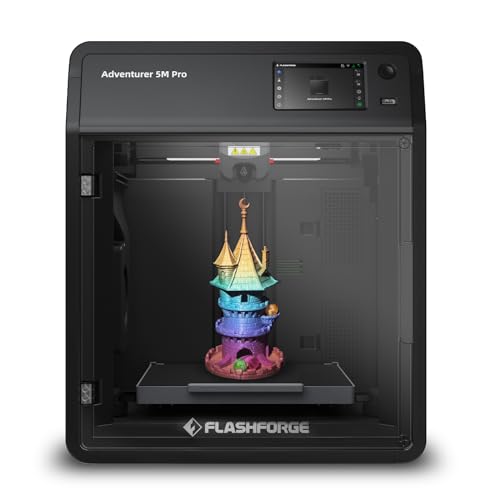
6. FLASHFORGE Adventurer 5M Pro: Best Enclosed Filament Printer
Pros
- Enclosed all-metal CoreXY structure
- Automatic pressure-based leveling
- 220 by 220 by 220mm print volume
- Supports PLA, ABS, PETG, ASA, TPU, PC, and composite variants
- Remote control and live video monitoring
Cons
- Heavy at about 32.2 pounds
- Filament cannot equal resin for miniature microdetail
- More printer than a small-figure beginner may need
Best for: experienced filament users who want an enclosed, versatile machine.
The Adventurer 5M Pro takes the fast, general-purpose idea of the Adventurer 5M and adds an enclosed, more fully featured body. Its all-metal CoreXY structure is designed to stay stable during rapid movement, while pressure-based automatic leveling avoids manual Z-axis calibration. The result is a printer that feels aimed at repeatable projects rather than occasional novelty prints.
The 220 by 220 by 220mm print volume is large enough for terrain, props, and several small filament miniatures. FlashForge specifies speeds up to 600mm/s and acceleration up to 20, 000mm/s². It can heat the nozzle to 200°C in 35 seconds, and the 280°C all-metal direct extruder supports materials ranging from PLA and PETG to ABS, ASA, TPU, PC, PLA-CF, and PETG-CF.
Nozzle choice is meaningful here. The supplied options include 0.25mm, 0.4mm, 0.6mm, and 0.8mm sizes, allowing a user to favor miniature detail or faster, stronger terrain. The dual-sided PEI platform is designed for easier removal, and Flash Maker adds remote control, live video monitoring, and real-time adjustments. Those are practical features when a long print is running in another room.
Compared with the Adventurer 5M, the Pro is heavier and less convenient to move, but it offers a more enclosed and capable working environment. The Bambu Lab A1 mini is simpler for a beginner, while the resin machines win for character-scale detail. The 5M Pro's weakness is its size and weight, especially if the main goal is only a handful of tiny figures.
Choose it when miniatures are part of a wider making habit that includes functional parts and multiple filament materials. For a dedicated miniature painter, the Saturn 4 Ultra or Photon Mono 4 is the more detail-oriented direction.
7. ELEGOO Saturn 4 Ultra: Best Large Resin Detail

Pros
- 16K resolution for very fine model detail
- Automatic leveling
- Heated resin tank maintains 30°C
- Tilt-release system with speeds up to 150mm/h
- AI camera, chamber light, and print alerts
Cons
- Large and heavy desktop footprint
- AI detection can vary by environment, model, and resin
- Resin workflow needs more cleanup than filament
Best for: serious hobbyists printing detailed miniatures in larger batches.
The Saturn 4 Ultra is the most capable resin machine in this group for someone who wants both fine detail and a more productive workflow. Its 16K resolution is aimed at smooth surfaces, lifelike textures, and clean edges on elaborate models. That is useful for miniatures with layered clothing, scales, facial expressions, and other details that benefit from a dense exposure grid.
Its standout feature is not resolution alone. The heated resin tank maintains 30°C to improve resin fluidity and layer adhesion, with the aim of reducing bubbles and layer separation. The tilt-release system is specified at up to 150mm/h and is designed to peel models from the release layer more quickly. Together, those features target the two issues that make resin production feel slow: inconsistent material behavior and laborious release.
The AI camera adds real-time monitoring and alerts for empty build plates and warped models. A built-in chamber light makes it easier to inspect a print, and the printer can create time-lapse footage. ELEGOO does caution that AI detection results may vary with the environment, models, and resin types. Treat the camera as a useful extra rather than a substitute for checking supports and exposure settings.
The supplied dimensions are 24 by 17 by 15 inches, and the weight is about 35.5 pounds. That is a substantial desktop commitment compared with the Photon Mono 4 or Mars 5. It is also more machine than a casual user needs. The Saturn 4 Ultra earns its place above those models when the owner wants to fill a build plate with detailed pieces and values the heated tank, monitoring, and release system.
This is our top choice for the Best 3D Printer for Miniatures when the priority is high-detail resin production rather than a simple first experiment. Skip it if workspace is tight or if you want to avoid resin handling altogether.
8. Magic Jimmy Kids Printer: Best for Children

Pros
- Fully assembled and ready to use
- Enclosed child-focused design
- AI Craft, AI Doodle, AI MiniMe, and MiniMakie tools
- Built-in camera and time-lapse recording
- Library of more than 8, 000 toy models
Cons
- Designed around PLA filament rather than fine resin work
- Child-focused tools may feel limiting to adult hobbyists
- Small models are its strongest use case
Best for: children who want to design and print with adult supervision.
The Magic Jimmy is not a conventional miniature enthusiast's printer. It is a guided creative system designed to make the jump from drawing to physical object feel immediate. AI Craft can turn sketches or text into printable designs, AI MiniMe can transform a photo into a cartoon figurine, and the included tools are built around experimentation rather than slicer theory.
The printer arrives fully assembled. The stated workflow is to connect it to WiFi, load the included white PLA filament, and start printing. Its enclosed chamber keeps hot components and moving parts away from children, while the product description specifies non-toxic PLA filament, a cool-touch exterior, and a magnetic build plate. Adult supervision is still the right approach around any heated machine.
Magic Jimmy claims speeds up to 400mm/s. Small models may complete in as little as 20 minutes, while many library models take one to three hours. The built-in camera records time-lapse footage, allowing children to watch a creation take shape. Access to more than 8, 000 toy models across iOS, Android, and Windows gives the printer a much broader starting point than a blank build plate.
It is a very different proposition from the Bambu Lab A1 mini. The A1 mini gives an adult hobbyist a more conventional connected printer, while Magic Jimmy places the design library and child-oriented tools at the center. The FlashForge Adventurer 5M is the better filament choice for serious miniature detail and material flexibility. Magic Jimmy's weakness is that adults may outgrow its guided experience.
For families specifically looking at creative printing, the safety and simplicity features children need around a printer deserve more attention than headline speed. Magic Jimmy is the right pick for a child who wants to make toys, cartoon figures, and STEM projects with an adult nearby.
9. Bambu Lab A1 Mini Combo: Best Multicolor Option

Pros
- AMS lite enables multicolor printing
- Automatic calibration and active flow-rate compensation
- Quick-swap nozzle design
- Pre-assembled setup
- Quiet operation rated at 48dB or less
Cons
- Color changes can add complexity to a print
- Filament detail is below resin for tiny figures
- Small A1 mini format limits larger pieces
Best for: makers who want easy multicolor figures, tokens, and decorative models.
The A1 Mini Combo is the most entertaining filament option here because it adds color without asking the user to paint every small accent by hand. Its AMS lite system is designed for multicolor printing, making it a natural fit for tokens, cartoon figures, game pieces, and decorative miniatures where visible color separation matters more than resin-level surface detail.
Bambu Lab includes full automatic calibration, including Z-offset and bed leveling, along with active flow-rate compensation. That compensation adjusts extrusion according to readings from the printer, with the aim of keeping lines smooth and consistent. The 1-Clip quick-swap nozzle also makes routine maintenance less awkward than a more involved nozzle replacement.
The Combo reaches acceleration of 10, 000mm/s² and is designed for fast, precise printing. Its pre-assembled format is intended to take about 20 minutes to set up for a first print. Noise is listed at 48dB or less, and active motor noise cancellation should make it more suitable for a shared home space than a loud, poorly tuned machine.
The standard A1 mini with LED kit is the simpler package if multicolor is not important, while the Adventurer 5M offers a larger stated print volume and more nozzle-size flexibility. The resin printers remain the clear choice for tiny facial features and delicate surface texture. The Combo's own limitation is the trade-off inherent in multicolor printing: color transitions can complicate a job, and the small platform still limits the size of the finished model.
Choose it when the visual impact of multiple filament colors matters more than microscopic detail. For a child-friendly guided system, Magic Jimmy is more approachable, while the A1 Mini Combo is the better fit for an adult who wants a conventional printer with multicolor capability.
How to choose best 3d printer for miniatures
The right machine depends on the kind of miniature you want to make, how much post-processing you can tolerate, and whether the printer must also handle terrain or household projects.
Resin or filament
Resin printers expose liquid resin layer by layer and are usually the stronger choice for small faces, sharp armor, and intricate textures. They require washing, curing, careful handling, and a suitable workspace. Filament printers melt plastic through a nozzle, which makes them easier to use for terrain and functional parts, but layer lines are more visible on small figures.
Resolution and nozzle size
For resin, XY resolution and LCD resolution affect how finely the printer can expose details across each layer. A 17µm or 22µm figure describes pixel size on the X and Y axes, not guaranteed finished quality. For filament, nozzle diameter changes the balance between detail and speed. A 0.25mm nozzle can be useful for small features, while larger nozzles suit terrain and sturdy props.
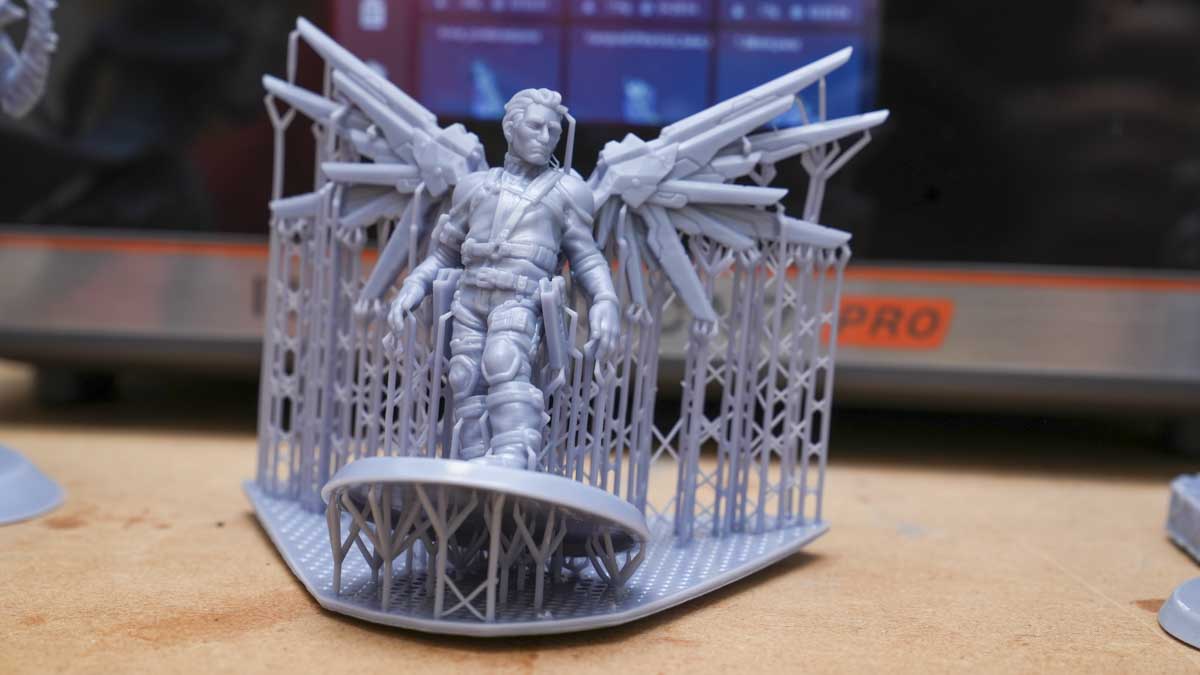
Resin sets the detail ceiling, but supports, exposure, and model orientation decide whether that detail survives.
Build volume
A larger build area lets you print several figures or bigger scenery in one job. The Photon Mono 4, Sonic Mini 8K S, and Mars 5 are more focused on compact resin work, while the 220 by 220 by 220mm FlashForge machines give filament users more room for terrain and props. Do not choose a large printer solely for its maximum volume if your workspace cannot comfortably house it.
Leveling and calibration
Automatic leveling is especially useful for beginners because a poor first layer can ruin an otherwise good model. The Photon Mono 4 uses a four-point leveling process intended to avoid repeated adjustments after the initial setup. The Mars 5, Saturn 4 Ultra, A1 mini, and FlashForge models offer automatic systems that reduce manual setup.
Workflow and monitoring
Connected apps, cameras, self-checks, and print alerts can make long jobs easier to manage. The Saturn 4 Ultra adds a camera, chamber light, and AI alerts, while the FlashForge models support remote monitoring through Flash Maker. The A1 mini models emphasize connected printing and ready-made model libraries. These features help, but no automated system replaces suitable supports and sensible material settings.
Frequently asked questions
Is resin or filament better for miniature figures?
Resin is generally better for tiny facial features, sharp edges, and fine surface texture. Filament is easier to handle and more useful for terrain, bases, storage, and larger props. The choice should follow your tolerance for washing and curing as much as the desired detail.
Which printer has the highest stated resolution?
The ELEGOO Saturn 4 Ultra lists 16K resolution. The ANYCUBIC Photon Mono 4 lists a 7-inch 10K monochrome LCD with 17µm XY pixels, while the Phrozen Sonic Mini 8K S lists 22µm XY resolution and an 8K monochrome LCD.
Can these printers make large miniatures?
The FlashForge Adventurer 5M and Adventurer 5M Pro list a 220 by 220 by 220mm print volume, which is useful for larger filament figures and terrain. The resin models have more specialized build areas, and the supplied details do not state the Mars 5 volume. Check the dimensions of your usual models before ordering.
Is the Bambu Lab A1 Mini Combo suitable for detailed miniatures?
It can make filament miniatures, tokens, and decorative figures with an easy workflow and multicolor capability. Resin printers such as the Photon Mono 4 and Saturn 4 Ultra are better for very small faces and delicate textures. The A1 Mini Combo is strongest when color and convenience matter more than the finest surface detail.
Does resin printing require extra cleanup?
Yes. Resin prints normally need washing and curing after removal from the build plate, and uncured resin requires careful handling. The printer itself is only one part of the resin workflow, so plan for a suitable workspace and the additional finishing steps.
Is the Magic Jimmy printer suitable for adult hobbyists?
It can import STL files and print small PLA models, but its main strength is its child-focused library and AI design tools. Adult hobbyists seeking fine miniature detail, broad material support, or more control will likely prefer the FlashForge, Bambu Lab, Phrozen, or ELEGOO models.
Do faster print speeds guarantee better miniatures?
No. Speed claims describe maximum movement or printing capability, but miniature quality also depends on resolution, layer settings, supports, material, and calibration. A slower well-supported print can look better than a fast print with poor exposure or unstable support placement.
The bottom line
The ELEGOO Saturn 4 Ultra is our top choice for the Best 3D Printer for Miniatures when fine resin detail, larger batches, and automated monitoring matter most. Its 16K resolution, 30°C heated tank, automatic leveling, and tilt-release system give serious hobbyists more control over demanding prints.
For a simpler filament workflow, the FLASHFORGE Adventurer 5M is the stronger all-rounder. Its 220 by 220 by 220mm volume, automatic leveling, 280°C direct extruder, and broad nozzle selection make it useful well beyond miniatures. Choose the Bambu Lab A1 Mini Combo instead if multicolor models are the main attraction.
If you are undecided, choose resin for the smallest details and filament for the least complicated ownership experience.
As an Amazon Associate we earn from qualifying purchases.