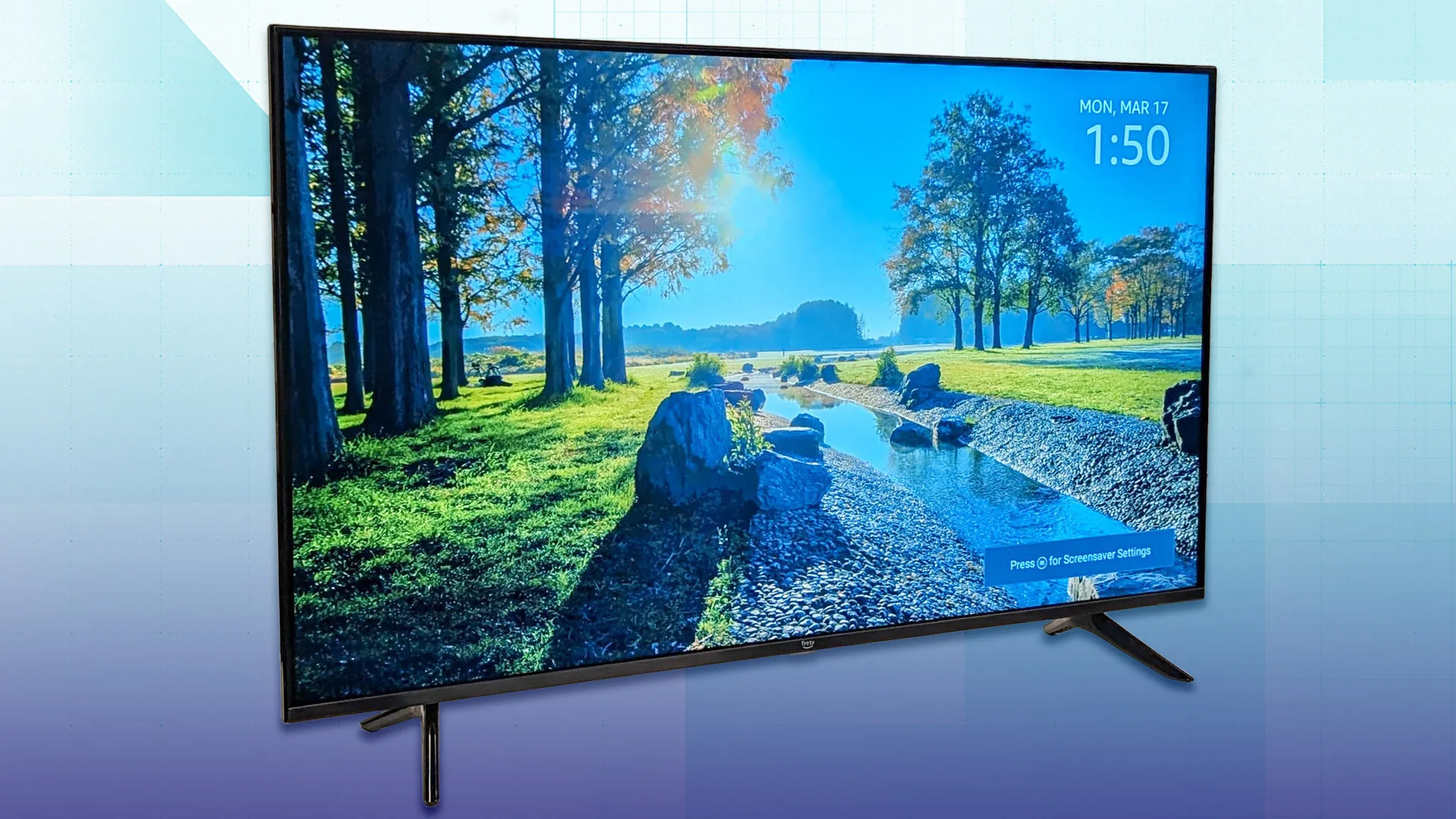

A 43-inch TV has to work harder than a huge living-room screen. It may sit close to a sofa, fill a bedroom wall, or pull double duty as a console display, so poor upscaling, weak motion handling, or an awkward smart interface becomes obvious quickly. The Best 43 inch smart TV options now range from simple Fire TV sets to Mini LED and QLED models with serious picture upgrades.
We compared the nine models by their panel and processing features, HDR support, smart platform, gaming tools, connections, and physical design. The Samsung M70H is our top pick for the strongest picture features, while the Insignia F50 is the simplest route to a compact 4K Fire TV. The rest cover better motion, richer color, Google TV, webOS, and more flexible streaming setups.
Comparison table
| # | Product | Award | Panel and picture | HDR | Smart platform | Best for |
|---|---|---|---|---|---|---|
| 1 | Samsung M70H | Best overall | Mini LED, 4K, Pure Color Spectrum | Mini LED HDR | Samsung smart TV, Gaming Hub | Movies, sports and gaming |
| 2 | Hisense E6 Cinema | Best HDR support | Hi-QLED, 4K | Dolby Vision, Dolby Atmos, HDR10+ Adaptive, HDR10, HLG | Fire TV | HDR streaming in changing light |
| 3 | Samsung Q7F QLED | Best color-focused TV | QLED, 4K | Quantum HDR, HDR10+ | Samsung Vision AI, Gaming Hub | Rich color and Samsung features |
| 4 | LG QNED73 | Best webOS option | QNED, Mini LED, 4K | HDR10 Pro | webOS | Streaming and console gaming |
| 5 | Amazon Ember 4-Series | Best Fire TV experience | 4K Ultra HD | HDR10+ | Fire TV, Alexa+ | Voice search and smart home use |
| 6 | Sony BRAVIA 2 II | Best Google TV pick | LED, 4K HDR | HDR | Google TV | Streaming and PS5 owners |
| 7 | Toshiba C350 | Best for built-in motion tools | LED, 4K | Dolby Vision | Fire TV | Sports and casual gaming |
| 8 | Samsung U8000H | Best straightforward Samsung | Crystal UHD, 4K | Not specified | Samsung smart TV | Simple everyday viewing |
| 9 | Insignia F50 | Best compact Fire TV value | LED, 4K UHD | HDR10 | Fire TV | Basic streaming and bedroom use |
1. Samsung M70H: Best Overall

Pros
- Mini LED contrast gives highlights and dark scenes more separation
- Pure Color Spectrum supports vivid, natural-looking color
- Motion Xcelerator plus DLG 120Hz suits sports and gaming
- Gaming Hub keeps console and cloud options together
Cons
- Samsung's smart interface is less flexible than Google TV for some app-heavy households
- The feature set is more than casual viewers may need
- No Dolby Vision support is listed
Best for: viewers who want the most capable picture and motion package in a 43-inch Samsung.
The Samsung M70H is the set we'd choose when a 43-inch screen has to feel like a serious main TV rather than a secondary display. Mini LED backlighting gives it a more ambitious foundation than the conventional LED panels in the Insignia F50, Samsung U8000H, and Sony BRAVIA 2 II. The attraction is not just a brighter picture. Mini LED is intended to create stronger separation between bright highlights and darker areas, which matters in films, sports broadcasts, and games with high-contrast scenes.
Samsung pairs that backlight with a Mini LED Processor 4K and Supreme Mini LED Dimming. The data does not specify a zone count or peak brightness, so we will not pretend to know exactly how aggressively it can control the backlight. What is clear is the direction of the design: brighter highlights, deeper blacks, and more precise dimming than a basic LED model. Pure Color Spectrum is also designed to show up to one billion colors, giving animated content, sports graphics, and saturated game worlds a more vivid presentation.
Motion is the other reason this set rises to the top. Motion Xcelerator plus DLG 120Hz is aimed at fast action, and Samsung calls out sports and gaming specifically. Soccer Mode adds a dedicated picture treatment for the sport. That makes the M70H more compelling than the Q7F for buyers who care about movement as much as color, although the Q7F remains a strong alternative for quantum-dot color and Samsung's Vision AI features.
The weakness is the missing Dolby Vision support in the supplied specifications. The television does have Mini LED HDR, but buyers with a large Dolby Vision library should look closely at the Hisense E6 Cinema instead. The M70H also makes the most sense when you will use its picture and gaming capabilities regularly. For a spare bedroom that mostly shows sitcoms, the Insignia F50 is easier to justify.
Choose the Samsung M70H for a 43-inch display that can handle films, sports, console play, and cloud gaming without feeling like a compromise. Its Mini LED picture and 120Hz-oriented motion features give it the broadest capability here.
2. Hisense E6 Cinema: Best HDR Support
Pros
- Supports Dolby Vision, HDR10+ Adaptive, HDR10 and HLG
- AI light sensor adjusts brightness to room conditions
- Dolby Atmos and Dolby Vision are included together
- Wi-Fi 6 supports newer home networks
Cons
- Fire TV is not ideal for viewers who prefer Google TV or webOS
- Motion claims do not specify a native panel refresh rate
- The extensive picture processing may need tuning for film purists
Best for: households that watch HDR movies and shows in rooms with changing ambient light.
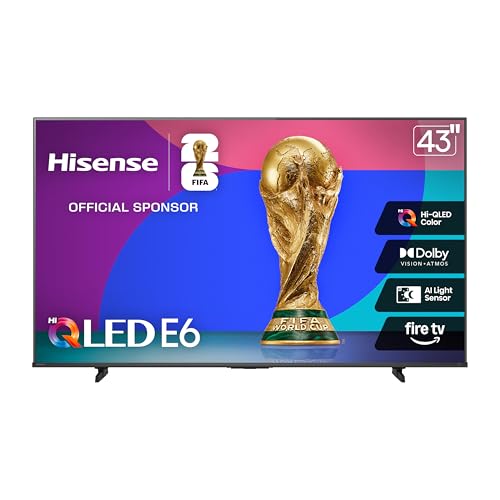
The Hisense E6 Cinema is the most format-flexible television in this group. Its Hi-QLED color system is designed to produce richer, more lifelike color than a conventional LED display, but its more important advantage is the breadth of HDR support. Dolby Vision, HDR10+ Adaptive, HDR10, and HLG are all listed, so the TV is prepared for a wider mix of streaming, broadcast, and disc content than the Samsung M70H or LG QNED73.
HDR is only useful when the television can respond to the room, and this Hisense includes an AI light sensor that adjusts screen brightness to ambient conditions. That should be useful in a room that shifts from daylight to evening lamps. The feature is not a substitute for strong native contrast, and the product information does not provide a backlight zone count, but it can make the picture easier to live with across the day.
Hisense also gives the E6 Cinema a useful movie toolkit. Filmmaker Mode is designed to preserve the original aspect ratio, frame rate, color, and audio settings. AI 4K Upscaler works on lower-resolution material, while AI Smooth Motion combines motion estimation, noise reduction, and a responsive panel to reduce blur. These features make it a more versatile mixed-content TV than the Q7F, though the Samsung M70H has the stronger stated motion specification for high-speed gaming and sports.
The main limitation is that the supplied data does not identify a native refresh rate. Motion Rate 120 and AI Smooth Motion describe processing and motion handling, but they should not be read as proof of a 120Hz panel. The Hisense is also a Fire TV, so choose another model if your household is already built around Google TV or webOS.
For viewers who want to use Dolby Vision and HDR10+ content without checking format compatibility first, the E6 Cinema is the easy recommendation. It beats the Toshiba C350 on HDR breadth and offers a more adaptable picture than the Samsung U8000H.
3. Samsung Q7F QLED: Best Color-Focused TV

Pros
- Quantum Dots are designed to preserve color across brightness levels
- HDR10+ dynamic tone mapping improves contrast detail
- Q4 AI Gen1 processing handles upscaling and picture adjustments
- Gaming Hub and Alexa are built in
Cons
- No Dolby Vision support is listed
- Motion features are less explicit than on the M70H
- Samsung Vision AI features may matter less to viewers who want manual control
Best for: viewers who want a colorful Samsung TV with strong processing and a polished ecosystem.
The Samsung Q7F QLED takes a different route from the Mini LED M70H. It uses Quantum Dots to produce a broad range of color, and Samsung says those colors remain accurate even in bright scenes. That makes it a natural fit for animation, nature programs, sports, and games where vivid reds, blues, and greens are part of the appeal.
Its Q4 AI Gen1 Processor is tasked with improving picture and audio according to the content, while 4K upscaling cleans up lower-resolution sources. Upscaling matters on a 43-inch screen because viewers often sit close enough to notice soft cable channels or older shows. It will not create missing detail from nothing, but intelligent processing can make that material look more coherent than a simple pixel stretch.
The Q7F also supports Quantum HDR and HDR10+ dynamic tone mapping. HDR10+ can adjust the tone of compatible content from scene to scene, helping preserve detail in both bright and dark parts of the image. Samsung's Gaming Hub adds a central place for console, cloud, and gaming app content, and Alexa is built in. Those features make it more of an entertainment hub than the simpler U8000H.
The trade-off is a less complete HDR format list than the Hisense E6 Cinema. Dolby Vision is not listed, and the supplied specifications do not state a native 120Hz panel or HDMI count. The M70H is the better Samsung for fast sports and gaming, while the Q7F is the one to pick when color and Samsung's processing are the priority.
The Q7F is especially appealing to people who want a refined Samsung experience without moving to a larger screen. If your viewing is dominated by colorful shows, streaming apps, and games rather than Dolby Vision films, its strengths are easy to appreciate.
4. LG QNED73: Best webOS Option

Pros
- QNED color system targets accurate, vivid color
- Mini LED design supports brighter highlights and deeper contrast
- Filmmaker Mode preserves a film's intended presentation
- FreeSync Premium and ALLM support gaming
Cons
- Only HDR10 Pro is listed
- The supplied data does not specify refresh rate or HDMI count
- webOS may feel unfamiliar to Fire TV or Google TV users
Best for: streamers and console players who prefer LG's webOS interface and gaming controls.
The LG QNED73 is the strongest alternative to Samsung if you want a more feature-rich panel and a different smart platform. Its QNED color system is designed for accurate color with 100% Color Volume, while Mini LED backlighting is intended to improve the distinction between bright highlights and darker portions of the image. LG does not provide a zone count here, so the important conclusion is simply that it has a more advanced backlight design than the standard LED sets in this list.
The A7 AI Processor 4K Gen9 handles picture detail, brightness, sound, and AI 4K Super Upscaling. That combination should help when switching between modern 4K streaming and older HD material. Filmmaker Mode is useful for film fans because it preserves the director's original colors, settings, and frame rates instead of applying a heavily processed look.
Gaming is a clear focus. FreeSync Premium, ALLM, Game Dashboard, and Game Optimizer give console and cloud players more control over latency and display settings. The feature list does not identify a native refresh rate or resolution support beyond 4K, so serious competitive players should not assume it matches the M70H's stated DLG 120Hz capability. For ordinary console gaming, the controls are still a meaningful advantage over the Insignia F50.
LG uses webOS and includes access to LG Channels, with more than 400 free channels listed. Google Gemini and Microsoft Copilot are also cited as available through the platform. The drawback is HDR format coverage. HDR10 Pro is listed, but Dolby Vision and HDR10+ are not, so the Hisense E6 Cinema is more flexible for a mixed HDR library.
The QNED73 makes sense for a viewer who wants LG's interface, a Mini LED picture, and gaming tools in one compact TV. It is a particularly good fit for a bedroom or office where streaming and console play share the same screen.
5. Amazon Ember 4-Series: Best Fire TV Experience

Pros
- New Fire TV interface emphasizes faster content discovery
- Alexa+ supports natural voice searches and smart home control
- Wi-Fi 6 and a quad-core processor support quick app loading
- Four HDMI inputs provide flexible connections
Cons
- Picture technology is less advanced than Mini LED and QLED alternatives
- Dolby Vision is not listed
- Alexa features may be unnecessary for people who prefer a traditional remote
Best for: households that want voice search, Fire TV integration, and simple access to streaming content.
The Amazon Ember 4-Series is built around convenience. Its 4K Ultra HD display supports HDR10+, and the newest Fire TV experience organizes content into dedicated categories with room to pin favorite apps. That is useful for people who spend more time deciding what to watch than changing picture settings. Alexa+ can search across apps using natural requests, control compatible smart home devices, and surface content without requiring a long sequence of menu selections.
Performance should be solid for everyday streaming. Amazon lists Wi-Fi 6 support and a new quad-core processor, two features that address the irritating pauses and slow menus that make inexpensive smart TVs feel old quickly. The television also uses Omnisense sensors to wake the display when someone enters, showing artwork or allowing quick viewing. Those sensors are a distinctive convenience, though they are not essential to picture quality.
The Ember has four HDMI inputs, which is more connection flexibility than the Insignia F50 lists. AirPlay is supported for compatible devices, and the TV can stream games through Amazon Luna and Xbox Game Pass without a console. Dolby Audio is included in the product title, but there is no detailed speaker configuration in the supplied data, so a soundbar remains the sensible route for a larger room.
The picture system is less ambitious than the Samsung M70H, Hisense E6 Cinema, or LG QNED73. HDR10+ is useful, but Dolby Vision is not listed, and there is no stated Mini LED or QLED layer. The Amazon TV is also a poor match for anyone who dislikes voice-driven recommendations or prefers the more app-neutral approach of Google TV.
For a Fire TV household, the Ember is easier to recommend than the Toshiba or Insignia because its interface and hardware are newer and its connection list is more generous. It is the right pick when finding content quickly matters more than advanced backlight control.
6. Sony BRAVIA 2 II: Best Google TV Pick

Pros
- 4K Processor X1 focuses on color and detail
- Google TV brings streaming apps into one interface
- AirPlay 2 and Google Cast support easy device sharing
- PS5 features optimize compatible gaming and streaming
Cons
- Standard LED design lacks the advanced backlight features of top picks
- HDR format details are limited
- The set is heavier than several alternatives
Best for: Google TV users and PS5 owners who want Sony processing in a compact screen.
The Sony BRAVIA 2 II appeals to people who care about processing and platform cohesion more than a long list of panel technologies. Its 4K Processor X1 is designed to produce rich colors and sharp detail, and 4K XR-Reality PRO upscales lower-resolution material to near-4K quality. That makes it a sensible choice for mixed viewing, especially if your library still includes broadcast TV, older films, or HD console games.
Motionflow XR handles fast-moving sports and action content, with Sony promising reduced blur. The supplied data does not give a native refresh rate, so this is a motion-processing feature rather than a reason to expect 120Hz gaming. The M70H and Toshiba C350 provide more explicit gaming and motion features, while Sony's advantage is its image processing and console-specific extras.
Google TV collects streaming apps in one place and supports both Apple AirPlay 2 and Google Cast. That combination is convenient in homes with a mixture of Android phones, iPhones, tablets, and laptops. Sony also includes access to movies through SONY PICTURES CORE. If you are deciding between platforms, how streaming interfaces handle multiple services can matter as much as the panel once the TV is installed.
PS5 owners get Auto HDR Tone Mapping and Auto Genre Picture Mode, plus a Game Menu that gathers game settings and assist features. These benefits are specific and useful, but they do not turn the BRAVIA 2 II into a specialist gaming monitor. The TV uses an LED panel, and the supplied information does not list Dolby Vision, HDR10+, or a detailed HDMI specification.
Choose the Sony when Google TV, AirPlay, Google Cast, and PS5 integration are more important than Mini LED contrast. It is a polished platform-first option, though the Samsung M70H and Hisense E6 Cinema offer more ambitious picture feature lists.
7. Toshiba C350: Best for Built-In Motion Tools

Pros
- Dolby Vision and Dolby Atmos support cinematic content
- AI 4K Upscaler improves lower-resolution sources
- VRR, ALLM and eARC support gaming and sound systems
- Sports Mode targets fast on-screen action
Cons
- Conventional LED design is less advanced than Mini LED models
- Fire TV limits the choice of smart platform
- The supplied data does not specify panel refresh rate
Best for: viewers who want Dolby Vision, sports processing, and useful console connections in one Fire TV.
The Toshiba C350 has a well-judged feature mix for a general-purpose 43-inch television. Its REGZA Engine ZR analyzes scenes for 4K presentation, while the AI 4K Upscaler looks at neighboring pixel colors and texture rather than simply enlarging the source. That should be helpful with HD broadcasts and older streaming content that can look soft on a compact 4K screen.
HDR support is another strength. Dolby Vision is listed, and the TV pairs it with Dolby Atmos for compatible audio systems. Super Contrast Booster is intended to deepen the sense of contrast, but the C350 does not have the Mini LED backlight design found in the M70H or QNED73. That means its processing features are doing more of the work when the scene contains both bright and dark material.
Toshiba includes Ultimate Motion and a dedicated Sports Mode. Game Mode supports ALLM, VRR, and eARC, giving the C350 a useful connection between low-latency console play and external audio. The product data does not specify the exact refresh rate or the number of HDMI inputs, so buyers with several consoles and streaming devices should confirm that layout before choosing it.
Compared with the Insignia F50, the C350 offers a more complete set of movie and gaming features. Compared with the Hisense E6 Cinema, it has fewer listed HDR formats and lacks the AI light sensor. Its weakness is the standard LED panel, which cannot match the M70H's Mini LED approach for deep contrast and bright highlights.
The C350 is the Toshiba to choose when Dolby Vision, eARC, VRR, and sports processing matter more than having the newest panel type. It is also a good middle ground for viewers who want more than basic Fire TV without moving to a premium Samsung or LG feature set.
8. Samsung U8000H: Best Straightforward Samsung
Pros
- Crystal Processor 4K improves color, detail and upscaling
- Motion Xcelerator supports sports and game motion
- Samsung TV Plus provides free streaming channels
- Compact 14.8-pound design is easy to position
Cons
- Standard Crystal UHD panel lacks QLED and Mini LED enhancements
- HDR format support is not specified
- Only 3 HDMI inputs are listed in the supplied data
Best for: viewers who want Samsung processing and a familiar smart TV experience without advanced panel technology.
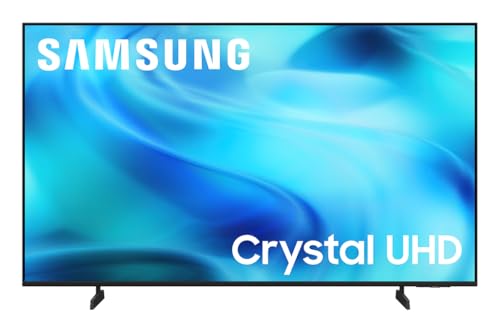
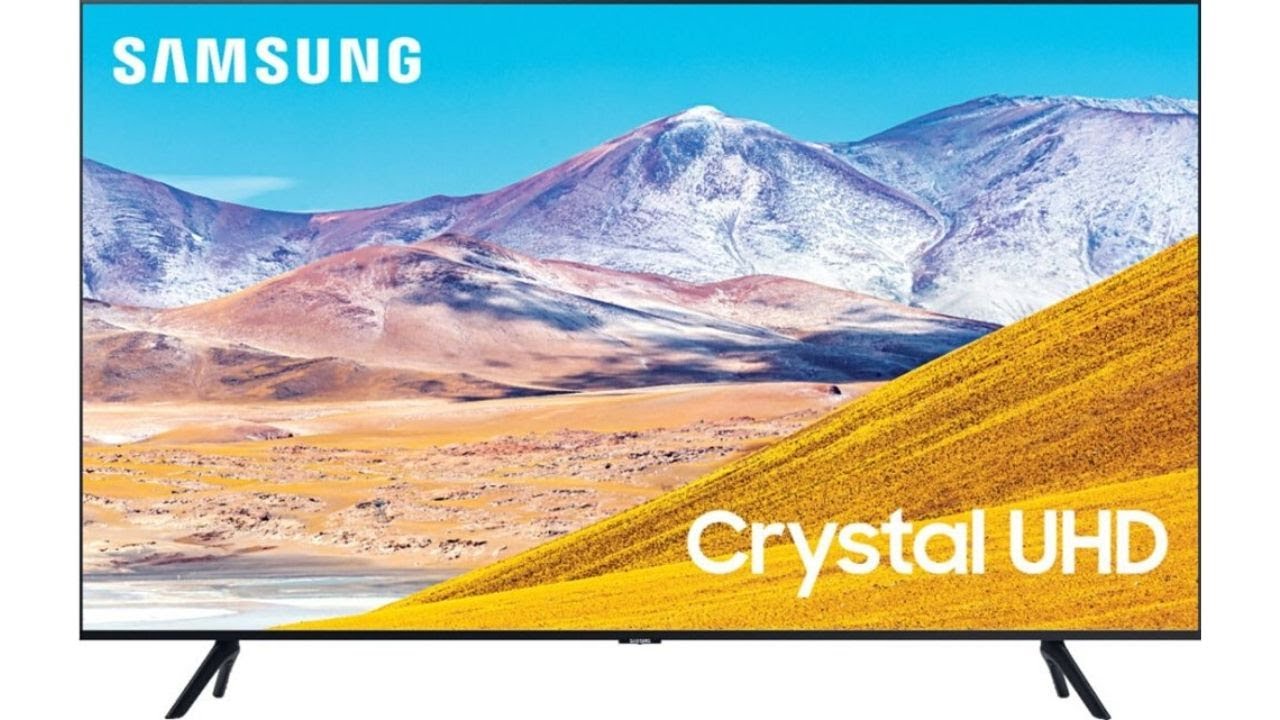
The Samsung U8000H is the uncomplicated Samsung in this lineup. Crystal Processor 4K is designed to sharpen detail, enhance colors, and upscale lower-resolution material. That is the useful part of the package for ordinary television viewing, where the source may be a mix of 4K streaming, HD channels, and older content.
Motion Xcelerator estimates and adjusts frame transitions in real time, with support for up to 4K 60Hz performance listed. Sports and games should look cleaner than they would with no motion processing, but the U8000H is not positioned like the M70H, which adds DLG 120Hz and Mini LED dimming. The U8000H is better understood as an everyday living-room screen than a high-performance gaming display.
Color Booster aims to make hues more intense, and Samsung's 4K upscaling handles the common jump from HD to the panel's 4K resolution. Samsung TV Plus adds free channels, including news, sports, movies, and children's programming. Those extras make setup simple for viewers who want to start watching without building a large collection of separate apps.
The compromises are predictable. This is a Crystal UHD LED model rather than a QLED or Mini LED television, and the supplied information does not identify HDR formats. It also lists three HDMI ports, which may be enough for a cable box, console, and soundbar, but the Amazon Ember's four inputs offer more flexibility. The Samsung Q7F is the better choice if color volume and HDR10+ matter.
The U8000H is a sensible fit for a straightforward Samsung household. Choose it for clean upscaling, familiar menus, and ordinary 4K viewing, not for the deepest blacks or the most advanced gaming specification.
9. Insignia F50: Best Compact Fire TV

Pros
- 4K UHD resolution with HDR10 support
- Fire TV places major streaming apps in one interface
- Three HDMI inputs plus composite and optical connections
- eARC supports full-resolution audio passthrough
Cons
- Standard LED panel lacks QLED or Mini LED color and contrast features
- No Dolby Vision support is listed
- The feature list does not specify refresh rate
Best for: bedrooms, guest rooms, and simple streaming setups that need broad physical connectivity.
The Insignia F50 keeps the 43-inch TV brief simple: 4K UHD resolution, HDR10, Fire TV, and a useful selection of connections. It is a sensible choice for a secondary room where the priority is getting Netflix, Prime Video, Disney+, Hulu, and free streaming channels onto one screen without adding a separate device.
HDR10 expands the range of visible color and contrast compared with standard content, while the TV can upscale existing material to an Ultra HD level. The supplied data does not describe a specialized processor or advanced dimming system, so expectations should remain realistic. The F50 is a conventional LED television, not a rival to the Mini LED Samsung M70H or QNED73.
Connectivity is the F50's most practical strength. It has three HDMI ports, composite AV jacks, digital optical output, a USB port, a headphone jack, coaxial, Ethernet, and Wi-Fi. HDMI eARC can send a full-resolution audio signal to a compatible sound system, and DTS Virtual:X is intended to create a wider, more three-dimensional sound from the built-in speakers. The range is particularly useful in an older setup with a cable box, game console, antenna, or legacy composite device.
Fire TV also adds smart home features, including compatible camera feeds, AirPlay, lighting control, and thermostat control. Parental controls can block content by rating or channel behind a PIN. Wall mounting is supported with a VESA pattern of 200 by 300, which gives the F50 flexibility in a bedroom or small lounge.
The weakness is the basic picture hardware. The Toshiba C350 adds Dolby Vision and VRR, the Hisense E6 Cinema adds a QLED layer and broader HDR support, and the Samsung U8000H has more explicit processing features. Pick the Insignia when ease, connections, and secondary-room functionality matter more than cinematic contrast.
How to choose best 43 inch smart tv
A 43-inch screen can serve as a main TV, bedroom display, office monitor, or compact gaming screen. The right choice depends on the picture hardware and the platform you will use every day, not just the resolution printed on the box.
Backlight and color system
Standard LED TVs such as the Insignia F50, Toshiba C350, Samsung U8000H, and Sony BRAVIA 2 II use a conventional backlight approach. QLED and QNED models add color-enhancing layers, while Mini LED models such as the Samsung M70H and LG QNED73 are designed for more precise brightness and contrast control.
For films and HDR, Mini LED is the most ambitious design here. QLED and QNED can still produce vivid color, especially in animation and sports. If you mostly watch news, sitcoms, and ordinary HD streaming, the difference may matter less than choosing a smart platform you enjoy using.
HDR formats
HDR support is not one universal standard. The Hisense E6 Cinema lists Dolby Vision, HDR10+ Adaptive, HDR10, and HLG, giving it the broadest format coverage. The Toshiba C350 supports Dolby Vision, while the Samsung Q7F and Amazon Ember list HDR10+ support. The Insignia F50 lists HDR10.
A TV that supports your streaming library's HDR format is more useful than one with a longer feature list you will never use.
Check the services and devices you actually watch. Dolby Vision is useful for compatible films and shows, while HDR10 is widely supported. HDR10+ can provide dynamic scene adjustments on compatible content.
Motion and refresh features
Sports and games expose motion weaknesses quickly. The Samsung M70H lists Motion Xcelerator plus DLG 120Hz, making it the clearest choice for fast action. The Toshiba C350 includes Ultimate Motion, Sports Mode, ALLM, and VRR, while the LG QNED73 includes FreeSync Premium and ALLM.
Do not treat marketing labels such as Motion Rate or Motionflow XR as proof of a native 120Hz panel. The supplied data does not identify a native refresh rate for several models. Buyers who play competitive games should confirm the input and refresh specifications before ordering.
Smart platform
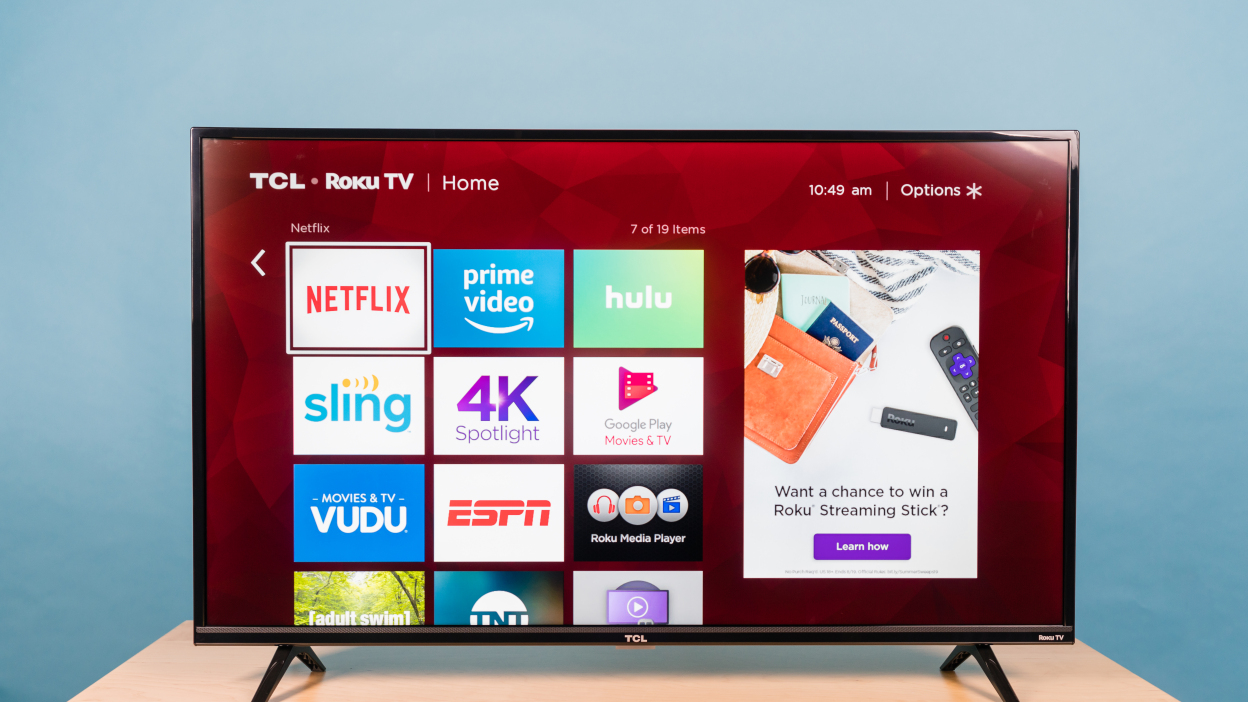
Fire TV appears on the Insignia, Toshiba, Hisense, and Amazon models. It is a good fit for Alexa users and households that want streaming apps, live channels, and voice search close together. The Amazon Ember has the newest Fire TV interface in this group and adds Alexa+.
Samsung's platform suits people who want Samsung TV Plus and Gaming Hub. Google TV on the Sony BRAVIA 2 II is useful for mixed Android and Apple households because it supports Google Cast and AirPlay 2. LG webOS on the QNED73 offers LG Channels, gaming dashboards, and a distinct interface.
Ports and room placement
Count your devices before choosing. The Amazon Ember lists four HDMI inputs, the Insignia F50 lists three, and other models do not provide a complete HDMI count in the supplied information. A console, soundbar, cable box, Blu-ray player, and streaming device can use ports quickly.
Physical dimensions matter in a 43-inch space. The Insignia F50 is listed at 36.68 inches wide, while the LG QNED73 is 37.8 inches wide with its stand. Wall mounting can free up furniture, but check the specified VESA pattern and the wall's construction before installation. If you are considering a smaller screen for a bedroom, how compact rooms change viewing distance can help with placement.
Frequently asked questions
Is a 43-inch TV large enough for a living room?
A 43-inch TV can work well in a small living room, apartment, bedroom, or office. Viewing distance, room layout, and seating position matter more than the label alone. If the sofa is far away, a larger screen may create a more immersive image.
Which 43-inch TV has the strongest HDR support?
The Hisense E6 Cinema has the broadest listed HDR support, including Dolby Vision, HDR10+ Adaptive, HDR10, and HLG. The Toshiba C350 also supports Dolby Vision. The Samsung M70H has Mini LED HDR, but Dolby Vision is not listed in the supplied specifications.
Are these TVs suitable for gaming?
Several are suitable for casual and console gaming. The Samsung M70H lists DLG 120Hz and Gaming Hub, the Toshiba C350 includes ALLM and VRR, and the LG QNED73 includes FreeSync Premium and ALLM. The Sony BRAVIA 2 II adds specific PS5 picture features, but the supplied data does not state a native refresh rate for it.
Which model is easiest for voice control?
The Amazon Ember 4-Series is the most voice-focused model, with Alexa+ and an enhanced Alexa Voice Remote. The Insignia, Toshiba, and Hisense models also include Alexa voice remote features. Samsung and LG provide their own smart platforms, with Alexa support listed on the Q7F and compatibility listed on the QNED73.
Do these TVs support external sound systems?
Yes, but the connection options vary. The Insignia F50 lists HDMI eARC and digital optical output, while the Toshiba C350 lists eARC and Dolby Atmos support. The Amazon Ember includes four HDMI inputs and is designed to connect a soundbar, but the supplied data does not provide its complete audio output specification.
Is Mini LED better than QLED for a 43-inch TV?
They address different parts of picture quality. QLED and QNED focus on color, while Mini LED focuses on more precise backlighting, brightness, and contrast. The Samsung M70H combines Mini LED with Pure Color Spectrum, while the Samsung Q7F emphasizes Quantum Dot color.
Can these TVs be wall mounted?
The Insignia F50 is explicitly listed as wall mountable with a 200 by 300 VESA pattern. The other product entries do not provide a mounting pattern in the supplied information. Check the model's installation details before buying a mount.
The bottom line
The Best 43 inch smart TV for the widest range of uses is the Samsung M70H. Its Mini LED backlight, Pure Color Spectrum, motion features, and Gaming Hub give it the strongest all-around feature set for films, sports, and games. The Hisense E6 Cinema is the better alternative for buyers who want Dolby Vision and broad HDR format support, especially in a room that changes from bright to dim.
For a simpler Fire TV, the Amazon Ember 4-Series has the most capable interface and voice-search experience. The Insignia F50 is a practical secondary-room option, while the Sony BRAVIA 2 II and LG QNED73 make more sense when Google TV, PS5 features, or webOS are central to your setup.
If you are undecided, choose the Samsung M70H for picture and motion capability, or the Hisense E6 Cinema when HDR format compatibility matters most.
As an Amazon Associate we earn from qualifying purchases.