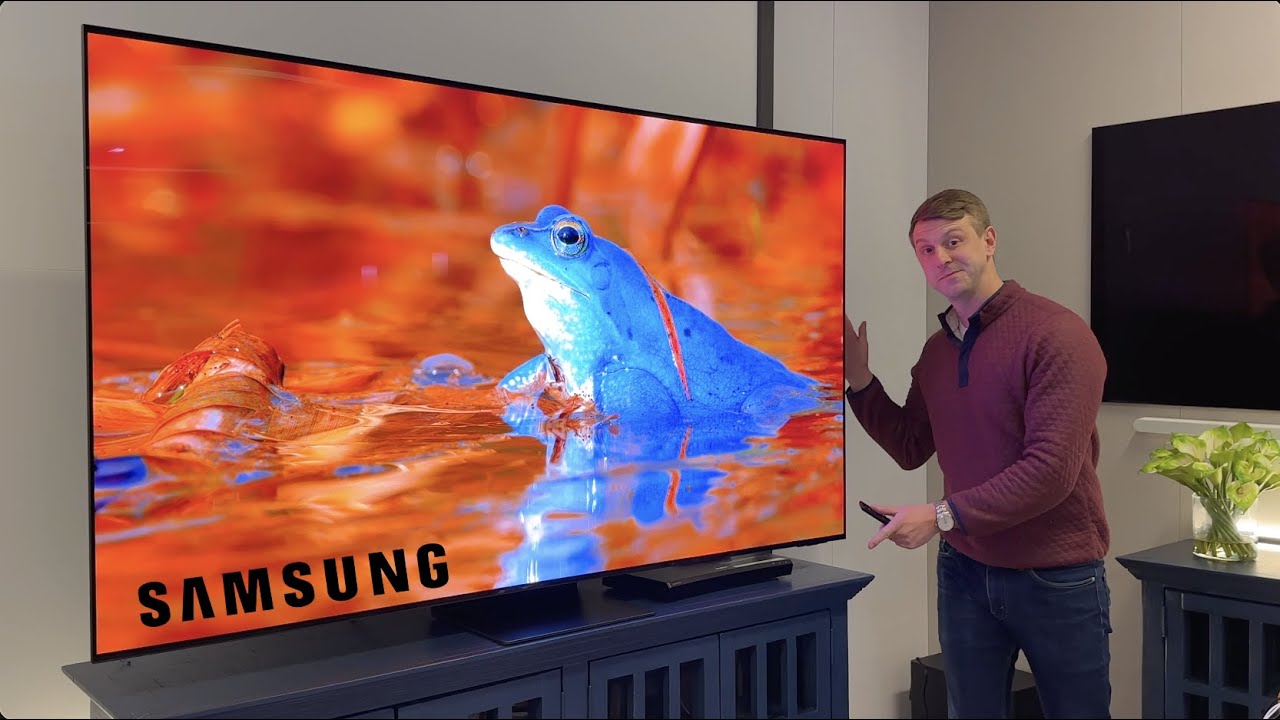

A 77-inch television can turn a living room into a proper cinema, but its size also exposes weaknesses that are easy to miss on a showroom wall. Poor upscaling makes ordinary broadcasts look rough, while reflections, motion blur, and a weak built-in sound system become much harder to ignore across such a large screen.
The Best 77 inch tv choices here are led by OLED models with self-lit pixels, though Samsung's Mini LED alternative is worth considering for brighter rooms and viewers who want to avoid OLED altogether. We compared picture processing, HDR support, gaming features, smart platforms, sound formats, and the practical differences between these large-screen sets.
The LG C5 is our top pick, with strong alternatives from Samsung, Panasonic, Sony, and LG across cinema, gaming, bright-room, and smart-TV priorities.
Comparison table
| # | Product | Award | Panel | Refresh rate | Smart platform | Best for |
|---|---|---|---|---|---|---|
| 1 | LG C5 OLED | Best overall | OLED evo | Up to 144Hz | LG smart TV | Most viewers |
| 2 | Samsung S90F OLED | Best for gaming | OLED | Up to 144Hz | Samsung smart TV | Console and PC gaming |
| 3 | Panasonic Z8 OLED | Best for film fans | OLED | 144Hz | Fire TV | Movie watching |
| 4 | LG G5 OLED | Best for bright rooms | OLED evo | Up to 120Hz | webOS | Wall mounting |
| 5 | Sony BRAVIA XR8B | Best for processing | OLED | Not specified | Google TV | Streaming and upscaling |
| 6 | Samsung S85F OLED | Best simple OLED | OLED | Not specified | Samsung smart TV | Everyday viewing |
| 7 | LG C6 OLED | Best high-refresh OLED | OLED evo | Up to 165Hz | webOS | Fast gaming |
| 8 | Samsung S90H OLED | Best glare control | OLED | Up to 165Hz | Samsung smart TV | Bright living rooms |
| 9 | Sony BRAVIA 8 | Best cinematic Sony | OLED | Not specified | Google TV | Films and PS5 |
| 10 | Samsung M70H | Best Mini LED alternative | Mini LED | Up to 120Hz | Samsung smart TV | Bright rooms and sports |
1. LG C5 OLED: Best Overall

Pros
- OLED evo contrast with self-lit pixels
- Brightness Booster and bright-room certification
- Four HDMI 2.1 inputs
- Up to 144Hz gaming support
- Dolby Vision and Dolby Atmos
Cons
- Built-in sound cannot match a dedicated audio system
- No stand or screen dimensions are specified in the listing as a complete setup
- OLED remains less suited to careless static-image use
Best for: someone who wants one large OLED for films, shows, sports, and gaming.
The LG C5 OLED is the easiest television here to recommend because it does not force a narrow compromise. Its OLED evo panel produces the deep black level that makes a dark film feel dimensional, while Brightness Booster helps highlights retain impact when the room is not fully dark. LG also says the set is UL verified for discomfort glare performance, with a UGR below 22, which gives it a practical edge over many glossy large OLED screens.
The picture engine is the Alpha 9 AI Processor Gen8. Its AI Super Upscaling is designed to improve lower-resolution material, a useful trait when the screen is large enough to make poor streaming compression obvious. Dolby Vision handles compatible HDR films, Filmmaker Mode removes much of the processing that can make cinema look artificial, and Dolby Atmos support gives compatible soundtracks a wider presentation. The screen uses more than 8.3 million self-lit pixels, so subtitles and bright objects can sit against genuinely dark surroundings.
Gaming support is unusually complete. The response time is listed as 0.1ms, the refresh rate reaches 144Hz, and the set supports VRR, NVIDIA G-Sync, and AMD FreeSync Premium. Four HDMI 2.1 inputs mean a console, gaming PC, sound system, and another high-bandwidth source can remain connected. The Samsung S90F is a sharper rival for buyers who care most about fast gaming and Samsung's motion tools, while the C5 is the more balanced home cinema choice.
The weakness is familiar to large OLED televisions. It is not the right pick for a room where direct sunlight regularly hits the screen, and anyone who leaves static channels or game interfaces running for hours should take OLED care seriously. Its built-in speakers support Dolby Atmos, but a 77-inch screen deserves a sound system with more scale. For the broadest mix of viewing, the LG C5 remains the set we'd keep.
2. Samsung S90F OLED: Best for Gaming

Pros
- NQ4 AI Gen3 processing
- Up to 4K 144Hz VRR gaming
- Motion processing for sports and fast text
- AI upscaling for HD and streamed content
- HDR-like remastering for SDR material
Cons
- Samsung's listing does not specify Dolby Vision support
- The set is heavier than several alternatives
- OLED is not ideal for unmanaged static content
Best for: PC and console players who want high refresh performance on a huge screen.
The Samsung S90F OLED makes its priorities clear. This is the model to look at when a 77-inch screen will spend as much time displaying games and live sports as it does films. The NQ4 AI Gen3 processor uses 128 neural networks for picture and sound processing, and Samsung pairs it with motion tools intended to keep moving players, balls, and on-screen text easier to follow.
Its headline gaming capability is 4K at 144Hz with VRR. That matters most with a capable PC, where the additional refresh headroom can make camera movement feel cleaner than a conventional 120Hz television. Console players still benefit from responsive OLED pixels and smooth variable refresh, although the full 144Hz advantage depends on the source. Samsung's upscaling also gives ordinary HD channels and older games a cleaner route to the native 4K panel.
The S90F can transform SDR material to an HDR-like presentation, adding more vivid color and brighter highlights. That can make daytime television and older content appear more energetic, though viewers who prefer a restrained, reference-style image may want to adjust the processing. Compared with the LG C5, the Samsung is the more obvious gaming pick, while the LG offers Dolby Vision and a more explicit cinema-oriented feature set.
There are two reasons to skip it. The listing does not specify Dolby Vision, so viewers with a large collection of Dolby Vision films may prefer the LG C5, Panasonic Z8, or Sony BRAVIA XR8B. It is also a substantial television, listed at 80.7 pounds and 67.7 inches wide, so the wall or cabinet needs proper planning. Choose the S90F when fast games and sports are the central reason for buying such a large OLED.
3. Panasonic Z8 OLED: Best for Film Fans

Pros
- OLED PRO panel with enhanced brightness
- Dolby Vision IQ and HDR10+ Adaptive
- Supports HDR10, HDR10+, Dolby Vision, and HLG
- 144Hz gaming mode with VRR
- Technics-tuned 360 Soundscape Pro audio
Cons
- Fire TV may not suit people invested in another platform
- The listing gives fewer processing details than some rivals
- The integrated speakers still cannot replace a full surround system
Best for: film lovers who want broad HDR format support and stronger built-in audio.
The Panasonic Z8 OLED is the most cinema-minded alternative to the LG C5. Its OLED PRO panel is built around brightness and contrast, but the more interesting advantage is format flexibility. It supports HDR10, HDR10+, Dolby Vision, and HLG, while Dolby Vision IQ and HDR10+ Adaptive use room-light information to adjust compatible material. That is helpful when a film begins in a dark room and the surrounding light changes during the evening.
Panasonic also gives the Z8 a more ambitious built-in audio system than most thin televisions. Its 360 Soundscape Pro system is tuned by Technics and uses front-array, upward-firing, and side-firing speakers, with Dolby Atmos support. The arrangement should create a broader sense of movement than standard downward-firing television speakers. It still cannot reproduce the low-end authority of a separate subwoofer, but it makes the set less dependent on immediate soundbar installation.
The Z8 is not only a movie screen. Game Mode Extreme supports HDMI 2.1, a 144Hz refresh rate, VRR, AMD FreeSync Premium, and NVIDIA G-Sync. Fire TV is built in, bringing live television, voice controls, and personalized recommendations into the same interface. The Samsung S90F has a stronger case for PC gaming, while the Panasonic is more appealing to a mixed household that watches films and wants broad HDR compatibility.
Its main limitation is less about the panel than the ecosystem. Fire TV is convenient for households already using Amazon's interface, but people who prefer Google TV or LG's webOS may find the layout less natural. The listing also gives fewer detailed processing claims than LG, Samsung, or Sony. For viewers building a dedicated movie room, the Panasonic Z8's format support and built-in sound make it a compelling specialist.
4. LG G5 OLED: Best for Bright Rooms

Pros
- Brightness Booster Max
- Bright-room glare certification
- One Wall design for flush mounting
- Alpha 11 AI Processor Gen2
- Four HDMI 2.1 inputs and VRR
Cons
- Up to 120Hz is lower than several gaming-focused rivals
- The wall-oriented design needs careful installation
- OLED still needs sensible static-image habits
Best for: a bright living room where the television will be wall mounted.
The LG G5 OLED is the architectural choice in this group. Its One Wall design is intended to sit with virtually no gap when mounted, so it looks more like a large framed display than a conventional television projecting from the wall. That changes the installation decision, though. Buyers should plan the mounting position, cable routes, and viewing height before the box arrives.
Brightness Booster Max magnifies each pixel for a more luminous image, and LG identifies the G5 as bright-room ready with a UL glare certification. It retains OLED's self-lit pixel structure, so bright details can still sit beside deep black without the gray haze that can affect some backlit screens. The Alpha 11 AI Processor Gen2 handles AI Picture Pro and AI Super Upscaling, and AI Director Processing is designed to preserve the intended tone of films.
The G5 also covers the fundamentals well for gaming. Its response time is listed as 0.1ms, with a refresh rate of up to 120Hz, VRR, NVIDIA G-Sync, AMD FreeSync Premium, and four HDMI 2.1 inputs. The LG C5 reaches up to 144Hz, and the LG C6 goes as high as 165Hz, so those models make more sense for a high-refresh PC setup. The G5 counters with stronger emphasis on wall mounting and bright-room viewing.
Skip it if the television will sit on furniture and the flush wall appearance has no appeal. The set is also listed at 74.1 pounds, so installation is not a casual one-person project. Its built-in Dolby Atmos support is useful, but the thin chassis still cannot replace a properly positioned speaker system. For a bright room with a planned wall installation, the G5 is the most coherent fit.
5. Sony BRAVIA XR8B: Best for Processing

Pros
- XR Processor for scene-by-scene enhancement
- Studio calibrated modes for Netflix and Prime Video
- XR Clear Image upscaling
- Dolby Vision, Dolby Atmos, IMAX Enhanced, and DTS:X
- Google TV with AirPlay 2 and Google Cast
Cons
- Refresh rate is not specified in the listing
- Fewer gaming performance details are provided than on LG and Samsung sets
- Larger depth may complicate furniture placement
Best for: streamers who want polished processing and a familiar Google TV interface.
The Sony BRAVIA XR8B earns its place through picture processing rather than a long list of gaming numbers. Sony's XR Processor analyzes scenes in real time to improve color, contrast, and clarity, while XR Clear Image upscales HD and digital content. That matters on a 77-inch screen because much of what people watch is still not native 4K. A good processor can make the difference between a comfortable image and one that constantly reminds you of its source quality.
Sony includes studio calibrated picture modes for Netflix and Prime Video, which should appeal to viewers who want streaming films to retain a creator-focused look. Dolby Vision and Dolby Atmos support are joined by IMAX Enhanced and DTS:X, giving compatible movie content plenty of room to show its intended contrast and sound format. XR OLED Motion is designed to keep sports and action scenes clearer without making every film look like live video.
Google TV is the most flexible smart interface in this roundup for households already using Google Assistant, Android phones, or Google Cast. AirPlay 2 support helps Apple users send content from compatible devices, and the listing names Netflix, Prime Video, Disney+, YouTube, the Apple TV app, and Crunchyroll among the available apps. The set also includes PlayStation 5 features such as Auto HDR Tone Mapping and Auto Genre Picture Mode.
The catch is that the listing does not specify a refresh rate, response time, HDMI count, or VRR support. That makes it harder to recommend to a serious PC gamer than the Samsung S90F or LG C5. The listed dimensions are 67.5 inches wide and 39.88 inches high, with a 16-inch depth, so furniture planning matters too. Pick the XR8B for streamed films, upscaling, and Google TV rather than for a specification-led gaming setup.
6. Samsung S85F OLED: Best Simple OLED

Pros
- OLED contrast with self-lit pixels
- NQ4 AI Gen2 processing
- AI upscaling through 20 neural networks
- Pantone-validated color claims
- Dolby Atmos and Alexa built in
Cons
- Refresh rate is not specified
- Less gaming detail than the Samsung S90F
- No Dolby Vision support is specified
Best for: everyday viewing when you want a clean OLED picture without chasing every gaming feature.
The Samsung S85F OLED is a quieter proposition than the S90F. It has the same broad appeal of an OLED panel, with self-lit pixels producing deep blacks, but its feature list is centered on ordinary viewing rather than an extensive gaming specification. For dramas, streamed shows, and live television, that can be exactly the right balance.
The NQ4 AI Gen2 processor uses 20 neural networks to upscale content to as much as 4K and optimize sound. Samsung says it analyzes each scene to improve brightness and contrast, while its color is validated by Pantone for realistic color and skin tones. Those claims do not replace careful picture adjustment, but they point to a television designed to make a mixture of sources look consistent rather than demanding a perfect 4K feed.
The flowing contour design is one of the few physical details Samsung emphasizes, and the set is listed at 67.8 inches wide, 41.7 inches high, and 63.5 pounds. Dolby Atmos support and Alexa integration help it fit into a connected living room. Compared with the Panasonic Z8, the S85F offers less explicit HDR format coverage and less ambitious built-in sound. Compared with the S90F, it gives up the latter model's detailed 4K 144Hz gaming emphasis.
The listing does not specify a refresh rate, HDMI configuration, response time, or VRR support. That is the reason competitive players should move up to the S90F, LG C5, or LG C6 instead. The S85F makes more sense for a household that watches a wide mix of television and wants OLED's contrast without making gaming performance the deciding factor.
7. LG C6 OLED: Best High-Refresh OLED

Pros
- Up to 165Hz refresh rate
- 0.1ms response time
- Brightness Booster Pro
- Dolby Vision and Filmmaker Mode
- Four HDMI 2.1 inputs
Cons
- The model's extra gaming speed matters mainly to PC players
- OLED care remains important with static interfaces
- Stand dimensions may need careful furniture planning
Best for: PC gamers who want the highest specified refresh rate in this group.
The LG C6 OLED is the performance-oriented LG in this list. Its headline feature is an up to 165Hz refresh rate, paired with a listed 0.1ms response time. That combination is more relevant to a gaming PC than to a console, but it gives fast camera movement and competitive play more headroom than the C5 or G5.
LG's Brightness Booster Pro magnifies each pixel, while the panel's more than 8.3 million self-lit pixels preserve the precise black levels that make OLED attractive for films. Dolby Vision, Dolby Atmos, Filmmaker Mode, and AI Super Upscaling cover the movie and streaming side. The A11 AI Processor is described as improving processing performance and graphics, and OLED Care is included to help protect the display over time.
Connectivity is well suited to an entertainment setup. The C6 has four HDMI 2.1 inputs, NVIDIA G-Sync, AMD FreeSync Premium, and VRR, so several modern sources can stay connected. WebOS provides the smart-TV layer, with Google Gemini and Microsoft Copilot listed among its integrations. Compared with the Samsung S90F, the C6 offers the higher specified refresh rate, while the Samsung gives a more detailed account of its motion and 4K 144Hz processing.
The C6 is not the automatic choice for everyone. At 165Hz, its advantage is wasted on a viewer who mainly watches films, cable, or console games limited below that level. The listing also gives stand dimensions, 67.4 by 40.7 by 10.5 inches, so a shallow cabinet may not work. Choose it when high-refresh PC gaming is central, not simply because the number is larger.
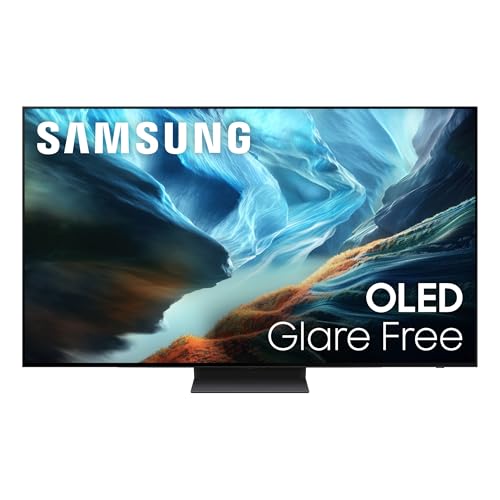
8. Samsung S90H OLED: Best Glare Control
Pros
- Glare Free technology
- NQ4 AI Gen3 processor
- Up to 165Hz gaming support
- G-Sync and FreeSync Premium Pro
- AI upscaling and HDR remastering
Cons
- Newer model details may be more than most viewers need
- Dolby Vision is not specified
- It is heavier than the S85F
Best for: bright rooms where reflections are more distracting than absolute cinema darkness.
The Samsung S90H OLED takes aim at one of OLED's most irritating real-world problems: reflections. Its Glare Free technology is designed to reduce distracting reflections, while OLED HDR+ combines bright highlights with deep contrast. That does not make it immune to a sunlit window, but it gives the S90H a clearer reason to exist beside the standard S90F.
The NQ4 AI Gen3 processor uses 128 neural networks for picture and sound processing. Samsung's 4K AI Upscaling Pro works on lower-resolution content, while AI Motion Enhancer Pro is intended to make fast-moving balls and text easier to follow. Auto HDR Remastering can give non-HDR films and older shows a more vivid presentation. Viewers who like a quiet, film-faithful image may prefer to leave some of these enhancements restrained.
Gaming credentials are strong. Motion Xcelerator reaches 165Hz, and the set supports NVIDIA G-SYNC and AMD FreeSync Premium Pro. That puts it alongside the LG C6 for high-refresh PC gaming, while the anti-glare treatment gives it a distinct advantage in a room with lamps or windows. The Samsung S90F is the more straightforward 2025 gaming recommendation, but the S90H is the better fit when reflections are the daily annoyance.
The listing does not specify Dolby Vision, so a movie collection built around that format may point toward LG, Panasonic, or Sony. The S90H is also listed at 75.4 pounds, which is a serious installation consideration. Buy it for its glare control and high-refresh capability, not because every viewer needs its processing features.
9. Sony BRAVIA 8: Best Cinematic Sony

Pros
- XR Contrast Booster 15
- XR Triluminos Pro color
- Studio calibrated picture modes
- Dolby Vision, Dolby Atmos, IMAX Enhanced, and DTS:X
- Google TV with AirPlay 2 and Chromecast
Cons
- Refresh rate and HDMI details are not specified
- Heavy at 74.9 pounds
- Best gaming features are tailored to PS5
Best for: film fans and PS5 owners who prefer Sony's processing and Google TV.
The Sony BRAVIA 8 remains a strong cinematic option because it focuses on controlled presentation. Its OLED panel uses more than 8 million self-lit pixels, and XR Contrast Booster 15 is designed to increase the separation between detailed blacks and bright highlights. XR Triluminos Pro handles color, while the XR Processor works scene by scene to improve clarity and contrast.
Sony's calibrated modes cover Netflix, Prime Video, and Sony Pictures Core. The television supports Dolby Vision, Dolby Atmos, IMAX Enhanced, and DTS:X, so it is well prepared for a disc player or streaming setup built around film formats. XR Clear Image upscales HD and digital content, and XR OLED Motion addresses blur in sports and action sequences.
The smart experience is Google TV, with Google Assistant, AirPlay 2, and Chromecast built in. Sony also gives PS5 owners Auto HDR Tone Mapping, Auto Genre Picture Mode, and a Game Menu for picture adjustments. The LG C5 and Samsung S90F provide clearer high-refresh specifications for PC gaming, while the BRAVIA 8 is more persuasive for a viewer whose priorities start with movies and console integration.
Its biggest uncertainty is the missing gaming detail. The listing does not state the refresh rate, response time, HDMI count, or VRR support, so buyers with a gaming-first brief should choose a model with those capabilities clearly stated. It is also 67.5 inches wide and listed at 74.9 pounds. Choose the BRAVIA 8 when Sony's image processing and film features matter more than chasing the latest gaming figures.
10. Samsung M70H: Best Mini LED Alternative

Pros
- Mini LED backlighting
- Up to 120Hz motion support
- Deep contrast through Mini LED dimming
- One billion color claim
- Samsung Gaming Hub and free content
Cons
- It is a 75-inch model rather than a 77-inch model
- Mini LED can show different backlight behavior from OLED
- Dolby Vision is not specified
Best for: buyers who want a bright-room Mini LED television and can accept a slightly smaller screen.
The Samsung M70H is the only non-OLED television here, and it is also the only model that does not actually measure 77 inches. Its 75-inch panel makes it a near-size alternative rather than a direct match. The reason to consider it is Mini LED, which uses many small backlights to pursue brighter highlights and deeper blacks without relying on self-lit OLED pixels.
Samsung lists Supreme Mini LED Dimming, Mini LED HDR, and a Mini LED Processor 4K. The set also claims one billion true-to-life colors through its Pure Color Spectrum system. In a bright room, that combination can be more practical than a traditional OLED, particularly for daytime sports and general television. It will not produce OLED's pixel-level black control, so dark-room film purists should keep that distinction in mind.
Motion Xcelerator and DLG support up to 120Hz, with specific emphasis on sports and gaming. Soccer Mode is designed to improve fast action and the appearance of the field, while Gaming Hub brings console, cloud, and gaming apps into one place. Samsung TV Plus adds more than 2, 700 free streaming options, including more than 750 subscription-free channels, according to the listing.
The size mismatch is the obvious reason to skip it if a true 77-inch fit is non-negotiable. It is also not the strongest choice for a dark home cinema, where the OLED models' self-lit pixels have a clear advantage. But if the television will face daylight, sports, and general streaming, and a 75-inch screen fits the room better, the M70H is the sensible Mini LED exception.
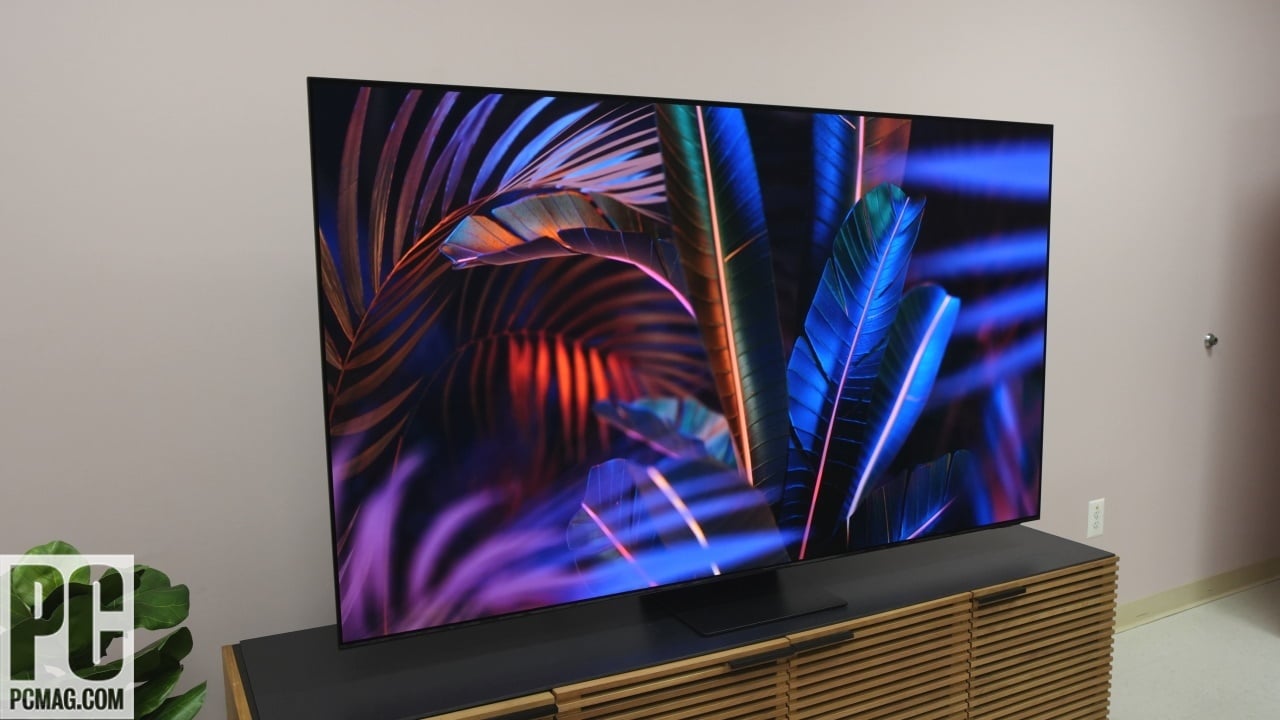
How to choose best 77 inch tv
A large television rewards careful matching between panel type, room lighting, viewing habits, and source equipment. These are the factors that matter most.
Panel and black level
OLED televisions use self-lit pixels, so each pixel can turn off for deep black. That gives the LG C5, Samsung S90F, Panasonic Z8, Sony BRAVIA models, and other OLED picks precise contrast in dark scenes. Mini LED models such as the Samsung M70H use a backlight with local dimming, which can reach strong brightness but may not control small bright objects against black as precisely.
Choose OLED for film-focused evening viewing and clean contrast. Consider Mini LED if the screen faces substantial daylight or you prefer not to manage OLED-specific static-image habits.
Brightness and reflections
A 77-inch panel can reflect a window like a large mirror. Brightness Booster on the LG C5, Brightness Booster Max on the LG G5, the Panasonic Z8's enhanced OLED panel, and the Samsung S90H's Glare Free technology all address the problem in different ways.
Room layout still matters more than marketing language. If a window sits opposite the television, prioritize glare control and flexible blinds. If the room is dim, black-level precision and calibrated picture modes become more important.
On a screen this large, a reflection is not a small annoyance. It is part of the picture.
Refresh rate and gaming
Refresh rate describes how often the panel can update the image. The LG C5 reaches up to 144Hz, the Samsung S90F supports 4K at 144Hz, and the LG C6 and Samsung S90H list up to 165Hz. Panasonic's Z8 supports 144Hz, while the Samsung M70H supports up to 120Hz.
A high refresh rate matters most for PC gaming and fast sports. Console buyers should also check VRR, HDMI 2.1, and response time. The LG C5, LG C6, Samsung S90F, Samsung S90H, and Panasonic Z8 state useful gaming features, while the Sony listings provide fewer specific refresh details.
HDR formats
HDR can improve highlight brightness, color, and contrast, but support varies by source. Dolby Vision appears on the LG, Panasonic, and Sony models in this list. Panasonic also supports HDR10+ Adaptive, while the Samsung televisions emphasize HDR+, HDR-like processing, or HDR remastering instead.
Look at the formats supported by the streaming services, discs, and game consoles you actually use. A television cannot show a format it does not support, and extra processing modes are not a substitute for native HDR compatibility.
Upscaling and motion processing
Most television viewing is a mixture of native 4K, HD broadcasts, compressed streams, and older films. LG's AI Super Upscaling, Samsung's neural-network processing, Panasonic's HCX Pro AI Processor MKII, and Sony's XR Clear Image all aim to make that mixture look cleaner.
Motion processing needs restraint. Sports may benefit from clearer movement, but aggressive smoothing can make films look unnatural. Look for a dedicated Filmmaker Mode or calibrated picture mode if preserving the intended cinematic appearance matters.
Smart platform and sound
LG uses webOS, Samsung uses its own smart-TV interface, Panasonic uses Fire TV, and Sony uses Google TV. The best platform is usually the one that fits the apps, voice assistant, and casting devices already in the home.
Dolby Atmos appears across several models, but built-in speakers remain limited by a thin television chassis. Panasonic's 360 Soundscape Pro system is the most ambitious integrated audio design here. For a genuine theater effect, plan for a soundbar or receiver with speakers placed around the room.
If you are still deciding whether this screen size fits the room, how much seating distance a large television needs can help before you commit to the wall or cabinet. A slightly smaller set may be more comfortable in a narrow space, while viewers with a deeper room can consider the room planning involved with a larger screen.
Frequently asked questions
Is a 77-inch OLED too large for a living room?
Not necessarily. The right distance depends on the room layout, content resolution, and how immersive you want the image to feel. Measure the wall and seating position first, because a 77-inch television is roughly 67 to 68 inches wide in this group.
Is OLED or Mini LED better for a bright room?
Mini LED can be the easier fit for a very bright room because its backlight is built to produce strong overall brightness. OLED models with brighter panels or glare control can also work well, especially the LG G5 and Samsung S90H. Direct reflections still depend on window placement and room lighting.
Which model is best for PS5 gaming?
The Sony BRAVIA XR8B and Sony BRAVIA 8 include PS5-specific features such as Auto HDR Tone Mapping and Auto Genre Picture Mode. The LG C5, Samsung S90F, LG C6, and Panasonic Z8 also provide strong gaming capabilities, so choose based on the refresh rate, VRR support, and smart platform you prefer.
Does a 77-inch TV need a soundbar?
It does not need one to function, and several models support Dolby Atmos. A soundbar or separate speakers can make dialogue clearer and add much more scale to films, since thin television cabinets have limited room for drivers and bass.
Is the Samsung M70H a 77-inch television?
No. The Samsung M70H in this roundup is a 75-inch model. It is included as a near-size Mini LED alternative for shoppers who can accept two fewer inches of diagonal screen size.
Do all these televisions support Dolby Vision?
No. Dolby Vision is specified for the LG, Panasonic, and Sony models listed here. The Samsung listings emphasize HDR+, HDR-like processing, or HDR remastering, but do not specify Dolby Vision support.
Is a 144Hz television useful for console gaming?
It can be useful for responsive gaming and VRR, but the full benefit of 144Hz is more relevant to a compatible gaming PC. Console players should focus on HDMI 2.1, VRR, low response time, and a good game mode before treating a higher refresh figure as decisive.
The bottom line
The Best 77 inch tv for most people is the LG C5 OLED. It combines deep OLED contrast, Dolby Vision, strong upscaling, bright-room features, four HDMI 2.1 inputs, and up to 144Hz gaming support without narrowing its appeal to one type of viewer. The Samsung S90F OLED is the better specialist choice for PC gaming and sports, while the Panasonic Z8 OLED is the one to choose for broad HDR support and more ambitious built-in sound.
For a wall-mounted set in a bright room, the LG G5 OLED has the clearest physical and picture rationale. If reflections are the main problem and high-refresh gaming matters, the Samsung S90H OLED is worth a close look. The Samsung M70H is the practical non-OLED choice, but remember that it is 75 inches rather than 77.
If you are undecided, buy the LG C5 unless your room lighting, gaming setup, or sound priorities point clearly to another model.
As an Amazon Associate we earn from qualifying purchases.