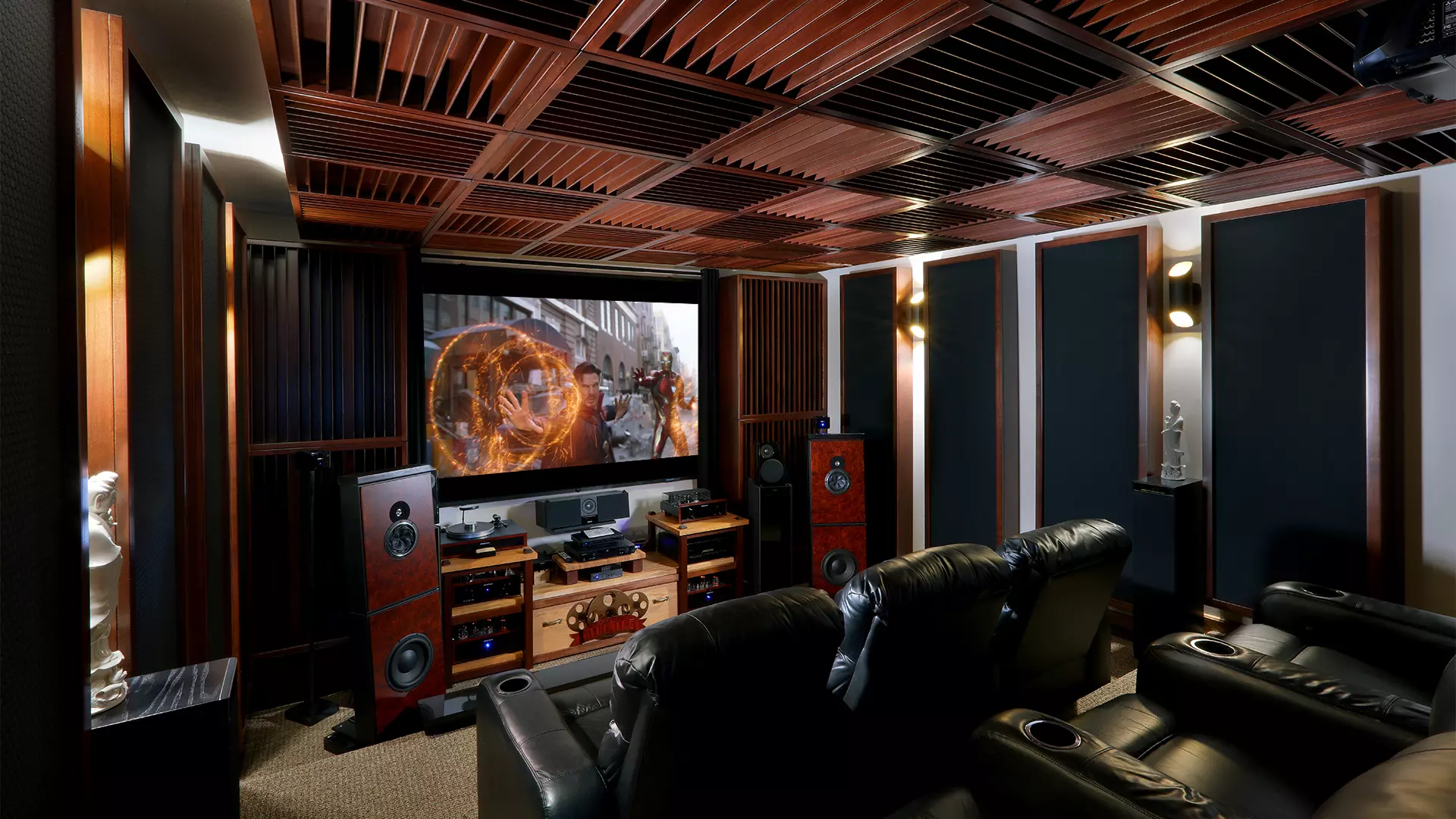

Hard walls, bare floors, and an empty room can make a video call sound hollow and make music seem harsher than it should. The right panel will not block every outside noise, but it can absorb reflections and shorten the echo that makes speech tiring to hear.
Our Best acoustic panels for home picks range from small self-adhesive foam tiles to substantial wood slat and ceiling systems. We looked for useful coverage, credible materials, sensible installation options, and designs that can live in a home rather than only in a studio.
Focusound 52 Pack Acoustic Foam Panels is our top pick for broad, flexible treatment. The rest of the list covers decorative wood panels, thicker foam, compact wall treatment, and layouts for ceilings, offices, studios, and media rooms.
| # | Product | Award | Thickness | Coverage or count | Installation | Best for |
|---|---|---|---|---|---|---|
| 1 | Focusound 52 Pack Acoustic Foam Panels | Best overall | 1 inch | 52 panels | Double-sided adhesive tape | Broad wall treatment |
| 2 | NEPIS 20 Pack Acoustic Panels | Best self-adhesive brick design | 0.4 inch | About 20 sq. ft. | Peel and stick | Home studios |
| 3 | Lebenforce 22 Pack Fabric Panels | Best fabric finish | 0.4 inch | 22 panels | Self-adhesive backing | Offices and media rooms |
| 4 | Soundsbay 12 Pack Acoustic Panels | Best measured absorption | 0.4 inch | 11.6 sq. ft. | 60 adhesive stickers | Targeted treatment |
| 5 | TONOR Wood Slatwall Panels | Best wood slat design | 0.4 inch | About 31 sq. ft. | Adhesive or screws | Decor-led rooms |
| 6 | ROOME 22 Pack Acoustic Panels | Best for patterned layouts | 0.4 inch | 22 panels | Self-adhesive | DIY feature walls |
| 7 | Shipxinfuren 2-Inch Foam Panels | Best thick foam | 2 inches | Four large panels | Wall mounting | Focused recording areas |
| 8 | Lebenforce 12 Pack Acoustic Panels | Best small-room starter set | 0.4 inch | 12 panels | Peel and stick | Small offices |
| 9 | Art3d Wood Slat Ceiling Tiles | Best ceiling coverage | 0.6 inch | 12 panels, 2 by 2 feet | T-bar grid, glue, or screws | Large ceiling projects |
1. Focusound 52 Pack Acoustic Foam Panels: Best Overall

Pros
- 52 tiles give you plenty of layout flexibility
- One-inch foam is deeper than most small tiles here
- 300 pieces of double-sided adhesive tape are included
- Wedge grooves help break up unwanted reflections
- Fire-resistant, breathable material
Cons
- Small tiles require a patient, carefully measured installation
- Foam treatment is less decorative than wood or fabric panels
- The panels may need recovery after unpacking
Best for: someone treating a home office, vocal area, or recording room across several reflection points.
The first thing that stands out about Focusound 52 Pack Acoustic Foam Panels is the amount of control the set gives you. Fifty-two square tiles can be spread across a larger wall, arranged around a desk, or concentrated near a microphone and listening position. That flexibility matters more than a single large panel when the room has several obvious reflection points.
Each tile is listed at about 1 inch thick and 11.81 by 11.81 inches. The triangular-groove surface adds texture instead of leaving a flat foam face, and the extra depth gives this set a more substantial treatment profile than the 0.4-inch panels from Lebenforce, ROOME, and Soundsbay. It is still a treatment for reflections, echo, and reverb rather than a promise of full room sound isolation. The practical result should be cleaner speech and less flutter in a treated area.
Installation is unusually well supported. Focusound includes 300 pieces of double-sided adhesive tape, which lets you place many tiles without immediately hunting for another mounting method. The product is intended for studios, vocal booths, offices, and control rooms, and the tape also makes it possible to test a layout before committing to a more permanent approach. The panels can arrive compressed, and the listing says that soaking and air drying can help foam that does not return to shape, with recovery taking 24 to 48 hours.
Compared with the NEPIS 20 Pack Acoustic Panels, Focusound gives you more pieces and a deeper tile. NEPIS is easier to picture on a finished home wall because of its brick styling, while Focusound is the more adaptable tool for placing treatment around a workstation or recording position. The weakness is visual: a wall covered in black wedge foam has a studio look, and arranging 52 small squares takes time. Someone seeking a polished living-room finish should consider TONOR or Art3d instead.
For a home studio, streaming corner, or office where echo control takes priority over decoration, Focusound is the most complete package here. It is the one we would choose when the room needs more than a small patch of treatment and the installation plan is still evolving.
2. NEPIS 20 Pack Acoustic Panels: Best Self-Adhesive Brick Design

Pros
- Self-adhesive backing needs no separate tape
- Brick texture gives a more intentional wall appearance
- About 20 square feet of stated coverage
- Polyester construction is described as odorless and non-toxic
- Panels can be used on walls, doors, windows, or ceilings
Cons
- At 0.4 inch, the panels are not as deep as Focusound
- The adhesive limits flexibility after placement
- The published density wording is unusually high and should be treated cautiously
Best for: a home studio owner who wants a peel-and-stick feature wall with broad stated coverage.
NEPIS 20 Pack Acoustic Panels makes a strong case for treating a visible wall without covering it in conventional wedge foam. The panels use a three-dimensional brick design, so they look more like a deliberate wall feature than a collection of technical tiles. That makes them a natural fit behind a desk, in a podcast corner, or across the wall behind a home theater seating area.
The set contains 20 panels, each measuring 12 by 12 inches and 0.4 inch thick, with about 20 square feet of stated coverage. NEPIS claims an NRC above 0.95 and describes the material as high density. Those are useful headline specifications, but room response depends on placement, wall construction, furnishings, and how much surface is treated. The important distinction is that the set offers a large, thin absorption surface, while Focusound uses fewer visual interruptions but deeper one-inch foam tiles.
The self-adhesive backing keeps installation simple. There is no separate tape or spray adhesive in the listed installation method, and the panels can be placed on walls, doors, windows, or ceilings. That convenience comes with a familiar trade-off: measuring carefully matters because a peel-and-stick panel is not as easy to reposition once it is firmly attached. On a smooth, clean surface, the simple mounting approach should be appealing to anyone who does not want to build a frame.
This set is more visually expressive than the Lebenforce 22 Pack Fabric Panels, but Lebenforce has a fabric finish that may blend more easily with a quiet office. NEPIS also offers more stated coverage than a 12-panel set, while its 0.4-inch depth is not the right answer for someone trying to address low-frequency buildup. For a broader look at wall treatment choices, how different wall materials handle everyday room noise can help before you cover a large surface.
The main caution is that “soundproof” is too broad a promise for any thin adhesive tile. NEPIS is best understood as an echo and reflection treatment, not a replacement for construction work that blocks voices or traffic. Choose it when appearance, easy mounting, and broad wall coverage matter as much as studio-style absorption.
3. Lebenforce 22 Pack Fabric Panels: Best Fabric Finish

Pros
- Polyester fiber construction has a fabric-like presentation
- Self-adhesive design suits smooth walls and ceilings
- 22 tiles allow more layout options than the smaller set
- Intended for offices, bedrooms, media rooms, and studios
- The manufacturer recommends treating 20 to 30 percent of wall area
Cons
- The listed thickness is only 0.4 inch
- No formal absorption coefficient is provided
- Peel-and-stick placement leaves little room for casual repositioning
Best for: a home office or media room where acoustic treatment should look less like studio foam.
Lebenforce 22 Pack Fabric Panels is the most approachable option for a room that has to remain comfortable and presentable. The panels are made from polyester fiber rather than the familiar exposed wedge-foam format. In a home office, bedroom, or media room, that difference can matter because the wall treatment does not immediately announce itself as recording equipment.
The 22 tiles measure 12 by 12 inches, and the listing describes them as 0.4 inch thick. That is a relatively slim profile, so expectations should stay focused on reducing reflections and reverberation around speech or media playback. Lebenforce specifically positions the panels for clearer video calls, podcasts, voice-over work, and media rooms. It also recommends covering 20 to 30 percent of a wall for a more complete treatment strategy, which is a useful reminder that a few tiles near a microphone will not transform an entire room.
Installation is the main attraction. The adhesive backing is designed for smooth walls, ceilings, doors, and windows, and the peel-and-stick approach avoids tools. The product is described as a non-permanent fix for renters and homeowners, though any strong adhesive can interact differently with paint or wall coverings. A small test area is sensible before committing to a full pattern.
Compared with the Soundsbay 12 Pack Acoustic Panels, Lebenforce gives you more tiles and does not put a numerical NRC claim at the center of its listing. Soundsbay is the more specification-led option, with stated density and absorption information, while Lebenforce is easier to recommend when appearance and room flexibility are the priority. The 22-pack is also a more practical starting point than the smaller Lebenforce 12 Pack Acoustic Panels if you already know that one wall needs several treatment zones.
Its limitation is the thin construction. It will not replace a thicker panel when a recording area needs more absorption, and the listing does not provide a formal absorption coefficient to make technical comparisons easier. Still, for someone trying to tame a bright office or echo-prone bedroom without installing a permanent-looking studio wall, this is a sensible, understated pick.
4. Soundsbay 12 Pack Acoustic Panels: Best Measured Absorption

Pros
- Stated NRC of 0.92 provides a useful comparison point
- High-density 150 kg/m³ polyester fiber construction
- Vertical stripe design is more decorative than wedge foam
- 60 adhesive stickers are included
- Suitable for walls, ceilings, and doors
Cons
- Twelve panels cover a relatively focused area
- The 0.4-inch profile is not a bass trap
- The stripe design may be less flexible for geometric layouts
Best for: someone who wants a compact treatment set with published material and absorption figures.
Soundsbay 12 Pack Acoustic Panels is the pick for readers who want more than vague claims about sound absorption. The listing identifies a 150 kg/m³ polyester fiber material and gives an NRC of 0.92. Those figures do not predict the exact result in every room, but they give shoppers a clearer basis for comparison than a generic “high density” label alone.
The 12 panels are approximately 12 by 12 inches and 0.4 inch thick, with stated coverage of 11.6 square feet. That makes this set appropriate for a wall behind a desk, a vocal position, or a narrow reflection zone rather than a complete room treatment. The vertical stripe surface also helps it sit closer to home decor than a triangular foam wedge. It is a useful middle ground between the fabric look of Lebenforce and the overt studio appearance of Focusound.
Installation uses 60 adhesive stickers and does not require additional tools. More attachment points than panels gives you some freedom to position each square securely, though the same caution applies to any adhesive product on painted walls. The panels can be used on walls, ceilings, and doors, so the set can address a specific reflection above or beside a workstation rather than forcing a wall-only layout.
The Soundsbay 12 Pack Acoustic Panels is more transparent about its stated acoustic performance than the ROOME 22 Pack Acoustic Panels, which emphasizes an absorption coefficient but gives less detail about material density. ROOME offers more pieces and a more playful geometric layout, while Soundsbay has the cleaner, calmer face. If your room also contains speakers, placement still matters, and how speaker placement changes reflections in a living room is worth considering before choosing the wall.
The weakness is scale. Eleven-point-six square feet can improve a problem area, but it is not much coverage for a large bare room. The thin profile also means this is not the choice for someone looking for substantial low-frequency control. Pick Soundsbay when a small, visually restrained treatment area and a published NRC figure are more useful than a large number of tiles.
5. TONOR Wood Slatwall Panels: Best Wood Slat Design

Pros
- Walnut wood appearance suits living spaces
- Four large panels provide about 31 square feet of coverage
- Polyester fiber, MDF, and wood veneer construction
- Panels can be cut to fit a wall
- Adhesive or screw installation is supported
Cons
- Mounting takes more planning than peel-and-stick tiles
- Large panels are less forgiving around outlets and trim
- The listing presents coverage choices that can be confusing
Best for: a living room, bedroom, or office where acoustic treatment must look like furniture.
TONOR Wood Slatwall Panels is the clear choice when a wall treatment needs to earn its place visually. The walnut finish and repeating slat pattern look closer to an architectural feature than a studio accessory. That makes the product particularly well suited to a living room, bedroom, or office where black foam would feel out of place.
The four-panel set uses panels measuring 47.2 by 23.6 inches and provides about 31 square feet of stated coverage. Each panel is approximately 0.4 inch thick according to the product information. TONOR describes a combination of high-density polyester fiber, medium-density fiberboard, and solid wood veneer. The layered construction gives the panel a more substantial presence than the small foam tiles, though the acoustic result still depends on the wall, the room, and how much surface is treated.
Installation is more involved, but also more adaptable. The panels can be secured with adhesive or screws, and TONOR says they can be cut to size. The suggested method is to mark the cut, apply tape over the line, and cut along it. That flexibility helps around corners and wall features, but it also means this is a project rather than a five-minute installation. Screw mounting is the safer route when a large panel needs dependable support.
TONOR beats Lebenforce 22 Pack Fabric Panels on visual impact and stated coverage, while Lebenforce is easier to place one small tile at a time. The Art3d Wood Slat Ceiling Tiles offer a larger ceiling-oriented format, but TONOR is more naturally suited to an accent wall. Its real weakness is the installation commitment. Renters or anyone who wants to experiment with panel positions should choose adhesive tiles instead.
For a finished room where the panels will remain in place for years, TONOR is the strongest decorative pick. It is the one to buy when acoustic improvement and a warm wood wall are part of the same design brief.
6. ROOME 22 Pack Acoustic Panels: Best for Patterned Layouts

Pros
- Beveled edges support geometric arrangements
- Self-adhesive backing needs no separate glue
- 22 tiles can form custom pinwheel or ring patterns
- Polyester fiber construction is described as odorless
- B1 flame-retardant material is listed
Cons
- Each tile is only 0.4 inch thick
- A decorative pattern takes careful measuring
- The claimed absorption coefficient is not enough to predict room results
Best for: a home studio or game room where the wall pattern matters as much as echo reduction.
ROOME 22 Pack Acoustic Panels turns a simple square-tile installation into a design project. The panels have beveled edges and a multi-line surface, and the listing specifically suggests pinwheel and multi-ring patterns. That makes them more interesting than a uniform grid behind a desk, particularly in a podcast room, gaming area, or home theater.
Each piece measures 12 by 12 inches and 0.4 inch thick. ROOME claims an absorption coefficient of 0.95 and describes the panels as high-density polyester fiber. The manufacturer also lists odorless material and B1 flame retardancy. These details make the set easier to assess, but a claimed coefficient should not be treated as a guarantee for a whole room. The amount of coverage and the position of the panels will still shape the result.
The self-adhesive backing simplifies the physical installation. No extra glue or tools are required according to the listing, and the panels can go on walls, doors, windows, or ceilings. The easy mounting is useful here because pattern work often involves several layout attempts. It is still wise to place a temporary guide and confirm spacing before pressing every panel firmly into position.
Compared with NEPIS 20 Pack Acoustic Panels, ROOME is more focused on visual arrangement, while NEPIS has the simpler brick face and a stated coverage figure of about 20 square feet. The two are similar in thickness and mounting style. ROOME is the better fit for someone who wants the wall to look deliberately designed, but NEPIS is less demanding if the goal is simply to cover a broad section quickly.
The limitation is the familiar one for thin adhesive tiles. ROOME can help reduce echo and unwanted reflections, but it is not a substitute for structural sound isolation or deeper treatment. It also rewards patience. Choose it if you are happy to spend time on a symmetrical layout and want the treatment itself to become part of the room's personality.
7. Shipxinfuren 2-Inch Foam Panels: Best Thick Foam

Pros
- Two-inch thickness is the deepest in this roundup
- Four large panels measure 48 by 24 inches
- Foam can be cut to fit
- Fire-retardant polyester material is listed
- Large surfaces suit focused recording zones
Cons
- Four panels cover less layout area than a multi-tile set
- Vacuum packaging requires recovery time
- Large foam panels are visually conspicuous
Best for: treating a defined wall area near a microphone, desk, or recording position.
The appeal of Shipxinfuren 2-Inch Foam Panels is immediate: these are large, deep panels rather than small decorative squares. Four pieces measure 48 by 24 inches and are listed at 2 inches thick. That combination gives you a substantial treatment surface for a vocal wall, podcast setup, video background, or focused recording area.
Shipxinfuren says the foam has uniform density and firmness, and it is designed to reduce echo, reverb, flutter echoes, and unwanted reflections. The panels are made from a fire-retardant polyester material, and the listing says they can be cut without changing acoustic performance. Cutting flexibility is useful for working around wall fixtures, although it makes sense to plan the layout before opening the package.
The packaging is the part that needs patience. The foam is compressed and vacuum-sealed, and the listing says to allow 24 to 48 hours for it to return to its original size. Another feature claim says the high-elasticity material can regain its shape within five seconds after opening, so the two statements do not make a perfectly clear preparation promise. Give the panels time to settle rather than mounting them immediately if they arrive distorted.
This is a different tool from Focusound 52 Pack Acoustic Foam Panels. Focusound offers many smaller one-inch tiles for distributed treatment and flexible patterns, while Shipxinfuren gives you fewer, deeper pieces for a particular wall. The larger format makes installation faster once the placement is decided, but it also makes mistakes more visible and gives you fewer options if the room changes.
The biggest weakness is limited coverage flexibility. Four large panels can improve a defined zone, but they do not offer the broad layout control of 52 tiles. Choose Shipxinfuren when thickness and a large treatment face matter more than a discreet appearance or room-wide pattern.
8. Lebenforce 12 Pack Acoustic Panels: Best Small-Room Starter Set

Pros
- Straightforward 12-tile format
- Peel-and-stick installation needs no tools
- Polyester fiber material is intended to resist shedding
- Suitable for offices, bedrooms, studios, and media rooms
- Small count is easy to arrange around a desk
Cons
- Less coverage than the 22-panel Lebenforce set
- No formal NRC figure is supplied
- Thin 0.4-inch construction limits the treatment depth
Best for: a small office or single workstation that needs a focused echo treatment.
Lebenforce 12 Pack Acoustic Panels is the simplest way into this group. It uses the same basic format as the larger Lebenforce set, with 12-inch square adhesive panels intended for smooth walls, ceilings, doors, and windows. The smaller quantity suits a desk wall or a compact recording corner where a full room treatment would be excessive.
The product information lists 12 panels and describes them as 0.4-inch high-density soundproof foam panels. The features identify an eco-friendly polyester fiber material and position the set for video calls, podcast recording, voice-over work, bedrooms, and media rooms. That range of uses makes sense for a focused reflection zone, but the lack of a formal absorption coefficient means you cannot compare its performance directly with the Soundsbay or NEPIS claims.
Peel-and-stick installation is the strong point. There are no tools in the stated method, and each tile can be arranged in a grid or separated around a monitor, microphone, or wall decoration. A smooth, clean surface is important, and renters should test a discreet section before applying the complete set. The panels are easier to handle than a large wood slat system, though a full wall will require more than one pack.
The Lebenforce 12 Pack Acoustic Panels is nearly the same concept as the Lebenforce 22 Pack Fabric Panels, but the larger set is the better choice when you want more coverage and more layout freedom. Soundsbay offers stronger published technical detail, while this set is appealing for its uncomplicated format. It also avoids the visual commitment of TONOR and the prominent foam wedges of Focusound.
The drawback is simply scale. Twelve thin panels can soften a specific area, but they will not treat every reflection in a large room. Buy this set when you have one clear problem wall, a small office, or a modest recording position and want the least complicated installation.
9. Art3d Wood Slat Ceiling Tiles: Best Ceiling Coverage

Pros
- Twelve large 2 by 2-foot panels cover broad surfaces
- Works with a standard 15/16-inch T-bar drop ceiling grid
- Can also be glued or screwed to a flat substrate
- Walnut wood texture suits decorative rooms
- Designed for ceilings and accent walls
Cons
- Ceiling installation needs more planning than wall tiles
- Large panels are harder to cut around fixtures
- The wood look may not suit every room
Best for: a home renovation project that needs acoustic treatment across a ceiling or large accent wall.
Art3d Wood Slat Ceiling Tiles is the most ambitious product here. Instead of twelve-inch squares, the set contains 12 panels measuring 24 by 24 inches. That format is far more practical for covering a ceiling or making a broad feature wall, where dozens of small adhesive tiles would take a long time to align.
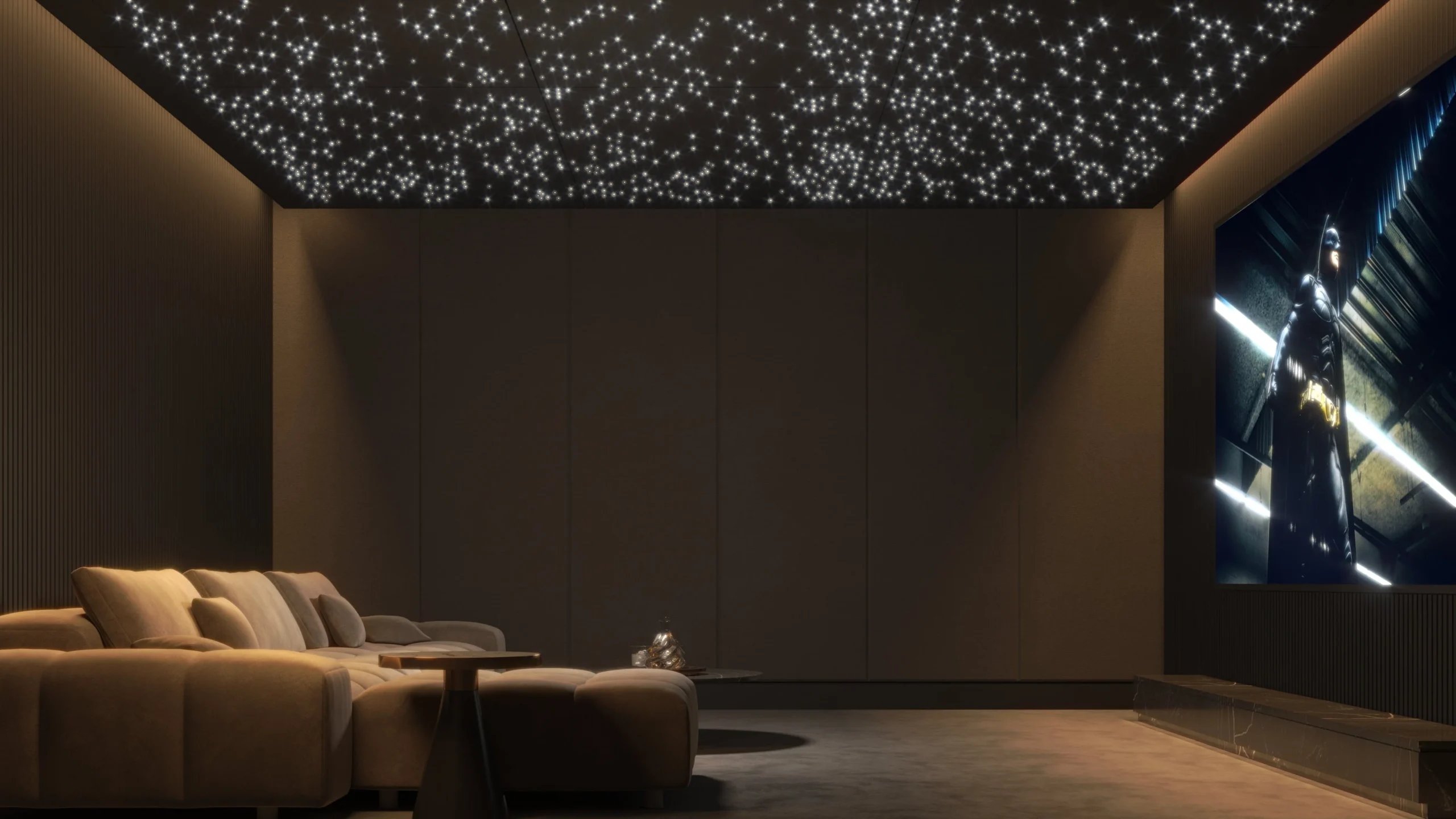
Each panel is listed at 0.6 inch thick and uses a walnut wood texture over a high-density polyester fiber design. Art3d says the panels absorb indoor echo and everyday noise, and the product is intended for living rooms, bedrooms, accent walls, and drop ceilings. The wood appearance gives the treatment a finished architectural quality that the foam options cannot match.
The mounting options are unusually flexible. The panels are made to work with a standard 15/16-inch T-bar drop ceiling grid, or they can be attached to a flat substrate using glue or screws. That makes them suitable for both suspended-ceiling renovations and decorative wall installations. It also means the existing ceiling structure matters. Measure the grid and plan around lights, vents, and access panels before ordering enough material for a larger project.
Compared with TONOR Wood Slatwall Panels, Art3d is more strongly oriented toward ceiling coverage and uses a two-foot square format. TONOR is easier to imagine as a vertical walnut accent wall, while Art3d can change the visual character of an entire ceiling. The trade-off is installation complexity. Neither is a casual peel-and-stick project, but Art3d demands even more attention when overhead.
This is not the right pick for a renter seeking removable treatment or for someone who only needs to calm a microphone reflection. The panels make sense when the room is being renovated and the ceiling itself is part of the acoustic plan. For a large decorative project, Art3d is the most capable coverage format in the roundup.
How to choose best acoustic panels for home
The right panel depends on what is causing the problem, how much surface needs treatment, and how permanent the installation can be.
Material and construction
Polyester fiber, exposed foam, wood veneer, MDF, and layered slat construction all produce different visual and practical results. Foam tiles are easy to cut and arrange, while fabric or wood-faced panels are more comfortable in a living space. Look for a stated material and a consistent construction rather than relying only on broad words such as “soundproof.”
Thin panels can reduce reflections from nearby walls, but they should not be expected to block voices, traffic, or other sound passing through a wall. That requires changes to the wall structure, doors, windows, or gaps around the room.
Thickness and absorption
Thickness affects how much treatment a panel can provide, especially when there is an air gap behind it. In this group, most small tiles are 0.4 inch thick, Soundsbay lists an NRC of 0.92, NEPIS claims an NRC above 0.95, and Shipxinfuren provides a much deeper 2-inch format. These figures and dimensions are useful clues, not guarantees of identical performance in your room.
A thin tile can calm a reflection, but only coverage and placement can calm a whole room.
Use deeper panels when a recording area needs more substantial absorption. Use thinner tiles when the problem is a bright wall near a desk and appearance or easy placement matters more.
Coverage and layout
Count alone is not enough. Twelve 12-inch squares cover a focused area, while 22 or 52 smaller tiles provide more freedom to distribute treatment. The TONOR set states about 31 square feet of coverage, NEPIS states about 20 square feet, and Soundsbay states 11.6 square feet. Art3d's 2 by 2-foot panels are a better format for large ceiling projects.
Think about first-reflection areas, the wall behind a microphone, and the ceiling above a hard floor. Treating those surfaces strategically is usually more useful than placing every panel on one convenient wall.
Installation method
Self-adhesive panels are the fastest to install, but smooth, clean surfaces and careful layout still matter. Focusound includes 300 pieces of double-sided adhesive tape, Soundsbay includes 60 adhesive stickers, and several other picks use built-in adhesive backing.
Wood panels such as TONOR and Art3d support glue or screws, with Art3d also fitting a 15/16-inch T-bar drop ceiling grid. Those options are better for permanent projects, but they require more measuring and planning.
Appearance and room use
A home office, living room, and recording booth do not need to look alike. Wedge foam is practical but visibly technical. ROOME and NEPIS use textured designs, Lebenforce uses a fabric-like polyester presentation, and TONOR and Art3d bring a walnut wood finish.
Choose a finish you can live with after the echo improves. Panels that match the room are more likely to stay in the right places instead of being removed after a few weeks.
Frequently asked questions
Do acoustic panels soundproof a room?
No. These products are designed mainly to absorb reflections, echo, reverb, and flutter echoes inside a room. Blocking sound from entering or leaving requires structural work involving walls, doors, windows, and gaps.
How many acoustic panels does a home room need?
There is no single number for every room. The answer depends on room size, furnishings, wall material, and the location of the main reflection points. Lebenforce recommends covering 20 to 30 percent of a wall for more complete treatment, while a smaller set can be useful around one desk or microphone.
Are thicker acoustic panels better?
Thickness is one important factor, but it is not the only one. The two-inch Shipxinfuren panels have a deeper profile than the 0.4-inch tile sets, while Soundsbay, NEPIS, and other products provide published absorption or density details. Placement, coverage, and the distance from the wall also affect the result.
Can these panels go on a ceiling?
Several can. Lebenforce, NEPIS, Soundsbay, and ROOME list ceiling use, while Art3d is specifically designed for a 15/16-inch T-bar drop ceiling grid as well as flat substrates. Always check the mounting method and the ceiling surface before installation.
Are self-adhesive panels safe for painted walls?
The products are designed for adhesive installation, but wall paint and adhesive can react differently. Test one panel or a small hidden area first, especially in a rental. A removable mounting approach may be preferable when preserving the wall matters.
Should panels go behind speakers or behind a microphone?
Place panels where strong reflections are reaching the listener or microphone. A microphone setup often benefits from treatment near the voice source and on nearby reflective surfaces, while a speaker setup needs attention to side walls, the wall behind the speakers, and the listening position. Room layout should guide the pattern rather than decoration alone.
Do wood slat panels absorb sound?
Wood slat panels can contribute to room treatment when they incorporate an absorptive backing or fiber layer. TONOR describes polyester fiber, MDF, and wood veneer construction, while Art3d describes high-density polyester fiber behind its wood texture. Their performance still depends on coverage and the rest of the room.
The bottom line
The Best acoustic panels for home depend on whether you need broad flexible treatment or a finished architectural surface. Focusound 52 Pack Acoustic Foam Panels is the strongest all-purpose pick because its 52 one-inch tiles and 300 adhesive tape pieces make it easy to distribute treatment across a home office or recording room. NEPIS 20 Pack Acoustic Panels is a better visual fit when a brick pattern and broad stated coverage matter.
For a decorative renovation, TONOR Wood Slatwall Panels offers the most convincing living-space finish, while Art3d Wood Slat Ceiling Tiles makes sense for a larger ceiling project. The thick Shipxinfuren 2-Inch Foam Panels are the focused choice for a defined recording area, not a whole-room makeover.
If you are undecided, choose Focusound for flexible echo control or TONOR for a wall treatment you will want to keep visible.
As an Amazon Associate we earn from qualifying purchases.