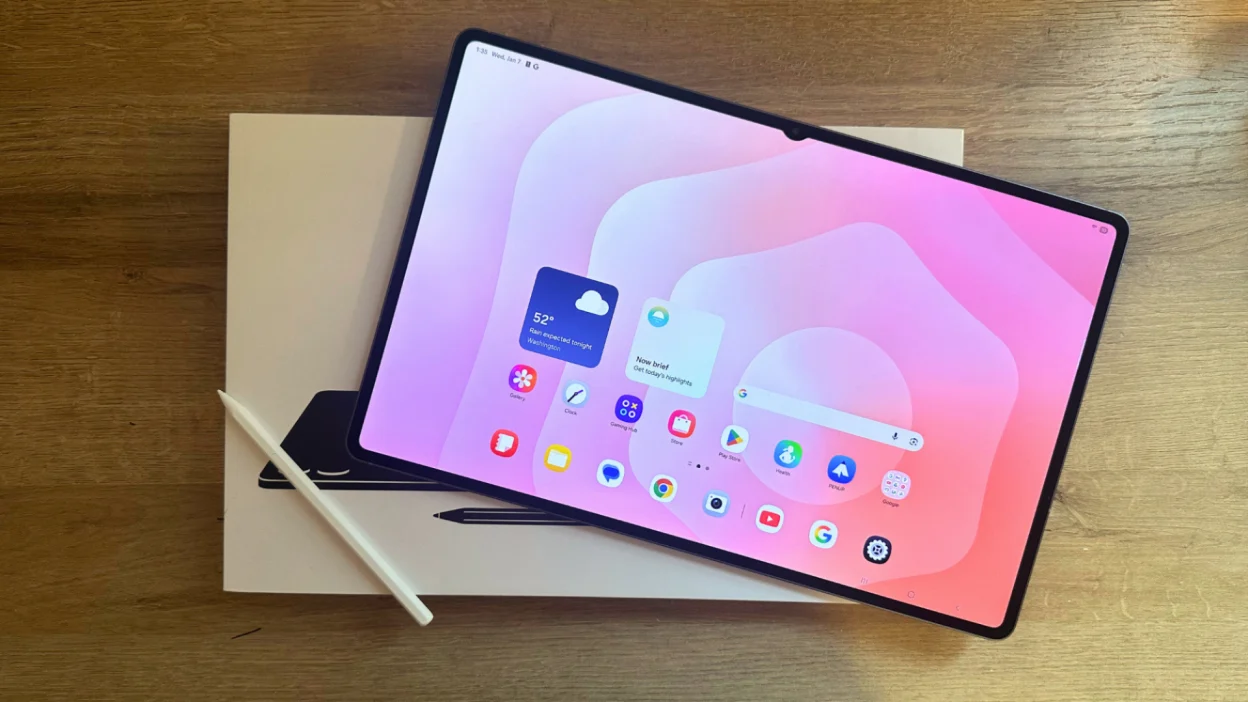

A tablet can be a superb couch screen, note-taking tool, travel companion, or family computer, but the wrong one quickly becomes a slow rectangle with a cramped display and nowhere to store your apps. The Best Android Tablet choices now range from compact readers to large student machines with pens, folio cases, and desktop-style accessories.
We compared the nine options here by screen quality, processor, storage, battery claims, portability, and the extras that affect daily use. Samsung is the safest all-purpose pick, while Lenovo has the strongest selection for students and pen input. The smaller Lenovo Tab One is the easiest to carry, and the large URAO is the most ambitious choice for a spacious workspace.
Our top pick is the Samsung Galaxy Tab A11+, with Lenovo's 11-inch Idea Tab close behind and a useful spread of compact, large-screen, and low-cost alternatives.
Comparison table
| # | Product | Award | Display | Memory and storage | Battery claim | Best for |
|---|---|---|---|---|---|---|
| 1 | Samsung Galaxy Tab A11+ | Best overall | 11-inch, up to 90Hz | 6GB, 128GB, expandable | Long-lasting battery, fast charging | Families and everyday use |
| 2 | Lenovo Idea Tab 11 8GB | Best for students | 11-inch 2.5K IPS, 90Hz | 8GB, 256GB | Up to 12 hours of YouTube | Notes, study, and media |
| 3 | Evermyth 10-inch Tablet | Best compact Android 16 tablet | 10-inch 1280 x 800 IPS | 24GB listed, 64GB, up to 1TB expandable | Up to 8 hours mixed use | Basic streaming and browsing |
| 4 | URAO 10.1-inch Tablet | Best small-screen storage | 10.1-inch 1280 x 800 IPS | 36GB listed, 128GB, up to 1TB expandable | Up to 8 hours mixed use | Families needing expandable storage |
| 5 | URAO 14-inch Tablet | Best large-screen bundle | 14-inch 1920 x 1200 IPS | 30GB listed, 256GB, up to 1TB expandable | Up to 12 hours mixed use | Desk work and shared viewing |
| 6 | Lenovo Idea Tab 11 4GB | Best pen tablet for basics | 11-inch 2.5K IPS, 90Hz | 4GB, 128GB | Up to 12 hours of YouTube | Handwritten notes and study |
| 7 | Lenovo Tab One | Best lightweight tablet | 8.7-inch HD, 60Hz | 4GB, 64GB | Up to 12.5 hours of YouTube | Travel and children |
| 8 | Lenovo Idea Tab Pro | Best performance | 12.7-inch 3K LCD | 8GB, 128GB | Up to 11 hours of video | Gaming and demanding study |
| 9 | Lenovo Idea Tab Plus | Best big-screen balance | 12.1-inch 2.5K IPS, 90Hz | 8GB, 128GB | Up to 13 hours of YouTube | Streaming and note-taking |
1. Samsung Galaxy Tab A11+: Best Overall

Pros
- 11-inch screen with motion up to 90Hz
- Quad speakers with Dolby Atmos
- Expandable storage and 5MP front camera
- Slim, light design for family use
Cons
- The included configuration has 6GB of memory and 128GB of storage
- Samsung does not include a pen or folio case in the listed package
- Less specialized for handwriting than the Lenovo Idea Tab models
Best for: families and everyday users who want a dependable tablet for streaming, browsing, calls, and casual games.
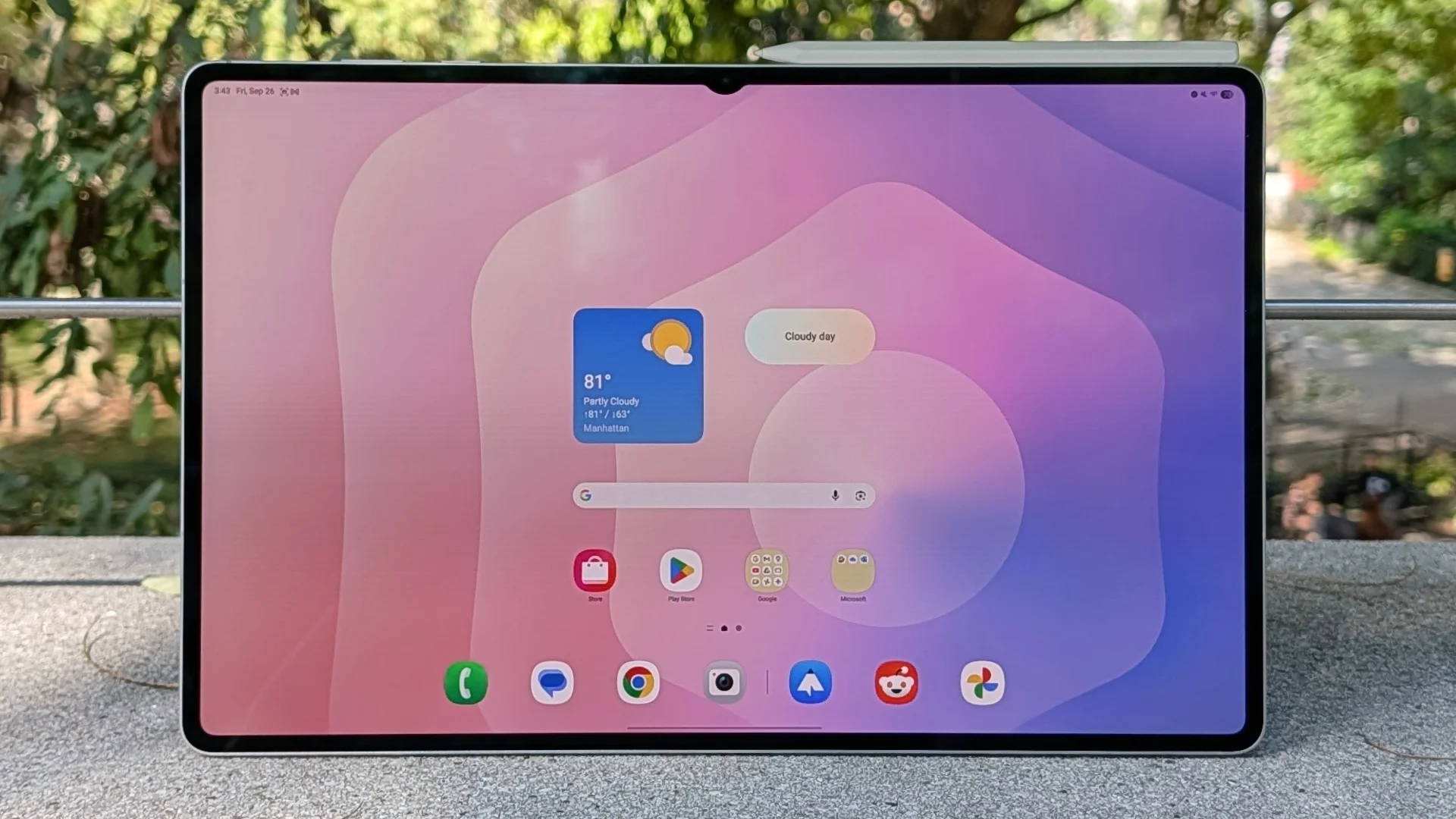
The Samsung Galaxy Tab A11+ is the one that asks the least of its owner. It is large enough for a movie or split-screen browsing, yet its slim 0.27-inch profile and 1.05-pound weight keep it manageable when passed around the house. The 11-inch display has a refresh rate up to 90Hz, so scrolling pages and moving through menus should look more fluid than on the 60Hz Lenovo Tab One.
Samsung's configuration here pairs 6GB of memory with 128GB of storage, and the tablet supports expandable storage. That is a sensible arrangement for a family device because downloaded shows, photos, and games do not have to compete for the same fixed space forever. The upgraded chipset is described as keeping everyday tasks responsive, though Samsung does not provide a processor model in the supplied details. Google Gemini and Circle to Search add useful assistance without requiring a separate app for every small question.
The entertainment hardware is stronger than the basic screen specification suggests. Four speakers with Dolby Atmos are designed to create fuller sound for movies and music, and the 5MP front camera is aimed at clearer video calls. Samsung also calls out fast charging and a battery built for browsing, streaming, and play, but it does not give a specific capacity or runtime in the available information. That restraint matters: the tablet sounds well suited to long sessions, but there is no precise claim to use as a planning benchmark.
Compared with the Lenovo Idea Tab 11 8GB, the Samsung is less compelling for serious handwritten work because the Lenovo includes a Tab Pen and folio case. The Samsung counters with a more general family focus, a cleaner all-purpose feature set, and a straightforward path to expandable storage. It also makes more sense than the Lenovo Tab One when a compact screen would feel restrictive.
The weakness is specialization. Students who expect to annotate pages every day should look at the Lenovo Idea Tab models, and buyers who want the biggest possible canvas should consider the Lenovo Idea Tab Pro or Lenovo Idea Tab Plus. For everyone else, the Galaxy Tab A11+ is the easiest recommendation because it balances screen size, sound, portability, cameras, and software features without leaning too hard toward one kind of user.
2. Lenovo Idea Tab 11 8GB: Best for Students

Pros
- Sharp 11-inch 2.5K IPS touchscreen
- 90Hz refresh rate for smoother writing and scrolling
- Tab Pen and folio case included
- Four learning apps and Circle to Search
- 256GB of storage
Cons
- The 1.05-pound body is less compact than the Lenovo Tab One
- No stated storage expansion in the supplied details
- The student-focused software may be unnecessary for simple media use
Best for: students who want a high-resolution screen, pen input, and enough storage for notes, documents, and downloads.
The Lenovo Idea Tab 11 8GB is the most complete study package in this group. It arrives with a Tab Pen and folio case, so the tablet is ready for handwritten notes and propped-up reading without making the owner assemble a separate accessory kit. Its 11-inch size is also a useful middle ground. It gives lecture slides and split-screen apps room to breathe, but it is not as cumbersome as the 12.7-inch Lenovo Idea Tab Pro.
The display is the star. A 2.5K IPS touchscreen produces a much denser image than the 1280 x 800 panels on the Evermyth and smaller URAO tablet, which makes fine text and diagrams look cleaner. The 90Hz refresh rate should make pen movement, page scrolling, and interface animation feel more immediate. Lenovo also lists TÜV Rheinland Low Blue Light hardware solutions, a thoughtful feature for long study sessions, although comfort still depends on room lighting and how long the screen is used.
Inside, the MediaTek Dimensity 6300 processor is paired with 8GB of memory and 256GB of storage. Those numbers give this version a clear advantage over the identical 4GB Lenovo Idea Tab 11 when several apps and large files are involved. Lenovo also includes AI Note, Squid, Nebo, and MyScript Calculator, giving the pen more to do than simply tap icons. Circle to Search can identify or translate something on the screen, while Smart Connect is intended to move tasks and files between compatible devices.
The quad speakers are tuned with Dolby Atmos, and Lenovo cites up to 12 hours of YouTube playback. The 72% NTSC color coverage claim suggests a more colorful image than a basic tablet panel, particularly for video and illustrated material. A 20W charger is included for quicker top-ups, though the supplied details do not give a battery capacity. The tablet weighs 1.05 pounds, matching the Samsung Galaxy Tab A11+ in the listed dimensions and making it portable enough for a backpack.
The compromise is that its strengths are concentrated around study and creation. The Samsung Galaxy Tab A11+ is the better fit for a family that wants simpler entertainment and expandable storage, while the Lenovo Idea Tab Pro has a faster Dimensity 8300 processor for heavier gaming. Pick the 8GB Idea Tab 11 when notes, reading, light productivity, and a supplied pen matter more than maximum processing power.
3. Evermyth 10-inch Tablet: Best Compact Android 16 Tablet

Pros
- Android 16 operating system
- Wi-Fi 6 and Bluetooth 5.4
- Storage expansion up to 1TB
- USB-C charging
- 5MP front and 8MP rear cameras
Cons
- 1280 x 800 resolution is modest for a 10-inch display
- The listed 24GB memory includes 21GB of virtual memory
- The five-core processor is specified only up to 1.8GHz
Best for: light browsing, video calls, reading, and streaming on a compact Android 16 tablet.
The Evermyth 10-inch Tablet is aimed at straightforward tablet jobs rather than ambitious productivity. It has a 10-inch form factor, a low-blue-light IPS touchscreen, and a slim listed width of 0.5 inches. That makes it an uncomplicated choice for a kitchen counter, a child's entertainment device, or a spare screen for travel.
Its Android 16 operating system and GMS certification give it access to the Google Play Store, while Wi-Fi 6 and Bluetooth 5.4 are newer connectivity standards than many entry-level tablets offer. The processor is described as a five-core design reaching up to 1.8GHz. That should be judged as basic hardware for browsing, video, and light app use, not as a match for the MediaTek Dimensity 8300 in the Lenovo Idea Tab Pro.
The memory description needs careful reading. Evermyth lists 24GB of RAM, but the breakdown is 3GB of physical memory plus 21GB of virtual memory. Virtual memory can use storage to help keep apps available, but it is not equivalent to 24GB of physical RAM. The tablet has 64GB of internal storage and supports a TF card up to 1TB, with the card not included. That expansion is useful for downloaded media, though app performance will still depend on the modest processor and physical memory.
The 1280 x 800 IPS display is serviceable for video and web pages, but it lacks the crispness of either Lenovo Idea Tab 11 model. The 6000mAh battery is claimed to support up to eight hours of mixed use, and the USB-C port handles charging. Cameras are more generous on paper than the Samsung's front camera, with a 5MP front unit and 8MP rear unit. They are suited to calls and casual photos rather than replacing a phone camera.
This tablet also makes some limitations clear. It is not the choice for demanding games, extensive multitasking, or sharp document work, and the supplied details do not mention a bundled case or pen. Compared with the 10.1-inch URAO Tablet, it has the same basic screen resolution and similar runtime claim, while URAO lists an octa-core processor and more physical memory in its configuration. Choose Evermyth for Android 16, current wireless standards, and simple expandable storage, as long as expectations stay realistic.
4. URAO 10.1-inch Tablet: Best Small-Screen Storage

Pros
- Android 16 with Google Play Store
- Octa-core processor listed at 1.8GHz
- 128GB storage with support for up to 1TB extra
- Wi-Fi 6 and Bluetooth 5.4
- 18W fast charging
Cons
- 1280 x 800 resolution is not especially sharp
- The 36GB memory figure includes virtual memory
- No GPS
Best for: families and casual users who want a small tablet with generous expandable storage.
The URAO 10.1-inch Tablet is a close relative to the Evermyth in purpose, but it takes a slightly more storage-focused approach. Its 10.1-inch IPS display is only 0.4 inches wider diagonally than the Evermyth's panel, so it remains easy to hold while offering a little more room for web pages and video controls. The 0.4-inch listed thickness also keeps the body slim.
URAO lists an Android 16 operating system, an octa-core processor running at 1.8GHz, and a pre-installed Google Play Store. The larger core count does not automatically make it faster than every rival, but it is a more reassuring specification for switching among ordinary apps than the Evermyth's five-core processor. Memory is listed as 36GB, broken down as 6GB physical plus 30GB virtual. As with Evermyth, that virtual portion should not be mistaken for physical memory.
Storage is the practical advantage. The tablet has 128GB built in and supports up to 1TB through a TF card, although the card is not included. That gives it more breathing room than Evermyth's 64GB before expansion becomes necessary. The 5MP front and 8MP rear cameras cover video calls and online learning, while the low-blue-light display treatment is intended to reduce the effects of flicker and harsh blue light.
Battery claims are similar to Evermyth's, with up to eight hours of mixed reading, streaming, gaming, and browsing. URAO lists an 18W fast-charging system and says the tablet can fully charge in 1.5 hours. Wi-Fi 6 and Bluetooth 5.4 provide modern wireless connections for home networks and accessories. The missing GPS is more important for anyone hoping to use this as a navigation device, since URAO explicitly says the tablet has none.
The screen is the main reason to hesitate. Its 1280 x 800 resolution is fine for casual video, but text and detailed images will not look as clean as they do on the 2.5K Lenovo displays. The Lenovo Tab One is smaller and lighter for travel, while the Samsung Galaxy Tab A11+ offers a more polished family experience with quad speakers and a 90Hz display. The URAO 10.1-inch Tablet makes sense for users who put expandable storage and Android 16 ahead of display sharpness.
5. URAO 14-inch Tablet: Best Large-Screen Bundle

Pros
- Spacious 14-inch IPS display
- Keyboard, stylus, case, and headphones included
- 10000mAh battery with 30W charging
- 256GB storage and up to 1TB expansion
- Four speakers and Wi-Fi 6
Cons
- Large body is less comfortable to hold for long periods
- 1920 x 1200 resolution is not as dense as the Lenovo Idea Tab Pro
- No GPS
Best for: desk-based tablet work, shared viewing, and buyers who want a broad accessory bundle.
The URAO 14-inch Tablet is not trying to be a hand-sized tablet. Its 14-inch display and listed dimensions of 12.8 by 8.39 inches make it closer to a portable workspace or a small shared television. It is the model to consider when a large document, video, or web page matters more than easy one-handed use.
The 1920 x 1200 IPS panel gives the wide screen a practical 16:10 shape for documents and video. It is bright and colorful according to URAO's description, with low-blue-light technology for reduced flicker and blue-light exposure. Still, the resolution is less dense than the 12.7-inch 3K screen on the Lenovo Idea Tab Pro, so the Lenovo should look sharper when reading small text or viewing detailed graphics.
The accessory bundle is unusually broad. URAO lists a Bluetooth keyboard, stylus, foldable case, and headphones, and describes the tablet as compatible with a mouse as well. The keyboard and case can turn the large display into a basic laptop-style setup, while the stylus gives it a route into handwritten notes and sketches. That does not make it a full desktop replacement, but it does make the tablet more useful on a desk than a bare entertainment slate.
The hardware includes an octa-core processor running at 2.0GHz, 30GB of listed memory made up of 6GB physical and 24GB virtual memory, and 256GB of internal storage. A TF card can add up to 1TB, though the card is not included. The 10000mAh battery is claimed to support up to 12 hours of mixed use, and 30W charging is said to bring a full charge in 2.5 hours. Four speakers, Wi-Fi 6, Bluetooth 5.4, and 5MP front and 8MP rear cameras round out the feature set.
The obvious weakness is size. The Lenovo Idea Tab Plus is much easier to carry and has a sharper 2.5K screen, while the Idea Tab Pro has stronger performance and a more detailed 3K display. URAO also notes that this tablet has no GPS. Choose the 14-inch URAO when the included accessories and large canvas will stay on a desk or table, not when portability is the priority. For a movie-centered setup, a larger screen can change the way you arrange a room, especially when the tablet will be shared.
6. Lenovo Idea Tab 11 4GB: Best Pen Tablet for Basics

Pros
- 2.5K IPS display with 90Hz refresh rate
- Tab Pen and folio case included
- Quad Dolby Atmos-tuned speakers
- Up to 12 hours of YouTube playback
- Useful learning app bundle
Cons
- 4GB of memory limits heavier multitasking
- 128GB storage is half the capacity of the 8GB version
- The larger display is less portable than the Lenovo Tab One
Best for: students and note-takers who want Lenovo's pen experience without needing heavy multitasking.
The Lenovo Idea Tab 11 4GB shares almost everything important with the 8GB model above. It has the same 11-inch 2.5K IPS touchscreen, 90Hz refresh rate, MediaTek Dimensity 6300 processor, Tab Pen, folio case, and student-oriented software. That makes it a particularly attractive option for handwriting and reading, provided the owner does not expect the same multitasking headroom as the higher-memory version.
The display is a strong fit for notes. The 2.5K resolution keeps text and diagrams crisp, while the 90Hz refresh rate should make page movement and pen strokes feel smooth. Lenovo also lists 72% NTSC color coverage and TÜV Rheinland Low Blue Light hardware solutions. Quad speakers tuned with Dolby Atmos help with lectures and streaming, though the audio experience will still depend on how the tablet is positioned.
The same Dimensity 6300 processor appears in both Idea Tab 11 versions, and the software package is a genuine strength. Lenovo AI Note, Squid, Nebo, and MyScript Calculator cover handwriting, organization, annotation, and calculations. Circle to Search works with the pen or a fingertip, and Smart Connect can help move tasks between compatible devices. Lenovo claims up to 12 hours of YouTube playback and includes a 20W charger.
The cutback is memory and storage. This configuration has 4GB of memory and 128GB of storage, compared with 8GB and 256GB in the other Idea Tab 11. Four gigabytes can handle basic notes, web research, and video, but it leaves less room for keeping many demanding apps open. If your study routine includes a browser with many tabs, a note app, cloud documents, and media at once, the 8GB version is the safer pick.
It is also worth choosing this tablet over the Lenovo Tab One only if the pen and sharper display matter. The Tab One is lighter and easier to use in one hand, but its 8.7-inch HD screen and 60Hz refresh rate are less suited to long-form notes. Readers focused on handwriting can also explore the features that make digital note taking feel natural. The Idea Tab 11 4GB is the right choice for structured study, while the 8GB version is the better long-term multitasker.
7. Lenovo Tab One: Best Lightweight Tablet

Pros
- Weighs 0.704 pounds
- Compact 8.7-inch display
- Up to 12.5 hours of YouTube streaming
- Folio case with built-in stand
- Google Kids Space support
Cons
- HD resolution is lower than every Lenovo Idea Tab display
- 4GB memory and 64GB storage are modest
- 60Hz refresh rate
Best for: travel, casual video, children, and anyone who prefers a tablet that fits easily in one hand or a small bag.
The Lenovo Tab One is the smallest and lightest tablet in this group, and that difference is more useful than it sounds. At 0.704 pounds, it is easy to hold during a commute, pass to a child, or tuck into a purse or backpack. The 8.7-inch display gives it enough room for video and reading while keeping the whole device more approachable than an 11-inch tablet.
The tradeoff is a clearly simpler screen. Its HD panel runs at 60Hz, so it will not look as crisp or as fluid as the 2.5K, 90Hz display on either Lenovo Idea Tab 11. Lenovo lists 480 nits of brightness, which should help in ordinary indoor settings, and dual Dolby Atmos speakers provide more depth than a single small speaker. For a compact media device, that combination is sensible.
A MediaTek Helio G85 processor, 4GB of memory, and 64GB of storage handle the tablet's intended routine of browsing, streaming, and light games. Lenovo claims up to 12.5 hours of YouTube streaming and lists 15W charging. The supplied folio case protects the tablet and folds into a stand, which makes hands-free viewing far easier than balancing the bare tablet against a cup or book.
The software is family-friendly in a specific way. Google Kids Space recommends teacher-approved content and provides access to children's videos and age-appropriate books. Lenovo also lists Android 14 and two years of security patches. Those details make it a more reassuring children's or guest tablet than the unnamed Android 16 models here, although anyone seeking the newest operating system should look elsewhere.
The weakness is capacity for serious work. There is no pen included, the screen is not especially large, and 64GB can fill quickly with downloaded video and games. Samsung Galaxy Tab A11+ is the better shared household tablet, while the Lenovo Idea Tab 11 4GB is the better note-taking tool. Pick the Tab One when carrying comfort matters more than display detail, and when the included folio stand will get regular use.
8. Lenovo Idea Tab Pro: Best Performance

Pros
- MediaTek Dimensity 8300 processor
- 12.7-inch 3K LCD display
- Pen and folio case included
- Quad JBL Dolby Atmos speakers
- 360Hz touch sampling and up to 90fps gaming claim
- 45W quick charging
Cons
- 1.364-pound body is heavier than the smaller Lenovo tablets
- 128GB storage is limited beside the expandable URAO models
- Large size is less comfortable for one-handed reading
Best for: demanding Android apps, gaming, large documents, and students who want a high-performance tablet with pen support.
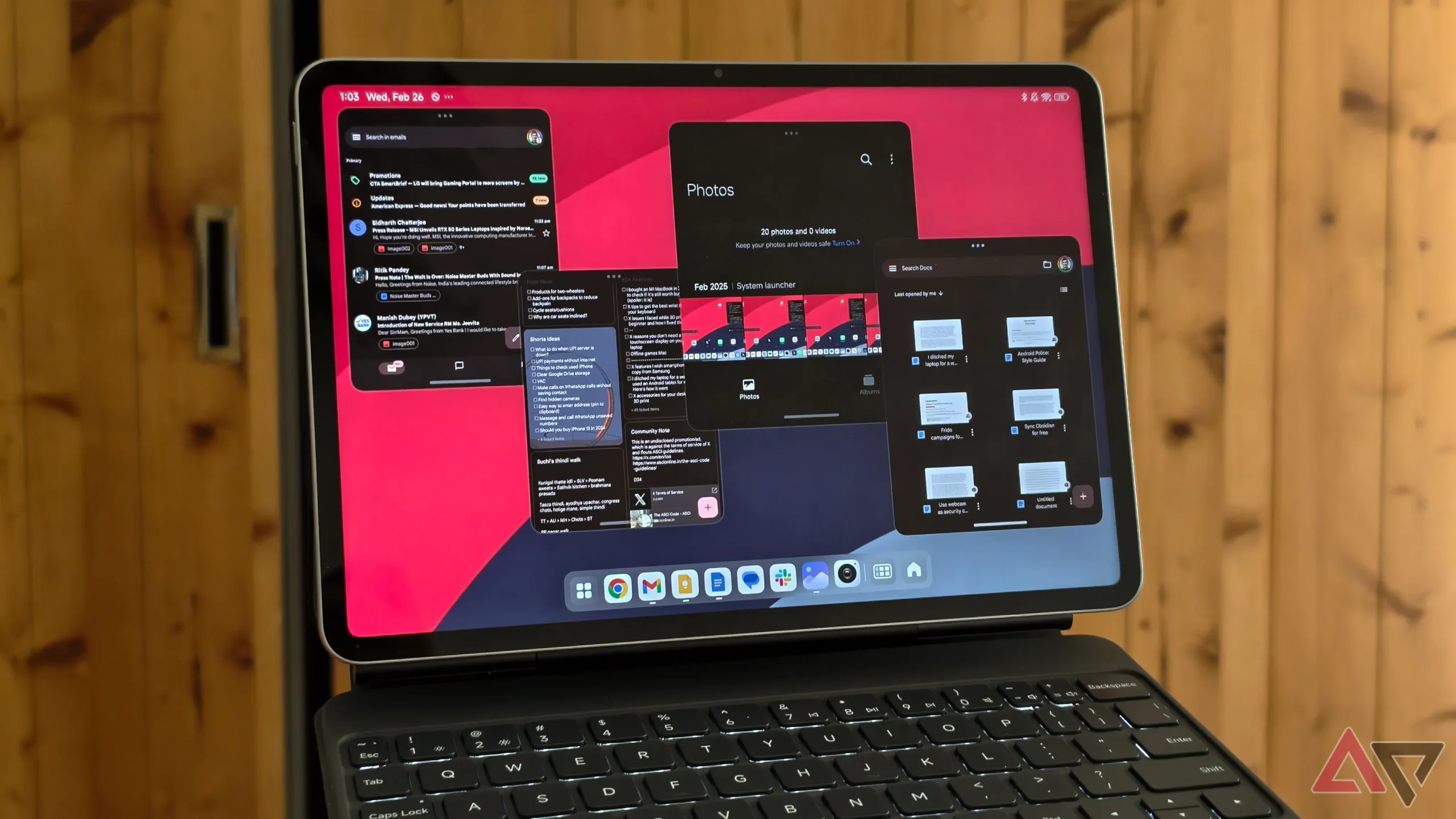
The Lenovo Idea Tab Pro is the performance specialist. Its 12.7-inch display gives games, lecture slides, and creative apps a generous canvas, while the MediaTek Dimensity 8300 processor is the most substantial processor named in this group. It weighs 1.364 pounds, so it is still portable, but the size and weight make it feel more like a small workstation than a casual hand-held reader.
The 3K LCD display is sharper than the 2.5K panel on the Lenovo Idea Tab Plus and much more detailed than the HD screens on the smaller models. Lenovo adds a 360Hz touch sampling rate and claims gaming performance up to 90fps, as well as PUBG certification for FPS play. Those features point to a tablet designed for quick touch response, though actual game performance will depend on the title, settings, and software updates.
The tablet has 8GB of memory and 128GB of storage, plus the included Tab Pen Plus and folio case. That combination makes it suitable for handwritten notes and demanding study apps, while Google Gemini and Circle to Search add research assistance. Wi-Fi 6E is listed for faster compatible networks, a step beyond the Wi-Fi 6 used by several other tablets here. Four JBL speakers with Dolby Atmos should make lectures and entertainment sound fuller than the dual-speaker Lenovo Tab One.
Battery life is listed at up to 11 hours of video streaming, and 45W quick charging is designed to reduce time tethered to an outlet. Lenovo also describes mono and chromatic visual modes and Low Blue Light certification for reading comfort. These are useful touches for a tablet that may spend hours displaying documents, though the large high-resolution screen will still be more demanding than the compact Tab One.
The obvious limitation is not speed but physical size and fixed storage. The Lenovo Idea Tab Plus is lighter at 1.17 pounds and still offers a 12.1-inch 2.5K 90Hz display, while the 14-inch URAO offers more internal and expandable storage along with a wider accessory bundle. The Idea Tab Pro wins when processing power, touch response, and display detail matter most. For people who want a tablet that can handle serious games and demanding study apps, it is the strongest Android device here.
9. Lenovo Idea Tab Plus: Best Big-Screen Balance
Pros
- 12.1-inch 2.5K IPS touchscreen
- 90Hz refresh rate
- Up to 800 nits brightness claim
- Quad Dolby Atmos-tuned speakers
- Tab Pen and folio case included
- Up to 13 hours of YouTube streaming
Cons
- Dimensity 6400 is below the Idea Tab Pro's Dimensity 8300
- 128GB storage is not expandable in the supplied details
- Larger than the 11-inch models for casual carrying
Best for: users who want a spacious display for streaming, notes, and reading without moving up to the largest tablet here.
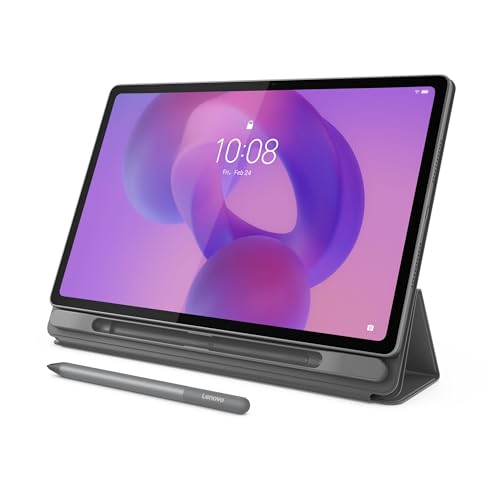
The Lenovo Idea Tab Plus occupies the sensible middle ground between an 11-inch tablet and a very large desktop-style slate. Its 12.1-inch screen provides more space for documents, streaming, and split-screen apps than the Idea Tab 11, yet the 1.17-pound weight keeps it lighter than the Idea Tab Pro. The 0.25-inch listed thickness also supports its portable design.
The 2.5K IPS touchscreen is sharp enough for small text and detailed images, and its 90Hz refresh rate should make scrolling and pen movement smoother. Lenovo claims up to 800 nits of brightness, which gives the screen more flexibility in bright rooms than the basic HD panels on Evermyth and URAO's 10.1-inch model. TÜV Rheinland Low Blue Light certification is included for longer reading sessions.
A MediaTek Dimensity 6400 processor works with 8GB of memory and 128GB of storage. That is a stronger everyday platform than the Lenovo Tab One's Helio G85 and 4GB of memory, although it does not reach the performance level of the Idea Tab Pro's Dimensity 8300. The included Tab Pen and folio case make it suitable for annotations and handwritten notes, and Lenovo supplies Notepad, Squid, Nebo, and MyScript Calculator for study work.
The tablet's media credentials are equally solid. Quad Dolby Atmos-tuned speakers are built for richer wireless entertainment, and Lenovo claims up to 13 hours of YouTube streaming. Quick charging helps reduce downtime, but the supplied product details do not provide a charging wattage or battery capacity. Smart file sharing can move documents and photos between compatible devices without cables or email attachments.
The main question is whether the extra screen space justifies moving beyond the smaller Lenovo Idea Tab 11. The Idea Tab 11 8GB is more compact and has the same 90Hz behavior, while the Idea Tab Pro offers a sharper 3K display and considerably stronger processor. The 14-inch URAO is the better pick for a desk-bound setup with a keyboard and broader storage. Choose the Idea Tab Plus when a bright, spacious display, pen support, speaker quality, and manageable weight all matter at once.
How to choose the best android tablet
The right tablet depends less on a long feature list than on how its screen, processor, storage, and physical design match the way you plan to use it.
Display size and resolution
Screen size determines whether a tablet feels like a portable reader or a small laptop substitute. An 8.7-inch display such as the Lenovo Tab One is easier to hold, while 11-inch screens offer a better compromise for browsing, video, and notes. Tablets at 12.1 inches, 12.7 inches, and 14 inches are more comfortable for split-screen work but need more room in a bag or on a table.
Resolution affects text sharpness and fine image detail. The 2.5K Lenovo models and the 3K Lenovo Idea Tab Pro are better suited to documents, diagrams, and detailed video than the 1280 x 800 panels on the Evermyth and URAO 10.1-inch tablet. Brightness matters in rooms with strong daylight, while low-blue-light features can help when reading for long periods.
Processor and memory
The processor determines how quickly apps open and how well the tablet handles games, video editing, and multitasking. The MediaTek Dimensity 8300 in the Lenovo Idea Tab Pro is the most performance-oriented platform here. The Dimensity 6300 models are better positioned for ordinary study and entertainment, while the Helio G85 and unnamed five-core Evermyth processor suit lighter routines.
Physical memory is more important than a large headline number. Evermyth's 24GB figure includes 3GB of physical memory and 21GB of virtual memory, while URAO's 36GB figure includes 6GB physical and 30GB virtual. Virtual memory can help manage open apps, but it does not provide the same responsiveness as actual RAM. For multitasking, the Lenovo Idea Tab 11 8GB is a safer choice than its 4GB counterpart.
Storage and expansion
Storage holds apps, downloads, photos, documents, and offline video. The Lenovo Idea Tab 11 8GB has 256GB, while the smaller configuration has 128GB. The Lenovo Tab One has 64GB, so it is more dependent on careful app and download management.
Expandable storage can be useful for a family tablet or a travel device loaded with video. Evermyth and both URAO models support TF cards up to 1TB, but the cards are not included. Check the specific listing when expansion is important, since not every tablet in this group states support for a memory card.
A sharp display makes a tablet pleasant to use, but enough physical memory is what keeps a busy study session from becoming frustrating.
Battery and charging
Battery claims are most useful when compared within a similar activity. Lenovo lists up to 12.5 hours of YouTube streaming for the Tab One, up to 13 hours for the Idea Tab Plus, and up to 11 hours of video for the Idea Tab Pro. Evermyth and the smaller URAO tablet list up to eight hours of mixed use, while the 14-inch URAO lists up to 12 hours.
These figures are not guarantees for gaming, bright-screen use, or constant multitasking. Charging speed is another part of the experience. The Idea Tab Pro lists 45W quick charging, the 14-inch URAO lists 30W, and the smaller URAO lists 18W. Samsung describes fast charging but does not provide a wattage in the supplied details.
Pen, case, and speakers
A bundled pen changes which tablet makes sense for handwritten notes. Both Lenovo Idea Tab 11 configurations, the Idea Tab Pro, and the Idea Tab Plus include a pen and folio case. The 14-inch URAO includes a stylus, keyboard, case, and headphones, making it the most accessory-heavy option.
Speakers also matter when the tablet replaces a small television or music player. Samsung has quad Dolby Atmos speakers, Lenovo's Idea Tab models use quad Dolby Atmos-tuned speakers, and the Idea Tab Pro adds JBL branding. The Lenovo Tab One has dual Dolby Atmos speakers, while the small Evermyth and URAO tablets do not provide the same detailed speaker description.

Frequently asked questions
Which Android tablet is best for most people?
The Samsung Galaxy Tab A11+ is the best general-purpose choice in this group. Its 11-inch display, up to 90Hz refresh rate, quad speakers, expandable storage, 5MP front camera, and family-oriented software cover everyday browsing, streaming, calls, and casual games.
Which tablet is best for handwritten notes?
The Lenovo Idea Tab 11 8GB is the strongest fit for most note-takers because it combines an 11-inch 2.5K 90Hz display with a Tab Pen, folio case, and several learning apps. The 4GB version has the same central pen and display experience, but less memory and storage for heavier multitasking.
Is a 10-inch tablet large enough for reading and streaming?
Yes. A 10-inch or 10.1-inch tablet is large enough for video, web pages, and ebooks while remaining easier to carry than a 12-inch model. The Evermyth and URAO screens use 1280 x 800 resolution, so they are better suited to casual viewing than dense document work.
Which tablet is easiest to travel with?
The Lenovo Tab One is the easiest to carry. It weighs 0.704 pounds, has an 8.7-inch display, and includes a folio case with a built-in stand. Its smaller HD screen and 4GB of memory make it less suitable for serious study, but those compromises help keep it compact.
Are virtual RAM figures the same as physical RAM?
No. Virtual RAM uses part of the tablet's storage to help manage apps, while physical RAM is dedicated working memory. Evermyth lists 24GB total with 3GB physical, and URAO lists 36GB total with 6GB physical, so those headline figures should not be compared directly with a tablet that lists 8GB of physical memory.
Which Android tablet has the strongest performance?
The Lenovo Idea Tab Pro has the strongest stated performance credentials, with a MediaTek Dimensity 8300 processor and 8GB of memory. Its 12.7-inch 3K display, 360Hz touch sampling claim, up to 90fps gaming claim, and quad JBL Dolby Atmos speakers also make it the most gaming-oriented model here.
Is a 14-inch tablet practical?
A 14-inch tablet can be practical when it stays on a desk, kitchen table, or shared viewing stand. The URAO 14-inch Tablet adds a keyboard, stylus, folio case, and headphones, but its size makes it less comfortable for one-handed use than the Lenovo Idea Tab Plus or Samsung Galaxy Tab A11+.
The bottom line
The Best Android Tablet for most households is the Samsung Galaxy Tab A11+. It has the right blend of an 11-inch 90Hz display, quad Dolby Atmos speakers, expandable storage, a slim body, useful cameras, and everyday software features. It is the model we'd choose when several people will use the tablet for different things.
Students should choose the Lenovo Idea Tab 11 8GB for its sharper 2.5K display, included pen and folio case, 8GB of memory, 256GB of storage, and study software. The Lenovo Idea Tab Pro is the better specialist pick for gaming and demanding apps, while the Lenovo Tab One remains the easiest choice for travel.
If you are undecided, buy the Samsung for general use, the Lenovo Idea Tab 11 8GB for notes, or the Lenovo Idea Tab Pro when performance matters most.
As an Amazon Associate we earn from qualifying purchases.