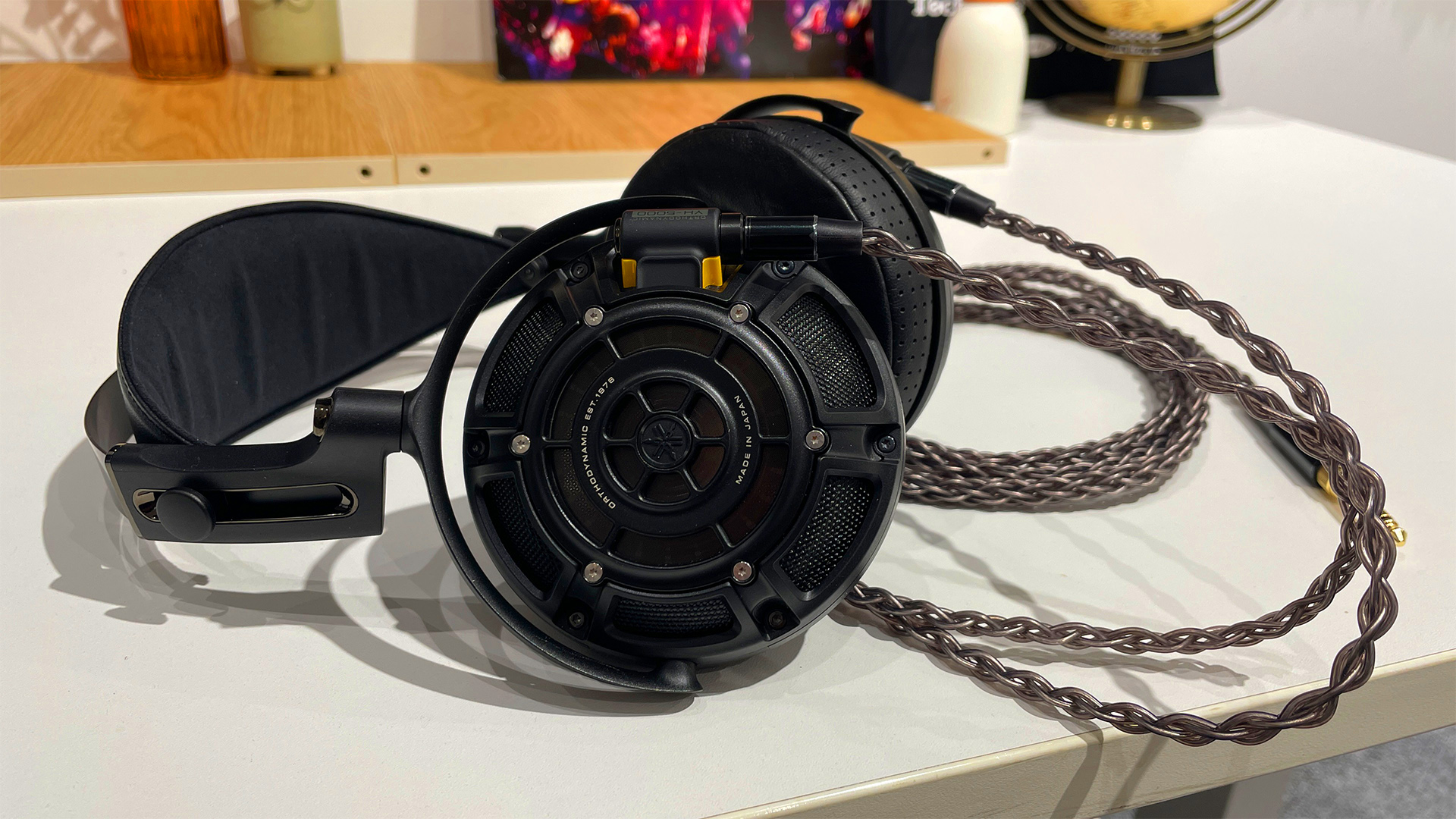

A good audiophile headphone should make you notice more in familiar recordings without turning every session into a technical exercise. The hard part is choosing between an isolating studio design, a spacious open-back model, and a wireless pair that can still preserve serious detail.
Our Best audiophile headphones picks include dependable studio monitors, comfortable home-listening headphones, and one unusually capable wireless option. The Audio-Technica ATH-M50X is the single best pick for most listeners, while the rest cover open-back sound, long sessions, studio work, and flexible everyday listening.
Comparison
| # | Product | Award | Driver and design | Connection | Best for |
|---|---|---|---|---|---|
| 1 | Audio-Technica ATH-M50X | Best overall | 45 mm, circumaural | Detachable cable | Versatile listening and monitoring |
| 2 | Sennheiser HDB 630 | Best wireless | 42 mm, adaptive ANC | Bluetooth, USB-C, included dongle | Wireless audiophile listening |
| 3 | beyerdynamic DT 990 PRO | Best open-back studio pair | Open-back, circumaural | Wired, 3 m coiled cable | Critical listening at a desk |
| 4 | Philips SHP9500 | Best airy sound | 50 mm, open acoustic system | Wired, 1.5 m cable | Spacious home listening |
| 5 | Audio-Technica ATH-M20X | Best studio starter | 40 mm, circumaural | Wired, single-sided cable | Tracking and casual monitoring |
| 6 | Sennheiser HD 505 | Best new Sennheiser | Open-back, laminate diaphragm | Wired, 1.8 m cable | Clear home listening |
| 7 | Sennheiser HD 599 SE | Best comfort | Open-back | Wired, detachable cables | Extended listening sessions |
1. Audio-Technica ATH-M50X: Best Overall

Pros
- Clear presentation with deep, accurate bass
- Circumaural cups help isolate outside sound
- Swiveling earcups support one-ear monitoring
- Detachable cable improves flexibility
- Durable professional-grade padding and headband
Cons
- Closed-in presentation compared with open-back models
- Heavier than the ATH-M20X
- No wireless listening
Best for: listeners who want one wired pair for music, studio work, and everyday use.
The Audio-Technica ATH-M50X is the pair we would hand to someone who wants serious sound without building an entire listening setup around it. It has a direct, energetic presentation that makes bass lines easy to follow and keeps vocals and instruments clear. The circumaural design also does a useful job of reducing outside noise, so it is less dependent on a perfectly quiet room than the open-back headphones in this roundup.
Its proprietary 45 mm drivers use rare earth magnets and copper-clad aluminum wire voice coils. Those details matter less as specifications than as an explanation for the M50X's character: it has enough low-end authority for modern recordings, but the bass is described as deep and accurate rather than simply oversized. The result is a monitor that can make a dense mix feel organized without flattening the small details that make acoustic recordings engaging.
The 90-degree swiveling earcups are a practical studio feature. They allow one-ear monitoring and make the headphones easier to position when checking a track or listening while speaking with someone nearby. The detachable cable is another meaningful advantage over simpler studio designs. It gives the M50X more flexibility at a desk and makes cable replacement less consequential. At 0.64 pounds, it is not the lightest model here, though it feels more substantial than cumbersome.
Compared with the Audio-Technica ATH-M20X, the ATH-M50X has larger drivers, a more refined presentation, swiveling earcups, and a detachable cable. The beyerdynamic DT 990 PRO creates a wider, more open image, and the Sennheiser HD 599 SE is gentler for long home listening, but neither offers the M50X's isolation. That balance is why it works across more rooms and more listening habits than any other pick here.
The weakness is the same feature that makes it so useful outside the home. Its isolating design does not produce the airy, speaker-like space of the Philips SHP9500 or Sennheiser HD 505. Listeners who want to hear the room around them, or who prioritize the most relaxed fit for several hours, should look at an open-back model instead. For everyone else, the ATH-M50X is the safest all-purpose recommendation in this group.
2. Sennheiser HDB 630: Best Wireless

Pros
- Neutral tuning with lifelike mids
- Wireless and USB-C listening options
- Supports aptX HD and aptX Adaptive
- Adaptive ANC and transparency mode
- 60-hour battery with fast charging
Cons
- Heavier than every wired pick in this roundup
- More features than a strictly wired listener needs
- Wireless performance depends on the source and connection
Best for: listeners who want high-fidelity sound without giving up wireless convenience.
The Sennheiser HDB 630 is the obvious choice when a cable would get in the way but sound quality still matters. It is the only model here built around wireless listening, active noise cancellation, transparency, and a long battery life. That makes it a very different proposition from the Audio-Technica ATH-M50X, but not a less serious one.
Sennheiser uses an in-house 42 mm transducer and a tuning intended to stay neutral, with lifelike mids and a wide, natural soundstage. The emphasis on minimal digital processing should appeal to listeners who dislike an over-shaped wireless sound. For a direct high-resolution connection, the headphones can use USB-C for lossless playback up to 24-bit/96 kHz. Bluetooth listeners get aptX HD and aptX Adaptive support, especially when paired with the included BTD 700 Bluetooth adapter.
The parametric EQ is a particularly strong feature. Instead of limiting the listener to a few broad presets, it allows frequency bands, widths, and filters to be adjusted with much greater precision. That means the HDB 630 can be tuned toward stronger bass, more prominent vocals, or a preferred balance for different genres. It is a more useful form of customization than a collection of vague listening modes.
The adaptive ANC is also important for its intended use. It can block distractions while preserving the balance and dynamics of the music, and transparency mode lets surrounding sound in when awareness matters. The 60-hour battery is enough for extended travel or several workdays, while a 10-minute charge can add up to 7 hours of playtime. Those are the kinds of conveniences the wired headphones simply cannot match.
The trade-off is weight. The listed weight is about 2.09 pounds, far above the wired models here, so the HDB 630 is not the pick for someone who wants the lightest possible frame. It is also unnecessary for a listener who always sits beside a headphone amplifier and never needs ANC. Choose it over the ATH-M50X when mobility, noise control, and wireless flexibility are central to the brief.
3. beyerdynamic DT 990 PRO: Best Open-Back Studio Pair

Pros
- Wide, natural soundstage
- Open design suits critical listening
- Replaceable soft velour ear pads
- 250-ohm design fits dedicated audio equipment
- Firm but comfortable headband pressure
Cons
- Open-back cups leak sound in both directions
- 250 ohms can be demanding for basic sources
- Fixed 3 m coiled cable is not ideal for travel
Best for: desktop listeners with suitable audio equipment who want a broad, open presentation.
The beyerdynamic DT 990 PRO has the most purpose-built studio character among the wired open-back choices here. Its sound is designed to feel spacious and precise rather than sealed inside the cups. That makes it especially appealing for critical listening, editing, and recordings where separation between instruments matters.
The open-back construction allows sound to move more freely around the ear, producing the wide, natural soundstage described for this model. It also means the DT 990 PRO is a home or studio headphone, not a commuter pair. People nearby will hear what you are playing, and environmental noise will remain part of the experience. That is a strength in a quiet room and a dealbreaker on public transport.
The 250-ohm impedance is the specification to take seriously. It is intended for professional studio interfaces, dedicated headphone amplifiers, home hi-fi systems, and other sources designed to drive higher-impedance headphones. A basic device may not provide the same authority or listening level as a suitable audio source. The Philips SHP9500 is less demanding in this respect, while the Sennheiser HDB 630 avoids the issue through its wireless and USB-C options.
Comfort is one of the DT 990 PRO's strongest practical traits. The circumaural earcups use soft, replaceable velour pads, and the headband applies firm but comfortable pressure. At about 0.84 pounds, it is not featherweight, but the large around-ear fit gives the weight somewhere sensible to sit. The 3 m coiled cable is useful at a studio desk, though its length and shape are awkward if the headphones are used close to a phone or laptop.
The real weakness is not sound quality. It is the narrow use case created by the open design, higher impedance, and studio-style cable. The Audio-Technica ATH-M50X is a better choice for isolation and general-purpose use, and the Sennheiser HD 599 SE is a friendlier option for relaxed home sessions. Pick the DT 990 PRO when a desk-based listener already has the right source and wants the expansive character of a traditional studio open-back.
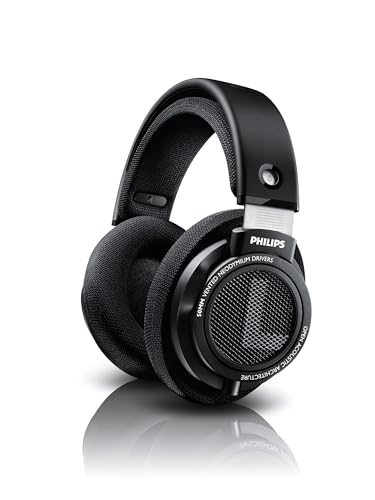
4. Philips SHP9500: Best Airy Sound
Pros
- Open acoustic system creates spacious sound
- Large 50 mm neodymium drivers
- Breathable ear cushions
- Cushioned double-layer headband
- Shorter 1.5 m cable suits indoor use
Cons
- Open design provides no meaningful isolation
- Cable is less convenient for long-room setups
- Less studio-focused than the DT 990 PRO
Best for: home listeners who want a roomy presentation and an easygoing fit.
The Philips SHP9500 is the most straightforward route to an open, breathable listening experience in this group. It does not try to add wireless controls, noise cancellation, or studio-oriented monitoring features. Instead, it focuses on the part that matters most at home: keeping the presentation spacious and the fit comfortable enough to leave on.
Its 50 mm neodymium drivers are the largest specified in this roundup. Driver diameter alone does not determine sound quality, but here it works alongside the open acoustic system to give recordings room to breathe. The result should suit acoustic music, live recordings, and any material where a sense of width is more important than isolation or a strongly emphasized low end.
The 1.5 m cable is a sensible length for indoor use, especially beside a computer or compact audio setup. It avoids the excess of the DT 990 PRO's 3 m coiled cable, although it offers less freedom if the listener is sitting far from the source. The gold-plated connector is a small durability and compatibility detail, not a reason to buy the headphones on its own, but it rounds out the simple wired design.
Comfort comes from a breathable ear cushion and a double-layer cushioned headband. The SHP9500 weighs about 0.66 pounds, putting it close to the ATH-M50X while using an open rather than isolating design. Compared with the Sennheiser HD 505, Philips offers a similarly airy direction with a more uncomplicated feature set. The beyerdynamic DT 990 PRO is better suited to a dedicated studio source, while the SHP9500 is easier to understand as a relaxed home-listening pair.
The limitation is unavoidable: sound escapes. It is not appropriate for an office, a shared bedroom, or any setting where other people need quiet. The shorter cable can also be inconvenient for a living-room setup. If those constraints do not matter, the SHP9500 is a comfortable way to hear more space in a recording without moving to the more specialized DT 990 PRO.
5. Audio-Technica ATH-M20X: Best Studio Starter

Pros
- 40 mm drivers tuned for low-frequency performance
- Circumaural design helps isolate outside sound
- Single-sided cable keeps the other side clear
- Designed for studio tracking and mixing
- Light 0.46-pound listed weight
Cons
- Cable is not detachable
- Less detailed and flexible than the ATH-M50X
- No open-back soundstage
Best for: first-time studio users who need isolation and a simple wired design.
The Audio-Technica ATH-M20X is a no-nonsense monitor for tracking, basic mixing, and private listening. It keeps the design focused on the essentials: an around-ear fit, a single-sided cable, and a tuning that gives low frequencies extra attention. It is not trying to be the most spacious or feature-rich headphone here, and that clarity of purpose is part of its appeal.
The 40 mm drivers use rare earth magnets and copper-clad aluminum wire voice coils. Audio-Technica tunes them for enhanced low-frequency performance, which gives kick drums and bass lines a stronger presence than a strictly neutral presentation might. The circumaural construction also helps keep external noise out, making it easier to concentrate when recording or monitoring in a room that is not perfectly silent.
The single-side cable exit is a small but useful studio detail. There is no cable crossing both sides of the head, so movement around a desk or instrument feels less cluttered. The compromise is that the cable is not detachable, unlike the ATH-M50X. That makes the M20X less flexible for people who switch between short desktop cables and longer studio leads.
At about 0.46 pounds, the M20X is the lightest listed model in this roundup. That helps during long sessions, though light construction does not automatically make a headphone more comfortable for every listener. The Audio-Technica ATH-M50X provides a more complete design with larger 45 mm drivers, swiveling earcups, and a detachable cable. The M20X makes more sense when the job is simply to monitor sound without needing those extras.
Its weakness is its limited ambition. The enhanced low end is not the same as a carefully neutral reference presentation, and the isolating design cannot create the open space of the Philips SHP9500. Listeners looking for a first studio headphone with straightforward handling should consider it. Those who expect one pair to cover detailed home listening, travel, and changing sources should move up to the M50X or choose an open-back Sennheiser.
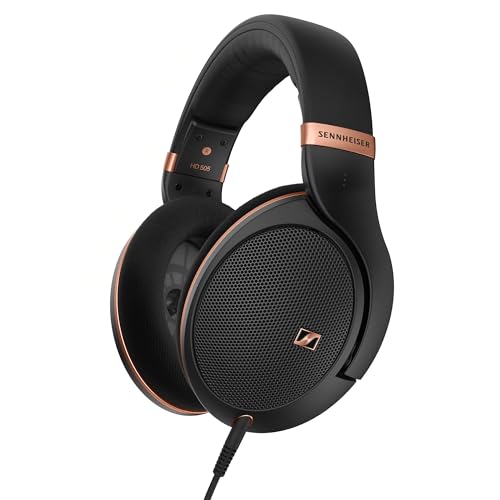
6. Sennheiser HD 505: Best New Sennheiser
Pros
- Transparent sound with controlled bass
- Spacious open-back design
- Lightweight headband with reduced clamping force
- Plush velour ear pads
- Compatible with HD 500 series cables and accessories
Cons
- Open design leaks sound
- Wired-only listening
- Included 1.8 m cable may be short for some setups
Best for: home listeners who want a clear, relaxed open-back headphone with a modern design.
The Sennheiser HD 505 is the most recent-feeling design in a group that includes several long-established studio headphones. Its appeal is not a long feature list. It is the combination of transparent sound, controlled bass, a broad open presentation, and a fit intended for long listening.
Sennheiser describes the headphone's diaphragm as an advanced laminate design. In use, that translates into a focus on crisp highs, clear mids, and bass that stays controlled rather than overwhelming. The open-back structure gives classical, acoustic, and vocal recordings space to develop. It also makes the HD 505 a natural fit for games and general home listening, provided sound leakage is acceptable.
The lightweight headband uses reduced clamping force, while plush velour ear pads help keep the fit comfortable over extended sessions. The 1.8 m cable ends in a 3.5 mm plug, a practical arrangement for a computer, phone adapter, or nearby hi-fi source. The headphones are also compatible with HD 500 series cables and accessories, which gives owners a clearer upgrade and replacement path than a permanently attached cable would.
The Sennheiser HD 599 SE is the closest comparison here. Both are open-back Sennheisers aimed at comfortable, detailed listening, but the HD 505 puts more emphasis on controlled bass and transparent sound in its description. The Philips SHP9500 is another airy alternative with 50 mm drivers, while the beyerdynamic DT 990 PRO is the better fit for listeners specifically building around a 250-ohm studio headphone.
The HD 505 is not the right answer for travel, shared rooms, or anyone who needs wireless connectivity. Its open design leaves the listener exposed to ambient noise, and the 1.8 m cable may feel limiting in a larger room. Choose it for a quiet home setup where vocal clarity, natural space, and low-clamp comfort matter more than isolation.
7. Sennheiser HD 599 SE: Best Comfort

Pros
- Spacious, balanced open-back sound
- Plush velour-covered ear pads
- Lightweight 0.57-pound design
- Detachable cable system
- Includes 3 m and 1.2 m cable options
Cons
- Open cups are unsuitable for noisy environments
- No wireless or noise cancellation
- Long cable can be cumbersome away from a desk
Best for: listeners who prioritize a soft fit and relaxed home listening.
The Sennheiser HD 599 SE is the pair to choose when comfort is not a secondary concern. Its lightweight frame and plush velour-covered pads make it particularly well suited to long sessions with albums, films, or games. The fit is more relaxed than the firm studio feel of the beyerdynamic DT 990 PRO, though comfort will always depend on head shape and personal preference.
The open-back design aims for natural, balanced audio with a spacious soundstage. Sennheiser highlights precise highs, rich mids, and controlled bass, a combination that should work especially well for classical and acoustic recordings. It does not isolate the listener, but that is part of the reason the presentation feels less closed in than the Audio-Technica ATH-M50X or ATH-M20X.
The HD 599 SE has a detachable cable system with both a 3 m 6.3 mm cable and a 1.2 m 3.5 mm cable. The longer lead works well with a home audio setup, while the shorter option is easier to manage beside a computer or compatible portable device. That flexibility makes the HD 599 SE more adaptable than a wired headphone that ships with only one long studio cable.
Compared with the Sennheiser HD 505, the HD 599 SE is the more obvious comfort-first choice, while the newer model emphasizes controlled bass and transparent sound. The Philips SHP9500 is also light and open, but the Sennheiser's two cable options make it more convenient across nearby listening setups. The ATH-M50X remains the stronger pick when sound isolation is necessary.
The weakness is the open construction. It will not keep music private, and outside noise can easily interrupt quiet passages. It is also not a portable headphone in the same sense as the HDB 630. For a listener who spends most sessions at home and wants to forget the headphones are there, however, the HD 599 SE remains an easy recommendation.
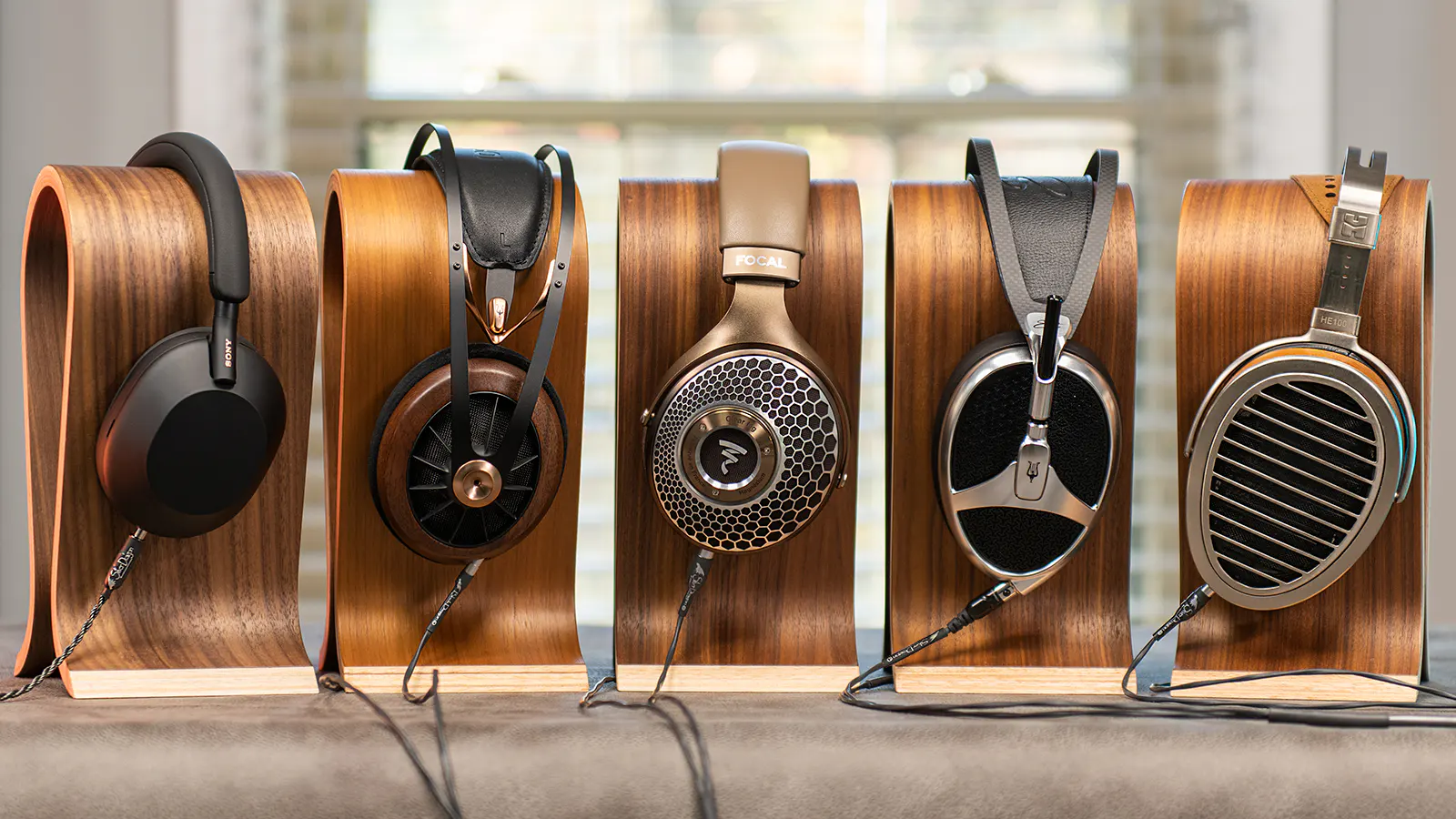
How to choose best audiophile headphones
The right pair depends less on a single headline specification than on where you listen, what drives the headphones, and how much isolation you need.
Open-back and circumaural design
Open-back headphones allow air and sound to move through the earcup, which can create a wider, more natural presentation. The trade-off is leakage in both directions, so they belong in quiet rooms rather than offices, public spaces, or shared bedrooms.
Circumaural headphones surround the ears and can provide better isolation. The ATH-M50X and ATH-M20X use that approach, making them more practical around outside noise. The right choice is simple: choose open-back for spacious home listening, or an isolating around-ear design when privacy and focus matter more.
Open-back headphones improve the sense of space only when the room around you is quiet enough to let you hear it.
Driver size and tuning
Driver size is useful context, but it is not a quality guarantee. The models here use drivers from 40 mm to 50 mm, with the Audio-Technica ATH-M20X using 40 mm drivers, the ATH-M50X using 45 mm drivers, and the Philips SHP9500 using 50 mm drivers. Tuning matters just as much: the M20X emphasizes low-frequency performance, while the Sennheiser HD 505 focuses on transparent sound and controlled bass.
Look for a tuning that matches your library. A stronger low end can make electronic, hip-hop, and rock more engaging, while a balanced midrange helps vocals, acoustic instruments, and dialogue stay intelligible.
Impedance and source compatibility
Impedance affects how demanding a headphone can be for the device driving it. The beyerdynamic DT 990 PRO is rated at 250 ohms and is intended for studio interfaces, dedicated headphone amplifiers, home hi-fi systems, and similar sources.
The other wired models in this roundup are easier to consider as general-purpose headphones because their listed features do not call for a high-impedance setup. Before buying a studio-oriented pair, check the capabilities of your interface, amplifier, computer, or adapter.
Wired and wireless connections
Wired headphones avoid battery management and can be the simplest route to consistent playback. Detachable cables, such as those on the ATH-M50X and HD 599 SE, make it easier to replace a damaged lead or choose a more suitable length. The HD 505 uses a 1.8 m cable, while the DT 990 PRO includes a 3 m coiled cable.
Wireless models add convenience, ANC, and freedom of movement. The Sennheiser HDB 630 goes further with aptX HD, aptX Adaptive, USB-C lossless playback up to 24-bit/96 kHz, and an included Bluetooth adapter. If you are weighing the trade-offs, what changes when you move from wired listening to wireless is more important than the connection label alone.
Comfort and cable length
Long sessions expose every weakness in a headband, ear pad, or cable. Velour pads appear on the DT 990 PRO, HD 505, and HD 599 SE, while Philips uses breathable ear cushions and a cushioned double-layer headband. A lighter headphone may feel easier to wear, but clamp, pad shape, and heat matter just as much.
Cable length should match the listening position. The Philips SHP9500's 1.5 m cable suits indoor desk use, while the HD 599 SE's 3 m cable is better for a home audio setup. For more context on fit and design, the differences that matter in an over-ear listening setup are worth considering before you choose.
Frequently asked questions
Are open-back headphones good for audiophile listening?
They can be excellent for quiet-room listening because the open design often creates a wider, more natural soundstage. The Philips SHP9500, beyerdynamic DT 990 PRO, Sennheiser HD 505, and Sennheiser HD 599 SE all use open-back designs. They are poor choices when you need isolation or privacy.
Which headphones are best for a noisy room?
The Audio-Technica ATH-M50X and ATH-M20X use circumaural designs that help isolate outside sound. The Sennheiser HDB 630 adds adaptive active noise cancellation and transparency mode, making it the most flexible option for changing environments.
Do the beyerdynamic DT 990 PRO headphones need an amplifier?
The DT 990 PRO in this roundup has a 250-ohm design intended for professional studio interfaces, dedicated headphone amplifiers, home hi-fi systems, and audiophile equipment. A suitable source is important if you want the headphones to perform as intended. Check your device's headphone output before choosing this model.
Are wired headphones better for sound quality?
Wired headphones avoid battery limits and wireless transmission variables, but the complete system still depends on the headphone, source, recording, and tuning. The Sennheiser HDB 630 supports USB-C lossless playback up to 24-bit/96 kHz as well as high-resolution Bluetooth formats, so wireless does not automatically mean poor fidelity.
Which pair is most comfortable for long listening sessions?
The Sennheiser HD 599 SE is the comfort-first choice, with a lightweight design and plush velour-covered ear pads. The Sennheiser HD 505 also uses a lightweight headband, reduced clamping force, and plush velour ear pads. Personal fit still matters, so these features are useful indicators rather than guarantees.
Can these headphones work for gaming?
Several can. The Sennheiser HD 505 and HD 599 SE are described as suitable for gaming, and their open designs can provide a spacious presentation in a quiet room. The Audio-Technica models are more useful when you need isolation, while none of the wired pairs includes a built-in microphone in the supplied details.
What makes a headphone audiophile-oriented?
A thoughtful tuning, clear reproduction, useful separation, and a design that suits the listening environment matter more than one isolated number. Open-back models can create a convincing sense of space, while studio monitors can offer focus and isolation. The best choice is the one whose sound and connection match the way you actually listen.
The bottom line
The Audio-Technica ATH-M50X is our top recommendation among the Best audiophile headphones because it balances clear sound, accurate low end, isolation, swiveling earcups, and a detachable cable. It is more versatile than the open-back models and more capable than the ATH-M20X, making it the easiest pair to use across music, studio work, and everyday listening.
Choose the Sennheiser HDB 630 if wireless freedom, adaptive ANC, USB-C listening, and a 60-hour battery matter more than a lightweight design. For quiet-room listening, the beyerdynamic DT 990 PRO offers the strongest studio focus, while the Sennheiser HD 599 SE is the better choice for a soft, relaxed fit.
If you are undecided, choose the ATH-M50X for flexibility, the HDB 630 for wireless listening, or the HD 599 SE for long sessions at home.
As an Amazon Associate we earn from qualifying purchases.