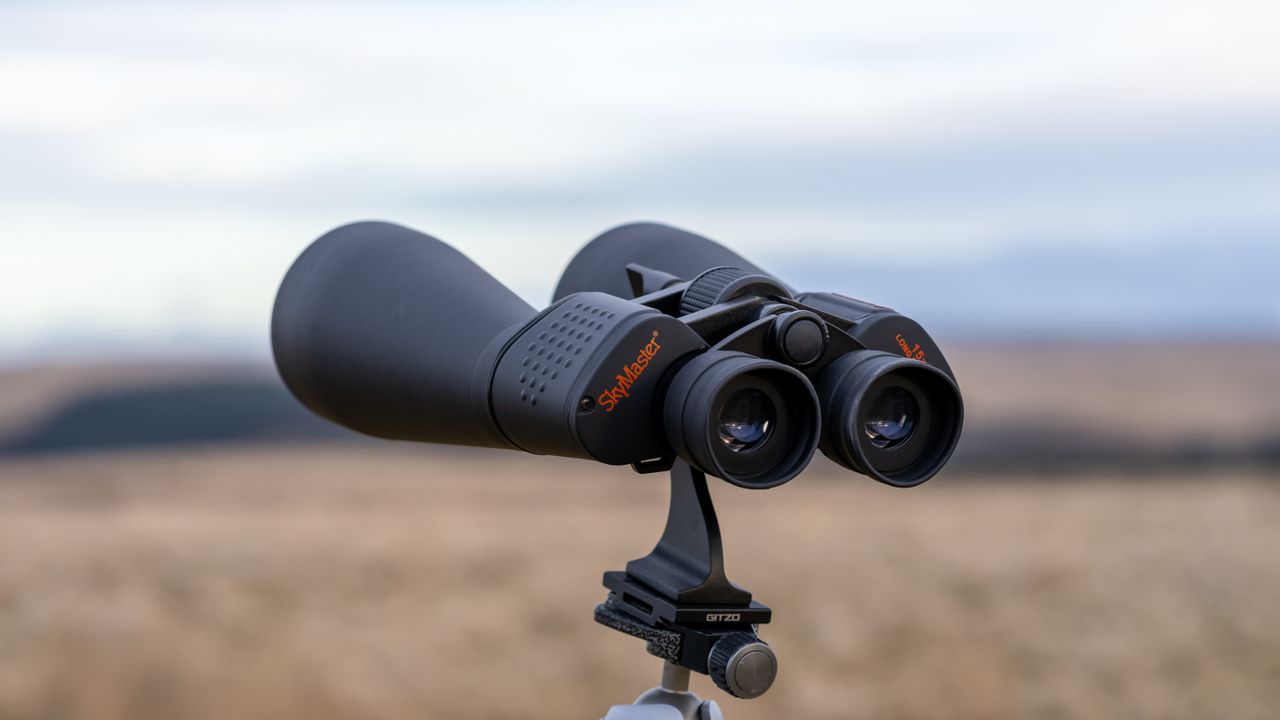

A dark sky can still feel frustrating when your binoculars show only a few bright stars and every small movement turns them into streaks. The right pair needs more than high magnification. Aperture, field of view, optical coatings, and a practical way to steady the binoculars all shape what you can actually see.
Our Best binoculars for stargazing shortlist includes easy handheld models, tripod-ready deep-sky binoculars, and one giant pair built for serious stationary observation. The Celestron SkyMaster 15x70 is the single best pick for most astronomy beginners, while the list also covers compact daytime models and much larger binoculars for experienced observers.
Comparison table
| # | Product | Award | Magnification | Objective | Best for |
|---|---|---|---|---|---|
| 1 | Celestron SkyMaster 15x70 | Best overall | 15x | 70mm | Deep-sky viewing with manageable bulk |
| 2 | Celestron Cometron 7x50 | Best for beginners | 7x | 50mm | Wide-field sky scanning |
| 3 | Celestron SkyMaster 20x80 | Best for deep-sky detail | 20x | 80mm | Brighter, closer astronomical views |
| 4 | FLYANT 20x50 | Best compact high-power option | 20x | 50mm | Travel and occasional stargazing |
| 5 | Celestron SkyMaster 25x70 | Best for long-range reach | 25x | 70mm | Stationary observation of distant targets |
| 6 | Sogries 20x80 | Best weather-sealed giant binocular | 20x | 80mm | Damp, variable observing conditions |
| 7 | Vortex Triumph HD 10x42 | Best all-purpose binocular | 10x | 42mm | Day and night versatility |
| 8 | Sogries 18x70 | Best for digiscoping | 18x | 70mm | Tripod viewing and phone capture |
| 9 | Adasion 12x42 | Best lightweight kit | 12x | 42mm | Portable observing with phone support |
| 10 | Celestron SkyMaster 25x100 | Best giant-aperture option | 25x | 100mm | Maximum light gathering from a tripod |
1. Celestron SkyMaster 15x70: Best Overall

Pros
- Strong 15x reach for star clusters and distant targets
- Large 70mm objectives gather substantial light
- BaK-4 prisms support bright, detailed views
- Built-in 1/4-inch-20 tripod adapter
- Rubber armor and water-resistant construction
Cons
- Too heavy for comfortable extended handheld use
- Requires a tripod for the steadiest astronomical views
- No tripod is included
Best for: beginners and intermediate observers who want a serious astronomy binocular without jumping straight to a giant 100mm model.
The Celestron SkyMaster 15x70 gets the central astronomy trade-off right. It has enough magnification to make the Moon feel substantially closer and enough aperture to show more than a small handheld daytime binocular, but it does not reach the extreme bulk of the 25x100 model later in this list. It is still a large instrument, yet the 15x power makes it a sensible first step into tripod-supported sky watching.
The 70mm objective lenses are the reason this binocular works so well after dark. A larger front lens gathers more light, which helps keep dim clusters and deep-sky targets visible. Celestron pairs that aperture with BaK-4 prisms, intended to improve light throughput and preserve brighter, more detailed views in low light. The 15x magnification also adds useful separation between stars that can blur together at lower power.
The built-in 1/4-inch-20 adapter attaches to a conventional photo tripod, which is important rather than a minor convenience. At this magnification, hand tremor can quickly obscure the detail the optics are trying to show. The rubber-armored housing gives the binoculars a secure grip, and the water-resistant exterior provides some protection when a clear evening turns damp. Celestron also includes a limited lifetime US warranty and US-based technical support.
Compared with the Celestron Cometron 7x50, this model shows more detail but gives up the Cometron's effortless wide-field scanning. The Celestron SkyMaster 20x80 gathers more light and reaches farther, though it weighs 4.8 pounds and demands a more substantial setup. The weakness here is simple: these are not casual grab-and-go binoculars. Skip them if you expect to hold them at eye level for long sessions. For a buyer who wants one capable astronomy pair and is prepared to use a tripod, this is the most balanced choice in the group.
2. Celestron Cometron 7x50: Best for Beginners

Pros
- Easy 7x magnification for relaxed handheld viewing
- 50mm objectives gather useful light
- Broad 6.6-degree angular field of view
- Multi-coated optics improve light transmission
- Built-in tripod socket
Cons
- Lower magnification reveals less fine detail
- Close focus is 26.2 feet
- Tripod adapter is not included
Best for: a first pair for learning constellations, scanning the Milky Way, and viewing large celestial objects.
The Celestron Cometron 7x50 is the binocular we would hand to someone who has never explored the night sky. Its 7x magnification is forgiving, so finding a target does not require the same precise aiming or tripod support demanded by the high-power SkyMaster models. Point it toward a broad section of sky and the generous field makes it easier to understand where constellations and bright objects sit in relation to one another.
Its 50mm objectives provide a useful amount of light gathering without turning the instrument into a large mounted optic. Celestron uses multiple anti-reflective coatings to boost transmission, contrast, and resolution. The 6.6-degree angular field is the standout specification. It is wide enough for panning across the Milky Way, looking for satellites, and taking in large star clusters rather than isolating one small patch of sky.
The Cometron also works during the day. Its listed close focus is 26.2 feet, so it is not designed for nearby subjects, but it can handle scenic viewing, hiking, and birdwatching at longer distances. A built-in tripod socket allows stable extended viewing if you want it, though the adapter is not included. The binoculars weigh 2 pounds and measure 9 inches long, so they are far easier to carry than the 4.8-pound SkyMaster 20x80.
The trade-off is obvious when placed beside the Celestron SkyMaster 15x70. The Cometron gives up reach and deep-sky detail, but it is less intimidating and much easier to use without accessories. If you want close views of lunar features or distant objects, choose the SkyMaster instead. If your priority is learning the sky, following broad star fields, and keeping the experience relaxed, this is the more approachable starting point.
3. Celestron SkyMaster 20x80: Best for Deep-Sky Detail

Pros
- 20x magnification reveals more fine detail
- 80mm objectives provide strong light gathering
- BaK-4 prisms support bright low-light views
- Built-in 1/4-inch-20 tripod adapter
- Water-resistant rubber-armored body
Cons
- 4.8-pound weight makes handheld use impractical
- Tripod is required for stable viewing
- Larger and less portable than the 15x70
Best for: observers who want a brighter, closer look at deep-sky targets from a fixed setup.
The Celestron SkyMaster 20x80 is where astronomy binoculars stop feeling like general-purpose optics and start behaving like a small observing system. The 20x magnification brings a noticeably tighter view than the Cometron 7x50, while the 80mm objectives collect more light than the 70mm SkyMaster. That combination is useful for observers who want star clusters and dimmer targets to occupy more of the view.
The 80mm aperture is the key reason to choose this over the 15x70. Bigger objectives can gather more light, but the benefit only matters if the binoculars remain steady. At 4.8 pounds, this is not a realistic long-session handheld instrument. The built-in 1/4-inch-20 adapter is designed for a traditional tripod, and using it is essential for extracting the detail available from the 20x optical power.
BaK-4 prisms are specified to maximize light throughput, helping produce brighter and more detailed images at night or around dawn and dusk. The rubber armor protects the housing and improves grip, while the water-resistant exterior gives it some resilience in changing conditions. The listed dimensions are 9 inches long, 4.7 inches wide, and 4.8 pounds, which should shape where you plan to store and use it.
The Celestron SkyMaster 25x70 offers more magnification but not the same 80mm light-gathering aperture, while the Sogries 20x80 matches the core optical size and adds sealing details and a carrying case. The Celestron's weakness is its demanding physical setup. It is a poor fit for someone who wants to wander around holding binoculars. For an observer with a steady tripod and a dedicated viewing spot, it is one of the clearest routes to more deep-sky detail without moving to a telescope. Readers comparing binoculars with telescopes may also want to consider how a telescope changes the way you explore the night sky.
4. FLYANT 20x50: Best Compact High-Power Option

Pros
- 20x magnification in a compact design
- 50mm objectives balance reach and size
- 168-yard field of view at 1, 000 yards
- BaK-4 Porro prisms and fully multi-coated lenses
- Rubberized waterproof body with textured grip
Cons
- Smaller aperture than the giant astronomy models
- High magnification can be difficult to hold steady
- Waterproof construction should not be immersed
Best for: travelers who want high magnification for mixed outdoor use and occasional night-sky viewing.
The FLYANT 20x50 takes a different approach from the dedicated Celestron astronomy binoculars. Its compact size and 1.96-pound weight make it easier to pack for camping, hiking, cruises, and sporting events. The 20x magnification sounds ambitious in a portable body, and it gives distant subjects plenty of reach, but it also means you need a steadier grip than you would with the Cometron.
For terrestrial viewing, the stated field of view is 168 yards at 1, 000 yards. That gives the FLYANT a useful balance between magnification and the ability to follow a distant subject. For astronomy, the 50mm objectives collect less light than the 70mm and 80mm models, so this is not the pair to choose when faint deep-sky visibility is the main goal. It is better suited to bright lunar viewing, open star fields, and mixed day to night use.
The optical design includes BaK-4 Porro prisms, multilayer-coated aspherical lens elements, and green FMC coating on the objective lens. Those details are intended to improve transmission, brightness, contrast, and sharpness. A 26mm eyepiece is designed to fit the eye comfortably, while the rubber center focus wheel is meant to make precise adjustment easier. The body has a textured rubber grip and waterproof construction, though the product guidance says not to immerse it.
Against the Celestron SkyMaster 15x70, the FLYANT is lighter and more versatile to carry, but the Celestron has a larger objective and a more astronomy-specific design. The Adasion 12x42 is easier to steady and includes a phone adapter and tripod, but it gives up this model's reach. Skip the FLYANT if you want the brightest possible deep-sky views. Choose it if your binoculars need to serve camping, wildlife, distant scenery, and occasional stargazing without becoming a dedicated piece of observing equipment.
5. Celestron SkyMaster 25x70: Best for Long-Range Reach

Pros
- Highest magnification among the 70mm Celestron models
- 70mm objectives support low-light viewing
- BaK-4 prisms improve light throughput
- Built-in tripod adapter
- Rubber armor and water-resistant exterior
Cons
- 25x magnification makes tripod use essential
- Heavier and less forgiving than lower-power binoculars
- No tripod included
Best for: stationary observers who prioritize reach for lunar, astronomical, and long-distance terrestrial viewing.
The Celestron SkyMaster 25x70 is a specialist choice built around reach. At 25x, it shows a tighter, more magnified view than the SkyMaster 15x70 and 20x80. That can make distant terrestrial subjects and lunar details more engaging, but it narrows the margin for movement. This is not a binocular to casually lift toward the sky and expect a stable image.
Its 70mm objectives retain the light-gathering capability that makes the SkyMaster family suitable for astronomy. BaK-4 prisms are intended to maximize light throughput, supporting brighter and more detailed images in dim conditions. The aperture is smaller than the 80mm models, but the 25x magnification gives this binocular a distinct purpose. It is about bringing a distant target closer, not presenting the broadest sweep of stars.
A traditional photo tripod connects through the built-in 1/4-inch-20 adapter. That accessory is not included, and it should be treated as part of the setup rather than an optional extra. The rubber-armored housing offers a secure grip and some impact protection, while the water-resistant exterior helps with unexpected rain. At 3.1 pounds, it is lighter than the 20x80 Celestron, but still substantial for handheld use.
The Celestron SkyMaster 15x70 is easier to aim and gives a more forgiving view, while the Celestron SkyMaster 25x100 goes much further in aperture and scale. This model makes sense between them for someone who wants 25x reach without carrying the 8.6-pound 100mm binocular. Avoid it if broad star-field scanning matters more than magnification. Pick it when your observing spot is fixed and your main question is how much detail a distant object can reveal.
6. Sogries 20x80: Best Weather-Sealed Giant Binocular

Pros
- 20x magnification with 80mm objectives
- BaK-4 prisms support bright low-light views
- O-ring sealing helps keep dust out
- Waterproof rubber-armored construction
- Includes a leather carrying bag
Cons
- Weighs about 4.59 pounds
- Requires a tripod for long viewing sessions
- Less established feature set than the Celestron equivalent
Best for: observers who want large-aperture binoculars with extra protection for damp or dusty outdoor conditions.
The Sogries 20x80 has the same headline combination as the Celestron SkyMaster 20x80: 20x magnification and 80mm objectives. That makes the comparison unusually direct. It is a large, tripod-oriented binocular intended to show bright, detailed views of the Moon, star clusters, and deep-sky targets rather than replace a lightweight pair for walking around.
The BaK-4 prisms are designed to enhance light transmission during dusk, dawn, and night viewing. More importantly, the 80mm objectives give this model the aperture needed to gather substantial light. The product lists a weight of about 4.59 pounds, so a tripod is not merely helpful. It is the sensible way to avoid arm fatigue and vibration during a long session.
Weather protection is this model's clearest distinction. Its rubber-armored housing is described as waterproof, and O-ring sealing is intended to keep dust and debris from entering the optical system. Those features make it appealing for humid locations, sudden rain, or outdoor storage and transport where a less protected binocular would need more care. A carrying bag is included for moving the binoculars between locations.
The Celestron SkyMaster 20x80 is the more obvious comparison and offers the same core magnification and aperture, while the Sogries emphasizes sealing and included carrying protection. The weakness is that its bulk still limits spontaneous use, despite the weather-resistant design. Someone seeking a compact travel binocular should look at the Vortex Triumph HD 10x42 instead. This Sogries is for a user who already accepts tripod viewing and wants large optics that can handle less predictable outdoor conditions.
7. Vortex Triumph HD 10x42: Best All-Purpose Binocular

Pros
- Lightweight 0.99-pound body
- Fully multi-coated HD optical system
- Waterproof, fog-proof, and shockproof construction
- Adjustable eyecups and diopter
- Includes neck strap and GlassPak harness
Cons
- 42mm objectives gather less light than astronomy giants
- 10x magnification shows less detail than 15x and higher models
- Not the first choice for faint deep-sky targets
Best for: hikers, travelers, and general observers who want one binocular for daytime use and casual stargazing.
The Vortex Triumph HD 10x42 is the most practical all-rounder here. It weighs just under 1 pound, has a full-size binocular shape, and comes with a neck strap and GlassPak harness for carrying. That makes it far more likely to be with you when the sky clears unexpectedly than a 4 to 8-pound astronomy binocular stored at home.
Its 10x magnification is a comfortable middle ground for handheld viewing. The 42mm objectives do not gather as much light as the Cometron 50mm or the Celestron 70mm and 80mm models, so the Triumph is not intended for the faintest targets. It can still provide a pleasant view of the Moon, brighter stars, and broad night scenes, while its daylight performance is more flexible than the dedicated high-power choices.
Vortex specifies an HD optical system with fully multi-coated lenses, optimized glass elements, reduced chromatic aberration, color fidelity, edge-to-edge sharpness, and light transmission. Adjustable rubber eyecups and an adjustable diopter help different users find a comfortable view. Nitrogen purging makes the binoculars waterproof and fog-proof, and the polycarbonate chassis with full rubber armor is designed to resist shocks.
Compared with the Adasion 12x42, the Triumph is lighter and focuses more on rugged all-purpose carry, while the Adasion includes a phone adapter and short tripod. The Celestron Cometron 7x50 is more astronomy-friendly because its objectives are larger and its field of view is wider. Skip the Triumph if deep-sky observing is your primary hobby. For someone who hikes, watches wildlife, travels, and occasionally looks up at the stars, its portability is the feature that matters most. For daytime subjects, it is also worth considering the optical traits that help with distant wildlife viewing.
8. Sogries 18x70: Best for Digiscoping

Pros
- 18x magnification and 70mm objectives
- BaK-4 prisms and fully multi-coated lenses
- IPX7 waterproof and fog-proof construction
- Built-in tripod thread and included adapter
- Universal smartphone adapter included
Cons
- Weighs about 4.67 pounds
- Tripod use is essential at 18x
- Phone adapter compatibility still depends on phone width
Best for: stationary astronomy or wildlife observers who want to capture views through the binoculars.
The Sogries 18x70 is aimed at observers who want a large binocular and a straightforward path to phone photography. Its 18x magnification sits below the 20x and 25x options here, which makes the view slightly easier to manage, while the 70mm objective still provides the light-gathering capacity expected from a dedicated astronomy model.
Sogries pairs the aperture with BaK-4 prisms and fully multi-coated lenses. The stated goal is stronger transmission, edge-to-edge sharpness, and contrast in twilight and dark-sky conditions. The metal barrel and rubber armor give it a sturdier feel than a lightweight compact binocular, but that construction contributes to the 4.67-pound weight. A tripod is the practical foundation for the setup, not a way to avoid using one.
The included 1/4-inch-20 tripod adapter is a useful distinction from several Celestron models that provide the binocular mounting thread but do not include a tripod. The universal smartphone adapter fits phones between 2.09 and 3.54 inches wide, giving you a way to record star clusters, lunar views, or wildlife. Phone alignment can still take patience, and images through binoculars are especially sensitive to vibration.
The Celestron SkyMaster 15x70 is simpler and easier to recommend for a first astronomy setup, while this model is more compelling if phone capture is part of the plan. Its IPX7 waterproof and fog-proof construction also gives it stronger stated protection than the water-resistant Celestron bodies. Skip it if you want lightweight handheld viewing or if you have no interest in recording what you see. Choose it when the binoculars will stay on a tripod and the included imaging accessories will get regular use.
9. Adasion 12x42: Best Lightweight Kit

Pros
- 12x magnification in a 1.25-pound design
- 367-yard field of view at 1, 000 yards
- BaK-4 prisms and fully multi-coated lenses
- Universal phone adapter and tripod included
- IPX7 waterproof and fog-proof body
Cons
- 42mm objectives are smaller than dedicated astronomy models
- Included 2.2-inch tripod is intended for compact use
- Less light gathering than the Cometron 7x50
Best for: travelers who want a portable binocular kit with basic phone and tripod support.
The Adasion 12x42 is a travel-oriented binocular that happens to be well suited to casual stargazing. At 1.25 pounds, it is dramatically easier to carry than the giant astronomy models. The 12x magnification gives a little more reach than the Vortex Triumph HD 10x42, though it also makes a steady grip more important. Its stated field of view is 367 yards at 1, 000 yards, a useful characteristic for scenery, wildlife, and broad sky viewing.
The 42mm objectives limit how much light reaches your eyes compared with the 50mm Cometron and the 70mm and 80mm models. That does not make the Adasion unsuitable for the Moon or bright star fields, but it does make the choice clear for anyone hoping to pursue faint deep-sky objects. BaK-4 prisms and fully multi-coated lenses are intended to improve color accuracy, reduce dark edges, and maximize transmission in dim conditions.
This is the most complete small kit in the roundup. It includes a universal phone adapter, a 360-degree swivel, and an extendable 2.2-inch tripod for steady photos and video. Twist-up eyecups support eyeglass wearers, with listed eye relief from 13.6mm to 19.6mm, and the center focus wheel provides familiar adjustment. IPX7 waterproof and fog-proof construction, a crossbody case, and a padded shoulder strap make it suitable for travel.
The Vortex Triumph HD 10x42 is lighter and has a more explicitly rugged optical system, while the Adasion offers more magnification and bundled phone support. The Celestron Cometron 7x50 is the stronger astronomy pick for wide, brighter sky scans because its objectives are larger. Choose the Adasion if portability and accessories matter as much as astronomy. If you mainly want to study faint objects, its compact 42mm aperture is the reason to skip it.
10. Celestron SkyMaster 25x100: Best Giant-Aperture Option

Pros
- Largest 100mm objectives in the roundup
- 25x magnification for detailed distant views
- BaK-4 prisms support bright images
- Built-in 1/4-inch-20 tripod adapter
- Rubber armor and water-resistant exterior
Cons
- Weighs 8.6 pounds
- Requires a substantial tripod setup
- Not practical for handheld or casual observing
Best for: experienced observers who want maximum aperture from a binocular and have a stable mounting location.
The Celestron SkyMaster 25x100 is the uncompromising option. Its 100mm objectives are the largest in this roundup, and the 25x magnification provides the reach of the 25x70 with a much larger light-gathering front end. This is designed for deep-sky observation from one place, not for carrying on a hike or holding from a reclining chair.
The aperture is the headline advantage. Larger objectives can collect more light, which is central to making dim astronomical targets easier to see. BaK-4 prisms are specified to maximize light throughput, and Celestron positions the binoculars for bright, sharp views in low-light conditions. The 25x magnification can reveal more detail than the 15x70 Cometron, but it also narrows the field and magnifies every vibration.
At 8.6 pounds, this binocular needs a tripod that can support both its weight and the leverage created by its long optical body. The built-in 1/4-inch-20 adapter connects to a traditional photo tripod, but the tripod is not included. The rubber-armored housing gives a secure grip while moving it into position, and the water-resistant exterior offers protection from unexpected rain. Once mounted, it is a dedicated observing instrument rather than a general-purpose binocular.
The Celestron SkyMaster 25x70 is easier to transport and has the same magnification, while the Celestron SkyMaster 20x80 is a more manageable alternative with a wider aperture-to-magnification balance. The real weakness is its size. Skip this model unless you have a robust mount and a reliable observing site. For an experienced buyer who wants the greatest light-gathering capacity in this group and accepts a permanent or semi-permanent setup, this is the top-end choice.
How to choose best binoculars for stargazing
The right astronomy binocular depends on how much light you need, how steadily you can mount it, and whether you want broad sky views or close detail.
Aperture
Aperture is the diameter of each objective lens, measured in millimeters. Larger objectives gather more light, which can make dimmer stars, clusters, and deep-sky targets easier to see. The 42mm models are easier to carry, while the 70mm, 80mm, and 100mm binoculars show why large astronomy instruments need a tripod.
Aperture also adds bulk. Do not choose a 100mm binocular simply because the number is larger if you will rarely set it up. A 50mm or 70mm pair may show more because you are willing to take it outside more often.
Magnification
Magnification determines how large a target appears, but high power also magnifies hand movement and usually narrows the field of view. The 7x Cometron is easy to aim and useful for sweeping across constellations. The 15x70 and 20x80 models offer a stronger balance for astronomy. At 25x, a tripod becomes essential for a stable view.
High magnification is only useful when the mount is steady enough to preserve the detail it reveals.
Field of view
A wide field makes it easier to locate constellations, scan the Milky Way, and keep large clusters in view. The Cometron's 6.6-degree angular field is especially useful for beginners. High-power binoculars generally show a tighter section of sky, which can be better for detail but less forgiving when you are searching for a target.
For terrestrial use, check whether the field is stated at a particular distance. The FLYANT lists 168 yards at 1, 000 yards, while the Adasion lists 367 yards at 1, 000 yards. Those figures describe how much ground you can see at that distance and are not directly interchangeable with an angular astronomy field.
Optical coatings and prisms
Multi-coated or fully multi-coated lenses are designed to reduce reflections and improve light transmission. BaK-4 prisms are common in the larger astronomy models in this list and are intended to support brighter, sharper views. These features matter most in low light, where lost transmission and internal reflections are more noticeable.
Do not treat coating language as a guarantee of identical performance across brands. The complete optical design, alignment, focus adjustment, and construction all affect the final view. Still, a stated multi-coated optical system and BaK-4 prisms are useful signs that a binocular is intended for more than bright daytime scenes.
Stability and mounting
A tripod socket is nearly mandatory once binoculars reach 15x magnification and large objective sizes. The Celestron models use a built-in 1/4-inch-20 adapter, while the Sogries 18x70 includes a tripod adapter and the Adasion includes a small tripod. The mount must be stable enough for the binocular's weight and length.
Handheld viewing can work with lighter 7x, 10x, or 12x models, though leaning against a surface still helps. If your priority is long sessions, choose the binocular and tripod as one system. A large optical instrument without a reliable way to steady it will be tiring and frustrating.
Weather protection and portability
Water-resistant, waterproof, fog-proof, and O-ring-sealed designs offer different levels of protection, so read the exact wording rather than assuming every sealed binocular can be submerged. The FLYANT specifically warns against immersion, while the Sogries 20x80 lists O-ring sealing and the Adasion and Sogries 18x70 list stronger waterproof protection.
Portability matters just as much. The Vortex Triumph HD weighs about 0.99 pounds, while the Celestron SkyMaster 25x100 weighs 8.6 pounds. A compact binocular fits more activities, but a giant pair can gather substantially more light. Decide where and how you will observe before choosing between those extremes.
Frequently asked questions
Are binoculars good for stargazing?
Yes. Binoculars are especially useful for learning the sky, scanning star fields, viewing the Moon, and finding large clusters. They provide a wider, more natural view than many narrow-field instruments, though a telescope can show smaller or fainter targets with greater detail.
What magnification is easiest for astronomy binoculars?
Seven to 12x is easiest for handheld use because it is less sensitive to movement. Fifteen power and above can show more detail, but these binoculars are usually better on a tripod. The Celestron Cometron 7x50 is the most forgiving starting point, while the SkyMaster 15x70 is a stronger mounted choice.
Do I need a tripod for 20x80 binoculars?
A tripod is strongly recommended. The combination of 20x magnification and an 80mm objective makes handheld shaking obvious, and the binoculars in this size range weigh several pounds. A stable mount lets you use the optical detail instead of constantly correcting the view.
Are 25x100 binoculars better than a telescope?
They are not automatically better. A 25x100 binocular provides a two-eyed, wide observing experience and substantial light gathering, while a telescope can offer higher magnification and more specialized control. The Celestron SkyMaster 25x100 is best for an observer who wants a large binocular view and has a suitable tripod.
Can I use astronomy binoculars during the day?
Yes, though large high-power models are less convenient for moving subjects and handheld use. The Celestron Cometron, FLYANT, Vortex Triumph HD, and Adasion are more flexible for daytime viewing. Close-focus performance varies, so large astronomy binoculars are generally better for distant scenery and wildlife than nearby subjects.
Can I take phone photos through binoculars?
Some models include phone adapters. The Sogries 18x70 includes a universal smartphone adapter, and the Adasion 12x42 includes a universal phone adapter with a 360-degree swivel. Phone alignment and vibration control still matter, so a tripod is important for usable images.
What should eyeglass wearers look for?
Twist-up eyecups and adequate eye relief make it easier to see the full field while wearing glasses. The Adasion lists eye relief from 13.6mm to 19.6mm and has twist-up eyecups. Adjustable eyecups are also specified on the Vortex Triumph HD.
The bottom line
The Celestron SkyMaster 15x70 is our top recommendation for Best binoculars for stargazing because it balances 15x reach, 70mm light gathering, BaK-4 prisms, and a tripod-ready design without becoming as extreme as the 25x100 model. The Celestron Cometron 7x50 is the better first pair for wide-field scanning and simple handheld use.
Choose the Celestron SkyMaster 20x80 or Sogries 20x80 if deep-sky brightness matters more than portability. Choose the Vortex Triumph HD 10x42 or Adasion 12x42 if these binoculars will spend more time on hikes and trips than under a dark sky.
If you are undecided, start with the Celestron SkyMaster 15x70 if you can use a tripod, or the Cometron 7x50 if you want the simplest path to exploring the night sky.
As an Amazon Associate we earn from qualifying purchases.