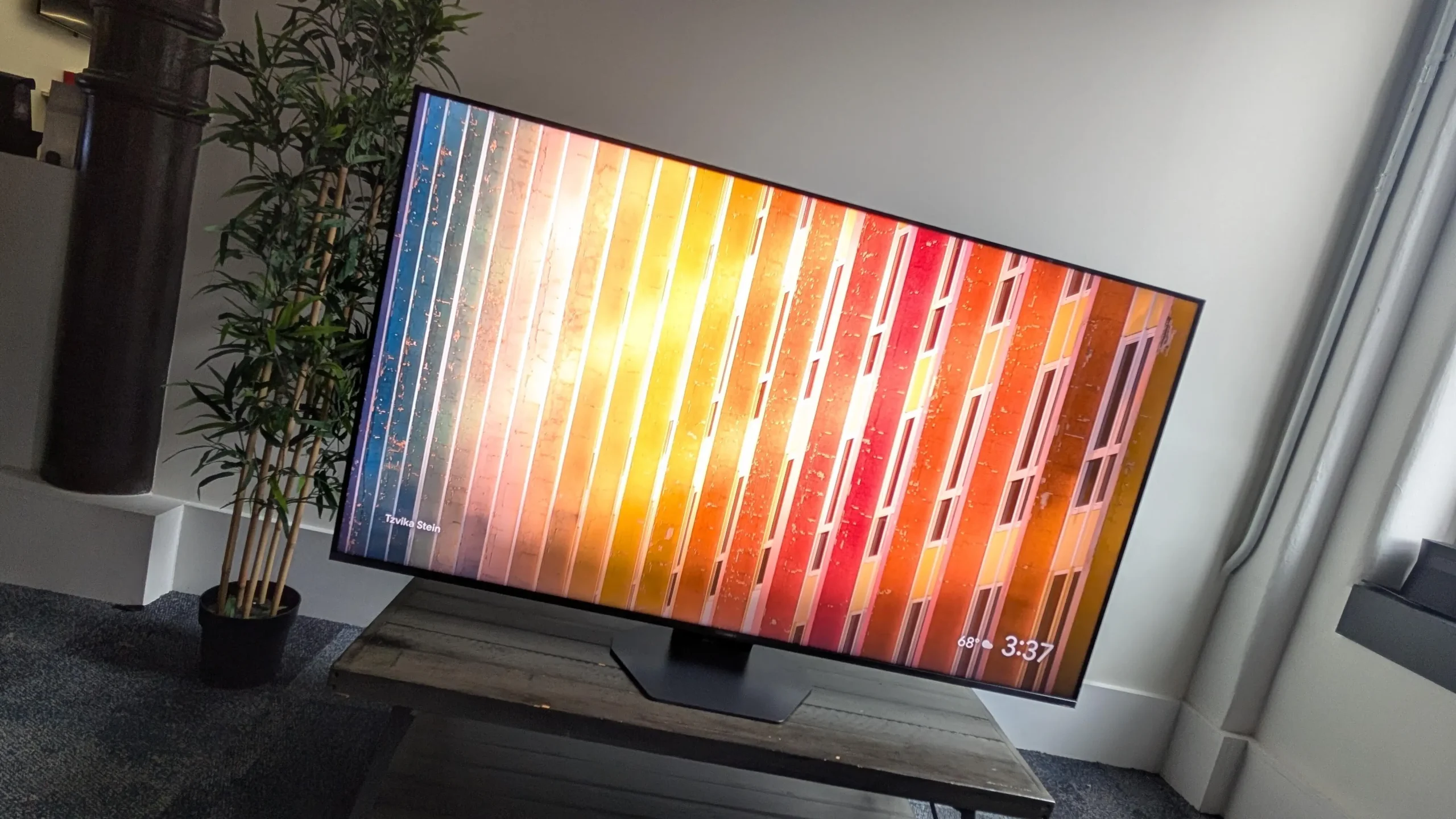

A 55-inch television can make a living room feel like a cinema, but the wrong one can leave you squinting through gray blacks, blurry sports, or a cluttered smart menu. The challenge is finding a screen that keeps the essentials, sharp 4K detail, useful HDR, clear streaming access, and responsive motion, without adding features you will never use.
Our Best Budget 55 Inch TV picks range from simple Roku models to Mini LED screens with high refresh rates for gaming. The Roku Select Series is the best starting point for most people, while the Samsung, TCL, Hisense, and LG models offer stronger picture or gaming features in specific situations.
Comparison table
| # | Product | Award | Panel and picture | Motion | Smart platform | Best for |
|---|---|---|---|---|---|---|
| 1 | Roku Select Series | Best overall | 4K QLED, HDR10 | Smart Picture processing | Roku TV | Simple streaming |
| 2 | Samsung U8000H | Best Samsung entry model | Crystal UHD, 4K | Up to 4K 60Hz | Samsung smart TV | Everyday viewing |
| 3 | Samsung M70H Mini LED | Best Mini LED step-up | Mini LED, 4K | DLG 120Hz | Samsung smart TV | Sports and HDR |
| 4 | Hisense E6 Cinema | Best format support | Hi-QLED, 4K UHD | Motion Rate 120 | Fire TV | Movies and mixed streaming |
| 5 | Insignia QF Series | Best connected budget model | QLED, 4K UHD | Direct LED | Fire TV | Consoles and peripherals |
| 6 | Roku Plus Series | Best Roku picture | QLED Mini LED, 4K | AI Smart Picture Max | Roku TV | Roku users wanting better contrast |
| 7 | TCL Q65 | Best Google TV option | QLED, 4K UHD | Motion Rate 240 | Google TV | HDR streaming and gaming |
| 8 | Samsung M80H | Best high-refresh Samsung | Mini LED, 4K | 144Hz with VRR | Samsung smart TV | Fast gaming |
| 9 | TCL T7 | Best gaming-focused pick | QLED, 4K | 120Hz panel | Google TV | Console and PC gaming |
| 10 | LG QNED73 | Best LG interface | QNED Mini LED, 4K | ALLM and FreeSync Premium | webOS | LG smart-home households |
1. Roku Select Series: Best Overall

Pros
- Straightforward Roku home screen
- QLED color with 4K detail
- HDR10 support and picture optimization
- Voice remote with lost remote finder
- Bluetooth headphone mode
Cons
- Motion performance is limited to 4K 60Hz
- HDR support is less extensive than some rivals
- No Mini LED backlight
Best for: viewers who want a simple 55-inch streaming TV that is easy to live with.
The Roku Select Series is the television we would recommend first to most people who want a low-fuss 55-inch screen. Its appeal is not a long list of ambitious claims. It is the way the Roku interface puts apps, live channels, search, and personalized picks in one uncluttered place. Setup is designed to take minutes, and the enhanced voice remote can search across apps, launch favorites, and help locate itself when it disappears into the sofa.
The picture has the right foundation for ordinary living-room viewing. The 4K resolution gives films, sports, and streaming shows a clean level of fine detail, while the QLED screen and HDR10 support are intended to produce brighter, more accurate color than a basic LED screen. Roku's Smart Picture processing also cleans up incoming signals and chooses a picture mode automatically. That matters when a household moves between modern 4K streams, older broadcasts, and lower-quality clips, since the set is not relying on one fixed adjustment for everything.
Motion is the main compromise. The Select Series is built around up to 4K 60Hz performance, which is suitable for normal television, films, and most console play, but it is not the pick for someone chasing 120Hz or 144Hz gaming. The Samsung M70H Mini LED and Samsung M80H are much more ambitious for fast sports and games, while the TCL T7 has a 120Hz panel. The Roku's advantage is calmer everyday operation. Its voice controls work with Roku Voice, Siri, Alexa, and Google Assistant, and AirPlay makes it easy to share content from Apple devices.
Audio receives more attention here than it does on many uncomplicated televisions. The set is designed for clear speech and louder sound, and Bluetooth Headphone Mode lets one person listen privately without waking the house. That does not make it a substitute for a dedicated soundbar, but it is a useful feature for late-night viewing. The frameless design also keeps attention on the screen rather than a thick border.
Skip this model if you specifically need broad HDR format support, Mini LED contrast, or high-refresh gaming. The Hisense E6 Cinema handles Dolby Vision and Dolby Atmos, and the Roku Plus Series adds Mini LED backlighting and a built-in subwoofer. For a household that wants a responsive interface, a good-sized 4K QLED screen, voice search, and very little menu friction, the Select Series remains the most sensible starting point.
2. Samsung U8000H: Best Samsung Entry Model
Pros
- 4K upscaling for older content
- Crystal Processor sharpens detail
- Color Booster adds intensity
- Smooth 4K 60Hz motion
- Samsung TV Plus free content
Cons
- No QLED or Mini LED backlight listed
- Motion ceiling is 60Hz
- Less gaming-focused than Samsung's M series
Best for: Samsung fans who want a restrained 4K television for shows, films, sports, and free channels.
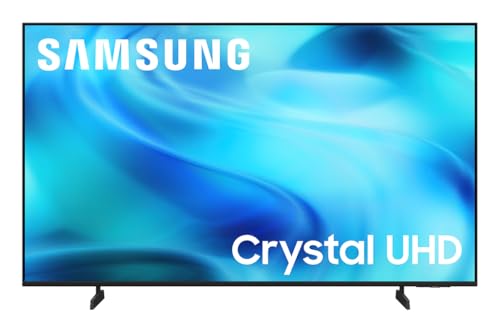
The Samsung U8000H is the straightforward Samsung choice in this group. It does not try to compete with the Mini LED models on contrast or refresh rate. Instead, it focuses on making regular television look clean and colorful, with a Crystal Processor that enhances color and sharpens detail. For a viewer whose week is mostly made up of broadcast television, streaming series, and occasional sports, that simplicity can be more useful than a gaming specification sheet.
Its 4K resolution gives the screen four times the resolution of 1080p, and the built-in upscaling is important because not every program arrives in native 4K. Samsung says the processor upgrades lower-resolution content to crisp 4K clarity. That should help older shows and standard HD streams appear more natural on a large 55-inch panel. Color Booster is intended to increase intensity across reds, blues, and other shades, though the model does not have the QLED layer found on the Roku Select Series, TCL Q65, or Hisense E6 Cinema.
The set supports up to 4K 60Hz performance through Motion Xcelerator. That is enough for familiar television viewing and smooth sports motion when the source and processing cooperate. It is not the right Samsung if gaming response is the reason for upgrading. The Samsung M70H offers DLG 120Hz, and the M80H reaches 144Hz with variable refresh rate technology. Those models are better suited to fast games, while the U8000H makes more sense when a console is an occasional source rather than the center of the room.
Samsung's smart content is a strong part of the ownership experience. Samsung TV Plus provides more than 2, 700 free streaming options, including more than 750 subscription-free channels, according to the product information. That gives the television plenty to show immediately, although the interface is a different experience from Roku TV, Google TV, or Fire TV. The choice comes down to which ecosystem the rest of the household already understands.
The weak point is the lack of a more advanced backlight or a broad collection of cinema-focused HDR features in the supplied specifications. The U8000H is not the screen we would choose for dramatic dark-room films when the Samsung M70H is available, and its 60Hz limit rules it out for serious gaming. Choose it for reliable 4K upscaling, recognizable Samsung processing, and easy access to free television, not for cutting-edge picture hardware.
3. Samsung M70H Mini LED: Best Mini LED Step-Up

Pros
- Mini LED backlighting
- Supreme Mini LED dimming
- DLG 120Hz motion
- One billion color claim
- Gaming Hub and Soccer Mode
Cons
- No Dolby Vision listed
- Smart platform differs from Roku and Google TV
- The feature set may be more than casual viewers need
Best for: sports fans and gamers who want stronger contrast without moving to a flagship television.
The Samsung M70H is where this list starts to feel like a meaningful picture upgrade rather than a simple 55-inch replacement. Mini LED backlighting gives Samsung more control over brightness and darkness than the U8000H's supplied specifications suggest. Its Supreme Mini LED Dimming feature is designed to create deeper contrast and brighter highlights, which is especially useful in night scenes, stadium shots, and games with bright effects against dark backgrounds.
Samsung pairs that backlight with a 4K Mini LED processor and Pure Color Spectrum technology. The company describes the panel as capable of one billion true-to-life colors, with more convincing reds, blues, and greens. The important point is not the large color count by itself. It is that Mini LED precision and color processing work together to make highlights more distinct and saturated scenes less flat. The M70H is a more convincing HDR-oriented choice than the Samsung U8000H, even though Dolby Vision is not listed for it.
Fast content is another reason to pick this model. Motion Xcelerator plus DLG 120Hz is aimed at games and sports, and Samsung includes a Soccer Mode that optimizes motion and color for the field. That makes the M70H a much better fit for a room where live sport is watched every week. It still does not reach the Samsung M80H's 144Hz specification, but 120Hz is a clear step beyond the Select Series and U8000H for rapid movement.
The Gaming Hub gathers console, cloud, and gaming apps in one place, with recommendations designed to make games easier to find. This does not replace the need for a console or compatible service, but it makes the television feel more intentional as a gaming display. Compared with the TCL Q65, the M70H's Mini LED emphasis is the stronger reason to choose it. Compared with the TCL T7, it is less clearly aimed at high-refresh PC gaming.
Its real limitation is format and ecosystem flexibility. Viewers who specifically want Dolby Vision should look at the Hisense E6 Cinema, Insignia QF Series, TCL Q65, or TCL T7 instead. The Samsung platform is also a better fit for households already using Samsung services than for someone who wants Roku's stripped-back layout. Still, if brighter HDR highlights, deeper blacks, sports motion, and Samsung's Gaming Hub matter, the M70H is one of the most capable screens here.
4. Hisense E6 Cinema: Best Format Support

Pros
- Dolby Vision and Dolby Atmos
- HDR10+ Adaptive, HDR10, and HLG
- AI light sensor
- Fire TV with Alexa
- Wi-Fi 6 connectivity
Cons
- No Mini LED backlight listed
- Motion features are less specific than the high-refresh picks
- Fire TV may feel busier than Roku TV
Best for: movie watchers who want extensive HDR support and hands-free Alexa control.
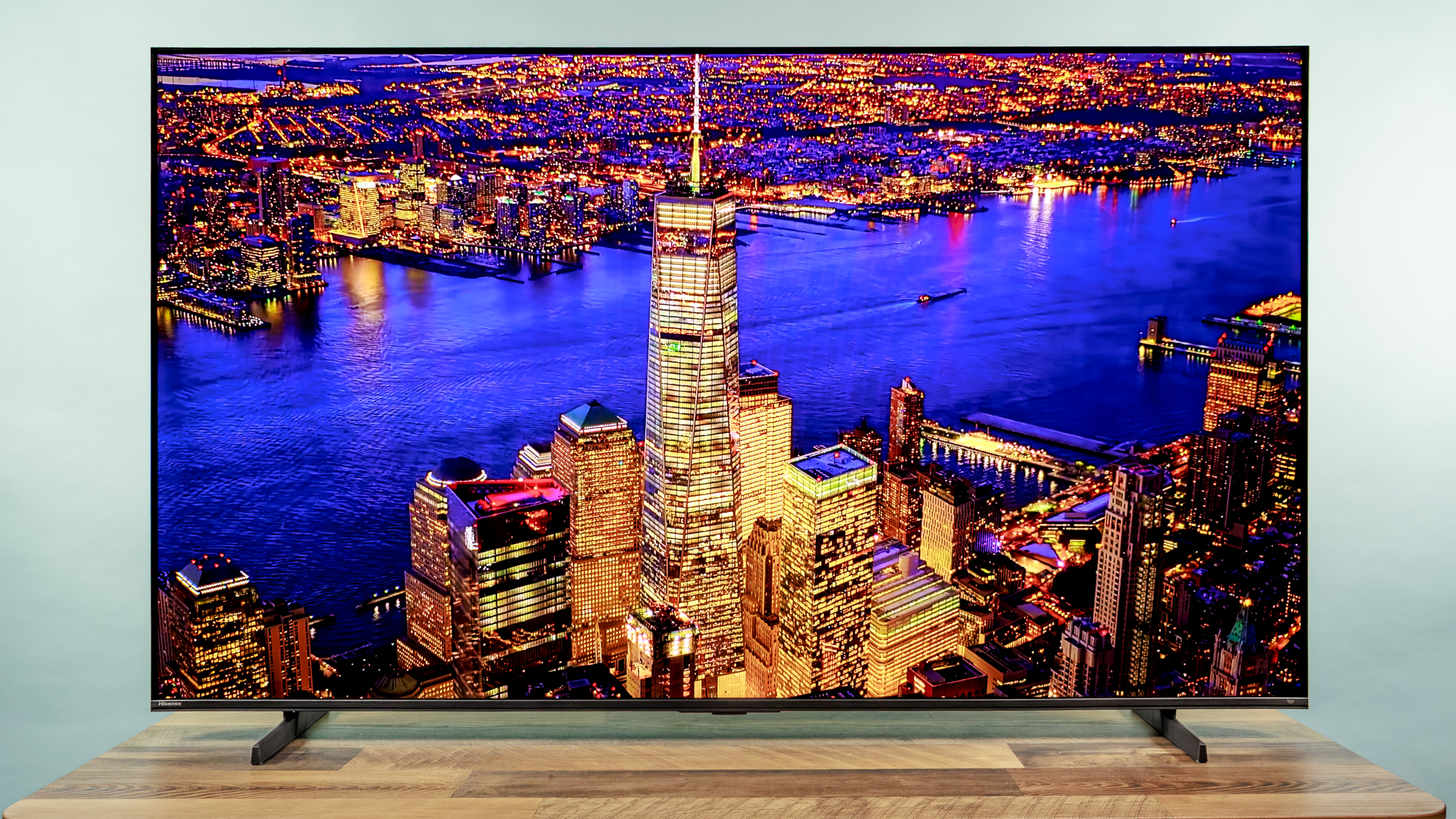
The Hisense E6 Cinema is the format specialist of the group. Its Hi-QLED color system is paired with a Total HDR Solution that supports Dolby Vision, HDR10+ Adaptive, HDR10, and HLG. That range gives streaming services and broadcast sources more chances to use the format they were mastered for. If films are the priority, this is more appealing than choosing a set that only lists HDR10.
Dolby Vision is particularly useful for compatible films and series because it can carry scene-by-scene brightness and color instructions. The E6 Cinema also lists Dolby Atmos support, bringing a more cinematic audio format to the television's processing. It cannot create the same soundstage as a separate surround system, but having both formats available makes the set a flexible center for a mixed movie and streaming setup. Filmmaker Mode is included for viewers who want content shown closer to the original aspect ratio, frame rate, color, and audio choices.
The AI light sensor is a practical feature rather than a headline specification. It detects the room's ambient light and adjusts screen brightness in response. That can make daytime viewing more comfortable while avoiding a permanently bright picture at night. AI 4K Upscaler also works on lower-resolution material, while AI Smooth Motion combines MEMC, noise reduction, and panel processing to keep fast action clearer. The supplied information does not give this model a native high refresh rate, so it should not be confused with the Samsung M80H or TCL T7.
Fire TV puts live channels and apps on the home screen, and the Alexa voice remote can search for content, launch apps, check sports scores, and set timers. Wi-Fi 6 is a welcome connectivity detail for homes with many connected devices because it is designed to handle more traffic with lower latency than Wi-Fi 5. The Roku Select Series remains easier for people who want the quietest interface, but Fire TV offers stronger voice integration for Alexa households.
The trade-off is that the picture hardware is not described as Mini LED, and the motion specifications do not match the high-refresh models. The Hisense is therefore not our first pick for a PC gamer or someone seeking the deepest possible backlight control. It is the one to choose when movie formats, Filmmaker Mode, Alexa control, and automatic room brightness matter more than a 120Hz or 144Hz gaming panel.
The choice between this television and the TCL Q65 comes down to platform and processing preferences. Hisense gives you Fire TV, an AI light sensor, and a very broad HDR list. TCL counters with Google TV, Auto Game Mode, and a Motion Rate 240 claim. For film-heavy streaming in a room that changes from bright afternoon to dark evening, the E6 Cinema is a compelling fit.
5. Insignia QF Series: Best Connected Budget Model

Pros
- QLED color technology
- Dolby Vision and Dolby Atmos
- Three HDMI inputs
- One HDMI input with eARC
- Alexa voice remote
Cons
- Direct LED rather than Mini LED
- No high-refresh specification listed
- Fire TV is not as minimal as Roku TV
Best for: households connecting a console, receiver, and streaming accessories to one television.
The Insignia QF Series makes a strong practical case for buyers who care about connections. It has three high-speed HDMI inputs, including one with eARC. That gives a living room enough room for a game console, a streaming box, and an audio receiver or soundbar without immediately reaching for an HDMI switch. The ports are more important here than a marketing-heavy processor name because they affect how easily the entire system fits together.
The screen itself combines 4K Ultra HD resolution with QLED quantum dot technology and a Direct LED backlight. QLED is intended to make color brighter and more lifelike, while direct LED backlighting provides uniform brightness and contrast. This is not the same as the Mini LED approach used by the Roku Plus Series, Samsung M70H, Samsung M80H, and LG QNED73. Those models are more interesting for backlight precision, but the Insignia keeps the essential 4K and color features in a relatively uncomplicated design.
It also supports HDR with Dolby Vision and Dolby Atmos audio processing. That makes it more versatile for films than a television limited to a single HDR format, and Atmos can add spatial cues to compatible programs. Voice control through the Alexa remote makes it easy to launch streaming services or search without typing with directional buttons. Fire TV brings movies, episodes, live shows, apps, and Alexa skills together on the home screen.
The QF Series is less specialized for fast gaming. The supplied information does not specify a 120Hz or 144Hz panel, and it does not list a dedicated variable refresh rate feature. The TCL T7 is a better fit for someone who wants high-refresh gaming, while the Samsung M70H is more attractive for sports and Mini LED contrast. The Insignia's advantage is the straightforward combination of HDMI flexibility, Dolby formats, and Fire TV.
The design is also easy to place. Its metal bezel-less construction uses edge-to-edge glass and a sleek rear panel, so the screen does not look bulky from the front. What it lacks is advanced motion and local backlight control. Skip it if dark-room movie contrast is your main concern. Choose it when the television is one part of a more complicated setup and three HDMI connections, eARC, and Alexa matter more than enthusiast-level picture control.
6. Roku Plus Series: Best Roku Picture

Pros
- QLED Mini LED backlighting
- Dolby Vision support
- AI Smart Picture Max processing
- Dolby Atmos and built-in subwoofer
- Bluetooth headphone mode
Cons
- Heavier than the Roku Select Series
- No high-refresh gaming specification listed
- Roku interface may not suit every household
Best for: Roku users who want a stronger picture and audio setup than the Select Series provides.
The Roku Plus Series keeps the clean interface that makes the Select Series easy to recommend, then adds more serious picture hardware. Its 4K QLED panel uses Mini LED backlighting, and Dolby Vision is listed for compatible content. That combination should give movie scenes more visible separation between bright highlights and dark areas than the Select Series, which uses QLED and HDR10 without Mini LED in its supplied details.
Roku's AI Smart Picture Max processing is designed to clean up incoming signals, optimize the television for the source, and refine color and sharpness as scenes change. The practical benefit is consistency when moving from a sports broadcast to a film or an older show. It does not turn poor source material into native 4K, but automatic adjustments can save viewers from repeatedly changing picture modes.
Audio is the other major distinction. The Plus Series includes Dolby Atmos technology and a built-in subwoofer, giving it a more substantial foundation for dialogue, music, and effects than a very thin television speaker system usually provides. Bluetooth Headphone Mode remains available for private listening, and the display can be turned off while audio continues through the remote's star key. Those details make this a particularly useful bedroom or shared-room television.
The Plus Series supports Roku Voice, Siri, Alexa, and Google Assistant, with AirPlay for Apple devices. Its home screen includes free live television, personalized picks, and quick access to frequently used entertainment. The Samsung M70H offers stronger listed motion features, and the TCL T7 is more capable for high-refresh gaming, but neither provides Roku's particularly direct search and navigation experience.
The weakness is its focus. The supplied features do not identify a 120Hz or 144Hz gaming mode, so serious players should move to the Samsung M80H or TCL T7. It is also heavier than the Select Series at 27.4 pounds, which matters when mounting or moving the set. For a Roku household that wants Mini LED contrast, Dolby Vision, better built-in audio, and the same approachable menus, the Plus Series is the more satisfying Roku choice.
Readers deciding between screen sizes should also think about seating distance before moving up. A larger panel changes how immersive films feel, but the viewing distance that suits a 55-inch screen helps prevent choosing a size that overwhelms the room.
7. TCL Q65: Best Google TV Option

Pros
- QLED Pro color
- Dolby Vision and HDR10+
- Auto Game Mode
- Dolby Atmos and DTS Virtual:X
- Google TV with Chromecast and AirPlay 2
Cons
- No Mini LED backlight listed
- Motion Rate is a processing claim rather than a native refresh figure
- Older 2024 model designation
Best for: Google TV users who want broad HDR support and automatic game mode switching.
The TCL Q65 is a well-rounded option for a household already invested in Google TV. Its QLED Pro quantum dot layer is intended to cover nearly the entire DCI-P3 color space, giving films and games a wider, more saturated palette than a basic LED television. The High Brightness+ LED backlight also aims to make images more visible in a bright room, though the supplied specifications do not describe a Mini LED backlight.
HDR support is one of the Q65's clearest strengths. It handles Dolby Vision, HDR10+, HDR10, and HLG through HDR Pro+. That gives it broad compatibility across streaming films, games, and television broadcasts. The TCL AIPQ Processor with Deep Learning AI is designed to optimize color, contrast, and clarity for 4K HDR content. The result should be a television that is flexible with different sources rather than tuned only for one type of viewing.
Gaming features are well chosen for the category. Auto Game Mode uses ALLM to switch into a lower-latency game setting when compatible equipment is detected. TCL also lists Motion Rate 240 with MEMC frame insertion. That can make fast movement look cleaner, although buyers should distinguish the Motion Rate label from the TCL T7's explicitly listed 120Hz panel and the Samsung M80H's 144Hz performance. The Q65 is capable for casual and console gaming, but it is not the clearest choice for a high-refresh PC setup.
Google TV brings movies, shows, and live channels into one interface, while the voice remote helps search across apps. Built-in Chromecast supports casting from compatible devices, and AirPlay 2 gives Apple users another way to share photos, video, and music. Dolby Atmos, enhanced dialogue mode, and DTS Virtual:X are useful audio processing tools, especially for viewers who are not immediately adding a soundbar.
The main concern is age and hardware positioning. This is identified as a 2024 model, and it lacks the Mini LED backlight used by the Roku Plus Series and Samsung M models. The Samsung U8000H offers a newer basic Samsung experience, while the TCL T7 is the more serious gaming choice. The Q65 earns its place through broad HDR format support, Google TV, and convenient automatic game mode switching.
For a wider comparison of interface features across similar screens, the streaming controls that matter in a smart television are more useful to consider than the number of apps printed on a product page.
8. Samsung M80H: Best High-Refresh Samsung

Pros
- 144Hz motion performance
- Variable refresh rate technology
- Mini LED backlighting
- AI picture processing
- One billion color claim
Cons
- No Dolby Vision listed
- More specialized than casual viewers need
- Samsung platform may not be everyone's preference
Best for: PC and console players who want the fastest display in Samsung's lineup here.
The Samsung M80H is the gaming specialist among the Samsung televisions in this roundup. Its Motion Xcelerator 144Hz performance is designed for fast games and sports, and variable refresh rate technology can match the display to the game to reduce stutter and tearing. That makes it the Samsung to choose when responsiveness is more important than simply having a large 4K screen.
Mini LED backlighting gives the M80H a stronger picture foundation than the U8000H. Samsung's AI Mode combines compact Mini LEDs with scene analysis to improve clarity, color, and contrast. The NQ4 AI Gen2 Processor handles real-time enhancement, while 4K AI Upscaling works on lower-resolution sources. These features should help both native 4K games and older television content look more coherent, though processing cannot compensate for a weak source or poor viewing angle.
Color is handled through Pure Spectrum Color, which Samsung describes as delivering one billion true-to-life colors. Auto HDR Remastering also attempts to give SDR content brighter highlights, more vibrant color, and clearer detail. The result is a model aimed at viewers who move between games, sports, streaming shows, and older content instead of using the panel for one narrow purpose. The Samsung M70H has DLG 120Hz, but the M80H has the more aggressive 144Hz specification.
The contrast with the TCL T7 is close. TCL lists a 120Hz panel, four HDMI inputs including eARC, broad HDR format support, and Google TV. Samsung counters with 144Hz, variable refresh rate technology, Mini LED processing, and a more detailed AI feature set. If Dolby Vision or Google TV matters, TCL is the easier choice. If fast PC play and Samsung's picture processing matter, the M80H is more persuasive.
The largest limitation is the absence of Dolby Vision in the supplied information. That does not prevent the television from showing HDR content, but it makes the Hisense E6 Cinema, TCL Q65, TCL T7, and Roku Plus Series more attractive for viewers who deliberately collect Dolby Vision films. The Samsung smart platform also makes most sense for people already comfortable with Samsung's interface and services.
Choose this model for a mixed entertainment room where the television doubles as a gaming display. Casual viewers can save themselves the complexity by choosing the Roku Select Series or Samsung U8000H. Competitive players and sports fans should look closely at the M80H's 144Hz and variable refresh rate capabilities.
9. TCL T7: Best Gaming-Focused Pick

Pros
- 120Hz panel refresh rate
- Four HDMI inputs with eARC
- HDR Pro+ with Dolby Vision
- Google TV and Chromecast
- Voice control across major assistants
Cons
- No Mini LED backlight listed
- Larger feature set can take time to tune
- High-refresh hardware may be unnecessary for basic streaming
Best for: gamers who want a 55-inch QLED television that also works well as a regular family screen.
The TCL T7 is the clearest gaming recommendation for buyers who want a television rather than a monitor. Its 120Hz panel refresh rate is the key detail. Fast games, live sport, and action films can benefit from more frequent screen updates, and the panel gives the T7 a more credible motion foundation than televisions whose information stops at 60Hz. TCL also lists Motion Rate 480 with MEMC frame insertion, though the native 120Hz figure is the specification to pay the most attention to.
The QLED panel supports 4K resolution and a wide range of HDR formats through HDR Pro+, including Dolby Vision, HDR10+, HDR10, and HLG. The TCL AIPQ Pro Processor works on color, contrast, and clarity, while the quantum dot layer is designed to provide rich color across nearly the entire DCI-P3 color space. This combination makes the T7 useful for films as well as games. It does not have the Mini LED backlight found in the Samsung M80H or Roku Plus Series, so those models remain more interesting for backlight precision.
Connections are unusually helpful for a living-room gaming setup. There are four high-speed HDMI inputs, including one with eARC, leaving room for multiple consoles, a receiver, a streaming device, and other equipment. Voice control works with Alexa, Google Assistant, and Apple HomeKit, while fast Wi-Fi 5 supports streaming. The Google TV interface brings apps and content together, with built-in Chromecast and AirPlay 2 for sharing from compatible devices.
Compared with the TCL Q65, the T7 has the stronger gaming hardware because its 120Hz panel is stated directly. The Q65 still has broad HDR support, Auto Game Mode, and Google TV, so it remains a sensible choice for less demanding play. Compared with the Samsung M80H, the T7 gives up 144Hz and Mini LED processing but gains Dolby Vision, four HDMI inputs, and an easy Google TV ecosystem.
The weakness is that it is more television than most casual streamers require. A buyer who watches a few shows each week will not make much use of the high-refresh panel, four HDMI inputs, or Motion Rate processing. It also lacks the Mini LED backlight that gives the Samsung M80H and Roku Plus Series a more compelling contrast story. Choose the T7 when gaming is a regular part of the room, especially if several devices need to stay connected.
10. LG QNED73: Best LG Interface

Pros
- QNED Mini LED picture system
- HDR10 Pro and Filmmaker Mode
- AI 4K Super Upscaling
- FreeSync Premium and ALLM
- webOS with free channels
Cons
- No Dolby Vision listed
- Supplied dimensions differ from the other models
- Gaming refresh rate is not specified
Best for: viewers who prefer webOS and want a flexible television for films, streaming, and console play.
The LG QNED73 is the alternative for viewers who prefer LG's webOS experience to Roku TV, Google TV, Fire TV, or Samsung's platform. It combines QNED color technology with a Mini LED picture system, giving it a more advanced foundation than a standard direct LED television. Dynamic QNED Color is designed to improve accuracy and provide 100% color volume, while the A7 AI Processor 4K Gen9 works on brightness, sound, and picture detail.
HDR10 Pro dynamically adjusts brightness to reveal detail in bright and dark scenes. Filmmaker Mode preserves the director's intended color, settings, and frame rate, making it a useful choice for movie watchers who want a less processed presentation. AI 4K Super Upscaling is intended to improve lower-resolution material, which matters on a 55-inch screen where rough source quality can become obvious from a normal sofa distance.
LG also gives gamers a useful set of controls. AMD FreeSync Premium and ALLM can improve console or cloud gaming quality, while the Game Dashboard and Game Optimizer collect relevant settings in one place. The supplied information does not state a 120Hz or 144Hz refresh rate, so the TCL T7 and Samsung M80H remain better fits for high-refresh gaming. The QNED73 is more of a general-purpose screen with gaming support than a dedicated fast-action display.
webOS provides streaming access, and LG Channels adds more than 400 free channels along with on-demand movies and shows. The set also supports Google Gemini and Microsoft Copilot through the platform information, and Gallery Plus can turn the television into a piece of displayed artwork when it is not being used for viewing. AI Sound Pro and Wow Orchestra are listed features, though the product information does not specify a speaker configuration.
The lack of Dolby Vision is the most obvious drawback for movie enthusiasts. The Hisense E6 Cinema, TCL Q65, and TCL T7 offer broader HDR format support, while the Roku Plus Series adds Dolby Vision alongside a Mini LED system. LG's dimensions also need careful checking before installation because the supplied listing gives 48.3 inches by 30.6 inches by 9.1 inches with the stand and 48.3 inches by 28.1 inches by 2.8 inches without it, while another product information field reports a different width. Choose the QNED73 for webOS, Mini LED color, Filmmaker Mode, and flexible gaming tools, but confirm the installation measurements first.
How to choose best budget 55 inch tv
The right 55-inch television depends less on a long feature list than on the kind of content the room receives most often. Focus on picture hardware, motion, HDR support, smart software, connections, and physical fit.
Backlight and contrast
A standard LED backlight illuminates the panel from behind, while QLED adds quantum dot color technology to improve brightness and saturation. Mini LED uses much smaller light sources and can provide more precise control over bright and dark parts of the image.
For ordinary daytime streaming, a good 4K QLED screen such as the Roku Select Series or TCL Q65 may be enough. For dark films, HDR effects, and scenes with bright objects against black backgrounds, Mini LED models such as the Roku Plus Series, Samsung M70H, Samsung M80H, and LG QNED73 have the more ambitious hardware.
If night scenes and HDR highlights matter, prioritize backlight control before chasing a larger motion number.
Refresh rate and motion
Refresh rate describes how often the panel can update the image. The Samsung U8000H is listed at up to 4K 60Hz, while the Samsung M70H offers DLG 120Hz, the Samsung M80H reaches 144Hz, and the TCL T7 has a 120Hz panel. Those higher figures can make fast games and sports appear smoother, especially when paired with variable refresh rate or compatible game modes.
Motion Rate labels such as 240 and 480 include processing and should not be treated as direct replacements for a native panel refresh specification. If you play fast games regularly, give the stated panel rate and VRR features more weight than a large Motion Rate number.
HDR formats
HDR can improve contrast, brightness, and color, but format support varies. Dolby Vision, HDR10+, HDR10, and HLG each appear across different content sources.
The Hisense E6 Cinema supports Dolby Vision, HDR10+ Adaptive, HDR10, and HLG. The TCL Q65 and TCL T7 also list Dolby Vision, HDR10+, HDR10, and HLG. The Samsung models in this group emphasize Samsung's own picture processing and HDR features, but Dolby Vision is not listed in their supplied information. Choose a television that supports the formats used by the services and discs you watch most.
Smart platform
Roku TV is the cleanest choice for simple navigation, fast search, free live channels, and broad voice compatibility. Google TV is useful for people who cast from Android devices or want content gathered from many apps. Fire TV suits Alexa households, while Samsung and webOS provide their own content hubs and free channel services.
Smart platforms change how often you reach for a remote or search through menus. If several people use the television, an interface they already understand can be more important than a modest difference in picture processing.
HDMI and audio connections
Count the devices that will stay connected. The Insignia QF Series has three HDMI inputs, including one with eARC. The TCL T7 has four, also with one eARC connection. That extra input can matter when a console, soundbar, receiver, streaming box, and cable device all share the same screen.
Dolby Atmos, DTS Virtual:X, and other audio processing features can improve the sense of space, but built-in speakers still have physical limits. The Roku Plus Series stands out because it lists a built-in subwoofer. A television with clear dialogue or a dedicated audio connection may be more useful than one with a long list of sound modes.
Room size and installation
Every model here uses a 55-inch screen, but the body dimensions, depth, and weight differ. The Roku Select Series is listed at 48.3 inches wide and 20.5 pounds, while the Roku Plus Series weighs 27.4 pounds. Confirm the stand width, wall-mount position, and furniture depth before ordering.
The LG QNED73 needs especially careful measurement because its supplied listing gives separate dimensions with and without the stand. Leave room for cables and airflow, and make sure the furniture can support the television securely.
Frequently asked questions
Is a QLED television better than a regular LED TV?
QLED uses quantum dot technology to improve color and brightness compared with a conventional LED design. That does not automatically guarantee better contrast, because backlight design matters too. A Mini LED QLED television can have a stronger contrast system than a basic direct LED QLED model.
Is 60Hz enough for a 55-inch TV?
A 60Hz television is adequate for regular shows, films, and many casual console games. Higher refresh rates are more useful for fast sports, competitive games, and compatible PC gaming. The Samsung U8000H is aimed at 4K 60Hz viewing, while the Samsung M80H and TCL T7 are more suitable for high-refresh play.
Which television has the simplest smart interface?
The Roku Select Series and Roku Plus Series have the most straightforward interface in this group. Their home screens emphasize apps, search, free live television, and personalized picks. Fire TV, Google TV, Samsung's platform, and webOS are also capable, but each organizes content differently.
Do these televisions support Dolby Vision?
Dolby Vision is listed for the Hisense E6 Cinema, Insignia QF Series, Roku Plus Series, TCL Q65, and TCL T7. It is not listed in the supplied information for the Samsung U8000H, Samsung M70H, Samsung M80H, or LG QNED73. Check the streaming service and external player requirements if Dolby Vision is a priority.
Which model is best for gaming?
The Samsung M80H has the highest listed refresh rate at 144Hz and includes variable refresh rate technology. The TCL T7 has a 120Hz panel, four HDMI inputs, and broad HDR support. The Samsung M70H is another strong option with DLG 120Hz, while the Roku Select Series is better suited to casual play.
Can I connect a soundbar to these televisions?
Several models include audio features or connections intended for external equipment. The Insignia QF Series and TCL T7 specifically list an HDMI input with eARC, which can simplify connection to a compatible soundbar or receiver. The Roku Plus Series also lists Dolby Atmos and a built-in subwoofer, though an external system can still provide fuller sound.
Should I buy a Mini LED model for a bright room?
Mini LED can help create brighter highlights and stronger contrast, but room lighting, screen placement, and viewing angle still matter. The Samsung M70H, Samsung M80H, Roku Plus Series, and LG QNED73 use Mini LED systems in the supplied descriptions. A QLED model without Mini LED can still work well when the room is bright and the main content is regular streaming.
The bottom line
The Roku Select Series is our top recommendation for the Best Budget 55 Inch TV because it gets the fundamentals right without making the living room harder to use. The 4K QLED screen, HDR10, fast Roku navigation, voice remote, AirPlay, and Bluetooth headphone mode cover the needs of most viewers. Pick the Roku Plus Series instead if Mini LED contrast, Dolby Vision, Dolby Atmos, and a built-in subwoofer matter more than the simplest possible specification set.
For gaming, the Samsung M80H and TCL T7 are the stronger choices. Samsung brings 144Hz motion, VRR, Mini LED processing, and AI picture tools, while TCL offers a 120Hz panel, four HDMI inputs, Dolby Vision, and Google TV. Movie-focused buyers should look at the Hisense E6 Cinema for its broad HDR format support and Filmmaker Mode, while the LG QNED73 suits households that prefer webOS and LG's gaming controls.
If you are undecided, choose the Roku Select Series for simple streaming, or move to the Samsung M80H when gaming is central to the room.
As an Amazon Associate we earn from qualifying purchases.