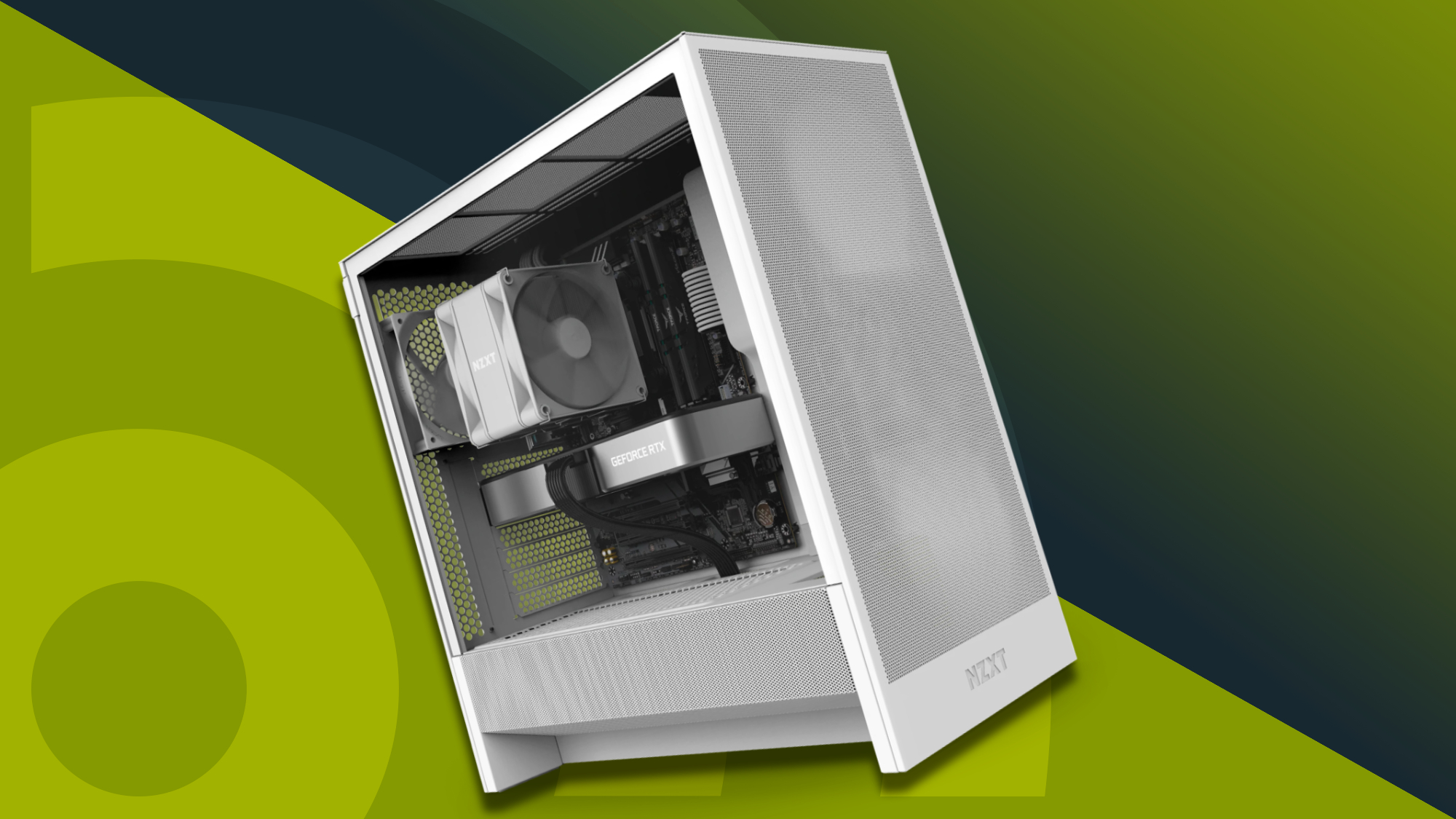

A desktop can look like a bargain until you discover it has 8GB of memory, integrated graphics, and barely enough storage for the operating system. The right Best budget pc depends on whether you need real gaming hardware, a quiet office machine, or simply a compact computer for browsing and streaming.
We ranked these 10 desktops by capability and practicality. The strongest options include a Ryzen 7 system with an RTX 5060, a capable Ryzen 5 tower with a large NVMe drive, refurbished Dell office PCs, and small machines that can disappear behind a monitor. YAWYORE Ryzen 7 RTX 5060 is the best pick for demanding gaming, while the rest cover more focused needs.
Comparison table
| # | Product | Award | Processor | Graphics | Memory and storage | Best for |
|---|---|---|---|---|---|---|
| 1 | YAWYORE Ryzen 7 RTX 5060 | Best overall | Ryzen 7 5700X | GeForce RTX 5060 8GB GDDR7 | 32GB DDR4, 1TB NVMe | Modern gaming |
| 2 | YAWYORE Ryzen 5 5600GT | Best integrated graphics tower | Ryzen 5 5600GT | Radeon Vega | 16GB DDR4, 1TB NVMe | Everyday use and light gaming |
| 3 | suevery White Tower | Best entry gaming tower | Ryzen 5 | Radeon 4GB | 16GB DDR4, 512GB NVMe | Starter gaming |
| 4 | STGAubron RX 580 | Best established gaming configuration | Core i7 | Radeon RX 580 8GB | 16GB, 512GB SSD | 1080p gaming |
| 5 | Dell OptiPlex 7050 | Best office multitasker | Core i7-7700 | Integrated graphics | 32GB DDR4, 1TB SSD | Office productivity |
| 6 | Dell OptiPlex 5060 | Best dual-drive desktop | Core i5-8500 | Intel UHD 630 | 16GB DDR4, 500GB SSD plus 1TB HDD | Home and office storage |
| 7 | suevery Black Tower | Best Ryzen 5 alternative | Ryzen 5 | Radeon RX 560 4GB | 16GB DDR4, 512GB NVMe | General gaming |
| 8 | Dell OptiPlex 3050 | Best small office PC | Core i5-6500 | Integrated graphics | 16GB DDR4, 256GB SSD | Compact workstations |
| 9 | KAMRUI AK1PLUS | Best mini PC | Celeron N5095 | Intel UHD Graphics | 16GB LPDDR4X, 256GB SSD | Browsing and media |
| 10 | OKAMUS i5 Tower | Best upgrade starting point | Intel i5 | Integrated graphics | 8GB RAM, 256GB M.2 | Basic desktop tasks |
1. YAWYORE Ryzen 7 RTX 5060: Best Overall

Pros
- RTX 5060 graphics with 8GB GDDR7 memory
- Ryzen 7 processor has 8 cores and 16 threads
- 32GB RAM and 1TB NVMe storage
- WiFi and Bluetooth built in
Cons
- Graphics card brand may vary
- Larger and heavier than the office-focused options
- Older AM4 platform limits the upgrade path
Best for: someone who wants a ready-to-use gaming tower with serious graphics capability.
The YAWYORE Ryzen 7 RTX 5060 is the easy recommendation when gaming is the priority. It has the one component that separates a gaming desktop from a dressed-up office PC: a dedicated GeForce RTX 5060 with 8GB of GDDR7 memory. That gives it a much stronger foundation for current games than the integrated graphics in the YAWYORE Ryzen 5 5600GT or either refurbished Dell.
The Ryzen 7 5700X is a good match for that graphics card. Its 8 cores and 16 threads give the system room for gaming alongside voice chat, browsers, streaming tools, or other background work. The processor can reach 4.6GHz, while the MSI B550M-A PRO motherboard provides a more credible base than the unspecified boards in several cheaper towers.
Memory and storage are unusually comfortable here. The 32GB of DDR4 3200MHz RAM helps with large games and multitasking, and the 1TB M.2 NVMe PCIe SSD gives the operating system and game library fast access without immediately forcing an external drive. A 650W 80 Plus Bronze power supply is also better suited to this configuration than the smaller supply in the OKAMUS tower.
There are caveats. YAWYORE says the RTX 5060 brand may vary, so buyers should not assume a particular cooler or board design. The AM4 platform is mature rather than forward-looking, and the 24.95-pound tower will take more floor or desk space than the Dell OptiPlex 7050. Still, the GPU, memory, and storage combination makes this the pick to buy for someone who wants gaming performance without assembling a PC. Readers comparing dedicated graphics options can also consider how much graphics hardware changes a desktop gaming experience.
2. YAWYORE Ryzen 5 5600GT: Best Integrated Graphics Tower

Pros
- Six-core, 12-thread Ryzen processor
- 16GB RAM and 1TB NVMe SSD
- Integrated Radeon Vega graphics
- Five 12cm ARGB fans
- WiFi and Bluetooth included
Cons
- No dedicated graphics card
- Integrated graphics uses the system platform for gaming
- Heavy tower for an everyday desktop
Best for: a general-purpose desktop that can handle light 1080p gaming without a separate graphics card.
The YAWYORE Ryzen 5 5600GT makes sense for someone who wants a proper tower but does not need a dedicated GPU on day one. Its Ryzen 5 5600GT has six cores and 12 threads, so it is better equipped for multitasking than the quad-core mini PC and older Dell OptiPlex 3050. Web work, office software, photo management, and casual creative tasks should all feel more natural on this platform.
The integrated AMD Radeon Vega graphics are the important distinction. YAWYORE positions them for mainstream 1080p gaming, but integrated graphics are still a compromise compared with the RTX 5060 in the other YAWYORE system or the RX 580 in the STGAubron. This is a sensible route for lighter games and a desktop that may gain a dedicated card later, not a high-end gaming solution.
The 16GB of DDR4 3200MHz memory is a comfortable starting point, while the 1TB M.2 NVMe PCIe SSD is generous for this group. Fast solid-state storage keeps booting and application loading responsive, and the capacity leaves more room for documents and games than the 256GB drives in the Dell OptiPlex 3050, KAMRUI, and OKAMUS. The MSI A520M-A PRO motherboard is described as expandable, though the listing does not specify the full upgrade layout.
Cooling is a visible strength. Five 12cm ARGB fans sit alongside AMD air cooling, with intelligent temperature control intended to keep noise and heat under control. The tradeoff is size and weight, with the tower listed at 21.4 pounds. It is a better fit beside a desk than in a cramped study nook. Choose it over the suevery White Tower if you prefer more storage and a cleaner integrated-graphics setup. Skip it if demanding games are the main reason for buying, because the YAWYORE Ryzen 7 RTX 5060 is substantially better suited to that job.
3. suevery White Tower: Best Entry Gaming Tower

Pros
- Six-core Ryzen 5 processor
- Dedicated Radeon graphics with 4GB
- 16GB DDR4 memory
- 512GB M.2 PCIe NVMe SSD
- WiFi 6 and customizable RGB lighting
Cons
- Graphics performance sits below the dedicated GPU leaders
- The processor has six threads
- Storage is less spacious than the YAWYORE Ryzen 5
Best for: a first gaming desktop for lighter games and everyday home use.
The suevery White Tower is more convincing as a gaming PC than its generic title suggests. It pairs a six-core Ryzen 5 processor with a dedicated AMD Radeon graphics card carrying 4GB of memory. That is a meaningful step above the OKAMUS tower, whose integrated graphics must share system memory, although it remains behind the 8GB RX 580 and RTX 5060 configurations.
Its 16GB of DDR4 3200MHz RAM is the right starting point for a mainstream Windows desktop. The 512GB M.2 PCIe NVMe SSD should keep startup and game loading brisk, but it gives less breathing room than the 1TB drives in both YAWYORE systems and the STGAubron. A large game library may require storage management sooner than expected.
Connectivity is well considered for a starter tower. WiFi 6 is built in, and the listing calls out two USB 3.0 ports and four USB 2.0 ports. That is enough flexibility for common peripherals, though buyers should check the rear and front layout before planning a crowded setup. Customizable RGB lighting and RGB fans add visual flair without changing the computer's actual performance.
The white chassis is compact by tower standards, measuring about 13 inches high, 13.35 inches long, and 10.87 inches wide. suevery also describes an optimized cooling design intended to keep noise low during extended use. The limitation is that the listing does not identify the exact Radeon model, which makes precise gaming expectations difficult. It is the better choice over the YAWYORE Ryzen 5 only if a dedicated GPU matters immediately. For a broader look at prebuilt gaming tradeoffs, the practical differences between ready-made gaming towers are useful to keep in mind.
4. STGAubron RX 580: Best Established Gaming Configuration

Pros
- Radeon RX 580 has 8GB of graphics memory
- Core i7 processor
- HDMI and DisplayPort outputs
- WiFi 6 and Bluetooth 5.0
- Four RGB fans
Cons
- Older graphics and processor platform
- 16GB RAM leaves less headroom than the top pick
- Large 17.52-inch-high chassis
Best for: established 1080p gaming hardware with generous graphics memory.
The STGAubron RX 580 takes a straightforward approach: an Intel Core i7 processor, 16GB of memory, and a dedicated Radeon RX 580 with 8GB. The RX 580 is an older GPU, but dedicated graphics memory still gives this machine a clearer gaming identity than the integrated-graphics desktops. The listing says it can run a long list of popular games at 60-plus frames per second, though results will vary with resolution and settings.
The 512GB solid-state drive keeps the system responsive for Windows and a moderate game collection. It is not as roomy as the 1TB storage in the YAWYORE systems, and the 16GB RAM is adequate rather than expansive. For schoolwork, streaming, and ordinary desktop tasks, that combination is sensible. Heavy modern games may expose the age of the platform sooner than the RTX 5060 system will.
Port selection is practical. HDMI and DisplayPort support modern monitor connections, while WiFi 6 and Bluetooth 5.0 handle network access and wireless accessories. Four RGB fans provide airflow and the lighting expected from a gaming case. STGAubron also lists an RGB keyboard and mouse, one year of parts and labor coverage, and lifetime technical support, which makes the setup feel more complete than a bare tower.
The downside is physical bulk. At 17.52 inches high, 14.96 inches long, and 7.87 inches wide, it needs a larger home than the Dell small-form-factor machines. Its older CPU and RX 580 also make it less compelling for buyers who want a long upgrade runway. Pick it over the suevery towers when the specified 8GB graphics card matters more than newer platform features. For expectations around older dedicated GPUs, the compromises that come with older gaming graphics hardware are worth understanding.
5. Dell OptiPlex 7050: Best Office Multitasker

Pros
- 32GB DDR4 memory
- 1TB SSD
- Windows 11 Pro
- HDMI and DisplayPort
- Dual-monitor support
Cons
- Integrated graphics only
- Four-core processor
- Small-form-factor design can constrain upgrades
Best for: office work, large browser sessions, and a tidy dual-monitor desk.
The Dell OptiPlex 7050 is not a gaming tower, and that is precisely why it earns a place here. Its Core i7-7700 processor and 32GB of DDR4 memory are well matched to office multitasking, with enough RAM for documents, browser tabs, video calls, and background utilities. It feels more purpose-built for a workstation than the RGB gaming machines.
The 1TB SSD is the other major advantage. It gives this compact Dell the same headline capacity as the larger YAWYORE desktops, while keeping the machine quick to start and easy to manage. Windows 11 Pro is installed, and the configuration includes a wired keyboard and mouse along with a wireless USB WiFi adapter and power cord.
The small-form-factor case measures 11.4 by 11.5 by 3.6 inches. That makes it unusually easy to place under a monitor or on a narrow shelf. HDMI and DisplayPort are included, and the listing specifically notes dual-monitor support. Those outputs are more useful for spreadsheets and communication apps than for demanding games because the system uses integrated graphics.
The weakness is clear: this is an older four-core platform with no dedicated GPU. It should be skipped by anyone shopping primarily for modern gaming, and the SFF enclosure is not the natural starting point for major hardware additions. For work, study, and a clean desk, however, it beats the Dell OptiPlex 3050 with twice the memory and four times the SSD capacity. It is the quiet, practical alternative to the gaming towers.
6. Dell OptiPlex 5060: Best Dual-Drive Desktop

Pros
- Six-core Core i5-8500 processor
- 500GB SSD plus 1TB HDD
- 16GB DDR4 RAM
- WiFi, Bluetooth, and LAN
- Intel UHD Graphics 630
Cons
- Integrated graphics limit gaming
- Hard drive is slower than the SSD
- Renewed hardware is older
Best for: home users who need quick system storage plus a separate drive for files.
The Dell OptiPlex 5060 has the most useful storage arrangement for a household PC. A 500GB SSD handles Windows and frequently used applications, while the 1TB hard drive provides room for photos, videos, documents, and other files. That division is more practical than filling a small single SSD and then adding external storage.
Its Intel Core i5-8500 has six cores and can turbo to 4.3GHz. Along with 16GB of DDR4 RAM, that gives it a solid everyday profile for web browsing, office applications, video calls, and light media work. It does not have the extra memory of the OptiPlex 7050, but its processor has two more cores and its dual-drive layout is more flexible for a family computer.
Intel UHD Graphics 630 handles display output and video playback, not demanding gaming. That puts it well behind every system here with a dedicated Radeon or GeForce card. WiFi, Bluetooth, and LAN are all included, so it can fit into a home network without depending on a separate adapter.
The slim black tower measures 11.4 inches high, 3.6 inches long, and 11.5 inches wide according to the listing. It is a sensible middle ground between the tiny KAMRUI and the full gaming towers. The real compromise is age and renewed condition, along with the slower HDD. Choose it over the OptiPlex 7050 when bulk file storage matters more than 32GB of RAM, and choose the 3050 only if the smallest footprint and basic display work matter most.
7. suevery Black Tower: Best Ryzen 5 Alternative

Pros
- Six-core Ryzen 5 processor
- Dedicated Radeon RX 560 4GB
- 16GB DDR4 and 512GB NVMe storage
- WiFi 6
- Customizable RGB lighting
Cons
- RX 560 is behind the RX 580 and RTX 5060
- Six-thread processor
- No detailed power supply information
Best for: a general-purpose Ryzen gaming tower with dedicated graphics.
The suevery Black Tower is closely related in purpose to the White Tower, but its specified graphics card makes the choice clearer. It uses a Radeon RX 560 with 4GB of graphics memory, a Ryzen 5 six-core processor, 16GB of DDR4 3200MHz RAM, and a 512GB M.2 PCIe NVMe SSD. That is a coherent starter configuration for games that do not demand the latest hardware.
The RX 560 gives it a real advantage over the integrated-graphics YAWYORE Ryzen 5 and OKAMUS systems. It still falls behind the STGAubron's RX 580 8GB, and the gap to the RTX 5060 system is much larger. Buyers should see this as a light gaming machine rather than a system aimed at high settings in new releases.
WiFi 6 and multiple USB ports make it convenient for a desk with several accessories. suevery lists two USB 3.0 ports and four USB 2.0 ports, along with a customizable RGB system and multi-cooling RGB fan setup. The 512GB SSD is quick for booting and application loading, though it leaves less space than the 1TB options.
The chassis measures about 13 inches high, 13.35 inches long, and 10.87 inches wide, with a listed weight of 18.15 pounds. It is smaller than the STGAubron but still a full tower rather than a compact office box. Its weakness is not one missing feature so much as the limited ceiling of the RX 560. Pick it over the White Tower if you prefer the black design and want the graphics model explicitly identified. Skip both if you need demanding modern gaming.
8. Dell OptiPlex 3050: Best Small Office PC

Pros
- Compact small-form-factor case
- 16GB DDR4 memory
- SSD storage
- HDMI and DisplayPort
- Dual 4K display support
Cons
- Older quad-core processor
- 256GB SSD fills quickly
- Integrated graphics only
Best for: a compact office workstation with two high-resolution displays.
The Dell OptiPlex 3050 is the straightforward office pick. Its Core i5-6500 is an older quad-core processor, but the 16GB of DDR4 RAM keeps ordinary work from feeling cramped. Email, documents, browser tabs, and video meetings are the territory this machine handles best.
The 256GB SSD is the main limitation. It should keep Windows and core applications responsive, but users with large photo libraries or many applications will need to manage space. The Dell OptiPlex 5060 has a much more useful dual-drive setup, and the OptiPlex 7050 has a larger SSD plus more memory.
Ports are a strong point. The front includes two USB 3.0 and two USB 2.0 ports, while the rear adds DisplayPort, HDMI, USB 3.0, USB 2.0, and RJ-45. The listing says it supports two 4K displays at once, which is a valuable feature for spreadsheets, coding, and reference-heavy work.
At 11.5 inches high, 11.2 inches long, and 3.75 inches wide, it fits where a gaming tower will not. This is certified refurbished hardware and includes a USB keyboard, mouse, and USB WiFi adapter. It is not the choice for gaming or demanding creative work, but it is a neat solution for a small desk. Choose it over the KAMRUI when ports and dual-display support matter more than minimal size.
9. KAMRUI AK1PLUS: Best Mini PC

Pros
- Very compact 5.04-inch square footprint
- 16GB LPDDR4X memory
- Dual 4K display support at 60Hz
- WiFi, Bluetooth, and Gigabit Ethernet
- Storage can expand up to 4TB total
Cons
- Celeron processor is not suited to demanding work
- Integrated graphics only
- Initial SSD capacity is limited
Best for: browsing, office tasks, streaming, and compact dual-screen setups.
The KAMRUI AK1PLUS is the smallest computer in this roundup by a wide margin. Its case measures 5.04 inches long, 5.04 inches wide, and 2.05 inches high, so it can sit behind a display or on a shallow shelf. That changes the desktop experience more than a few extra processor cores would if space is the main problem.
The Intel Celeron N5095 has four cores and four threads, with speeds up to 2.9GHz. It is designed for web browsing, online classes, email, video conferencing, and basic multitasking. It is not a gaming replacement for the YAWYORE or STGAubron, and the Intel UHD Graphics are intended for everyday display work rather than demanding 3D applications.
The 16GB of LPDDR4X memory helps the little machine stay responsive with several browser tabs and office applications open. Its 256GB M.2 2280 SSD is more modest, but KAMRUI provides a useful expansion path. The system supports an additional M.2 SATA or NVMe SSD up to 2TB and a 2.5-inch SATA SSD or HDD up to 2TB, for up to 4TB total storage.
Dual HDMI 2.0 outputs can drive two 4K displays simultaneously at 60Hz. Four USB 3.2 ports, Gigabit Ethernet, a 3.5mm audio jack, WiFi, and Bluetooth make it unusually versatile for its size. Auto Power On, RTC Wake, and Wake-on-LAN also suit kiosks, signage, and managed office setups. Choose it over the Dell OptiPlex 3050 when the smallest possible footprint matters. Skip it if gaming or heavy content creation is the goal.
10. OKAMUS i5 Tower: Best Upgrade Starting Point

Pros
- Intel i5 processor
- M.2 solid-state storage
- Four RGB fans
- WiFi 6 and Bluetooth 5.3
- 400W power supply
Cons
- Integrated graphics only
- Just 8GB of RAM
- 256GB storage fills quickly
Best for: basic desktop use with plans for future upgrades.
The OKAMUS i5 Tower is a reminder that a gaming-style case does not automatically make a gaming computer. Its Intel i5 processor, 256GB M.2 drive, and 8GB of RAM are enough for basic Windows work, browsing, streaming, and lighter applications. The listing explicitly says this model has integrated graphics only, with no dedicated GPU included.
That graphics limitation is the central buying decision. Shared system memory and integrated graphics put it behind every dedicated-GPU machine in this roundup. It is also less comfortable for multitasking than the 16GB systems, and the 256GB drive provides less working room than the 512GB and 1TB options.
The hardware does have a few useful foundations. OKAMUS lists four black RGB fans and a vertical CPU cooler, along with a 400W power supply. WiFi 6 and Bluetooth 5.3 cover wireless networking and accessories. The wide-voltage supply and case are described as leaving room for upgrades, but the listing does not specify which graphics cards or memory configurations the system can accept.
That uncertainty matters. Buyers should not choose this tower expecting a ready-made gaming experience. It makes more sense as a basic desktop that may receive more RAM and a dedicated graphics card later, assuming the case and power connections support the intended additions. Choose it over the KAMRUI if you want a conventional tower and expansion matters. Choose the KAMRUI instead for quiet, compact everyday computing with dual 4K output.
How to choose best budget pc
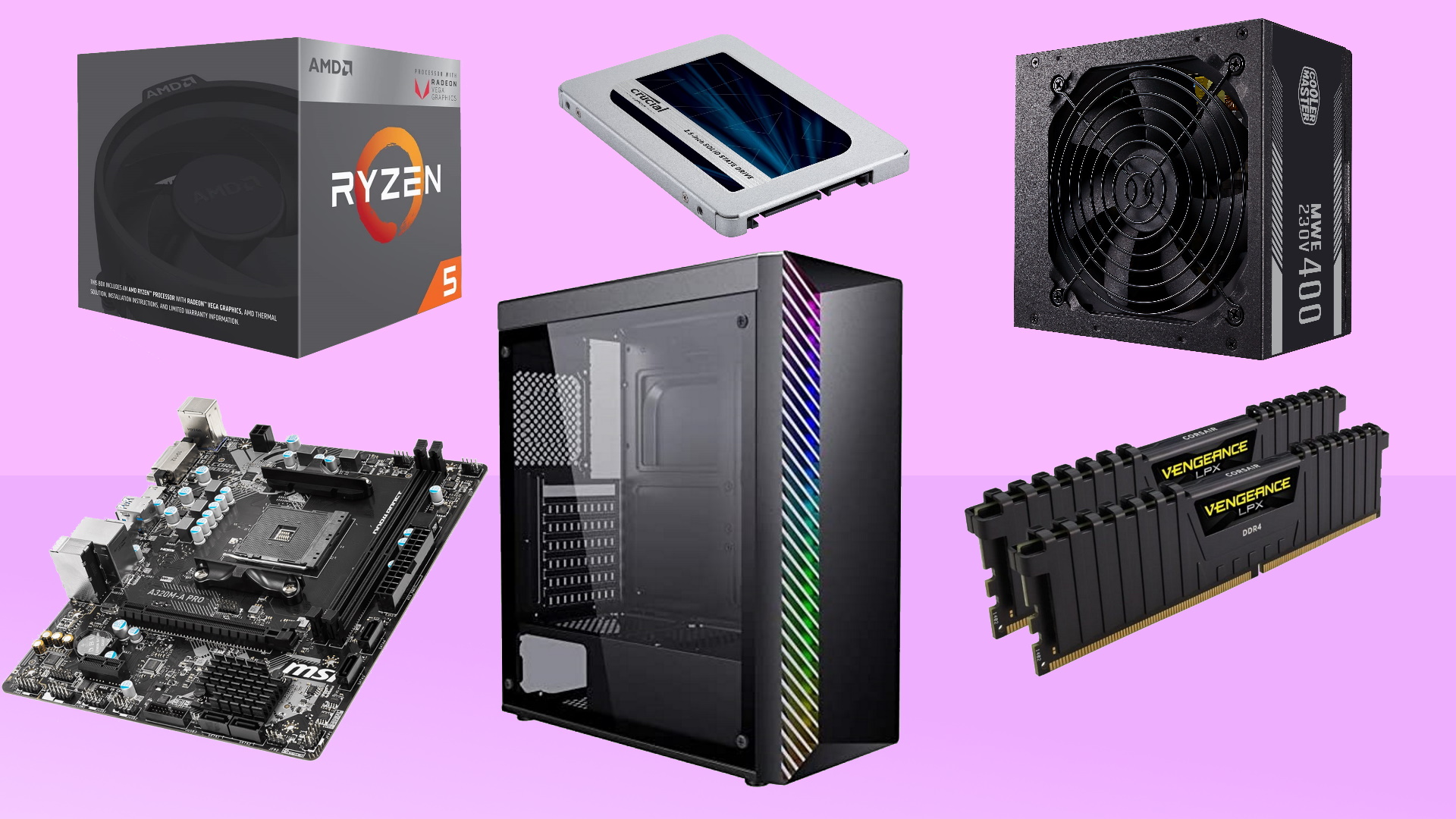
Start with the work you actually need the computer to do. A dedicated GPU changes gaming more than decorative lighting, while RAM, storage, and monitor outputs matter more for office use.
Dedicated graphics
A dedicated graphics card has its own memory and is the defining feature for serious gaming. The RTX 5060 and RX 580 systems are the clear leaders here, while the two suevery towers provide more modest dedicated Radeon graphics. Integrated graphics can handle ordinary display work and some light games, but they are not a substitute for a dedicated GPU.
Processor cores
Core count affects multitasking, compiling, editing, and how comfortably a desktop handles background applications. The Ryzen 7 5700X has eight cores and 16 threads, while the Ryzen 5 systems use six cores. The Celeron N5095 is adequate for everyday work but belongs in a different performance class.
Memory capacity
16GB is a sensible baseline for a Windows desktop used for browsing, office work, and light gaming. The Dell OptiPlex 7050 stands out with 32GB, while the OKAMUS begins with 8GB. More memory helps when many browser tabs, creative applications, and communication tools are open together.
SSD capacity
An NVMe or SATA SSD makes Windows and applications feel responsive. Capacity determines how long that speed remains convenient. A 1TB SSD gives the YAWYORE systems and Dell OptiPlex 7050 plenty of room, while the 256GB drives in the KAMRUI, Dell OptiPlex 3050, and OKAMUS call for careful storage management.
Case size and expansion
Full towers generally offer more room for airflow and hardware changes, but they occupy more space. Small-form-factor Dells are easier to place and support useful display setups, while the KAMRUI is tiny enough to hide behind a monitor. Check the listed expansion details before assuming a machine can accept a graphics card or additional drive.
Buy the graphics hardware for the games you play, then choose the processor and case around it.
Display outputs and connectivity
HDMI and DisplayPort determine which monitors you can use, and dual-display support is valuable for office work. WiFi and Bluetooth reduce cable clutter, while Ethernet remains useful for a stable connection. The KAMRUI is particularly strong for dual 4K displays, and the Dell OptiPlex 3050 lists both HDMI and DisplayPort.
Frequently asked questions
Is a budget desktop good for gaming?
Some are, but the graphics hardware matters more than the case design or RGB fans. The YAWYORE Ryzen 7 RTX 5060, STGAubron RX 580, and suevery towers have dedicated graphics, while the OKAMUS and refurbished Dell systems use integrated graphics.
How much RAM should a desktop have?
16GB is a sensible starting point for general computing and light gaming. The Dell OptiPlex 7050 has 32GB for heavier multitasking, while the OKAMUS has 8GB and may feel more restricted with many applications open.
Is integrated graphics enough for everyday work?
Yes. Integrated graphics can handle browsing, office software, video playback, and ordinary monitor output. They are less suitable for demanding games, 3D applications, and graphics-heavy creative work.
Should I choose a mini PC or a tower?
Choose a mini PC when desk space, low visual clutter, and simple everyday computing matter most. Choose a tower when you need a dedicated GPU, more cooling capacity, or a clearer path for hardware changes.
Can these desktops run two monitors?
Several can. The KAMRUI AK1PLUS supports two 4K displays through dual HDMI 2.0, and the Dell OptiPlex 3050 lists dual 4K display support through HDMI and DisplayPort. The Dell OptiPlex 7050 also lists dual-monitor support.
Is a renewed Dell desktop a sensible purchase?
A renewed Dell can be a practical office machine when the configuration fits the task. These models offer useful memory, SSD storage, and business-friendly ports, but their older processors and integrated graphics make them poor choices for modern gaming.
The bottom line
The Best budget pc for gaming is the YAWYORE Ryzen 7 RTX 5060. Its RTX 5060 graphics, 32GB of RAM, 1TB NVMe SSD, and eight-core Ryzen processor give it a meaningful lead over the older Radeon systems. For lighter gaming and general use, the YAWYORE Ryzen 5 5600GT is the more restrained tower, while the Dell OptiPlex 7050 is the strongest office pick.
The KAMRUI AK1PLUS is the one to choose when a tiny footprint and dual 4K displays matter more than gaming speed. For a conventional office desktop, the Dell OptiPlex 5060 balances six-core processing with both SSD and hard-drive storage.
If you are undecided, choose the YAWYORE Ryzen 7 RTX 5060 for gaming, or the Dell OptiPlex 7050 for work.
As an Amazon Associate we earn from qualifying purchases.