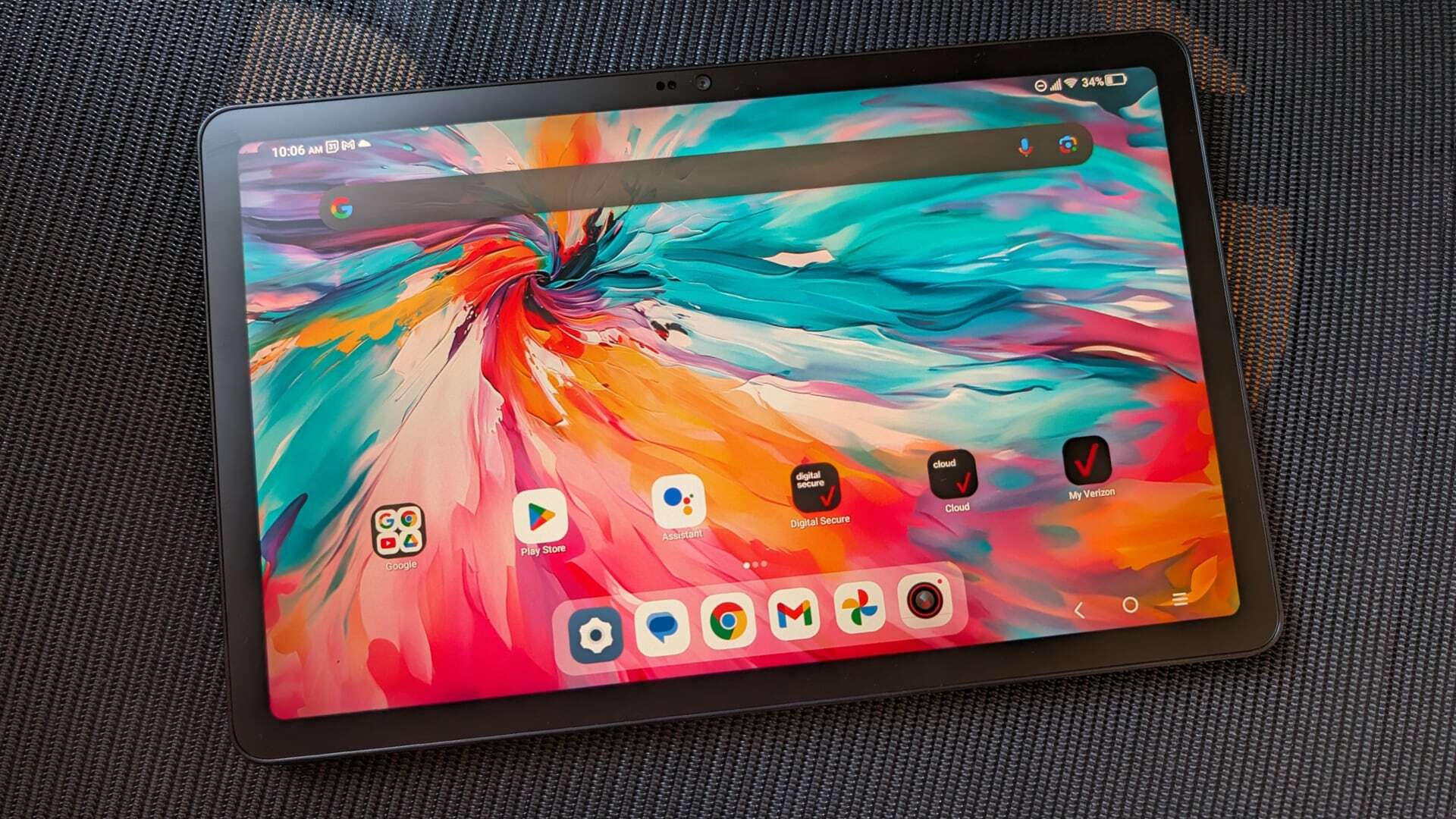

A tablet can be the easiest way to read, stream, take notes, or keep children occupied, but weak displays, sluggish processors, and cramped storage quickly spoil the experience. The challenge is finding the useful hardware among a pile of near-identical specifications.
The Best budget tablet choices here range from Lenovo's pen-ready 11-inch model to compact Android tablets and Amazon's entertainment-focused Fire HD 10. We have ranked them by the capabilities that matter most in daily use, including screen quality, software, storage, battery claims, and included accessories.
Lenovo Idea Tab 8GB is our top pick for its sharp 2.5K display, 90Hz refresh rate, included pen, and stronger memory configuration. The rest of the list covers family entertainment, portability, Android flexibility, and inexpensive keyboard bundles.
| # | Product | Award | Display | Memory and storage | Battery or software | Best for |
|---|---|---|---|---|---|---|
| 1 | Lenovo Idea Tab 8GB | Best overall | 11-inch 2.5K IPS, 90Hz | 8GB, 256GB | Up to 12 hours YouTube, Android | Study and entertainment |
| 2 | Lenovo Idea Tab 4GB | Best pen bundle | 11-inch 2.5K IPS, 90Hz | 4GB, 128GB | Up to 12 hours YouTube, Android | Note-taking |
| 3 | Samsung Galaxy Tab A11+ | Best family tablet | 11-inch, up to 90Hz | 6GB, 128GB, expandable | Fast charging, Android | Shared family use |
| 4 | Evermyth 10-inch Tablet | Best connectivity | 10-inch 1280x800 IPS | 3GB physical, 64GB, up to 1TB | Up to 8 hours mixed use, Android 16 | Basic Android tasks |
| 5 | Lenovo Tab One | Best compact tablet | 8.7-inch HD, 60Hz | 4GB, 64GB | Up to 12.5 hours YouTube, Android 14 | Reading and travel |
| 6 | Amazon Fire HD 10 | Best for streaming | 10.1-inch 1080p Full HD | 4GB, 32GB, expandable | Up to 13 hours, Fire OS | Video and reading |
| 7 | URAO 10.1-inch Tablet | Best storage package | 10.1-inch 1280x800 IPS | 6GB physical, 128GB, up to 1TB | Up to 8 hours mixed use, Android 16 | App storage |
| 8 | ECOPAD 10.1-inch Tablet | Best simple Android option | 10.1-inch 1280x800 IPS | 4GB physical, 64GB, up to 1TB | Up to 8 hours video, Android 15 | Light home use |
| 9 | ECOPAD Tablet Set | Best keyboard bundle | 10.1-inch 1280x800 IPS | 12GB listed, 64GB, up to 1TB | 6000mAh, Android 15 | Basic typing |
1. Lenovo Idea Tab 8GB: Best Overall

Pros
- Sharp 11-inch 2.5K touchscreen
- Smooth 90Hz refresh rate
- Tab Pen and folio case included
- 256GB of storage
- Dolby Atmos-tuned quad speakers
Cons
- The 1.05-pound body is less compact than smaller tablets
- Its advertised battery figure is specifically for YouTube streaming
- Some buyers will not need the extra memory and storage
Best for: students and families wanting one tablet for notes, video, browsing, and light creative work.
The Lenovo Idea Tab 8GB is the tablet in this group that feels least compromised. Its 11-inch 2.5K IPS screen gives text and handwritten notes a noticeably cleaner look than the 1280x800 panels used by the Evermyth, URAO, and ECOPAD models. The 90Hz refresh rate also makes scrolling through websites and moving around compatible apps feel more fluid than the 60Hz Lenovo Tab One.
Lenovo pairs that screen with a MediaTek Dimensity 6300 processor, 8GB of memory, and 256GB of storage. Those numbers matter together. The memory gives multitasking more room, while the storage leaves space for downloaded shows, documents, games, and note files without immediately requiring a card. The tablet also supports Circle to Search, and the included Lenovo Tab Pen makes the feature practical for marking objects or translating text directly on screen.
This is a particularly complete writing setup. Lenovo includes the pen and folio case, along with Lenovo AI Note, Squid, Nebo, and MyScript Calculator. The case adds protection and a hands-free viewing option, while the pen changes the tablet from a passive screen into something useful for class notes and sketches. Quad Dolby Atmos-tuned speakers and the display's stated 72% NTSC coverage make it well suited to streaming after work is finished.
The claimed battery life reaches up to 12 hours of YouTube use, and the included 20W charging support is intended to shorten time spent plugged in. The limitation is that this remains a tablet, not a laptop replacement, and the larger body is not as easy to hold one-handed as the Lenovo Tab One. The 4GB Lenovo Idea Tab 4GB has the same display, processor, pen, and case, but this version is the better long-term choice for people who keep several apps open.
Choose it if you want the strongest blend of display quality, writing tools, storage, and everyday responsiveness in this group. For a wider look at how tablet capability affects day-to-day use, the storage and screen trade-offs that shape tablet ownership are useful to consider before ordering.
2. Lenovo Idea Tab 4GB: Best Pen Bundle

Pros
- 2.5K IPS display with 90Hz refresh
- Tab Pen and folio case included
- Four useful note and calculation apps
- Quad Dolby Atmos-tuned speakers
Cons
- 4GB memory gives less multitasking headroom
- Storage is half that of the 8GB model
- It is still a relatively large tablet for one-handed use
Best for: students who want an affordable note-taking setup with a sharp, smooth display.
The Lenovo Idea Tab 4GB shares the most important hardware with our top pick, which makes it much more interesting than its lower memory figure suggests. The 11-inch 2.5K IPS touchscreen is crisp enough for small text and detailed diagrams, and its 90Hz refresh rate keeps page movement and supported animations feeling polished. That combination is a clear step above the HD panels in the smaller-brand tablets here.
Its MediaTek Dimensity 6300 processor is designed for multitasking, and the tablet includes 128GB of storage. That is sufficient for regular apps, class documents, downloaded reading, and a moderate collection of media. The 4GB of memory is the meaningful compromise. Basic switching between a browser, notes, and a video should be comfortable, but people who routinely leave many demanding apps open will have a better experience with the 8GB Lenovo Idea Tab 8GB.
The included Tab Pen is the reason to choose this model over a more generic Android tablet. Circle to Search can be used with the pen or a fingertip, and Lenovo supplies AI Note, Squid, Nebo, and MyScript Calculator for writing, organization, sketching, and calculations. The folio case completes the package for students who want to protect the tablet and prop it up without shopping for separate accessories.
Lenovo claims up to 12 hours of YouTube streaming, and the 20W charger is meant to restore power quickly when needed. The screen also has a TÜV Rheinland Low Blue Light hardware solution, while the speakers are tuned for Dolby Atmos. The weakness is not image quality but flexibility. Storage and memory can become restrictive sooner than on the top configuration, and the 1.05-pound frame is better on a desk or in a case than held aloft for long reading sessions.
This is the right pick for handwritten notes, homework, recipes, and streaming when the extra headroom of the top model is not essential. It also makes more sense than the Samsung Galaxy Tab A11+ for buyers who specifically want a pen and folio case included.
3. Samsung Galaxy Tab A11+: Best Family Tablet

Pros
- 11-inch screen with refresh rate up to 90Hz
- Expandable storage
- Quad Dolby Atmos speakers
- 5MP front camera for video calls
- Gemini and Circle to Search features
Cons
- Pen and case are not listed among the included accessories
- Storage configuration is less generous than the top Lenovo
- Samsung's most useful extras matter less if the tablet has one owner
Best for: households that want a familiar Android tablet for streaming, calls, games, and shared use.
The Samsung Galaxy Tab A11+ is the safest family-oriented choice in this lineup. Samsung describes it as a tablet for everyday tasks, movies, and games, and the hardware is shaped around that mix rather than around pen input. Its bright 11-inch screen supports refresh rates up to 90Hz, so scrolling and motion can look smoother than on the 60Hz Lenovo Tab One or the unspecified-refresh-rate HD tablets.
The listed configuration includes 6GB of memory and 128GB of storage, with expandable storage support for users who keep a large media library. Samsung also offers configurations with up to 8GB of memory and 256GB of storage, but buyers should pay attention to the exact version selected. The expandable-storage option is useful in a shared home because children can download games and adults can keep offline entertainment without filling the internal drive immediately.
Quad speakers with Dolby Atmos support make this a better communal video device than a tablet with a single basic speaker arrangement. The 5MP front camera is another practical advantage for family calls, and Samsung highlights Google Gemini assistance and Circle to Search for everyday help. The slim, light design is intended to move from room to room, although the available product information does not provide a precise weight beyond the listed 1.05-pound package specification.
Fast charging and a long-lasting battery are part of the design, but Samsung does not provide a specific hour figure in the supplied details. That makes the Lenovo models easier to judge for extended YouTube sessions because their claims are more concrete. Samsung also does not list a pen or folio case with this product, so the Lenovo Idea Tab models are more complete for handwritten schoolwork.
Pick the Galaxy Tab A11+ when more than one person will use the tablet and sound, calls, smooth motion, and expandable storage matter more than a bundled stylus. It is a stronger family media device than the Lenovo Tab One, while the Lenovo Idea Tab 8GB remains the better fit for serious note-taking.
4. Evermyth 10-inch Tablet: Best Connectivity

Pros
- Android 16 with Google Play access
- Wi-Fi 6 and Bluetooth 5.4
- Up to 1TB expandable storage
- 6000mAh battery
- USB-C charging
Cons
- 1280x800 resolution is modest on a 10-inch screen
- The listed 24GB memory includes 21GB of virtual memory
- Five-core processor is less reassuring for demanding apps
Best for: basic browsing, video calls, reading, and streaming on modern wireless networks.
The Evermyth 10-inch Tablet makes a strong first impression through its newer software and wireless features. It runs Android 16, is GMS-certified, and supports downloads from the Google Play Store. Wi-Fi 6 and Bluetooth 5.4 are unusually current connections for an entry-level tablet, giving it a better chance of fitting into a newer home network than the ECOPAD models with Bluetooth 5.0.
The display is a 10-inch IPS panel with a 1280x800 resolution. It should be comfortable for video, web pages, and casual reading, but it is not as crisp as the 2.5K Lenovo Idea Tab screen. The tablet includes a 5MP front camera and 8MP rear camera, and its low-blue-light technology is intended to reduce discomfort from flicker and harsh blue light. Those cameras suit calls and simple snapshots rather than serious photography.
The specification that needs careful reading is the memory. The advertised 24GB consists of 3GB of physical memory and 21GB of virtual memory. Virtual memory can provide extra breathing room in some situations, but it is not equivalent to having 24GB of physical RAM. The five-core processor runs at up to 1.8GHz, which points to a tablet for ordinary apps and media rather than heavy gaming or sustained creative work.
A 6000mAh battery supports the claimed up to eight hours of mixed use, with up to three days of standby. USB-C charging is convenient, and the tablet can accept a TF card up to 1TB, although the card is not included. The real weakness is the gap between its large memory headline and its modest physical memory. The URAO 10.1-inch Tablet offers 6GB of physical memory and 128GB of internal storage, though both use the same 1280x800 class of display.
Choose Evermyth if current wireless standards and Android 16 matter more than screen sharpness. It is a sensible basic tablet for browsing, calls, and video, but buyers wanting the smoothest general experience should move up to a Lenovo or Samsung model.
5. Lenovo Tab One: Best Compact Tablet

Pros
- Lightweight 0.704-pound design
- 8.7-inch display is easy to carry
- Up to 12.5 hours of YouTube streaming
- Folio case with built-in stand
- Dolby Atmos speakers
Cons
- Smaller HD screen is less suited to split-screen work
- 4GB memory and 64GB storage are limited
- 60Hz refresh rate is less fluid than the Idea Tab
Best for: travel, reading, children's content, and one-handed casual use.
The Lenovo Tab One is the tablet to choose when the physical size matters more than screen area. Its 8.7-inch HD display fits easily into a bag, and the tablet weighs 0.704 pounds. That is a meaningful difference when reading in bed, carrying it on a commute, or handing it to a child. The included folio case adds protection and a built-in stand for hands-free video.
Lenovo uses a MediaTek Helio G85 processor, 4GB of memory, and 64GB of storage. This is a straightforward configuration for browsing, streaming, reading, and light games. The 60Hz refresh rate is perfectly usable, but scrolling lacks the extra smoothness of the 90Hz Lenovo Idea Tab and Samsung Galaxy Tab A11+. The 480-nit display brightness is a useful detail for ordinary indoor viewing, while the 1280x800 class resolution keeps the screen less demanding than the larger Lenovo's 2.5K panel.
Battery life is the Tab One's strongest practical feature. Lenovo claims up to 12.5 hours of YouTube streaming and includes 15W charging support. Dual Dolby Atmos speakers add more depth than a basic small tablet speaker, making this a good personal entertainment device. Google Kids Space provides teacher-approved content recommendations, and the tablet runs Android 14 with two years of security patches.
The compact form does bring compromises. A smaller display is less comfortable for documents, detailed notes, and two apps side by side, and 64GB can fill quickly if several large games or downloaded videos are stored locally. The screen also lacks the visual density of both Lenovo Idea Tab versions. People who want a full-size tablet for classwork should skip this one, even though its portability is excellent.
Choose it for a purse, backpack, bedside table, or child's hands. It is more comfortable to carry than the larger picks and more polished than the smallest generic Android tablets, but it is not the right tool for extensive writing or productivity.
6. Amazon Fire HD 10: Best for Streaming

Pros
- 10.1-inch 1080p Full HD screen
- Up to 13 hours of battery life
- Up to 1TB microSD expansion
- 5MP front camera
- Useful Amazon Kids parental controls
Cons
- 32GB internal storage is limited
- Fire OS is different from standard Android
- Stylus is sold separately
Best for: people who mainly want a comfortable screen for shows, books, and casual games.
The Amazon Fire HD 10 is built around relaxation, and its 10.1-inch 1080p Full HD display is the clearest reason to buy it. It has more pixels than the 1280x800 screens on the Evermyth, URAO, and ECOPAD tablets, so movies, comics, and web text look cleaner. The octa-core processor is described as 25 percent faster than the previous generation, which should help with routine streaming, reading, and casual gaming.
This configuration includes 4GB of RAM and 32GB of internal storage, with microSD expansion up to 1TB. The expansion option is important because the internal capacity is modest, especially for a family tablet shared by several users. Amazon's software also makes the Fire HD 10 particularly convenient for customers already using Alexa, Amazon Kids, or the company's reading and entertainment services.
Battery life is rated for up to 13 hours, the longest specific claim in this roundup. The body weighs 0.96 pounds, and strengthened aluminosilicate glass is designed for durability. Amazon says the device was 2.7 times as durable as the Samsung Galaxy Tab A8 in a tumble test, though that comparison is not a substitute for using a case. The 5MP front camera supports Zoom and social apps, while new smart tools can help summarize webpages, draft emails, and create wallpapers.
Fire OS is the central compromise. It provides a focused Amazon experience, but it is not the same as the standard Android software on the Lenovo, Samsung, Evermyth, URAO, and ECOPAD tablets. App availability and account integration should be checked before buying, especially if Google Play access is essential. The Made for Amazon Stylus Pen is also sold separately, despite supporting 4, 096 pressure levels when paired with the tablet.
The Fire HD 10 is the best entertainment-first pick here, and its display is more convincing than the generic HD panels. For shoppers comparing screen-based entertainment devices, how a larger display changes everyday viewing distance can help clarify whether a tablet or another screen makes more sense.
7. URAO 10.1-inch Tablet: Best Storage Package

Pros
- 128GB internal storage
- Up to 1TB TF card expansion
- Wi-Fi 6 and Bluetooth 5.4
- 18W charging
- Android 16 and Google Play Store
Cons
- 1280x800 resolution is basic for a 10.1-inch screen
- Advertised 36GB memory includes virtual memory
- No GPS
Best for: users who want generous file storage and current wireless standards for ordinary Android tasks.
The URAO 10.1-inch Tablet stands apart from the other generic Android models by putting more useful storage inside the tablet. It lists 128GB of ROM and support for a TF card up to 1TB, giving downloaded videos, photos, and apps more room than the 64GB ECOPAD and Evermyth configurations. Android 16 and a pre-installed Google Play Store also make it easy to start with familiar apps.
The 10.1-inch IPS display uses a 1280x800 resolution, so it is best viewed as a practical media and browsing screen rather than a high-detail work panel. The front 5MP and rear 8MP cameras are adequate for video calls, online learning, and simple pictures. Low-blue-light technology is intended to reduce flicker and harsh blue light, but it does not change the screen's basic pixel density.
URAO advertises 36GB of memory, made up of 6GB physical memory and 30GB of virtual memory. The physical figure is the one that matters most when comparing genuine multitasking headroom, and 6GB is more reassuring than the 3GB physical memory listed by Evermyth. An octa-core processor running at 1.8GHz should handle everyday apps, though the tablet is not positioned as a demanding gaming or creative workstation.
The 6000mAh battery is rated for up to eight hours of mixed use and up to three days of standby. URAO says its 18W fast charging can fully charge the tablet in 1.5 hours, and USB-C keeps the connection current. Wi-Fi 6 and Bluetooth 5.4 are strong connectivity features, but the product specifically notes that it has no GPS. That omission matters for navigation or location-dependent apps, and anyone needing a sharper screen should choose a Lenovo Idea Tab instead.
Select it when internal storage, newer wireless connections, and Android 16 are the priorities. It is a better file-storage proposition than the ECOPAD tablets, while the Evermyth is the closer rival for shoppers who care more about the same connectivity features than about internal capacity.
8. ECOPAD 10.1-inch Tablet: Best Simple Android Option

Pros
- 10.1-inch IPS display
- Up to 1TB SD card expansion
- 6000mAh battery
- Google Mobile Services support
- One-year warranty listed
Cons
- Quad-core processor is modest
- 2MP front camera is basic
- Bluetooth 5.0 is older than the newer wireless options
- The tablet is relatively heavy at about 2.01 pounds
Best for: light browsing, video playback, reading, and occasional video calls at home.
The ECOPAD 10.1-inch Tablet is a basic Android tablet with a clear focus on familiar everyday tasks. Its 10.1-inch IPS screen uses a 1280x800 resolution, which is adequate for shows, books, and simple browsing. It will not match the sharpness of either Lenovo Idea Tab, but the larger panel is easier to share than the 8.7-inch Lenovo Tab One.
ECOPAD lists 12GB of RAM, identified as 4GB plus 8GB, alongside 64GB of storage. The supplied specifications do not explain the memory split in the same detail as some of the other products, so buyers should not assume the headline figure equals 12GB of physical memory. Storage can be expanded to 1TB with an SD card, which is helpful for a tablet intended to hold downloaded video and photos.
The tablet uses a quad-core processor and Android 15, with Google Mobile Services support. That provides access to common Google apps and services, while dual-band Wi-Fi handles ordinary home connections. The camera arrangement consists of a 2MP front camera and an 8MP rear camera. The front camera is suitable for simple calls, but it is less capable on paper than the 5MP front cameras in the Samsung Galaxy Tab A11+ and Amazon Fire HD 10.
A 6000mAh battery is rated for up to eight hours of video playback. Bluetooth 5.0 is functional for standard accessories, though it is older than the Bluetooth 5.4 support on Evermyth and URAO. The listed weight is about 2.01 pounds, which is surprisingly heavy for this category and makes the tablet less appealing for prolonged handheld use. ECOPAD lists a one-year warranty, but the hardware remains better suited to light use than demanding multitasking.
Choose this model for simple home entertainment and expandable storage, not for high-resolution work or intensive apps. It is the more straightforward choice compared with the keyboard-equipped ECOPAD Tablet Set, while Lenovo Tab One is a better companion for anyone who values low weight.
9. ECOPAD Tablet Set: Best Keyboard Bundle

Pros
- Keyboard and mouse included
- Android 15 with Google Play access
- Wi-Fi 6 support
- Up to 1TB microSD expansion
- 6000mAh battery
Cons
- 1280x800 display is not especially sharp
- Listed 12GB memory is not broken down
- Bundle weighs about 2.76 pounds
- Bluetooth is listed as version 5.0
Best for: occasional typing, email, and simple tablet-to-desk use.
The ECOPAD Tablet Set is the most obvious attempt here to turn an inexpensive Android tablet into a small workstation. The included keyboard and mouse make it possible to type emails, short documents, and search queries without relying on the touchscreen. That changes the tablet's role, but it does not turn the hardware into a full laptop replacement.
Its 10.1-inch IPS display has a 1280x800 resolution, matching the standard HD panels on several generic tablets in this roundup. It is roomy enough for basic typing and web use, though text and detailed spreadsheets will look less refined than on the 2.5K Lenovo Idea Tab. Android 15 and GMS certification provide access to Google Play, while Wi-Fi 6 supports newer wireless networks.
The tablet lists 12GB of RAM and 64GB of internal storage, with support for up to 1TB of additional storage. The supplied details do not state how much of the 12GB is physical memory, so the headline should be treated cautiously. A 2MP front camera and 8MP rear camera cover basic calls and snapshots. Bluetooth 5.0 supports accessories, although the bundled keyboard and mouse are the main reason to consider this version.
A 6000mAh battery is intended for all-day use, but no specific video-playback-hour figure is supplied. The set weighs about 2.76 pounds, including the accessories, which is much less convenient to carry than the 0.704-pound Lenovo Tab One. That weight and the modest display are the main weaknesses. The package makes sense at a desk or kitchen counter, but people expecting laptop-like speed, a high-density screen, or a refined typing experience should skip it.
Buy this one when the keyboard and mouse are genuinely useful and the tablet will handle light tasks. For normal tablet use, the regular ECOPAD 10.1-inch Tablet is simpler, while the Lenovo Idea Tab models are substantially better for screen quality and pen-based work.
How to choose best budget tablet
The right tablet depends less on a long memory headline than on how the screen, processor, software, storage, and accessories work together.
Screen size and resolution
A screen around 10 or 11 inches gives video, web pages, and documents enough room to be comfortable. Resolution matters just as much. The Lenovo Idea Tab's 2.5K panel is visibly more detailed than the 1280x800 screens used by Evermyth, URAO, and ECOPAD, while the Amazon Fire HD 10 sits between them with 1080p Full HD.
Physical and virtual memory
Tablet listings often combine physical RAM with virtual memory borrowed from storage. Those are not interchangeable. The Evermyth lists 24GB but identifies only 3GB as physical, and URAO lists 36GB with 6GB physical. Compare the physical figure first, then consider storage speed and processor performance before believing a large combined number.
A sharp screen and adequate physical memory improve daily use more than an oversized virtual-memory headline.
Storage and expansion
Internal storage determines how quickly apps and files can fill the tablet, while a microSD or TF card can add room for media. The Lenovo Idea Tab 8GB starts with 256GB, URAO lists 128GB, and several others start at 64GB or less. Expansion is useful, but it does not always move apps as freely as internal storage, so frequent downloaders should favor a larger built-in capacity.
Battery claims and charging
Battery figures are only meaningful when the test type is clear. Lenovo's claims refer to YouTube streaming, Amazon specifies up to 13 hours, and several generic tablets quote up to eight hours of mixed use or video. Charging support also matters during busy days, with the Lenovo models listing 20W, URAO listing 18W, and Lenovo Tab One listing 15W charging.
Software and app access
Standard Android tablets with Google Play support are generally more flexible for apps and accounts. Fire OS offers a focused Amazon experience with Alexa and Amazon Kids, but its software is different from standard Android. Check the operating system before choosing, especially if a particular Google app, child profile, or accessory workflow is important.
Portability and accessories
A compact tablet such as Lenovo Tab One is easier to hold and carry, while an 11-inch model is better for notes and split-screen work. Included accessories can change the experience. Lenovo includes a pen and folio case with both Idea Tab versions, the Tab One includes a folio case, and the ECOPAD Tablet Set includes a keyboard and mouse.

Frequently asked questions
Which tablet is best for taking handwritten notes?
The Lenovo Idea Tab 8GB is the strongest option because it includes a Tab Pen, supports Circle to Search, and has an 11-inch 2.5K touchscreen. The Lenovo Idea Tab 4GB offers the same display and pen bundle, but its lower memory and storage configuration gives it less room for heavy multitasking.
Which tablet has the sharpest display?
The Lenovo Idea Tab 4GB and Lenovo Idea Tab 8GB both use an 11-inch 2.5K IPS display. The Amazon Fire HD 10 follows with a 10.1-inch 1080p Full HD screen, while the Evermyth, URAO, and ECOPAD tablets use 1280x800 panels.
Can these tablets use a memory card?
The Evermyth, URAO, Amazon Fire HD 10, and both ECOPAD models list expandable storage up to 1TB. The exact card type varies, including TF and microSD references, and the card is not included where the product details explicitly say so. The Samsung Galaxy Tab A11+ also lists expandable storage support.
Which tablet is easiest to carry?
The Lenovo Tab One is the lightest listed tablet at 0.704 pounds and has an 8.7-inch display. Its smaller screen is easier to hold but less suitable for extensive documents or split-screen work.
Is the Amazon Fire HD 10 a standard Android tablet?
No. It runs Amazon's Fire OS rather than the standard Android software used by the Lenovo, Samsung, Evermyth, URAO, and ECOPAD products. It is a strong fit for Amazon services, Alexa, reading, and streaming, but buyers should check app availability if Google Play is required.
Are the large RAM numbers on generic tablets physical RAM?
Not always. Evermyth identifies its 24GB as 3GB physical plus 21GB virtual, and URAO identifies its 36GB as 6GB physical plus 30GB virtual. The ECOPAD listings do not fully explain their 12GB figures, so those numbers should not be compared directly with a tablet that states physical memory clearly.
Do any of these tablets include a keyboard?
The ECOPAD Tablet Set includes a keyboard and mouse. The other ECOPAD model does not list those accessories, while the Lenovo Idea Tab products include a Tab Pen and folio case and the Lenovo Tab One includes a folio case.

The bottom line
The Best budget tablet for most people in this group is the Lenovo Idea Tab 8GB. Its 11-inch 2.5K 90Hz display, 8GB of memory, 256GB of storage, included pen, and folio case give it the most complete mix of study and entertainment features. Choose the Lenovo Idea Tab 4GB if the same screen and pen experience matter more than multitasking headroom.
For a family media tablet, the Samsung Galaxy Tab A11+ is the better alternative, with quad Dolby Atmos speakers, expandable storage, a 5MP front camera, and refresh rates up to 90Hz. The Amazon Fire HD 10 is the more focused streaming choice, while Lenovo Tab One wins for portability.
If you are undecided, choose the Lenovo Idea Tab 8GB for versatility, Samsung Galaxy Tab A11+ for shared family use, or Lenovo Tab One when carrying comfort comes first.
As an Amazon Associate we earn from qualifying purchases.