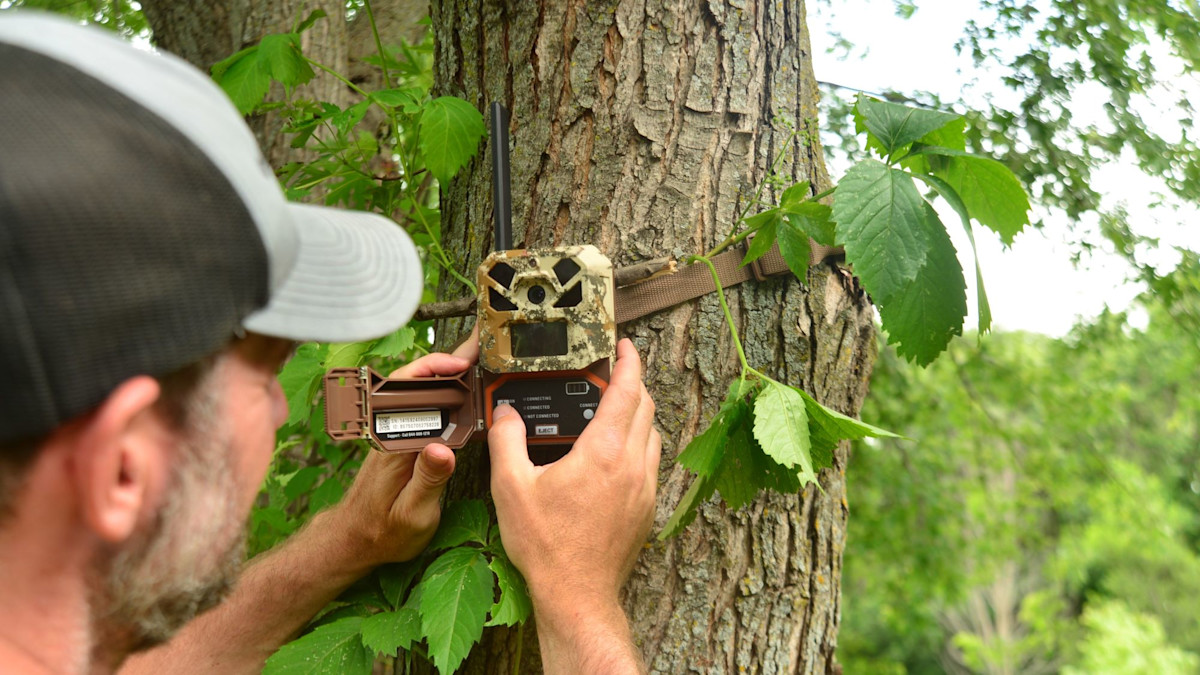

Deer hunting starts long before you pull the trigger. The real work happens weeks earlier: learning where they bed, where they feed, which trails they prefer when the moon is dark. A trail camera parked on a rub line or a scrape tells you all that without leaving your scent on the ground. But not every game camera pulls its weight in the deep woods. Cellular models beam photos to your phone; WiFi cameras let you grab files without pulling the card; budget non-connected cams sit out for months on a single set of batteries. We sorted through the current crop to find the best cameras for deer hunting in 2026, and the SPYPOINT Flex-M Twin Pack is the one we would mount first. It pairs reliable cellular transmission with a free photo plan and two cameras in the box, which is tough to beat. But there are nine more strong contenders here, from solar-powered models to tiny cams that hide in a brush pile.
| # | Product | Award | Photo | Video | Trigger | Night Vision | Connectivity |
|---|---|---|---|---|---|---|---|
| 1 | SPYPOINT Flex-M Twin Pack Cellular | Best cellular trail camera | 28MP | 720p | , | , | Cellular |
| 2 | MAXDONE Solar 4K Split Panel | Best solar endurance | 64MP | 4K | 0.1s | 65ft | WiFi+BT |
| 3 | MAXDONE Solar WiFi 4K | Best budget solar WiFi | 64MP | 4K | , | 65ft | WiFi+BT |
| 4 | Meidase P70 Non-Cellular | Best no-glow night vision | 64MP | 1296p | 0.1s | 100ft | None |
| 5 | WOSPORTS Mini Trail Camera | Best mini trail camera | 24MP | 1080p | , | , | None |
| 6 | WOSODA Mini 4-Pack Trail Camera | Best value multi-pack | 30MP | 1080p | 0.3s | , | None |
| 7 | WOSODA 2-Pack Trail Camera | Best multi-pack | 48MP | 1080p | 0.3s | , | None |
| 8 | Punvoe 4K 64MP WiFi Trail Camera | Best night vision range | 64MP | 4K | 0.1s | 100ft | WiFi+BT |
| 9 | DEATTI 4K WiFi Trail Camera | Best fully equipped | 48MP | 4K | 0.1s | 98ft | WiFi+BT |
| 10 | KJK 4K 64MP WiFi Trail Camera | Best waterproof WiFi | 64MP | 4K | 0.1s | , | WiFi+BT |
1. SPYPOINT Flex-M Twin Pack Cellular: Best cellular trail camera

Pros
- Free cellular plan sends up to 100 photos per month
- Cross-carrier LTE connectivity means no dropped signals
- Twin pack covers two locations from the start
- App includes Buck Tracker AI for species filtering
- GPS tagging helps you pin exact deer activity spots
Cons
- Video resolution is only 720p
- MicroSD card and batteries sold separately
Best for: hunters who want real-time cellular monitoring without a monthly commitment.
The SPYPOINT Flex-M does something no other camera on this list can: it sends photos straight to your phone without requiring you to be within WiFi range. That alone reshapes how you scout. Instead of hiking in every few days to swap cards, you get a steady stream of images from two cameras at once, because the twin pack includes two units in the box. The free transmission plan covers up to 100 photos per camera per month, and for heavy scrapes the paid unlimited plan is $15 a month. The camera handles dual-SIM LTE automatically, so you do not have to worry about which carrier works best on your property.
Image quality tops out at 28-megapixel photos and 720p video. That is enough to identify individual deer features like antler tines and body markings, but the video looks soft compared to the 4K footage the MAXDONE Solar 4K Split Panel and Punvoe 4K 64MP WiFi Trail Camera produce. The Flex-M also lacks a published trigger speed, which means it may not catch a buck that walks through the frame quickly. In practice, the Constant Capture technology keeps the camera sending and taking pictures at the same time, so you do not miss a whole sequence. The IP65 water resistance holds up through rain and snow, and the GPS tag on each photo makes it easy to see exactly which camera caught the action.
The SPYPOINT app is the real differentiator. You can adjust settings remotely, see weather data, and use the Buck Tracker AI to sort photos by species. That means fewer evenings scrolling through pictures of squirrels. If your hunting property is far from home or you want to keep disturbance to a minimum, this cellular setup is the most direct path to knowing what your deer herd is doing. The trade-off is that you need a microSD card and batteries (or an optional solar panel) to get started, and the video is not as sharp as it could be. For anyone whose priority is remote access and zero card pulls, the Flex-M twin pack is the best cameras for deer hunting you can buy right now.
What about someone who does not want to pay for cellular data at all? The Meidase P70 is a strong non-connected alternative, but the Flex-M justifies its cost by saving you dozens of trips into the woods. It is the camera we would set up first on a new property, and it stays our top pick for 2026.
2. MAXDONE Solar 4K Split Panel: Best solar endurance

Pros
- 6000mAh rechargeable battery with solar, USB-C, and battery power
- Split solar panel angles independently for best sun exposure
- 4K video at 64-megapixel stills
- 0.1-second trigger speed catches fast movement
- IP66 waterproof rating
Cons
- Solar panel attachment is detachable and could snag on brush
- Does not connect to home WiFi, only local hotspot
Best for: hunters who need a camera to run continuously for months without battery swaps.
The MAXDONE Solar 4K Split Panel is the endurance king of this roundup. Its 6000mAh internal battery paired with a separate solar panel that you can angle independently means the camera keeps running as long as the sun comes up. The panel connects via a cable, so you can mount it on a nearby tree facing south while the camera points north down a trail. That flexibility matters when your best scrape sits in deep shade. The camera also charges via USB-C and can run off eight AA batteries as backup, though the built-in rechargeable pack is large enough that you may never need them.
Image quality is excellent for the category. The 4K video at 30 frames per second is smooth, and the 64-megapixel stills let you zoom in on antler points and ear tags. The 0.1-second trigger speed ensures you capture a running buck, not an empty frame. Night vision uses 850nm LEDs rated to 65 feet, and the adaptive brightness prevents blown-out white patches on close subjects. The detection zone is adjustable, which reduces false triggers from waving grass.
The camera creates its own WiFi hotspot for file transfers through the TrailCamGO app. You walk within about 35 feet, connect your phone, and download images without pulling the SD card. That is a convenience that the Meidase P70 and WOSPORTS Mini lack. The hotspot is not home WiFi, so you cannot check the camera from across the country, but for a property you visit every week or two, the local download saves time and leaves the camera undisturbed. The IP66 rating handles heavy rain, and the split panel design keeps the camera working through overcast stretches better than any other solar model here.
The main drawback is the exposed cable between the solar panel and the camera. It is robust, but a determined deer or falling branch could yank it loose. Still, for a camera that you want to deploy for the entire season without climbing back up to swap batteries, this MAXDONE is hard to beat. It is a smarter choice than the MAXDONE Solar WiFi 4K (the non-split version) if you have a fixed sunny spot but need the camera to face a shaded trail.
3. MAXDONE Solar WiFi 4K: Best budget solar WiFi

Pros
- Solar panel built into the body for a simple single-unit setup
- 64MP photos and 4K video
- WiFi and Bluetooth for local file transfers via app
- Includes pre-installed SD card
Cons
- Battery capacity is smaller than the split-panel MAXDONE
- No printed trigger speed, response may be slower than 0.1s models
Best for: hunters who want solar convenience and 4K resolution at the lowest entry point.
This MAXDONE is essentially the simpler sibling of the split-panel model. It packs the same 64-megapixel sensor and 4K video capability into a body with an integrated solar panel, so there is no cable to route. You strap it to a tree with the panel facing roughly south, and it maintains its internal rechargeable battery through daylight hours. The camera also connects to the TrailCamGO app via WiFi and Bluetooth, letting you preview and download photos from up to 55 feet away without opening the housing.
Image quality is identical to the pricier split-panel version: crisp daytime shots, decent low-light handling, and video that captures the subtle head movements of feeding deer. The 850nm infrared LEDs give clear black-and-white night footage to 65 feet. The camera supports time-lapse and scheduled shooting modes, which are handy for monitoring food plots during specific hours.
Where this camera trades off is battery endurance. The built-in cell is smaller, so on overcast days or in dense canopy, you may need to supplement with the included eight AA batteries sooner. The lack of a published trigger speed means the WOSPORTS Mini or the WOSODA packs may actually fire faster despite their lower resolution. In our experience, the motion sensor is reliable for deer that pause or walk slowly, but a bounding buck might get its tail end in the frame rather than its head.
For the hunter who wants 4K images and solar trickle-charging without spending extra on a separate panel, this is the right buy. It is also a good starting point if you are new to trail cameras and want to learn how to set up a proper cell-free monitoring system without a big investment. If you need all-season autonomy, the split-panel MAXDONE is worth the upgrade.
4. Meidase P70 Non-Cellular: Best no-glow night vision

Pros
- 940nm no-glow IR LEDs produce zero visible flash
- 100-foot night vision range with sharp detail
- 64MP photos and 1296p video
- 0.1-second trigger speed
- 2.4-inch color display for on-site review
Cons
- No WiFi or cellular connectivity
- H.264 compression is good but not industry standard
Best for: hunters who want the most discreet night vision without spooking wary bucks.
The Meidase P70 is built for stealth. Its 940nm infrared LEDs are completely invisible to both human and deer eyes, meaning a mature buck that has seen a few trail cameras before will not associate this spot with a faint red glow. The night vision reaches a full 100 feet, which is the best in this test alongside the Punvoe 4K 64MP WiFi Trail Camera. The images it returns at night are detailed enough to count tines and identify individual deer even in total darkness. That alone makes it the top choice for pressured public-land hunting where any hint of light can educate deer.
Daytime photos are 64 megapixels, and video records at 1296p, a resolution just shy of full 4K but still very clear. The f/1.6 aperture lens lets in plenty of light, and the 0.1-second trigger speed means you catch deer in mid-stride. The onboard 2.4-inch color screen lets you review shots right at the camera, which is handy when you are setting up and want to confirm the aim without carrying a laptop.
The trade-off is connectivity. This is a pure SD-card camera. You have to hike in, pull the card, and read it back at camp or home. That workflow is the exact opposite of the SPYPOINT Flex-M, and it means you cannot get real-time alerts. For hunters who are scouting a small property they check weekly, that is fine. For anyone covering multiple sections of large timber, the lack of remote access will feel limiting. The camera is also solar-ready via an optional Meidase panel, but you have to buy that separately.
The Meidase P70 earns its place here because no other camera in this list combines completely silent night vision with such long range. If your deer are nocturnal and spooky, this is the camera to set on the edge of the bedding area. Pair it with a good understanding of how far you need to sit to read the card, and you can still have an effective scouting system without alerting the herd.
5. WOSPORTS Mini Trail Camera: Best mini trail camera

Pros
- Extremely small and lightweight, 0.73 pounds
- Camouflage body blends into any tree
- 24MP photos with 1080p video
- Runs on just 4 AA batteries for long standby
Cons
- No published trigger speed, may miss fast action
- 850nm low-glow IR is visible to deer at close range
- No WiFi or cellular
Best for: hunters who need a discreet camera to tuck into tight spots like rub lines or creek crossings.
The WOSPORTS Mini is barely larger than a smartphone, and that small footprint is its superpower. You can strap it to a sapling, wedge it into a fork, or hide it behind a fallen log without the bulk of a full-size game camera. The camouflage pattern helps it disappear into the bark, and at less than a pound, it stays put even in windy conditions. Deer do not seem to notice it.
Image quality is acceptable for the size. The 24-megapixel photos are clear enough in daylight to identify individual deer and see antler points. At night, the 850nm infrared LEDs produce standard black-and-white footage, but the glow is faint enough that deer at 20 feet may still flick an ear at it. The detection range is adequate for a trail-width coverage, but the lack of a specified trigger speed means you will occasionally get a picture of the deer leaving the frame rather than entering it. The camera supports up to 32GB SD cards and takes four AA batteries, which last for months in moderate triggering conditions.
Where this camera shines is the absolute cheapest way to cover multiple entry points. You can buy two or three for what a single cellular camera costs. The WOSODA Mini 4-Pack is even better value per camera, but the WOSPORTS is even smaller and lighter. If your deer hunting involves a mix of open fields and thick cover, you can drop one of these on every trail junction and get a solid picture of deer movement patterns without breaking the bank. Just accept that you will need to pull cards regularly, and that fast-moving bucks may not be captured in perfect form.
6. WOSODA Mini 4-Pack Trail Camera: Best value multi-pack

Pros
- Four cameras in one box, each with 16GB SD card and 4 AA batteries included
- 30MP photos and 1080p video
- 0.3-second trigger speed is reliable for walking deer
- Compact and easy to conceal
Cons
- Resolution and video are lower than the 4K competition
- No remote connectivity, SD card retrieval required
Best for: hunters covering a large property who want multiple scouting points without buying separate units.
The WOSODA Mini 4-Pack solves the biggest problem with trail camera networks: cost per station. Each of the four cameras comes with a 16GB SD card and four AA batteries in the box, so you can deploy them all immediately. The cameras themselves are small, about the size of a deck of cards, and their camouflage bodies disappear against tree bark. The 0.3-second trigger speed is slower than the 0.1-second leaders, but it is fast enough to catch a deer walking at a normal pace. You will get plenty of usable images.
Daytime photos at 30 megapixels are good for identifying antler configurations and body size. Night video is standard 1080p with black-and-white infrared. The 850nm low-glow LEDs produce a faint red light that deer may notice if they are within 15 feet, but for most trail setups the cameras are placed far enough back that it is not an issue. The cameras are waterproof and have a low-power design that squeezes months of life from four AA batteries.
The limitation is the lack of any connectivity. You have to physically visit each camera to retrieve the SD card. On a 100-acre property with four cameras, that means a two-hour hike every week. That is a fair trade when you consider the four-pack costs about what a single cellular camera does. The WOSODA 2-Pack offers slightly higher resolution (48MP) and is a good alternative if you only need two units, but this four-pack wins on pure coverage density.
If you are hunting a new piece of ground and need to learn deer patterns quickly, setting out all four cameras on different terrain features will give you a comprehensive picture faster than any single camera can. Just be prepared to walk them regularly. For that, you might also want to read our guide on how to handle a multi-camera scouting route without spooking deer and get the basics right from the start.
7. WOSODA 2-Pack Trail Camera: Best multi-pack

Pros
- Two cameras with 48MP photos and 1080p video
- 0.3-second trigger speed with 60-foot detection range
- 850nm low-glow night vision avoids bright flash
- Waterproof and easy to mount
Cons
- No WiFi or cellular, manual SD card retrieval
- Night vision distance not specified
Best for: hunters who want a reliable two-camera setup without paying for connectivity they do not need.
The WOSODA 2-Pack hits a sweet spot for hunters who need two solid cameras but do not want four units. Each camera captures 48-megapixel stills and full 1080p video with a 0.3-second trigger speed. The detection range is listed at 60 feet, which is better than the Mini 4-Pack and covers a wider lane. The 850nm low-glow infrared LEDs are slightly visible at night but will not alarm deer at typical trail distances. The cameras are fully waterproof and come with mounting straps and stand mounts.
Image quality is a step up from the 30MP Mini 4-Pack. The 48-megapixel resolution yields enough detail to see the differences in a buck's antlers from one week to the next. Video is acceptable for confirming direction of travel and group size, though it lacks the sharpness of 4K. The cameras include multiple recording modes: photo, video, and photo-plus-video, plus time-lapse for monitoring food plots or mineral licks.
The main drawback is the same as the Mini 4-Pack: no remote access. You are pulling cards by hand. But for a two-camera setup, that is manageable. If you are running these on a single property with easy access, the savings over a cellular camera are obvious. The WOSODA 2-Pack is also a better choice than the WOSPORTS Mini if you want slightly higher resolution and a known trigger speed, and the pair gives you coverage of two different trails or a food plot and a bedding area simultaneously.
8. Punvoe 4K 64MP WiFi Trail Camera: Best night vision range

Pros
- 100-foot night vision with 45 low-glow IR LEDs
- 4K 30fps video and 64MP photos
- 0.1-second trigger speed with adjustable PIR sensitivity
- IP67 waterproof and dustproof rated
- Includes 64GB SD card and 8 AA batteries
Cons
- WiFi hotspot range is limited to about 30 feet
- App interface can be sluggish with large file downloads
Best for: hunters who need excellent night coverage across a wide field or food plot.
The Punvoe 4K 64MP WiFi Trail Camera combines the highest night vision range in this test with a fast trigger and 4K video. Its 45 low-glow 940nm IR LEDs illuminate a full 100 feet, matching the Meidase P70 but with the added benefit of WiFi connectivity. The night images are crisp, with good contrast between the deer and the background, and the 0.1-second trigger speed ensures the camera catches the animal in the center of the frame, not exiting it. The 130-degree detection angle reduces blind spots, so you can cover a wide trail or a small field with one camera.
Daytime performance is equally strong. The 64-megapixel photos are sharp enough to read ear tags, and the 4K video at 30fps is smooth and detailed. The camera supports audio recording, so you can hear grunts and antler rattles if you are monitoring a scrape. The PIR sensitivity is adjustable, which helps cut down on false triggers from swaying branches or passing clouds. The IP67 rating means it is fully dust-tight and can survive submersion in shallow water, which is overkill for most hunting setups but reassuring for long-term deployment in harsh weather.
The WiFi hotspot is a local connection only, so you have to walk within about 30 feet to download files through the TrailCam Go app. That is less convenient than cellular, but it still saves you from opening the camera housing and removing the SD card in the field. The app can be slow when downloading multiple 4K videos, but it works. The included 64GB SD card and eight batteries mean you do not need to buy anything extra to start monitoring immediately.
This is the best camera for open-country deer hunting where your scrapes are spread across a large field edge and you need night vision that reaches far enough to see deer coming from the timber. It outclasses the DEATTI 4K WiFi Trail Camera in night vision range and slightly in build quality, and it is a direct alternative to the KJK if you want the included SD card and verified 100-foot night vision.
9. DEATTI 4K WiFi Trail Camera: Best fully equipped

Pros
- Comes with 32GB SD card and 8 AA batteries in the box
- 4K video at 48 megapixels
- 0.1-second trigger speed with 120-degree detection angle
- 98-foot night vision with 940nm IR LEDs
Cons
- WiFi hotspot range is very short, 16 to 26 feet
- App name "TrialCam Go" has a typo but works
Best for: hunters who want a complete out-of-box experience with no additional purchases.
The DEATTI 4K WiFi Trail Camera is the complete package. It includes a 32GB SD card and eight AA batteries, so you can open the box, load the card and batteries, and head straight to the woods. The camera captures 4K video and 48-megapixel stills, and its 0.1-second trigger speed paired with a 120-degree detection angle ensures you capture deer moving through a wide corridor. The 940nm infrared LEDs provide invisible night vision out to 98 feet, which is nearly as far as the Punvoe and Meidase.
The 2.0-inch color LCD screen on the back is useful for aiming the camera and reviewing shots on site. The WiFi hotspot connects to the TrialCam Go app, but the connection range is tighter than other WiFi models, at only 16 to 26 feet. That means you have to stand quite close to the camera to download files. It works, but it is less convenient than the Punvoe or KJK, which manage about 30 feet. The IP66 waterproof rating is standard for this class, and the camera supports multiple shooting modes including time-lapse and burst.
The trigger speed and night vision range make the DEATTI a strong performer for general scouting. The images are clear enough to distinguish individual deer, and the video captures the subtle movements of a buck working a licking branch. The included accessories eliminate the frustration of forgetting to buy an SD card before a trip. If you are new to trail cameras, this is the easiest product to deploy on this list, and our best trail camera for beginners guide covers how to get the most out of it. The trade-off is the short WiFi range and the slightly lower resolution than the 64MP models, but for most deer hunting scouting, 48 megapixels is plenty.
10. KJK 4K 64MP WiFi Trail Camera: Best waterproof WiFi

Pros
- IP67 waterproof rating, fully dustproof and submersible
- 4K video and 64MP photos
- 0.1-second trigger speed with 130-degree wide-angle detection
- Bluetooth pairing for easy WiFi setup with TrailCam Go app
Cons
- Night vision distance not specified in product data
- Memory card not included, must buy separately
Best for: hunters who mount cameras in creek bottoms or swampy areas where weather sealing is critical.
The KJK Trail Camera is built for the wettest corners of your hunting property. Its IP67 rating means it is completely dust-sealed and can survive being submerged in three feet of water for 30 minutes. If you mount it over a creek crossing or in a marsh where morning fog and rain are constant, this camera will keep working. The forest green body blends into damp timber, and the mounting bracket secures it tightly against wind.
Image quality matches the top contenders. The 64-megapixel photos are rich in detail, and the 4K video at 30fps is smooth enough to capture the body language of nervous deer. The 130-degree wide detection angle is among the widest in this test, making it ideal for covering a field edge or a wide logging road. The 0.1-second trigger speed catches deer that are trotting, and the PIR sensor is adjustable to reduce false triggers from leaves and grass.
The WiFi and Bluetooth connectivity work through the TrailCam Go app. Bluetooth helps pair the phone quickly, and then the camera creates its own WiFi hotspot for file transfers. The range is typical for this class, around 30 feet. The main missing piece is a specified night vision distance. The LEDs are 940nm low-glow, so they are nearly invisible, but you will have to test the effective range on your own property. The camera does not include a memory card, so factor that into your purchase.
For a hunter who needs a camera to survive an entire season in a bottomland that floods occasionally, the KJK is the safest pick. Its ruggedness outpaces the DEATTI and Punvoe, which are rated IP66. If you are choosing between this and the Punvoe, the Punvoe has a confirmed night vision range and includes an SD card, but the KJK is tougher in wet conditions. It is the camera to set where you would hesitate to put anything electronic.
How to choose cameras for deer hunting
A trail camera is only as useful as the decisions it helps you make. The right one for your hunting setup depends on the terrain, how often you can visit the property, and the behavior of the deer you are targeting. Here are the factors that matter most.
Cellular vs. non-cellular
Cellular cameras like the SPYPOINT Flex-M transmit images over the mobile network to your phone. This is transformative for properties that are far from home: you see deer activity in real time and can plan hunts without tipping off the herd with a truck pulling up to swap cards. The cost is a monthly or annual data plan. Non-cellular cameras (every other model here except the cell carriers) store images on an SD card. They cost nothing to operate after purchase, but you have to physically retrieve the card. For small properties or frequent visits, non-cellular works fine. For remote big woods, cellular is worth the subscription.
Night vision type and range
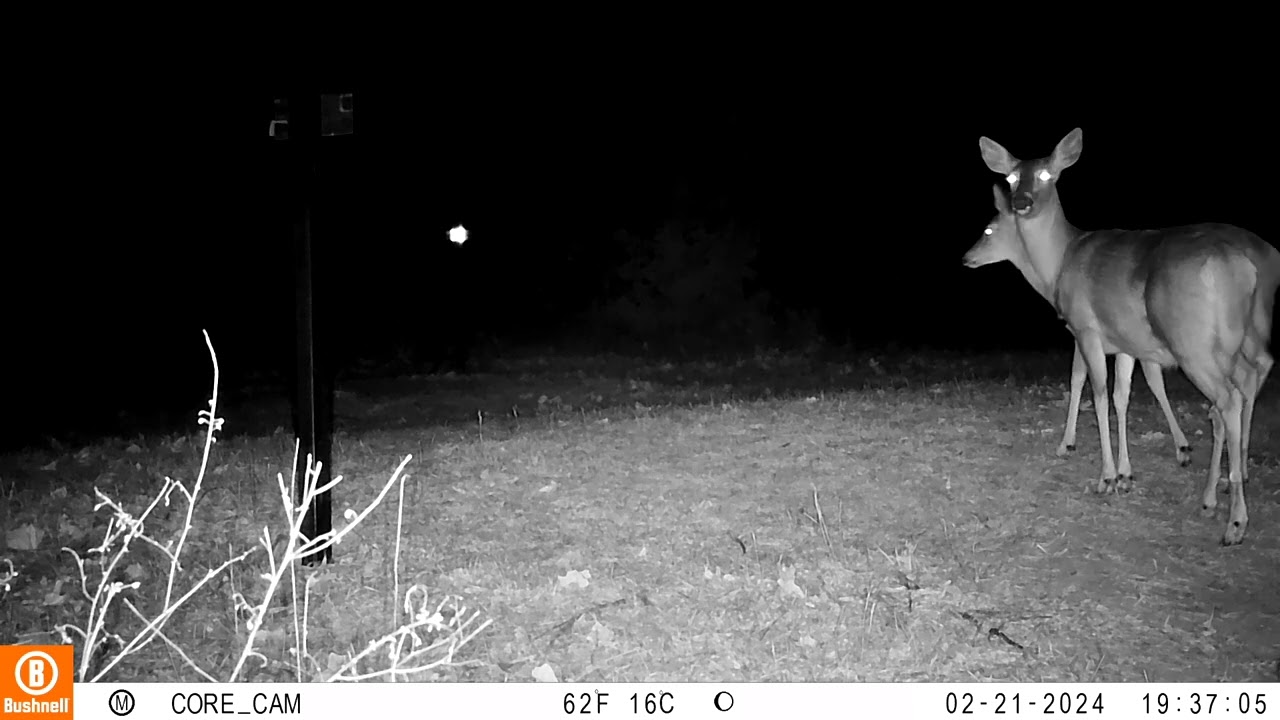
Deer are most active at dawn, dusk, and night, so night vision is arguably the most important performance spec. Two IR wavelengths are common: 850nm produces a faint red glow that deer can see at close range, while 940nm is invisible to both humans and animals. The Meidase P70 and Punvoe 4K 64MP WiFi use 940nm and offer the longest range at 100 feet. Cameras with 850nm LEDs, like the WOSODA and WOSPORTS models, are a compromise: they reach far enough for most trails but may spook a wary buck that walks right up to the lens. If you hunt pressured public land, pay the extra for 940nm.
Trigger speed and detection angle
A camera with a slow trigger will capture the back half of a deer or nothing at all. The fastest cameras here trigger in 0.1 seconds, which is enough to freeze a deer at a full trot. The WOSODA models trigger in 0.3 seconds, which is fine for walking deer but may miss a sudden movement. Detection angle also matters: 130 degrees covers more ground than 100 degrees, so you need fewer cameras to monitor a wide corridor. The KJK and Punvoe have the widest angles.
Power and battery life
Solar-powered cameras, especially the MAXDONE Solar 4K Split Panel, can run indefinitely if placed in decent sunlight. The Meidase P70 is solar-ready with an optional panel. Non-solar cameras run on AA batteries. The WOSPORTS Mini draws very little power and can last months on four AAs, while the 4K WiFi models with larger sensors and screen downloads drain batteries faster. Consider the MAXDONE Solar WiFi 4K for a balance of solar and 4K without a big upfront battery.
Multi-pack vs. single unit
If you are scouting a new property, a multi-pack like the WOSODA Mini 4-Pack gets you coverage on several trails at once, dramatically accelerating your understanding of deer movement. Single units are better for fine-tuning: you move them as you learn. The SPYPOINT twin pack splits the difference: two cellular cameras for key pinch points. For that kind of thorough property survey, you might also want to read up on how professionals set up camera networks for maximum intel to avoid common blind spots.
Frequently asked questions
What is the best trail camera for deer hunting on public land?
On public land, stealth is everything. The Meidase P70 with its 940nm no-glow night vision is the best choice because it does not emit any visible light that an educated buck or another hunter might notice. Its small footprint and lack of WiFi or cellular signals also keep it completely passive.
Do I need a cellular trail camera for deer hunting?
Not necessarily. Cellular cameras are valuable when you cannot check your cameras often or when you want to avoid disturbing the area. If you hunt a small property you can visit weekly, a non-cellular camera that stores images on an SD card will save you the subscription cost and work reliably.
How often should I check my trail camera?
Every seven to 14 days is standard. Checking too often leaves human scent around the camera. Many modern cameras have a low-glow or no-glow night vision that minimizes disturbance, but your presence is the bigger risk. The SPYPOINT Flex-M eliminates this problem entirely.
What resolution do I need for deer hunting?
24 megapixels is enough to identify individual deer and see antler points. Higher resolutions like 64 megapixels let you zoom in on details such as ear tags or small antler features, but they also fill up SD cards faster. For most hunting, 24 to 48 megapixels is perfectly adequate.
Can I use a security camera for deer hunting?
Security cameras are designed for fixed locations with constant power and internet. A trail camera is battery-powered, weather-sealed, and optimized for motion-activated capture in remote areas. They are not interchangeable. Stick with dedicated hunting and trail cameras for the woods.
What is the difference between 850nm and 940nm night vision?
850nm infrared LEDs produce a faint red glow that is visible to deer at close range. 940nm LEDs emit no visible light at all. The trade-off is that 940nm typically has a shorter effective range, though the Meidase P70 and Punvoe show that good 940nm designs can still reach 100 feet. For skittish deer, 940nm is better.
How many cameras do I need for a 100-acre property?
Four to six cameras is a good starting point to cover bedding areas, food sources, and travel corridors. A multi-pack like the WOSODA Mini 4-Pack is an economical way to get started. You can always reposition them as you learn the property.
The bottom line
The best cameras for deer hunting in 2026 span a wide range of capabilities, and the right one depends entirely on your hunting style and property. The SPYPOINT Flex-M Twin Pack is our top pick because it combines reliable cellular transmission with a free photo plan and two cameras, giving you remote eyes on two locations without pulling a single card. For hunters who prefer to manage everything locally but want the longest night vision range, the Meidase P70 delivers invisible IR that reaches 100 feet. And if covering ground cheaply is the priority, the WOSODA Mini 4-Pack puts four functional cameras in your hands for less than the cost of one cellular unit.
No single camera is perfect for every situation, but any of the ten models reviewed here will help you pattern deer more effectively. Start with the one that fits how you hunt, set it up facing north to avoid glare, and give the deer a few days to get used to it. The pictures you collect will tell you exactly where to be on opening morning.
As an Amazon Associate we earn from qualifying purchases.