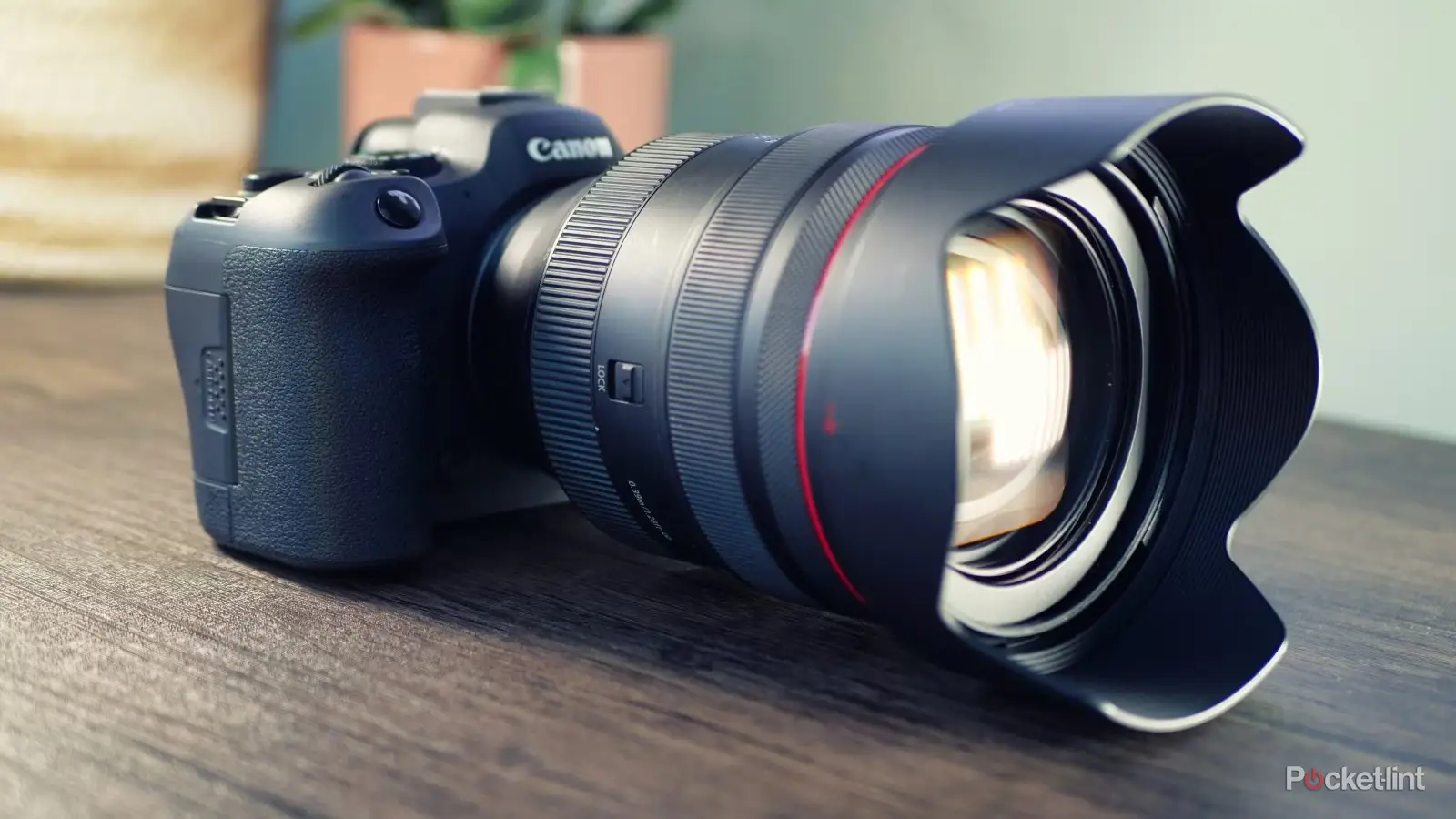

A camera can look impressive on a product page and still be frustrating once you need to focus on a moving child, transfer a clip to your phone, or hold it steady for a full day. The Best canon camera depends less on a long feature list than on the way you shoot.
This selection covers approachable DSLRs, compact point-and-shoot models, creator-focused mirrorless cameras, and Canon's more advanced full-frame option. The Canon EOS R50 is our top pick, with the R6 Mark II, R100, and several Rebel T7 kits filling out the range.
Comparison table
| # | Product | Award | Sensor | Video | Best for |
|---|---|---|---|---|---|
| 1 | Canon EOS R50 White | Best overall | 24.2MP APS-C | 6K oversampled 4K up to 30 fps | Hybrid photo and video |
| 2 | Canon EOS R6 Mark II | Best full-frame | 24.2MP full-frame | Hybrid video | Enthusiasts and professionals |
| 3 | Canon EOS R50 Bundle | Best for creators | APS-C | 4K | Vlogging and social video |
| 4 | Canon EOS R100 | Best entry mirrorless | 24.1MP APS-C | 4K up to 24 fps | First interchangeable-lens camera |
| 5 | Canon EOS Rebel T7 | Best beginner DSLR | 24.1MP APS-C | Full HD | Learning traditional photography |
| 6 | Canon EOS Rebel T7 Dual Lens | Best for reach | 24.1MP APS-C | Full HD 1080p | Wildlife and distant subjects |
| 7 | Canon PowerShot G7 X III | Best compact creator camera | 20.1MP | 4K UHD | Vlogging on the go |
| 8 | Canon PowerShot ELPH 360 HS | Best pocket camera | 20.2MP CMOS | Hybrid Auto clips | Casual travel and family photos |
| 9 | Canon EOS Rebel T7 Bundle | Best complete DSLR kit | 24.1MP APS-C | Not specified | New photographers |
| 10 | Canon EOS Rebel T7 Renewed | Best renewed DSLR | 24.1MP APS-C | Not specified | Basic still photography |
1. Canon EOS R50 White: Best Overall

Pros
- 24.2MP APS-C sensor with a modern DIGIC X processor
- Excellent subject detection and tracking
- Uncropped 4K from 6K oversampling
- Vari-angle touchscreen and 2.36-million-dot EVF
- Bluetooth and Wi-Fi connectivity
Cons
- The included RF-S18-45mm lens has a modest F4.5-6.3 aperture range
- Smaller APS-C sensor than the R6 Mark II
- The white finish will not suit every camera bag
Best for: photographers and creators who want one compact body for high-quality stills and video.
The Canon EOS R50 White is the easiest recommendation here because it avoids the two most common beginner-camera problems: an aging autofocus system and video features that feel bolted on. It is small enough to carry regularly, but it still gives you an electronic viewfinder, a vari-angle touchscreen, interchangeable lenses, and controls that leave room to grow.
Its 24.2MP APS-C sensor produces enough detail for everyday prints, crops, portraits, and social media work. The DIGIC X processor helps the camera keep up with action, with continuous shooting up to 12 fps using the electronic first-curtain shutter and up to 15 fps with the electronic shutter. Those figures matter when a subject is moving unpredictably, although the camera's real advantage is the autofocus system. Dual Pixel CMOS AF II covers up to 100% by 100% of the frame with 651 AF zones and can detect people, animals, and vehicles.
Video is where the R50 pulls decisively ahead of the Rebel T7 cameras. It records 6K oversampled uncropped 4K at up to 30 fps, Full HD high-frame-rate footage up to 120 fps, and includes a Movie for Close-up Demo Mode that can shift focus to a nearby object. The vari-angle screen makes self-recording far more practical than a fixed display, while vertical video tools and Camera Connect support a creator's workflow.
The RF-S18-45mm lens is a sensible everyday starting point, covering wide to standard perspectives for family scenes, street photos, and talking-head video. Its F4.5-6.3 aperture is not especially bright, so indoor scenes may need more light than they would with a faster lens. That is the main reason to consider the R6 Mark II instead, while the R50 Bundle is the more practical choice if its included accessories appeal to you.
The white version does not change the camera's capabilities, but it does make this particular listing visually distinct. Skip it if you want a full-frame body or a brighter kit lens from day one. For everyone else, this is the most balanced starting point in the group.
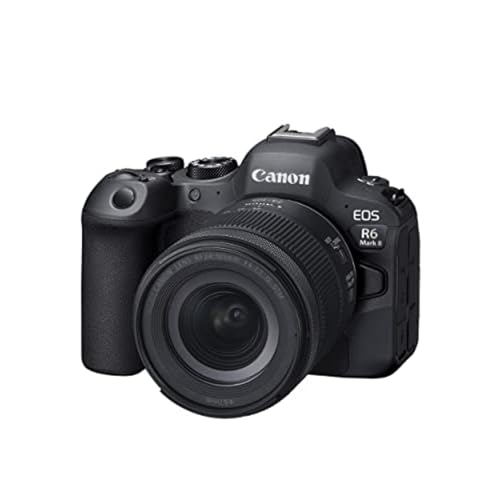
2. Canon EOS R6 Mark II: Best Full-Frame
Pros
- 24.2MP full-frame CMOS sensor
- ISO range from 100 to 102400, expandable to 204800
- Up to 40 fps electronic shutter shooting
- Dual Pixel CMOS AF II with 1, 053 AF zones
- Detects people, animals, vehicles, aircraft, trains, and horses
Cons
- Larger and heavier than the APS-C mirrorless options
- The included RF24-105mm lens has an F4-7.1 aperture range
- More camera than a casual shooter may need
Best for: serious photographers who need full-frame image quality, fast shooting, and advanced subject recognition.
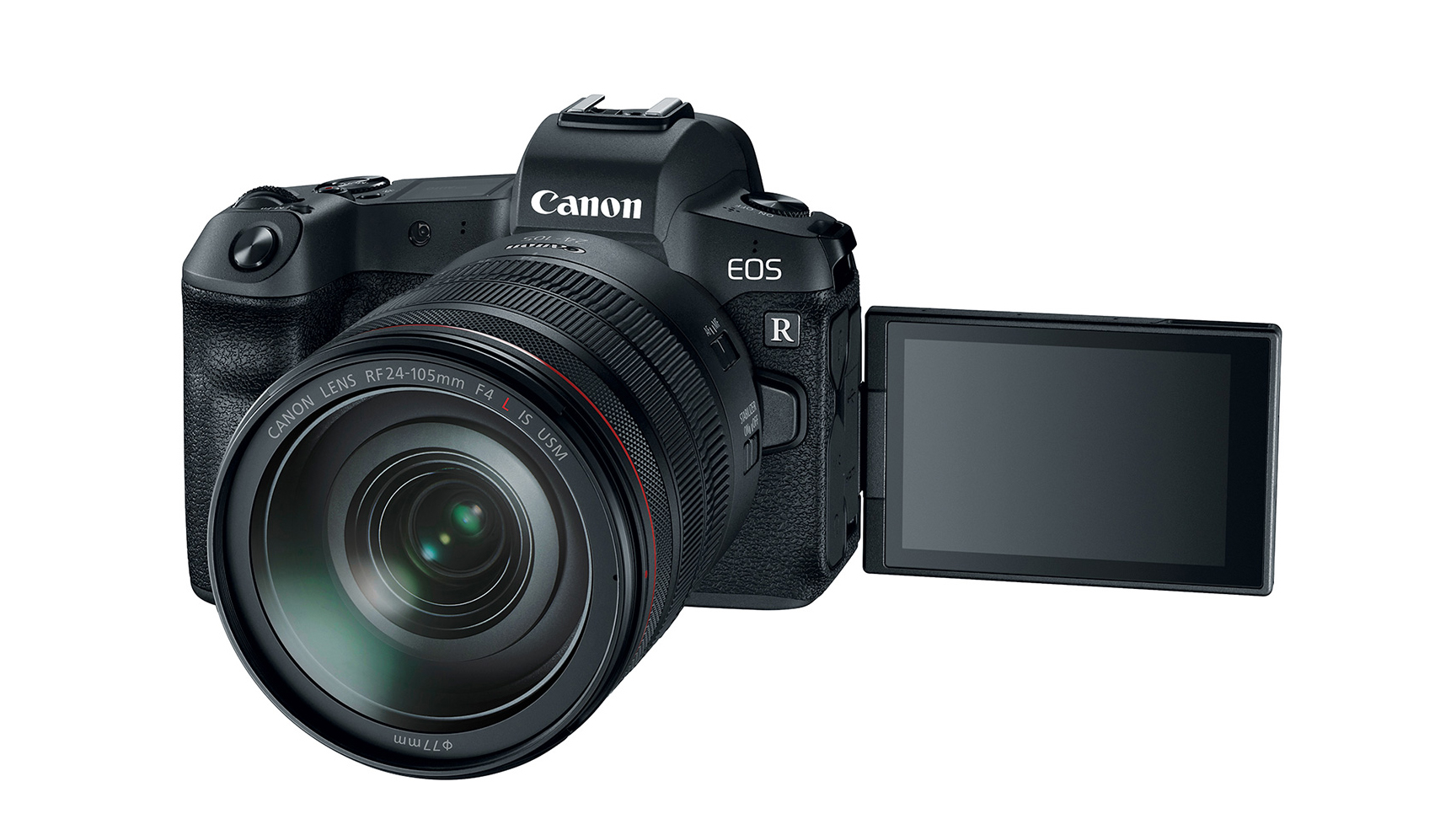
The Canon EOS R6 Mark II is the most capable camera in this group, and it feels aimed at someone who already knows what they want from a camera. Its 24.2MP full-frame sensor gives it a different low-light and depth-of-field character from the APS-C R50, R100, and Rebel T7 models. The body is also more substantial, which makes sense for a camera built around fast action and demanding hybrid work.
The ISO range runs from 100 to 102400, expandable to 204800. That does not make every high-ISO image clean, but it gives the camera more room to work when light disappears. The DIGIC X processor supports up to 12 fps with the mechanical shutter and up to 40 fps with the electronic shutter. RAW burst mode and pre-shooting capture add another layer for subjects that move before you fully press the shutter.
Autofocus is the strongest reason to choose this model. Dual Pixel CMOS AF II covers up to 100% by 100% of the frame with 1, 053 AF zones, and the deep-learning detection system recognizes people, animals, vehicles, aircraft, trains, and horses. Compared with the nine-point AF system in the Rebel T7, this is a fundamental change in how much attention you need to spend keeping a subject under an AF point.
The RF24-105mm F4-7.1 IS STM lens gives you a useful general-purpose focal range, from wide scenes to moderate telephoto framing. Its variable aperture is the compromise. It is less helpful for isolating a subject in dim interiors than a brighter lens would be, so buyers should think of it as a flexible starting point rather than the final lens for every assignment. Canon's lens choices for expanding a mirrorless kit are worth considering once you know which subjects you photograph most.
The R6 Mark II is heavier than the R50 White and less approachable than the R100. It is also unnecessary for someone who mainly photographs vacations in daylight. Choose it when fast action, low-light work, full-frame rendering, and advanced autofocus matter more than keeping the kit small.
3. Canon EOS R50 Bundle: Best for Creators
Pros
- 4K video with Dual Pixel AF II
- Vari-angle touchscreen
- Face and eye detection for video
- Vertical video and Creative Assist tools
- Includes an 18-45mm lens and listed creator accessories
Cons
- APS-C sensor is smaller than the R6 Mark II's full-frame sensor
- The kit lens is not especially bright
- Bundle dimensions and accessory details may matter to buyers with existing gear
Best for: new vloggers and social creators who want guided controls and reliable autofocus.
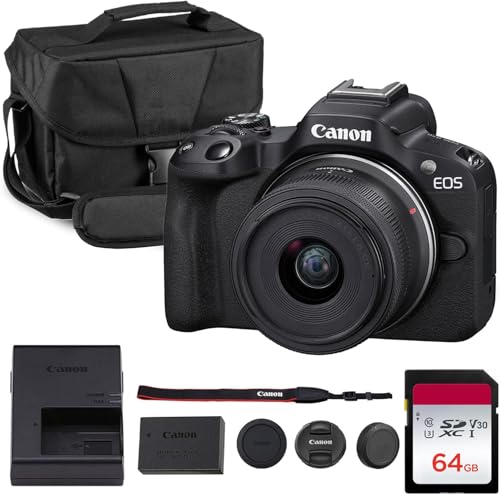
The Canon EOS R50 Bundle is functionally very close to the R50 White, but its appeal is the creator-oriented presentation. The camera itself combines a lightweight APS-C body with the RF-S18-45mm lens, and the listed bundle includes a shoulder bag and a 64GB UHS-I SDXC memory card. That means less time assembling the basic pieces needed to start shooting.
The R50's autofocus is far more useful for self-recording than the Rebel T7's basic nine-point system. Dual Pixel AF II tracks subjects across up to 100% by 100% of the frame, with 651 AF zones and detection for people, animals, and vehicles. Face and eye detection can keep a presenter recognizable while they move, which is the sort of small convenience that prevents many failed clips.
The video specification is also a meaningful step up from Canon's entry DSLR options. The camera offers 6K oversampled uncropped 4K at up to 30 fps and Full HD high-frame-rate recording up to 120 fps. A vari-angle touchscreen helps with high, low, and front-facing compositions, while Movie for Close-up Demo Mode can move focus toward a product held near the lens. Vertical shooting tools are a natural fit for short-form platforms.
The 18-45mm range handles desk videos, walking clips, portraits, and ordinary street scenes without demanding constant lens changes. The F4.5-6.3 aperture range is less useful in dim rooms, and the kit does not create the same background separation as a larger full-frame setup. The R6 Mark II is the stronger choice for demanding low-light work, while the R100 is simpler for buyers who do not need the R50's creator controls.
The bundle makes more sense for someone starting from nothing than for a photographer who already owns an SD card and bag. Those extras do not change the camera's image quality, but they reduce setup friction. Pick this version for a ready-to-shoot creator kit, and pick the R50 White if the camera alone and its finish are the deciding factors.
4. Canon EOS R100: Best Entry Mirrorless

Pros
- 24.1MP APS-C sensor
- Compact EOS R-series body
- 4K recording and Full HD at 60 fps
- HD recording up to 120 fps
- Wi-Fi and Bluetooth connectivity
- Human face, eye, animal, and vehicle detection
Cons
- 4K is limited to up to 24 fps
- Continuous shooting reaches 6.5 shots per second in One-Shot AF
- The F4.5-6.3 kit lens needs reasonable light
Best for: first-time interchangeable-lens buyers who want a small mirrorless camera and 4K recording.
The Canon EOS R100 is a straightforward introduction to Canon's RF mirrorless system. It keeps the familiar appeal of a 24.1MP APS-C sensor and interchangeable lens, then places them in a compact body that is easier to carry than a traditional DSLR. Its simplicity is a strength for a new photographer who wants better control than a phone without being buried in advanced settings.
The DIGIC 8 processor supports 4K video at up to 24 fps, Full HD at up to 60 fps, and HD recording at up to 120 fps. That gives the R100 useful flexibility for everyday clips and slow-motion experiments, although the R50's uncropped 4K at up to 30 fps is more attractive for a creator who records frequently. The R100 is better understood as a stills-first camera with respectable video, not a dedicated vlogging body.
Autofocus covers up to 143 zones and includes human face and eye detection, along with animal and vehicle detection. In One-Shot AF, continuous capture reaches up to 6.5 shots per second. That is enough for children, pets, and ordinary movement, but it lacks the action headroom of the R50 and is nowhere near the R6 Mark II's burst performance.
The included RF-S18-45mm F4.5-6.3 IS STM lens covers the familiar everyday wide-to-standard range. It is convenient for travel, family photos, and learning composition, but the narrow aperture range can make indoor shooting more demanding. Wi-Fi and Bluetooth make transfers easier, and the small body is a reason to carry this camera instead of leaving a larger DSLR at home.
The R100 is not the pick for advanced video controls or fast sports. It also has less room for growth than the R50 if your interest quickly moves toward self-recording and high-speed action. For a first mirrorless camera that teaches lens choice, exposure, and autofocus without excessive bulk, though, it is an uncomplicated place to begin.
5. Canon EOS Rebel T7: Best Beginner DSLR

Pros
- 24.1MP APS-C CMOS sensor
- Familiar optical viewfinder
- Built-in Wi-Fi and NFC
- Compatible with Canon EF and EF-S lenses
- Webcam support through EOS Utility Webcam Beta Software
Cons
- Nine-point autofocus is basic
- Optical viewfinder shows approximately 95% of the frame
- Full HD rather than 4K video
Best for: beginners who specifically want the handling and optical viewfinder of a DSLR.
The Canon EOS Rebel T7 remains appealing because it makes the fundamentals visible. Looking through an optical viewfinder and changing lenses gives a new photographer a direct connection to framing, focus, and exposure that can feel more deliberate than shooting with a phone. The body is listed at 1.04 pounds, so it is not an especially intimidating DSLR to carry.
Its 24.1MP APS-C sensor is capable of detailed still images, and the ISO range runs from 100 to 6400, expandable to 12800. That range gives the camera flexibility from bright outdoor scenes to dimmer interiors, although the sensor and processor belong to an older generation than those in the R50. The included EF-S18-55mm lens is a sensible general-purpose starting point for portraits, family photos, and landscapes.
The nine-point AF system with AI Servo AF is easy to understand, but it is limited compared with the R100's 143 zones or the R50's 651 zones. The optical viewfinder covers approximately 95% of the eventual frame, so the edges can include a little more than what you see while composing. Those are not deal-breakers for patient still photographers, but they become noticeable with erratic subjects.
Video tops out at Full HD, and the camera can work as a webcam through Canon's EOS Utility Webcam Beta Software on Mac and Windows. Built-in Wi-Fi and NFC support wireless sharing, which makes the T7 less isolated than some older DSLRs. If video is a central reason for buying, the R100 or R50 is a much more natural fit.
This is the plainest and most focused camera in the lineup. It lacks the quick subject recognition and modern 4K features of Canon's mirrorless bodies, but it offers a comfortable way to learn traditional camera controls and access Canon EF and EF-S lenses. Choose it when the optical viewfinder matters more than the newest autofocus system.
6. Canon EOS Rebel T7 Dual Lens: Best for Reach

Pros
- Includes EF-S18-55mm and EF75-300mm lenses
- 24.1MP APS-C sensor
- Optical viewfinder with approximately 95% coverage
- Built-in Wi-Fi and NFC
- Full HD 1080p video
Cons
- Nine-point autofocus remains modest
- The longer lens adds bulk and lens changes
- Full HD video is behind the mirrorless options
Best for: beginners who need more framing reach for distant subjects without leaving the Canon DSLR system.
The Canon EOS Rebel T7 Dual Lens uses the same basic camera platform as the standard Rebel T7, but the second lens changes what the kit can do. The EF-S18-55mm lens handles ordinary scenes, while the EF75-300mm lens brings distant subjects closer in the frame. That combination is more useful for outdoor events, playgrounds, and casual wildlife photography than a single short zoom.
The camera carries a 24.1MP APS-C sensor and ISO 100 to 6400, expandable to 12800. The sensor gives you room to crop, though cropping cannot replace the reach of the 75-300mm lens. At the long end, framing a subject is easier from a distance, but the larger lens also makes the kit less convenient for casual walks than the standard T7.
Autofocus uses nine points with AI Servo AF. It can handle deliberate photography and some moving subjects, but it requires more care than the tracking systems in the R50 and R6 Mark II. The optical viewfinder covers about 95% of the frame, and the camera records Full HD 1080p rather than 4K. Those limitations matter less when still photography is the priority.
Wi-Fi and NFC help move photos to a compatible device, and Canon's EOS Utility Webcam Beta Software can turn the camera into a webcam on supported Mac and Windows systems. The lens compatibility is broad across Canon EF lenses, including EF-S lenses, which gives the kit a clear upgrade path. The cost of that flexibility is carrying and storing two lenses.
Compared with the regular Rebel T7, this version is the obvious choice for distant subjects. Compared with the R50, it is slower to focus and less capable for video, but its two-lens arrangement gives a beginner a wider range of perspectives immediately. Skip it if you mostly photograph indoors or want a small, low-maintenance camera bag.
7. Canon PowerShot G7 X III: Best Compact Creator Camera

Pros
- Compact body with a 20.1MP sensor
- 4K UHD video without cropping
- Flip-up screen for self-recording
- External microphone input
- Built-in Wi-Fi and Bluetooth
- Includes battery, charger, shoulder bag, and memory card
Cons
- No interchangeable-lens flexibility
- The listed bundle is heavier than expected for a compact camera
- Less control and reach than the mirrorless kits
Best for: creators who want a self-contained camera for vlogs, travel clips, and quick sharing.
The Canon PowerShot G7 X III is the most convenient camera here for someone who wants to record without assembling a system. It has a 20.1MP sensor, a compact body, a flip-up screen, and an external microphone input. That last feature is particularly important for vlogging because clear voice recording can matter more than a small increase in image detail.
It records 4K UHD video without cropping, which preserves a more useful view when the camera is held at arm's length. The flip-up display lets you monitor a self-facing composition, while the touchscreen and compact design keep the operation approachable. The listed bundle includes the camera, NB-13L battery pack, charger, wrist strap, shoulder bag, and a 64GB memory card.
The fixed-lens design is both the reason to buy this camera and its central limitation. You do not need to carry a second lens or decide which focal length to mount, but you also cannot switch to a wider lens for a cramped room or a longer one for distant wildlife. The R50 Bundle is the stronger choice when changing lenses and subject tracking matter more than simplicity.
Built-in Wi-Fi and Bluetooth support transfers through the Canon Camera Connect app, so the G7 X III fits a publish-and-move workflow better than the older Rebel T7 models. The feature set is aimed at spontaneous recording, family moments, and travel rather than elaborate production. Buyers who want a deeper look at compact options may also want to compare features that make a small camera useful for travel.
The bundle listing describes the camera as compact, but its product information lists a weight of 2.82 pounds, so buyers should check the supplied configuration carefully. It is not the camera for someone building a lens collection or photographing distant action. It is the right pick for a creator who values a flip-up screen, external microphone support, and an all-in-one setup.
8. Canon PowerShot ELPH 360 HS: Best Pocket Camera

Pros
- 12x optical zoom
- Optical image stabilization
- 20.2MP CMOS sensor
- Built-in Wi-Fi and NFC
- Three-inch LCD
- Hybrid Auto creates short daily recaps
Cons
- Fixed lens limits creative expansion
- Older DIGIC 4+ processor
- Less suited to serious video than the mirrorless models
Best for: casual photographers who want a genuinely small camera with useful zoom reach.
The Canon PowerShot ELPH 360 HS is the smallest, simplest option in this roundup. It measures roughly 3.92 inches wide and weighs 0.62 pounds according to the listed product information, making it much easier to slip into a pocket than any interchangeable-lens camera here. That changes the likelihood that you will actually have it when a photo appears.
Its 20.2MP CMOS sensor works with a DIGIC 4+ processor, and the built-in 12x optical zoom gives it more framing flexibility than a typical phone camera's basic view. Optical image stabilization helps reduce the effect of hand movement, especially at the longer end of the zoom. A three-inch LCD is large enough for composing and reviewing photos from a range of angles.
Wi-Fi and NFC make transfers to a smartphone more convenient, while Hybrid Auto records up to four seconds of video before each still and combines the clips into a short recap. That is a distinctive feature for family days and trips, though it is not a substitute for the R50's modern 4K video tools or the G7 X III's creator-focused design.
The fixed lens means there is no path into wide-angle, macro, or telephoto lens selection. Low-light performance also has less room than the larger-sensor mirrorless cameras, despite Canon's claim that the sensor and processor work together for dim scenes. The R100 produces a more adaptable file and offers interchangeable lenses, but it is substantially less pocketable.
Choose the ELPH 360 HS when size and ease matter more than advanced control. It is a particularly sensible companion for family gatherings, sightseeing, and casual snapshots. Skip it if you want a viewfinder, serious subject tracking, or video as a main part of the purchase.
9. Canon EOS Rebel T7 Bundle: Best Complete DSLR Kit
Pros
- 24.1MP APS-C CMOS sensor
- 18-55mm lens included
- Built-in Wi-Fi and NFC
- EF and EF-S lens compatibility
- Listed bundle includes a bag and 64GB memory card
Cons
- Basic nine-point autofocus
- Full HD video rather than 4K
- Bundle body is listed at 3.81 pounds
Best for: beginners who want a traditional Canon DSLR package with the basic accessories included.
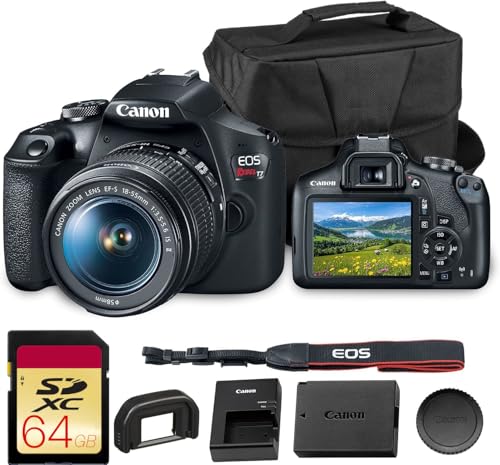
The Canon EOS Rebel T7 Bundle is a familiar starter package built around the same 24.1MP APS-C Rebel T7 platform. Its appeal is not a new sensor or a more advanced focusing system. It is the fact that the listed package includes the camera, 18-55mm lens, LP-E10 battery, charger, strap, shoulder bag, and 64GB memory card.
The 18-55mm lens covers the most common beginner subjects, from indoor family photos at the wide end to portraits at the standard end. The T7's ISO range runs from 100 to 6400 and expands to 12800, giving a novice some room to work as lighting changes. The optical viewfinder shows approximately 95% of the final frame, which is a traditional DSLR characteristic that takes a little practice.
The nine-point AF system and AI Servo AF are adequate for deliberate compositions but are not as forgiving as the R100's wider zone coverage. There is also no 4K video listed for this kit, with the T7 platform focused on Full HD capture. That makes the R50 Bundle a better fit for a person who expects to produce regular video or wants dependable face and eye tracking.
Wi-Fi and NFC support sharing, and the T7 is compatible with Canon EF lenses, including EF-S lenses. That lens ecosystem gives the camera room to grow, although the body itself will remain less responsive than Canon's newer mirrorless designs. The product information lists a 3.81-pound weight, so this bundle may feel more substantial than a beginner expects.
The bundle makes sense when you specifically want a DSLR and appreciate receiving the basic carrying and storage items in one package. The regular Rebel T7 is the cleaner choice if you do not need those extras, while the Dual Lens kit is more useful for distant subjects. Pick this one for a ready-to-use introduction to traditional Canon photography.
10. Canon EOS Rebel T7 Renewed: Best Renewed DSLR

Pros
- 24.1MP CMOS sensor
- ISO 100 to 6400, expandable to 12800
- Built-in Wi-Fi and NFC
- Three-inch LCD
- Scene Intelligent Auto mode
- Nine-point AF with AI Servo AF
Cons
- Renewed condition requires closer inspection of the listing
- Basic autofocus compared with newer mirrorless cameras
- No listed 4K video capability
Best for: still photographers who want the Rebel T7 controls and are comfortable considering a renewed body.
The Canon EOS Rebel T7 Renewed keeps the same central strengths as the other T7 entries while presenting a different buying consideration. It has a 24.1MP CMOS sensor, a 3.0-inch LCD, and Scene Intelligent Auto mode that simplifies the first steps for someone learning camera settings. The included 18-55mm lens is a practical general-purpose starting point.
The ISO range runs from 100 to 6400 and expands to 12800. That gives the camera useful flexibility for daylight and moderately dim scenes, but it does not erase the age of the platform. The nine-point autofocus system with AI Servo AF needs more deliberate subject placement than the R50 or R6 Mark II, especially when the subject is moving.
Wi-Fi and NFC help transfer images to compatible devices, and the optical DSLR viewfinder gives the shooting experience a direct, traditional feel. The camera is listed at 2.5 pounds, which is manageable for a DSLR but heavier than the compact mirrorless alternatives. Video is not a reason to choose this entry because no 4K capability is listed.
A renewed camera deserves a more careful look at the condition details, included accessories, and return terms before ordering. That is not a sensor specification, but it is part of choosing a renewed product responsibly. The standard Rebel T7 offers a similar photographic experience in a new listing, while the R100 provides a newer mirrorless platform with 4K.
This model is best for someone whose priority is still photography and who understands the trade-off between a mature DSLR design and a newer mirrorless body. It is not the right choice for a creator who needs strong video autofocus or a self-facing screen. For learning composition, exposure, and lens changes, it remains a capable basic tool.
How to choose best canon camera
The right Canon camera comes down to sensor size, focusing behavior, lens flexibility, and how much video you actually plan to record.
Sensor format
The APS-C sensors in the Rebel T7, R100, and R50 provide a useful balance of detail and manageable camera size. The R6 Mark II uses a 24.2MP full-frame sensor, which is better suited to demanding low-light work and stronger background separation, but its body and lenses can make a kit more substantial.
Compact models such as the G7 X III and ELPH 360 HS use fixed-lens designs. They trade interchangeable-lens flexibility for a camera that is ready to use without carrying extra glass.
Autofocus coverage
Autofocus coverage tells you how much of the frame the camera can use when finding a subject. The Rebel T7's nine-point system is workable for centered, deliberate compositions. The R100 reaches up to 143 zones, the R50 reaches 651 AF zones across up to 100% by 100% of the frame, and the R6 Mark II uses 1, 053 zones with more advanced subject recognition.
For moving people, pets, and vehicles, autofocus coverage matters more than a small difference in megapixel count.
Lens flexibility
An interchangeable-lens camera lets you choose a wider lens for interiors, a longer lens for distant subjects, or a brighter lens for dim rooms. The R50, R100, R6 Mark II, and Rebel T7 models all support lens changes, though the mount and compatible lens families differ. The PowerShot cameras have fixed lenses, so choose them only if their built-in framing range already matches your habits.
The RF24-105mm lens supplied with the R6 Mark II is the most flexible general-purpose option here. The R50 and R100 kits use an 18-45mm range that is smaller and easier to carry, while the Dual Lens T7 kit adds a separate 75-300mm lens for reach.
Video features
The R50 White and R50 Bundle are the most capable creator-focused options, with 6K oversampled uncropped 4K up to 30 fps, Full HD recording up to 120 fps, vari-angle screens, and subject detection. The R100 records 4K up to 24 fps, Full HD up to 60 fps, and HD up to 120 fps.
The G7 X III is the most compact serious video option because it combines uncropped 4K, a flip-up screen, and an external microphone input. The Rebel T7 cameras are better treated as still cameras with Full HD video support.
Camera size and handling
A camera is useful only when you are willing to carry it. The ELPH 360 HS weighs 0.62 pounds and is designed for pockets. The mirrorless R50 and R100 bodies are more compact than the DSLR kits, while the R6 Mark II is deliberately more substantial.
Choose an optical viewfinder if you prefer seeing the scene directly through the lens. Choose an electronic viewfinder and vari-angle screen if you want a clearer preview of exposure, self-recording, and unusual shooting angles.
Frequently asked questions
Which Canon camera is best for a beginner?
The Canon EOS R50 White is the strongest all-round beginner option because it combines approachable controls with modern autofocus, 4K video, and a vari-angle screen. The Canon EOS R100 is a simpler alternative for someone who wants a compact mirrorless body without as many creator-oriented features.
Is the Canon EOS R6 Mark II suitable for a first camera?
Yes, if the buyer is serious about photography and expects to work in low light, photograph action, or build a more advanced system. It is larger and more complex than the R50 and R100, so casual users may find those models easier to carry and learn.
Should I choose a Canon DSLR or mirrorless camera?
Choose a DSLR if you specifically want an optical viewfinder, traditional handling, and access to the EF and EF-S lens families. Choose mirrorless if modern autofocus, 4K video, a smaller body, and electronic composition are more important.
Which Canon camera is best for vlogging?
The Canon EOS R50 Bundle is the most complete fit for new creators because it has 4K video, Dual Pixel AF II, a vari-angle touchscreen, vertical video tools, and an included 18-45mm lens. The PowerShot G7 X III is a strong compact alternative with a flip-up screen and external microphone input.
Do all of these Canon cameras use interchangeable lenses?
No. The Rebel T7, R100, R50, and R6 Mark II use interchangeable lenses. The PowerShot G7 X III and PowerShot ELPH 360 HS have fixed lenses, so their built-in focal ranges cannot be replaced.
Is a 24MP sensor enough for photography?
For family photos, travel, portraits, online publishing, and many prints, a 24MP sensor provides substantial detail. The more important differences often come from autofocus, lens quality, sensor format, lighting, and how much you need to crop.

The bottom line
The Best canon camera for most people is the Canon EOS R50 White. It combines a 24.2MP APS-C sensor, 651-zone autofocus, 6K oversampled 4K, a vari-angle touchscreen, and a useful RF-S18-45mm starting lens in a compact hybrid body.
The Canon EOS R6 Mark II is the better choice for full-frame image quality, fast action, and advanced subject detection, while the Canon EOS R100 is the simpler entry point. Choose the Canon PowerShot G7 X III if a compact creator camera matters more than interchangeable lenses.
If you are undecided, choose the smallest camera whose autofocus and video features will still satisfy you a year from now.
As an Amazon Associate we earn from qualifying purchases.