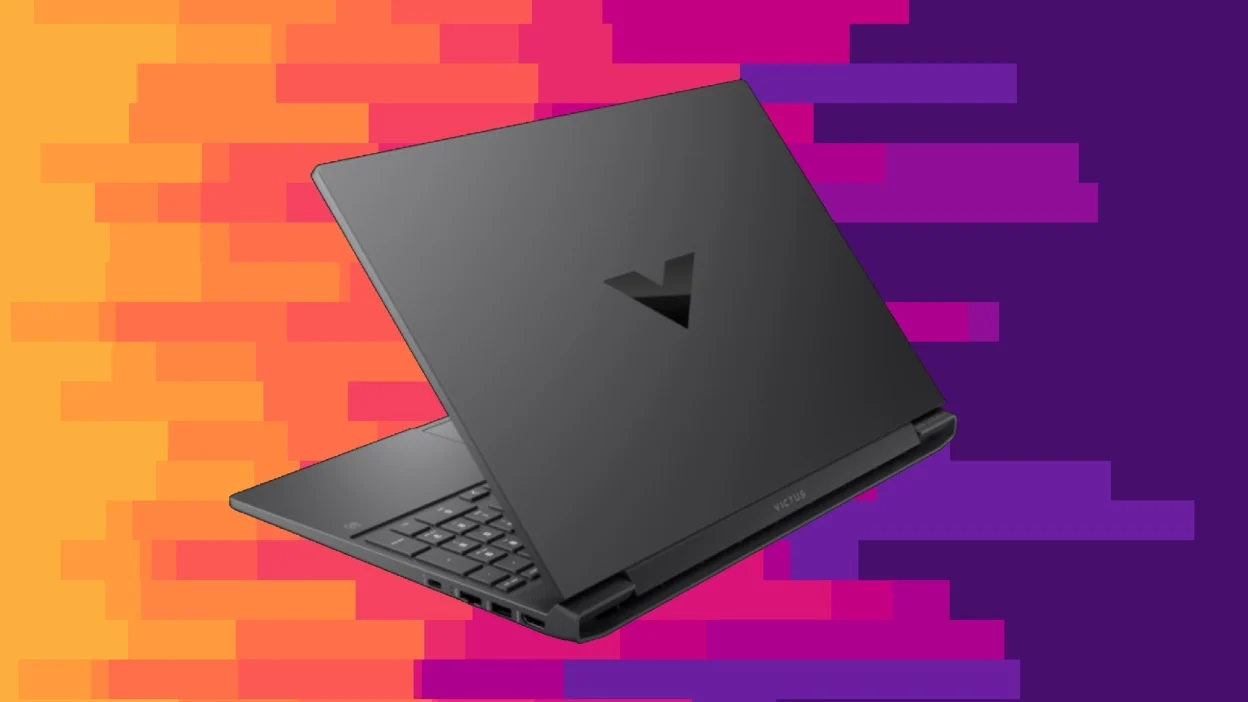

A low-cost gaming laptop can mean two very different things. Some models have a dedicated GeForce GPU and a fast gaming display, while others use integrated Radeon graphics and are better suited to older games, schoolwork, and everyday computing. The difference is easy to miss when every listing uses the word “gaming.”
Our Best best cheap gaming laptop picks separate genuine gaming hardware from ordinary laptops with generous memory. We compared graphics capability, processor class, display speed, storage, connectivity, portability, and upgrade potential. The ASUS ROG Strix G16 is the strongest choice for demanding modern games, while the other models make more sense for lighter gaming or mixed-use computing.
The ASUS ROG Strix G16 is our top pick, with the Acer Nitro V and ASUS TUF Gaming F16 close behind for dedicated graphics.
Comparison table
| # | Product | Award | Graphics | Display | Memory and storage | Best for |
|---|---|---|---|---|---|---|
| 1 | ASUS ROG Strix G16 | Best overall | GeForce RTX 5060 | 16-inch FHD+, 165Hz, 3ms | 16GB DDR5, 1TB Gen 4 SSD | Modern games and demanding creative work |
| 2 | Acer Nitro V | Best display and connectivity | GeForce RTX 5050 | 16-inch WUXGA, 180Hz, 3ms | 16GB DDR5, 1TB Gen 4 SSD | Fast competitive gaming |
| 3 | ASUS TUF Gaming F16 | Best durable gaming laptop | GeForce RTX 5050 | 16-inch FHD+, 165Hz | 16GB DDR5, 512GB Gen 4 SSD | A sturdy everyday gaming machine |
| 4 | KAIGERR RX16 | Best integrated graphics option | Radeon RX Vega 8 | 16-inch IPS | 24GB DDR5, 512GB NVMe SSD | Light gaming and multitasking |
| 5 | FUNYET Ryzen 7 Laptop | Best for memory-heavy work | Radeon 680M | 15.6-inch FHD IPS | 32GB DDR5, 1TB SSD | Editing and general productivity |
| 6 | MALLRACE LX15PRO | Best storage and keyboard features | Radeon Graphics | 15.6-inch FHD | 16GB LPDDR4, 1TB NVMe SSD | Casual gaming and office use |
| 7 | KAIGERR Ryzen 7 Laptop | Best expandable storage | Radeon RX Vega 8 | 15.6-inch IPS | 16GB DDR4, 1TB NVMe SSD | Creative and business tasks |
| 8 | KAIGERR Ryzen 5 Laptop | Best portable Radeon laptop | Integrated Radeon Graphics | FHD | 16GB DDR4, 512GB NVMe SSD | Commuting and light games |
| 9 | YOZISUAN Core Laptop | Best for basic everyday use | Not specified | 15.6-inch FHD, 1920 by 1080 | 16GB RAM, 512GB SSD | Students and casual computing |
1. ASUS ROG Strix G16: Best Overall

Pros
- GeForce RTX 5060 dedicated graphics
- 165Hz display with 3ms response time
- 1TB PCIe Gen 4 SSD
- Vapor chamber and tri-fan cooling
- Wi-Fi 7 connectivity
Cons
- Heavier than the integrated graphics laptops
- 16GB memory is less generous than some rivals
- Dedicated gaming hardware makes it less portable
Best for: someone who wants the strongest gaming performance in this group.
The ASUS ROG Strix G16 is the laptop here that feels designed around modern PC gaming rather than simply labeled for it. Its GeForce RTX 5060 Laptop GPU gives it a clear graphics advantage over every integrated Radeon model in this roundup. The Intel Core i7 14650HX also gives it the processor headroom for demanding games, streaming, and heavier creative applications.
The 16-inch FHD+ display uses a 16:10 aspect ratio, so it offers a little more vertical workspace than a conventional 16:9 panel. Its 165Hz refresh rate makes fast camera movement look noticeably cleaner than a standard office screen, while the stated 3ms response time is aimed at reducing visible blur. The ACR film is designed to improve contrast and reduce glare, which should help when the room is not perfectly controlled.
There is practical capacity behind the graphics performance. The 16GB of DDR5-5600MHz memory is suitable for current gaming and multitasking, and the 1TB PCIe Gen 4 SSD gives a useful amount of room for a game library before storage management becomes a daily chore. Wi-Fi 7 is a forward-looking inclusion, though the benefit depends on having a compatible network.
The cooling system is unusually serious for this list, with an end-to-end vapor chamber, tri-fan technology, and Conductonaut Extreme liquid metal on the chipset. The tradeoff is a listed weight of about 5.84 pounds, so it is not the laptop we'd choose for constant commuting. The Acer Nitro V has a faster 180Hz panel and broader port details, but the ROG Strix G16 has the stronger GPU. Choose this one if modern game performance matters more than carrying comfort.
2. Acer Nitro V: Best Display and Connectivity

Pros
- GeForce RTX 5050 Laptop GPU
- 180Hz WUXGA display with 3ms response time
- Thunderbolt 4 and HDMI 2.1
- 1TB Gen 4 SSD
- Expandable memory and microSD reader
Cons
- Heavier than several integrated graphics alternatives
- RTX 5050 sits below the ROG Strix G16's GPU
- Port selection can make the chassis feel busier
Best for: gamers who want a fast screen and extensive connections.
The Acer Nitro V is the most complete alternative to the ASUS ROG Strix G16. It has a dedicated GeForce RTX 5050 Laptop GPU, an Intel Core 7 240H processor, and enough storage for a serious collection of games. It cannot match the Strix's RTX 5060, but it is much closer to a conventional gaming laptop than any of the Radeon integrated graphics models.
Its 16-inch WUXGA panel runs at 1920 by 1200, giving it the same useful 16:10 shape as the Strix while adding a little vertical resolution. The 180Hz refresh rate is the highest listed here, and the 3ms overdrive response time suits quick shooters and racing games. A stated 300-nit brightness level is helpful indoors, though it does not make this a high-brightness outdoor screen.
Acer also gives this model a strong set of connections. Thunderbolt 4 over USB-C, USB 3.2 ports, HDMI 2.1, Ethernet, and a microSD card reader cover gaming peripherals, external displays, wired networking, and media transfers. The two DDR5 slots support up to 32GB, so the 16GB starting configuration is not necessarily the end of the laptop's useful life.
The dual-fan, quad-intake, and quad-exhaust cooling system is built for sustained loads, and NitroSense allows fan-speed adjustments. At 5.29 pounds, it remains a substantial machine, although its 14.17-inch width and 0.63 to 0.96-inch height are manageable in a large backpack. If the faster screen and Thunderbolt 4 matter more than maximum GPU performance, the Nitro V is the more flexible pick. Readers comparing this with broader everyday notebooks may also want to see which hardware matters most for light gaming and schoolwork.
3. ASUS TUF Gaming F16: Best Durable Gaming Laptop
Pros
- Dedicated GeForce RTX 5050 graphics
- 165Hz 16:10 display
- 100% sRGB color coverage
- MIL-STD-810H testing
- Adaptive-Sync and Wi-Fi 6E
Cons
- 512GB SSD fills faster than a 1TB drive
- Core i5 processor is below the ROG Strix's Core i7
- Nearly 4.85 pounds
Best for: buyers who want dedicated graphics in a tougher, understated chassis.
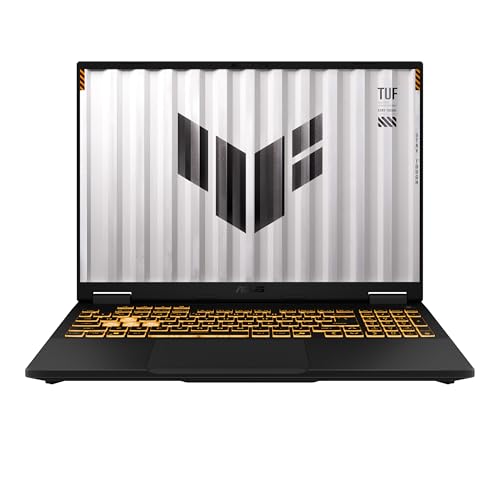
The ASUS TUF Gaming F16 takes a less showy approach than the ROG Strix G16. Its restrained cover and embossed TUF logo suit a desk that also serves for study or work. The important part is underneath: a GeForce RTX 5050 Laptop GPU with a maximum listed TGP of 115W and Advanced Optimus support.
Its 16-inch FHD+ display uses a 16:10 layout and a 165Hz refresh rate. ASUS lists 100% sRGB coverage, which makes this a more credible screen for color-sensitive everyday work than many entry-level gaming panels. Adaptive-Sync is intended to reduce tearing and stutter, so games should look more coherent when frame rates fluctuate.
The Intel Core i5 13450HX is not as powerful on paper as the ROG Strix G16's Core i7 14650HX, but the dedicated RTX 5050 keeps the TUF in the same broad gaming conversation as the Acer Nitro V. Its 16GB DDR5 memory is sensible for current use. The 512GB PCIe Gen 4 SSD is the obvious limitation, particularly for large modern games, and buyers may eventually need to manage their installation space.
ASUS says the chassis has undergone MIL-STD-810H testing, while the second-generation Arc Flow Fans, full-width heatsink, and full-width vent are meant to keep heat under control. That does not make it light at 4.85 pounds, but it does make the TUF a better fit for someone who wants a more robust machine than the thin integrated graphics options. It is the one to choose when durability and a color-accurate fast screen matter more than the Strix's extra GPU muscle.
4. KAIGERR RX16: Best Integrated Graphics Option

Pros
- Ryzen 7 H255 with 8 cores and 16 threads
- 24GB DDR5 memory
- Upgrade support for memory and SSD
- Dual-fan cooling
- Wi-Fi 6 and backlit keyboard
Cons
- Radeon RX Vega 8 is not a dedicated gaming GPU
- 512GB SSD is modest for a game library
- Display refresh rate is not specified
Best for: light gaming, multitasking, and buyers who want generous memory.
The KAIGERR RX16 is a different kind of gaming laptop from the three dedicated GPU models above. Its AMD Ryzen 7 H255 processor has 8 cores and 16 threads, with speeds listed up to 4.9GHz, but graphics come from Radeon RX Vega 8. That makes it more appropriate for lighter games, older releases, and general use than for demanding new titles at high settings.
The unusually generous 24GB of DDR5 memory is useful when many browser tabs, office applications, and creative tools are open together. The 512GB M.2 NVMe SSD should make Windows and applications feel responsive, and KAIGERR says the memory can be upgraded to 64GB while the storage can expand to 4TB. Those upgrade claims are central to the laptop's appeal because they leave room for a longer ownership cycle.
The listing describes a 16-inch IPS display with a wide color gamut and a high refresh rate, but it does not provide a specific refresh figure. That missing detail matters to gamers. The larger panel should be comfortable for split-screen work and media, while the dual-fan cooling system is intended to reduce heat buildup during longer sessions.
At roughly 3.86 pounds, the RX16 is much easier to carry than the ROG Strix G16, Acer Nitro V, or TUF F16. It also includes Wi-Fi 6 and a backlit keyboard. It loses decisively to those three laptops in dedicated graphics performance, but it beats them on memory capacity and portability. Choose it when “gaming” means lighter titles plus demanding multitasking, not maximum visual quality.
5. FUNYET Ryzen 7 Laptop: Best for Memory-Heavy Work

Pros
- 32GB DDR5 memory
- 1TB SSD
- Ryzen 7 6800H with 8 cores and 16 threads
- Radeon 680M integrated graphics
- Two-year warranty listed
Cons
- No dedicated GeForce GPU
- Wi-Fi 5 and Bluetooth 4.2 are older standards
- Display is limited to 60Hz-class FHD specifications
Best for: video editing, heavy multitasking, and light gaming.
The FUNYET Ryzen 7 Laptop is best understood as a high-memory general-purpose notebook that can handle lighter gaming. Its Ryzen 7 6800H has 8 cores and 16 threads, while the integrated Radeon 680M graphics are stronger than the basic integrated solutions often found in ordinary laptops. It still does not belong in the same performance class as the RTX-equipped ASUS and Acer machines.
The 32GB of DDR5 memory is the standout feature. It gives large applications and extensive multitasking much more breathing room than the 16GB configurations elsewhere in this group. The 1TB SSD also provides useful working space for projects, media, and games. For someone editing video or running several demanding applications at once, those two capacities matter more than a decorative gaming design.
Its 15.6-inch FHD IPS display uses a 1920 by 1080 resolution, a 16:9 aspect ratio, and 178-degree viewing angles. The listing emphasizes color reproduction and wide viewing, but it does not specify a high refresh rate. That makes the screen more suited to editing, streaming, and ordinary games than competitive play.
The chassis is listed at 3.5 pounds and 0.77 inches thick, making it far more portable than the dedicated gaming models. There are compromises in connectivity, with Wi-Fi 5 and Bluetooth 4.2, plus dual USB 3.0, Mini HDMI, and a TF card slot. The listed two-year warranty and 180-day return and replacement policy add reassurance, but buyers seeking modern wireless standards or high frame rates should look at the Acer Nitro V instead. For a broader look at portable systems for mixed work and play, the tradeoffs between lighter laptops and stronger hardware are worth considering.
6. MALLRACE LX15PRO: Best Storage and Keyboard Features

Pros
- 1TB NVMe SSD
- Ryzen 7 5825U with 8 cores and 16 threads
- Numeric keyboard
- Backlit keyboard
- Full-function USB-C and Wi-Fi 6
Cons
- Integrated Radeon graphics limit demanding games
- LPDDR4 memory is less current than DDR5
- Display refresh specification is not supplied
Best for: casual gaming, office work, and users who need a number pad.
The MALLRACE LX15PRO is aimed at people who want one laptop for office work, storage-heavy files, and casual gaming. Its Ryzen 7 5825U has 8 cores and 16 threads with a listed maximum speed of 4.5GHz. Integrated Radeon graphics can handle lighter titles, but this is not a substitute for the RTX 5050 in the ASUS TUF Gaming F16 or Acer Nitro V.
The 16GB of LPDDR4 memory should be adequate for everyday multitasking, and the 1TB M.2 NVMe SSD is a practical advantage over laptops that start with half that storage. MALLRACE says the memory can be upgraded to 64GB and the SSD to 2TB. Those expansion claims make the LX15PRO more adaptable than its basic graphics hardware suggests.
Its 15.6-inch FHD display is described as an IPS panel with a wide color gamut and high refresh rate, although the listing does not give a specific refresh number. The backlit keyboard is useful in dim rooms, while the numeric keyboard is a genuine advantage for spreadsheets, accounting, and data entry. That layout can be more useful for office work than the compact keyboards on many gaming machines.
Connectivity includes two USB 3.2 ports, HDMI, full-function USB-C, a 3.5mm audio and microphone connection, a TF card slot, and Wi-Fi 6. The listed 54.72Wh battery and two-and-a-half to three-hour charging time suggest convenient top-ups, but they do not establish gaming battery life. Pick the MALLRACE when storage, a number pad, and general productivity rank ahead of modern game performance.
7. KAIGERR Ryzen 7 Laptop: Best Expandable Storage

Pros
- Ryzen 7 5825U with 8 cores and 16 threads
- 1TB NVMe SSD
- Memory expansion up to 64GB listed
- Wi-Fi 6
- Full-function USB-C and TF card slot
Cons
- Integrated Radeon RX Vega 8 graphics
- DDR4 memory
- Refresh rate is not specified
Best for: creative work, office tasks, and expandable local storage.
The KAIGERR Ryzen 7 Laptop shares its processor class with the MALLRACE LX15PRO, using an AMD Ryzen 7 5825U with 8 cores, 16 threads, and speeds up to 4.5GHz. Its Radeon RX Vega 8 graphics place it firmly in the light-gaming tier. Games that are modest in their demands should be the target, while new graphically intensive releases will favor a dedicated GPU.
KAIGERR lists 16GB of DDR4 memory and a 1TB M.2 NVMe SSD. The storage capacity is welcome for files, applications, and a larger collection of lighter games. The memory can reportedly expand to 64GB, and the NVMe or NGFF storage can expand to 2TB. That upgrade path is more meaningful here than a vague promise of future performance.
The 15.6-inch IPS display is described as high definition with a wide color gamut and high refresh rate, but no numerical refresh figure is supplied. It should be a reasonable size for work and games, though buyers who care about motion clarity should choose a laptop with a confirmed 165Hz or 180Hz panel, such as the ASUS TUF Gaming F16 or Acer Nitro V.
The port selection is useful: two USB 3.2 ports, HDMI, full-function USB-C, a headphone and microphone connection, and a TF card holder. Wi-Fi 6 supports current wireless networking, and the laptop weighs about 3.86 pounds. It is a sensible productivity machine with light-gaming ability, but calling it a serious replacement for a dedicated gaming laptop would overstate what its integrated graphics can do.
8. KAIGERR Ryzen 5 Laptop: Best Portable Radeon Laptop

Pros
- Six-core Ryzen 5 7430U processor
- 16GB memory and 512GB NVMe SSD
- Wi-Fi 6 and Bluetooth 5.2
- HDMI, USB-C, and memory card slot
- Relatively portable design
Cons
- Integrated Radeon graphics
- DDR4 memory
- No specific display refresh rate
Best for: commuters who want light gaming alongside everyday work.
The KAIGERR Ryzen 5 Laptop is the most straightforward portable option among the Radeon-based models. Its Ryzen 5 7430U uses 6 cores and 12 threads, with a listed turbo speed of up to 4.3GHz. That is suitable for documents, browsing, streaming, and modest creative work, while the integrated Radeon graphics can support lighter games.
The 16GB of SODIMM DDR4 memory and 512GB M.2 NVMe SSD form a sensible everyday configuration. The SSD should keep startup and application loading responsive, and the memory capacity avoids the immediate limitations of smaller office notebooks. The listing does not provide a specific gaming refresh rate, so this is not a machine for high-speed competitive play.
KAIGERR includes HDMI, USB-C, a 3.5mm TRRS jack, a memory card slot, and USB 3.2 ports. Wi-Fi 6 and Bluetooth 5.2 are newer wireless standards than those listed for the FUNYET Ryzen 7 Laptop. The compact design measures about 14.06 by 9 inches and weighs about 4.41 pounds, which is portable enough for regular travel but not especially light for an integrated graphics model.
The main reason to choose this laptop is balance. It is less ambitious than the KAIGERR RX16 and less spacious than the MALLRACE LX15PRO, but its six-core processor, current wireless support, and useful ports cover normal daily needs. Skip it if gaming is the primary activity. Choose it if school, commuting, and occasional light gaming are the real brief.
9. YOZISUAN Core Laptop: Best for Basic Everyday Use

Pros
- 16GB RAM
- 512GB SSD
- 15.6-inch anti-glare FHD display
- Listed 2-year manufacturer warranty
- Compact 3-pound chassis
Cons
- Graphics hardware is not specified
- Core processor model is not specified
- Wi-Fi 5 and Bluetooth 5.0 are older than newer options
Best for: students, commuters, and basic computing with occasional light games.
The YOZISUAN Core Laptop is the weakest gaming recommendation here because its listing does not identify a dedicated graphics processor or even a specific Core processor model. It does list speeds up to 3.40GHz, 16GB of RAM, and a 512GB SSD, which should be enough for documents, web applications, streaming, and general student work.
The 15.6-inch display has a 1920 by 1080 resolution, a 16:9 aspect ratio, and an anti-glare coating. That combination is sensible for online classes, video calls, and office work. Anti-glare treatment can reduce distracting reflections, but it does not turn the screen into a high-refresh gaming panel, and the listing does not state a refresh rate.
The 38Wh battery is described as a 5000mAh unit, while the chassis measures about 14.1 by 9.1 inches and weighs 3 pounds. That is a comparatively easy laptop to carry. Wi-Fi and Bluetooth 5.0 cover ordinary wireless accessories, but the listing does not provide the newer Wi-Fi 6 or Wi-Fi 7 support found on higher-ranked alternatives.
YOZISUAN also lists 24-hour customer support, a two-year manufacturer warranty, and a 90-day return or exchange policy. Those are useful ownership details, but they cannot compensate for the missing graphics information if gaming is central to the decision. Readers looking for a machine primarily for games should start with the ASUS TUF Gaming F16, while students who only need a little casual gaming can consider this model.
How to choose best cheap gaming laptop
The right choice depends first on whether gaming is the main job or one task among several. Focus on graphics, screen behavior, processor and memory, storage, cooling, and portability before considering appearance.
Dedicated graphics
A dedicated GeForce RTX GPU has its own graphics memory and is substantially better suited to modern games than integrated Radeon graphics. The RTX 5060 in the ASUS ROG Strix G16 is the strongest option here, while the RTX 5050 models from Acer and ASUS provide a lower tier of dedicated performance. Integrated Radeon graphics are better matched to older, lighter, or less demanding games.
If the listing does not name a dedicated GPU, treat the laptop as a light-gaming machine until proven otherwise.
Display refresh rate
A 165Hz or 180Hz panel can make fast movement look smoother than a conventional laptop display, provided the graphics hardware can produce enough frames. The ROG Strix G16 and TUF Gaming F16 use 165Hz displays, while the Acer Nitro V reaches 180Hz and adds a 3ms response specification. Several Radeon models mention a high refresh rate without stating the number, which makes direct comparison difficult.
Processor and memory
Processor cores help with game logic, streaming, editing, and multitasking, but a fast CPU cannot replace a dedicated graphics processor. The Ryzen 7 H255, Ryzen 7 6800H, and Ryzen 7 5825U models offer multiple cores for mixed workloads. Memory also matters: 16GB is a practical baseline, while the 24GB KAIGERR RX16 and 32GB FUNYET model are better suited to heavy multitasking.
Storage capacity
A 1TB SSD gives more room for games and large creative files than a 512GB drive. The ASUS ROG Strix G16, Acer Nitro V, MALLRACE LX15PRO, FUNYET laptop, and both 1TB KAIGERR models have the larger starting capacity. Check expansion claims carefully, since an upgrade path is useful only when the design actually supports an additional or replacement drive.
Cooling and chassis
Gaming components generate more heat than ordinary laptop hardware. Vapor chambers, multiple fans, large heatsinks, and well-designed vents help maintain performance during longer sessions. The ROG Strix G16, Acer Nitro V, and ASUS TUF Gaming F16 have the most explicitly developed cooling systems, while their extra weight reflects the demands of dedicated graphics.
Ports and wireless
USB-C, HDMI, Ethernet, memory card slots, and modern Wi-Fi can change how convenient a laptop is at a desk. Acer's Nitro V is particularly well equipped, with Thunderbolt 4, HDMI 2.1, Ethernet, and a microSD reader. For a desktop replacement, connectivity may matter more than a few pounds of weight. If you are choosing a computer for work first, the hardware that matters for everyday laptop longevity is a useful separate perspective.
Frequently asked questions
Can an integrated Radeon laptop run modern games?
Integrated Radeon graphics can handle lighter games and some older titles, but they are not equivalent to a dedicated GeForce RTX GPU. The KAIGERR RX16 and FUNYET laptop have more capable integrated graphics than a basic office notebook, yet the ASUS ROG Strix G16, Acer Nitro V, and ASUS TUF Gaming F16 are better choices for demanding releases.
Is 16GB of memory enough for a gaming laptop?
For ordinary gaming and everyday multitasking, 16GB is a sensible starting point. The 24GB KAIGERR RX16 and 32GB FUNYET model offer more room for large applications, editing work, and extensive multitasking. Memory capacity does not by itself determine gaming performance, since the GPU remains crucial.
Does a 165Hz display matter?
A 165Hz display can make motion look smoother than a standard 60Hz panel, especially in fast games. The benefit is greatest when the GPU can generate high frame rates. A high refresh panel is less important for office work, turn-based games, and systems that rely on integrated graphics.
Which laptop has the strongest graphics?
The ASUS ROG Strix G16 has the strongest graphics hardware in this group, with a GeForce RTX 5060 Laptop GPU. The Acer Nitro V and ASUS TUF Gaming F16 follow with GeForce RTX 5050 graphics. The remaining laptops use integrated Radeon graphics or do not specify their graphics hardware.
Is a 512GB SSD enough for gaming?
A 512GB SSD can hold Windows, applications, and several games, but large modern installations can fill it quickly. A 1TB SSD is more comfortable for a growing library. The MALLRACE, FUNYET, Acer, and ROG Strix models start with 1TB, while some other laptops list upgrade support.
Are these laptops suitable for school or office work?
Yes, every model here is built around ordinary laptop tasks as well as its stated gaming or light-gaming use. The integrated graphics models are often easier to carry and less visually aggressive. The ASUS TUF Gaming F16 has a restrained design, while the MALLRACE adds a numeric keyboard that can help with spreadsheets.
The bottom line
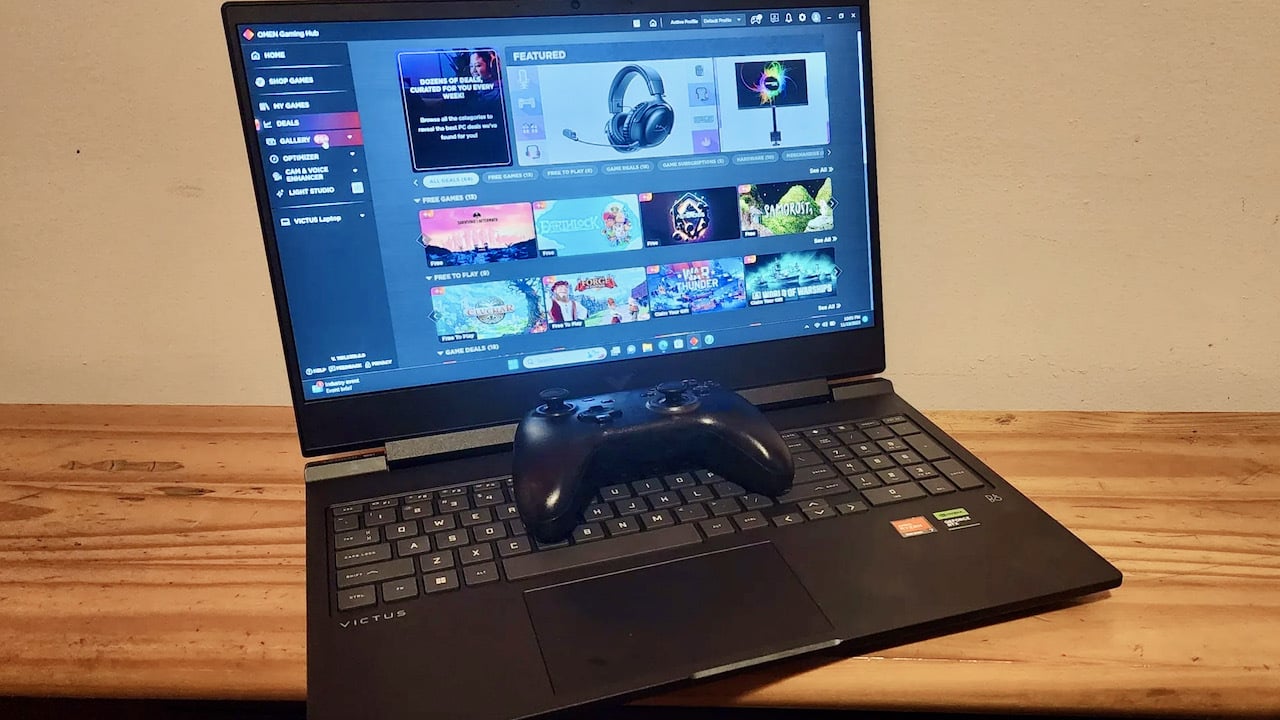
The Best best cheap gaming laptop choice is the ASUS ROG Strix G16 because its RTX 5060, Core i7 processor, 165Hz display, 1TB SSD, and advanced cooling give it the clearest advantage for modern games. The Acer Nitro V is the better alternative for shoppers who want a 180Hz screen, Thunderbolt 4, HDMI 2.1, and extensive connectivity.
If dedicated graphics are not essential, the KAIGERR RX16 offers a lighter chassis and 24GB of DDR5 memory, while the FUNYET Ryzen 7 Laptop is a strong mixed-use option for memory-heavy work. The other Radeon models make sense for casual games and everyday computing, but buyers should not expect them to compete with the RTX-equipped systems.
An undecided reader should choose the ROG Strix G16 for serious gaming, the Acer Nitro V for display and ports, or the KAIGERR RX16 for lighter play and easier carrying.
As an Amazon Associate we earn from qualifying purchases.