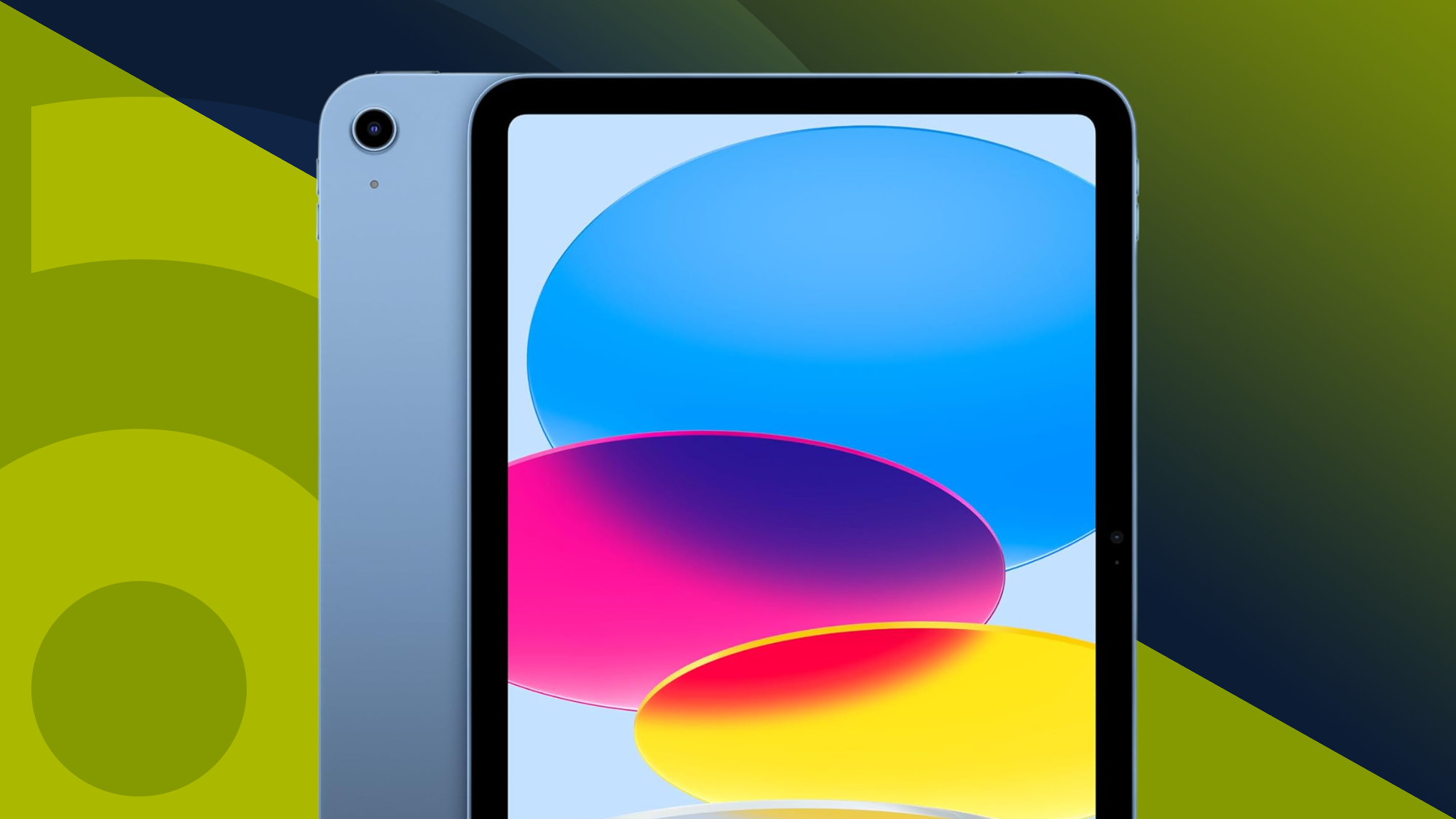

A tablet can be the simplest way to read, stream, join a video call, or give a child a screen without handing over your phone. The problem is that low-cost models can look similar on a product page while feeling very different once apps, video, and storage enter the picture. The Best cheap tablet choices are not all built for the same kind of use.
We ranked these ten tablets by the capabilities that matter most in daily use: display quality, processor performance, software access, portability, storage, battery claims, and useful extras. The Lenovo Idea Tab with 4GB memory is our top pick, while the list also includes compact Fire tablets, larger Android models, and a few basic options for light use.
Comparison table
| # | Product | Award | Display | Memory and storage | Battery | Best for |
|---|---|---|---|---|---|---|
| 1 | Lenovo Idea Tab 4GB | Best overall | 11-inch 2.5K IPS, 90Hz | 4GB, 128GB | Up to 12 hours of YouTube | Students and general use |
| 2 | ECOPAD 10.1-inch Tablet | Best basic Android tablet | 10.1-inch 1280 x 800 IPS | 4GB plus 8GB expansion, 64GB, up to 1TB microSD | Up to 8 hours of video | Streaming and simple tasks |
| 3 | Amazon Fire HD 10 | Best for entertainment | 10.1-inch 1080p Full HD | 4GB, 32GB | Up to 13 hours | Shows, reading, and Alexa |
| 4 | Lenovo Idea Tab 8GB | Best for multitasking | 11-inch 2.5K IPS, 90Hz | 8GB, 256GB | Up to 12 hours of YouTube | Notes, apps, and larger files |
| 5 | Amazon Fire HD 8 | Best compact tablet | 8-inch HD | 3GB, 32GB, up to 1TB microSD | Up to 13 hours | Travel and reading |
| 6 | Lenovo Tab One | Best lightweight Android tablet | 8.7-inch HD, 60Hz | 4GB, 64GB | Up to 12.5 hours of YouTube | One-handed use |
| 7 | Samsung Galaxy Tab A11+ | Best family tablet | 11-inch, up to 90Hz | 6GB, 128GB, expandable | Long-lasting battery | Family entertainment |
| 8 | URAO 10.1-inch Tablet | Best storage flexibility | 10.1-inch 1280 x 800 IPS | 6GB plus 30GB expansion, 128GB, up to 1TB TF card | Up to 8 hours mixed use | Apps and media storage |
| 9 | HOTTABLET 7-inch Tablet | Best small secondary tablet | 7-inch 1024 x 600 IPS | 3GB plus 5GB expansion, 32GB, up to 1TB microSD | 3000mAh battery | Light browsing and kids’ content |
| 10 | WXUNJA 11-inch Tablet | Best for streaming compatibility | 11-inch 1280 x 800 | 4GB plus 24GB expansion, 128GB, up to 1TB | Up to 8 to 10 hours | Video and casual gaming |
1. Lenovo Idea Tab 4GB: Best Overall

Pros
- Sharp, fluid 2.5K screen
- Tab Pen and folio case included
- Strong selection of note-taking tools
- Dolby Atmos-tuned quad speakers
- Useful cross-device Smart Connect features
Cons
- 4GB memory leaves less headroom for heavy multitasking
- Larger than the compact tablets here
- Pen-focused features may matter less to casual viewers
Best for: students and general users who want a capable tablet with a sharp display and useful accessories.
The Lenovo Idea Tab 4GB is the tablet we would hand to most people first. It feels designed for more than simply playing video. The 11-inch screen gives documents, web pages, and split-screen apps room to breathe, while the included Tab Pen and folio case make it ready for handwritten notes without immediately requiring another accessory.
Its 2.5K IPS touchscreen is the standout feature. Text should look cleaner than it does on the 1280 x 800 panels used by the ECOPAD 10.1-inch Tablet, URAO 10.1-inch Tablet, and WXUNJA 11-inch Tablet. The 90Hz refresh rate also makes scrolling and pen movement appear smoother than on the 60Hz Lenovo Tab One. Lenovo claims up to 12 hours of YouTube playback, and the 20W charger is intended to shorten time spent plugged in.
The MediaTek Dimensity 6300 processor gives this model a more serious foundation than the entry-level tablets lower on the list. Lenovo also includes Lenovo AI Note, Squid, Nebo, and MyScript Calculator, so the tablet has a clearer role in schoolwork than the Fire HD 8. Circle to Search can turn a marked item into a search or translation without requiring a separate app switch. Quad speakers tuned with Dolby Atmos and 72% NTSC color coverage round out the entertainment side.
The limitation is the 4GB of memory. It is enough for ordinary browsing, streaming, reading, and note-taking, but the Lenovo Idea Tab 8GB has twice the memory and twice the storage for people who keep more apps and files open. The 4GB version is also not a particularly small tablet, weighing 1.05 pounds. For someone who wants a simple reading device, the Amazon Fire HD 8 is easier to carry.
For students, commuters, and households that want one tablet to cover work and entertainment, this is the most balanced pick. It is the Best cheap tablet for buyers who care about the screen and bundled pen as much as basic app access.
2. ECOPAD 10.1-inch Tablet: Best Basic Android Tablet

Pros
- Full-size 10.1-inch IPS screen
- Android 15 and Google Mobile Services
- Dual-band Wi-Fi
- Expandable storage up to 1TB
- One-year warranty listed by the manufacturer
Cons
- 1280 x 800 resolution is modest for this screen size
- Quad-core processor is less suited to demanding apps
- Claimed memory includes expansion rather than only physical RAM
Best for: basic streaming, web browsing, reading, and video calls on a conventional Android tablet.
The ECOPAD 10.1-inch Tablet takes the straightforward route. It has a familiar Android interface, a large screen, Google Mobile Services, and enough storage for ordinary downloads. It is a sensible shape for watching video on a stand or browsing from the sofa, though its 2.01-pound listed weight makes it much less comfortable to hold for long periods than the Amazon Fire HD 8 or Lenovo Tab One.
The IPS screen measures 10.1 inches and uses 1280 x 800 resolution. That is sufficient for video and web pages, but it does not have the fine text and image definition of the 2.5K panel on either Lenovo Idea Tab. The 6000mAh battery is rated for up to eight hours of uninterrupted video playback. Bluetooth 5.0 and dual-band Wi-Fi give it the basic wireless connections most homes need.
The quad-core processor is the key reason to keep expectations measured. The tablet should be comfortable with reading, video playback, email, and lighter games, but it is not the model to choose for demanding multitasking. Its advertised 12GB memory combines 4GB of physical memory with 8GB of expansion, a distinction that matters because virtual expansion does not replace faster physical memory when several demanding apps are open.
Storage is more flexible than the built-in 64GB suggests. A microSD card can expand it up to 1TB, although the card is not included. The 2MP front camera and 8MP rear camera cover basic video calls and casual photos. Compared with the Amazon Fire HD 10, the ECOPAD offers a more conventional Android experience, but Amazon's tablet has a sharper 1080p screen and a faster-feeling entertainment focus.
The ECOPAD is best when the brief is simple: a large Android screen for videos, browsing, and occasional calls. Readers deciding between generic Android models can also compare how expandable storage changes everyday tablet use before choosing a card or a built-in capacity.
3. Amazon Fire HD 10: Best for Entertainment

Pros
- Sharp 1080p Full HD display
- Up to 13 hours of battery life
- Strong fit for streaming and reading
- Alexa and family controls built in
- 5MP front camera for video calls
Cons
- Fire OS does not support Google Play
- 32GB fills quickly with downloaded media
- Stylus is sold separately
Best for: people who mainly want a polished entertainment tablet with Alexa and Amazon’s family controls.
The Amazon Fire HD 10 is the cleanest pick for a household already comfortable with Amazon’s services. Its interface points directly toward streaming, reading, Alexa, games, and parental controls. The 10.1-inch screen is large enough for a movie or a recipe, yet the tablet remains under a pound at 0.96 pounds.
The 1080p Full HD resolution is a real advantage. It gives this tablet a more detailed picture than the ECOPAD 10.1-inch Tablet and the other 1280 x 800 10 and 11-inch models. Amazon also lists up to 13 hours of battery life and a strengthened aluminosilicate glass screen. The octa-core processor is described as 25 percent faster than the previous generation, which should help with app launches, streaming, and light gaming.
The main choice is not hardware but software. Fire OS uses Amazon’s Appstore, and the listing explicitly says Google Play is not supported. Popular services are available, but app selection can differ from a standard Android tablet. That makes the Lenovo Idea Tab 4GB a better fit for someone who wants Google-oriented study tools, while the Fire HD 10 is easier to recommend for Kindle books, Prime Video, Alexa, and Amazon Kids controls.
The base configuration has 32GB of storage, with support for up to 1TB through a separately purchased microSD card. That is workable if most content is streamed, but downloaded shows and games can make the internal space feel tight. The 5MP front camera is useful for Zoom and video calls, and a Made for Amazon Stylus Pen can provide 4, 096 levels of pressure sensitivity, though the pen is not bundled.
If a family tablet means a bright screen, simple parental controls, and easy access to Amazon content, the Fire HD 10 is a strong choice. People who need Google Play or a more open Android setup should skip it and consider the Lenovo models or Samsung Galaxy Tab A11+ instead.
4. Lenovo Idea Tab 8GB: Best for Multitasking

Pros
- 8GB physical memory
- 256GB internal storage
- Sharp 2.5K display with 90Hz refresh
- Tab Pen and folio case included
- Good note-taking software selection
Cons
- Same large 1.05-pound form as the 4GB version
- Extra capacity is unnecessary for light users
- No cellular connectivity is listed
Best for: users who keep many apps, notes, downloads, and documents on the tablet.
The Lenovo Idea Tab 8GB is the more comfortable version for people who expect a tablet to act like a small computer. It shares the 11-inch 2.5K IPS display, 90Hz refresh rate, MediaTek Dimensity 6300 processor, included pen, and folio case with the 4GB model. The difference is that this configuration has enough physical memory and storage to make heavier everyday use less restrictive.
The 8GB memory is more meaningful than the large virtual memory figures advertised by several generic tablets here. It gives the operating system more room for multiple active apps, which matters when switching between a browser, a note app, a document, and a video call. The 256GB storage also gives downloaded media and school files more room before a microSD card becomes necessary.
Lenovo claims up to 12 hours of YouTube playback, and the 20W charger is included for quicker top-ups. The screen supports a smoother writing feel than the 60Hz Lenovo Tab One, while TÜV Rheinland low blue light hardware helps make long reading and note sessions less tiring. Four learning apps, including Nebo and MyScript Calculator, add practical value for handwritten and mathematical work.
The 4GB Lenovo Idea Tab is the sharper recommendation for most people because it keeps the same central experience without as much unused headroom. The Samsung Galaxy Tab A11+ also offers a large screen and family-friendly features, but its listed configuration has 6GB of memory and 128GB of storage. Choose this Lenovo when local storage and multitasking matter more than brand ecosystem features.
Its weakness is physical rather than technical. At 1.05 pounds, it is not the tablet to hold one-handed in bed for an hour. It is better on a desk, in its folio stand, or in a student bag. For someone managing notes, PDFs, apps, and downloads, this is the Lenovo to keep.
5. Amazon Fire HD 8: Best Compact Tablet

Pros
- Light 0.74-pound design
- Up to 13 hours of battery life
- Easy to carry and hold
- Expandable storage up to 1TB
- Alexa and Fire family features
Cons
- Smaller HD screen
- Google Play is not supported
- Like-new condition may mean generic packaging
Best for: readers, travelers, and anyone who wants a tablet that disappears into a small bag.
The Amazon Fire HD 8 is the most natural travel companion in this group. Its 8-inch HD display is large enough for books, casual video, and light games, but the tablet weighs only 0.74 pounds. That makes a noticeable difference when holding it without a case or carrying it alongside a phone and charger.
The 3GB of memory and 32GB of storage are modest, although microSD expansion supports up to 1TB. Amazon claims up to 13 hours for reading, browsing, video, gaming, and music. The 5MP rear camera can handle simple photos, while Alexa supports reminders, weather, music, smart home control, and video calls through compatible apps.
The screen is less spacious and less detailed than the Amazon Fire HD 10. That is the trade-off for the much more portable shape. It also uses Amazon’s Appstore, and the listing states that Google Play is not supported. If a particular Android app is essential, confirm availability before buying. For Kindle reading, streaming services supported by Fire OS, and children’s content, the software is much less of a concern.
This particular listing is for a like-new refurbished device that has been tested and certified to look and work like new. It comes with the same limited warranty as a new device, but may arrive in generic Amazon-branded packaging. That condition detail makes it different from the new tablets elsewhere in this roundup.
The Lenovo Tab One offers a larger 8.7-inch screen, more physical memory, and an included folio case, but it is less compact. The Fire HD 8 wins for simple portability, especially when choosing a screen size that stays comfortable in a small bag. It is the right Fire tablet for reading and travel, not for large spreadsheets or serious note-taking.
6. Lenovo Tab One: Best Lightweight Android Tablet

Pros
- Weighs less than a pound
- Up to 12.5 hours of YouTube streaming
- Folio case included
- 480-nit screen
- Dolby Atmos stereo speakers
Cons
- HD resolution is less sharp than the Lenovo Idea Tab
- 60Hz refresh rate
- Only two years of security patches are listed
Best for: Android users who want a small tablet with a proper folio case and long streaming endurance.
The Lenovo Tab One gets the physical design right for casual use. It weighs 0.704 pounds and uses an 8.7-inch display, so it fits naturally in one hand and does not feel like a miniature laptop. The included folio case adds protection and folds into a stand for hands-free video.
Its MediaTek Helio G85 processor, 4GB memory, and 64GB storage form a more convincing everyday package than the smallest HOTTABLET. Lenovo rates YouTube streaming for up to 12.5 hours, and the tablet supports 15W charging. The 480-nit brightness rating is useful for indoor rooms and travel, while dual Dolby Atmos speakers give it more audio presence than its compact frame suggests.
The 60Hz refresh rate is perfectly normal for browsing and video, but scrolling and pen movement will not look as fluid as on either Lenovo Idea Tab or the Samsung Galaxy Tab A11+. Its HD resolution is also a step below the 2.5K Lenovo display. Those limits are easier to accept on an 8.7-inch screen than on a large 10.1-inch model.
Lenovo includes Android 14, Google Kids Space, and two years of security patches. Google Kids Space can help steer children toward teacher-approved content, but this is not a dedicated childproof tablet. Adults should still set up accounts and parental controls themselves. The device includes a microSD or SIM tray pin, though the supplied data does not specify cellular service.
The Amazon Fire HD 8 is lighter and smaller, while the Fire HD 8 has the advantage of Amazon’s tightly integrated reading and entertainment environment. The Lenovo Tab One is the better fit for someone who specifically wants standard Android and Google services. It is a compact, practical tablet for commutes, kitchen recipes, children’s viewing, and casual browsing.
7. Samsung Galaxy Tab A11+: Best Family Tablet

Pros
- Large 11-inch screen
- Up to 90Hz refresh rate
- 6GB memory and 128GB storage
- Quad Dolby Atmos speakers
- 5MP front camera for video calls
Cons
- Heavier than compact tablets
- Display resolution is not listed
- Some advertised configurations differ from this listing
Best for: households sharing one tablet for streaming, video calls, browsing, and light gaming.
The Samsung Galaxy Tab A11+ is the most family-oriented Android tablet here. Its 11-inch screen gives two people a reasonable viewing area, and the quad speakers with Dolby Atmos are better suited to shared entertainment than the small speakers on a compact tablet. Its slim, light design is still portable, although the listed 1.05-pound weight places it alongside the larger Lenovo models.
This listing specifies 6GB of memory and 128GB of storage, with expandable storage. Samsung also advertises configurations up to 8GB of memory and 256GB of storage, so buyers should confirm the selected version before ordering. The updated chipset is described as responsive for daily tasks, movies, and games, but the supplied information does not name the chipset or display resolution.
The screen supports refresh rates up to 90Hz, which should make scrolling and compatible motion look smoother than on the Lenovo Tab One or the Amazon Fire HD 8. The 5MP front camera is designed for clearer video calls, and features such as Google Gemini and Circle to Search make the tablet feel more current than a bare-bones Android model.
The Lenovo Idea Tab 8GB remains the stronger choice for handwriting because it includes a Tab Pen and a more detailed 2.5K display. The Amazon Fire HD 10 has a sharper specified resolution and longer listed battery endurance, but Fire OS is less flexible for families committed to Google Play. Samsung sits between those approaches, with a conventional Android experience and a more polished shared-screen setup.
The missing display resolution is the main information gap. The listing tells us the size and refresh rate but not the number of pixels, so we would not choose it specifically for fine text or photo work. It makes more sense as a living-room or family tablet where speakers, screen space, and familiar Android features carry the decision.
8. URAO 10.1-inch Tablet: Best Storage Flexibility

Pros
- 128GB built-in storage
- Expandable storage up to 1TB
- Google Play Store included
- Wi-Fi 6 and Bluetooth 5.4
- 18W fast charging listed
Cons
- 1280 x 800 display
- No GPS
- Advertised 36GB memory includes expansion
Best for: users who want a conventional Android tablet with plenty of local storage and modern wireless features.
The URAO 10.1-inch Tablet makes its case with storage and connectivity. It provides 128GB of built-in space and supports a TF card up to 1TB, so it is better prepared for downloaded video, photos, and a growing app library than the 32GB Fire tablets. Google Play is pre-installed, which avoids the software limitation found on Amazon’s Fire models.
The 10.1-inch IPS display uses 1280 x 800 resolution and includes a low blue light design. That is a functional setup for video, reading, and web pages, but text will not look as refined as it does on the Lenovo Idea Tab’s 2.5K panel. The front 5MP and rear 8MP cameras are suitable for video calls and basic photography.
URAO lists an octa-core processor at 1.8GHz and advertises 36GB of memory, made up of 6GB plus 30GB expansion. Buyers should treat the expansion figure as a software-assisted memory feature rather than equivalent to 36GB of physical RAM. The tablet should suit ordinary Android use, but the Lenovo Idea Tab 8GB is the safer choice for demanding multitasking.
The battery is rated for up to eight hours of mixed reading, video, gaming, and web use. URAO also lists 18W fast charging and a USB Type-C port, with a full charge claimed in 1.5 hours. Wi-Fi 6 and Bluetooth 5.4 are newer wireless standards than those listed for the ECOPAD, HOTTABLET, and WXUNJA, though actual home network performance will depend on the router.
One clear omission is GPS. URAO explicitly says the tablet has no GPS, so it should not be treated as a navigation device. It is a reasonable media and app tablet for someone who wants Google Play, generous storage, and newer wireless connectivity, but shoppers needing a sharper display or stronger documented performance should move up to Lenovo or Samsung.
9. HOTTABLET 7-inch Tablet: Best Small Secondary Tablet

Pros
- Very compact 7-inch design
- Android 14
- Protective case included
- Dual-band Wi-Fi
- Expandable storage up to 1TB
Cons
- 1024 x 600 resolution
- 3000mAh battery
- 3GB physical memory
- Listed weight is heavier than expected for this size
Best for: simple browsing, light streaming, travel, and use as a secondary household screen.
The HOTTABLET 7-inch Tablet is built around a small footprint. Its 7-inch IPS screen is easy to fit on a bedside table, kitchen counter, or travel tray, and the included protective case adds useful insurance for family use. It is the most basic tablet in this roundup, so its appeal depends on needing a small Android screen rather than expecting laptop-like flexibility.
The display uses 1024 x 600 resolution. That is enough for simple video, ebooks, and browsing, but it is visibly less spacious than the 8-inch Fire HD 8 and 8.7-inch Lenovo Tab One. The 3000mAh battery is also much smaller than the batteries in the larger tablets, and the listing does not provide a specific playback-hour claim.
Its 3GB of physical memory can be supplemented by 5GB of expansion, while 32GB of storage can grow to 1TB with a microSD card. As with the URAO and WXUNJA, the expansion figure should not be confused with physical RAM. Android 14, Bluetooth 5.0, and dual-band Wi-Fi cover the basics, and the dual cameras can handle simple calls and snapshots.
The 1.2-pound listed weight is an odd weakness for such a small tablet. It is heavier than the 8-inch Amazon Fire HD 8 and Lenovo Tab One despite its smaller screen, so it does not automatically win for handheld comfort. The Fire HD 8 also has a much longer listed battery claim and a better developed entertainment ecosystem.
The HOTTABLET makes sense as a spare device for a child’s light content, a kitchen recipe screen, or occasional travel use. Readers comparing family options should first consider the features that make a tablet easier for children to use safely. For adults who expect frequent multitasking, the small display and limited physical memory are reasons to choose almost anything higher on this list.
10. WXUNJA 11-inch Tablet: Best for Streaming Compatibility
Pros
- Widevine L1 certification listed
- 128GB storage with 1TB expansion
- 8000mAh battery
- Dual-band Wi-Fi
- Case included
Cons
- 1280 x 800 display
- Advertised 28GB memory includes expansion
- No display refresh rate listed
- Larger and heavier than compact alternatives
Best for: streaming-focused users who want a large screen, Widevine L1, and substantial battery capacity.
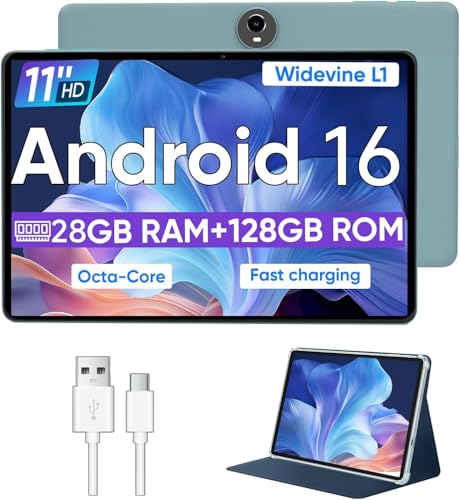
The WXUNJA 11-inch Tablet stands out for one streaming detail that many generic tablets leave unclear: the listing says it passed Widevine L1 certification. That can help supported services deliver higher-quality video than devices restricted to lower playback levels. It combines that feature with an 11-inch screen, a case, and an 8000mAh battery.
The screen uses 1280 x 800 resolution, so it is large rather than especially sharp. Movies and games should be easy to see, but small text will not have the same crispness as on either Lenovo Idea Tab. WXUNJA claims eight to ten hours of playback and supports PD 18W fast charging, which makes it a better fit for long viewing sessions than the HOTTABLET.
The Unisoc T606 octa-core processor and 4GB of physical memory are aimed at everyday apps and most games. The advertised 28GB memory combines 4GB with 24GB expansion, so the headline figure should not be treated as 28GB of physical RAM. Storage is more convincing: 128GB is built in, with support for a card up to 1TB.
Connectivity is broad. The tablet lists 2.4GHz and 5GHz Wi-Fi, Bluetooth 5.0, a 3.5mm headphone jack, wireless casting, FM radio, face recognition, and 5MP plus 8MP cameras. The title mentions GPS, while the feature text lists connectivity and multimedia functions without providing a separate GPS specification, so buyers who need location services should verify that detail before relying on it.
The Amazon Fire HD 10 has a sharper documented screen and a longer battery claim, while the WXUNJA has Google-oriented Android flexibility and Widevine L1. The Lenovo Idea Tab is better for study and handwriting. Choose WXUNJA when streaming compatibility and local storage matter more than display resolution or premium software support.

How to choose best cheap tablet
The right tablet depends less on a large memory figure in the title and more on how the screen, software, processor, storage, and battery work together.
Display size and resolution
An 8-inch screen is easier to hold and carry, while 10 or 11 inches gives video, documents, and split-screen apps more room. Resolution matters most for reading and web pages. The Lenovo Idea Tab’s 2.5K panel is substantially more detailed than the 1280 x 800 displays on the ECOPAD, URAO, and WXUNJA.
Physical memory and processor
Look for the amount of actual memory, not just a combined figure that includes virtual expansion. The 4GB Lenovo Idea Tab, 6GB Samsung Galaxy Tab A11+, and 8GB Lenovo Idea Tab have clearer multitasking credentials than models advertising extra memory through expansion. Processor information is also important, since an octa-core label alone does not tell you how responsive a tablet will be.
A tablet with a sharper screen and real physical memory usually feels better every day than one with the biggest headline RAM figure.
Operating system and app access
Amazon Fire tablets use Fire OS and the Appstore. The Fire HD 10 and Fire HD 8 are convenient for Amazon content, Alexa, and family controls, but the Fire HD 8 listing specifically says Google Play is not supported. Standard Android models such as Lenovo, Samsung, ECOPAD, URAO, HOTTABLET, and WXUNJA are more suitable when Google Play access is central to the purchase.
Storage and expansion
32GB can work for streaming, reading, and light app use, but downloaded video and games can consume it quickly. Built-in storage is preferable to relying entirely on a memory card, and the Lenovo Idea Tab 8GB starts with 256GB. Expandable storage is still useful on the ECOPAD, Fire HD 10, Fire HD 8, URAO, HOTTABLET, and WXUNJA, though cards are not included in every listing.
Battery and portability
Battery claims vary by activity, so treat playback figures as a guide rather than a guarantee. The Fire HD 10 and Fire HD 8 list up to 13 hours, while Lenovo Tab One lists up to 12.5 hours of YouTube streaming. For travel, weight matters just as much: the Fire HD 8 and Lenovo Tab One are much easier to carry than the 11-inch models.
Frequently asked questions
Which tablet is best for school notes?
The Lenovo Idea Tab 4GB is the strongest fit because it includes a Tab Pen and folio case, a 2.5K touchscreen, and note-taking apps such as Lenovo AI Note, Squid, and Nebo. The Lenovo Idea Tab 8GB is better if the student keeps many apps and documents open.
Do these tablets support Google Play?
The Android tablets from Lenovo, Samsung, ECOPAD, URAO, HOTTABLET, and WXUNJA are presented as Android devices, and the ECOPAD and URAO listings specifically mention Google services or Google Play. The Amazon Fire HD 10 and Fire HD 8 use Amazon’s Appstore, and the Fire HD 8 listing says Google Play is not supported.
Which tablet is easiest to carry?
The Amazon Fire HD 8 is the lightest listed tablet at 0.74 pounds, followed by the Lenovo Tab One at 0.704 pounds. Their smaller screens are easier to hold than the 10 and 11-inch models, but they provide less room for documents and split-screen use.
Is expandable storage included?
No. Several tablets support microSD or TF card expansion up to 1TB, but the storage card is separate. The Lenovo Idea Tab 8GB has 256GB built in, which reduces the need to add a card immediately.
Which tablet has the sharpest screen?
The Lenovo Idea Tab 4GB and Lenovo Idea Tab 8GB have the sharpest documented screens, with 11-inch 2.5K IPS panels. The Amazon Fire HD 10 follows with a 10.1-inch 1080p Full HD display.
Is the URAO tablet suitable for navigation?
The URAO listing explicitly says it has no GPS. It can use location information from other sources in some circumstances, but it should not be selected as a standalone navigation tablet.
Which tablet is best for video streaming?
The Amazon Fire HD 10 is the strongest general entertainment choice because it combines a 10.1-inch 1080p screen with a 13-hour battery claim. The WXUNJA is worth considering when Widevine L1 certification and standard Android access are more important than resolution.
The bottom line
The Lenovo Idea Tab 4GB is our Best cheap tablet pick for most people because its 2.5K 90Hz screen, Dimensity 6300 processor, included pen, folio case, and note-taking tools cover far more than basic streaming. Choose the Lenovo Idea Tab 8GB instead when multitasking and internal storage are central to the purchase.
For entertainment, the Amazon Fire HD 10 has the clearest 1080p screen and a strong battery claim, while the Amazon Fire HD 8 is the better travel companion. The Lenovo Tab One is the more flexible compact Android alternative, and the Samsung Galaxy Tab A11+ is the sensible family choice when a large screen and shared use matter most.
If you are undecided, choose the Lenovo Idea Tab 4GB for general use, the Fire HD 10 for Amazon-centered entertainment, or the Fire HD 8 when carrying comfort comes first.
As an Amazon Associate we earn from qualifying purchases.