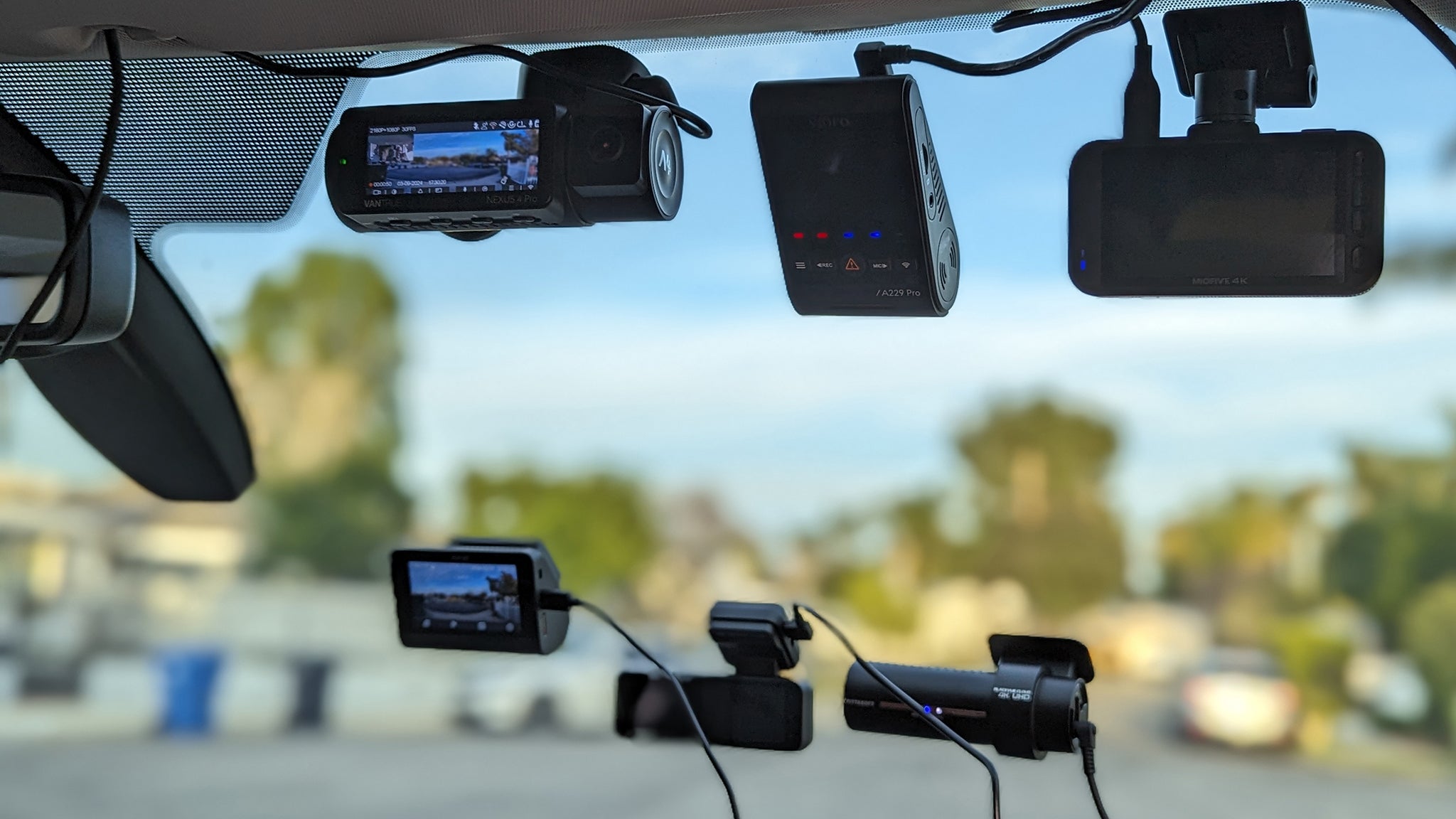

A dash camera earns its place when a license plate is hard to read, a driver disputes what happened, or a parked car takes an unexplained hit. The useful differences are not just resolution. Rear coverage, interior recording, night performance, GPS data, phone transfers, and how cleanly the wiring disappears all matter.
The Best dash camera options below range from compact single-camera models to four-channel systems that watch the front, rear, cabin, and sides. We have ranked them by the balance of image quality, coverage, controls, and ownership features, with a clear weakness called out for every pick.
For most drivers, the ROVE R2-4K Dual is the one to buy. The rest of the list covers rideshare drivers, parking surveillance, side-view coverage, and simple front-only recording.
| # | Product | Award | Channels | Front video | Rear or interior video | Wi-Fi and GPS | Best for |
|---|---|---|---|---|---|---|---|
| 1 | ROVE R2-4K Dual | Best overall | 2 | 4K at 30fps | 1080p at 30fps | 5GHz and 2.4GHz Wi-Fi, GPS | Daily driving and road trips |
| 2 | REDTIGER F7NP | Best night recording | 2 | 4K | 1080p | 5.8GHz Wi-Fi, GPS | Drivers who prioritize front detail |
| 3 | REDTIGER F7N Touch | Best touch controls | 2 | 4K | 1080p | 5.8GHz Wi-Fi, GPS | Hands-free control and simple setup |
| 4 | XYGCACO 4-Channel 360 | Best side coverage | 4 | 4K | Three 1080p views | 5GHz Wi-Fi, GPS | Full exterior coverage |
| 5 | Icesky S03 360 | Best four-channel display | 4 | 4K | 1080p rear, interior, left, and right | Wi-Fi 6, GPS | Seeing every camera at once |
| 6 | TERUNSOUl 3-Channel 4K | Best cabin coverage | 3 | 4K | 1080p rear and cabin | 5.8GHz and 2.4GHz Wi-Fi, GPS | Rideshare and family vehicles |
| 7 | IIWEY N6 360 | Best parking surveillance | 4 | Ultra HD | Ultra HD rear and side views | Wi-Fi 6, GPS | Side monitoring and long parking periods |
| 8 | galphi Mini 4K | Best compact camera | 1 | 4K at 2160p | None | 5GHz Wi-Fi, no GPS listed | Small cars and distraction-free recording |
| 9 | 70mai T800E | Best voice control | 3 | 4K | 1080p interior and rear | Wi-Fi 6, GPS | Rideshare drivers who want hands-free controls |
| 10 | Vantrue N4S | Best low-light coverage | 3 | 2.7K | 1440p interior and rear | 5GHz Wi-Fi, GPS | Night driving and flexible rear placement |
1. ROVE R2-4K Dual: Best Overall
Pros
- Sharp 4K front and 1080p rear recording
- STARVIS 2 sensor with wide apertures
- Fast phone transfers through dual-band Wi-Fi
- GPS data is embedded in recordings
- Three parking modes
Cons
- Parking mode requires a separate hardwire kit
- The rear camera records at a lower resolution than the front
- The built-in screen is not especially discreet
Best for: drivers who want a polished dual-camera system with strong night recording and useful evidence features.
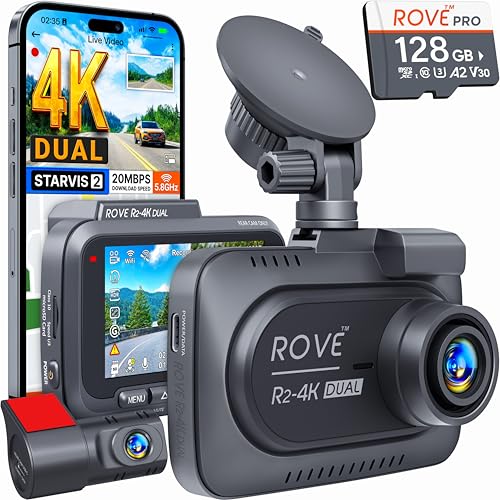
The ROVE R2-4K Dual is the easiest recommendation here because it gets the fundamentals right without forcing the driver into a complicated four-camera installation. It records the road ahead in 3840 by 2160 video at 30fps and the road behind in 1920 by 1080 at 30fps. That combination gives the front camera enough detail for signs and plates while still preserving useful rear evidence. The 150-degree front view and 140-degree rear view are broad without being described as a full surround system.
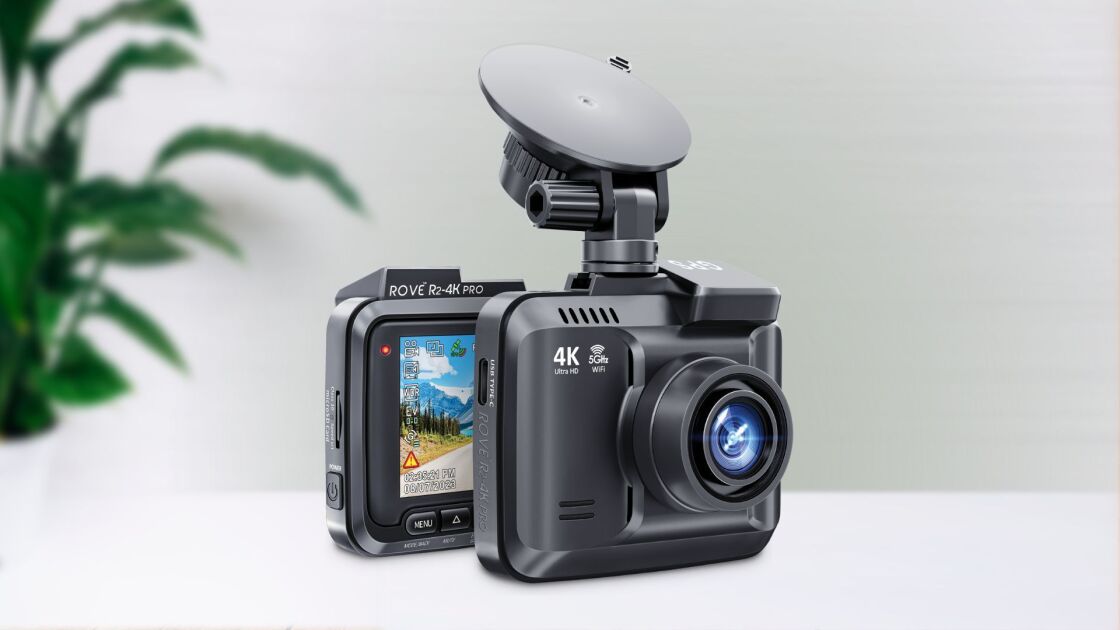
Its front Sony IMX675 STARVIS 2 sensor is the important part of the specification sheet. The F1.5 front aperture and F1.8 rear aperture allow more light into the lenses, which matters on dark streets, under street lamps, and when headlights create high-contrast scenes. The camera also uses a 3-inch IPS display, so setup and framing are straightforward. That screen is helpful during installation, although drivers who want a nearly invisible camera may prefer the screen-free galphi Mini 4K.
The ROVE's app experience is one of its strongest practical features. Dual-band 5GHz and 2.4GHz Wi-Fi can transfer recordings at up to 20MB/s, so retrieving a clip does not require removing the memory card every time. Built-in GPS records routes, locations, speed, and compass information, and the GPS player can show that data on a computer. Loop recording handles ordinary driving, while the G-sensor locks footage after an impact.
Parking protection is more flexible than on several competing models. The R2-4K Dual offers one-frame-per-second time-lapse, motion detection, and collision detection modes. The catch is important: a hardwire kit is required, and it is not included. Its supplied 128GB card, supercapacitor, thermal protection, voice guidance, and emergency video lock make the package feel complete for normal installation, but the rear camera's 1080p ceiling means it cannot match the front detail.
Choose the ROVE R2-4K Dual if you want a dependable front and rear system for commuting, long trips, or general incident recording. It is a more balanced buy than REDTIGER F7NP when fast access and a broader set of parking options matter more than the widest front lens.
2. REDTIGER F7NP: Best Night Recording

Pros
- 4K front and 1080p rear recording
- STARVIS 2 sensor, HDR, and WDR
- Wide 170-degree front lens
- Fast 5.8GHz Wi-Fi transfers
- Supercapacitor design for heat resistance
Cons
- Parking modes need a separate hardwire kit
- No cabin camera for rideshare use
- The display and controls are less versatile than a touch model
Best for: drivers who put front-facing detail and difficult nighttime scenes ahead of cabin coverage.
The REDTIGER F7NP is built around a simple idea: capture as much useful detail as possible in front of the car, then add enough rear coverage to document what happened behind you. Its front channel records in 4K and its rear channel records in 1080p. The 170-degree front lens is wider than the ROVE R2-4K Dual's front view, while the rear lens is 140 degrees. That extra width can help at intersections and during side-angle incidents, though wide lenses can make distant objects look smaller.
Night recording gets a serious hardware push from the STARVIS 2 sensor, F1.5 aperture, six-layer optical lens, WDR, and HDR. Those features work together rather than acting as interchangeable marketing labels. The larger aperture helps gather light, while HDR and WDR help control the difference between dark pavement and bright headlights. The result should be more usable evidence in mixed lighting than a basic 4K camera with no stated dynamic-range processing.
The F7NP also handles the routine parts of ownership well. Its 5.8GHz Wi-Fi connects to the REDTIGER Cam app for previews, downloads, playback, and settings. Transfers can reach 20MB/s, which is useful when a collision clip needs to leave the camera quickly. GPS data includes route, speed, and location. Loop recording replaces older unlocked files, while the G-sensor protects clips associated with sudden movement or impact.
Two parking modes are available: time-lapse recording and G-sensor recording. Neither works as a complete parked-car solution without the separate hardwire kit, so buyers should not confuse the menu option with an installation that can run while the ignition is off. The included card makes daily recording easy to start, and the supercapacitor is a sensible choice for a camera that may sit behind a windshield in hot weather.
Compared with REDTIGER F7N Touch, the F7NP gives up the touchscreen and voice control. In return, it keeps the interface simpler and focuses its case for buyers who mainly want front-road clarity. Skip it if interior recording is important, or choose 70mai T800E for a three-channel rideshare setup.
3. REDTIGER F7N Touch: Best Touch Controls

Pros
- 4K front and 1080p rear recording
- Touchscreen and voice commands
- GPS and fast 5.8GHz Wi-Fi
- Included 128GB card
- G-sensor and two parking modes
Cons
- Hardwire kit is required for parking monitoring
- No interior camera
- Touchscreens can add visual distraction if used while driving
Best for: drivers who want several ways to control a dual-channel camera without reaching for a phone.
The REDTIGER F7N Touch is the more interactive sibling in this group. It combines a 4K front camera with a 1080p rear camera, then adds a touchscreen, physical buttons, and voice commands. That gives it a useful advantage during setup and incident handling. A driver can use the screen to lock an emergency clip or turn on Wi-Fi, while voice control reduces the need to take a hand from the wheel for supported commands.
Its recording hardware is familiar but capable. The front camera uses a STARVIS 2 sensor and a 170-degree lens, while the rear camera covers 140 degrees at 1080p. WDR, HDR, and the stated super night vision processing are intended to preserve detail when bright headlights and dark surroundings share the frame. It is a strong arrangement for ordinary front and rear evidence, but it does not provide the cabin perspective that makes three-channel cameras useful for rideshare drivers.
GPS is built in, and the REDTIGER app connects over 5.8GHz Wi-Fi for downloads of up to 20MB/s. That is quick enough to make phone-based clip retrieval practical rather than an occasional chore. The camera also records speed, location, and route information. Loop recording keeps the card cycling through normal footage, and the G-sensor locks clips after a sudden movement so they are not immediately overwritten.
The parking feature offers G-sensor and time-lapse modes, but the separate hardwire requirement is still the main limitation. Installation uses a suction cup mount and includes a pry tool for hiding the rear cable. The 128GB card means the camera can be used immediately, though buyers should still check the cable routing and keep the original accessories as recommended.
This model makes more sense than REDTIGER F7NP for people who want direct controls and more than ROVE R2-4K Dual for drivers who prefer voice operation. It is not the right fit for a driver needing interior footage or a camera that stays nearly invisible behind the mirror.
4. XYGCACO 4-Channel 360: Best Side Coverage

Pros
- Four simultaneous views
- 4K front camera and three 1080p lenses
- Adjustable left and right cameras
- GPS and 5GHz Wi-Fi
- Infrared lights and WDR
Cons
- Side cameras make installation more involved
- Parking mode requires a separate hardwire kit
- A four-view setup creates more footage to manage
Best for: drivers who want exterior views on both sides of the vehicle, not just front and rear recording.
The XYGCACO 4-Channel 360 solves a problem that dual cameras cannot: incidents arriving from the sides. Its four lenses record the front, rear, left, and right simultaneously. The front channel reaches 4K, while the three additional cameras record in 1080p. That is a sensible division because the forward view usually needs the most detail, while the side views are primarily there to establish position, movement, and surrounding vehicles.
A 3-inch IPS screen shows the four feeds, and the side cameras are adjustable. Placement will matter more here than with a basic windshield camera. The side views need to be aimed at useful zones rather than blocked by trim, pillars, or seats. Buyers should expect a longer installation process because the additional camera cables must be routed and positioned cleanly.
The camera has dual-band 5GHz Wi-Fi, GPS, loop recording, and a G-sensor. The Viidure app can be used to preview, manage, download, and share recordings, while GPS documents the vehicle's path. The 64GB card is preinstalled. Four-channel recording can fill storage more quickly than a front-only system, so the stated support for continuous loop recording and locked impact clips matters.
Low-light coverage gets help from eight infrared LED lights, a wide F1.6 aperture, and WDR. The product information specifically describes exposure adjustment for low-light and overexposed scenes. That should help the side cameras at night, although infrared illumination is not a substitute for a high-resolution color image when a plate is far away.
The trade-off is complexity. Icesky S03 360 also offers four-channel coverage, but it adds a more explicit multi-view display and Wi-Fi 6 description. The XYGCACO is the better choice when adjustable side cameras are the main reason for buying a four-channel unit. Choose a dual-camera model instead if you want a faster, less intrusive installation.
5. Icesky S03 360: Best Four-Channel Display

Pros
- Front, rear, interior, left, and right coverage
- 4K front recording
- 3-inch screen supports multi-view display
- Wi-Fi 6 with up to 20MB/s downloads
- GPS and support for larger memory cards
Cons
- A hardwire kit is not included for parking mode
- Four cameras require careful placement
- The side-camera setup is more work than a dual system
Best for: drivers who want to monitor the road and cabin while viewing all four feeds on the camera.
The Icesky S03 360 is the most literal all-around recorder in this roundup. It records 4K from the front and 1080p from the rear, interior, left, and right cameras simultaneously. That gives it more coverage than a standard three-channel camera and a useful cabin perspective for family vehicles or rideshare work. The built-in 3-inch screen can show the four views together, which is helpful when adjusting the side cameras.
The important question is not simply whether four cameras are present. It is whether the angles can be made useful in a particular vehicle. The S03 has adjustable cameras, and its side cameras use eight infrared lights that can be controlled independently. That is a thoughtful detail for nighttime side monitoring, since the left and right views may face very different lighting conditions. It also means the installation deserves more care than a front and rear kit.
Wi-Fi 6 on the 5.8GHz band is rated for downloads up to 20MB/s through the app. The system can preview, play, download, and share footage without removing the card. GPS records speed, route, location, and time, with route playback available through the app or GPS player. Loop recording overwrites older unlocked files, while the G-sensor protects important clips.
The S03 includes a 128GB card and supports cards up to 512GB with the required U3 speed class. That expanded capacity is useful because four simultaneous channels generate more files than the two-channel ROVE R2-4K Dual. Its 24-hour parking mode also requires a separate hardwire kit. Voice alerts and a screen saver help reduce the need to interact with the display while moving.
This is a better fit than XYGCACO 4-Channel 360 for someone who specifically wants front, rear, cabin, and side views on one screen. It is not the simplest answer for a commuter. If your main concern is evidence ahead and behind, the extra cameras add installation work without adding much useful information.
6. TERUNSOUl 3-Channel 4K: Best Cabin Coverage

Pros
- 4K front, 1080p rear, and 1080p cabin recording
- Wide coverage from all three cameras
- GPS data is embedded in footage
- Fast Wi-Fi transfers
- Included 128GB card
Cons
- Parking mode needs a separate hardwire kit
- No side cameras
- The cabin view may be unnecessary for ordinary commuting
Best for: rideshare drivers, family vehicles, and anyone who wants the interior event documented.
The TERUNSOUl 3-Channel 4K is aimed at the driver who needs to know what happened inside the vehicle as well as outside it. Its three channels record 4K in front, 1080p behind, and 1080p inside the cabin. That is more useful for rideshare disputes, passenger incidents, and family trips than a side-view system when the key evidence may be a conversation or movement in the car.
The lens coverage is broad: 170 degrees in front and 165 degrees for both the rear and cabin cameras. Wide angles help include more of a scene, though they also place more of the frame at the edges where objects can appear smaller. The cabin camera is paired with a five-layer lens, F1.6 aperture, and HDR processing for low-light recording. Those features should help when the interior is dim, but the camera's usefulness still depends on where it is mounted and how much glare reaches the glass.
GPS records route, speed, location, compass, and timestamp information directly in the video. The app connects over dual-band 5.8GHz and 2.4GHz Wi-Fi, with downloads up to 20MB/s and wireless firmware updates. Loop recording handles the card automatically, while the collision sensor locks relevant footage. A preinstalled 128GB card is included, which is sensible for three channels that create files faster than a front-only camera.
The 3.16-inch IPS screen makes setup easier, but this is not a particularly hidden installation. Parking mode requires a separate hardwire kit, and that limitation matters for drivers who want protection while the vehicle is unattended. The camera does include an 18-month warranty and 24/7 support according to the product details.
Compared with 70mai T800E, the TERUNSOUl offers a similar front, rear, and cabin concept but with faster stated Wi-Fi downloads. The 70mai adds voice control and a switchable infrared interior mode. Pick the TERUNSOUl when cabin evidence is the priority and you prefer its wider interior view. Skip it if you never carry passengers and want a smaller, simpler camera.
For drivers weighing installation against coverage, how an interior camera changes a car recording setup can help clarify whether a cabin view earns its place.
7. IIWEY N6 360: Best Parking Surveillance

Pros
- Four-channel front, rear, and side recording
- 170-degree front and rear views
- Adjustable side cameras with infrared night vision
- Up to 48 hours of time-lapse parking surveillance
- Wi-Fi 6 and GPS
Cons
- No built-in battery
- Parking mode requires a separate hardwire kit
- Side-camera installation takes patience
Best for: owners who want side coverage and extended parked-vehicle monitoring.
The IIWEY N6 360 is unusual in this list because its parking feature is described in more detail than most. It records front, rear, and both sides at the same time, with 170-degree front and rear fields of view and 150-degree side views. The side cameras are adjustable and use infrared night vision, so the system is designed to watch the areas that a normal windshield and rear camera leave exposed.
The product calls its four channels ultra-FHD rather than assigning a separate 4K figure to the front view. That distinction matters. If maximum forward resolution is your main goal, the 4K front cameras in Icesky S03 360 or XYGCACO 4-Channel 360 are more clearly specified. The N6 instead makes its case through surround coverage, side visibility, and its night-oriented design.
Parking surveillance has two modes. Time-lapse can record at one, three, or five frames per second for up to about 48 hours, while impact detection records and locks a short clip after a bump or tampering event. Both require the IIWEY hardwire kit. The camera has no built-in battery and must be connected to a vehicle power source during use, a point buyers should take seriously before planning an installation.
For everyday driving, the N6 includes loop recording, G-sensor emergency locking, a 128GB card, and support for cards up to 256GB. Wi-Fi 6 on 5.8GHz can transfer at up to about 20MB/s, and GPS records speed and route in the app or PC viewer. Its auto-off behavior after several minutes can reduce heat and power draw when Wi-Fi is not being used.
The main weakness is not a missing convenience feature. It is the installation commitment. Four cameras, side wiring, and a hardwire connection create more opportunities for a poor fit than a conventional dual system. The N6 is a good match for a vehicle parked outdoors or in uncertain surroundings. For a straightforward commute, ROVE R2-4K Dual is easier to live with.
8. galphi Mini 4K: Best Compact Camera

Pros
- Compact screen-free design
- 4K front recording at 2160p
- 160-degree field of view
- 5GHz Wi-Fi and app control
- F1.6 aperture and WDR
Cons
- Front camera only
- GPS is not listed in the product details
- Parking mode requires a separate Type-C hardwire kit
Best for: drivers who want a small camera that records without putting a display in their line of sight.
The galphi Mini 4K is the cleanest answer for a driver who does not want a screen or a second camera cable crossing the cabin. It records forward in 4K at 2160p through a 160-degree lens, and its screen-free design reduces the temptation to look down at a live display. The compact body is also less likely to obstruct the windshield than the larger multi-camera systems in this roundup.
Its F1.6 aperture and WDR are intended to make night and high-contrast scenes more readable. The camera is still front-only, so it cannot document a rear impact or provide an interior view. That limitation is more significant than the compact shape if a car is used for rideshare or regularly parked in crowded areas.
The camera connects to an app over 5GHz Wi-Fi and can download footage at up to 8MB/s. That is slower than the 20MB/s figures claimed by several dual and multi-channel picks, but it is still more convenient than removing the card for every clip. Loop recording automatically replaces older footage, while the G-sensor locks files after sudden movement.
A 32GB card is included, and the camera supports cards up to 256GB. The supplied card capacity is enough to get started, though front-only 4K recording can still use storage quickly. The 24-hour parking feature records in time-lapse and requires a separate Type-C hardwire kit. GPS is not listed in the available product details, so buyers who need location and speed data should choose a model such as REDTIGER F7NP or 70mai T800E.
The galphi is the right compromise for a small car, a new driver, or anyone who values an unobtrusive installation over all-around coverage. It is not a substitute for a dual camera. If you are deciding between a compact front-only model and rear protection, the latter is usually the more important upgrade.
9. 70mai T800E: Best Voice Control

Pros
- 4K front, 1080p interior, and 1080p rear recording
- Switchable infrared for the interior camera
- GPS, Wi-Fi 6, and voice control
- 64GB card included
- Supercapacitor rated for a broad temperature range
Cons
- Wi-Fi transfers are slower than several competitors
- Parking monitoring requires a compatible hardwire kit
- The listed weight is higher than most picks here
Best for: rideshare and family drivers who want cabin recording with hands-free operation.
The 70mai T800E takes the three-channel formula and adds the most driver-friendly control scheme in this group. It records 4K in front and 1080p inside and behind, covering the road, passengers, and following traffic. That makes it a natural fit for Uber and Lyft drivers, but it is also useful for families who want a record of what happened in the cabin.
The interior camera has switchable infrared recording. Turning infrared on can improve visibility inside the vehicle at night, while turning it off can preserve a more natural view when the cabin is already well lit. HDR and 3D noise reduction support the front and rear footage, and the F1.55 aperture is intended to help with low-light scenes. The product does not state a separate frame rate for each channel, so the resolution figures should not be read as a promise of identical motion handling across the system.
Voice control is the standout convenience. Supported commands can take a photo, start recording, or lock important footage without reaching toward the display. Built-in five-mode GPS records speed, location, and route. Wi-Fi 6 transfers files through the 70mai app at up to 10MB/s, which is respectable but behind the faster 20MB/s claims from TERUNSOUl 3-Channel 4K, ROVE R2-4K Dual, and several REDTIGER models.
The camera comes with a 64GB card and supports cards up to 512GB. Loop recording manages ordinary files, while G-sensor detection locks footage during impacts. Parking monitoring requires a compatible hardwire kit, and the camera uses an adhesive mount for installation. The stated operating range of 14°F to 140°F and supercapacitor design are reassuring for a device that lives behind glass through seasonal temperature changes.
The T800E is easier to recommend than a basic three-channel camera when hands-free controls matter. TERUNSOUl 3-Channel 4K has faster stated Wi-Fi, while Vantrue N4S provides higher rear and interior resolution. The 70mai earns its place through voice control, the switchable interior infrared mode, and a fairly complete rideshare feature set.
Before installing any model in a vehicle used for passengers, consider which views matter when the cabin is part of the evidence, especially if rear and interior footage will be reviewed often.
10. Vantrue N4S: Best Low-Light Coverage

Pros
- Triple STARVIS 2 sensors
- 2.7K front and 1440p rear and interior recording
- HDR and PlatePix processing
- Rotating rear camera
- Four parking modes
Cons
- Front resolution is below the 4K leaders
- Memory card is sold separately
- The camera is heavier and larger than many alternatives
Best for: drivers who prioritize night footage, interior detail, and a flexible rear camera.
The Vantrue N4S takes a different route from the 4K-focused cameras above. Instead of putting the highest resolution only in front, it uses triple STARVIS 2 sensors and records 2.7K in front with 1440p inside and behind. That gives the rear and cabin channels more detail than the 1080p cameras used by most of the other three-channel picks. For rideshare drivers, that can be a meaningful improvement because the interior view is not merely a secondary witness.
Its 158-degree front, 165-degree cabin, and 160-degree rear lenses provide broad coverage. The rear camera rotates 360 degrees, allowing it to face backward or pivot inward toward cargo, luggage, or pets. That flexibility makes the N4S more adaptable than a fixed rear module, though the extra adjustment also creates another installation detail to check.
Low-light performance is the strongest reason to choose it. Triple HDR is designed to manage bright headlights against dark roads, while Night Vision 4.0 and STARVIS 2 improve sensitivity in dim scenes. The product also cites PlatePix processing for sharpening license plates. Those features cannot guarantee readable plates in every motion or lighting condition, but they target the exact situations where a generic camera often produces a washed-out image.
Parking protection includes four modes, with motion detection providing 10 seconds of pre-event recording and collision detection locking impact footage. Low-bitrate and low-frame-rate modes reduce file sizes for longer parked monitoring. The camera supports up to a 1TB microSD card, although the card is sold separately. It also has 5GHz Wi-Fi, quad-mode GPS with BeiDou positioning, and OTA firmware updates.
The weakness is the front camera's 2.7K ceiling and the larger physical package. 70mai T800E is the more natural pick if 4K forward detail and voice control matter, while the N4S is stronger when the interior and rear images need to hold more detail at night. It is a specialist choice, but a persuasive one for rideshare drivers and frequent nighttime travelers.
How to choose best dash camera
Start with the view you need to preserve after an incident, then work through image quality, storage, controls, and parked monitoring. A compact front-only unit is not automatically the right answer if rear or cabin evidence matters more.
Camera coverage
Front-only, dual-channel, three-channel, and four-channel systems solve different problems. A front camera documents the road ahead, while a dual setup adds rear evidence. Three-channel models add the cabin, and four-channel cameras add side views or combine side and interior coverage.
Four-channel systems such as Icesky S03 360 and XYGCACO 4-Channel 360 reduce blind spots, but they require more cables and careful positioning. For most private cars, front and rear coverage is the sensible starting point. Rideshare drivers should strongly consider a cabin camera.
Extra cameras help only when their lenses are aimed at the event you actually need to document.
Front and rear resolution
4K front recording can preserve more detail than 2.7K or 1080p when a plate or road sign is distant, but resolution is only one part of image quality. Aperture, sensor design, HDR, WDR, lens quality, and lighting all influence the final clip.
The rear camera is often 1080p in dual and three-channel systems. That is useful for establishing what happened behind the vehicle, but it will not match a 4K front view for fine detail. The Vantrue N4S stands out by using 1440p for both the interior and rear channels.
Night recording
Night footage is where a dash camera's hardware choices become obvious. STARVIS 2 sensors, wide apertures, HDR, WDR, infrared interior lighting, and noise reduction can help preserve detail in scenes with headlights, shadows, and street lighting.
Front-facing infrared is not normally the goal because it can reflect from the windshield. Infrared is more useful inside the cabin or on side cameras, as seen on the 70mai T800E, Icesky S03 360, and IIWEY N6 360. Look for a stated low-light technology and a lens aperture, not just a generic night vision label.
GPS and phone access
GPS can embed speed, route, location, time, or compass information into footage. That can make a clip more useful when the sequence of events is disputed. It also lets you review where a recording occurred without relying on memory.
Wi-Fi is useful for retrieving a clip without removing the card. The products here list 5GHz or Wi-Fi 6 connections, with claimed transfer rates ranging from 8MB/s to 20MB/s. A fast connection helps, but app stability and a straightforward file export process matter just as much.
Parking monitoring and power
Parking mode is not a self-contained feature unless the camera has a suitable power source after the ignition is off. Most models here require a separate hardwire kit. Time-lapse, low-bitrate, motion, and impact modes reduce storage or power demands in different ways.
A supercapacitor can be preferable to a lithium battery for heat tolerance and shutdown reliability, but it does not make the camera wireless. Check whether the required kit is included, which recording mode it enables, and whether the camera locks an event automatically.

Frequently asked questions
Is a 4K dash camera better than a 1080p model?
A 4K front camera can preserve more fine detail, especially when a vehicle or sign is some distance away. It does not automatically produce clearer night footage, since sensor quality, aperture, HDR, WDR, and exposure also matter. A good 2.7K camera such as the Vantrue N4S may produce more useful rear or cabin footage than a basic 4K system.
Do I need a rear camera?
A rear camera is useful for rear-end collisions, tailgating incidents, and disputes where the important vehicle is behind you. It also gives a more complete record of a road event. If installation simplicity matters more than rear evidence, a front-only model such as the galphi Mini 4K is easier to place.
Are three-channel cameras useful for rideshare drivers?
Yes. A three-channel system records the road ahead, the road behind, and the cabin. That can help document passenger incidents that a front and rear camera would not capture. The 70mai T800E, TERUNSOUl 3-Channel 4K, and Vantrue N4S all add an interior view, although their cabin resolutions and night features differ.
Does GPS record the vehicle's speed?
Models with built-in GPS can record speed, route, location, and time information. The exact way that information appears depends on the camera app or desktop player. GPS does not replace the video itself, and it should be checked for accuracy after installation.
Can a dash camera record while the car is parked?
Many of these cameras offer parking modes, but most need a separate hardwire kit to keep operating after the ignition is off. Some use motion or impact detection, while others offer time-lapse or low-bitrate recording. The hardwire requirement applies to the parking features of several top picks, including the ROVE R2-4K Dual.
Is Wi-Fi the same as internet connectivity?
No. Dash camera Wi-Fi creates a direct connection between the camera and your phone for previewing, downloading, and managing files. It does not necessarily provide internet access or cloud storage. GPS is also separate from Wi-Fi and can record location data without a home or mobile network.
How much camera coverage is enough?
Front and rear coverage is enough for many daily drivers. Add a cabin camera for rideshare or family use, and consider side cameras if blind spots or parked-car incidents are the central concern. More channels provide more evidence but also increase installation time, storage use, and the number of camera angles that need checking.
The bottom line
The Best dash camera for most drivers is the ROVE R2-4K Dual. It combines sharp 4K front recording, useful rear coverage, a STARVIS 2 sensor, fast Wi-Fi, GPS, and several parking options in a balanced two-camera design. Its separate hardwire requirement and 1080p rear channel are real limitations, but they are easier to accept than the installation complexity of a four-channel system.
Choose the TERUNSOUl 3-Channel 4K or 70mai T800E when cabin footage matters, with the 70mai standing out for voice control and switchable interior infrared. The Icesky S03 360 and IIWEY N6 360 make more sense when side coverage and parked surveillance are central to the decision, while the galphi Mini 4K is the cleanest option for a small, unobtrusive front-only setup.
If you are undecided, buy the ROVE for front and rear coverage, or step up to a three-channel model if passengers regularly share the car.
As an Amazon Associate we earn from qualifying purchases.