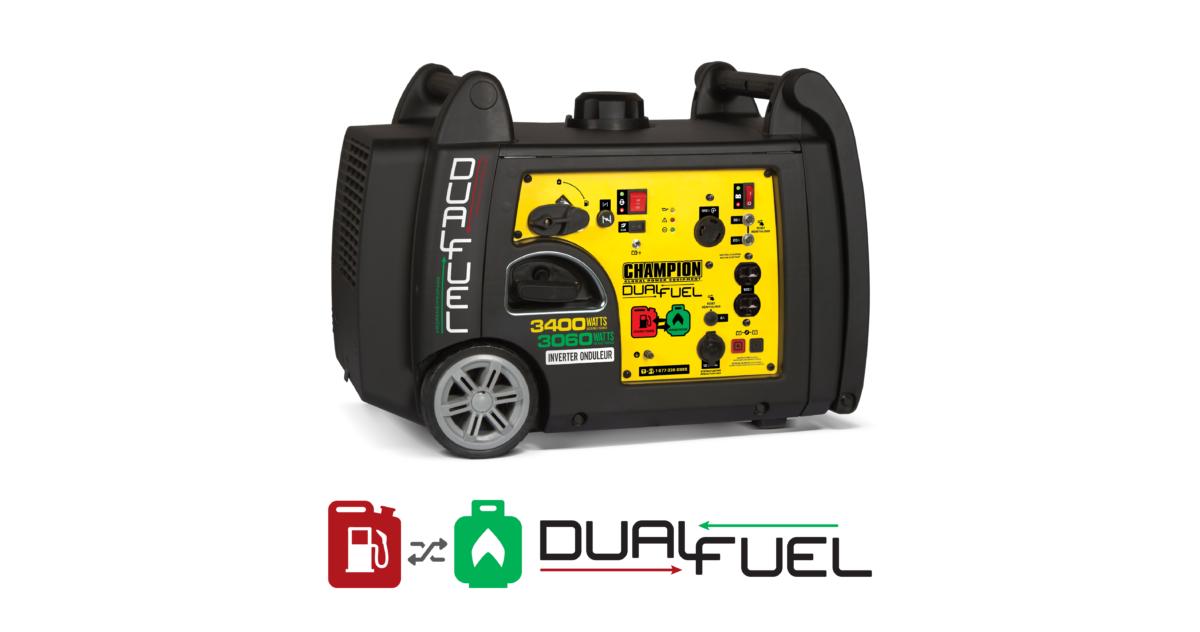

A generator that runs only on gasoline leaves you dependent on one fuel source when the power is out. The Best dual fuel inverter generators give you a second option, cleaner power for electronics, and more flexibility for an RV, campsite, or home backup plan.
The difficult part is separating genuinely useful differences from a long list of wattage claims. A compact 2, 450-watt model can be the right tool for lights and small appliances, while a 12, 000-watt machine is designed for transfer-switch-ready home backup. Noise, outlet layout, portability, runtime, and carbon monoxide protection matter just as much as peak output.
The WEN DF680iX is our top pick, but the list also includes very light camping generators, quiet RV-ready options, and large machines for serious backup loads.
Comparison table
| # | Product | Award | Output | Fuel and runtime | Noise | Best for |
|---|---|---|---|---|---|---|
| 1 | WEN DF680iX | Best overall | 6, 800 surge, 5, 100 rated watts on gas | Gas or propane | Not stated | RVs, emergency backup, and 240V loads |
| 2 | WEN DF280iX | Best compact option | 2, 800 surge, 2, 250 rated watts on gas | Gas or propane | Not stated | Small appliances and electronics |
| 3 | PowerSmart 4400W | Best practical midrange output | 4, 400 surge, 3, 600 rated watts on gas | 1.6-gallon tank, up to 11 hours at 25% load | 76 dB at 23 feet | Camping and basic home backup |
| 4 | AIVOLT 4300W | Best quiet RV pick | 4, 300 surge watts | Gas or propane, up to 11.5 hours on gas at 25% load | 53 dBA | RV use and quiet campsites |
| 5 | Westinghouse iGen5000 | Best long-runtime design | 5, 000 peak, 3, 900 rated watts | 3.4-gallon tank, up to 18 hours | As low as 52 dBA | Extended RV or home use |
| 6 | WEN DF360iX | Best lightweight RV option | 3, 600 surge, 2, 900 rated watts on gas | Gas or propane | Conversation-level operation | Portable RV power |
| 7 | AIVOLT 8000W | Best high-output RV generator | 8, 000 surge, 6, 100 running watts | Automatic gas to propane switching | 62 dBA at 23 feet | Large RVs and demanding loads |
| 8 | Champion 4000W | Best support package | 4, 000 starting, 3, 000 running watts | Up to 10 hours on gas, up to 25 hours on propane | 64 dBA at 23 feet | RV owners wanting simple controls |
| 9 | Westinghouse iGen12000DFc | Best home backup power | 12, 000 peak, 9, 000 running watts on gas | 7.9-gallon tank, up to 19 hours at 25% load | As low as 64 dBA | Transfer-switch-ready backup |
| 10 | POXURIO 2450W | Best lightweight basic generator | 2, 450 starting watts | 6-liter tank, up to 14 hours at 25% load | 59 dB | Camping and light emergency use |
1. WEN DF680iX: Best Overall
Pros
- Strong output on both gasoline and propane
- 120V and 240V operation
- RV-ready TT-30R outlet
- Electric start and onboard mobility features
- Fuel shutoff and CO Watchdog protection
Cons
- Nearly 100 pounds before fuel
- Propane output is lower than gasoline output
- Not the quietest model in this group based on listed specifications
Best for: RV owners and households that need substantial inverter power with 240V flexibility.
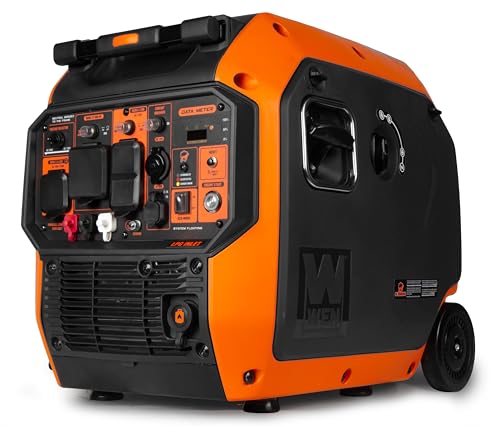
The WEN DF680iX is the most versatile generator here because it covers several jobs without feeling narrowly designed for one of them. It produces 6, 800 surge watts and 5, 100 rated watts on gasoline, or 6, 000 surge watts and 4, 500 rated watts on propane. That is enough headroom for larger startup loads than the WEN DF360iX or Champion 4000W can comfortably handle, while its inverter design is intended to provide cleaner power for sensitive electronics.
Its bonded-neutral 240V configuration is the unusual feature. The generator includes an L14-30R 120V/240V receptacle, two standard 120V receptacles, an RV TT-30R outlet, a 12V DC receptacle, and two 5V USB ports. The 240V configuration also supports low-power Level 2 charging for battery and hybrid electric vehicles. That does not turn it into a dedicated high-speed vehicle charger, but it gives this WEN a capability most of the smaller models lack.
At 99.2 pounds, this is not a generator one person will casually lift into a truck bed. The onboard wheels and telescoping pull handle make movement across a driveway or campsite more manageable, and the electric start is a welcome match for a machine of this size. The fuel shutoff uses the remaining fuel in the carburetor before the engine stops, a useful maintenance feature for anyone who stores the generator between outages.
The weakness is straightforward: the DF680iX trades the easy portability of the WEN DF360iX and AIVOLT 4300W for considerably more output. Its listed specifications do not give a noise figure, so buyers who prioritize campground quiet should look closely at the AIVOLT 4300W or Westinghouse iGen5000 instead. For emergency loads, RV air conditioning, and occasional 240V needs, this is the WEN we would keep.
2. WEN DF280iX: Best Compact Option

Pros
- Compact 19.7 by 11.6 by 18.7-inch body
- Gasoline and propane operation
- Clean power for phones, tablets, and laptops
- Fuel shutoff and CO Watchdog
- Two USB ports
Cons
- No RV TT-30R outlet listed
- Limited to 2, 250 rated watts on gasoline
- No electric start listed
Best for: campers and households that need a compact source for electronics, lights, and smaller appliances.
The WEN DF280iX is the least intimidating generator in the lineup. Its 19.7 by 11.6 by 18.7-inch dimensions make it easier to store than the larger WEN DF680iX, and the lower output keeps its role clear. This is for keeping essentials going, not powering an entire home or running every RV appliance at once.
Gasoline output is 2, 800 surge watts and 2, 250 rated watts. On propane, the figures are 2, 800 surge watts and 2, 000 rated watts. That distinction matters when a refrigerator, pump, or small motor starts up. The generator has enough short-term capacity for startup demands, but its continuous output is better suited to a modest collection of electronics, lights, chargers, and small appliances.
The clean-power inverter design is particularly useful for phones, tablets, and laptops. Two three-prong 120V receptacles sit alongside a 12V DC receptacle and two 5V USB ports, giving it a practical charging layout without requiring extra adapters for basic devices. WEN also includes a fuel shutoff, which helps clear fuel from the carburetor before storage, and a Watchdog CO sensor that automatically shuts the unit down if dangerous carbon monoxide levels are detected.
The DF280iX gives up the RV-ready outlet and higher continuous output found on the WEN DF360iX. It also lacks a listed electric start, so buyers should not assume push-button operation. Still, for someone who wants the smallest WEN option in this comparison and does not need to run a large air conditioner or heavy-duty tool, it is a sensible fit. Keep it outside, use it well away from doors and windows, and let its compact size do the work.
3. PowerSmart 4400W: Best Practical Midrange Output

Pros
- 4, 400 surge and 3, 600 rated watts on gasoline
- 1.6-gallon fuel tank
- 30A RV-ready capability
- Parallel-ready design
- CO detection, low-oil shutoff, and overload protection
Cons
- Listed noise level is 76 dB at 23 feet
- Recoil start is the listed starting method
- Continuous-load guidance favors staying below full rated output
Best for: buyers who need more output than a compact generator but still want a manageable 62-pound package.
The PowerSmart 4400W occupies the useful middle ground between small camping units and heavy home-backup machines. It weighs 62 pounds and measures 19.3 by 16.9 by 16.5 inches, so it is substantially easier to move than the WEN DF680iX or Westinghouse iGen5000. Its 223cc OHV engine runs on gasoline or propane, with gasoline providing 4, 400 surge watts and 3, 600 rated watts.
Propane output falls to 4, 000 surge watts and 3, 300 rated watts. That is still enough for an RV-ready setup or a cluster of household essentials, but the difference between the two fuels becomes relevant when a motor starts or several devices are connected at once. PowerSmart recommends keeping continuous loads below 2, 800 watts for the best performance, which is a useful reminder not to treat the peak number as a sustained operating target.
The 1.6-gallon fuel tank is a reasonable match for a portable generator. The listed runtime reaches 11 hours at 25% load and 5.1 hours at 50% load, though actual results depend on load, fuel, and altitude. Its 30A RV-ready connection, parallel capability, economy mode, CO detection, low-oil shutoff, and overload protection give it a broad feature set. The compact body also leaves room for a practical setup in a garage or vehicle without the bulk of a high-output model.
Noise is the clear compromise. The listed 76 dB(A) from 23 feet is louder than the AIVOLT 4300W, Westinghouse iGen5000, and Champion 4000W figures. It is also a recoil-start unit based on the supplied details, so it lacks the convenience of the AIVOLT's remote start. Choose the PowerSmart when output, portability, and basic safety features matter more than quiet operation.
4. AIVOLT 4300W: Best Quiet RV Pick

Pros
- Listed 53 dBA operation
- Remote start with key fob
- Dedicated 30A RV outlet
- 64-pound design with wheels and telescoping handle
- Automatic CO shutdown and parallel capability
Cons
- Parallel kit is sold separately
- Propane runtime claim is load dependent
- Two-year warranty is shorter than several competitors' listed coverage
Best for: RV users who want quiet operation, remote starting, and easy movement around a campsite.
The AIVOLT 4300W makes a strong case for RV use by combining the features people notice immediately at a campsite. It has a key-fob remote start, a dedicated 30A outlet, wheels, and a telescoping handle. At 64 pounds, it is not featherweight, but it is easier to position than the 104.7-pound Westinghouse iGen5000.
Its headline feature is the listed 53 dBA noise level. That is the lowest stated noise figure among the mid-output models here, and it should be much less intrusive than the PowerSmart 4400W's listed 76 dB(A). The generator produces 4, 300 surge watts, while the supplied details do not state its continuous running wattage. That missing figure is worth checking before buying if you plan to run an RV air conditioner alongside other large loads.
Fuel flexibility is more than a checkbox. AIVOLT lists up to 11.5 hours on gasoline and up to 34 hours on propane at 25% load. Those figures describe light-load operation, not a full-load day with an air conditioner running continuously. The clean electricity is intended for sensitive devices, and the generator includes carbon monoxide auto-shutoff and low-oil protection. Parallel capability gives owners a way to scale later, although the parallel kit is sold separately.
The AIVOLT 4300W is a better fit than the Champion 4000W for buyers who value remote starting and lower listed noise. The Champion counters with a longer stated warranty and lifetime technical support, while the WEN DF360iX is lighter and includes a three-year warranty. Choose this AIVOLT when RV convenience and campsite manners matter more than the strongest warranty package.
5. Westinghouse iGen5000: Best Long-Runtime Design

Pros
- Up to 18 hours on a 3.4-gallon gas tank
- Remote, electric, and recoil start
- 30A RV-ready outlet
- Listed noise as low as 52 dBA
- Digital display with runtime and fuel information
Cons
- Weighs 104.7 pounds
- Larger than the lighter mid-output models
- Listed output is lower than the WEN DF680iX
Best for: users who want long operation, remote starting, and a clear information display.
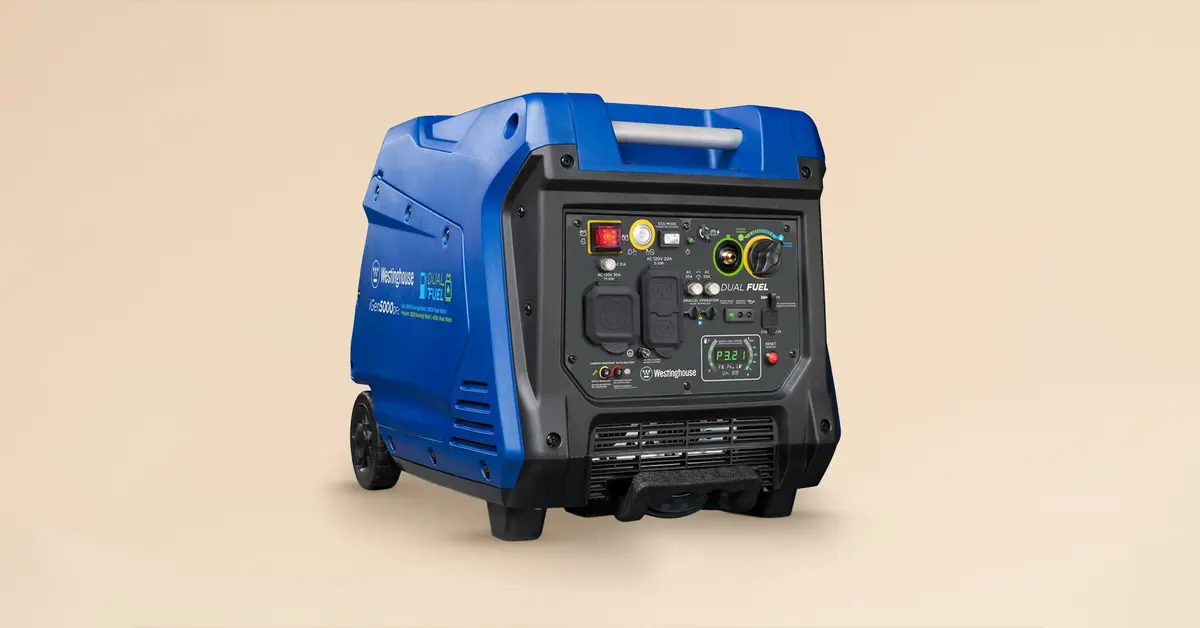
The Westinghouse iGen5000 is built around endurance rather than minimum size. Its 3.4-gallon gasoline tank supports a listed runtime of up to 18 hours, and economy mode is designed to reduce fuel use as demand changes. That makes it appealing for overnight RV use or an outage where constant refueling is an avoidable nuisance.
Output reaches 5, 000 peak watts and 3, 900 rated watts. The generator includes a 120V household duplex outlet, an RV-ready TT-30R 30A outlet, and two USB outlets. Westinghouse also lists less than 3% THD, which is the kind of power-quality detail that matters when laptops, chargers, and other electronics are connected. The rotating LED data center shows fuel level, output, remaining runtime, voltage, and lifetime hours.
Starting flexibility is another strength. The iGen5000 supports remote start with the included key fob, electric start, and recoil start. Its listed noise output can be as low as 52 dBA, putting it close to the AIVOLT 4300W on paper and below the Champion 4000W's 64 dBA figure. A three-year limited service, labor, and parts warranty is also listed.
The trade-off is physical size. At 104.7 pounds and 24.5 inches long, it is far less convenient to carry than the 51.8-pound Champion 4000W or 49-pound WEN DF360iX. The WEN DF680iX produces more output and offers 240V capability, but the Westinghouse is the quieter, longer-running choice when 3, 900 rated watts is sufficient. It suits buyers who would rather refuel less often than move a small generator by hand.
6. WEN DF360iX: Best Lightweight RV Option
Pros
- Only 49 pounds
- RV-ready TT-30R outlet
- Gasoline and propane operation
- Fuel shutoff and CO Watchdog
- USB, 12V, and standard 120V outputs
Cons
- Propane output drops to 2, 600 rated watts
- No electric or remote start listed
- Not suitable for large whole-home loads
Best for: RV owners who need a portable, clean-power generator for moderate loads.
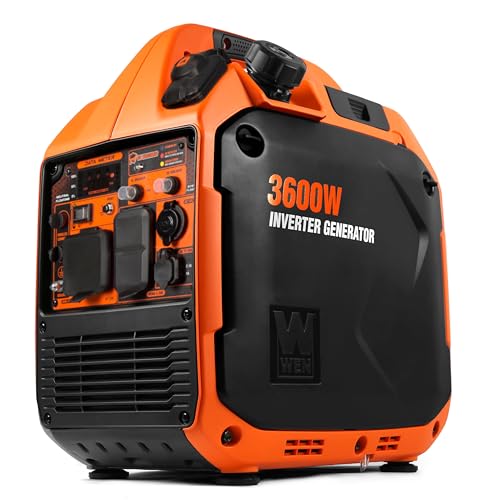
The WEN DF360iX is the portable sweet spot in WEN's lineup. At 49 pounds, it is dramatically easier to lift and store than the DF680iX, while still adding the RV-ready TT-30R outlet that the smaller DF280iX lacks. It is the model to consider when one person may need to unload the generator, position it outside, and put it away without help.
Gasoline output is 3, 600 surge watts and 2, 900 rated watts. On propane, it produces 3, 500 surge watts and 2, 600 rated watts. That range works for moderate RV loads and ordinary emergency essentials, but it leaves less room for stacking a high-startup appliance with an air conditioner. The inverter design provides clean power for electronics such as smartphones, tablets, and laptops.
The outlet layout is practical rather than elaborate. There are two three-prong 120V receptacles, one TT-30R RV receptacle, one 12V DC receptacle, and two 5V USB ports. The tool-free LPG quick connector simplifies propane setup, while the fuel shutoff helps limit maintenance by clearing residual fuel from the carburetor. WEN's Watchdog CO sensor automatically stops the unit if dangerous carbon monoxide levels are detected.
The DF360iX is lighter than the AIVOLT 4300W and more RV-focused than the DF280iX, but it does not list remote or electric start. Its operation is described as comparable to a normal conversation, although no numeric noise rating is supplied. Buyers who need push-button starting should look at the AIVOLT 4300W or Westinghouse iGen5000. For a manageable RV generator that one person can actually move, this WEN remains a compelling pick.
7. AIVOLT 8000W: Best High-Output RV Generator

Pros
- 8, 000 surge and 6, 100 running watts
- 50A RV generator design
- Automatic switching between gasoline and propane
- Electric start and low-temperature battery
- LCD control hub with operating information
Cons
- Weighs 130.7 pounds
- Larger footprint than every smaller RV pick
- Listed noise is 62 dBA, not the quietest figure here
Best for: large RVs and users who need high continuous output without moving to a 12, 000-watt home-backup unit.
The AIVOLT 8000W is for the buyer who has outgrown a 30A RV generator. Its 322cc four-stroke OHV engine produces 8, 000 surge watts and 6, 100 running watts, giving it considerably more sustained capacity than the AIVOLT 4300W or Champion 4000W. That extra output is useful when several RV systems need to operate together instead of taking turns.
Automatic fuel switching is its most distinctive feature. The supplied information says the generator can move between gasoline and propane without manual adjustments. That can be useful during extended operation, though fuel-system behavior and installation details still deserve attention before relying on it for unattended backup. Eco mode is listed with more than 10 hours of runtime at 25% load.
This is a large machine at 25.1 by 19.6 by 21.3 inches and 130.7 pounds. The telescoping handle and two 7-inch never-flat wheels help with transport, but they do not make it a lightweight generator. The listed 62 dBA noise level from 23 feet is respectable for this output class, though it is louder on paper than the AIVOLT 4300W and Westinghouse iGen5000.
The control hub shows fuel use, voltage, and runtime, while the generator includes four outlets, a 12V DC cigarette-style outlet, and a dual USB adapter. A low-temperature lithium battery is rated for operation from -4°F to 140°F, and CO Alert technology provides automatic shutdown. If you need a 50A RV generator with serious output, choose this over the smaller models. If home transfer-switch readiness is the main goal, the Westinghouse iGen12000DFc is the more purpose-built option.
8. Champion 4000W: Best Support Package

Pros
- 4, 000 starting and 3, 000 running watts
- RV-ready TT-30R outlet
- Less than 3% THD
- 51.8-pound portable design
- Three-year warranty and lifetime technical support
Cons
- 64 dBA at 23 feet is louder than the quietest options
- Parallel kit is sold separately
- No remote start listed
Best for: RV owners who want a straightforward generator backed by a strong support offering.
The Champion 4000W keeps its mission simple. It provides 4, 000 starting watts and 3, 000 running watts, includes a 120V 25A TT-30R outlet for an RV, and weighs 51.8 pounds. That makes it easy enough for one person to move while giving an RV more capacity than the WEN DF280iX.
Champion lists up to 10 hours of runtime on gasoline and up to 25 hours on propane. As with any runtime claim, those figures are tied to the stated operating conditions and load. The generator also provides a 120V 20A household duplex outlet, a 12V automotive-style outlet, and parallel outlets. Its inverter output is listed at less than 3% THD, a useful specification for electronics.
Noise is listed at 64 dBA from 23 feet. That is quieter than many conventional generators but not as quiet on paper as the AIVOLT 4300W or Westinghouse iGen5000. The optional parallel kit can connect this generator with another compatible Champion inverter or power station, adding a path to more output without immediately stepping up to a much larger machine.
Champion's three-year limited warranty and free lifetime technical support distinguish it from the AIVOLT 4300W's listed two-year warranty. The generator does not list electric or remote start, so buyers who want to start from inside an RV should choose the AIVOLT 4300W instead. For someone who values a familiar control layout and long-term help more than the lowest noise, the Champion is a well-defined choice.
9. Westinghouse iGen12000DFc: Best Home Backup Power

Pros
- Up to 12, 000 peak and 9, 000 running watts on gasoline
- 50A outlet and transfer-switch-ready connections
- Remote electric start
- Up to 19 hours at 25% load
- Low THD and CO sensor
Cons
- Weighs 187.4 pounds
- Large 30.2 by 25.2 by 26.6-inch body
- Excessive for basic camping or light RV loads
Best for: households planning serious backup power through a transfer switch or interlock kit.
The Westinghouse iGen12000DFc is the only model here that clearly targets substantial home backup first. On gasoline it produces 12, 000 peak watts and 9, 000 running watts. Propane output is 11, 000 peak watts and 8, 100 running watts. Those numbers put it far beyond the portable RV-focused generators, with enough continuous capacity for a much broader selection of household circuits.
Its outlet selection reinforces that purpose. The generator has a 120/240V 14-50R 50A outlet and a 120/240V L14-30R 30A twist-lock outlet, both listed as transfer-switch or interlock-kit ready. It also includes a GFCI 120V 5-20R household duplex outlet and is parallel capable. Low THD, listed at 3% or less, makes it suitable for sensitive electronics as well as larger household equipment.
The 457cc four-stroke OHV engine can run for up to 19 hours at 25% load from its 7.9-gallon gasoline tank. Eco mode is designed to match engine speed to demand, while the LED data center shows fuel level, output, runtime, voltage, and lifetime hours. Remote start, a battery, a 12V battery charger, propane regulator kit, oil, funnel, and tool kit are included according to the supplied details.
The obvious weakness is the size and weight. At 187.4 pounds, this is a machine for a fixed outdoor location, not a casual camping companion. Its listed noise can be as low as 64 dBA, which is reasonable for the output but not competitive with the smaller quiet models. If your actual need is an RV refrigerator and a few outlets, the WEN DF360iX is a much more sensible match. If you are planning serious outage coverage, this Westinghouse is the one to consider, with professional installation for the transfer equipment.
10. POXURIO 2450W: Best Lightweight Basic Generator

Pros
- Only 43 pounds
- Gasoline and propane operation
- Listed 59 dB noise level
- 6-liter fuel tank
- Simple option for camping and light backup
Cons
- Limited output for large appliances
- No RV-ready outlet listed
- No CO shutdown feature listed in the supplied details
Best for: campers and households that need a light generator for basic loads rather than whole-home backup.
The POXURIO 2450W is the easiest generator here to carry. At 43 pounds, it is lighter than the WEN DF360iX and Champion 4000W, with a compact 19.3 by 19.3 by 11.8-inch body. That makes it appealing for camping, tailgating, and emergency charging where the generator may need to move frequently.
Its starting output is 2, 450 watts. The supplied information does not state a continuous running wattage, so buyers should be conservative about connecting refrigerators, pumps, heaters, or other motor-driven appliances. The generator runs on gasoline or propane and has a 6-liter tank. POXURIO lists up to 14 hours at 25% load, while the product title references up to 8.3 hours, so actual runtime should be treated as dependent on load and operating conditions.
The listed noise figure is 59 decibels, and the design uses sound-reduction technology. That places it below the Champion 4000W's listed 64 dBA and close to the quietest smaller generators in this roundup. The basic dual-fuel arrangement is useful when propane is easier to store or gasoline is not available, but the supplied details do not list an RV TT-30R outlet, USB ports, electric start, or an automatic CO shutdown system.
That missing safety detail matters. A CO shutdown feature is explicitly listed on the WEN DF280iX, WEN DF360iX, PowerSmart 4400W, AIVOLT 4300W, Champion 4000W, and Westinghouse models, but not here. Use the POXURIO only outdoors, far from doors, windows, and vents, and never rely on a generator indoors or in an enclosed structure. It is the right pick for minimum carrying weight and basic loads, not for an RV's full electrical system or home backup panel.
How to choose best dual fuel inverter generators
The right generator depends on the loads you need to start, the way you plan to move it, and how much control you want over fuel and safety.
Continuous and surge output
Running watts describe the load a generator can sustain, while surge or starting watts cover the brief demand from motors and compressors. A refrigerator, sump pump, air conditioner, or power tool may need extra startup capacity even when its normal operating draw looks modest.
The WEN DF680iX and Westinghouse iGen12000DFc offer the most headroom here. The WEN DF280iX and POXURIO 2450W are better for smaller loads. Do not choose by peak wattage alone. Add the running watts of the devices you expect to use, then leave room for startup demand.
Fuel system
Dual-fuel operation lets you use gasoline for the highest listed output on many models or propane when storage and longer-term readiness matter more. Output often drops on propane, as it does with the WEN DF680iX, WEN DF280iX, PowerSmart 4400W, and Champion 4000W.
Automatic switching is a separate feature from simply supporting both fuels. The AIVOLT 8000W lists automatic switching between gasoline and propane, while the other generators require the user to select the fuel. Check the exact fuel connection and regulator arrangement before planning a permanent setup.
RV outlets and voltage
A 30A TT-30R outlet is important for many travel trailers. The WEN DF360iX, AIVOLT 4300W, Westinghouse iGen5000, and Champion 4000W list RV-ready connections. The AIVOLT 8000W is aimed at larger RV demands with a 50A design.
For home backup, 120/240V outlets and transfer-switch or interlock readiness matter more than a simple RV connection. The WEN DF680iX has a bonded-neutral 240V configuration, while the Westinghouse iGen12000DFc lists both 50A and 30A 120/240V connections for backup equipment.
Noise and portability
Noise figures are not always measured or reported in the same way, so treat comparisons as directional. The AIVOLT 4300W lists 53 dBA, the Westinghouse iGen5000 can reach 52 dBA, and the Champion 4000W lists 64 dBA at 23 feet.
Weight changes how often you will actually use a generator. The POXURIO 2450W weighs 43 pounds, the WEN DF360iX weighs 49 pounds, and the Westinghouse iGen12000DFc weighs 187.4 pounds. Wheels and handles help, but they do not erase a large weight difference.
Pick the generator around your heaviest startup load, then check whether you can safely move and store it.
Safety and maintenance
Carbon monoxide shutdown, low-oil protection, overload protection, and fuel shutoff all address different risks. CO sensors stop the generator when dangerous levels are detected, while low-oil and overload systems protect the engine and connected equipment.
Fuel shutoff is useful before storage because it can use the fuel remaining in the carburetor. The WEN models list this feature directly. Regardless of the electronics protection, every portable generator must run outdoors with plenty of clearance and away from openings into the home or RV. For a broader look at household backup planning, the loads a home generator must actually cover are worth mapping before you choose.
Frequently asked questions
Are dual fuel inverter generators safe for sensitive electronics?
Inverter generators are designed to provide cleaner, more stable power than many conventional generators. Several models here list less than 3% THD or specifically describe clean power for electronics. Use surge protection where appropriate, and follow the manufacturer's connection instructions.
Can I run a dual fuel generator inside a garage?
No. A generator should never operate inside a garage, shed, basement, tent, RV, or other enclosed space. Carbon monoxide can build up quickly even when doors or windows are open. Place it outdoors, away from windows, doors, and vents.
Is propane or gasoline better for a generator?
Neither fuel is universally better. Gasoline generally provides the higher listed output on models such as the WEN DF680iX and PowerSmart 4400W, while propane can be useful for storage and extended readiness. Check the generator's separate output figures for each fuel before connecting a heavy load.
What size generator is suitable for an RV?
Many RVs use a 30A TT-30R connection, making models such as the WEN DF360iX, AIVOLT 4300W, Westinghouse iGen5000, and Champion 4000W natural candidates. The right output still depends on whether you need to run an air conditioner, microwave, refrigerator, and other appliances at the same time.
Do I need a transfer switch for home backup?
A transfer switch or compatible interlock kit is the proper way to connect a generator to selected home circuits. The Westinghouse iGen12000DFc specifically lists transfer-switch and interlock-kit readiness. Have the equipment installed according to local electrical requirements rather than using improvised connections.
How much generator noise is acceptable at a campsite?
That depends on campground rules and how close other sites are. The AIVOLT 4300W and Westinghouse iGen5000 have the lowest listed noise figures among the mid-output models, while the PowerSmart 4400W lists 76 dB(A) at 23 feet. A lower number is useful, but the measurement distance and operating load also affect the experience.
The bottom line
The Best dual fuel inverter generators in this roundup cover very different jobs. The WEN DF680iX is the strongest all-purpose pick because it combines high output, a 240V configuration, an RV outlet, electric start, fuel shutoff, and CO protection. It is the model we would choose for mixed RV and emergency-backup use.
For a lighter RV setup, the AIVOLT 4300W is the more pleasant companion, with remote start, a 53 dBA listed noise level, and a 30A outlet. For serious home backup, the Westinghouse iGen12000DFc is the clear specialist, while the WEN DF360iX is the easier choice when portability matters most.
If you are undecided, choose the smallest model that can handle your largest startup load, and do not compromise on safe outdoor placement.
As an Amazon Associate we earn from qualifying purchases.