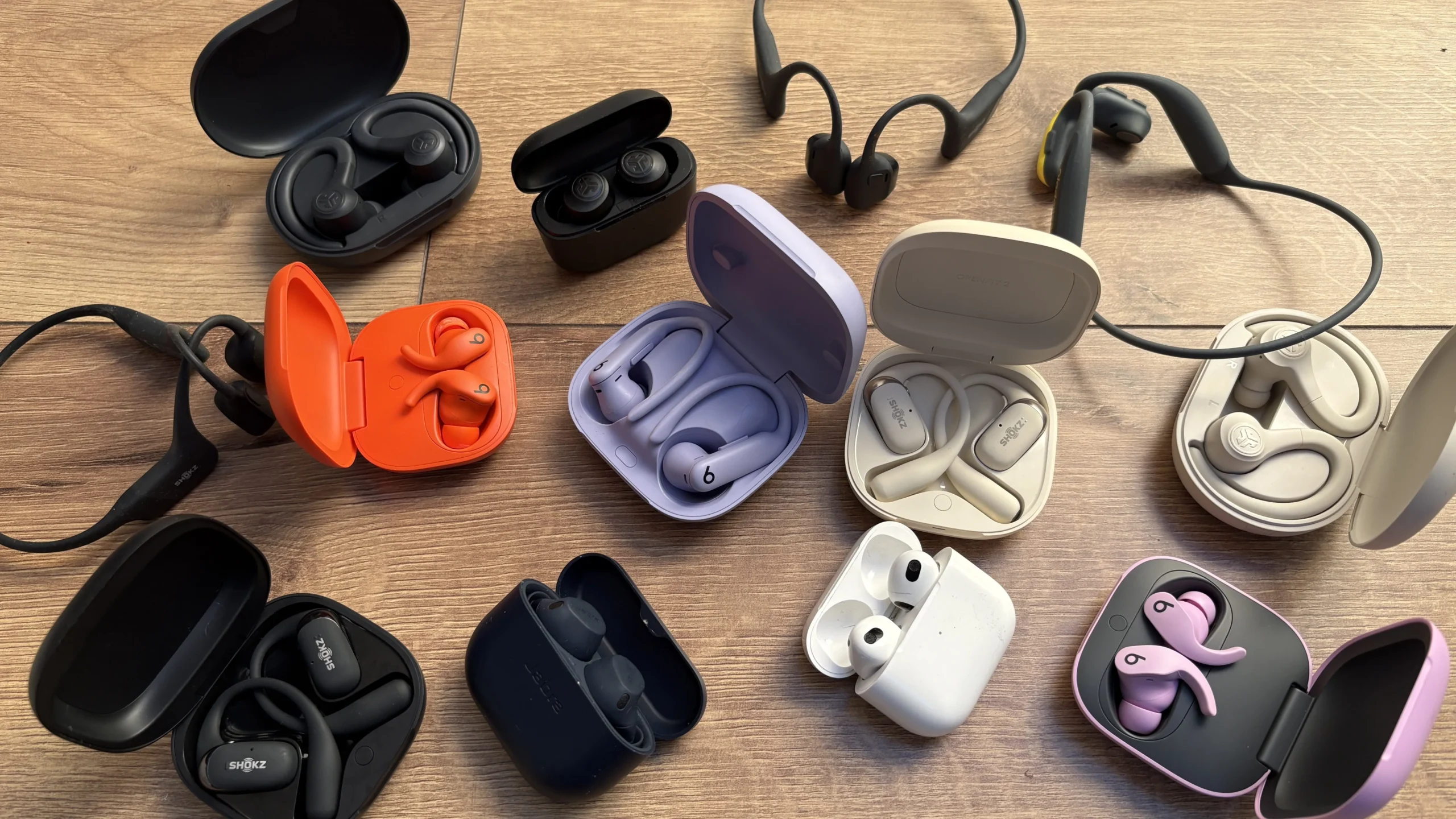

A running earbud has one job before sound quality enters the picture: it must stay put when your stride gets uneven. The wrong pair loosens with sweat, blocks a car horn, or turns every footfall into a thump inside your ear. The Best earphones for running make those trade-offs clear, especially between sealed earbuds and open designs.
We ranked these 10 picks by fit, awareness, durability, battery design, and the audio features that matter while moving. Our top choice is SHOKZ OpenRun Pro 2, while the list also includes secure in-ear models, open-ear alternatives, and practical long-battery options.
Comparison table
| # | Product | Award | Fit | Battery | Water resistance | Best for |
|---|---|---|---|---|---|---|
| 1 | SHOKZ OpenRun Pro 2 | Best overall | Open-ear wraparound | 12 hours | Not stated | Runners who need awareness and better sound |
| 2 | Soundcore V20i | Best open-ear earbuds | Four-position adjustable fit | Not stated | Not stated | Everyday outdoor training |
| 3 | SHOKZ OpenRun | Best lightweight open-ear pick | Open-ear wraparound | 8 hours | IP67 | Sweat-heavy training |
| 4 | GNMN V7 | Best noise-cancelling fit | Earhooks and silicone tips | 8 hours per charge | IPX7 | Runners who prefer sealed earbuds |
| 5 | GOLREX ANC Sport Earbuds | Best feature-rich in-ear pair | Flexible over-ear hooks | Not stated | Not stated | Running with calls and commuting |
| 6 | TRAUSI Open Ear 80H | Best long-battery open-ear pair | Open-ear hooks | 80 hours with case | IPX7 | Frequent training and travel |
| 7 | bmani Sport Earbuds | Best physical controls | Adjustable over-ear hooks | 8 hours per charge | Sweat and dust resistant | Runners who dislike touch controls |
| 8 | TRAUSI i27 | Best lightweight in-ear pair | 7g earhooks | 6 hours per charge | IPX7 | Secure daily workouts |
| 9 | Ortizan Circlet I10 | Best lightweight open-ear design | Air conduction frame | 10 hours | IPX6 | Runners sensitive to ear-canal pressure |
| 10 | HAOYUYAN BX17 | Best battery-focused in-ear pair | Hooks and three tip sizes | 15 hours per earbud | IPX7 | Long sessions between charges |
1. SHOKZ OpenRun Pro 2: Best Overall

Pros
- Open-ear design preserves awareness
- Combines bone conduction and air conduction
- 12-hour listening time
- Dedicated EQ modes in the app
- Wind-resistant call microphones
Cons
- Does not provide the sealed isolation of in-ear earbuds
- Wraparound design is less discreet than small true wireless buds
- No water-resistance rating is stated in the supplied details
Best for: runners who want open-ear awareness without giving up as much bass and detail.
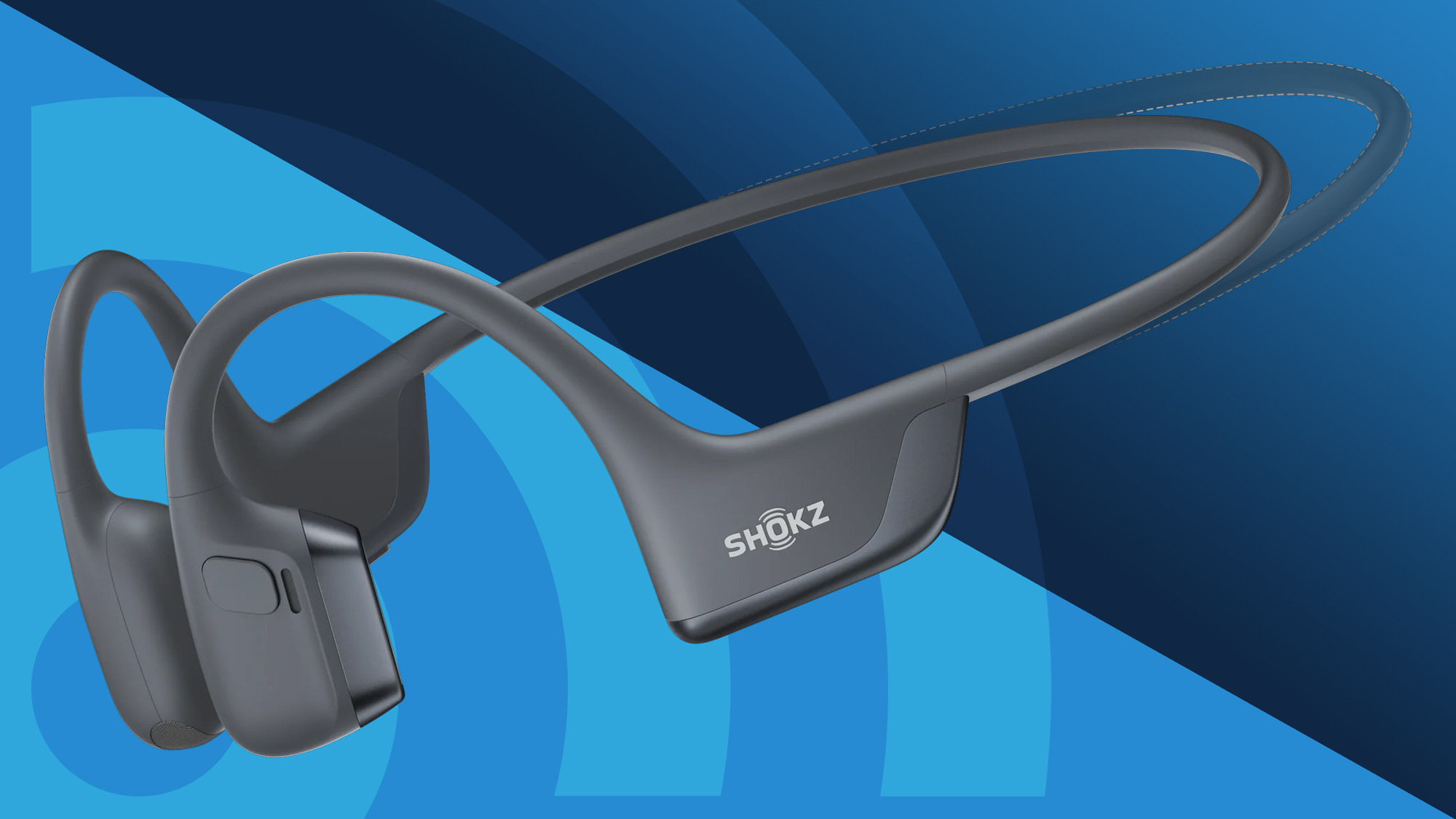
The SHOKZ OpenRun Pro 2 is the pair we would keep for regular outdoor running. Its open-ear fit leaves the ear canal unobstructed, so traffic, other runners, and conversations remain part of the soundscape. The neckband-style frame and ergonomic ear hooks keep the headphones supported without asking a silicone tip to hold everything in place.
The interesting change here is the dual-driver arrangement. Bone conduction handles the clear highs, while air conduction adds deeper bass, giving the Pro 2 a fuller presentation than a conventional bone-conduction design. Its 12-hour battery is also long enough for several training sessions, and the dedicated EQ modes let you choose between the standard bone-conduction presentation and a volume boost mode for noisier routes.
Calls are better considered than on most of the smaller running buds in this group. The dual wind-resistant microphones and AI noise reduction are designed to filter background noise, including wind up to 15 miles per hour. The SHOKZ OpenRun is lighter and has a useful IP67 rating, but the Pro 2 offers more playtime and a more ambitious audio system. Soundcore V20i is a more traditional open-ear alternative with adjustable positions, though it does not offer the same stated combination of conduction technologies.
The weakness is inherent to the design. Open-ear audio cannot create the same sealed, forceful low end or isolation as GNMN V7 and GOLREX ANC Sport Earbuds. The supplied information also does not state a water-resistance rating, which matters for runners who regularly train in heavy rain. For people who run beside roads, cycle outdoors, or dislike the plugged-up feeling of earbuds, the Pro 2 remains the most complete choice.
2. Soundcore V20i: Best Open-Ear Earbuds

Pros
- Four adjustable fit positions
- Open design keeps surroundings audible
- 16mm drivers with BassUp
- Four microphones with AI call enhancement
- Customizable music-synced lights
Cons
- Battery duration is not stated in the supplied details
- Open-ear sound gives up some isolation
- No water-resistance rating is stated
Best for: runners who want an adjustable open-ear fit for outdoor routes and daily wear.
The Soundcore V20i takes a more earbud-like approach to open listening. Rather than sitting inside the canal, it rests outside the ear and can rotate through four positions. That adjustability is the main reason to choose it over a fixed open-ear design. Small changes in angle can make the difference between a stable fit and a distracting bounce during a run.
Its 16mm drivers are unusually large for this style, and Soundcore pairs them with titanium-coated domes and BassUp processing. That combination should give workout playlists more low-end presence than a thin-sounding open speaker, while still allowing ambient sound through. It is not the same acoustic approach as SHOKZ OpenRun Pro 2, which uses bone and air conduction, but it is a straightforward choice for listeners who prefer conventional speaker playback.
Four microphones and AI enhancement give the V20i a stronger call specification than several of the generic open-ear options here. The customizable lights are less important to running performance, though they may appeal to people who wear the earbuds throughout the day. The supplied product details do not state battery life or water resistance, so this is easier to recommend for everyday training than for someone who needs a clearly documented rain-ready product.
Compared with TRAUSI Open Ear 80H, the V20i puts more emphasis on fit adjustment and call hardware than on a stated case battery total. It also feels more refined on paper than Ortizan Circlet I10, whose 19g frame is lighter but uses a simpler air-conduction setup. Choose the V20i if comfort, awareness, and the ability to fine-tune the ear position matter more than maximum weather protection.
3. SHOKZ OpenRun: Best Lightweight Open-Ear Pick

Pros
- Featherweight wraparound design
- Leaves the ears open to surroundings
- IP67 waterproof rating
- Eight hours of playback
- Quick charge adds 1.5 hours in 10 minutes
Cons
- Less bass depth than sealed in-ear models
- Shorter battery life than OpenRun Pro 2
- Not suitable for swimming
Best for: runners who want a proven open-ear shape with clearly stated sweat and water protection.
The SHOKZ OpenRun is the uncomplicated member of this list. Its featherweight wraparound frame does not rely on an earbud tip, and the open-ear fit lets the runner hear nearby activity naturally. That makes it particularly sensible for road running, where awareness can matter more than maximum musical immersion.
Eight hours of playback covers a normal week of shorter sessions, while a 10-minute quick charge provides up to 1.5 hours. The OpenRun uses eighth-generation bone conduction, transmitting sound through the cheekbone rather than sealing the ear canal. That produces a different listening experience from GNMN V7 or TRAUSI i27, but it also avoids the pressure and occlusion some runners dislike.
The IP67 rating is a meaningful advantage. It is designed for sweat and water exposure, and the moisture detection alert helps prevent charging when the headphones are wet. SHOKZ specifically says it is not suitable for swimming, so the rating should be read as protection for workouts and rain rather than an invitation to submerge the device.
OpenRun Pro 2 is the stronger choice when fuller audio and longer playback are priorities. Soundcore V20i offers more adjustment through its four-position design, but the OpenRun has the clearer durability story. Skip it if you want active noise cancellation or a deep sealed-bud bass response. It is a better fit for runners who want light, open, weather-ready audio and do not need every feature.
4. GNMN V7: Best Noise-Cancelling Fit

Pros
- Active noise cancellation and transparency mode
- Earhooks and customizable tips
- IPX7 protection
- 96-hour total playback claim
- 16mm drivers
Cons
- Sealed fit reduces awareness when transparency mode is off
- Bulkier than open-ear designs
- The supplied details do not state a separate rating for call microphones
Best for: runners who prefer an in-ear seal and want the option to reduce or restore outside sound.
The GNMN V7 is the obvious alternative to the open-ear leaders. Its soft earhooks and customizable tips create a more locked-in fit, while the in-ear structure provides passive isolation before active noise cancellation starts working. For treadmill sessions, gym workouts, and routes where outside noise is less central, that sealed presentation can make music feel more immediate.
GNMN states that the active noise cancellation can reduce ambient sound by up to 45dB, and a transparency mode lets the surroundings back in without removing the earbuds. That switch is crucial for running. A sealed earbud should not be treated as an awareness product by default, but a transparent mode gives the wearer a practical way to hear a conversation or nearby traffic.
The audio hardware is built around 16mm drivers, with clear highs, rich mids, and punchy bass listed among the intended results. Each earbud is rated for up to eight hours, while the case brings the claimed total to 96 hours. A dual LED display shows the battery state of both earbuds and the case, and USB-C fast charging reduces the chance of leaving for a workout with no usable charge.
The IPX7 rating and hook-based fit make the V7 more exercise-ready than many ordinary sealed earbuds. GOLREX ANC Sport Earbuds offer stronger stated ANC reduction and wireless charging, but GNMN gives you the larger total playback claim and a more explicitly sports-focused IPX7 design. Choose GNMN if you want isolation and stability. Skip it if you run beside busy roads and do not want to manage transparency mode.
5. GOLREX ANC Sport Earbuds: Best Feature-Rich In-Ear Pair

Pros
- Adaptive hybrid ANC with transparency mode
- 13mm dynamic drivers
- Physical controls resist accidental taps
- Wireless and USB-C charging
- Flexible hooks with three tip sizes
Cons
- Heavier than the smallest in-ear options
- A sealed ANC design is not ideal for every outdoor route
- The supplied details do not state a per-charge earbud runtime
Best for: runners who want strong noise control, physical buttons, and charging flexibility.
The GOLREX ANC Sport Earbuds are designed for people who use one pair for running, commuting, and calls. The flexible over-ear hooks take the strain off the ear tips, while the included small, medium, and large tips let the wearer tune the seal. That is a more involved fit than the open-ear choices, but it can be worthwhile when movement makes ordinary true wireless earbuds shift.
Its adaptive hybrid ANC is rated to reduce ambient sound by up to 50dB, and the transparency mode provides an alternate way to hear the outside world. The 13mm drivers are intended to add bass and vocal detail, while the product description claims a high-bandwidth transmission path that carries up to three times more audio data than conventional codecs. Those claims describe the design goal, not a guarantee that every track will sound studio-like, but the hardware is clearly aimed at a fuller presentation.
Physical buttons are a smart choice for exercise. Sweaty fingers and gloves can make touch controls unreliable, and an accidental tap can change a workout playlist at the worst moment. GOLREX also supports both wireless charging and USB-C charging. Its case is rated for up to 80 hours of total playback, and a 10-minute charge is claimed to restore up to two hours.
GNMN V7 is the better pick when an IPX7 rating and the longest stated case endurance matter most. GOLREX is more versatile for people who want charging flexibility and firm physical controls. It is not the right choice for runners who want maximum environmental awareness, and the product details do not state the individual earbud runtime. For mixed commuting and training, though, its feature set is unusually complete.
6. TRAUSI Open Ear 80H: Best Long-Battery Open-Ear Pair

Pros
- Open-ear design maintains awareness
- 80-hour total playtime claim
- Bluetooth 5.4
- IPX7 waterproof rating
- Earhook fit for running
Cons
- Sound can be less immersive than a sealed earbud
- Touch controls may be less reliable with wet fingers
- No per-charge runtime is stated
Best for: runners who want an open design and rarely want to recharge the case.
The TRAUSI Open Ear 80H makes a persuasive case for open listening without the wraparound band used by SHOKZ. Its ergonomic hook rests outside the ear canal, leaving traffic and conversation audible while keeping the earbuds supported during running and cycling. That pressure-free approach is easier to wear for long stretches than an in-ear seal for many people.
The standout specification is the claimed 80 hours from the earbuds and charging case combined. The supplied details do not state how long each earbud runs on its own, so the total should not be confused with a single-session figure. Still, the large case reserve is useful for runners who rotate between workouts, work calls, and travel without wanting to check a charger every night.
Bluetooth 5.4 provides one-step pairing and a stable wireless link, while touch controls cover music, calls, volume, and voice assistants. The IPX7 rating gives this model a stronger weather story than Soundcore V20i, whose supplied details do not state water resistance. That makes TRAUSI the more reassuring choice for sweaty sessions and sudden rain.
The trade-off is sound isolation. Open-ear speakers cannot create the same bass pressure as GNMN V7 or HAOYUYAN BX17, and the design may sound less forceful in heavy traffic. The fit choices that keep earbuds stable through changing stride lengths are worth considering before choosing between an open hook and a sealed tip. Pick TRAUSI when awareness and low-maintenance charging matter more than isolation.
7. bmani Sport Earbuds: Best Physical Controls

Pros
- Separate physical buttons
- Adjustable over-ear hooks
- 80-hour total playback claim
- 10mm dynamic drivers
- Dual microphones
Cons
- No formal IP water rating is stated
- In-ear tips reduce natural awareness
- Physical buttons can require more pressure than touch controls
Best for: runners who want direct controls without accidental taps.
The bmani Sport Earbuds solve a small but persistent running annoyance: touch controls that trigger when a hat, hood, or wet finger brushes the earbud. Their separate main and volume buttons give the wearer a clear press for playback, calls, and adjustment. That is especially useful when a phone is tucked away and stopping to change volume would break the rhythm.
The fit is built around adjustable over-ear hooks, intended to adapt to different ear shapes and hold the earbuds in place during running and cycling. Each earbud is rated for up to eight hours, and the charging case brings the stated total to 80 hours. A dual LED display shows the case power and earbud charging status, so there is less guesswork before leaving for a session.
Audio comes from 10mm dynamic drivers, with the product details describing crisp treble and rich bass. Dual microphones are designed to reduce surrounding noise during calls. This is a conventional sealed-earbud arrangement, so it should sound more concentrated than TRAUSI Open Ear 80H, but it also blocks more of the environment unless the wearer uses only one earbud.
The biggest omission is a formal water-resistance rating. The description mentions sweat and dust resistance, but that is less precise than the IPX7 ratings on GNMN V7, TRAUSI i27, and HAOYUYAN BX17. The difference between sealed tips and open listening on outdoor routes is a useful question to settle here. Choose bmani for reliable button control, not for documented rain protection.
8. TRAUSI i27: Best Lightweight In-Ear Pair

Pros
- 7g weight per earbud
- Soft earhooks and three tip sizes
- IPX7 waterproof rating
- Bluetooth 5.4
- LED power display
Cons
- Six-hour per-charge runtime is shorter than several rivals
- Total case playback is lower than the longest-lasting picks
- Touch controls can be vulnerable to accidental taps
Best for: runners who want a light sealed fit with clear battery information.
The TRAUSI i27 is the compact, uncomplicated in-ear option in this group. Each earbud weighs 7g, and the soft earhooks add stability without the more substantial feel of some over-ear sports designs. Three silicone tip sizes help create a seal that suits the wearer, which is important because a poor tip choice can cause both slipping and dull sound.
The battery is rated for up to six hours per charge, with the case extending total playback to 54 hours. A 10-minute quick charge is claimed to provide two hours, and the LED percentage display makes the remaining reserve easy to check. That is less endurance than GNMN V7 or HAOYUYAN BX17, but six hours is enough for many individual runs and the case still supports regular weekly use.
Bluetooth 5.4 and dual-channel transmission are intended to improve connection stability, with a stated range of up to 15 meters without obstacles. The built-in microphone supports noise-cancelled calls, while touch controls handle tracks, volume, calls, and voice assistants. IPX7 protection covers sweat, rain, and splashes, though the supplied details caution against submersion.
The i27 is a better fit than a generic loose earbud for runners who need a sealed design but dislike heavy hardware. bmani Sport Earbuds offer more tactile control, and HAOYUYAN BX17 offers much longer stated per-earbud playback. Choose TRAUSI i27 when lightness and a compact hook matter more than maximum battery life.
9. Ortizan Circlet I10: Best Lightweight Open-Ear Design

Pros
- 19g total weight
- Open air-conduction design
- 14.2mm dynamic drivers
- Bluetooth 5.3
- 10-hour playback and quick charging
Cons
- IPX6 is less protective than IPX7
- Volume adjustment uses the phone buttons
- Open playback cannot match sealed-bud isolation
Best for: runners who find in-ear tips uncomfortable and want a notably light frame.
The Ortizan Circlet I10 takes comfort seriously. Its open design rests around the ear rather than inside the canal, and the complete unit weighs 19g. That makes it an appealing choice for runners who stop using sealed earbuds because of pressure, heat, or the feeling of having their ears plugged.
Air-conduction speakers direct sound toward the ear, and the 14.2mm dynamic drivers are intended to produce stronger audio than a tiny open speaker. The frame uses a liquid silicone material described as aviation grade, while the directional sound cavity is designed to limit leakage. As with every open model here, the result depends heavily on fit and surroundings, but the approach is more natural for awareness than an ANC earbud.
Battery life is stated at up to 10 hours, and a 10-minute magnetic charge is claimed to add one hour. Bluetooth 5.3 handles the connection, and the microphone includes noise reduction for calls. The IPX6 rating protects against water jets and sweat exposure, but it is not the same documented level as IPX7 on TRAUSI i27 or HAOYUYAN BX17.
The Circlet I10 is lighter than SHOKZ OpenRun Pro 2 and SHOKZ OpenRun, but it has fewer stated audio and control refinements. The lack of onboard volume controls is also inconvenient because the product details direct iPhone users to adjust volume through the phone. Choose it for a low-pressure, lightweight frame and moderate training sessions. Runners wanting the strongest weather specification should look elsewhere.
10. HAOYUYAN BX17: Best Battery-Focused In-Ear Pair

Pros
- 15-hour playback claim per earbud
- 80-hour total playback claim
- IPX7 waterproof rating
- Hooks and three silicone tip sizes
- 14.3mm drivers
Cons
- Sealed fit reduces outside awareness
- Long playback claims are not the same as quick recharge convenience
- The supplied details do not identify a separate ANC mode
Best for: runners who prioritize long single-session playback and a secure sealed fit.
The HAOYUYAN BX17 is built for runners who do not want to think about charging. Each earbud is claimed to run for up to 15 hours, while the case adds eight full charges for a stated 80-hour total. That per-earbud figure is the unusual part. It is far longer than the six to eight hours stated for many competing in-ear models, though real playback time will vary with volume and use.
Flexible hooks and three silicone tip sizes provide two ways to secure the fit: the hook resists movement and the tip creates the seal. The IPX7 rating is suitable for sweat and rain, and the description says it can handle accidental submersion up to one meter for 30 minutes. That is a useful protection detail for outdoor training, although these are still not swimming headphones.
The 14.3mm drivers are intended to produce rich bass and clear treble, while the acoustic design balances internal and external air pressure to reduce sound loss. Button controls handle playback, volume, and calls, and hall-switch technology allows the earbuds to power on and reconnect when the case opens. The LED display shows remaining power, and USB-C supports charging.
Compared with GNMN V7, HAOYUYAN gives up the clearly stated active noise cancellation and transparency modes but offers a much longer claimed runtime per earbud. TRAUSI i27 is lighter at 7g per earbud, though its six-hour runtime is substantially shorter. Pick BX17 for long training blocks, travel, and infrequent charging. Skip it if awareness on a busy road is more important than a sealed, bass-forward presentation.
How to choose best earphones for running
The right running earbuds come down to the route, the fit you can tolerate, and how much protection the headphones need from sweat and rain.
Open-ear awareness
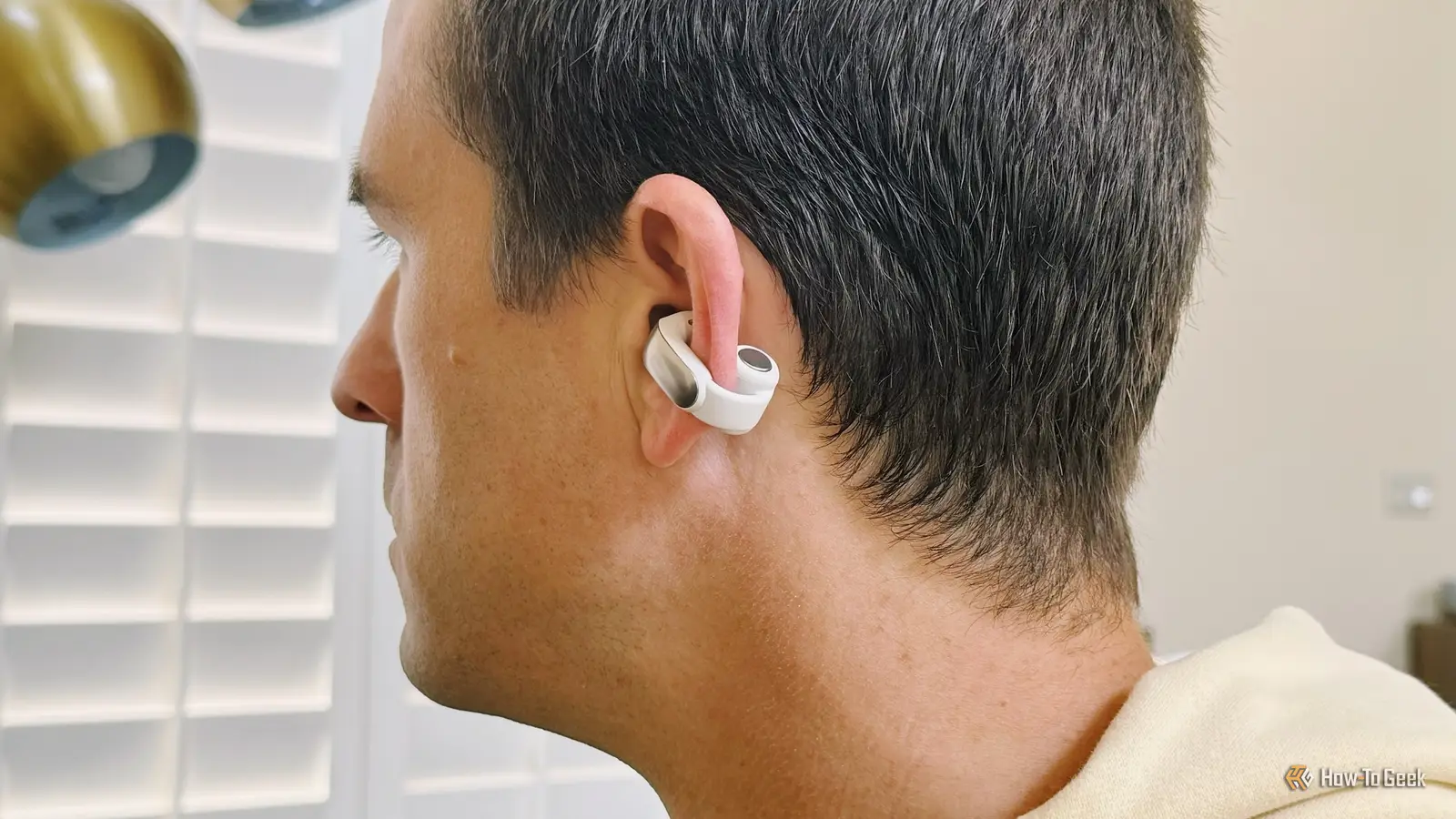
Open-ear headphones leave the ear canal unobstructed, allowing traffic, conversations, and environmental sounds to remain audible. That makes them especially useful on roads, shared paths, and city streets. Soundcore V20i, SHOKZ OpenRun Pro 2, SHOKZ OpenRun, TRAUSI Open Ear 80H, and Ortizan Circlet I10 all take this approach.
Open designs usually give up some isolation and bass pressure. A strong open-ear model should sit securely without pressing on the ear, and its speaker should aim sound toward the ear rather than simply playing outward.
For road running, hearing the route is part of the headphone specification.
Fit and stability
Earhooks are useful when ordinary earbuds shift as your stride changes. Sealed models such as GNMN V7, GOLREX ANC Sport Earbuds, bmani Sport Earbuds, TRAUSI i27, and HAOYUYAN BX17 combine hooks with silicone tips. The hook keeps the body stable, while the tip determines the seal and much of the comfort.
Look for multiple tip sizes when the product offers them. An open-ear model should have a frame or hook that does not rock against the ear as you turn your head. A pair that fits securely at walking speed but needs constant adjustment during intervals is not a good running fit.
Water resistance
Sweat and rain protection should be stated clearly. IPX7 appears on GNMN V7, TRAUSI Open Ear 80H, TRAUSI i27, and HAOYUYAN BX17. SHOKZ OpenRun has an IP67 rating and is specifically described as not suitable for swimming. Ortizan Circlet I10 lists IPX6, while bmani Sport Earbuds mention sweat and dust resistance without a formal IP rating.
Do not treat a water rating as permission to charge wet earbuds. Dry the contacts and follow the product instructions, especially after a rainy run.
Battery and charging
Per-charge runtime matters more than the case total during long runs. HAOYUYAN BX17 claims up to 15 hours per earbud, Ortizan Circlet I10 lists up to 10 hours, and SHOKZ OpenRun Pro 2 lists 12 hours. GNMN V7, bmani Sport Earbuds, and several others state up to eight hours per charge.
Case totals are useful for travel and weekly training, but they can obscure the figure that matters when you leave the house. Quick-charge claims also help when a short top-up must cover a workout. Check whether the case uses USB-C and whether the controls remain usable while moving.
Sound and noise control
Sealed earbuds can create stronger bass and more isolation, while open-ear models preserve awareness at the cost of some immersion. GNMN V7 and GOLREX ANC Sport Earbuds add active noise cancellation and transparency modes, but runners should use transparency when they need to hear the route.
Driver size alone does not determine sound quality. Fit, acoustic design, processing, and the amount of outside noise all matter. For a broader look at how different running audio designs handle outside sound, compare the open and sealed approaches before choosing.
Frequently asked questions
Are open-ear headphones safer for running?
Open-ear headphones make it easier to hear traffic, other runners, and conversations because they do not seal the ear canal. They do not replace attention or safe route choices, but that awareness can be useful on roads and shared paths. SHOKZ OpenRun Pro 2 and Soundcore V20i are the clearest examples in this list.
Should running earbuds have earhooks?
Earhooks add stability during repeated movement and can reduce the chance of an earbud loosening as you sweat. They are especially useful for sealed earbuds that rely on a tip for both sound and fit. Some open-ear designs use a hook or wraparound frame for the same reason.
Is active noise cancellation useful while running?
ANC can reduce distracting background noise, particularly on a treadmill or in a gym. Outdoors, it should be paired with a transparency mode or switched off when you need to hear traffic and other people. GNMN V7 and GOLREX ANC Sport Earbuds both list ANC and transparency modes.
How much battery life is enough for a run?
Most runners can cover a normal session with six to eight hours of per-charge playback. Longer figures are helpful for ultralong training, travel, or people who do not charge frequently. The case total matters for extended use, but it should not be mistaken for the runtime of one earbud charge.
What water rating should running earbuds have?
A stated IPX7 or IP67 rating offers stronger protection against sweat, rain, and splashes than an unspecified resistance claim. SHOKZ OpenRun also carries an IP67 rating but is not intended for swimming. No water rating makes earbuds suitable for deliberate submersion.
Do running earbuds need to block outside noise?
No. Many runners prefer open-ear headphones because they can hear the environment naturally. Sealed earbuds are better for indoor training or people who want a more immersive sound, but they require more care on routes where awareness matters.
The bottom line
The Best earphones for running in this group are SHOKZ OpenRun Pro 2 for outdoor awareness, fuller sound, and 12-hour playback. SHOKZ OpenRun is the simpler choice when a lightweight frame and IP67 protection matter more than the newer model's dual-driver design.
For a sealed fit, GNMN V7 is the strongest all-purpose alternative because it combines hooks, IPX7 protection, ANC, transparency mode, and a large case reserve. Choose TRAUSI Open Ear 80H if you want open listening with a long stated case runtime and a clear IPX7 rating.
If you are undecided, choose open-ear headphones for busy outdoor routes and earhook earbuds for indoor training or maximum musical immersion.
As an Amazon Associate we earn from qualifying purchases.