

A flat mouse can leave your wrist twisted inward for hours, especially when every document, browser tab, and spreadsheet requires the same small movement. The right vertical or trackball design changes that posture, but the wrong shape can create a different kind of fatigue.
We compared 10 real options across hand fit, angle, tracking controls, battery approach, connection choices, and quiet operation. The Logitech Lift Vertical Ergonomic Wireless Mouse is our top pick, while the list also includes capable choices for large hands, compact desks, multi-device work, and people who prefer a thumb-controlled trackball.
If you are looking for the Best best ergo mouse, start with the Lift, then consider the MX Vertical for larger hands or the Ergo M575S if you want to keep your hand still while the cursor moves.
Comparison table
| # | Product | Award | Angle or control | Connectivity | Best for |
|---|---|---|---|---|---|
| 1 | Logitech Lift Vertical Ergonomic Mouse | Best overall | 57-degree vertical design | Bluetooth Low Energy, Logi Bolt | Small to medium right hands |
| 2 | Anker Vertical Ergonomic Mouse | Best simple design | Vertical handshake shape | 2.4 GHz USB receiver | Straightforward desktop use |
| 3 | Logitech MX Vertical | Best for large hands | 57-degree vertical design | Wireless USB receiver | Medium to large right hands |
| 4 | ProtoArc EM11 NL Rechargeable Mouse | Best compact rechargeable | Vertical design | Dual Bluetooth, 2.4 GHz USB-A | Small to medium hands |
| 5 | Logitech Ergo M575S Trackball | Best trackball | Thumb-controlled cursor | Bluetooth, Logi Bolt | Small desks and limited movement |
| 6 | UGREEN Ergonomic Wireless Mouse | Best quiet multi-device pick | Vertical design | Bluetooth, 2.4 GHz | Quiet shared workspaces |
| 7 | Lekvey Rechargeable Vertical Mouse | Best for medium and large hands | Vertical handshake shape | 2.4 GHz USB receiver | Long sessions without disposable batteries |
| 8 | ProtoArc EM11 NL Vertical Mouse | Best for quiet multi-device work | 58-degree vertical design | Dual Bluetooth, 2.4 GHz USB-A | Small to medium hands |
| 9 | Logitech Lift Vertical Ergonomic Mouse Off White | Best light-colored option | 57-degree vertical design | Bluetooth Low Energy, Logi Bolt | Small to medium right hands |
| 10 | TECKNET Vertical Ergonomic Mouse | Best adjustable tracking | Vertical right-handed design | Bluetooth, 2.4 GHz USB-A | Users who tune pointer speed |
1. Logitech Lift Vertical Ergonomic Mouse: Best Overall
Pros
- Comfortable 57-degree upright posture
- Soft grip and snug thumb rest
- Quiet clicks and smooth SmartWheel
- Bluetooth and Logi Bolt support
- Up to two years of battery life
Cons
- Designed for small to medium right hands
- Not rechargeable
- Left-handed users need another design
Best for: right-handed users who want an easy transition to a polished vertical mouse.
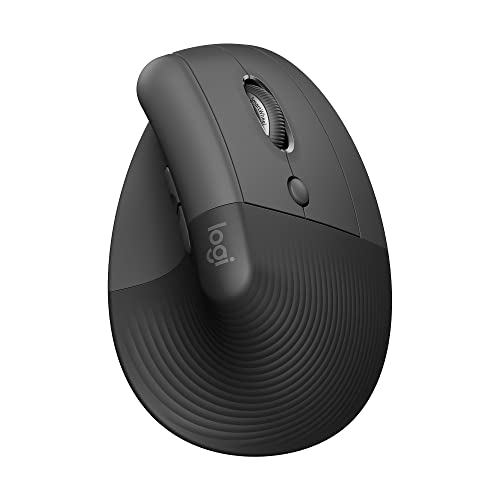
The Lift is the mouse we would hand to someone who knows a standard mouse is bothering their wrist but does not want a dramatic, awkward transition. Its 57-degree body raises the hand into a handshake position, and the thumb rest gives the side of the palm somewhere natural to settle. The soft texture helps keep the grip relaxed rather than clenched.
It is aimed at small to medium right hands, which is an important qualification rather than a footnote. The 5.6-inch length, 3.4-inch width, and 3-inch height create a compact upright shape that feels easier to control for that audience than the roomier MX Vertical. A larger hand may find the Lift too short or feel as if the fingers hang over the front.
The controls are well judged for office work. Logitech includes easy-to-reach customizable buttons, quiet clicks, and a SmartWheel that moves smoothly through long pages while still allowing ordinary line-by-line scrolling. Bluetooth Low Energy and the Logi Bolt USB connection cover Windows, macOS, iPadOS, ChromeOS, and Linux, so it can fit into a laptop setup without forcing a receiver into every device.
The weakness is the battery format. It uses a replaceable battery rather than a rechargeable cell, though the claimed battery life reaches up to two years. It is also a right-handed mouse, and its vertical shape takes some adjustment for cursor control. If you want the most compact learning curve, the Anker is simpler, but it gives up quieter operation and Bluetooth. If you have larger hands, the MX Vertical is the better Logitech shape.
Choose the Lift when comfort, quiet operation, and broad connection support matter more than gaming-style precision or a rechargeable design. It is the most balanced starting point in this group.
2. Anker Vertical Ergonomic Mouse: Best Simple Design

Pros
- Natural handshake-style grip
- Three selectable tracking levels
- Forward and back buttons
- Automatic power saving
- Receiver stores in the mouse
Cons
- No Bluetooth
- Click sounds are noticeable
- AAA batteries are not included
Best for: someone who wants a no-frills vertical mouse with a USB receiver.
Anker’s vertical mouse is uncomplicated in a useful way. Plug the small receiver into a computer, place your hand around the raised body, and start working without Bluetooth pairing or software setup. That makes it a sensible choice for a desktop that stays in one place.
Its ergonomic structure is intended to keep the wrist and arm in a neutral handshake position. The body measures 3.98 inches long, 3.23 inches wide, and 3.15 inches high, with a listed weight of 3.4 ounces. Those dimensions put it close to the size of the compact vertical models here, though the broad body may feel more substantial than the Lift for some hands.
The optical sensor offers 800, 1200, and 1600 DPI settings. Those are enough for documents, browser work, and ordinary desktop navigation, but there is less fine control than the Logitech MX Vertical or TECKNET. Forward and back buttons make browsing faster, and the mouse enters a power-saving mode after eight minutes of inactivity. A click wakes it.
The main limitation is connectivity. This model uses 2.4 GHz wireless through its USB receiver and does not support Bluetooth, so it is less convenient with tablets or thin laptops that have limited ports. The buttons also make audible clicks, a detail that matters in a quiet office or shared room. The two required AAA batteries are not included.
Compared with the ProtoArc EM11 NL, the Anker has fewer connection options and no rechargeable battery, but its receiver-first setup is easier for a stationary PC. Compared with the Lift, it feels less refined and offers less flexibility. It remains a good fit for buyers who want a basic vertical shape, browser buttons, and nothing to configure.
3. Logitech MX Vertical: Best for Large Hands

Pros
- Roomy shape for medium to large hands
- 57-degree vertical angle
- High-resolution 4000 DPI sensor
- Cursor speed switch
- Textured rubber grip
Cons
- Heavier than the Lift
- More demanding shape for new users
- Right-handed design
Best for: right-handed users with medium to large hands who want a tall, precise vertical mouse.
The MX Vertical feels like a proper large-hand alternative to the Lift. Its shape gives the palm more room and the thumb a defined rest, while the textured rubber surface helps keep control without squeezing the mouse. The 0.5-pound weight is noticeable, but that extra solidity can make the tall design feel planted rather than flimsy.
The 57-degree angle matches the Lift, yet the overall proportions are different. Logitech lists it for medium to large hands, with a length of 4.724 inches, width of 3.11 inches, and height of 3.09 inches. The longer body gives larger fingers somewhere to land. Smaller hands may struggle to reach the buttons without shifting the whole grip.
Tracking is the standout feature. The 4000 DPI optical sensor supports precise pointer movement with less hand travel, and a dedicated cursor speed switch lets you change sensitivity quickly. That is useful when moving between detailed editing and broad desktop navigation. It also gives the MX Vertical an advantage over the Anker and Lekvey, whose listed tracking settings top out at 1600 DPI.
The MX Vertical is not as light or immediately approachable as the Lift. Its taller, heavier form asks the hand to learn a new movement pattern, and the mouse is intended for right-handed use. It also lacks the Lift’s emphasis on whisper-quiet clicking and the newer M575S’s thumb-controlled cursor. For a larger hand, though, the extra size is a benefit rather than a burden.
If a standard compact vertical mouse feels cramped, the MX Vertical is the Logitech to try first. It suits people who want a stable, textured grip and a sensor that can move quickly across a large display without repeated sweeping motions.
4. ProtoArc EM11 NL Rechargeable Mouse: Best Compact Rechargeable

Pros
- Supports up to three devices
- Built-in 500mAh rechargeable battery
- Quiet left and right buttons
- Three DPI settings
- Made for small to medium hands
Cons
- Forward and back buttons do not work with Mac
- Scroll wheel and side buttons are not silent
- USB-A receiver only
Best for: small to medium-handed users who want a rechargeable vertical mouse for several devices.
The EM11 NL is a practical little vertical mouse with a clear target. ProtoArc recommends it for hand lengths under 7.5 inches, and the compact shape is easier to settle into than the larger Logitech models. It still has a learning curve, as any vertical design does, but its proportions make the transition less intimidating for smaller hands.
The built-in 500mAh lithium-ion battery removes the need for disposable cells. Charging uses the included Type-C cable, though that cable is for charging only. Connection options are more flexible than the Anker or Lekvey: the mouse supports two Bluetooth connections plus a 2.4 GHz USB-A connection, allowing up to three devices in total.
Tracking is adjustable between 1000, 1600, and 2400 DPI. That range gives ordinary office work a little more headroom than the Anker and Lekvey, while the back and forward buttons speed up web browsing. The left and right buttons are designed to click quietly. ProtoArc is clear that the scroll wheel and navigation buttons are not silent, so the quiet claim has a specific boundary.
This is not the ideal choice for every Mac user. The forward and back buttons are not compatible with Mac systems, and the included receiver is USB-A rather than USB-C. Its listed weight is about 0.55 pounds, which is heavier than the Lift despite the smaller hand target. That extra heft may feel reassuring to some users and tiring to others.
The two ProtoArc EM11 NL entries are closely related, but this rechargeable model is the more compact-focused option in the list. It beats the Anker on battery convenience and device switching, while the Logitech Lift feels more polished in its scroll wheel and button experience. Pick the ProtoArc when a rechargeable battery and multi-device support matter most.
5. Logitech Ergo M575S Trackball: Best Trackball

Pros
- Cursor control without moving the mouse
- Comfortable sculpted hand shape
- Bluetooth and Logi Bolt support
- Up to 18 months of battery life
- Three customizable buttons
Cons
- Trackball control takes adjustment
- Ball cage needs occasional cleaning
- Not a vertical mouse
Best for: users with limited desk space or anyone who wants to reduce arm movement.
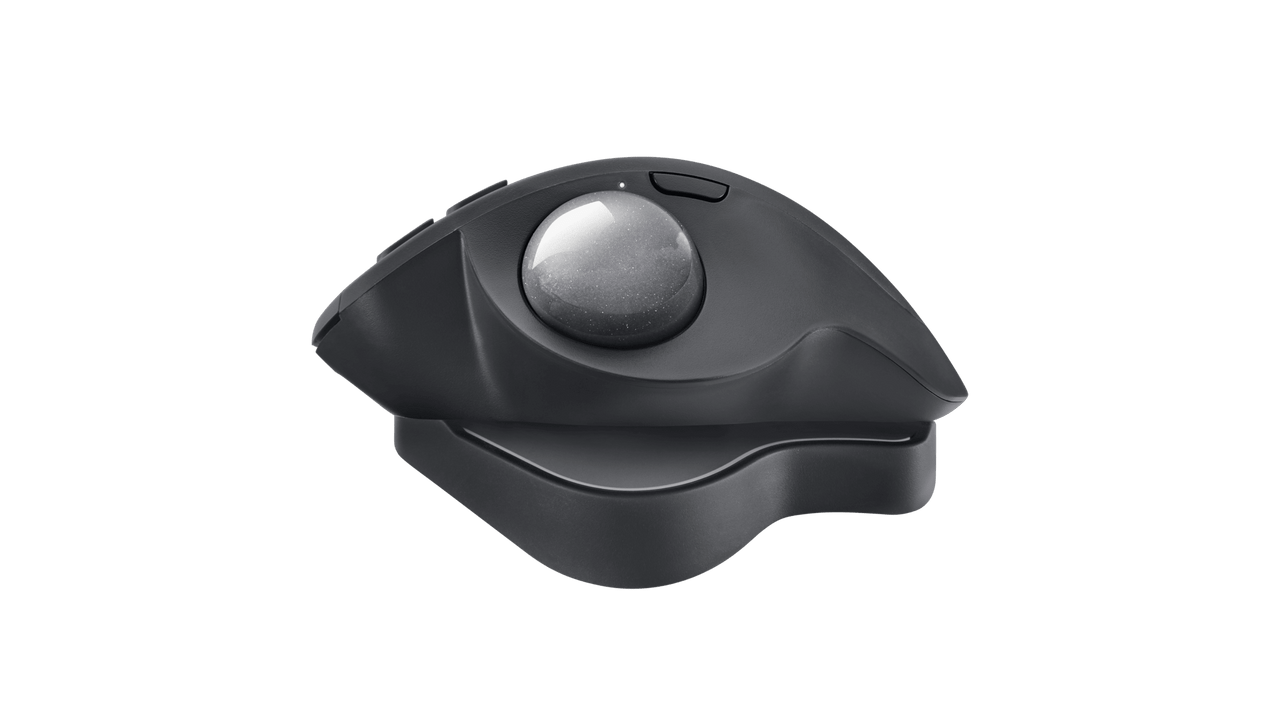
The Ergo M575S takes a different route to comfort. Instead of turning the hand upright, it keeps the mouse planted while the thumb moves the blue trackball. That means the cursor can travel across a large screen without the forearm repeatedly sliding the device across the desk. For a cramped workspace, that change is more important than a dramatic vertical angle.
The sculpted shell supports the hand and is described as suitable for most hand sizes. Its listed dimensions are 4.13 inches long, 3.94 inches wide, and 5.28 inches high, though the unusually tall stated height reinforces that this is a substantial, stationary device. The thumb trackball is the feature to evaluate carefully. Some people find it precise and relaxing, while others prefer the familiar movement of an optical mouse.
Logitech includes Bluetooth and a Logi Bolt USB receiver, along with up to 18 months of battery life from an included AA battery. Three customizable buttons and cursor speed adjustment through the Logi Options Plus app provide more flexibility than the basic vertical models. Smart Actions are also supported, which can turn repeated shortcuts into a single button press.
The trade-off is the learning curve. Trackball control feels different from both the Lift and the UGREEN, and the ball cage can collect debris over time. Logitech makes the ball removable for cleaning, but that maintenance is part of ownership. The M575S also will not solve a preference for an upright wrist posture because it is a horizontal sculpted trackball design.
Read the differences that matter when choosing a mouse for long work sessions before deciding between this and a vertical model. The M575S is the better choice when desk space is the problem, while the MX Vertical is better when wrist rotation is the central concern.
6. UGREEN Ergonomic Wireless Mouse: Best Quiet Multi-Device Pick

Pros
- Bluetooth and 2.4 GHz connections
- Switches among up to three devices
- Quiet clicks
- Four DPI settings up to 4000
- PTFE glide feet
Cons
- Uses an AA battery
- Vertical shape is aimed at larger hands
- Not every button is silent
Best for: people sharing a desk or moving between several computers and tablets.
UGREEN’s mouse is a strong option for a desk with more than one computer. It supports Bluetooth and 2.4 GHz wireless, can switch among up to three devices, and works with Windows, macOS, Linux, ChromeOS, and Android. That is a useful combination for someone who moves between a desktop, laptop, and tablet without wanting a separate mouse for each.
The vertical body is designed to reduce wrist rotation, with the palm held near a natural handshake position. UGREEN specifically points to larger hands as a good match. Its listed width is about 3.39 inches and its weight is about 0.37 pounds, giving it a broad footprint without the heaviness of the MX Vertical. The shape should be checked against your hand size before ordering, since a roomy shell can feel less controlled for a smaller hand.
Its four DPI settings are 1000, 1600, 2000, and 4000. That is a useful spread for switching from careful document work to fast pointer movement across a wide display. Five buttons add navigation flexibility, while PTFE glide feet are intended to reduce friction and noise as the mouse moves across the desk.
UGREEN also calls out quiet clicks, but the description applies to the click buttons rather than every control. The scroll wheel and other buttons can still make sound. The single AA battery and sleep mode keep the setup simple, yet the rechargeable ProtoArc models are better if charging is preferable to battery replacement.
The UGREEN is more versatile than the Anker because of Bluetooth and multi-device switching, and its 4000 DPI ceiling matches the MX Vertical. The Logitech Lift feels more compact and refined for smaller right hands. Choose UGREEN when device switching, quiet primary clicks, and a broad hand-friendly shape are the priorities.
7. Lekvey Rechargeable Vertical Mouse: Best for Medium and Large Hands

Pros
- Rechargeable battery
- More than 150 hours of continuous use
- Forward and back buttons
- Three DPI levels
- Long manufacturer warranty
Cons
- USB receiver only
- No Bluetooth
- Requires an adjustment period
Best for: medium and large-handed users who prefer a roomy rechargeable vertical shape.
Lekvey’s design is broad, tall, and clearly intended to fill the hand. The company recommends it for medium or large hands, and the listed dimensions are 4.6 inches long, 2.7 inches wide, and 3.9 inches high. That tall profile puts the palm in a handshake position without making the mouse feel tiny beneath the fingers.
A built-in rechargeable battery is the practical advantage. Lekvey claims more than 150 hours of continuous use on a charge, and the included Type-C cable is 150 centimeters long. The mouse connects through a nano USB receiver stored in its base, so setup is plug and play with no Bluetooth pairing or drivers.
The sensor provides 800, 1200, and 1600 DPI settings. Those levels cover ordinary browsing and office work, though they are less flexible than the 4000 DPI options on the MX Vertical, UGREEN, and TECKNET. Forward and back buttons are useful for web pages, and the mouse supports Windows, Linux, and Mac OS according to the listed compatibility information.
There is a genuine adjustment period here. Lekvey suggests that users may need three to five days to become comfortable, while ProtoArc suggests one to two weeks for its similar vertical design. Neither claim guarantees a particular experience, but both point to the same reality: vertical mice change how the hand starts and stops cursor movement. The receiver-only connection also makes this less convenient for a tablet or laptop with limited USB ports.
Lekvey is a better physical fit than the Lift for larger hands, but the Logitech MX Vertical offers a more advanced sensor and the UGREEN offers multi-device connectivity. Pick Lekvey for a roomy rechargeable body and simple receiver-based setup, not for high-resolution pointer control.
8. ProtoArc EM11 NL Vertical Mouse: Best for Quiet Multi-Device Work

Pros
- 58-degree vertical angle
- Three-device connectivity
- Up to 100 hours of use
- Quiet left and right clicks
- USB-C charging
Cons
- Designed for small to medium hands
- Side buttons are not silent
- Side buttons do not work with Mac
Best for: small to medium-handed users who move between three devices in quiet spaces.
This ProtoArc EM11 NL is the closest match to the other EM11 in core design, but its listed 58-degree angle gives the posture a slightly more upright emphasis. The shape is intended for hand lengths under 7.5 inches, so it is a better match for smaller and medium hands than the Lekvey or MX Vertical.
The built-in 500mAh lithium-ion battery charges through USB-C. ProtoArc claims up to 100 hours of use and up to 200 days of standby after about two hours of charging. That makes it suited to a laptop bag or shared desk where a replaceable battery would be inconvenient. Dual Bluetooth and 2.4 GHz USB-A connectivity let it cover up to three devices.
Tracking settings run from 1000 to 2400 DPI. The three levels are enough for ordinary work and browsing, and the forward and back buttons make page navigation faster. The left and right buttons are quiet, but the scroll wheel and navigation buttons are not. That distinction matters in a library, meeting room, or bedroom where every click can be noticeable.
The size is the main thing to get right. A small vertical mouse can feel comfortable because it prevents the fingers from stretching, but a larger hand may press against the front or curl around the side. The M575S avoids that fit issue for some users by allowing the hand to stay in one place, though it requires learning trackball control.
Compared with the first EM11 entry, this model emphasizes the 58-degree posture and lists up to 100 hours of use. The other ProtoArc is also rechargeable and supports three devices, so the choice should come down to the specific size and design details you prefer. It is a sensible compact option when quiet primary clicks and USB-C charging matter.
9. Logitech Lift Vertical Ergonomic Mouse Off White: Best Light-Colored Option

Pros
- Same comfortable 57-degree design as the Lift
- Soft textured grip
- Quiet clicks and SmartWheel
- Bluetooth and Logi Bolt support
- Up to two years of battery life
Cons
- Right-handed only
- Intended for small to medium hands
- Uses a replaceable battery
Best for: small to medium right hands that want the Lift design in an off-white finish.
The Off White Lift is functionally the same choice as the Graphite Lift, so the difference is visual rather than ergonomic. It uses the same 57-degree upright posture, softly textured grip, thumb rest, quiet clicks, customizable buttons, and SmartWheel. For a light-colored desk setup, that consistency is the reason to choose this version.
The listed dimensions are 5.7 inches long, 3.5 inches wide, and 3 inches high, with a weight of about 0.28 pounds. Logitech positions the Lift for small to medium right hands. That compact fit remains the most important detail, since the tall shape is comfortable only when the fingers can reach the controls without stretching.
Bluetooth Low Energy and Logi Bolt support make it flexible across Windows, macOS, iPadOS, ChromeOS, and Linux. Battery life is listed at up to two years, which keeps maintenance low even though the mouse is not rechargeable. The Off White version also includes certified post-consumer recycled plastic in its construction, with the listed proportion for this finish at 54%.
The same limitations apply as with the Graphite model. It is not for left-handed users, it may feel cramped for large hands, and the upright body takes time to feel natural. The ProtoArc EM11 NL is the more compelling alternative if you specifically want USB-C charging and three-device switching, while the Lift has the more polished wheel and button feel.
If your hand fits the Lift and the finish matters to your workspace, this version gives you the top pick’s behavior without changing its core design. Treat it as a finish-specific alternative to the Graphite Lift, not as a separate ergonomic platform.
10. TECKNET Vertical Ergonomic Mouse: Best Adjustable Tracking

Pros
- Six DPI levels from 800 to 4800
- Bluetooth and 2.4 GHz connectivity
- Six-button layout
- Nearly silent primary clicks
- Three-year registered warranty
Cons
- Right-handed only
- Side buttons do not work with macOS
- Requires two AAA batteries
Best for: right-handed users who want many pointer-speed settings and several connection options.
TECKNET stands out for adjustable tracking. Its six DPI levels run from 800 through 4800, with settings at 1200, 1600, 2400, and 3200 along the way. That gives more control than the three-level sensors in the Anker and Lekvey, especially if you switch between detailed work and a large monitor.
The mouse combines Bluetooth 5.0 or 3.0 with a 2.4 GHz USB-A receiver stored in the bottom. Bluetooth can connect to two devices at once, while the receiver provides a quick desktop connection. A bottom button handles connection mode changes. It is compatible with Windows, Mac, Chrome, and Linux, though the side buttons are not compatible with macOS.
The near-silent behavior applies to the left and right buttons. Other function buttons are not silent, so the mouse is quieter in primary use rather than completely silent. The six-button layout provides more controls than the five-button UGREEN, and the vertical design places the palm at a near-vertical angle to reduce the inward rotation associated with a flat mouse.
The battery setup is less convenient than the rechargeable ProtoArc and Lekvey models. TECKNET requires two AAA batteries, which are not included, and uses deep sleep after roughly 10 to 30 minutes of inactivity to conserve power. The claimed battery duration is up to 12 months, but that depends on usage and the batteries installed. It is also designed for right-handed use only.
The TECKNET is the better technical fit than the Anker if you care about DPI adjustment and Bluetooth, while UGREEN has a simpler five-button layout and PTFE glide feet. It does not feel as focused on hand fit as the Lift, so choose it for control flexibility rather than the gentlest transition to a vertical grip.
How to choose best ergo mouse
The Best best ergo mouse is not defined by the steepest angle or the largest DPI number. Start with the way your hand rests, then match the controls, connection method, and battery design to the work you actually do.
Hand size and handedness
A vertical mouse should support the palm without forcing the fingers to reach forward or curl tightly around the body. The Lift and both ProtoArc EM11 NL models are aimed at small to medium hands, while the MX Vertical and Lekvey are better suited to medium and large hands.
Most products in this group are right-handed. The TECKNET, Lift, MX Vertical, and vertical models from Anker, UGREEN, Lekvey, and ProtoArc all require a right-handed grip. Check this before considering angle or DPI, because a comfortable shape for the wrong hand is not a practical choice.
Vertical angle and wrist posture
The angle determines how far the palm rotates away from a flat, face-down position. The Lift and MX Vertical use 57 degrees, while the ProtoArc EM11 NL lists 58 degrees. These numbers are close, so the shape, thumb rest, and finger reach matter just as much as the angle itself.
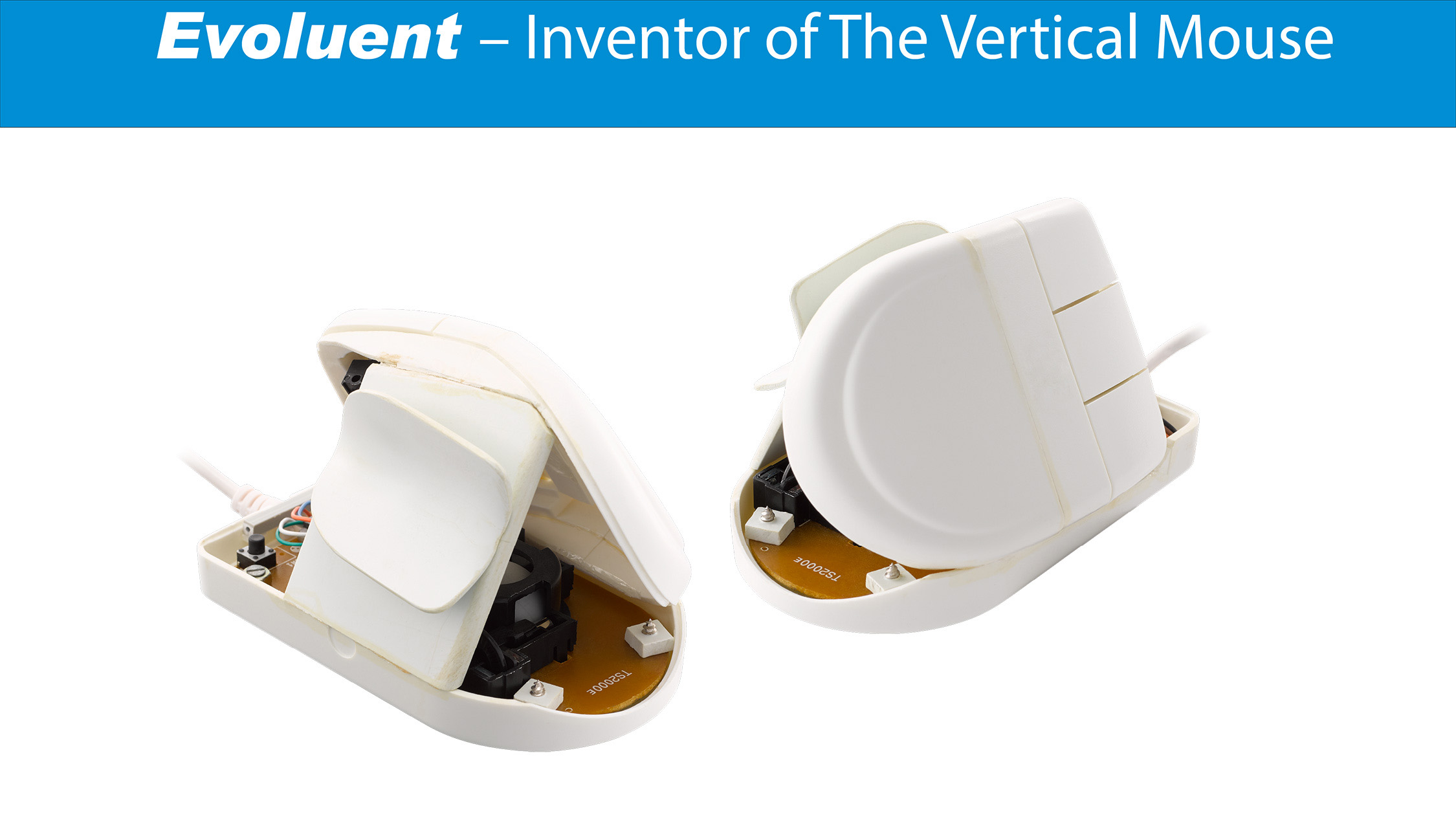
A vertical design can reduce the inward twist of the forearm, but it will not feel natural immediately. Give yourself time to learn the new movement, and keep the grip relaxed rather than squeezing the tall shell.
A steeper mouse is not automatically more comfortable. The hand must still reach every button without stretching.
Tracking and DPI controls
DPI changes how far the pointer moves for a given physical movement. Lower settings can help with careful selection, while higher settings reduce the amount of desk space needed to cross a wide display. The MX Vertical reaches 4000 DPI, UGREEN reaches 4000 DPI, and TECKNET reaches 4800 DPI with six selectable levels.
The Anker and Lekvey offer 800, 1200, and 1600 DPI options. Those settings are adequate for ordinary office work, but they give less flexibility if you frequently change screen size or pointer speed. The trackball M575S takes a different approach by moving the cursor with the thumb while the mouse stays put.
Connection options
A USB receiver is simple and dependable for a desktop, but it occupies a port. Bluetooth is more convenient for laptops, tablets, and multi-device setups. The Lift supports Bluetooth Low Energy and Logi Bolt, while the ProtoArc EM11 NL and UGREEN combine Bluetooth with 2.4 GHz wireless.
The Anker and Lekvey use a 2.4 GHz receiver only. TECKNET supports Bluetooth connections to two devices plus a USB receiver. ProtoArc’s EM11 NL models support up to three devices, making them better suited to a mixed laptop, desktop, and tablet workflow.
Battery and click noise
Rechargeable models avoid disposable batteries, but they need a charging routine. The ProtoArc models use built-in 500mAh batteries, while Lekvey claims more than 150 hours of continuous use. The Lift and M575S use replaceable batteries with listed life of up to two years and up to 18 months respectively.
Quiet primary buttons are useful in shared rooms, offices, libraries, and recording spaces. Lift, both ProtoArc models, UGREEN, and TECKNET list quiet or silent left and right clicks. Read the qualification carefully: scroll wheels and side buttons may still make sound.
For a wider look at hand posture and desk setup, compare the design features that separate vertical and trackball mice. If your workspace includes frequent typing, how the keyboard and mouse work together can matter as much as the mouse shell.

Frequently asked questions
Are vertical mice better for wrist comfort?
A vertical mouse can place the hand in a more neutral handshake position and reduce the inward rotation associated with a flat mouse. Comfort still depends on hand size, button reach, grip pressure, and how long you take to adjust. No shape is equally comfortable for every user.
How long does it take to get used to a vertical mouse?
The transition varies, but the products in this group acknowledge that a learning period is normal. ProtoArc suggests one to two weeks for its EM11 NL, while Lekvey describes a three to five day adjustment for many users. Start with ordinary work rather than precision-heavy tasks while the new movement becomes familiar.
Is a trackball more ergonomic than a vertical mouse?
A trackball can reduce arm movement because the mouse stays in place while the thumb controls the cursor. A vertical mouse changes wrist and forearm posture instead. The M575S suits small desks and users who want minimal movement, while the Lift or MX Vertical suits users who prefer conventional optical cursor control.
Which mouse is best for small hands?
The Logitech Lift and both ProtoArc EM11 NL models are the clearest small to medium hand options here. ProtoArc specifies hand lengths under 7.5 inches for the EM11 NL. The MX Vertical and Lekvey are intended for larger hands and may feel oversized if your fingers cannot reach their controls comfortably.
Can these ergonomic mice work with a Mac?
Several can connect to macOS, including the Lift, M575S, UGREEN, and ProtoArc models. Compatibility is not identical across every button, however. ProtoArc says its forward and back buttons are not compatible with Mac, and TECKNET says its side buttons do not work with macOS.
Are rechargeable ergonomic mice better?
Rechargeable models remove the need for disposable batteries and can be convenient when a charging cable is already on the desk. The trade-off is remembering to charge them, and battery life varies by model. The ProtoArc EM11 NL models and Lekvey are the rechargeable choices here, while the Lift, Anker, M575S, UGREEN, and TECKNET use replaceable batteries.
Do quiet mouse buttons make every sound disappear?
No. Most quiet claims apply to the primary left and right buttons. The ProtoArc models, UGREEN, and TECKNET specifically identify other controls that are not silent, including the scroll wheel or side buttons. If a completely quiet setup matters, listen for wheel and navigation-button noise as well.
The bottom line
The Best best ergo mouse for most right-handed users is the Logitech Lift Vertical Ergonomic Mouse. Its 57-degree shape, thumb rest, quiet clicks, SmartWheel, and Bluetooth or Logi Bolt connections make it the easiest all-around recommendation, provided your hand is small to medium in size.
Choose the Logitech MX Vertical when the Lift feels cramped or you want a 4000 DPI sensor in a roomier body. The Logitech Ergo M575S Trackball is the smarter alternative for a small desk or anyone who wants to keep the arm still, while the ProtoArc EM11 NL models make more sense when USB-C charging and three-device switching take priority.
If you are undecided, measure your hand first, then choose the shape that lets your fingers reach the buttons without stretching.
As an Amazon Associate we earn from qualifying purchases.