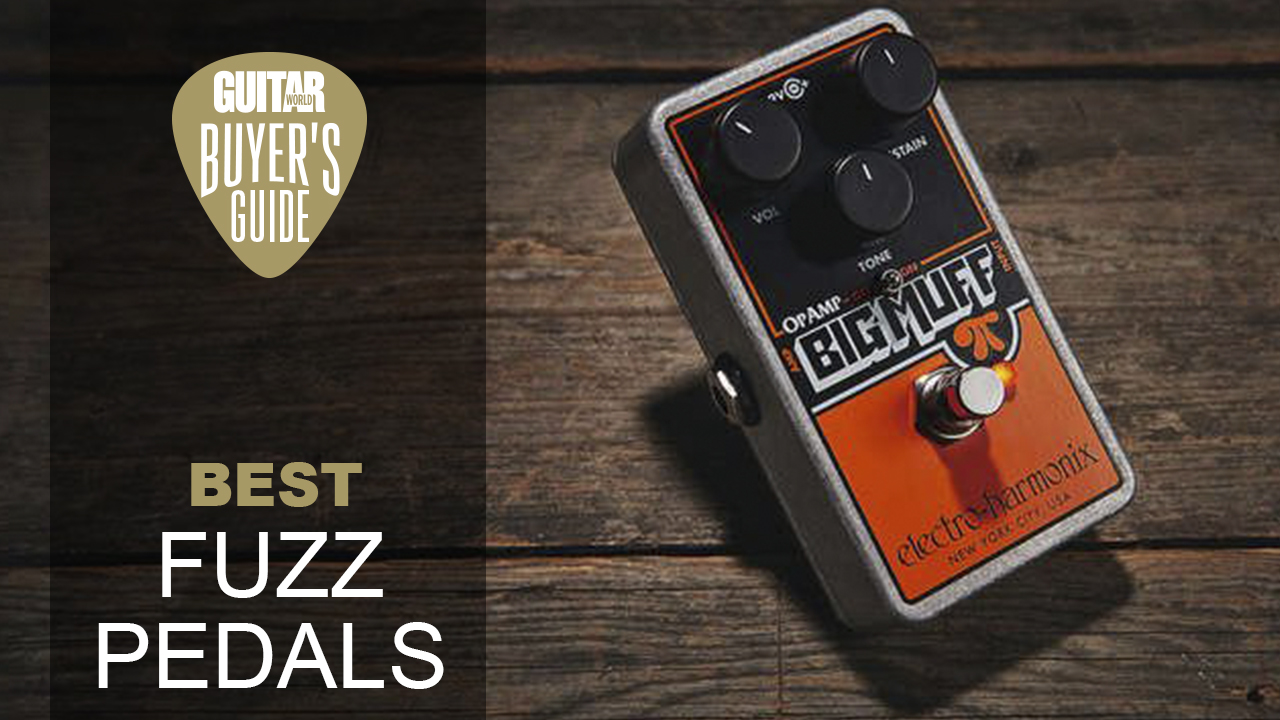

A fuzz pedal can turn a clean guitar into a snarling wall of sound, but the wrong one can make chords collapse into mush or leave you with one usable setting. The useful distinction is not simply how much fuzz a pedal produces. It is how well the circuit responds to your guitar, how much control you have over the mids and bass, and whether the pedal can move from vintage sputter to a workable full-band sound.
The Best fuzz pedals in this group range from compact analog stompboxes to more specialized octave and high-sustain designs. Some favor straightforward controls, while others reward players who want to sculpt the entire voice of the effect. For most players, JOYO Octave Fuzz is the pick to buy because it combines a characterful germanium fuzz with octave-up and mid-cut options.
Best fuzz pedals compared
| # | Product | Award | Circuit and controls | Size | Best for |
|---|---|---|---|---|---|
| 1 | JOYO Octave Fuzz | Best overall | Germanium fuzz, octave up, mid-cut, tone | 4.72 x 2.17 x 3.82 inches | Players who want several vintage voices |
| 2 | JHS 3 Series Fuzz | Best for versatility | Fuzz, bias, fat toggle | 4 x 3 x 2 inches | Players moving between fuzz, distortion, and overdrive |
| 3 | Electro-Harmonix Op Amp Big Muff | Best for sustain | Op amp fuzz, tone bypass, sustain | 4.5 x 2.75 x 2.1 inches | Thick leads and sustained riffs |
| 4 | SONICAKE Fazy Cream | Best compact Muff-style fuzz | Analog fuzz, tone control, true bypass | 3.68 x 1.65 x 2.05 inches | Guitarists and bassists needing a small pedal |
| 5 | Behringer Super Fuzz SF300 | Best for three modes | Three modes, gain, two-band EQ, level | 2.76 x 2.13 x 4.84 inches | Grunge, classic fuzz, and boosted gain |
| 6 | TC Electronic Honey Pot Fuzz | Best for massive sustain | Heavy fuzz, gain, true bypass | 2.05 x 1.15 x 0.9 inches | Alternative rock and long, singing notes |
| 7 | Donner Stylish Fuzz II | Best four-control layout | Bass, treble, level, volume | 3.7 x 1.7 x 2 inches | Players who want hands-on EQ |
| 8 | AZOR AP-303 Fuzz | Best simple analog pedal | Fuzz, tone, level | 3.7 x 1.7 x 1.3 inches | Small boards and uncomplicated setups |
| 9 | IOppWin Fuzz Buff | Best ultra-compact option | Fuzz circuit, true bypass | 1.9 x 1.25 x 3.6 inches | Minimal pedalboards |
1. JOYO Octave Fuzz: Best Overall

Pros
- Germanium-driven vintage fuzz character
- Separate octave-up footswitch
- Mid-cut switch adds a tighter rhythm voice
- True bypass and aluminum alloy housing
Cons
- Regulated 9V power is recommended and not included
- Octave and fuzz effects can be intense for clean, restrained sounds
- Larger than the smallest mini pedals
Best for: guitarists who want a vintage fuzz foundation with extra octave and midrange options.
The JOYO Octave Fuzz is the pedal here that feels like it has a point of view. Its germanium-driven circuit leans into thick, snarling 1960s-style fuzz, with enough sustain for lead lines and enough texture to make a simple riff sound immediately more animated. The octave-up footswitch is the headline feature, but the regular fuzz sound is strong enough to stand on its own.
Its controls make the pedal easier to fit into a real rig than a one-trick octave box. The tone control can move from dark and woolly to bright and biting, while the mid-cut switch changes the balance between a fuller lead voice and a tighter, more scooped rhythm sound. That is a meaningful distinction. A fuzz with too much midrange can dominate a mix, while one with too little can disappear when the rest of the band starts playing.
The octave-up function adds searing upper harmonics rather than simply making the entire signal louder. It is especially suited to single-note lines and high-register phrases, where the extra harmonic edge can make the guitar sound more urgent. Players who are also comparing the wider range of guitar effects that shape a complete pedalboard will find the JOYO more specialized than a general distortion unit, but more expressive than a basic fuzz with only three knobs.
The aluminum alloy housing and true bypass switching suit a pedal that is likely to see regular stomping. Its listed dimensions are 4.72 inches long, 2.17 inches wide, and 3.82 inches high, so it is not the smallest design here. It also recommends a regulated 9V supply, and the adapter is not included. Some power supplies may introduce noise, which makes the quality of the supply more important than with a casual bedroom setup.
The weakness is that the extra character can become too forceful if you want a polite, nearly clean fuzz. The octave switch also takes some dialing in, particularly if your playing relies on dense chords. Choose it over the JHS 3 Series Fuzz if octave color and a mid-cut option matter more than broad low-gain flexibility. It is the right first pick for players who want one pedal that can cover vintage fuzz, sharp octave leads, and more focused rhythm tones.
2. JHS 3 Series Fuzz: Best for Versatility
Pros
- Fuzz control remains useful across its sweep
- Bias knob moves toward gated textures
- Fat toggle adds bass boost
- Made in Kansas City, USA
Cons
- No dedicated tone control
- Requires a 9V DC negative-center supply
- Less overtly vintage than the JOYO
Best for: players who want one fuzz that can also cover distortion and pushed-amp sounds.
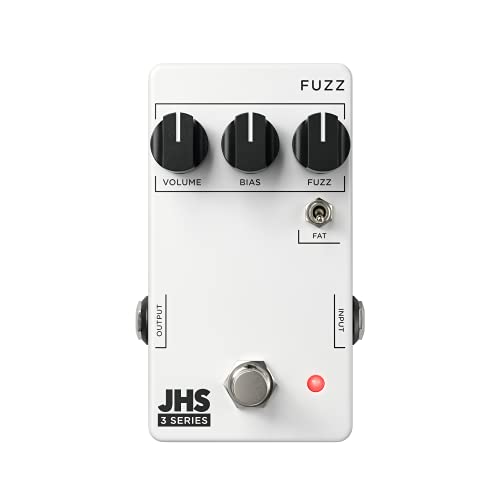
The JHS 3 Series Fuzz is the most flexible pedal in this roundup in the less obvious sense. It does not offer a long list of switches, but its fuzz knob is designed to stay useful through the full 100 percent of its rotation. At one end it can produce more conventional fuzz, while other settings move toward distortion and pushed-amp overdrive textures.
That range makes it easier to leave on a board when you are not sure which song will need a dramatic effect. The bias knob is the more unusual control. Turning it up gives the sound a more gated character, trimming the sustain and making the notes feel more broken up. Backing it down keeps the fuzz smoother and more open. It is a practical way to move between singing lines and deliberately ragged textures.
The fat toggle engages a bass boost, giving the pedal more weight without requiring a second low-end control. That is useful with bright guitars or thinner-sounding amplifiers, although the lack of a dedicated tone knob means the rest of the rig has to do more of the final balancing. Players building a wider setup around how to combine fuzz with other gain stages should appreciate how readily this pedal can sit before or after another drive.
The enclosure measures 4 inches long, 3 inches wide, and 2 inches high, and the pedal consumes 9mA. It runs from a 9V DC negative-center power supply. Those details are straightforward, but the control layout is what sets it apart. The pedal is less about recreating one famous circuit and more about giving the player a broad range of usable breakup.
Its principal weakness is the absence of a tone control. The fat switch adds low end, but it cannot replace the ability to trim brightness or bass continuously. The JHS also does not have the JOYO's octave-up drama or the Electro-Harmonix's unmistakable sustain-heavy voice. Pick it when you want a fuzz that can pull double duty as a rough overdrive, gated effect, and full-bodied gain sound. It is the most sensible choice for a player who changes styles often.
3. Electro-Harmonix Op Amp Big Muff: Best for Sustain

Pros
- Thick, recognizable Op Amp Big Muff voice
- Sustain control supports long lead notes
- Tone bypass switch provides an alternate signal path
- Rugged die-cast enclosure
Cons
- Large sound can overwhelm a busy arrangement
- Fewer tone-shaping controls than the JHS or Behringer
- Not the best fit for subtle fuzz textures
Best for: players who want dense, singing sustain for riffs, solos, and alternative rock.
The Electro-Harmonix Op Amp Big Muff is built around a large, compressed fuzz voice that does not apologize for taking up space. It is the pedal to reach for when a riff needs a thick edge or a lead needs to hang in the air. The sound has the familiar Big Muff sense of mass, but the Op Amp version brings its own focused identity rather than behaving like a generic vintage fuzz.
Its three main controls are volume, tone, and sustain. Sustain is the key one for lead players, because increasing it pushes notes toward a long, smooth decay with a dense harmonic tail. The tone control helps decide whether that mass stays dark and rounded or cuts with more treble. It does not have the JOYO's octave switch or the Behringer's separate two-band EQ, so the amplifier and guitar remain important parts of the final sound.
The tone bypass switch is a useful alternative when you want the pedal's core voice without passing through the normal tone shaping. That can help preserve a particular guitar sound or make the effect feel less filtered. It is a good reminder that this pedal is not only about maximum fuzz. The switch gives experienced players another way to fit the circuit into a wider signal chain.
The die-cast package measures 4.5 inches long, 2.75 inches wide, and 2.1 inches high. It is compact enough for a normal pedalboard while still feeling substantial underfoot. True bypass switching keeps the signal path clear when the pedal is off. If you are deciding between a dedicated gain box and a broader collection of pedals for changing the character of a guitar rig, this one earns its space through its distinctive sustain rather than its number of settings.
The weakness is the same quality that makes it appealing: it can be too large and compressed for players who want touch-sensitive, low-gain fuzz. Chords may lose some separation when sustain is pushed high, and there is no bias or mid control to reshape that behavior. The JHS is more versatile, while the JOYO is more colorful. Choose the Electro-Harmonix when the sound in your head is a wall of fuzz behind a singing guitar line.
4. SONICAKE Fazy Cream: Best Compact Muff-Style Fuzz

Pros
- Analog Muff-style fuzz circuit
- Works with guitar and bass
- Broad tone range from dark to aggressive
- True bypass in a compact enclosure
Cons
- 9V center-negative supply is not included
- Less control than the Donner or Behringer
- No separate octave or mid switch
Best for: guitarists and bassists who need a compact, straightforward wall of fuzz.
The SONICAKE Fazy Cream takes the familiar Muff-style idea and puts it in a very small enclosure. Its sound moves from creamy fuzz into high-gain fuzzy distortion, so it is not limited to a single woolly setting. The appeal is directness. You can plug in, turn the tone control, and quickly find a dark, rounded sound or something more aggressive and cutting.
The pedal uses a 100 percent analog circuit and is designed for both guitar and bass. That does not mean every setting will preserve the same low-end balance on both instruments, but it does make the Fazy Cream more adaptable than a pedal voiced only for lead guitar. Bass players looking for a compact source of thick drive should pay attention to the wide tone range, especially if their amplifier already has enough control over the lows.
At 3.68 inches long, 1.65 inches wide, and 2.05 inches high, it occupies noticeably less board space than the JOYO or Behringer. The true bypass footswitch keeps the clean signal path intact when disengaged. Its size also makes it an easy addition to a crowded board, although the reduced footprint means there is less room for extra switching and control options.
The tone control is doing a lot of work here. Turned toward the darker side, it produces a heavier and more enclosed fuzz; moved toward the brighter side, it becomes more aggressive and prominent. That broad sweep is useful, but it cannot provide the mid-cut choices of the JOYO or the separate bass and treble adjustment of the Donner. Players who need more help placing fuzz in a full mix may prefer one of those pedals.
The main limitation is simplicity. There is no octave-up circuit, no bias control, and no separate EQ, so the Fazy Cream will not replace a more elaborate fuzz design. It also requires a regular 9V center-negative power supply, which is not included. Choose it when board space and a familiar high-gain fuzz voice matter more than unusual textures or extensive sound shaping.
5. Behringer Super Fuzz SF300: Best for Three Modes

Pros
- Three distinct sound modes
- Gain, two-band EQ, and level controls
- Covers classic fuzz, grunge, and gain boost
- Battery or compatible DC power operation
Cons
- Larger footprint than most compact picks
- Power supply is not included
- Plastic housing feels less substantial than metal enclosures
Best for: players who want several gain flavors from one pedal.
The Behringer Super Fuzz SF300 is the most immediately practical choice for someone who has not settled on one fuzz style. Its three modes cover classic fuzz, grunge, and gain boost, so it can move from a vintage-leaning effect to a more aggressive alternative sound without changing pedals. That flexibility is more important than any single mode sounding exactly like another pedal.
The control set is unusually generous for this category. Gain controls the intensity, while the two-band EQ lets you shape bass and treble separately. Level handles the output. This gives the SF300 more direct tone control than the SONICAKE, and it is easier to rebalance in a band than a fuzz with only one tone knob. The gain boost mode can also serve as a way to push an amplifier rather than simply adding more fuzz.
The trade-off is the enclosure and footprint. The pedal measures 2.76 inches long, 2.13 inches wide, and 4.84 inches high, making it taller and more prominent on a pedalboard than the mini designs here. It includes a blue status LED for effect status and battery checking, and it can run from a 9V battery or a BEHRINGER PSU-SB DC power supply. The compatible power supply is not included.
A player who likes experimenting will get more from this pedal than someone who wants one carefully defined vintage voice. The EQ controls can tighten a bass-heavy fuzz or add presence when the effect sinks behind the rest of the band. Its broad range also makes it a useful companion to a more specialized pedal. The JOYO has more distinctive octave character, while the JHS offers a smoother transition into overdrive.
The SF300's weaknesses are its larger format and less reassuring housing compared with the JOYO's aluminum alloy case or the Electro-Harmonix's die-cast enclosure. It can also take a little more time to set up because the three modes react differently to the same control positions. Choose it if range is the priority and you want classic fuzz, grunge drive, and a boost option in one box.
6. TC Electronic Honey Pot Fuzz: Best for Massive Sustain
Pros
- Heavy fuzz voice with a large sonic footprint
- Designed for long sustain
- True bypass
- Metal chassis
Cons
- Narrower personality than the JHS or Behringer
- Limited control information in the product details
- Can be too dense for chord clarity
Best for: alternative rock players who want heavy, sustaining fuzz without extra modes.
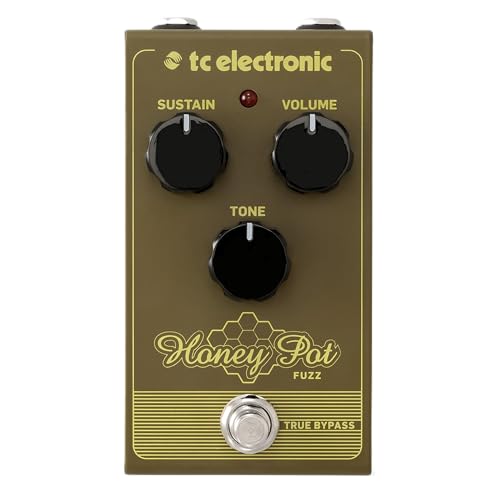
The TC Electronic Honey Pot Fuzz is the blunt instrument in this list. It aims for a massive wall of tone, substantial gain, and almost endless sustain rather than a menu of vintage variations. That makes it attractive for players who want the fuzz to become part of the amplifier's entire voice instead of sitting as a light texture over a clean sound.
Its personality is close to the thick, compressed side of fuzz. Notes can bloom into a long tail, which suits single-note melodies, held chords, and alternative rock parts that need to feel physically large. Compared with the JHS 3 Series Fuzz, the Honey Pot is less interested in moving into overdrive. Compared with the Op Amp Big Muff, it occupies a similar sustain-heavy territory but has a simpler identity.
The product information describes a metal chassis and true bypass switching. Its listed dimensions are 2.05 inches long, 1.15 inches wide, and 0.9 inches high, though that unusually compact measurement should be checked against the pedal in the intended board layout. The listed details do not provide a full control breakdown, so this is not the pedal to choose if you want every control function documented before buying.
That lack of documented control detail is the real consideration. The Honey Pot is appealing when its broad, heavy voice is exactly what you want, but it offers less guidance for carefully balancing the effect against a bright guitar or a bass-heavy amplifier. A player who needs more corrective shaping should choose the Behringer or Donner instead. Those pedals make it easier to adjust the frequency balance without relying as heavily on the rest of the rig.
Skip it if your priority is subtle response or a wide range of settings. Choose it if your music calls for thick sustain, heavy gain, and a pedal that makes the fuzz effect unmistakable. The Honey Pot earns its place by committing to that sound rather than trying to imitate every other design here.
7. Donner Stylish Fuzz II: Best Four-Control Layout

Pros
- Separate bass and treble controls
- Level and volume controls
- Compact true-bypass design
- Designed for guitar and bass
Cons
- 9V adapter is not included
- No octave or bias control
- Four knobs can take longer to balance
Best for: players who want direct control over the bass and treble of a classic fuzz sound.
The Donner Stylish Fuzz II is a sensible answer to a common fuzz problem: the effect sounds good alone but loses definition once the whole band starts. Instead of using one broad tone knob, Donner gives you separate bass and treble controls, along with level and volume controls. That makes the pedal less mysterious to adjust and more adaptable to different guitars and amplifiers.
Its sound is described as dense and delicate, with a classic-inspired character. Those terms point to a fuzz that aims for thickness without turning every note into the same block of distortion. The bass control can add body to a thin rig or keep the low end from becoming too loose, while treble can help a neck pickup cut through. This is more hands-on shaping than the AZOR or SONICAKE provide.
The pedal measures 3.7 inches long, 1.7 inches wide, and 2 inches high. Its true bypass design is intended to keep the signal intact when switched off, and the controls are positioned for adjustment during performance. It runs from a 9V DC center-negative adapter with a recommended minimum current of 500mA. The adapter is not included, so the power requirement deserves attention when adding it to an existing supply.
The Donner is less distinctive than the JOYO because it has no octave-up switch and less unusual than the JHS because it does not offer a bias control. Its strength is practical EQ. If your amplifier and guitar change frequently, separate bass and treble controls can be more useful than a highly colored circuit that sounds perfect only in one setup. It is also a useful option for bass players who want to control how much low-end weight remains in the fuzz.
The weakness is that four controls do not automatically make a pedal easier. It can take longer to find a balanced setting, particularly if the fuzz level and both EQ controls are pushed together. Choose the Donner when you want to shape a classic fuzz around your rig rather than chase octave harmonics or gated effects. It is a capable, approachable choice for players who prefer control over a fixed signature sound.
8. AZOR AP-303 Fuzz: Best Simple Analog Pedal

Pros
- Simple fuzz, tone, and level controls
- Analog fuzz character
- Compact aluminum alloy chassis
- True bypass and one-year guarantee
Cons
- No separate bass or treble control
- 9V center-negative adapter is not included
- Fewer distinctive textures than the JOYO or JHS
Best for: players who want a compact, uncomplicated analog fuzz with familiar controls.
The AZOR AP-303 Fuzz keeps the traditional fuzz pedal formula intact. It has fuzz, tone, and level controls, and its analog circuit is intended to produce plump, rich tones. There is no mode switch to learn and no secondary effect competing for attention. For a player who wants to add fuzz to a small board and start shaping sounds immediately, that simplicity is the main attraction.
The tone control provides the primary means of balancing the effect. A darker setting can make the fuzz feel thicker and less pointed, while a brighter setting helps it remain audible with a warm amplifier or neck pickup. The fuzz control determines how far the pedal moves from a textured edge into a more saturated effect. Level then gives you the output adjustment needed to keep the pedal from becoming an accidental volume jump.
At 3.7 inches long, 1.7 inches wide, and 1.3 inches high, the AP-303 fits comfortably beside other compact pedals. Its aluminum alloy chassis is described as lightweight and enduring, and true bypass switching is intended to preserve the clean signal when disengaged. It requires a 9V DC center-negative adapter with a recommended minimum current of 500mA, and that adapter is not included.
The AP-303 is less versatile than the Donner because it lacks independent bass and treble controls. It also cannot produce the JOYO's octave-up shimmer or the JHS's gated bias effects. Those are not flaws if you want a classic three-knob layout, but they matter if the pedal needs to cover several distinct sounds. The AP-303 is better understood as a focused tool than a complete fuzz laboratory.
Choose it when you want a compact analog pedal with a familiar response and very little setup friction. Skip it if your rig changes often and you need detailed EQ correction. The AZOR is the straightforward pick for a player who already knows the general fuzz sound they want and does not need extra switching.
9. IOppWin Fuzz Buff: Best Ultra-Compact Option

Pros
- Very small pedalboard footprint
- Metal enclosure
- True bypass switching
- Low 3mA power draw
Cons
- Product details provide few tone-shaping controls
- DC 9V adapter is sold separately
- Less flexible than every multi-control pedal here
Best for: guitarists building the smallest possible board around a basic fuzz sound.
The IOppWin Fuzz Buff is all about conserving board space. Its listed dimensions are 1.9 inches long, 1.25 inches wide, and 3.6 inches high, making it a small-format option for a board where every inch matters. The product description presents the sound as dynamic, full, and sweet, with a vintage character rather than an aggressively modern distortion voice.
Its metal enclosure gives the compact design more confidence than a lightweight plastic box would. True bypass switching keeps the signal path clear when the effect is off, which is important on a small board where the pedal may sit alongside several other active circuits. The listed input impedance is 470k ohms and output impedance is 1k ohms, details that indicate attention to how the pedal connects with the rest of a signal chain.
The low 3mA draw is useful for a pedalboard power supply, although the unit runs from DC 9V and the adapter is sold separately. The product information does not spell out a full set of tone controls, so buyers should not expect the same adjustment range as the Behringer, Donner, or JHS. Its appeal is a compact source of fuzz, not a large control surface.
That limited documentation also makes this a harder pedal to recommend as the only fuzz in a varied rig. The AZOR offers a similarly compact approach with clearly stated fuzz, tone, and level controls, while the SONICAKE adds a broad tone range and guitar and bass compatibility. The IOppWin makes more sense when physical size is the deciding factor.
Choose it for a minimalist board, a spare slot, or a setup where the amplifier already handles most of the tone shaping. Skip it if you need octave effects, independent EQ, or a bias control. It is the narrowest recommendation here, but it fills that narrow role neatly.
How to choose Best fuzz pedals
The right fuzz pedal depends on how much character you want from the circuit and how much control your amplifier, guitar, and signal chain already provide.
Fuzz character
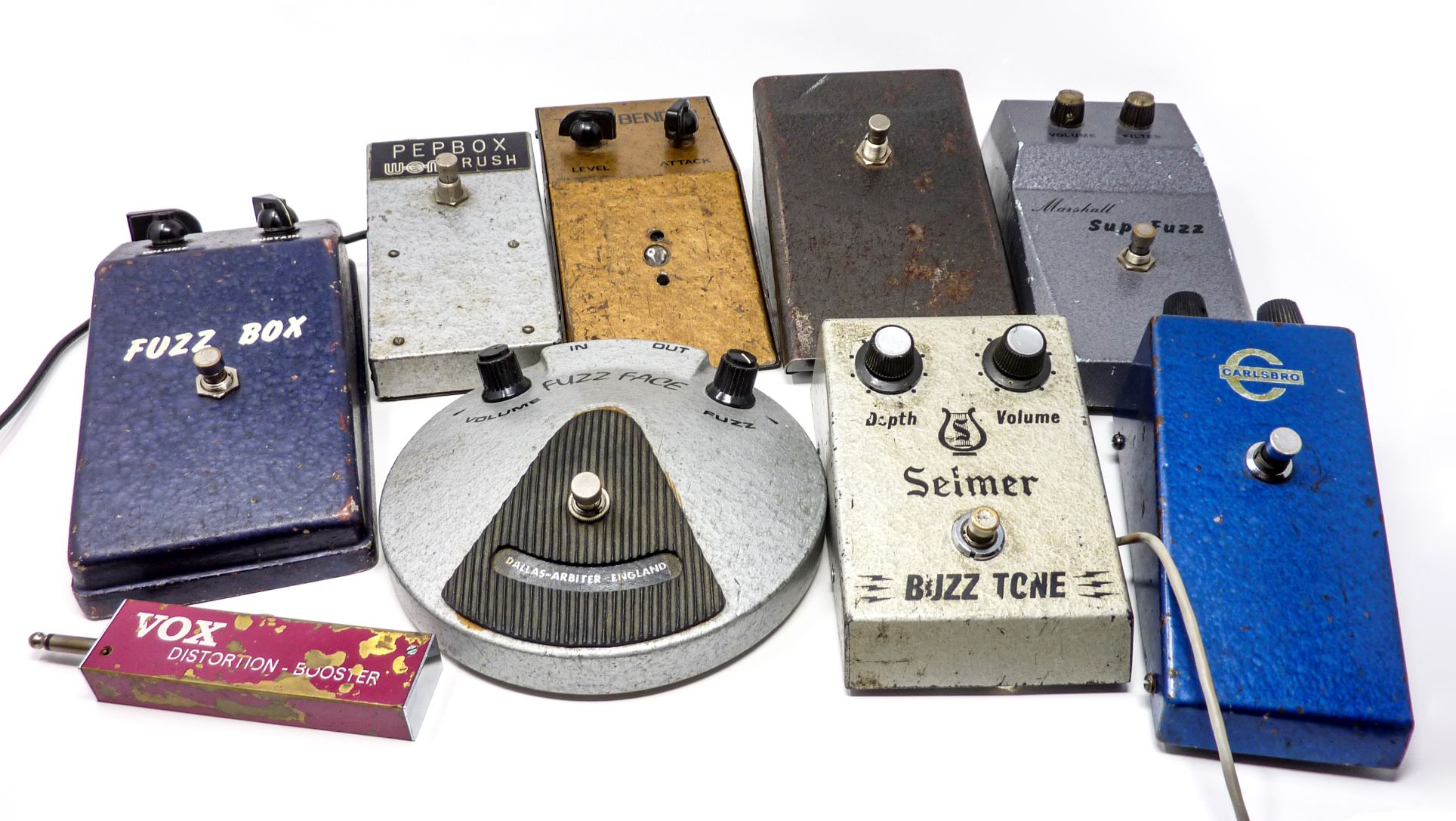
Some pedals aim for thick, smooth sustain, while others create gated, ragged, or octave-heavy textures. The Op Amp Big Muff and Honey Pot Fuzz lean toward large sustain, while the JHS adds a more broken-up bias sound and the JOYO brings upper-octave color. Decide whether you want one recognizable voice or a pedal that can move between several kinds of fuzz.
Tone shaping
A single tone knob is enough when the pedal already matches your guitar and amplifier. Separate controls can be more useful when you need to adjust the effect for different rooms, pickups, or band arrangements. The Donner has bass and treble controls, the Behringer has a two-band EQ, and the JOYO adds a mid-cut switch. Those features make it easier to keep fuzz audible without simply increasing its level.
Sustain and note separation
Long sustain is useful for leads and held chords, but high saturation can blur complex playing. The Electro-Harmonix and TC Electronic pedals emphasize a large, sustaining voice. A player who uses intricate chord shapes may prefer the more adjustable JHS or Donner, where the effect can be backed away from its densest settings.
A fuzz pedal should sound exciting alone, but it must leave enough space for the bass, vocals, and cymbals once the band starts.
Octave and special effects
An octave-up switch changes the role of a fuzz pedal. It can add sharp harmonic emphasis to single-note lines, as on the JOYO, but it is less important if you mainly play low riffs or open chords. Bias controls create another kind of variation by moving the circuit toward gated, broken-up textures. These are creative tools, not universal improvements, so choose them only if you expect to use them.
Enclosure and board space
Compact pedals are easier to fit into a crowded setup, but smaller dimensions often mean fewer controls. The IOppWin, AZOR, and SONICAKE save space, while the Behringer and JOYO take up more room. Metal and aluminum alloy housings also make sense for regular foot use, especially on a board that travels to rehearsals or performances.
Power requirements
Most of these pedals use a 9V supply, but the specific requirement still matters. Several call for center-negative power, and the Donner and AZOR recommend a minimum of 500mA. The Behringer can also run on a 9V battery. Check your existing power supply before choosing a pedal, particularly if the board has limited isolated outputs.
Frequently asked questions
Should fuzz go before or after distortion?
Fuzz is commonly placed before distortion so the distortion or amplifier can shape its output. Placing fuzz after another gain pedal can create a more compressed and forceful sound, but it may also reduce clarity. The best order depends on whether you want the fuzz to push another stage or remain the dominant effect.
Are germanium fuzz pedals better?
Germanium circuits are associated with warm, vintage-style fuzz and responsive harmonic behavior, but they are not automatically better for every rig. The JOYO uses a germanium-driven design and emphasizes a thick 1960s-style voice. Players who want cleaner articulation or more predictable control may prefer the JHS, Behringer, or Donner.
Can these pedals work with bass?
The SONICAKE is specifically described for guitar and bass, and the Donner is also presented for both instruments. Other pedals may work with bass, but their tone and low-end response are not documented here as specifically. A bass player should pay close attention to whether the fuzz preserves enough low frequency for the rest of the arrangement.
Do fuzz pedals need a special power supply?
Most pedals here use a 9V supply, commonly with center-negative polarity. The SONICAKE, JOYO, Donner, AZOR, and IOppWin do not include an adapter, while the Behringer can also use a 9V battery. The JOYO recommends a regulated supply, and the Donner and AZOR specify a minimum 500mA current, so a compatible output is essential.
What is the difference between fuzz and distortion?
Distortion usually aims for a more controlled form of clipping, while fuzz tends to be thicker, more compressed, and more harmonically exaggerated. The boundary is not fixed. The JHS 3 Series Fuzz is a good example of a pedal that can move toward distortion and pushed-amp tones as its fuzz control changes.
Which fuzz pedal is easiest for a beginner?
A pedal with a simple control layout is usually easiest to understand. The AZOR has fuzz, tone, and level controls, while the SONICAKE adds a broad tone range without introducing many extra switches. Players who want more sounds from the start may prefer the Behringer, but its three modes and extra EQ controls take more experimentation.
The bottom line
The Best fuzz pedals should offer a clear reason to live on your board, and the JOYO Octave Fuzz has the strongest combination of character and control. Its germanium fuzz, octave-up switch, mid-cut option, true bypass design, and aluminum alloy housing give it more useful range than a basic three-knob pedal.
The JHS 3 Series Fuzz is the better pick for players who want to move between fuzz, distortion, overdrive, and gated textures, while the Electro-Harmonix Op Amp Big Muff remains the specialist choice for dense sustain and large lead tones. Compact-board users should look at the SONICAKE or AZOR, and the Behringer is the flexible option for three different gain directions.
If you are undecided, choose the JOYO for the broadest mix of vintage fuzz, octave color, and practical tone shaping.
As an Amazon Associate we earn from qualifying purchases.