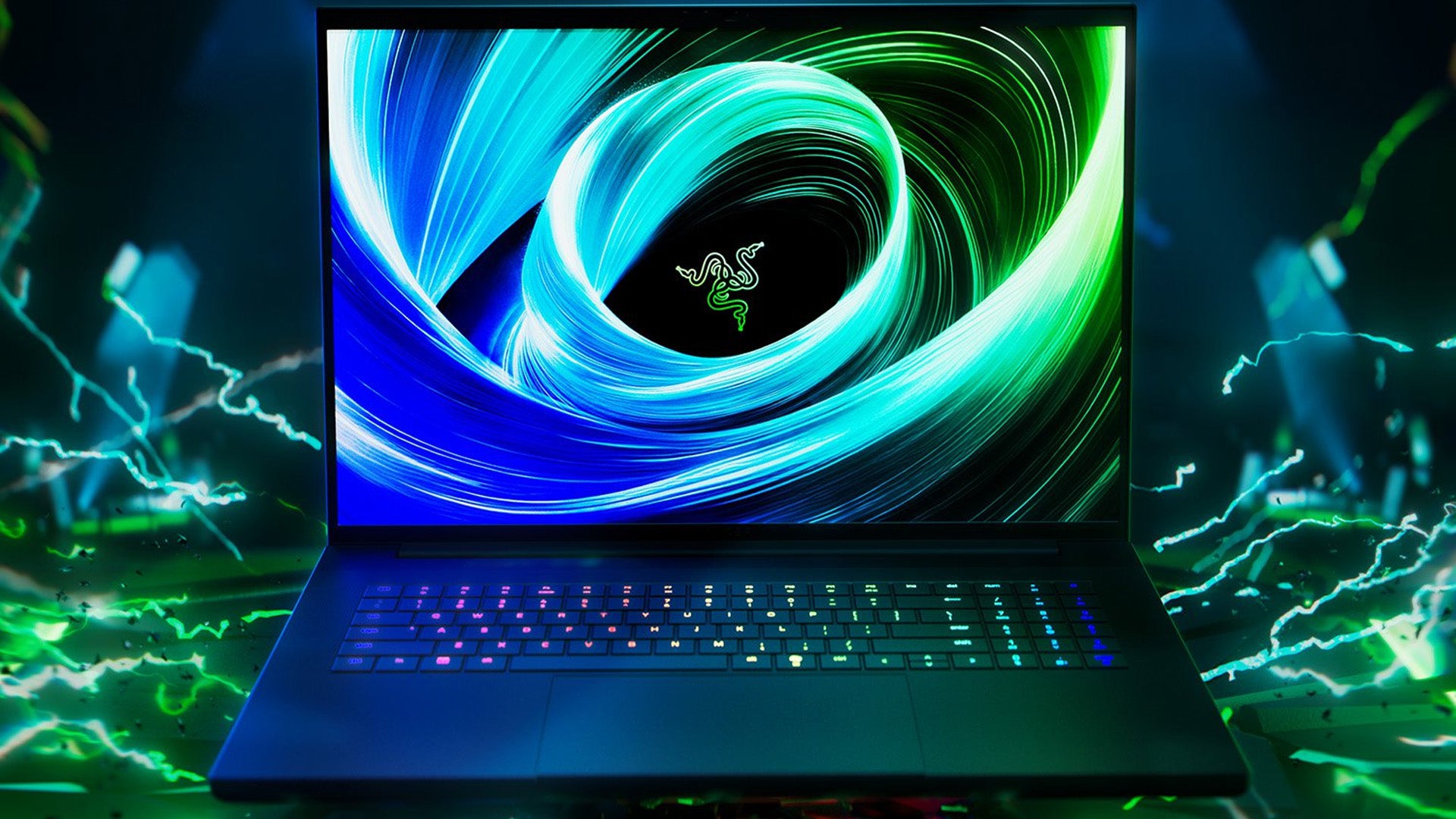

A gaming laptop has to solve a desktop problem in a portable shape: sustained graphics performance, a fast screen, useful cooling, and enough storage for games that can occupy more than 100GB. The wrong model may look capable on paper but leave you choosing between smooth play and excessive heat.
Our Best best gaming laptop brands guide separates genuine gaming machines from laptops that merely use the word gaming in their listings. The range here includes powerful RTX 5070 Ti hardware, practical RTX 5050 systems, and integrated-graphics laptops suited to lighter games and creative work.
The ASUS ROG Strix G16 with RTX 5060 is our top pick, while the other eight cover high-refresh displays, sturdy designs, portable creator hardware, and entry-level everyday use.
Comparison table
| # | Product | Award | Graphics | Display | Memory and storage | Best for |
|---|---|---|---|---|---|---|
| 1 | ASUS ROG Strix G16 RTX 5060 | Best overall | GeForce RTX 5060 | 16-inch FHD+, 165Hz, 3ms | 16GB DDR5, 1TB SSD | Serious gaming and everyday creation |
| 2 | KAIGERR RX16 | Best upgradeable alternative | Radeon RX Vega 8 | 16.1-inch IPS | 24GB listed, 512GB NVMe SSD | Lighter gaming and multitasking |
| 3 | ASUS ROG Strix G16 RTX 5070 Ti | Best high-end performance | GeForce RTX 5070 Ti | 16-inch 2.5K, 240Hz, 3ms | 32GB DDR5, 1TB SSD | Competitive gaming and demanding creation |
| 4 | Acer Nitro V | Best connectivity | GeForce RTX 5050 | 16-inch WUXGA, 180Hz, 3ms | 16GB DDR5, 1TB SSD | Gaming with many peripherals |
| 5 | YOZISUAN 15.6-inch Laptop | Best for basic everyday use | Not specified | 15.6-inch FHD, 60Hz class not specified | 16GB RAM, 512GB SSD | School, commuting, and light games |
| 6 | Alienware 16 Aurora | Best design-led option | GeForce RTX 5050 | 16-inch WQXGA, 120Hz | Not specified | A distinctive gaming chassis |
| 7 | ASUS TUF Gaming F16 | Best durable design | GeForce RTX 5050 | 16-inch FHD+, 165Hz | 16GB DDR5, 512GB SSD | Students and frequent travelers |
| 8 | GIGABYTE Gaming A16 | Best thin RTX 5060 option | GeForce RTX 5060 | 16-inch WUXGA, 165Hz | 16GB DDR5, 1TB SSD | Gaming and streaming |
| 9 | NIMO 15.6 Creator Laptop | Best integrated-graphics creator laptop | Radeon 780M | 15.6-inch FHD | 32GB RAM, 1TB SSD | Editing, AI tasks, and portable work |
1. ASUS ROG Strix G16 RTX 5060: Best Overall

Pros
- RTX 5060 graphics with DLSS 4 support
- Fast 165Hz, 3ms FHD+ display
- 1TB PCIe Gen 4 SSD
- Vapor chamber and tri-fan cooling
- Wi-Fi 7 and configurable RGB lighting
Cons
- Weighs 5.84 pounds
- 16GB memory is less generous than the premium ROG model
- The FHD+ panel is less detailed than the 2.5K alternative
Best for: someone who wants a serious gaming laptop with strong all-around hardware.
The ASUS ROG Strix G16 RTX 5060 gets the important balance right. It has enough graphics headroom for modern games, a display that favors fluid motion, and a 1TB SSD that avoids the immediate need to manage a tiny game library. It feels like a gaming laptop first, but the subdued Stealth Mode lighting gives it a more sensible look when the RGB light bar is not wanted.
Its Intel Core i7-14650HX processor and 16GB of DDR5-5600MHz memory are a sensible pairing for gaming, streaming, and general creation. The GeForce RTX 5060 brings NVIDIA Blackwell architecture, DLSS 4, and Max-Q technologies, giving this model a stronger graphics foundation than the RTX 5050 machines here. The 16-inch 16:10 FHD+ screen runs at 165Hz with a 3ms response time, so fast camera movement should look cleaner than it does on a conventional 60Hz laptop.
Cooling is a major reason to choose this ROG model over simpler designs. ASUS lists an end-to-end vapor chamber, tri-fan technology, and Conductonaut Extreme liquid metal on the chipset. Those features are aimed at maintaining performance during long sessions rather than merely producing a short burst of speed. Wi-Fi 7 also gives the machine a newer wireless platform, although the benefit depends on the rest of the network.
The main compromise is weight. At 5.84 pounds, this is not the laptop we'd choose for a daily train commute, and the FHD+ resolution is visibly less detailed than the 2.5K panel on the ASUS ROG Strix G16 RTX 5070 Ti. The latter is clearly the stronger option for demanding creative work and high-end gaming, but this RTX 5060 version is easier to recommend as the balanced choice. Readers comparing more portable systems can also consider how gaming performance changes in a thinner laptop design.
Choose it if you want a full gaming system rather than a general laptop with a gaming label. The ASUS ROG Strix G16 RTX 5060 is the one we'd keep for a mix of demanding games, school or office work, and occasional content creation.
2. KAIGERR RX16: Best Upgradeable Alternative

Pros
- Ryzen 7 H255 processor with eight cores and 16 threads
- Dual-fan cooling design
- DDR5 memory and NVMe storage
- Listed support for memory and SSD upgrades
- Backlit keyboard and Wi-Fi 6
Cons
- Integrated Radeon RX Vega 8 graphics trail the dedicated GPUs here
- The listing gives conflicting memory information
- Display refresh rate is not specified
Best for: multitaskers who want a lighter machine for casual gaming and work.
The KAIGERR RX16 is not a direct rival to the ASUS ROG machines. Its appeal is different. This is a relatively light 16-inch laptop with a Ryzen 7 H255 processor, a backlit keyboard, and enough memory and storage for a broad set of school, office, and entertainment tasks. It makes more sense for someone who plays lighter games than for a player expecting dedicated-GPU performance.
The processor is listed with eight cores, 16 threads, and speeds up to 4.9GHz. That should help with browser-heavy multitasking, document work, and applications that use several CPU threads. The Radeon RX Vega 8 graphics are integrated, however, so they do not occupy the same performance tier as the GeForce RTX 5050 and RTX 5060 systems in this roundup. The 16-inch IPS display is described as having a wide color gamut and high refresh rate, but the listing does not specify the refresh-rate figure.
There is useful upgrade potential here. The product information identifies 24GB of DDR5 memory and a 512GB NVMe SSD, while the feature text refers to a 16GB configuration and says memory can be expanded to 64GB and storage to 4TB. That inconsistency deserves attention before ordering. The upgrade claims are helpful, but buyers should confirm the shipped configuration and available slots rather than assuming every detail is identical.
The dual-fan cooling system is a welcome inclusion for a thin machine, and the 3.86-pound weight makes it easier to carry than the larger dedicated-GPU laptops. Still, the lack of a specified display refresh rate and the integrated graphics put a clear ceiling on gaming. The Acer Nitro V and ASUS TUF Gaming F16 are much safer picks for demanding games, while the KAIGERR is more attractive when memory, portability, and everyday responsiveness matter most.
This is one of the more unusual entries among the Best best gaming laptop brands because it behaves as much like a capable general laptop as a gaming system. Choose it for casual play, multitasking, and an upgrade path, not for maximum graphical detail.
3. ASUS ROG Strix G16 RTX 5070 Ti: Best High-End Performance

Pros
- RTX 5070 Ti graphics with Blackwell architecture
- 2.5K 240Hz, 3ms ROG Nebula display
- 32GB DDR5 memory
- Vapor chamber and tri-fan cooling
- 1TB PCIe Gen 4 SSD and Wi-Fi 7
Cons
- Weighs 5.84 pounds
- More hardware than casual players need
- High-resolution gaming places greater demands on the GPU
Best for: enthusiasts who want a fast, detailed screen and substantial graphics power.
The ASUS ROG Strix G16 RTX 5070 Ti is the obvious performance leader in this group. Its identity is built around the display as much as the GPU. The ROG Nebula panel combines a 16:10 2.5K resolution with a 240Hz refresh rate and 3ms response time, giving fast games both sharper detail and smoother motion than the FHD+ displays below it.
The Intel Core Ultra 9 275HX and 32GB of DDR5-5600MHz memory give this machine more room for demanding multitasking than the RTX 5060 ROG model. Its GeForce RTX 5070 Ti uses NVIDIA Blackwell architecture and supports DLSS 4 and Max-Q technologies. That combination is a better fit for high graphical settings, ray-traced effects, and creative applications than the RTX 5050 laptops, although the exact experience will vary by game and settings.
ASUS uses the same serious thermal approach found on the other ROG Strix model. An end-to-end vapor chamber, tri-fan design, and Conductonaut Extreme liquid metal on the chipset are intended to keep sustained workloads from quickly turning into thermal throttling. The 1TB SSD is a practical starting point, while Wi-Fi 7 keeps wireless connectivity current. A full-surround RGB light bar can be synchronized with compatible ROG peripherals or disabled through Stealth Mode.
The tradeoff is straightforward: this laptop is large and heavy, and its 2.5K screen makes its high-end hardware more relevant than it would be on a basic FHD panel. The ASUS ROG Strix G16 RTX 5060 is the more balanced pick for most people, while the GIGABYTE Gaming A16 RTX 5060 offers a slimmer chassis. Choose this model when the display and graphics ceiling matter more than carrying comfort.
Among the Best best gaming laptop brands, this is the pick for a buyer who knows they will use the extra performance. It is excessive for light esports and office work, but compelling for demanding games, editing, and long-term headroom.
4. Acer Nitro V: Best Connectivity

Pros
- RTX 5050 graphics with DLSS 4
- 180Hz, 3ms WUXGA display
- Thunderbolt 4, HDMI 2.1, Ethernet, and microSD
- 1TB Gen 4 SSD
- Dual-fan, quad-intake cooling
Cons
- Heavier than thinner productivity laptops
- 16GB memory is less than the high-end ROG model
- RTX 5050 sits below the RTX 5060 systems
Best for: players who need fast gaming and a broad selection of ports.
The Acer Nitro V is a particularly practical gaming laptop. It does not chase the highest resolution in this list, but its 16-inch WUXGA screen has a 16:10 layout, 180Hz refresh rate, and 3ms overdrive response time. That is a good combination for action games, and the 300-nit brightness and 1920 by 1200 resolution make the panel useful for ordinary work too.
Inside is an Intel Core 7 240H processor, 16GB of DDR5 memory, a 1TB PCIe Gen 4 SSD, and a GeForce RTX 5050 Laptop GPU. NVIDIA Blackwell graphics, DLSS 4, and fourth-generation ray-tracing cores give it modern rendering features. The RTX 5050 is not as capable as the RTX 5060 in the ASUS ROG Strix G16 RTX 5060 or GIGABYTE Gaming A16, but the 180Hz panel gives this Acer a strong motion advantage over the 120Hz Alienware 16 Aurora.
Connectivity is the real differentiator. The laptop includes a Thunderbolt 4 USB-C port, HDMI 2.1, Ethernet, several USB ports, a headphone jack, and a microSD card reader. That makes it easier to connect a monitor, wired network, external storage, camera cards, and accessories without immediately reaching for a hub. The listing also identifies USB-C charging up to 65W, though that is separate from the system's main gaming power requirements.
Acer pairs the hardware with dual-fan cooling, quad intake and exhaust design, and NitroSense controls for fan-speed customization. At 5.29 pounds, it is still a substantial machine. The ASUS TUF Gaming F16 has a durability-focused design, while this Nitro V wins on ports and storage capacity. It is the better fit for a desk that regularly hosts several accessories.
The Best best gaming laptop brands conversation often focuses on GPU names, but the Acer Nitro V shows why the rest of the system matters. Choose it when flexible connectivity, a fast panel, and a useful SSD are more important than having the fastest graphics chip in the group.
5. YOZISUAN 15.6-inch Laptop: Best for Basic Everyday Use

Pros
- 16GB RAM and 512GB SSD
- Anti-glare 15.6-inch FHD screen
- Three-pound listed weight
- Compact dimensions
- Two-year manufacturer warranty listed
Cons
- Graphics hardware is not specified
- Processor details are limited
- Not suited to demanding modern games
Best for: students, commuters, and office users who only play lightweight games.
The YOZISUAN 15.6-inch Laptop is the clearest example of why a gaming label needs scrutiny. It has the shape and title of a gaming laptop, but the listed details describe a general-purpose computer more convincingly. Its unnamed Core processor reaches up to 3.40GHz, and the machine includes 16GB of RAM with a 512GB SSD.
For school documents, web browsing, video streaming, and business applications, that configuration is straightforward. The 15.6-inch FHD display uses a 1920 by 1080 resolution, a 16:9 aspect ratio, and an anti-glare coating. The coating should be useful in classrooms, libraries, and offices where overhead lighting can create reflections. The listing does not provide a dedicated GPU or a gaming refresh rate, so buyers should not expect the smooth high-frame-rate experience offered by the ASUS or Acer models.
Portability is one of its strengths. The listed weight is three pounds, and the 14.06 by 8.98-inch footprint should fit more easily into a backpack than the 5-pound-plus gaming machines. A 38Wh battery is included, though real battery life depends on applications, brightness, and wireless use. The product also lists Wi-Fi and Bluetooth 5.0 connectivity.
The biggest weakness is not a small missing feature. It is the lack of a specified graphics processor. That makes it difficult to judge demanding games and means this laptop should be treated as an everyday computer with light gaming capability. The NIMO 15.6 Creator Laptop is a stronger alternative for creator workloads, while the ASUS TUF Gaming F16 is the much safer choice for real gaming.
It belongs in this list only for readers whose gaming needs are modest. The Best best gaming laptop brands should include a clear warning here: a gaming-themed title does not replace dedicated graphics hardware.
6. Alienware 16 Aurora: Best Design-Led Option

Pros
- GeForce RTX 5050 graphics
- 16-inch WQXGA display
- 300-nit brightness
- Cryo-Chamber cooling structure
- One-year onsite service listed
Cons
- 120Hz display is slower than several rivals
- Weighs 5.49 pounds
- Memory and storage details are not specified
Best for: buyers who want Alienware design and a sharper 16-inch display.
The Alienware 16 Aurora takes a different route from the aggressively illuminated ROG Strix. Its streamlined chassis avoids a rear thermal shelf, and the design remains distinctive without relying on a large collection of visible accents. That makes it appealing to someone who wants a recognizable gaming machine that can still sit comfortably in a work or study environment.
The core graphics hardware is a GeForce RTX 5050 Laptop GPU using NVIDIA Blackwell architecture. The 16-inch WQXGA display has a 2560 by 1600 class resolution, 120Hz refresh rate, and 300-nit brightness. The sharper panel is useful for games, video, and productivity, while 120Hz remains comfortably smoother than a basic 60Hz display. It is not as fast as the 165Hz, 180Hz, or 240Hz screens elsewhere in the roundup.
Alienware's Cryo-Chamber structure focuses airflow toward core components. The design is intended to support thermal performance without the rear shelf used by some older gaming laptops. The listing does not specify RAM or SSD capacity, which is a meaningful omission for anyone building a large game library or using memory-heavy creative software.
At 5.49 pounds, this is still a desktop replacement in practical terms. The Acer Nitro V offers more clearly documented connectivity, and the ASUS TUF Gaming F16 provides a stronger durability story. Alienware counters with a sharper display, a distinctive chassis, and one-year onsite service, with support intended to come to the user's location when a covered issue cannot be solved remotely.
This is not the most complete specification package in the Best best gaming laptop brands selection. It is better suited to a buyer who already values the Alienware look and wants a higher-resolution screen, provided the missing memory and storage details are confirmed before purchase.
7. ASUS TUF Gaming F16: Best Durable Design
Pros
- 165Hz FHD+ display with 100% sRGB coverage
- RTX 5050 with a listed 115W maximum TGP
- MIL-STD-810H testing claim
- Wi-Fi 6E
- Arc Flow fans and full-width cooling
Cons
- 512GB SSD fills quickly with large games
- Core i5 is below the processors in the ROG Strix models
- Weighs 4.85 pounds
Best for: students and travelers who need a tougher gaming laptop.
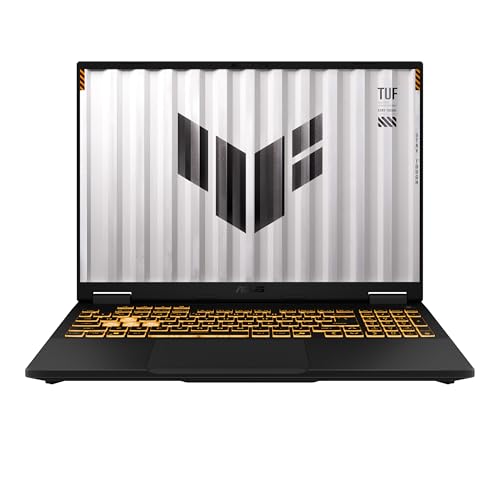
The ASUS TUF Gaming F16 is the sensible, restrained member of the ASUS family. It does not have the premium display or high-end processor of the ROG Strix models, but its design places more emphasis on durability and practical gaming hardware. The understated cover and embossed TUF logo also make it less visually loud than many gaming systems.
Its Intel Core i5-13450HX processor is paired with 16GB of DDR5 memory, a 512GB PCIe Gen 4 SSD, and a GeForce RTX 5050 Laptop GPU. ASUS lists a maximum graphics TGP of 115W and NVIDIA Advanced Optimus, which can help the laptop manage the relationship between integrated and dedicated graphics. The 16-inch FHD+ 16:10 panel runs at 165Hz, includes 100% sRGB coverage, and supports Adaptive-Sync.
That screen specification is stronger than the basic resolution suggests. A 165Hz refresh rate makes fast movement look smoother, while 100% sRGB is useful for people who care about consistent color in photos, video, and web design. The 512GB SSD is the limitation. Modern games can consume a large share of that space, so this model is easier to live with if the library is selective or external storage is part of the setup.
ASUS lists MIL-STD-810H testing, second-generation Arc Flow fans, a full-width heatsink, and a full-width vent. Those details point to a machine designed to tolerate regular travel better than a fragile thin laptop. The 4.85-pound weight is still noticeable, but it is lighter than the ROG Strix G16 models. The Acer Nitro V is better equipped for connectivity, while the TUF is the more appealing choice when ruggedness matters.
The Best best gaming laptop brands should not be judged only by peak frame rates. Choose the ASUS TUF Gaming F16 if you need a capable RTX 5050 system that can handle commuting, classes, and regular gaming without looking overly flashy.
8. GIGABYTE Gaming A16: Best Thin RTX 5060 Option

Pros
- RTX 5060 graphics
- 165Hz WUXGA display
- 1TB SSD and 16GB DDR5
- 180-degree hinge
- 19.45mm slim chassis
Cons
- Intel i7-13620H is older than the newest processors here
- Chassis is still listed at about 4.85 pounds
- Cooling details are less specific than the ASUS and Acer models
Best for: gamers who want RTX 5060 graphics in a slimmer chassis.
The GIGABYTE Gaming A16 is the most appealing compromise for someone who wants dedicated RTX 5060 graphics without choosing the heavier visual style of a large performance laptop. Its 19.45mm chassis is listed as 0.76 inches thick, and the 180-degree hinge lets the display lie flat for easier collaboration or unusual desk positions.
Inside, an Intel Core i7-13620H processor works with 16GB of DDR5 memory, a 1TB SSD, and a GeForce RTX 5060 Laptop GPU. The RTX 5060 uses NVIDIA Blackwell architecture and supports DLSS 4, so it is a meaningful step above the RTX 5050 systems. The processor is not as new as the Core Ultra 9 in the premium ASUS model, but it remains suited to gaming, streaming, recording, and multiple applications.
The 16-inch 1920 by 1200 WUXGA panel runs at 165Hz. That 16:10 workspace adds a little vertical room for documents and applications compared with a conventional 16:9 screen, while the refresh rate suits fast games. A 1TB SSD gives it the same practical storage capacity as the top ASUS and Acer picks.
The thin chassis has consequences. At roughly 4.85 pounds, this is not an ultralight laptop despite its slim profile, and the listing gives less detail about the cooling architecture than the ROG Strix and Nitro V. The ASUS ROG Strix G16 RTX 5060 remains the stronger performance-oriented design, while the GIGABYTE is easier to justify for a buyer who cares about thickness and the 180-degree hinge.
Among the Best best gaming laptop brands, this is the model to consider when physical design matters nearly as much as graphics. It offers a strong middle ground for gaming, streaming, and portable desk setups.
9. NIMO 15.6 Creator Laptop: Best Integrated-Graphics Creator Laptop

Pros
- Ryzen 7 8745HS with eight cores
- 32GB RAM and 1TB SSD
- Radeon 780M integrated graphics
- USB4 and HDMI 2.1
- 100W USB-C Power Delivery and 180-degree hinge
Cons
- Integrated graphics are below dedicated RTX GPUs
- FHD display refresh rate is not specified
- Gaming claims should be kept to lighter titles
Best for: creators who need memory, storage, and portable connectivity more than maximum gaming graphics.
The NIMO 15.6 Creator Laptop is a creator machine with gaming capability, not a conventional high-performance gaming laptop. Its strongest features are the 32GB of RAM, 1TB SSD, and AMD processor, all packed into a listed 3.75-pound chassis. That combination is useful for editing, large browser sessions, AI tools, and remote streaming.
The AMD Ryzen 7 8745HS has eight cores and a listed 45W TDP. Its integrated Radeon 780M graphics use the RDNA 3 architecture. That is substantially more interesting than the unspecified graphics hardware in the YOZISUAN, but it still does not compete directly with the RTX 5050 or RTX 5060 laptops for demanding games. The listing specifically positions the Radeon 780M for lighter gaming and 1080p streaming.
Connectivity is unusually strong for a portable creator laptop. USB4 can support an external GPU setup according to the listing, while HDMI 2.1 is identified for 4K at 120Hz output. There are also USB 3.2 ports, a microSD reader, and a 3.5mm combo jack. The 100W Power Delivery system is designed to reduce reliance on a bulky proprietary charger, and the listing claims charging to 50% in 30 minutes.
The 15.6-inch FHD display has a 16:9 aspect ratio and a 180-degree hinge, but its refresh rate is not specified. A fingerprint sensor in the touchpad, backlit keyboard, and two-year manufacturer warranty add to its work-focused character. The GIGABYTE Gaming A16 is a much better choice for dedicated gaming, while the NIMO makes more sense when editing and portable productivity lead the brief.
This is a useful reminder that the Best best gaming laptop brands are not all built for the same player. Pick the NIMO for creator workloads, large multitasking sessions, and occasional lighter games, not for uncompromised AAA gaming.
How to choose best gaming laptop brands
The right gaming laptop depends on the graphics processor first, but screen speed, cooling, memory, storage, and portability determine how enjoyable that hardware is to use.
Dedicated graphics
A dedicated NVIDIA GeForce RTX GPU is the clearest dividing line in this group. The RTX 5070 Ti in the ASUS ROG Strix G16 RTX 5070 Ti sits at the top, followed by RTX 5060 and RTX 5050 systems. Integrated Radeon graphics in the KAIGERR and NIMO can handle lighter games, but they have less headroom for demanding settings and ray-traced effects.
Display refresh rate
A 165Hz or faster panel makes quick camera movement and competitive play look smoother than a standard 60Hz screen. The 240Hz ROG Nebula display is aimed at players who can make use of very high frame rates, while the 120Hz Alienware panel favors resolution over speed. A high refresh rate is useful only when the GPU can produce enough frames to support it.
Resolution and aspect ratio
FHD+ and WUXGA resolutions are easier for midrange GPUs to drive at high frame rates. The 2.5K screen on the premium ASUS ROG Strix offers a sharper image but asks more from the RTX 5070 Ti. A 16:10 aspect ratio adds vertical workspace, which helps when a laptop doubles as a school or office computer.
Buy the GPU for the games you play, then choose a display that lets that GPU work comfortably.
Memory and storage
16GB of RAM remains a practical baseline for gaming and normal multitasking, while 32GB gives more room for editing, streaming, virtual machines, and heavy browser use. Storage capacity matters because modern games are large. A 1TB SSD, as found in the ROG Strix, Acer Nitro V, GIGABYTE, and NIMO, is more flexible than a 512GB drive.
Cooling and portability
Gaming laptops trade portability for sustained performance. Vapor chambers, multiple fans, large heatsinks, and managed airflow can help a system maintain speed during long sessions. The ASUS ROG Strix models are heavy but thermally ambitious, while the NIMO and KAIGERR are easier to carry. For a broader comparison of hardware categories, the difference between a laptop and a full desktop gaming setup is worth considering.
Ports and wireless networking
Thunderbolt 4, USB4, HDMI 2.1, Ethernet, and card readers reduce the need for adapters. The Acer Nitro V has the most clearly documented port selection, while the NIMO is strong for external displays and creator accessories. Wi-Fi 7 appears on the ROG Strix models, Wi-Fi 6 or 6E appears on several midrange laptops, and the best choice depends on the network and peripherals already in use.
Frequently asked questions
Are all nine laptops suitable for demanding gaming?
No. The ASUS ROG Strix, Acer Nitro V, ASUS TUF, GIGABYTE, and Alienware models have dedicated NVIDIA graphics. The KAIGERR and NIMO use integrated Radeon graphics, while the YOZISUAN listing does not specify a dedicated GPU.
Which laptop has the fastest display?
The ASUS ROG Strix G16 RTX 5070 Ti has the fastest display, with a 240Hz refresh rate and 3ms response time. The ASUS ROG Strix RTX 5060 runs at 165Hz, while the Acer Nitro V reaches 180Hz.
Is 16GB of RAM enough for a gaming laptop?
For gaming and ordinary multitasking, 16GB is a sensible starting point. Buyers who stream, edit video, run many applications, or use demanding creative tools should consider the 32GB configurations in the premium ASUS ROG and NIMO models.
Which model has the most storage?
The ASUS ROG Strix RTX 5060, ASUS ROG Strix RTX 5070 Ti, Acer Nitro V, GIGABYTE Gaming A16, and NIMO Creator Laptop each list a 1TB SSD. The KAIGERR, YOZISUAN, and ASUS TUF list 512GB, while the Alienware listing does not specify storage capacity.
Can an integrated-graphics laptop play games?
Yes, but the game selection and settings need to be realistic. Radeon 780M and Radeon RX Vega 8 graphics are better suited to lighter games, older titles, and lower settings than the dedicated RTX GPUs in this roundup.
Which gaming laptop is easiest to carry?
The YOZISUAN is listed at three pounds, followed by the KAIGERR at about 3.86 pounds and the NIMO at 3.75 pounds. Those models are easier to carry than the larger dedicated-GPU laptops, though portability does not equal high gaming performance.

The bottom line
The ASUS ROG Strix G16 RTX 5060 is the strongest all-around recommendation in the Best best gaming laptop brands roundup. It combines an RTX 5060, fast 165Hz display, 1TB SSD, modern wireless networking, and serious cooling without moving into the more specialized territory of the RTX 5070 Ti model.
Choose the ASUS ROG Strix G16 RTX 5070 Ti if you want the sharpest, fastest display and the most graphics headroom. For a more durable design, the ASUS TUF Gaming F16 is compelling, while the Acer Nitro V stands out for its port selection and practical 180Hz screen.
If you are undecided, choose the ASUS ROG Strix G16 RTX 5060 unless portability or creator-focused memory capacity matters more than dedicated gaming performance.
As an Amazon Associate we earn from qualifying purchases.