
A crosshair overlay can be the difference between a clean first shot and a frantic correction, but it is only useful when the monitor also keeps motion clear. The right screen needs a genuinely fast refresh rate, sensible image controls, and a panel size that does not force you to scan the whole display.
We compared ten monitors with built-in crosshair functions, from compact 1080p esports displays to expansive 34-inch ultrawide models. The Best gaming monitor with crosshair for most competitive players is the SANSUI 27-inch WQHD 260Hz, while the Amzfast AMZG25F6F is the specialist pick for maximum 1080p speed.
Our top pick is the SANSUI 27-inch WQHD 260Hz, with options ranging from compact 22-inch screens to 34-inch ultrawides.
Comparison table
| # | Product | Award | Resolution | Refresh rate | Panel or curve | Crosshair | Best for |
|---|---|---|---|---|---|---|---|
| 1 | SANSUI 27-inch WQHD 260Hz | Best overall | 2560 x 1440 | Up to 260Hz | Fast IPS | Yes | Competitive PC gaming |
| 2 | Amzfast AMZG25F6F | Best for esports speed | 1920 x 1080 | Up to 320Hz | Fast IPS | AI crosshair | High-frame-rate shooters |
| 3 | LG 27GS60QC-B | Best curved QHD | 2560 x 1440 | Up to 180Hz | 1000R curved | Yes | Immersive desktop gaming |
| 4 | LG 32GS60QC-B | Best large QHD | 2560 x 1440 | Up to 180Hz | 1000R curved | Yes | Large-screen play |
| 5 | SANSUI 34-inch 200Hz Ultrawide | Best feature-rich ultrawide | 3440 x 1440 | Up to 200Hz | 1500R curved Fast VA | AI crosshair | Multitasking and racing |
| 6 | SANSUI 34-inch 240Hz Ultrawide | Best ultrawide speed | 3440 x 1440 | 240Hz | Curved Fast VA | AI crosshair | Ultrawide competitive play |
| 7 | SANSUI 27-inch Curved 240Hz | Best curved 1080p | 1920 x 1080 | Up to 240Hz | 1500R curved | Yes | Smooth full-HD gaming |
| 8 | LG 24G411A-B | Best compact IPS | 1920 x 1080 | 120Hz native, 144Hz overclocked | IPS | Yes | Small desks and FPS |
| 9 | SANSUI 24-inch Curved 160Hz | Best compact curved | 1920 x 1080 | Up to 160Hz | 1500R curved Fast VA | Yes | Entry-level curved play |
| 10 | Sceptre E225W-FW144 | Best with built-in audio | 1920 x 1080 | Up to 144Hz | Flat | Not specified | Basic gaming and work |
1. SANSUI 27-inch WQHD 260Hz: Best Overall

Pros
- 2560 x 1440 resolution with up to 260Hz refresh
- Fast IPS panel with 1ms MPRT
- Built-in crosshair and game-assistant controls
- Broad color coverage and HDR10
- Two DisplayPort 1.4 inputs
Cons
- HDMI inputs top out at 144Hz
- No built-in speakers
- Fastest mode requires a suitable DisplayPort cable
Best for: competitive PC players who want high refresh and sharper QHD detail in one screen.
The SANSUI 27-inch WQHD 260Hz is the most balanced screen in this group. It feels purpose-built for someone who plays competitive shooters but does not want to remain tied to 1080p. The 27-inch size gives the 2560 x 1440 image enough density to make distant targets and interface text look cleaner, while the built-in crosshair sits directly in the monitor rather than relying on a game overlay.
Its fast IPS panel supports up to 260Hz, with a quoted 1ms MPRT response mode. That combination is most useful when the graphics card can actually produce a high frame rate. At 260Hz, motion updates arrive frequently enough to make rapid camera movement look more continuous, while the 320-nit brightness, HDR10 support, and 130% sRGB and 98% DCI-P3 coverage give the display more color range than the basic full-HD models here. The 10-bit specification also gives it more room for smoother color transitions.
Connectivity is unusually practical. Two DisplayPort 1.4 inputs can reach the full refresh rate, while the two HDMI 2.0 ports support up to 144Hz. That makes it easier to leave a PC and another device connected, though console users should not expect every input to provide the same performance. The stand tilts from minus 5 to 20 degrees, and VESA compatibility allows an arm or wall mount.
Compared with the Amzfast AMZG25F6F, this SANSUI gives up some peak refresh speed but adds substantially more resolution and a larger working canvas. The LG 27GS60QC-B has a more familiar brand and a curved design, but its 180Hz ceiling is less ambitious. The weakness here is the need to use the right DisplayPort connection and cable for the top refresh setting. Buy it for fast PC gaming, not if you want integrated speakers or a simple plug-in console monitor.
2. Amzfast AMZG25F6F: Best for Esports Speed

Pros
- Up to 320Hz refresh rate
- Fast IPS panel with 1ms MPRT
- AI crosshair and night vision modes
- Two DisplayPort 1.4 inputs
- TÜV Rheinland low-blue-light and anti-flicker features
Cons
- Full HD resolution only
- No built-in speakers
- HDMI is limited to 240Hz at 1080p
Best for: players focused on high-frame-rate competitive shooters and a compact esports-style screen.
The Amzfast AMZG25F6F is the specialist among these monitors. Its 25-inch format is deliberately compact, keeping the action within a comfortable field of view, and its headline feature is the 320Hz refresh rate. That is excessive for many games, but it makes sense for players who tune a system around competitive titles and want the screen to keep up with very high frame rates.
The fast IPS panel runs at 1920 x 1080 and supports 300Hz and 240Hz modes as well as 320Hz. The lower resolution is easier for a gaming PC to drive at those speeds than QHD, and the 1ms MPRT mode is intended to reduce perceived blur. Its AI crosshair assist adds the central aiming aid, while night vision and game modes can lift details in darker scenes. Those tools are useful, but they should be treated as adjustable aids rather than substitutes for a well-calibrated image.
Color coverage reaches 120% sRGB, with HDR10, an 8-bit display and a stated 1000:1 contrast ratio. The TÜV Rheinland hardware low-blue-light certification, anti-flicker operation, and anti-glare treatment are welcome for long sessions. Two DisplayPort 1.4 inputs are the route to 320Hz. The two HDMI 2.0 ports support 1080p at up to 240Hz, so the choice of input matters.
This is faster than the SANSUI 27-inch Curved 240Hz, and its flat 25-inch shape is more conventional for esports than a curved 27-inch panel. The SANSUI 27-inch WQHD 260Hz is the better all-rounder because it has far more desktop detail, but it cannot match this screen's 320Hz ceiling. The main reason to skip the Amzfast is simple: players who care about cinematic image quality or QHD sharpness will notice the limitations of 1080p. For competitive shooters and a high-refresh PC, it is the focused choice.
3. LG 27GS60QC-B: Best Curved QHD

Pros
- QHD resolution on a 27-inch display
- 180Hz refresh rate and 1ms GtG specification
- Strong 1000R curve
- AMD FreeSync and Dynamic Action Sync
- Black Stabilizer, FPS counter, and crosshair
Cons
- 1000R curve is not ideal for every desk or game
- No built-in speakers
- Stand is tilt adjustable rather than height adjustable
Best for: gamers who want a compact curved QHD screen with familiar gaming controls.
The LG 27GS60QC-B is the easiest recommendation for someone who wants a curved screen without moving to an ultrawide desk setup. At 27 inches, its 2560 x 1440 resolution gives games a crisp image while keeping the display manageable. The 1000R curve is pronounced, wrapping the edges toward the player more aggressively than the 1500R SANSUI models.
LG rates it for up to 180Hz and 1ms GtG. That refresh rate is plenty for most modern gaming systems, especially at QHD, and it creates a meaningful step up from ordinary 60Hz displays. AMD FreeSync helps coordinate the display refresh with compatible graphics hardware, while Dynamic Action Sync is designed to reduce input lag. The crosshair and FPS counter are useful menu-level controls for shooters and performance checks.
The image specification includes HDR10 and up to 99% sRGB coverage. Black Stabilizer is a practical feature for darker maps because it can raise shadow visibility without requiring the entire image to be washed out. Two HDMI ports and DisplayPort make the monitor easy to build into a desk with several devices, though the stand only offers tilt adjustment.
The LG 32GS60QC-B offers the same general feature set at a larger size, but the 27-inch model is easier to place and keeps QHD looking denser. The SANSUI 27-inch WQHD 260Hz is the faster option for serious esports, while this LG has the calmer, more polished everyday balance. Its weakness is the steep 1000R curve, which can feel intrusive for productivity or games with wide menus. Choose it when immersion matters, and skip it if you prefer a flat panel or need height adjustment.
4. LG 32GS60QC-B: Best Large QHD

Pros
- Large 32-inch QHD screen
- 180Hz refresh and 1ms GtG
- 1000R curve for a wraparound view
- Crosshair and FPS counter
- Two HDMI ports plus DisplayPort
Cons
- QHD is less dense across 32 inches than 27 inches
- Large stand footprint
- No built-in speakers
Best for: players who want a large, immersive screen without stepping up to an ultrawide aspect ratio.
The LG 32GS60QC-B makes games feel larger without introducing the compatibility questions that can come with an ultrawide. Its 32-inch panel keeps the standard 16:9 shape, so games and streaming video behave normally, while the 1000R curve pulls the outer edges into the player's field of view. It is a good fit for a deeper desk where a 27-inch screen feels too restrained.
The resolution is 2560 x 1440, and the refresh rate reaches 180Hz with a stated 1ms GtG response. The combination is well suited to fast games, but the larger panel spreads the same QHD pixel count over more area than the LG 27GS60QC-B. Sit close and the smaller model looks sharper. Sit farther back and the 32-inch screen's scale becomes its advantage.
AMD FreeSync, Dynamic Action Sync, and Black Stabilizer cover the important gaming basics. The monitor also includes HDR10, up to 99% sRGB color gamut expression, a crosshair, game modes, and an FPS counter. Two HDMI inputs and DisplayPort provide enough flexibility for a PC and other sources, while the three-side borderless design keeps the screen from looking overly bulky.
The LG 27GS60QC-B is the more precise choice for desk gaming, and the SANSUI 34-inch 200Hz Ultrawide shows more horizontally when a wider field is useful. This LG is for the player who wants scale but still wants ordinary 16:9 support. Avoid it if your desk is shallow or if you expect pixel density comparable to a smaller QHD panel.
5. SANSUI 34-inch 200Hz Ultrawide: Best Feature-Rich Ultrawide

Pros
- 3440 x 1440 ultrawide resolution
- Up to 200Hz refresh rate
- 1500R curve and 21:9 aspect ratio
- AI crosshair and sniper scope modes
- PIP and PBP support
Cons
- Needs a wide desk
- No built-in speakers
- VA panel behavior may not suit every competitive player
Best for: gamers who split time between immersive play, multitasking, and ultrawide workflows.
The SANSUI 34-inch 200Hz Ultrawide is a strong fit for a desk that has to handle games and several open applications. Its 3440 x 1440 resolution and 21:9 format provide much more horizontal room than a normal 16:9 monitor. The 1500R curve keeps that width from feeling excessively flat, and PIP and PBP modes let separate sources share the screen.
It uses a Fast VA panel with up to 200Hz refresh and an OD 1ms response specification. That gives the monitor the speed expected from a gaming display while the VA design aims for deeper contrast than the IPS models. AI crosshair, sniper scope, and AI picture-quality controls give shooters extra on-screen options, though players should spend time adjusting them so the image does not become too aggressive.
The port selection is ready for modern systems. DisplayPort 1.4 supports up to 200Hz, and two HDMI 2.1 inputs also support up to 200Hz. It has a 178-degree viewing angle, a tilt range from minus 5 to 15 degrees, and VESA 100 x 100 compatibility. There are no speakers, so audio still needs headphones or separate speakers.
For a wider comparison, how much desk width an ultrawide setup really needs is worth considering before ordering. The SANSUI 34-inch 240Hz Ultrawide is faster, but this model adds PIP and PBP while retaining a high refresh ceiling. The weakness is physical rather than feature-based: its 31.8-inch width needs planning, and some players will prefer the cleaner motion character of a fast IPS screen. It suits users who want one large workspace for games, streaming, and work.
6. SANSUI 34-inch 240Hz Ultrawide: Best Ultrawide Speed

Pros
- 3440 x 1440 resolution
- 240Hz refresh rate
- 1500R curved Fast VA display
- AI crosshair and sniper scope functions
- HDMI 2.1 and DisplayPort 1.4
Cons
- Very wide footprint
- No built-in speakers
- Requires a powerful system to use the full refresh rate at UWQHD
Best for: PC players who want an expansive ultrawide view without giving up high refresh performance.
The SANSUI 34-inch 240Hz Ultrawide is the no-compromise speed pick for an ultrawide format. Its 34-inch 21:9 panel fills more of the peripheral view than any 16:9 model here, and the 1500R curve gives the edges a natural angle from a normal seated position. It is particularly compelling for racing, flight, and open-world games that benefit from extra horizontal space.
The Fast VA display runs at UWQHD, or 3440 x 1440, with a 240Hz refresh rate and MPRT 1ms specification. That is a demanding combination. A system must render a large number of pixels quickly to make full use of it, but when it can, the screen offers both a broad image and rapid updates. FreeSync support helps reduce tearing when frame delivery varies.
The monitor includes AI crosshair, AI blue-light adjustment, AI picture enhancement, ultra-vivid modes, sniper scope, and several game modes. PIP and PBP are not listed for this model, so it is more focused on single-source gaming than the SANSUI 34-inch 200Hz Ultrawide. HDMI 2.1 and two DisplayPort 1.4 connections can support up to 240Hz at the stated resolution, while the tilt-adjustable metal stand and VESA support help with placement.
The SANSUI 34-inch 200Hz Ultrawide is the more flexible multitasking choice, but this model wins when refresh speed is the deciding factor. The SANSUI 27-inch WQHD 260Hz remains easier to drive and easier to fit on a desk. Its major weakness is the hardware demand and physical size. Choose it for a powerful PC and a wide desk, not for a compact setup or a console-first arrangement.
7. SANSUI 27-inch Curved 240Hz: Best Curved 1080p

Pros
- Up to 240Hz refresh rate
- 1500R curved 27-inch display
- 4000:1 contrast ratio
- 130% sRGB and 95% DCI-P3 coverage
- Crosshair and shadow adjustment
Cons
- 1080p is not especially sharp at 27 inches
- No built-in speakers
- HDMI and DisplayPort do not have identical capabilities listed
Best for: players who prefer a large curved full-HD panel and high refresh for fast games.
The SANSUI 27-inch Curved 240Hz takes a straightforward route to smooth gameplay. It combines a 27-inch 1500R curve with a full-HD resolution, making the action large and easy to read from a little farther back. The built-in crosshair and black-level adjustment are especially relevant for shooters where dark corners can hide movement.
Its Fast VA panel supports up to 240Hz and an MPRT 1ms mode. The stated 4000:1 contrast ratio is much higher than the 1000:1 figure listed for the Amzfast, which should give dark scenes more separation when the room lighting is controlled. Color coverage reaches 130% sRGB and 95% DCI-P3, with HDR support and 300-nit brightness.
The stand offers tilt from minus 5 to 15 degrees, and the monitor supports VESA 100 x 100 mounting. HDMI, DisplayPort 1.4, and an audio jack cover the basic connection needs. There are no built-in speakers, so the audio setup remains separate. The metal stand should also be more reassuring than a lightweight plastic support, though the tilt-only adjustment limits ergonomic positioning.
The Amzfast AMZG25F6F is the better fit for 320Hz esports play, while the SANSUI 24-inch Curved 160Hz occupies less desk space. This SANSUI's real weakness is its pixel density. At 27 inches, full HD looks less refined than the QHD image on the LG 27GS60QC-B. Pick it when you want a curved, high-refresh shooter display and sit far enough back to make the resolution comfortable.
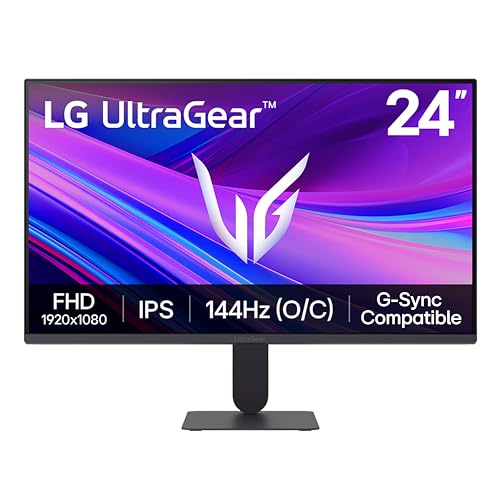
8. LG 24G411A-B: Best Compact IPS
Pros
- Compact 24-inch IPS display
- 120Hz native refresh with 144Hz overclock
- G-Sync Compatible and FreeSync support
- HDR10 and up to 99% sRGB
- Crosshair and Black Stabilizer
Cons
- Native refresh is lower than the advertised overclocked figure
- Full HD resolution
- Tilt-only stand adjustment
Best for: small desks and players who want a compact IPS panel with useful competitive controls.
The LG 24G411A-B is the sensible compact option. A 24-inch screen keeps the whole battlefield within view without demanding much desk depth, and the IPS panel should provide more consistent color and viewing angles than the curved VA alternatives. Its center-display crosshair is built into the monitor, so it can be available across compatible games without depending on a title's own interface.
The important distinction is refresh rate. LG lists 120Hz as the native speed and up to 144Hz with overclocking. That is still a clear improvement over office displays, but it is not the same proposition as the 240Hz and 320Hz models above. Its 1ms MBR mode is intended to reduce motion blur, while G-Sync Compatible and AMD FreeSync help smooth frame pacing with compatible hardware.
The 1920 x 1080 resolution is appropriate for the 24-inch size, and HDR10 plus up to 99% sRGB coverage give the IPS panel a broader visual range than a basic display. Black Stabilizer can reveal detail in dark areas, and Dynamic Action Sync is aimed at reducing input delay. HDMI and DisplayPort provide the necessary video connections. The slim stand keeps the footprint modest, but only tilt adjustment is listed.
The SANSUI 24-inch Curved 160Hz is more immersive and slightly faster on paper, while this LG has the cleaner flat IPS format. It is also much less demanding than QHD screens such as the SANSUI 27-inch WQHD 260Hz. The drawback is that overclocking is required for 144Hz, and the screen lacks speakers. Choose it for a small desk, a compact PC, or a player who values IPS consistency over extreme refresh speed.
9. SANSUI 24-inch Curved 160Hz: Best Compact Curved

Pros
- Compact 24-inch 1500R curve
- Up to 160Hz refresh rate
- Fast VA panel with 3000:1 contrast
- Crosshair, timer, and game modes
- HDMI and DisplayPort support the full refresh rate
Cons
- Full HD resolution
- No built-in speakers
- Less color coverage than the larger SANSUI models
Best for: gamers who want a small curved screen with a smoother-than-basic refresh rate.
The SANSUI 24-inch Curved 160Hz is a compact monitor with a clear identity. Its 1500R curve adds some immersion without the pronounced wraparound effect of LG's 1000R screens, and the 24-inch size works well when desk depth is limited. The built-in crosshair, game timer, and preset modes make the on-screen controls more useful for casual competitive play.
This is a full-HD Fast VA panel with up to 160Hz refresh and an MPRT 1ms response mode. Its 3000:1 contrast ratio should give dark scenes more depth than the IPS screens in this roundup, while the 300-nit brightness and HDR support cover the expected gaming features. Color gamut is listed at 110% sRGB, which is respectable but less ambitious than the 130% sRGB claims on some of the larger SANSUI displays.
Both HDMI 2.0 and DisplayPort 1.4 can reach up to 160Hz, so the connection choice is less restrictive than on some faster screens. The stand tilts from minus 5 to 15 degrees, and VESA 75 x 75 support makes mounting possible. There is an audio jack but no built-in speaker system.
The LG 24G411A-B is the better pick for a flat IPS image and broader adaptive-sync support, while the SANSUI 27-inch Curved 240Hz is the obvious step up for players chasing higher refresh. The limitation here is headroom. 160Hz feels smooth, but it cannot compete with the dedicated esports screens. It is a good match for a smaller desk and a player who wants curvature without moving to a large panel.
10. Sceptre E225W-FW144: Best With Built-In Audio

Pros
- Compact 22-inch full-HD display
- Refresh rate up to 144Hz
- Built-in speakers
- HDMI and DisplayPort
- Blue-Light Shift technology
Cons
- Crosshair is not specified in the available features
- Fewer gaming controls are listed
- Smaller screen than every other main gaming pick here
Best for: basic gaming setups that need a compact monitor with integrated audio.
The Sceptre E225W-FW144 is the outlier in this list because the available product information does not specify a built-in crosshair. That matters for this roundup, so it belongs at the bottom despite offering several practical features. It is a compact 22-inch full-HD monitor with an advertised refresh rate up to 144Hz, making it suitable for ordinary PC gaming and general desktop use.
Its most useful convenience is the integrated speaker system. That keeps a small desk free from separate speakers, although the product information does not provide an audio power specification, so buyers should not expect a detailed account of sound quality. HDMI and DisplayPort provide the basic video connections, and the nearly bezel-free design could work well in a dual-screen arrangement.
Blue-Light Shift technology is intended to reduce blue-light emissions during long sessions. The compact 22-inch size also keeps the display easy to place, but it gives up the larger field of view offered by the SANSUI and LG screens. The listed features do not mention HDR, adaptive sync, response time, or a crosshair, so this is not the choice for someone selecting a monitor primarily around aiming assistance.
The LG 24G411A-B is a much stronger fit for crosshair use and competitive controls, while the Sceptre makes more sense when speakers and simplicity matter most. If a built-in aiming reticle is essential, skip this model because that capability is not confirmed. If the priority is a small screen for mixed work and gaming with fewer accessories, its straightforward design is appealing.
How to choose best gaming monitor with crosshair
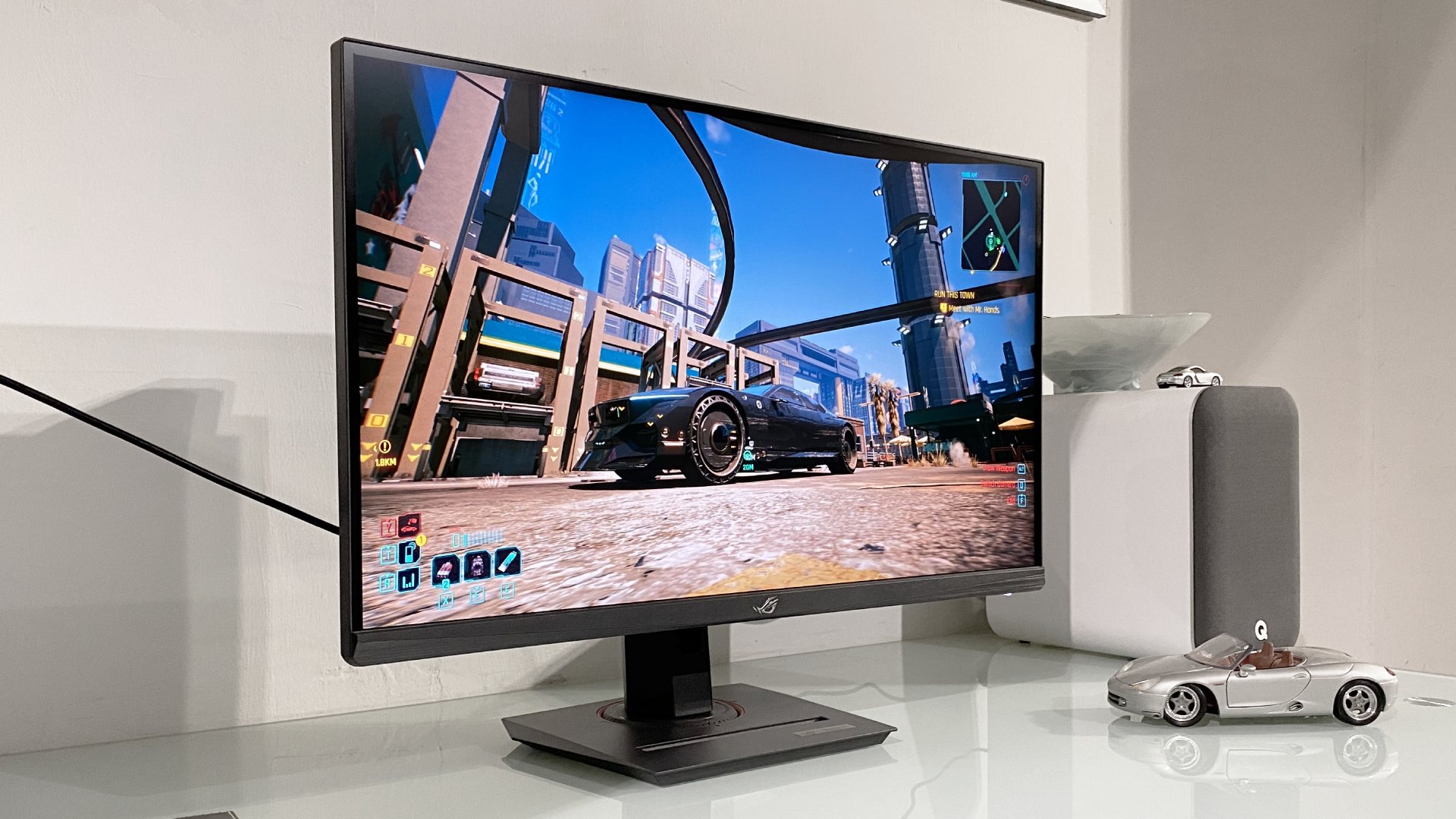
A good crosshair is only one part of a useful gaming monitor. Match the reticle controls with refresh rate, resolution, panel behavior, connection bandwidth, and the physical shape of the screen.
Crosshair controls
A built-in crosshair is rendered by the monitor, so it can remain available across games that do not offer their own reticle options. Look for adjustable styles, color choices, or related tools such as sniper scope and game modes. The Amzfast and larger SANSUI models explicitly list AI crosshair functions, while the Sceptre entry does not specify one.
Refresh rate and response mode
Refresh rate controls how often the display can update. A 144Hz screen is already much smoother than a standard 60Hz monitor, while 180Hz, 240Hz, 260Hz, and 320Hz are aimed at players with systems capable of producing very high frame rates. Response claims such as 1ms MPRT or 1ms GtG describe different measurement methods, so treat them as clues rather than guarantees of identical motion clarity.
A 320Hz monitor cannot make a game feel like 320Hz when the PC is rendering far fewer frames.
Resolution and screen size
Full HD works naturally on 22-inch to 25-inch displays and is easier to drive at extreme refresh rates. QHD is a sharper fit for 27-inch screens and gives games more fine detail, but it asks more from the graphics card. UWQHD at 3440 x 1440 gives the broadest view here and needs both a wide desk and a capable GPU.
Panel type and curve
IPS panels generally emphasize viewing consistency and vivid color, while VA panels commonly offer stronger stated contrast. Curves range from the milder 1500R designs on SANSUI's smaller and ultrawide models to LG's more dramatic 1000R screens. A curved panel can make a wide screen feel more enveloping, but a steep curve is not automatically better for spreadsheets, design work, or every game.
Ports and adaptive sync
Check which input supports the advertised refresh rate. The Amzfast reaches 320Hz through DisplayPort, while its HDMI ports are limited to 240Hz at 1080p. The SANSUI WQHD 260Hz also reserves its top speed for DisplayPort. FreeSync, G-Sync Compatibility, or VRR can help reduce tearing when the frame rate changes, but the graphics card and cable must support the relevant connection.
Ergonomics and desk space
A tilt-only stand is common in this group, so check the desk height before buying. VESA support gives you a way to add a monitor arm, but the mounting standard differs between models. A 34-inch screen needs considerably more width than a 24-inch model, and the right viewing distance for a screen this size can determine whether its extra area feels useful or overwhelming.
Frequently asked questions
Do these monitors work with every game?
A monitor-based crosshair is generally independent of the game's own interface, but the exact function and available styles vary by model. The game still needs to output a normal video signal through a supported input. Competitive games may also have rules about external aiming aids, so check the specific game's policy before using one.
Is 240Hz better than 144Hz for crosshair gaming?
A higher refresh rate can make motion appear more continuous and reduce the time between display updates. The difference is most useful when the computer can maintain a high frame rate and the player is sensitive to motion clarity. It does not improve aiming by itself, and it cannot compensate for low frame rates or poor settings.
Should I choose 1080p or 1440p?
Choose 1080p when high frame rates are the priority or the graphics card is modest. Choose 1440p for a sharper image, especially on a 27-inch screen, provided the PC can render games at the desired refresh rate. The SANSUI 27-inch WQHD 260Hz combines both goals, but its highest mode places more demands on the system.
Are curved monitors good for first-person shooters?
A curve can keep the sides of a wide screen closer to the same viewing distance as the center. That is most noticeable on 27-inch and 34-inch displays. A 1000R curve is quite strong, so players who use the monitor for work as well as games may prefer the gentler 1500R designs or a flat IPS screen.
Do these monitors have speakers?
Several products explicitly state that they do not have built-in speakers, including the Amzfast and the SANSUI models. The Sceptre E225W-FW144 explicitly includes integrated speakers. The LG listings in this group do not advertise speakers, so plan on using headphones or separate speakers unless the product page confirms otherwise.
Can a console use these monitors?
Some models include HDMI inputs suitable for console connections, but the supported resolution and refresh rate depend on the monitor, console, and cable. The SANSUI 34-inch 240Hz model specifically lists VRR support for Xbox, PlayStation, and Switch when connected through HDMI 2.1, with the stated condition that HDMI 2.1 is required for that feature. Check the console's output limits before choosing an ultrawide display.
The bottom line
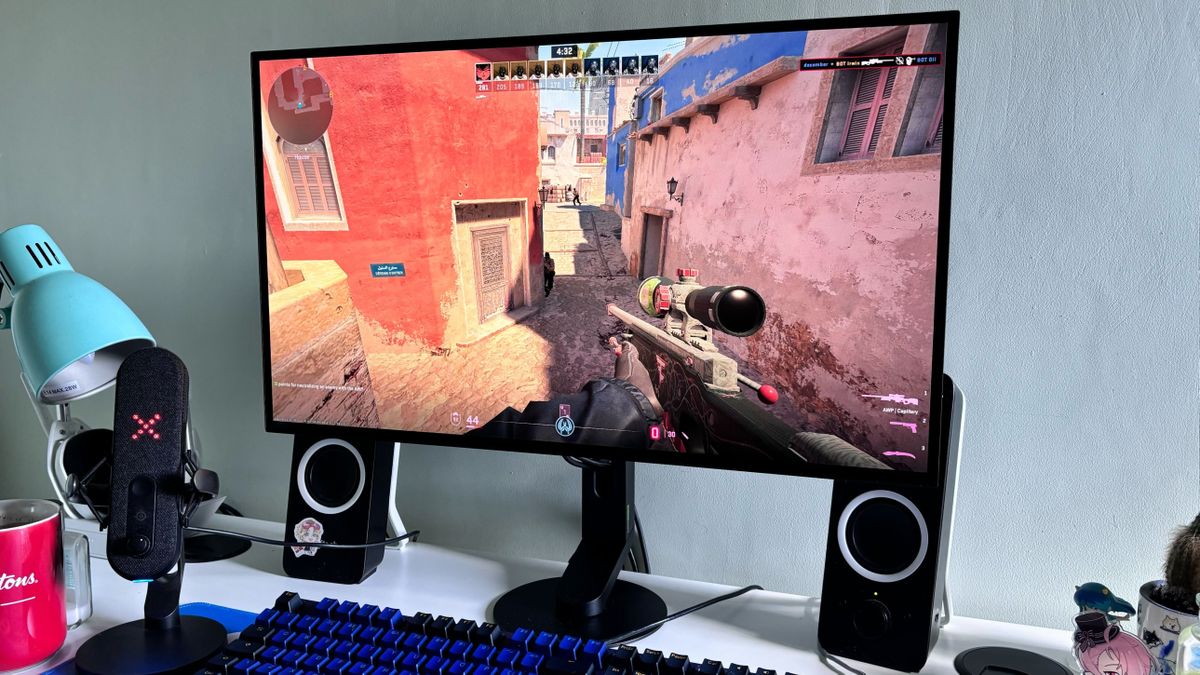
The Best gaming monitor with crosshair for most PC players is the SANSUI 27-inch WQHD 260Hz. Its QHD resolution, fast IPS panel, 260Hz refresh, DisplayPort connectivity, and built-in crosshair make it the most complete choice for competitive play without narrowing the monitor to 1080p esports alone.
Choose the Amzfast AMZG25F6F if 320Hz at 1080p is the priority, or the SANSUI 34-inch 240Hz Ultrawide if you have the desk and PC power for a wide, high-refresh view. The LG 27GS60QC-B remains the calmer curved QHD alternative, while the LG 24G411A-B makes the most sense for a compact flat setup.
If you are undecided, choose the SANSUI 27-inch WQHD 260Hz unless your setup specifically demands 320Hz esports speed or a 34-inch ultrawide.
As an Amazon Associate we earn from qualifying purchases.