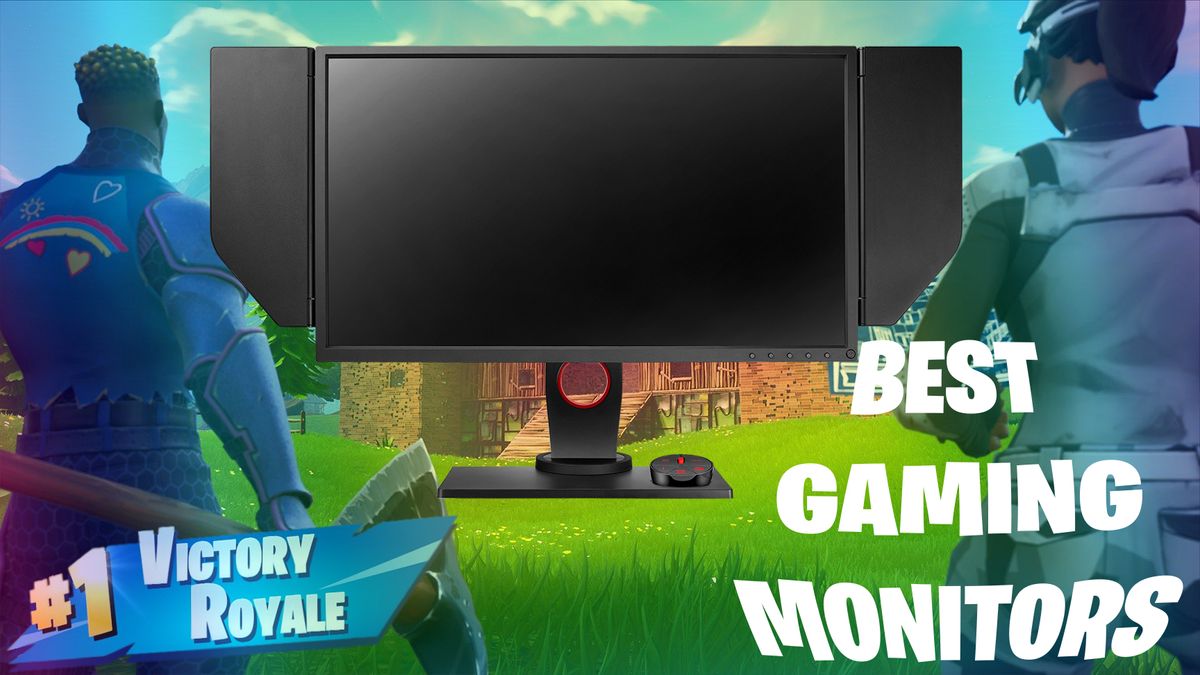

Fortnite rewards a screen that keeps motion clean when the fight gets frantic. A slow display can blur a quick turn, while an oversized 1080p panel can make the image look softer than expected. The right refresh rate, response features, resolution, and screen size matter more than a wall of gaming branding.
Our Best best gaming monitors for fortnite picks cover everything from a compact 22-inch Sceptre to a 27-inch QHD Samsung and several high-refresh curved displays. The Samsung Odyssey G5 is the strongest all-around choice, while the Amzfast is the specialist pick for players chasing the highest refresh rate.
Comparison table
| # | Product | Award | Resolution | Refresh rate | Best for |
|---|---|---|---|---|---|
| 1 | Samsung Odyssey G5 | Best overall | QHD 2560 x 1440 | 180Hz | Detailed Fortnite play |
| 2 | Amzfast AMZG25F6F | Best competitive refresh | FHD 1920 x 1080 | Up to 320Hz | High-frame-rate players |
| 3 | ASUS TUF VG249QE5A | Best motion handling | FHD 1920 x 1080 | Up to 146Hz | Clear, responsive play |
| 4 | SANSUI 27-inch Curved 240Hz | Best curved 27-inch | FHD 1920 x 1080 | Up to 240Hz | Immersive desk setups |
| 5 | SANSUI 24-inch 180Hz | Best compact feature set | FHD 1920 x 1080 | 180Hz | Small gaming desks |
| 6 | SANSUI 32-inch Curved 240Hz | Best large curved screen | FHD 1920 x 1080 | 240Hz | Big-screen gaming |
| 7 | Sceptre C248B-FW180T | Best curved Sceptre | FHD 1920 x 1080 | Up to 180Hz | Smooth curved play |
| 8 | Sceptre E248B-FW165T | Best connectivity | FHD | Up to 165Hz | Multiple gaming devices |
| 9 | Sceptre E225W-FW144 | Best small monitor | FHD 1080p | Up to 144Hz | Tight desks |
| 10 | Sceptre C248W-1920RN | Best basic curved display | 1080p | 75Hz | Casual Fortnite |
1. Samsung Odyssey G5: Best Overall

Pros
- QHD resolution makes Fortnite look crisp
- 180Hz refresh rate keeps fast movement smooth
- FreeSync helps reduce tearing
- Adjustable stand supports tilt, pivot, and height changes
- Black Equalizer helps reveal detail in dark areas
Cons
- QHD demands more from the graphics card
- Larger footprint than the compact 24-inch options
- No built-in speakers are listed
Best for: players who want a sharp image without giving up serious competitive responsiveness.
The Samsung Odyssey G5 is the monitor we would choose for most Fortnite players because it avoids the usual trade-off between image clarity and speed. Its 27-inch screen gives the game enough room to feel immersive, but it does not turn every interface element into a distant corner. The stand is a major part of the appeal. Tilt, pivot, and height adjustment make it easier to set the screen at a comfortable angle instead of stacking books under it or leaning forward all evening.
The QHD resolution is 2560 x 1440, which puts substantially more detail on screen than Full HD. Fortnite's landscapes, structures, and distant movement look cleaner, and text around the game is less coarse. The catch is that a graphics card has to render more pixels, so players chasing the highest possible frame rate may prefer a 1080p panel such as the Amzfast AMZG25F6F. For a mixed setup that includes everyday desktop use, the extra sharpness is hard to give up.
Samsung pairs that resolution with a 180Hz refresh rate and a listed 1ms response time. The refresh rate gives quick camera movements a fluid appearance, while AMD FreeSync is designed to reduce tearing and stutter when the frame rate changes. Black Equalizer is especially useful in dark corners and shadowed interiors. It lets the player adjust darker areas so opponents are easier to distinguish, though pushing it too far can make the image look washed out.
HDR10 adds brighter highlights and more nuanced shadows, but buyers should keep expectations realistic about what a display in this class can do with HDR. The meaningful strengths here are the QHD panel, adaptive sync, refresh rate, and flexible stand. The main weakness is the extra graphics horsepower QHD requires, and the lack of listed built-in speakers means audio will need to come from a headset or another device.
Compared with the ASUS TUF VG249QE5A, the Samsung is less focused on a compact 1080p competitive setup and more convincing as a monitor for games, browsing, and creative work. Compared with the 240Hz SANSUI models, it gives up some refresh headroom but gains pixel density and a more versatile ergonomic stand. For players who want one screen to do more than run Fortnite, this is the most balanced choice in the group.
2. Amzfast AMZG25F6F: Best Competitive Refresh

Pros
- Up to 320Hz refresh rate
- Fast IPS panel with MPRT 1ms
- Two DisplayPort inputs support 1080p at 320Hz
- AI crosshair and Night Vision features
- TÜV Rheinland low blue light certification
Cons
- No built-in speakers
- Full benefit requires a very high frame rate
- FHD is less detailed than the Samsung Odyssey G5
Best for: competitive players with a PC that can sustain very high frame rates at 1080p.
The Amzfast AMZG25F6F is built around one idea: keep the image moving as quickly as possible. It is a 25-inch Full HD monitor with a Fast IPS panel, and its headline refresh options are 240Hz, 300Hz, and 320Hz. That makes it the natural choice for a Fortnite player who has already tuned a high-performance PC and wants the screen to keep pace.
At 1080p, the graphics card has fewer pixels to render than it would at the Samsung Odyssey G5's QHD resolution. That makes it easier to target a very high frame rate, which is where a 320Hz display starts to make sense. The difference between 180Hz and 320Hz is not magic, and it will not make a low-frame-rate system feel like a tournament machine. With a suitably fast system, though, the display can show more frequent updates and make rapid edits and turns feel immediate.
The connectivity is unusually well matched to the refresh rate. The two DisplayPort 1.4 inputs support 1080p at 320Hz, while the two HDMI 2.0 inputs support 1080p at 240Hz. A DisplayPort cable is included. Adaptive Sync is listed for smoother frame delivery, and MPRT 1ms is aimed at reducing visible motion blur. These are useful tools for a competitive setup, though the best result still depends on the game settings, graphics card, and chosen connection.
The monitor also includes FPS, RTS, and RPG modes, an AI crosshair, Night Vision, and a screen size adjustment feature. Those extras will not replace good aim, and some players may prefer to keep the picture neutral rather than use an overlay. Night Vision can be helpful in dark scenes, while the 120% sRGB coverage, HDR10, and 16.7 million colors give the screen some flexibility outside competitive play. TÜV Rheinland certified hardware low blue light, anti-flicker, and anti-glare features address long sessions more directly than the gaming presets do.
The weakness is straightforward. There are no built-in speakers, and the display's FHD resolution is less crisp than the Samsung's QHD image. It also makes little sense for a console or modest PC that cannot produce high frame rates. Choose this over the ASUS TUF VG249QE5A when competitive speed is the priority. Choose the ASUS instead when you want a simpler, more balanced 24-inch display with a lower refresh target.
3. ASUS TUF VG249QE5A: Best Motion Handling

Pros
- IPS panel with Full HD resolution
- Refresh rate overclocks from 144Hz to 146Hz
- ELMB Sync works with variable refresh technology
- Shadow Boost improves dark-scene visibility
- Built-in speakers are included
Cons
- Only a small refresh increase beyond 144Hz
- Less sharp than the Samsung Odyssey G5
- Fewer stated inputs than the Amzfast
Best for: players who want dependable motion clarity and useful image controls in a familiar 24-inch format.
The ASUS TUF VG249QE5A takes a measured approach to Fortnite. It does not chase the 320Hz ceiling of the Amzfast or the expansive image of the Samsung. Instead, it combines a 23.8-inch viewable Full HD IPS panel with a 144Hz refresh rate that can be overclocked to 146Hz, then adds features intended to keep moving objects clear.
The important feature is ASUS Extreme Low Motion Blur Sync, or ELMB Sync. It is designed to let blur reduction and variable refresh technology operate together, which can help maintain a clean image when frame rates fluctuate. A listed 1ms response time supports the same goal. The 146Hz overclock is only a small step above 144Hz, so it should not be treated as a dramatic performance leap. The stronger argument is the way the monitor handles motion while retaining adaptive behavior.
Shadow Boost is useful in Fortnite's darker areas because it brightens shadow detail without simply blowing out the brighter portions of the image. That can make it easier to separate a player from a dim background, although the setting needs restraint. DisplayWidget Center lets users adjust monitor settings with a mouse, which is more convenient than navigating a row of physical buttons every time a game mode needs changing.
The built-in speakers make this easier to use in a bedroom, study, or shared setup where a headset is not always wanted. The supplied box contents include an HDMI cable, power cord, quick start guide, and warranty card. The 23.8-inch size also keeps the pixels reasonably concentrated at Full HD, while the 21.3-inch width and 6.9-inch depth listed in the product information make it less demanding on a desk than the 27-inch and 32-inch choices.
The limitation is that this is not the pick for someone chasing the highest competitive refresh rate. The Amzfast has much more headroom, and the Samsung offers a visibly sharper QHD image. The ASUS makes more sense for players who want a well-rounded 1080p screen, motion controls that address ghosting and tearing together, and speakers built into the monitor. It is the calmer alternative to the specification race.
4. SANSUI 27-inch Curved 240Hz: Best Curved 27-inch

Pros
- 240Hz refresh rate with MPRT 1ms
- 1500R curve adds immersion
- 130% sRGB and DCI-P3 95% coverage
- 4000:1 contrast ratio
- Metal stand and VESA compatibility
Cons
- Full HD is less dense at 27 inches
- No built-in speakers
- 240Hz requires a capable gaming system
Best for: players who want a large curved display with strong color claims and high refresh performance.
The SANSUI 27-inch Curved 240Hz is a good fit for a player who wants Fortnite to feel more enveloping without moving all the way to a 32-inch panel. Its 1500R curve bends the edges toward the viewer, and the 27-inch size gives the game a larger presence than a standard 24-inch screen. The design is most convincing when the monitor sits directly in front of one player rather than at an angle shared by several people.
Its central gaming specification is a refresh rate of up to 240Hz, paired with an MPRT 1ms response time and FreeSync. That combination is aimed at fast, consistent motion, especially when the computer can produce enough frames to use the refresh headroom. The monitor also includes a black-level adjustment, shadow booster, game presets, and a crosshair. Those tools are useful for experimenting with visibility, but players who want an unaltered image can leave them off.
The panel is Full HD at 1920 x 1080. That resolution is easy for many gaming PCs to drive at high frame rates, but it is not as dense on a 27-inch display as it is on the ASUS or the smaller Sceptre models. Sitting farther back helps. The picture specification is more ambitious in color and contrast: 130% sRGB, DCI-P3 95%, a 4000:1 contrast ratio, 300 nits brightness, and HDR are all listed. These should produce a more colorful, punchy image than a plain office display, though HDR performance is still shaped by the panel's brightness and overall implementation.
The stand is metal, tilts from minus 5 to 15 degrees, and supports a 100 by 100 millimeter VESA mount. HDMI, DisplayPort 1.4, and an audio jack are provided, but there are no built-in speakers. That omission is easy to live with for headset users, less so for anyone expecting sound from the monitor without another audio device.
The Samsung Odyssey G5 beats it on resolution and stand adjustability, while the SANSUI 32-inch Curved 240Hz model creates a much larger field of view. This 27-inch SANSUI is the middle ground: more immersive than a flat 24-inch screen, less physically demanding than the 32-inch option, and faster than the Samsung. Skip it if crisp text and fine image detail matter more than size and refresh rate.
5. SANSUI 24-inch 180Hz: Best Compact Feature Set

Pros
- 180Hz refresh rate and MPRT 1ms
- FreeSync and several game assistants
- 110% sRGB and DCI-P3 80%
- HDMI 2.1 and DisplayPort 1.4
- HDR and high listed contrast
Cons
- No built-in speakers
- Stand adjustment details are limited
- Smaller screen than the curved SANSUI choices
Best for: players who want a compact 24-inch screen with competitive features and useful connections.
The SANSUI 24-inch 180Hz is a sensible size for Fortnite. A 23.81-inch Full HD screen keeps the action easy to scan without requiring a deep desk or a large viewing distance. It is not as dramatic as a curved 27-inch monitor, but that can be an advantage for players who prefer a straightforward, centered view and a display that also works comfortably for school or office tasks.
The 180Hz refresh rate and 1ms MPRT response time target smooth movement, while FreeSync is intended to reduce tearing when the frame rate does not remain perfectly steady. The monitor includes crosshair, timer, RTS, FPS, and racing game assistants. These are practical extras for different genres, though Fortnite players will likely spend most of their time with the FPS options or a neutral picture mode.
Connectivity is a strong point. One HDMI 2.1 port and one DisplayPort 1.4 port are both listed as supporting up to 180Hz, and an HDMI cable is included. There is also an audio jack and VESA support at 75 by 75 millimeters. The monitor has no built-in speakers, so the audio jack or a separate audio setup is necessary for sound.
The display supports 110% sRGB, DCI-P3 80%, HDR, a 4000:1 contrast ratio, and 300 cd/m² brightness. Those figures suggest a more saturated and contrasty presentation than the most basic Full HD panels. Anti-flicker and low blue light eye-care features are also listed, which are useful during long sessions when the screen is doing double duty as a work monitor.
The SANSUI 27-inch Curved 240Hz is the better fit for an immersive setup, and the ASUS TUF VG249QE5A has a stronger set of named motion technologies. This SANSUI wins when the desk is compact and the buyer wants a more modern connection mix without moving to a larger display. It is also a good reminder that a smaller 1080p panel can look more coherent at a normal desk distance than a larger one with the same resolution.
6. SANSUI 32-inch Curved 240Hz: Best Large Curved Screen

Pros
- Large 32-inch 1500R curved display
- 240Hz refresh rate and MPRT 1ms
- 125% sRGB and HDR support
- 3500:1 contrast ratio
- FreeSync and VESA compatibility
Cons
- Full HD resolution is stretched across 32 inches
- No built-in speakers
- Takes more desk space than every smaller pick
Best for: players who want a large, immersive Fortnite screen and sit far enough back to use it comfortably.
The SANSUI 32-inch Curved 240Hz is the screen for players who want Fortnite to occupy a large portion of their view. The 1500R curve and 32-inch diagonal create a more enveloping presentation than the 24-inch monitors, and the effect is strongest when the screen is used alone. It can make building, driving, and exploring feel more cinematic, although competitive players who sit close may find the edges require more eye movement.
The refresh rate is up to 240Hz, with a listed MPRT 1ms response time and built-in FreeSync. HDMI and DisplayPort 1.4 can both reach 240Hz according to the product details. That is plenty of motion headroom for a fast PC, and it gives the monitor a clear speed advantage over the 75Hz Sceptre C248W-1920RN. Anti-flicker and low blue light features are also included for longer sessions.
The compromise is the 1920 x 1080 resolution. At 32 inches, Full HD will not look as sharp as QHD on Samsung's 27-inch Odyssey G5, particularly for desktop text and distant details. Fortnite can still look lively because the screen lists 125% sRGB, HDR, 16.7 million colors, 300 nits brightness, and a 3500:1 contrast ratio. Those features support color and depth, but they cannot change the underlying pixel density.
The monitor tilts from minus 5 to 15 degrees and supports a 100 by 100 millimeter VESA mount. Its listed dimensions are 24.19 inches wide and 8.06 inches deep, so desk planning matters. There is an earphone jack, but no built-in speakers. A DisplayPort cable is included, which helps get a compatible PC connected at the intended high refresh rate.
The SANSUI 27-inch Curved 240Hz is the more balanced curved choice for most desks. It uses the same Full HD idea at a more manageable size and adds stronger listed color coverage. The 32-inch version is for someone who specifically wants scale, has room to sit back, and accepts that the picture will not be as crisp as a QHD display.
7. Sceptre C248B-FW180T: Best Curved Sceptre

Pros
- 1500R curved 24-inch design
- Up to 180Hz refresh rate
- Listed 1ms blur reduction
- Two HDMI and two DisplayPort inputs
- Built-in speakers and audio output
Cons
- 180Hz is described as overclocked
- Full HD only
- No adaptive sync details are listed
Best for: players who want a compact curved monitor with many connection options and built-in audio.
The Sceptre C248B-FW180T is the most appealing Sceptre for a player who likes a curved screen but does not want a 27-inch or 32-inch footprint. Its 24-inch panel uses a 1500R curve, so the edges angle toward the viewer without taking over a small desk. The minimal-bezel design also suits a future dual-screen arrangement, especially when the second display needs to sit close beside it.
The monitor is Full HD and lists a 1ms BR, or blur reduction, response feature. Its refresh rate reaches up to 180Hz through overclocking. That gives it a meaningful speed advantage over the older Sceptre C248W-1920RN, whose listed refresh rate is 75Hz, and a modest advantage over the E248B-FW165T. The product details do not provide the same specific adaptive-sync explanation as some other picks, so buyers who want clearly documented frame-rate matching should look more closely at the ASUS or Samsung.
Two HDMI ports and two DisplayPort ports make it easy to connect a gaming PC, console, or another device without constantly swapping cables. Built-in speakers and an audio-out jack are included, which makes the monitor more self-contained than the Amzfast and both larger SANSUI curved models. The screen also lists 100% sRGB coverage, giving Fortnite's colorful environments a more complete presentation than a narrow-gamut office panel.
There is a catch to the speed claim. The 180Hz figure is described as overclocked, so it should be treated as a setting to enable and evaluate rather than an automatic guarantee across every connection and system. The display is also still 1080p, and no brightness, contrast, or HDR specifications are provided in the supplied product information. That makes it less suited to buyers who want a detailed picture profile rather than a fast, uncomplicated screen.
The SANSUI 24-inch 180Hz offers more stated color and HDR details, while the Sceptre E248B-FW165T has similar connectivity and built-in speakers without a curved panel. Pick this model when the curve is part of the appeal and you want the option of 180Hz. Skip it if you would rather have a flat screen with better-documented image and sync specifications.
8. Sceptre E248B-FW165T: Best Connectivity

Pros
- Two HDMI and two DisplayPort inputs
- Built-in speakers and audio output
- 165Hz connectivity claims
- Adaptive Sync support
- VESA mounting and blue-light adjustment
Cons
- Product details also mention 180Hz, creating a refresh-rate inconsistency
- Full HD resolution
- No stand adjustment details are listed
Best for: households connecting several gaming systems or using the display for both gaming and work.
The Sceptre E248B-FW165T stands out because it is unusually easy to connect to several devices. It has two HDMI ports and two DisplayPort ports, and both connection types are described as supporting up to 165Hz. That is useful for a desk shared by a gaming PC, console, laptop, and another source. Built-in speakers and an audio-out jack reduce the number of accessories needed for basic play.
The panel is a 24-inch Full HD display with listed 94% sRGB coverage. That is a sensible combination for Fortnite because 1080p is relatively easy to drive at a high frame rate, and the 24-inch size keeps the image from feeling too spread out. Adaptive Sync is included to help produce tear-free, flicker-free gameplay when the frame rate varies. The monitor also lists a 1ms BR blur reduction feature.
There is an important inconsistency in the supplied listing. One feature describes the display as supporting up to 165Hz through HDMI and DisplayPort, while another calls out an ultra-smooth 180Hz refresh rate. We would plan around the clearly stated 165Hz connection specification and verify the desired mode after setup rather than assume every input reaches 180Hz. That uncertainty is the reason this model ranks below the Sceptre C248B-FW180T.
Custom FPS and RTS modes provide quick game-specific adjustments, and Blue-Light Shift is intended to reduce blue-light emissions during long sessions. The monitor has a VESA wall-mount pattern, which helps reclaim desk space or fine-tune the viewing height. The provided information does not specify a height-adjustable stand, so a monitor arm may be preferable for players who want precise positioning.
Compared with the ASUS TUF VG249QE5A, this Sceptre gives up the ASUS's ELMB Sync and Shadow Boost but offers more inputs and built-in speakers. Compared with the curved C248B-FW180T, it is the better choice for a flat, multi-device setup. Consider how much room a second screen really needs before choosing a dual-monitor arrangement, since the near bezel-free design makes expansion tempting.
9. Sceptre E225W-FW144: Best Small Monitor

Pros
- Compact 22-inch Full HD format
- Refresh rate up to 144Hz
- HDMI and DisplayPort inputs
- Built-in speakers
- Blue-Light Shift eye-care feature
Cons
- Smaller screen than the 24-inch alternatives
- Fewer stated gaming features
- No adaptive sync details are listed
Best for: players working with a tight desk or a small room who still want a high-refresh gaming display.
The Sceptre E225W-FW144 is the small-screen specialist in this roundup. Its 22-inch panel takes up less space than the 24-inch models, which can make a real difference on a shallow desk or in a shared bedroom. The Full HD resolution also suits the size, keeping Fortnite's image reasonably compact and easy to take in without requiring an especially powerful graphics card.
Its refresh rate reaches up to 144Hz, a clear step above the 75Hz Sceptre C248W-1920RN. That is enough to make camera movement and fast building feel substantially smoother when the PC can supply the frames. HDMI and DisplayPort inputs are included. The listing does not provide a response-time figure or adaptive-sync specification, so buyers should not expect the same motion-tuning detail offered by the ASUS TUF or the faster SANSUI models.
Built-in speakers make it convenient for casual sessions, and Blue-Light Shift is intended to reduce blue-light emissions and eye strain during extended viewing. The minimal-bezel design is another practical touch. It can sit beside a second monitor with less visual interruption, and readers planning that kind of arrangement may want to compare ways to position two screens without crowding a desk.
The trade-off is simply scale. A 22-inch display feels less immersive than the Sceptre C248B-FW180T or either curved SANSUI, and the product information does not list HDR, wide color coverage, or a gaming overlay system. That is not a problem if the goal is a clean, compact screen, but it limits the monitor's appeal as a centerpiece gaming display.
The ASUS TUF VG249QE5A is the stronger 24-inch choice for motion controls, while the Sceptre E248B-FW165T adds more ports and a higher stated refresh target. Choose the E225W-FW144 when desk space is the deciding factor. Players with room for a 24-inch screen should usually move up to one of the more feature-rich alternatives.
10. Sceptre C248W-1920RN: Best Basic Curved Display

Pros
- 24-inch curved 1080p design
- 1800R curvature for a wrapped-in view
- Two HDMI inputs and VGA
- Built-in speakers
- VESA wall-mount support
Cons
- 75Hz refresh rate is low for competitive Fortnite
- Older connection mix
- Limited gaming features compared with the other picks
Best for: casual Fortnite players who want a curved screen for gaming and general computer use.
The Sceptre C248W-1920RN is the outlier here because it is built more like a general-purpose curved monitor than a modern high-refresh competitive display. Its 24-inch 1080p screen uses an 1800R curve, which gives the image a wrapped appearance without the larger footprint of the 27-inch and 32-inch models. For casual Fortnite, that can be pleasant and uncomplicated.
The largest limitation is the 75Hz refresh rate. It is perfectly usable for menus, building practice, and relaxed matches, but the action will not look as fluid as it does on the 144Hz Sceptre E225W-FW144 or the 180Hz SANSUI 24-inch. Players who rely on rapid edits and precise tracking should notice the gap immediately. This is not the display to buy when competitive responsiveness is the main objective.
Connectivity includes two HDMI ports, VGA, and PC audio in. Built-in speakers are included, and VESA mounting support allows the screen to move onto an arm or wall mount. The listing gives a 250 cd/m² brightness figure in one feature and 220 cd/m² in another, so brightness should be treated cautiously. It also lists a 0.27156 millimeter pixel pitch and a lamp life of more than 30, 000 hours.
The 98% sRGB claim is welcome for colorful games, but the listing does not provide adaptive-sync support, HDR, or a fast response specification. That puts it well behind the newer Sceptre curved models and the SANSUI options for motion-focused play. It does have a useful place for someone who wants one curved screen for everyday computing and occasional Fortnite rather than a dedicated competitive panel.
The Sceptre C248B-FW180T is the obvious upgrade within the same general shape, with 1500R curvature, up to 180Hz, and DisplayPort. The C248W-1920RN is worth considering only when casual play and basic connectivity matter more than refresh rate. Competitive players should start higher in this list.
How to choose best gaming monitors for fortnite
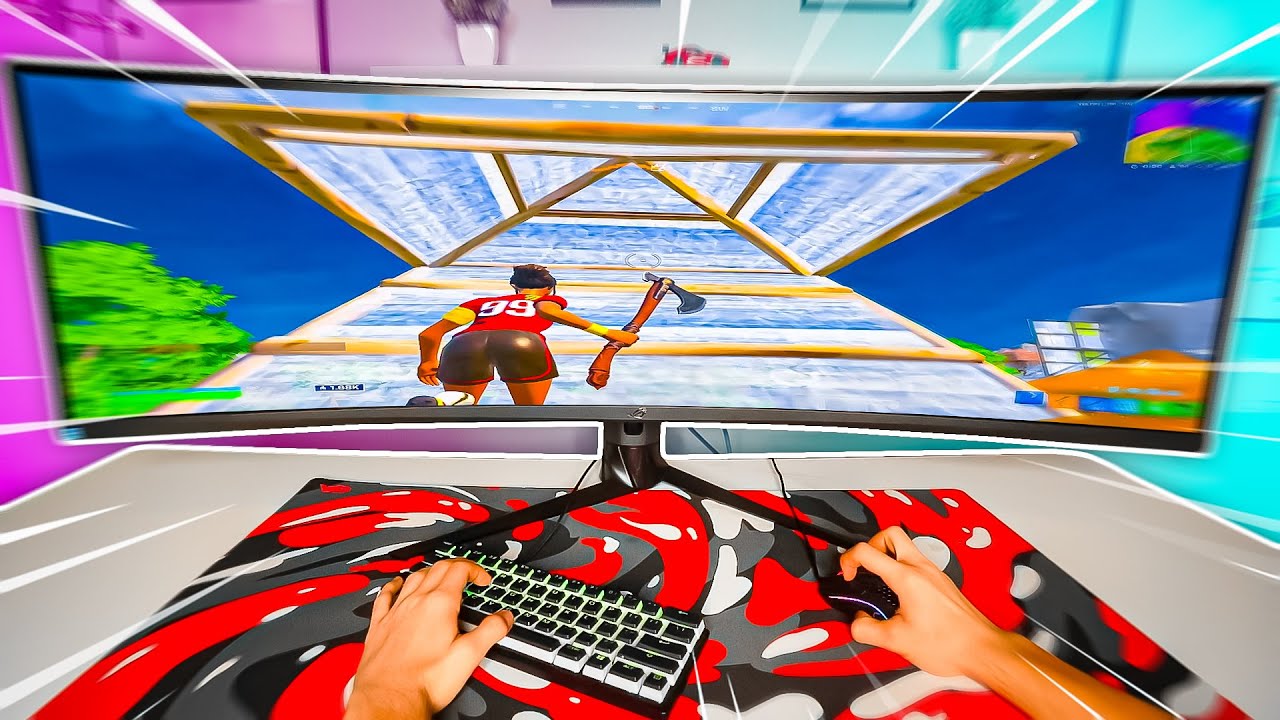
The right monitor depends on how fast the gaming system can render, how close you sit, and whether you want competitive responsiveness or a more detailed everyday image.
Refresh rate
Refresh rate determines how often the monitor can update the image each second. A 144Hz or 180Hz display is a strong starting point for Fortnite, while 240Hz and 320Hz models make sense when the PC can consistently produce very high frame rates. A high refresh rate cannot create frames the computer does not render, so match the monitor to the system rather than selecting the largest number blindly.
The Amzfast reaches 320Hz, the SANSUI curved models reach 240Hz, and the Samsung reaches 180Hz. The 75Hz Sceptre C248W-1920RN is adequate for casual play but clearly behind the other choices for quick competitive movement.
Resolution and screen size
Full HD at 1920 x 1080 is easier to drive quickly and remains a good match for 22-inch to 24-inch screens. At 27 inches or larger, the same resolution looks less dense, especially for text and distant details. Samsung's 2560 x 1440 QHD panel is sharper, but it asks more from the graphics card.
A 24-inch screen is usually the easiest size to scan in competitive play. A 27-inch display provides more visual presence, while a 32-inch curved model needs more desk depth and a sensible seating distance.
For Fortnite, the best screen is fast enough for your frame rate and small enough that your eyes can read the whole fight at once.
Motion response and adaptive sync
Response-time claims describe how quickly pixels change, while technologies such as ELMB Sync, blur reduction, and MPRT aim to make moving objects look clearer. Adaptive sync helps the monitor coordinate with changing frame rates to reduce tearing and stutter. These features work best when the graphics card, game settings, and connection are also configured properly.
The ASUS TUF VG249QE5A has the most explicit motion-focused system with ELMB Sync and variable refresh support. Samsung lists FreeSync, and the SANSUI models list FreeSync as well. The Sceptre C248W-1920RN has no adaptive-sync detail in the supplied information, so it should not be chosen for that feature.
Panel and image quality
Panel type affects viewing angles, color, and motion behavior. The Amzfast specifically uses a Fast IPS panel, while several other listings emphasize color gamut, contrast, HDR, or curvature without naming the panel type. Wider color coverage can make Fortnite look more vivid, and stronger contrast can add depth to dark scenes, but listed gamut numbers do not guarantee professional color accuracy.
Samsung's HDR10 and QHD resolution make it the strongest image-quality choice here. The SANSUI 27-inch model lists 130% sRGB, DCI-P3 95%, and a 4000:1 contrast ratio. The Sceptre C248B-FW180T lists 100% sRGB, which is useful but less ambitious.
Ports and ergonomics
Check the inputs before buying if the monitor will serve more than one device. The Amzfast and newer Sceptre models offer two HDMI and two DisplayPort inputs, while the SANSUI 24-inch uses HDMI 2.1 and DisplayPort 1.4. Older or simpler displays may use VGA alongside HDMI.
Stand adjustment matters during long sessions. Samsung offers tilt, pivot, and height adjustment, while the SANSUI 27-inch and 32-inch models list tilt and VESA support. A VESA pattern is useful when the included stand does not position the panel at the right height.
Frequently asked questions
Is 144Hz enough for Fortnite?
Yes. A 144Hz monitor can make Fortnite feel substantially smoother than a 60Hz or 75Hz display when the computer produces enough frames. Higher refresh rates can help competitive players, but they are most useful when the system can sustain them.
Should I choose QHD or 1080p for Fortnite?
Choose 1080p when high frame rates and easier graphics-card demands are the priority. Choose QHD when you also care about sharper desktop text, more detailed scenery, and a monitor that serves general computing well. The Samsung Odyssey G5 is the QHD option in this roundup.
Is a curved monitor good for Fortnite?
A curved monitor can make a single-screen setup feel more immersive, especially at 27 or 32 inches. It is less useful if you frequently share the screen with another viewer or prefer a completely flat competitive display. The Sceptre C248B-FW180T and SANSUI models provide the main curved choices here.
Do I need a 240Hz monitor for competitive play?
No. A 240Hz monitor is useful when your PC can produce frame rates high enough to take advantage of it, but a good 144Hz or 180Hz screen remains responsive. The Amzfast's 320Hz mode is aimed at a narrower group of players with very fast systems and a strong preference for competitive settings.
Do these monitors include speakers?
Some do and some do not. The Sceptre E225W-FW144, Sceptre E248B-FW165T, Sceptre C248B-FW180T, and Sceptre C248W-1920RN list built-in speakers. The Amzfast and both SANSUI curved models explicitly state that they do not have built-in speakers.
Does HDMI support the highest refresh rate?
It depends on the monitor. The Amzfast lists 1080p at 240Hz through HDMI 2.0 and 320Hz through DisplayPort 1.4. The SANSUI 24-inch lists both HDMI 2.1 and DisplayPort 1.4 at up to 180Hz, while the newer Sceptre models list high refresh support on both HDMI and DisplayPort. Check the specific input specification before connecting the gaming PC.
The bottom line
The Best best gaming monitors for fortnite choice is the Samsung Odyssey G5 for players who want a sharp QHD image, 180Hz motion, FreeSync, useful shadow controls, and a stand that adjusts properly. It is the most complete monitor here, though its higher resolution requires more graphics performance than a 1080p screen.
The Amzfast AMZG25F6F is the better specialist pick for competitive players chasing 240Hz, 300Hz, or 320Hz at 1080p. The ASUS TUF VG249QE5A is the safer middle ground for players who want a compact IPS display, built-in speakers, and explicit motion features without chasing extreme refresh rates.
If you are undecided, choose Samsung for image quality and mixed use, or choose Amzfast only when your PC can genuinely take advantage of its highest refresh modes.
As an Amazon Associate we earn from qualifying purchases.