
Warzone exposes a monitor's weaknesses quickly. A slow refresh rate can make fast movement look smeared, while a soft 1080p image can hide detail in distant windows and dark interiors. The right screen needs both speed and clarity, not just a large number on the box.
Our Best gaming monitors for warzone picks cover everything from compact 22-inch displays to ultrawide QHD screens. The LG 32GS60QC-B is the strongest all-rounder, while the Alienware and INNOCN models make compelling cases for higher-resolution play.
Comparison table
| # | Product | Award | Size | Resolution | Refresh rate | Response time | Best for |
|---|---|---|---|---|---|---|---|
| 1 | LG 32GS60QC-B | Best overall | 32 inches | 2560 x 1440 | 180Hz | 1ms GtG | QHD Warzone play |
| 2 | Alienware AW3425DWM | Best ultrawide | 34 inches | WQHD | 180Hz | 1ms gray to gray | Immersive ultrawide gaming |
| 3 | INNOCN 25G2S | Best compact QHD | 24.5 inches | 2560 x 1440 | 240Hz | 1ms | Competitive FPS play |
| 4 | SANSUI 27-inch 240Hz | Best curved 27-inch | 27 inches | 1920 x 1080 | 240Hz | 1ms MPRT | Fast 1080p gaming |
| 5 | SANSUI 32-inch 240Hz | Best large 1080p | 32 inches | 1920 x 1080 | 240Hz | 1ms MPRT | Large-screen console-style play |
| 6 | Sceptre C248B-FW180T | Best connected 24-inch | 24 inches | 1920 x 1080 | 180Hz | 1ms BR | Multi-device setups |
| 7 | SANSUI 24-inch 160Hz | Best small curved screen | 24 inches | Full HD | 160Hz | 1ms MPRT | Compact desks |
| 8 | Sceptre E225W-FW144 | Best compact starter | 22 inches | 1920 x 1080 | 144Hz | Not specified | Small gaming stations |
| 9 | Sceptre C248W-1920RN | Best basic curved display | 24 inches | 1920 x 1080 | 75Hz | Not specified | General gaming and desktop use |
1. LG 32GS60QC-B: Best Overall

Pros
- QHD resolution gives Warzone a noticeably sharper image
- 180Hz refresh rate and 1ms GtG response time
- Black Stabilizer helps reveal detail in dark areas
- Dynamic Action Sync and FPS Counter are useful gaming tools
- Two HDMI ports plus DisplayPort
Cons
- Large 1000R curve is not ideal for every desk
- The listed features do not include built-in speakers
- Requires more graphics performance than a 1080p monitor
Best for: PC players who want a sharp 32-inch screen without giving up fast competitive performance.
The LG 32GS60QC-B is the easiest monitor here to recommend to most Warzone players because it avoids the usual compromise between detail and speed. Its 32-inch curved screen gives the game room to breathe, but the 2560 x 1440 resolution keeps distant objects and interface text sharper than the Full HD screens in this roundup. The 1000R curve is pronounced, so the display feels more enveloping when you sit close to it.
Its 180Hz refresh rate is a strong match for a gaming PC that can maintain high frame rates. The 1ms GtG response specification is aimed at reducing visible trailing during quick camera movements, which matters when turning through a building or tracking a sliding opponent. AMD FreeSync is included to reduce tearing, although the real benefit depends on whether your system can stay within a compatible frame-rate range.
LG adds features that are genuinely relevant to Warzone rather than merely decorative. Black Stabilizer is designed to lift detail in shadowed areas, while Dynamic Action Sync targets reduced input lag. The FPS Counter can show current frame output without relying on a separate software overlay. There are also Gamer, FPS, and RTS modes, two HDMI ports, and DisplayPort connectivity.
Compared with the SANSUI 27-inch 240Hz, the LG gives up some refresh-rate headroom but gains a much sharper QHD image and a more useful large-screen resolution. The Alienware AW3425DWM is wider and more immersive, but its ultrawide format takes more desk space and is less straightforward if you want a conventional 16:9 view. The LG's real weakness is that its 32-inch size can feel overwhelming on a shallow desk, and a graphics card must work harder to drive QHD at high frame rates.
Choose the LG if you want one display for competitive matches, campaign-style games, and ordinary desktop work. It is the most balanced screen in this group, especially for players who would rather see more detail than chase the highest possible refresh number.
2. Alienware AW3425DWM: Best Ultrawide
Pros
- Expansive 34-inch ultrawide workspace
- WQHD resolution improves image detail
- 180Hz refresh rate with 1ms gray to gray response
- AMD FreeSync Premium and VESA AdaptiveSync
- DisplayHDR 400 certification and 95% DCI-P3 coverage
Cons
- Ultrawide format is not the best fit for every game or setup
- Large and heavy compared with the smaller displays here
- Requires substantial desk width
Best for: players who want Warzone to feel wider and more cinematic while retaining competitive speed.
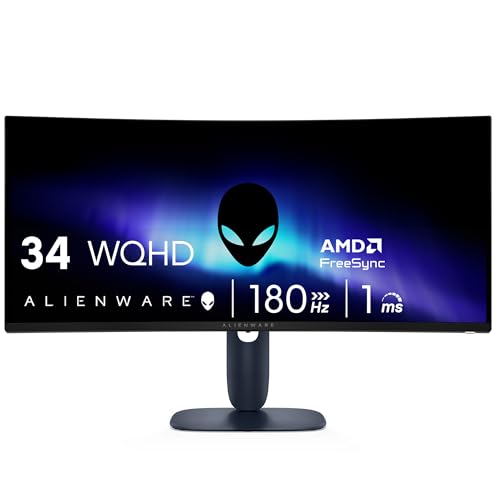
The Alienware AW3425DWM is the most immersive screen in this group. Its 34-inch ultrawide panel and 1500R curve spread the action across a broader field of view, making open areas and vehicle sequences feel more expansive. The WQHD resolution keeps that larger canvas from looking coarse, which is important when the display is also being used for maps, menus, and desktop work.
For a fast shooter, the core numbers are reassuring. A 180Hz refresh rate keeps motion fluid, while the 1ms gray to gray response specification is aimed at keeping transitions quick. AMD FreeSync Premium and VESA AdaptiveSync help coordinate the screen's refresh with the graphics output, reducing tearing when frame rates fluctuate. That combination is more useful than refresh rate alone because Warzone performance can change substantially between an open landscape and a crowded urban area.
The picture specification is also stronger than the Full HD options. The monitor covers 95% of the DCI-P3 color space and has VESA DisplayHDR 400 certification. Those features should help game environments look richer and highlights stand out more, although HDR quality still depends on the game, system settings, and the monitor's implementation. Its hardware-based low blue light solution is intended to reduce eye strain while preserving color, and a dedicated console mode broadens its appeal beyond PC play.
The trade-off is shape. The LG 32GS60QC-B is a better fit if you want the familiar 16:9 layout and a smaller footprint, while the INNOCN 25G2S is much more focused on compact competitive play. The Alienware also measures 31.71 inches wide and weighs 20.97 pounds according to the listed product information, so it needs a sturdy, deep desk. Some games may not take full advantage of the ultrawide view, and some players simply prefer a narrower screen for keeping the whole action area in view.
For a desk built around immersion, the AW3425DWM is the standout. It makes sense for someone who plays more than ranked matches and wants the monitor to feel like a wide window into the game world.
3. INNOCN 25G2S: Best Compact QHD

Pros
- QHD resolution on a compact 24.5-inch screen
- 240Hz refresh rate through DisplayPort 1.4
- Fast IPS panel with 1ms response time
- HDMI 2.1 and DisplayPort 1.4
- G-SYNC compatibility and 99% sRGB coverage
Cons
- 240Hz support is specified through DisplayPort 1.4
- Smaller screen is less immersive than the large curved models
- The listed weight approaches 9 pounds with the stand
Best for: competitive players who want high refresh rate and QHD sharpness in a compact format.
The INNOCN 25G2S takes a different route from the larger curved monitors. At 24.5 inches, it keeps the image compact enough that a player can see the entire screen without much eye movement. That is a practical advantage in a game where the minimap, ammo count, and peripheral action all compete for attention. The flat, compact design is less cinematic than the Alienware, but it is highly purposeful.
The standout specification is the combination of 2560 x 1440 resolution and a 240Hz refresh rate. QHD gives the image more definition than the 1080p SANSUI and Sceptre models, while 240Hz provides substantial motion headroom for a capable gaming PC. The product specifies 240Hz through DisplayPort 1.4 and lists support for 120Hz, 144Hz, 165Hz, 180Hz, and other intermediate modes. Its 1ms response time is suited to rapid movement, and the Fast IPS panel should offer a different balance of speed and viewing consistency than the VA displays identified elsewhere in this list.
Connectivity is more flexible than its small footprint suggests. HDMI 2.1 and DisplayPort 1.4 support PCs, gaming laptops, Switch, Xbox, and PlayStation consoles. The monitor also has a three-sided narrow-bezel design, a metal stand with tilt adjustment, and 100 x 100mm VESA compatibility. Blue-light reduction and flicker-free technology are useful for long sessions, especially if the same screen handles documents during the day.
The LG 32GS60QC-B gives you a larger image and useful dark-scene controls, while the INNOCN 25G2S is the more disciplined choice for a player who wants to concentrate on the match. The SANSUI 27-inch 240Hz also reaches 240Hz, but it remains at Full HD. That means the INNOCN is the sharper choice when the graphics card can take advantage of QHD. Its main weakness is that the benefits depend heavily on using DisplayPort for the top refresh mode, and the compact size will not suit someone looking for a living-room-style experience.
Pick the INNOCN when clarity and speed matter more than screen size. It is particularly well suited to a small desk, a close viewing position, or a competitive setup built around keeping the entire screen in sight.
4. SANSUI 27-inch 240Hz: Best Curved 27-inch

Pros
- 240Hz refresh rate with 1ms MPRT
- 1500R curve adds immersion without the size of a 32-inch display
- 130% sRGB and 95% DCI-P3 color coverage
- 4000:1 contrast ratio and HDR support
- Metal stand, tilt adjustment, and VESA compatibility
Cons
- Full HD is less sharp than the QHD alternatives
- No built-in speakers
- 240Hz support depends on suitable source output
Best for: players who want a fast curved screen with a manageable 27-inch footprint.
The SANSUI 27-inch 240Hz is a focused Full HD gaming monitor. Its 1500R curve adds a little wraparound effect without requiring the desk width of the 32-inch SANSUI or the Alienware ultrawide. For Warzone, the size is a sensible middle ground: larger than a compact esports display, but not so large that every part of the interface feels spread out.
The 240Hz refresh rate and 1ms MPRT response time are the reason to choose it. When a gaming PC can produce very high frame rates, the screen has the capacity to show more frequent updates and keep fast camera movement looking fluid. FreeSync is included, and the monitor provides game modes, a crosshair option, and black-level adjustment. The latter is especially relevant for indoor fights where shadow detail can make an opponent easier to distinguish.
The image specification is more ambitious than the resolution suggests. SANSUI lists 130% sRGB, 95% DCI-P3, a 4000:1 contrast ratio, 300 nits brightness, and HDR support. Those numbers point toward stronger color and deeper contrast than a plain office display. They do not change the fact that 1920 x 1080 is softer than QHD at this screen size, especially if you sit close, but the contrast specification could help the display retain a punchier appearance in darker scenes.
The SANSUI 32-inch 240Hz offers a larger view and a 3500:1 contrast ratio, but its Full HD image is spread across more screen area. The INNOCN 25G2S is sharper and reaches the same refresh rate, though it gives up the curve and larger image. The 27-inch SANSUI also lacks built-in speakers, and its HDMI, DisplayPort 1.4, and audio jack setup means you will need headphones or separate speakers for game sound.
This is the pick for someone who values a curved display and extremely smooth motion but does not need QHD. It works best when the graphics card is built for high frame rates and the player sits at a sensible distance rather than right against the screen.
5. SANSUI 32-inch 240Hz: Best Large 1080p

Pros
- Large 32-inch 1500R curved screen
- 240Hz refresh rate and 1ms MPRT response
- 125% sRGB coverage and HDR support
- 3500:1 contrast ratio
- FreeSync, VESA compatibility, and low-blue-light mode
Cons
- Full HD resolution is stretched over a large screen
- No built-in speakers
- Tilt-only adjustment is less flexible than a fully adjustable stand
Best for: players who want a large, curved view and high refresh rate for fast-paced games.
The SANSUI 32-inch 240Hz is built around scale. The 1500R curve and 32-inch panel make Warzone feel more substantial than it does on a compact 24-inch monitor, especially when the screen is used from a little farther away. It is an appealing shape for players who want a monitor to occupy the same visual role as a small television while keeping the refresh rate associated with competitive play.
The refresh specification is unusually strong for this size and resolution. The display supports up to 240Hz through HDMI and DisplayPort 1.4, with a 1ms MPRT response time and FreeSync. That should make quick turns and tracking feel smooth when the system is producing the necessary frame rate. Anti-flicker and low-blue-light features address comfort rather than performance, but they matter on a screen intended for long sessions.
Color and contrast are respectable on paper. The monitor lists 125% sRGB coverage, 16.7 million display colors, 300 nits brightness, HDR technology, and a 3500:1 contrast ratio. Those features can make the game world look more vivid and give dark scenes stronger separation than a basic display. The 1920 x 1080 resolution is the limiting factor, though. On a 32-inch panel, fine text and distant objects will not look as crisp as they do on the QHD LG or Alienware.
That resolution issue is the key comparison with the SANSUI 27-inch 240Hz. The 27-inch model keeps the same Full HD target on a smaller surface, so it should look a little denser, while this version creates a more dramatic image. The LG is the stronger choice for detail, and the Alienware brings both ultrawide space and WQHD resolution. The SANSUI 32-inch also has no built-in speakers, so audio must come from a headset or another device.
Choose it if size and smoothness are more important to you than pixel density. It is a straightforward match for someone who sits back from the desk and wants an expansive curved screen without moving to an ultrawide format.
6. Sceptre C248B-FW180T: Best Connected 24-inch

Pros
- 180Hz refresh rate with 1ms blur-reduction response
- Two HDMI ports and two DisplayPort connections
- Built-in speakers and audio-out jack
- 1500R curve in a compact 24-inch design
- Blue-Light Shift technology
Cons
- Full HD resolution rather than QHD
- 180Hz is listed as overclocked
- Built-in speakers are convenient but not a substitute for a headset
Best for: players who switch between several devices and want plenty of built-in connectivity.
The Sceptre C248B-FW180T is a practical compact monitor with a useful emphasis on ports. Its 24-inch 1500R curved screen is small enough for a typical desk, while the near-bezel-free design makes a dual-monitor arrangement less visually awkward. It is not trying to compete with the QHD detail of the LG or Alienware. Its appeal is a tidy, flexible gaming station with a faster-than-basic refresh rate.
The monitor reaches up to 180Hz and lists a 1ms BR, or blur-reduction, response time. That combination is suited to fast movement in Warzone, provided the connected system can output enough frames. The product describes the refresh rate as overclocked, so users should pay attention to the settings needed to enable the top mode. The 100% sRGB specification also gives the Full HD image a reasonable color target for games and general media.
Its connection layout is the main differentiator. Two HDMI ports and two DisplayPort inputs let you leave several devices connected, which is useful for a PC plus console or laptop arrangement. Built-in speakers keep the desk free of another audio device, while the audio-out jack gives you an easier route to headphones. Blue-Light Shift is included for longer viewing sessions.
The SANSUI 24-inch 160Hz is the more conservative choice if you want a curved display without relying on an overclocked refresh mode, but it has no speakers and fewer inputs. The Sceptre E225W-FW144 is smaller and slower, while this model gives you a more capable gaming setup in nearly the same general footprint. Its limitation is still Full HD, and the integrated speakers are best treated as a convenience for menus, video, or casual play rather than competitive audio.
This Sceptre is the right fit for a mixed-device desk. Pick it when connection flexibility and built-in audio matter nearly as much as refresh rate.
7. SANSUI 24-inch 160Hz: Best Small Curved Screen

Pros
- 160Hz refresh rate and 1ms MPRT response
- 1500R curve suits a compact desk
- 110% sRGB and 97% DCI-P3 coverage
- 3000:1 contrast ratio and HDR support
- HDMI 2.0, DisplayPort 1.4, and VESA compatibility
Cons
- No built-in speakers
- Only one HDMI and one DisplayPort input
- Smaller screen than the 27-inch and 32-inch SANSUI models
Best for: compact gaming desks that still need a responsive curved display.
The SANSUI 24-inch 160Hz makes a good case for not overbuilding a small desk. Its 1500R curve gives the compact screen some visual depth, but the 24-inch size keeps the image easy to scan from a normal desk position. That can be useful in Warzone, where the player needs to monitor the center of the screen while still checking the minimap and status indicators.
A 160Hz refresh rate is a meaningful step up from ordinary 60Hz or 75Hz displays. The 1ms MPRT response specification is designed for fast transitions, while FreeSync helps reduce tearing when the frame rate changes. HDMI 2.0 and DisplayPort 1.4 are provided, and both are listed as supporting up to 160Hz. This is not as fast as the 240Hz SANSUI models, but it is still a sensible target for a midrange gaming system.
The display's color figures are stronger than the basic category suggests. SANSUI lists 110% sRGB, 97% DCI-P3, 300 nits brightness, 8-bit color, a 3000:1 contrast ratio, and HDR. That should give games a more saturated appearance and help dark and bright parts of the scene separate more clearly. A 178-degree viewing angle, flicker-free operation, and blue-light reduction also make it more usable for general computing.
Compared with the Sceptre C248B-FW180T, this SANSUI has a slightly lower top refresh rate but a more detailed listed color and contrast specification. The Sceptre wins on built-in speakers and port count. The SANSUI 27-inch 240Hz is the better choice if the desk can handle a larger screen and the computer can push higher frame rates. This 24-inch model's biggest weakness is the absence of speakers, along with its relatively limited input selection.
Choose this monitor when desk space is tight and you want a curved Full HD screen that feels quicker and more gaming-focused than a basic office panel. It is a balanced small-screen option rather than a showcase display.
8. Sceptre E225W-FW144: Best Compact Starter

Pros
- Compact 22-inch Full HD format
- Up to 144Hz refresh rate
- HDMI and DisplayPort connectivity
- Built-in speakers
- Blue-Light Shift technology and minimal bezels
Cons
- Smaller screen than the other modern gaming options
- The listed features do not specify response time
- Less immersive than the curved displays
Best for: small desks, secondary gaming stations, and players who want a compact 1080p screen.
The Sceptre E225W-FW144 is the smallest modern option in this roundup, and that is its reason to exist. A 22-inch screen can fit where a 27-inch or 32-inch display simply cannot, making it useful for a narrow desk, a bedroom setup, or a second station. The Full HD resolution is well matched to the size, so the image should not feel as spread out as 1080p does on a large 32-inch panel.
Its refresh rate reaches 144Hz, which is enough to make camera movement look considerably smoother than it does on a standard office monitor. HDMI and DisplayPort provide the necessary connection choices for a PC or laptop, while the built-in speakers keep the setup simple. The nearly bezel-free design is also practical if the monitor is paired with another screen.
Sceptre includes Blue-Light Shift technology for long viewing sessions. That is useful for a screen that may serve for both games and school or office work. The product data does not specify a response-time figure, so this monitor is not as clearly targeted at rapid competitive play as the 1ms models in the list. The 144Hz ceiling also sits below the 160Hz, 180Hz, and 240Hz alternatives.
The SANSUI 24-inch 160Hz is a better gaming display if you have room for a slightly larger curved screen, while the Sceptre C248B-FW180T offers a faster refresh rate and more inputs. This Sceptre's advantage is its compact dimensions and integrated audio. Players looking for the most responsive image or the most immersive view should skip it in favor of one of those larger choices.
It makes sense for a small-space setup where 22 inches is a feature, not a compromise forced by the desk. For casual Warzone play, it supplies the essential Full HD image and high-refresh experience without taking over the station.
9. Sceptre C248W-1920RN: Best Basic Curved Display

Pros
- 24-inch curved screen
- Built-in speakers
- Two HDMI ports plus VGA
- VESA wall-mount readiness
- 98% sRGB color coverage
Cons
- 75Hz refresh rate is far below the other gaming-focused picks
- No DisplayPort connection
- Listed brightness information is inconsistent
Best for: general desktop use with occasional gaming on a compact curved screen.
The Sceptre C248W-1920RN is the outlier in this roundup. It has the familiar 24-inch curved format and Full HD resolution, but its listed 75Hz refresh rate places it closer to a general-purpose display than a serious competitive Warzone monitor. It can still handle ordinary gaming, but its motion will not look as fluid as it does on the 144Hz and faster options.
The 1800R curve is gentler than the 1500R curves used by several other models here. That makes it less visually dramatic and potentially easier to live with for mixed work and gaming. The product lists 98% sRGB coverage, along with a pixel pitch of 0.27156mm horizontally and vertically. Built-in speakers make it convenient for everyday use, and two HDMI ports plus VGA allow older and newer devices to share the screen.
The monitor is also VESA wall-mount ready, which gives it some flexibility in a cramped room. Its lamp life is listed as more than 30, 000 hours, though that figure does not tell you anything about gaming responsiveness. Sceptre includes PC audio input, and the product information lists a 250 cd/m² brightness figure in one feature and 220 cd/m² in another, so brightness should not be treated as a precise strength.
The Sceptre E225W-FW144 is a much better fit for fast Warzone play because it reaches 144Hz and includes DisplayPort. The SANSUI 24-inch 160Hz adds a faster panel, a stronger contrast specification, and HDR support. This Sceptre is best understood as a basic curved screen that can play games, not a display selected for competitive advantage.
Choose it only when general desktop use, built-in speakers, wall mounting, or older connections matter more than fast motion. Players who care about tracking and rapid camera movement should move up to one of the higher-refresh models.
How to choose best gaming monitors for warzone
Warzone rewards a monitor that matches both your graphics hardware and the way you play. Focus on these factors before choosing between a sharp QHD display, a fast Full HD panel, or a larger curved screen.
Refresh rate
Refresh rate describes how many times the monitor can update the image each second. A 144Hz screen can show motion much more fluidly than a 75Hz display, while 180Hz and 240Hz models provide more headroom for systems that produce very high frame rates.
A higher refresh rate is not automatically useful if the computer cannot generate enough frames. For a competitive player with a powerful PC, the 240Hz SANSUI and INNOCN models are the most ambitious choices. For a more mixed-use system, 144Hz to 180Hz is often a more sensible target.
Resolution and screen size
Resolution determines how much detail the display can show, while screen size determines how widely those pixels are spread. QHD at 2560 x 1440 is sharper than Full HD at 1920 x 1080, especially on a 27-inch or larger screen.
The LG and Alienware models make the strongest case for QHD. The 24.5-inch INNOCN combines QHD with a compact format, while the 32-inch SANSUI spreads Full HD across a much larger surface. If you sit close to the monitor, the difference in sharpness becomes easier to notice.
Response time
Response time affects how quickly a pixel changes from one color or shade to another. A listed 1ms figure is common on gaming displays, but the measurement type matters. The products here specify MPRT, GtG, gray to gray, or blur reduction, and those terms are not directly interchangeable.
For fast camera movement, look for a monitor with a clearly stated low response time and a refresh rate that your system can use. The Sceptre C248W-1920RN does not provide the same response specification as the other gaming-focused choices, which is one reason it ranks lower for Warzone.
Variable refresh support
FreeSync, FreeSync Premium, G-SYNC compatibility, and VESA AdaptiveSync help the monitor synchronize its refresh with the graphics card. That can reduce tearing and make uneven frame rates feel less distracting.
The LG and SANSUI models list FreeSync, while the Alienware adds FreeSync Premium and VESA AdaptiveSync. The INNOCN lists G-SYNC compatibility. Check that your graphics card and connection support the desired mode, particularly when a monitor reaches its highest refresh rate through DisplayPort.
Curve and desk distance
A 1000R, 1500R, or 1800R curve changes how much of the screen faces you directly. A tighter curve can feel more immersive when you sit close, while a gentler curve is less imposing for mixed work and gaming.
The LG's 1000R curve is the most pronounced here, while the Sceptre C248W-1920RN uses an 1800R curve. Measure desk depth before choosing a 32-inch or 34-inch display. If you are building around a compact station, the sizes that still work in tight spaces can help frame the decision.
For Warzone, a sharp image at a refresh rate your PC can actually sustain is more useful than a headline specification you cannot reach.
Ports and audio
Port selection determines how easily the monitor fits into a real gaming station. HDMI is useful for consoles and laptops, while DisplayPort is often the route to the highest PC refresh rates. Multiple inputs are valuable if you switch between a desktop, console, and laptop.
Built-in speakers are convenient for casual play, but a headset remains the better choice for locating footsteps and distant gunfire. The Sceptre C248B-FW180T and E225W-FW144 include speakers, while the SANSUI models listed here do not. If your computer is still being assembled, the hardware choices that shape gaming performance are worth considering alongside the monitor.
Frequently asked questions
Is 240Hz useful for Warzone?
240Hz can make motion look smoother and reduce the time between display updates, but its benefit depends on the computer producing high frame rates. The SANSUI 27-inch, SANSUI 32-inch, and INNOCN 25G2S all list 240Hz support. A 180Hz or 144Hz monitor may be the better fit if the system cannot consistently reach higher output.
Is QHD better than Full HD for Warzone?
QHD provides more pixels and can make distant objects, menus, and textures look sharper than Full HD. The LG, Alienware, and INNOCN models use QHD or WQHD resolutions. Full HD can still be a sensible choice for high frame rates, particularly on a compact 22-inch or 24-inch display.
Does a curved monitor help in Warzone?
A curve can make a large screen feel more immersive and keep the edges angled toward the viewer. It does not directly improve aim or reaction time. The benefit depends on sitting position, desk depth, and personal preference, so a flat or gently curved compact display may suit some players better.
Which monitor size is easiest for competitive play?
A 24-inch to 25-inch screen is easy to scan without much eye movement, which is why compact displays remain popular for competitive games. The INNOCN 25G2S and SANSUI 24-inch 160Hz are focused options. Larger 32-inch and 34-inch screens create a more immersive view but require more desk space and a greater viewing distance.
Do I need DisplayPort for high refresh rates?
It depends on the monitor and the connection mode. The INNOCN specifies 240Hz through DisplayPort 1.4, while the SANSUI 32-inch lists HDMI and DisplayPort support up to 240Hz. Always check the monitor's port limitations and use a suitable cable if you want the top refresh setting.
Are built-in monitor speakers good enough for Warzone?
Built-in speakers can handle menus, casual play, and general video, but they are rarely the best option for competitive audio. A headset gives footsteps and positional cues more separation. The Sceptre E225W-FW144 and C248B-FW180T include speakers, while several SANSUI models do not.
Can a console use these monitors?
Many of them can connect to a console through HDMI. The INNOCN specifically lists support for Switch, Xbox, and PlayStation consoles, while the Alienware includes a dedicated console mode. Console output limits may prevent a system from using every refresh-rate or resolution mode available on the monitor.
The bottom line
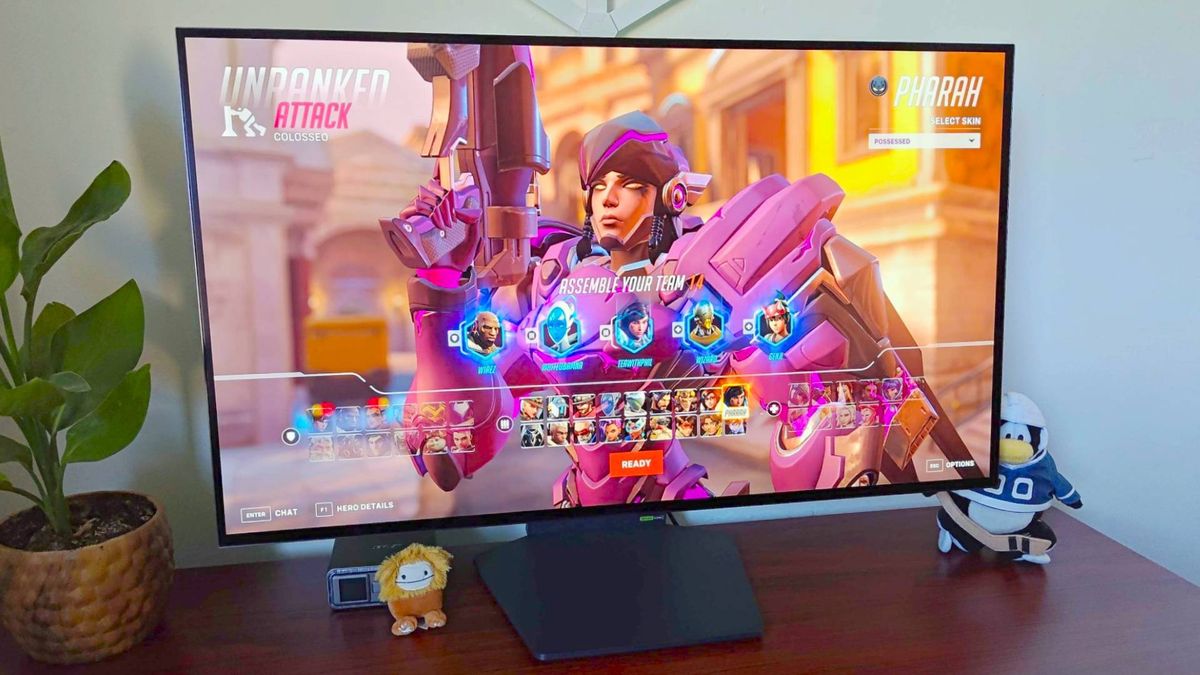
The LG 32GS60QC-B is the strongest all-round choice among the Best gaming monitors for warzone because it combines QHD detail, 180Hz motion, a 1ms GtG response specification, and useful features such as Black Stabilizer and Dynamic Action Sync. It is the monitor we would choose for a PC that can drive QHD smoothly.
The Alienware AW3425DWM is the better pick for an ultrawide desk and a more cinematic view, while the INNOCN 25G2S is the sharper competitive option for players who want QHD and 240Hz in a compact format. The SANSUI 27-inch 240Hz remains a strong Full HD alternative for high-refresh curved play.
If you are undecided, choose the LG for the most balanced upgrade, or choose the INNOCN when competitive speed and a compact QHD screen matter most.
As an Amazon Associate we earn from qualifying purchases.